Indoor Composting: How to Compost Without a Yard (3 Methods)
Every day a household throws away things the garden would love: coffee grounds, banana peels, the soft end of a bag of spinach, eggshells. If you have a yard, those go on a pile out back. If you live in an apartment, a condo, or anywhere without a patch of ground, it can feel like composting is simply not for you.
It is. Indoor composting turns the same kitchen scraps into rich, dark compost on a countertop, under a sink, or in a closet, with no yard and, done right, no smell. Extension services have taught it for decades, and the setups have only gotten simpler.
There are really three ways to compost indoors, and they are not equally good for everyone. One uses worms, one ferments, and one runs on electricity. This guide walks through all three honestly, including which one is actually worth it for your situation, so you are not stuck with a bin that does not fit your life.
Table of Contents
The Quick Answer
The three real methods of indoor composting, and who each one suits:
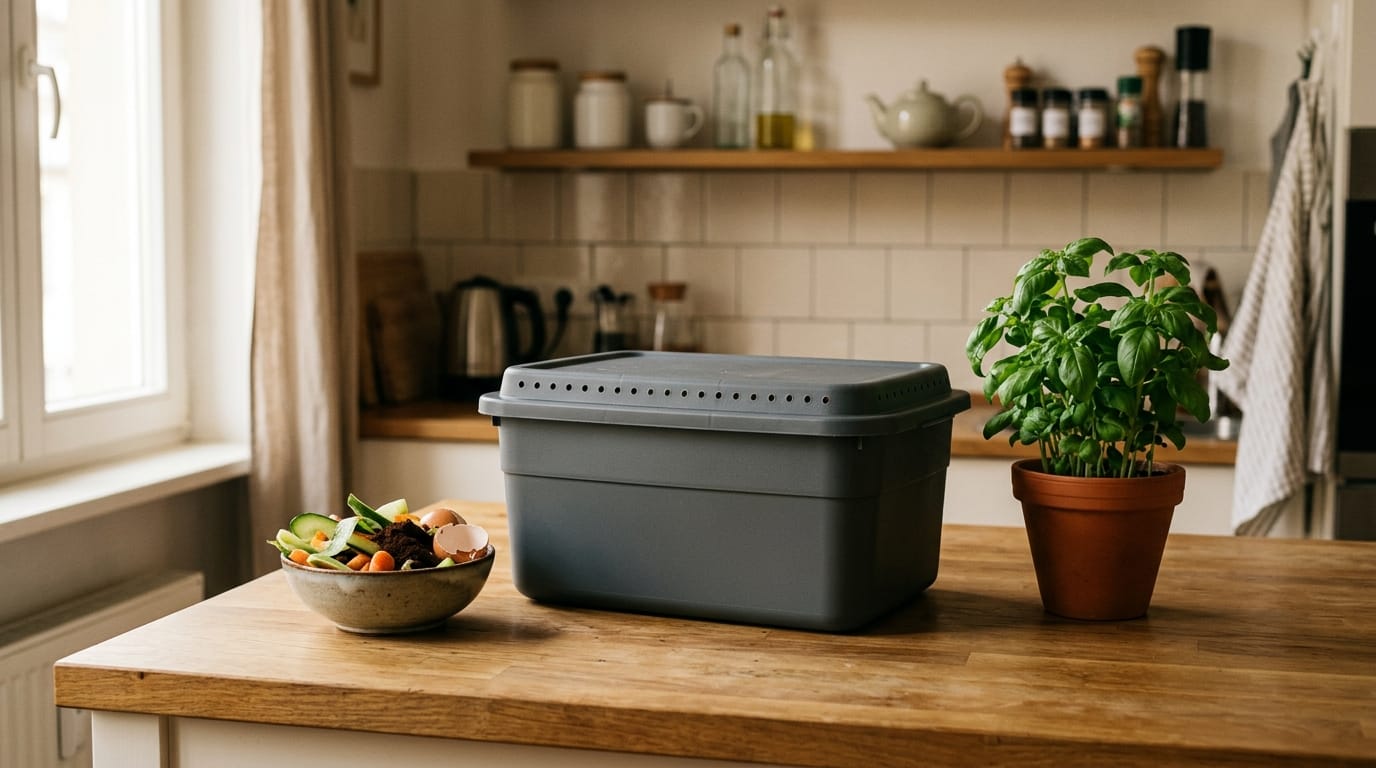
| Method | How it works | Makes real compost? | Best for |
|---|---|---|---|
| Worm bin (vermicomposting) | Red wiggler worms eat scraps and produce castings | Yes, excellent | Anyone with a little space and patience; the best compost of the three |
| Bokashi | Ferments scraps in a sealed bucket with inoculated bran | No, it pre-ferments; needs soil or a bin to finish | People who want to include meat and dairy, or have somewhere to bury it |
| Electric composter | Heats and grinds scraps into a dry crumble in hours | No, it dehydrates; not true compost | People who want zero effort and no bugs, and will pay for it |
If you want one recommendation: a worm bin is the method that produces genuine, garden-ready compost indoors, and it costs the least to run. The rest of this guide explains why, and how to run each one.
Can You Really Compost Indoors Without It Smelling?
Yes, and the smell question is the one everyone asks first, so let us settle it. A properly run indoor compost system does not stink. According to Iowa State University Extension, a well-managed worm bin is odorless and can be kept in a small indoor space.
Smell comes from things going wrong, and each one has a simple cause. A sour or rotten odor almost always means too much wet food and not enough dry bedding, or food left sitting on the surface instead of buried. Fruit flies mean the same thing: exposed scraps. The fix in both cases is to add more dry bedding and bury every addition. An indoor bin that smells is a bin that is being overfed, not a method that is broken.
The other quiet advantage of composting indoors is temperature. Your kitchen stays in the 60 to 75 F range that worms and microbes like all year, so unlike an outdoor pile that stalls in winter, an indoor system keeps working through January.
Method 1: Worm Composting (The Best Indoor Compost)
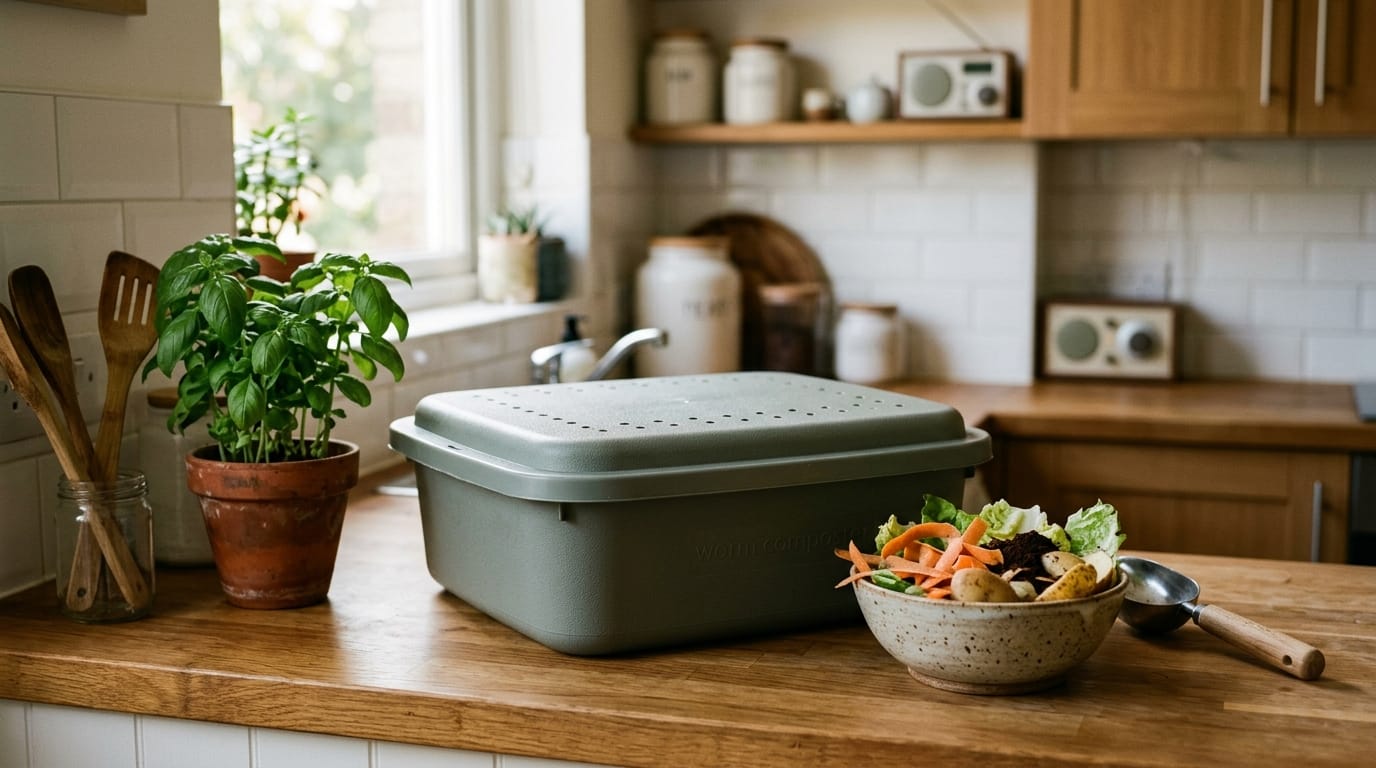
Vermicomposting, composting with worms, is the method that actually produces finished compost indoors, and it is cheaper and simpler than most people expect. A container of worms quietly turns your scraps into worm castings, one of the richest soil amendments there is.
What You Need for a Worm Bin
- A container. A shallow plastic bin, roughly 8 to 12 inches deep, with holes drilled in the lid and upper sides for air. Worms feed near the surface, so wide and shallow beats tall and deep.
- Bedding. Shredded newspaper, cardboard, or coco coir, dampened to the wetness of a wrung-out sponge. This fills most of the bin.
- The right worms. Red wigglers (Eisenia fetida), not the earthworms from your yard. Red wigglers thrive in a bin and eat close to their own weight in scraps daily. Start with about 1 pound, which is 500 to 1,000 worms, for a small bin.
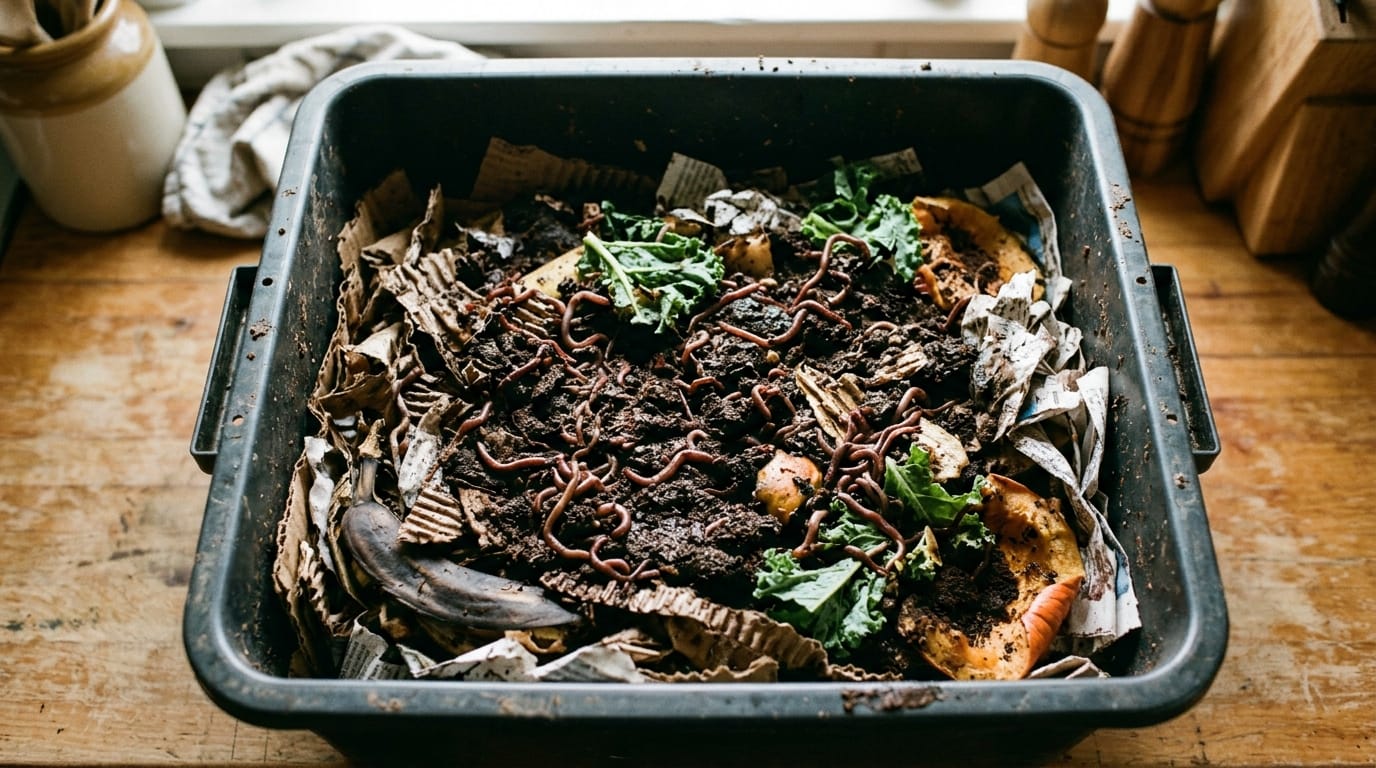
That is genuinely the whole shopping list. University of Maryland Extension lays out the same simple setup: a container, moist bedding, redworms, and food scraps.
How to Run It
Bury food scraps under the bedding rather than leaving them on top, and move the spot around the bin each time so waste is spread out. This single habit prevents nearly all odor and fruit-fly problems. Feed a handful or two every few days, and let the worms tell you the pace: if food is disappearing, add more; if it is piling up, ease off.
Keep the bin between 60 and 75 F, out of direct sun, and keep the bedding damp but not soggy. In two to three months the lower layers turn into dark, crumbly castings. Push everything to one side, add fresh bedding and food to the empty side, and the worms migrate over in a week or two so you can harvest the finished side.
What Worms Can and Cannot Eat
Worms eat fruit and vegetable scraps, coffee grounds and paper filters, tea, crushed eggshells, and the bedding itself. Keep out meat, fish, dairy, fats and oils, and citrus, all of which either rot, smell, or harm the worms. It is the same short avoid-list as an outdoor pile, which our guide to starting a compost pile at home covers in more depth if you ever add an outdoor bin too.
Method 2: Bokashi (Ferment First, Compost Later)
Bokashi is not composting in the usual sense. It is fermentation. You layer food scraps in a sealed bucket with bokashi bran, a mix inoculated with beneficial microbes, and the airtight environment pickles the waste rather than rotting it. It is the same lactic-acid fermentation idea behind fermented pickles, applied to garbage.
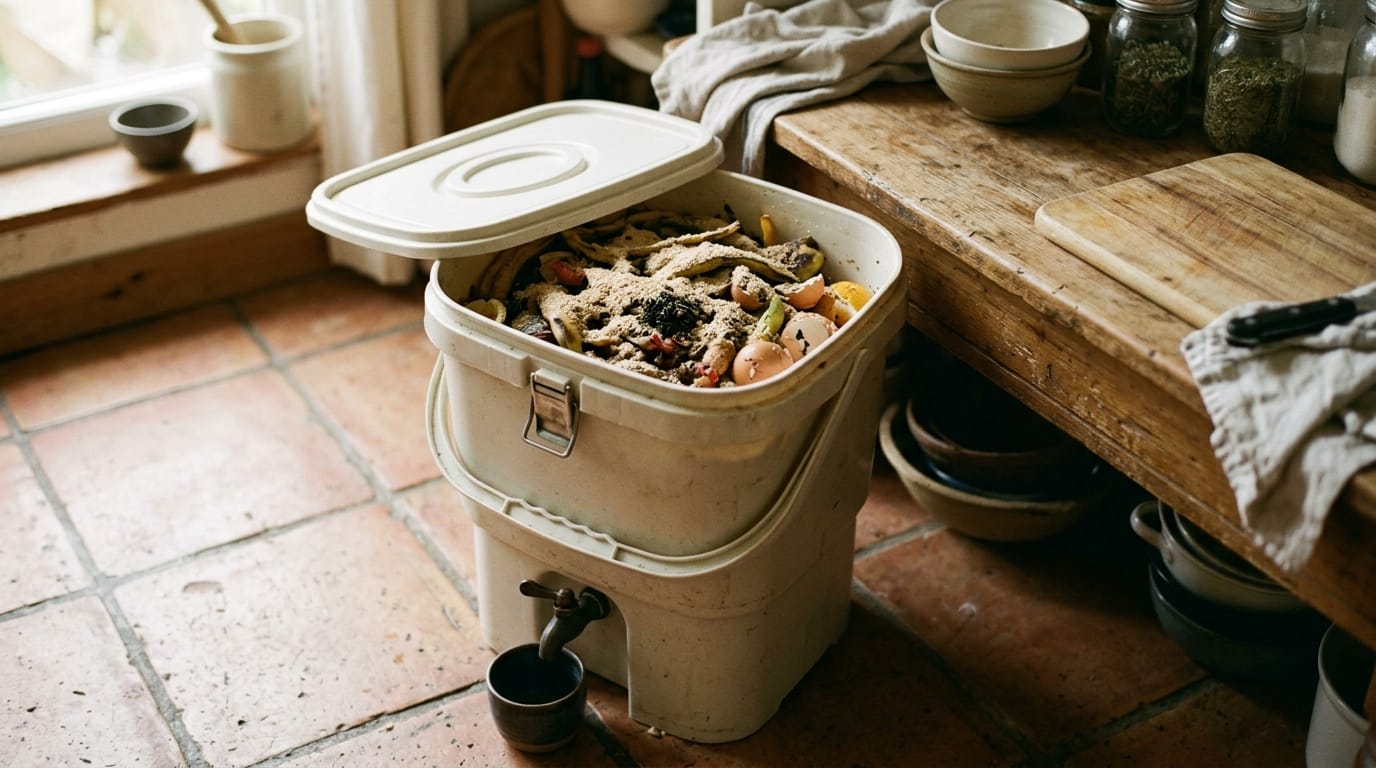
Its one real advantage is important: because it ferments in a sealed bucket, bokashi can handle meat, dairy, and cooked food that no worm bin or open pile can. If those make up a lot of your waste, this is the method that includes them.
The honest catch is that bokashi does not finish the job on its own. What comes out of the bucket is fermented, pre-compost pickle, acidic and not yet soil. To turn it into usable compost you have to bury it, in a garden bed, an outdoor pile, or a worm bin, where it breaks down the rest of the way in a few weeks. For a true no-yard apartment dweller, that final burial step is the sticking point, and it is worth knowing before you buy a kit.
Method 3: Electric Countertop Composters (Convenient, But Not Compost)
Electric composters, the sleek countertop machines you have seen advertised, are the newest and most expensive option. You drop in scraps, press a button, and a few hours later you have a cup of dry, ground-up crumble. They are quiet, sealed, bug-free, and genuinely effortless.
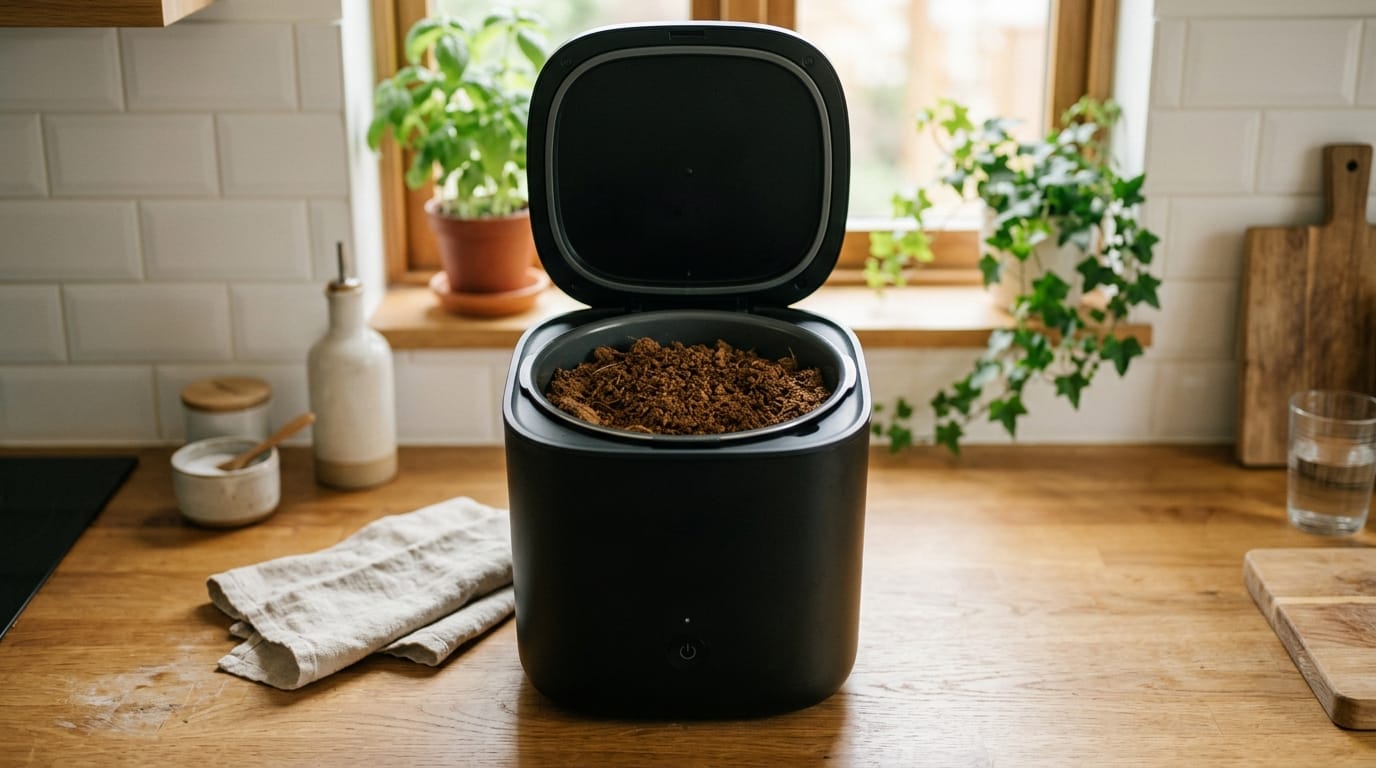
Here is the part the marketing tends to skip: most of these machines do not make compost. They dehydrate and grind, producing a dried food-scrap meal, not finished compost with the microbial life that composting creates. That crumble is not stable soil. Dug into a garden in large amounts it can actually rob nitrogen as it finishes breaking down, the same way unfinished compost does. Used in small amounts, mixed into soil or added to a real compost system, it is fine and it is a genuine convenience.
So the honest verdict: an electric composter is a fast way to shrink and de-stink your food waste, which has real value in a small kitchen. It is not the cheapest way, and it is not, on its own, the way to make garden compost. If your goal is the finished compost, a worm bin does it better for a fraction of the running cost. If your goal is just to stop throwing wet scraps in the trash with minimum fuss, the machine delivers.
How to Choose Your Indoor Composting Method
- You want real compost for houseplants or a balcony garden: worm bin. It is the only one of the three that produces finished, living compost indoors.
- You throw away a lot of meat and dairy: bokashi, as long as you have a bed, pile, or worm bin to finish it in.
- You want zero effort, no worms, no bugs, and will pay for it: electric composter, understanding it makes a dried meal, not compost.
- You are not sure and want the cheapest start: worm bin. A drilled plastic tote and a pound of red wigglers costs very little and teaches you the most.
What to Do With Your Indoor Compost
The payoff is worm castings or finished compost that your plants will genuinely notice. Indoors, mix a spoonful into the top of each houseplant pot, or steep a handful in water overnight for a gentle liquid feed. If you grow food on a balcony or windowsill, work it into your container vegetable garden or your small-space container setup, where a little rich compost goes a long way.
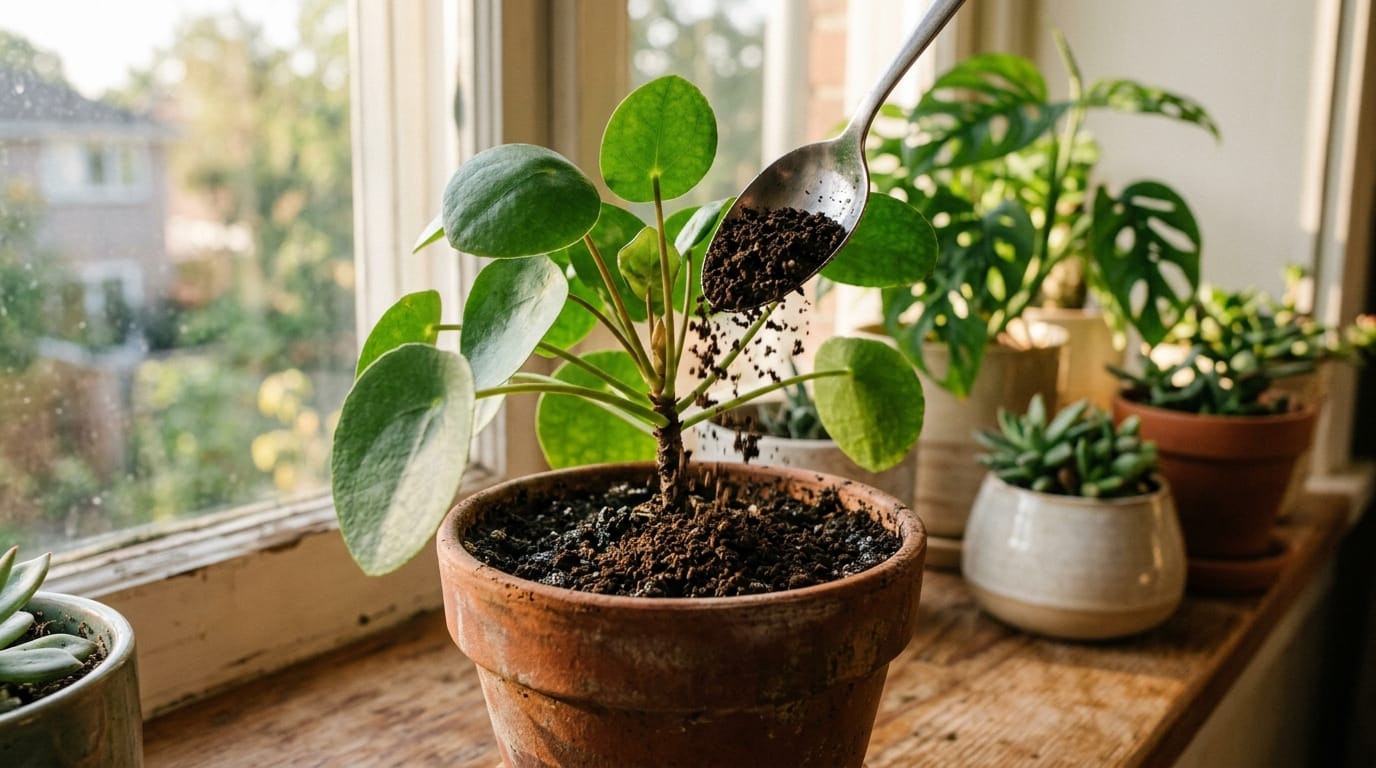
The amounts are small compared to a backyard pile, and that is fine. A worm bin will not fill raised beds, but it will keep a collection of pots and planters fed all year, and it closes the loop between your kitchen and your plants no matter how little space you have. If you want the full picture of how to actually use it once you have it, our guide to using compost in the garden covers rates and timing.
Growing on a balcony or windowsill?
The Complete Garden Planner is a 30 page printable with planting calendars, spacing charts, and harvest logs, so your container and small-space crops get fed and planted on time.
The Free Garden Starter Pack
Five printable pages that take the guesswork out of a first season, plus a short email every week or two when something is worth planting, picking, or putting up.
- A garden planning worksheet you can actually fill in
- A seed-starting and planting calendar
- A harvest log to track what really produced
No spam, ever. Unsubscribe in one click.
Thank you. You are on the list.
Your Garden Starter Pack is ready right now. Grab it here:
Download the pack (PDF)Keep an eye on your inbox. The next seasonal guide lands there first.
Frequently Asked Questions About Indoor Composting
Does indoor composting smell?
A properly run indoor system does not smell. Odor comes from overfeeding, too little dry bedding, or food left on the surface instead of buried. Add more bedding and bury every scrap, and the smell goes away.
What is the best indoor composter for an apartment?
For actual finished compost, a worm bin is the best choice: cheap, odorless when managed, and it produces excellent castings. An electric composter is the most convenient but makes a dried scrap meal rather than true compost. Bokashi works but needs somewhere to bury the fermented waste to finish.
What worms are used for indoor composting?
Red wigglers (Eisenia fetida), not garden earthworms. Red wigglers thrive in the confined, food-rich environment of a bin and can eat close to their own weight in scraps each day. Start with about 1 pound for a small bin.
Do electric composters make real compost?
Not exactly. Most heat, dry, and grind scraps into a dehydrated crumble rather than composting them biologically. It is a useful way to reduce food waste, but the output is not finished compost and should be added to soil in small amounts or fed into a real compost system.
Can you compost without a yard?
Yes. A worm bin, a bokashi bucket, or an electric composter all work in an apartment. A worm bin is the only one that produces finished compost entirely indoors, which makes it the go-to for people with no outdoor space at all.
How long does indoor composting take?
A worm bin produces usable castings in about two to three months. Bokashi ferments in roughly two weeks but then needs a few more weeks buried in soil to finish. Electric composters produce their dried crumble in hours, though that is dehydration rather than true composting.
Final Thoughts
No yard has never been a real reason to send food scraps to the landfill. A shallow bin, a pound of red wigglers, and a corner of a closet turn the same peels and grounds you were throwing away into compost your plants will thank you for.
Start with the worm bin. It is the cheapest to try, the most forgiving once you learn to bury the scraps, and the only one that hands you real, finished compost at the end. Once you have watched a container of kitchen waste become dark castings on your own countertop, the whole idea of throwing it away stops making sense.