
Tomato Suckers: Remove Them or Leave Them?
Tomato suckers have a way of going unnoticed until they are already several inches long. By the time most gardeners spot one, it has been growing for a week or two. That is not a crisis. A late catch is not a ruined plant, and the decision about what to do next is simpler than most gardening content makes it sound.
The part that actually trips beginners up is not finding suckers. It is knowing which ones to remove and which ones to leave exactly where they are.
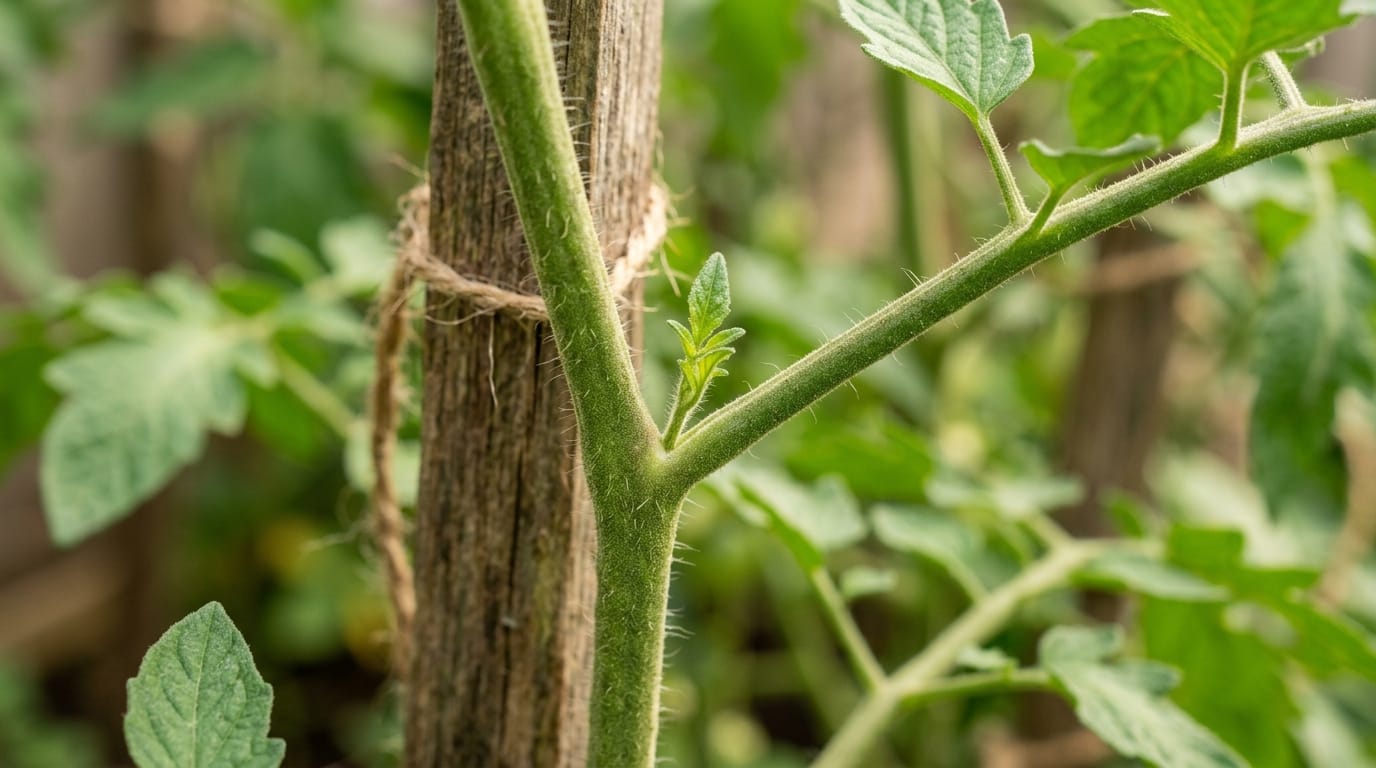
Tomato suckers are shoots that grow from the joint where a branch meets the main stem, called the axil. Left alone, they become full stems with their own flowers and fruit. On indeterminate varieties, removing them keeps energy focused on fewer, larger tomatoes. On determinate varieties, you should leave them alone.
Quick Answer
- A sucker is a shoot growing from the axil, the V-junction between the main stem and a side branch.
- On indeterminate tomatoes (most heirlooms, beefsteak, cherry), remove suckers regularly through the season.
- On determinate tomatoes (Roma, Celebrity, most paste types), leave suckers alone.
- Pinch small suckers (under 2 inches) by hand; use clean pruners for larger ones.
- Check plants every 7 to 10 days during peak growing season.
- Suckers 4 to 6 inches long can be rooted in water and grown into free plants.
- Never prune with dirty hands or wet foliage. That is how disease gets in.
What Is a Tomato Sucker?
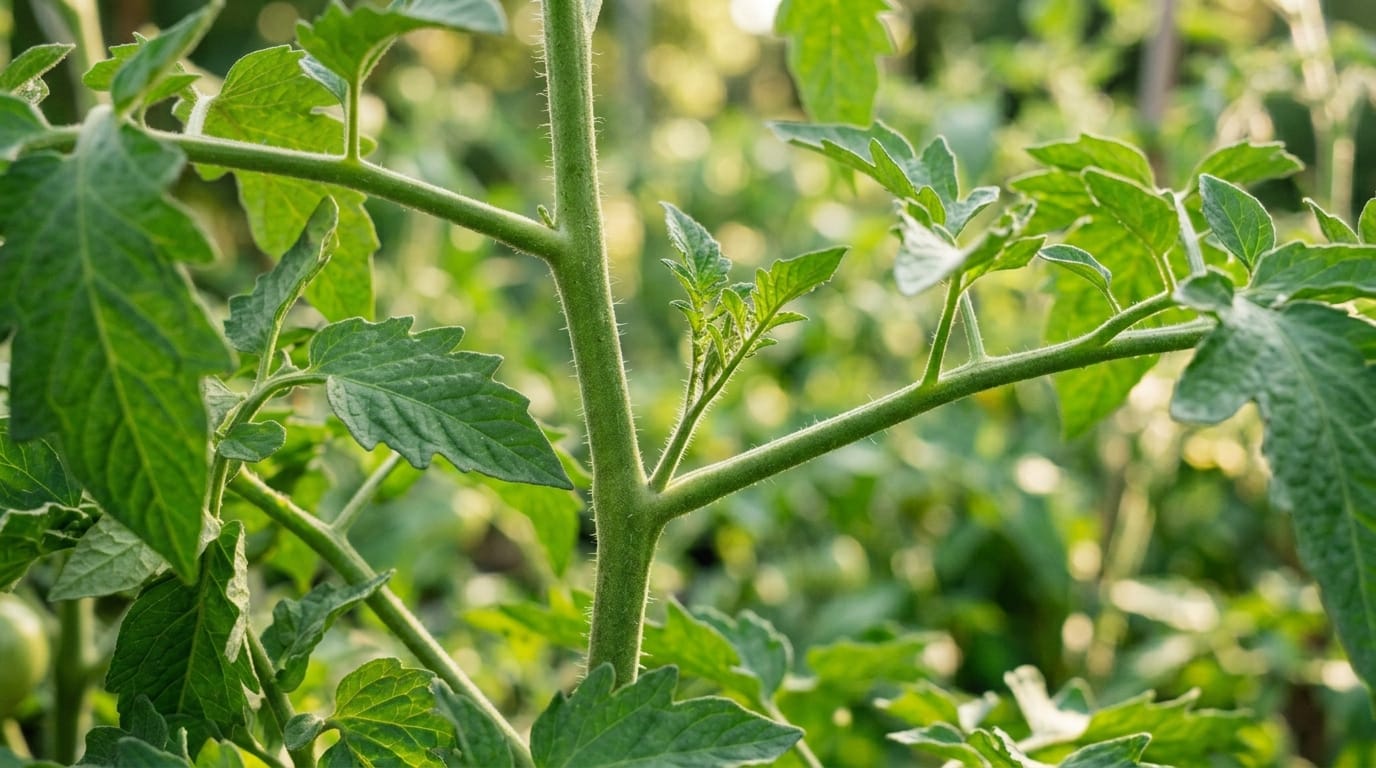
A tomato sucker is a new shoot that emerges from the axil, the V-shaped junction where a side branch meets the main stem. This is the key location detail. A regular branch grows directly from the main stem. A sucker grows from the joint between the main stem and an existing branch. That distinction is not just botanical trivia. It is the only way to tell them apart when they are young.
At 1 inch, a sucker looks like any other green shoot. Nothing about it signals “remove me.” At 4 inches, it starts to look like a small branch, with its own leaf structure beginning to form. Left alone past that point, it becomes a full stem with its own branches, flowers, and fruit. Effectively, your one tomato plant becomes two or three plants tangled together, all competing for the same root system and the same support structure.
Small suckers under 2 inches are the easiest to deal with. The stem is still soft, and a clean pinch removes them without leaving much of a wound. Once they exceed 4 inches, you are looking at a proper cutting and you will need a tool.
Determinate vs. Indeterminate: The Only Thing That Decides Whether You Prune

This is the decision point that beginners most often miss, and getting it wrong costs real fruit.
Indeterminate tomatoes grow continuously from the time you plant them until the first frost kills them. They keep throwing out new stems, new flowers, and new fruit all season. Most heirlooms fall into this category: Brandywine, Cherokee Purple, Green Zebra, and most cherry tomato varieties including Sungold and Sweet Million. Beefsteak types are almost always indeterminate. For these plants, suckers divert energy away from the fruit already setting on the plant. Regular removal keeps the plant focused, the structure manageable, and the tomatoes larger.
Determinate tomatoes are genetically programmed to reach a set size and then stop growing. They set all their fruit in a concentrated window and then wind down. Roma, Celebrity, and most paste tomatoes are determinate. For these plants, the suckers are not an accident. They are part of the plant’s intended architecture, carrying flowers and fruit that the variety was bred to produce. Determinate tomatoes set a fixed number of fruit and should not have suckers removed, while indeterminate varieties benefit from sucker pruning throughout the season, as noted in cooperative extension guidance. Remove those suckers and you remove part of the harvest.
How to tell which you have: check the seed packet or plant tag. It will usually say “det.” or “indet.” in small print. If you have already planted and lost the tag, look up the variety name. A quick search for “Roma tomato determinate” or “Sungold indeterminate” will give you a clear answer.
One common scenario is planting two or three tomato varieties in the same space without tracking which is which. If you mixed types and are not sure, wait and observe. A determinate plant will reach a compact size and plateau. An indeterminate will keep climbing past its cage or stake through midsummer. For either type, keeping your plants supported as they grow becomes more important once the stems start to fill out.
How to Identify a Sucker Before It Gets Out of Hand
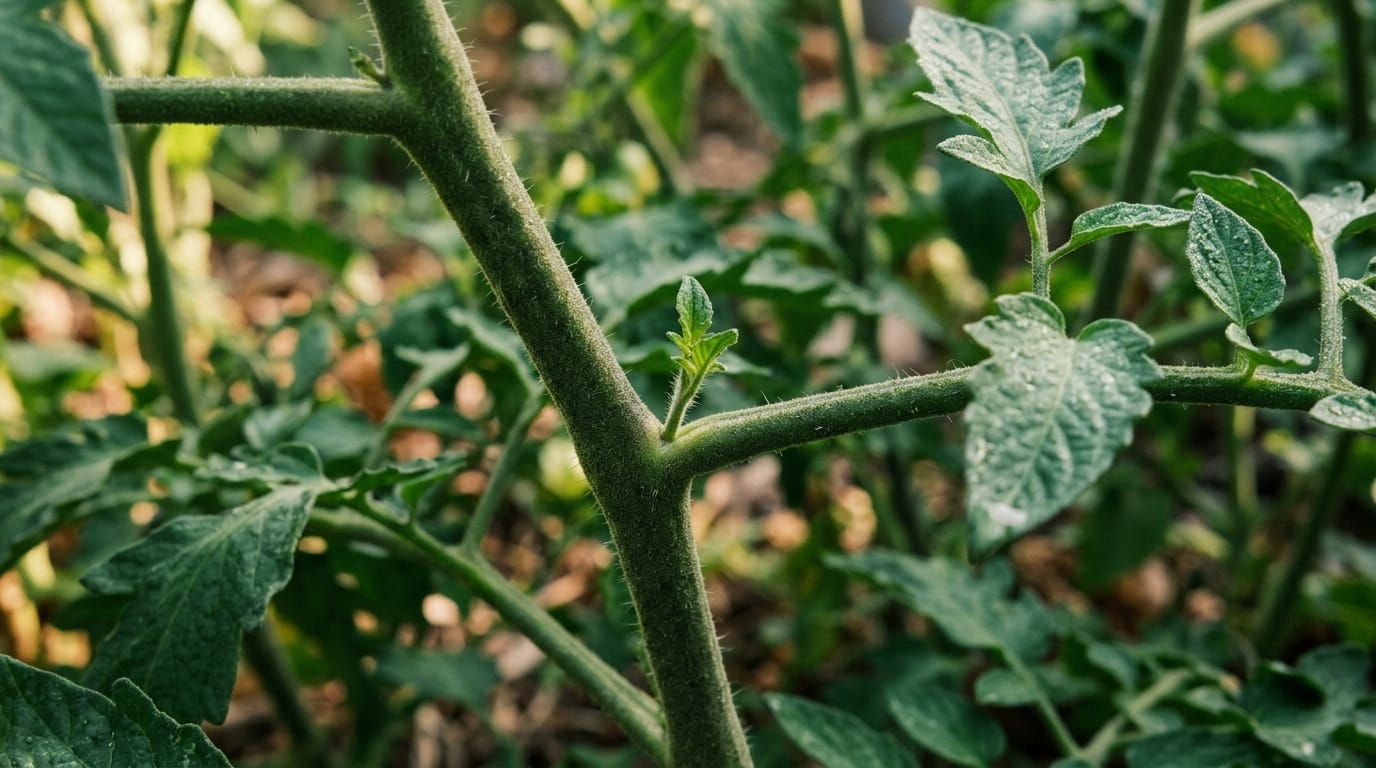
The axil is where you look. On every junction where a side branch meets the main stem, check for a new shoot growing in the V. This is not just the main crotch at the base of the plant. Every side branch has its own axil, and suckers appear at all of them.
At 1 inch, the sucker is a small, soft shoot with a few tiny leaves at the tip. It looks almost identical to any other new growth. The location is the tell, not the appearance. If it is growing from the axil, it is a sucker.
At 4 inches, it has developed enough leaf structure to look convincingly like a legitimate branch. By this point it has already been growing for about a week in warm weather. It is still removable, but it will leave a larger wound.
A fully branched sucker that has been growing for three or four weeks can be 8 to 12 inches long with its own flower clusters. At that stage, removing it is still the right call on an indeterminate plant, but you will need sharp pruners and you should be prepared for a significant cut.
Check your plants every 7 to 10 days during the main growing season. Suckers grow surprisingly fast in warm weather. A shoot that is barely visible on Monday can be 3 to 4 inches by the following weekend.
How to Remove Tomato Suckers Without Damaging the Plant
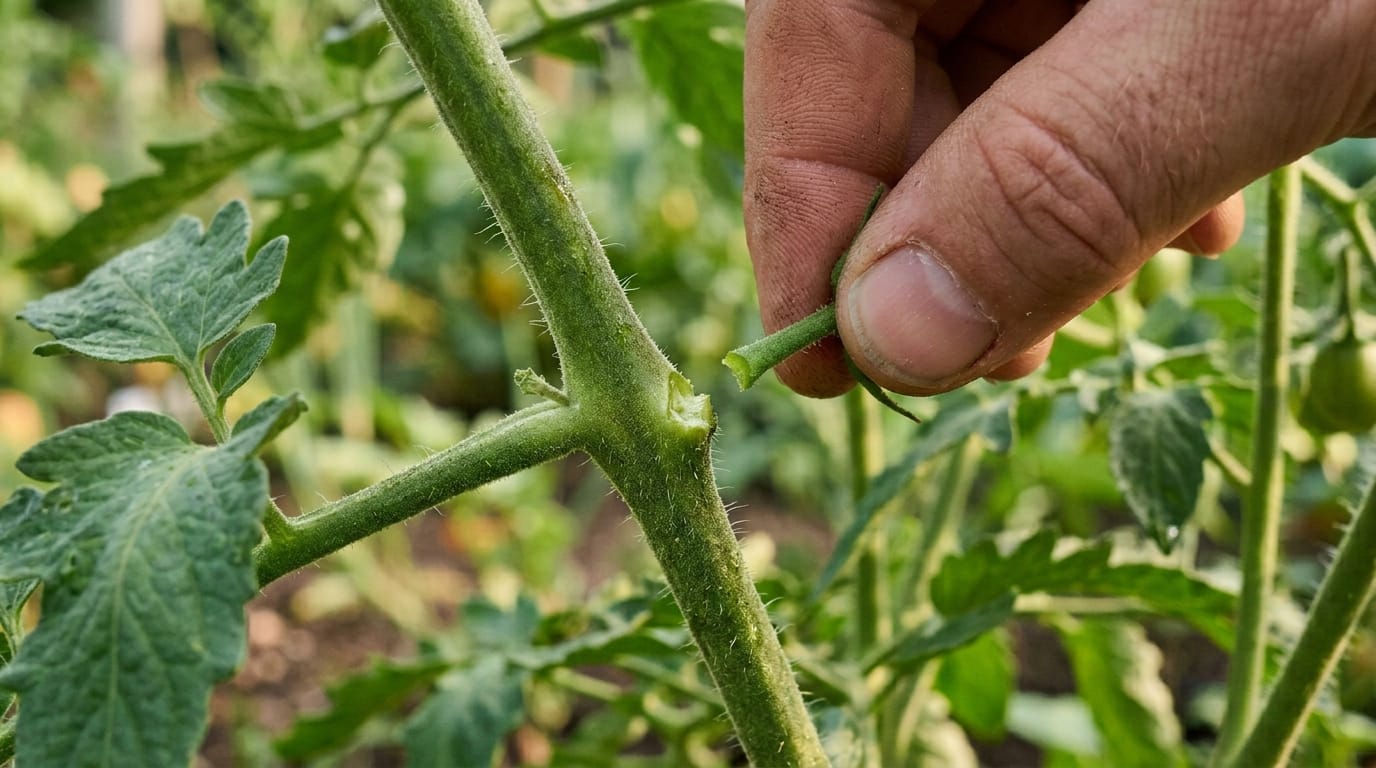
The method depends on how large the sucker has gotten.
Small suckers (under 2 inches): Use your fingers. Grip the sucker between your thumb and forefinger, as close to its base at the axil as possible, and give it a quick, clean snap. The stem is still soft enough that it breaks without tearing the main branch. No tool needed.
Larger suckers (over 2 inches): Use sharp pruners or scissors that have been wiped clean. Cut at the base of the sucker, but leave a small stub rather than cutting flush with the main stem. A flush cut creates a larger wound. A small stub, about a quarter inch, seals over more cleanly and gives the cut end a bit of protection while it dries.
The Missouri pruning method is worth knowing for large suckers you hesitated on. Instead of cutting the whole sucker off, pinch just the growing tip. This stops the sucker’s upward growth without removing the entire stem. The stub left behind is small, the wound is minimal, and the sucker is unlikely to regrow aggressively. It is the gentler option when a sucker has already developed several sets of leaves.
Timing matters in a small but practical way. Remove suckers in the morning, when the plant tissues are firm and turgid from overnight moisture. Cuts made in the morning dry out during the warmth of the day, which reduces the window for disease to enter.
How Often to Check and Remove Suckers
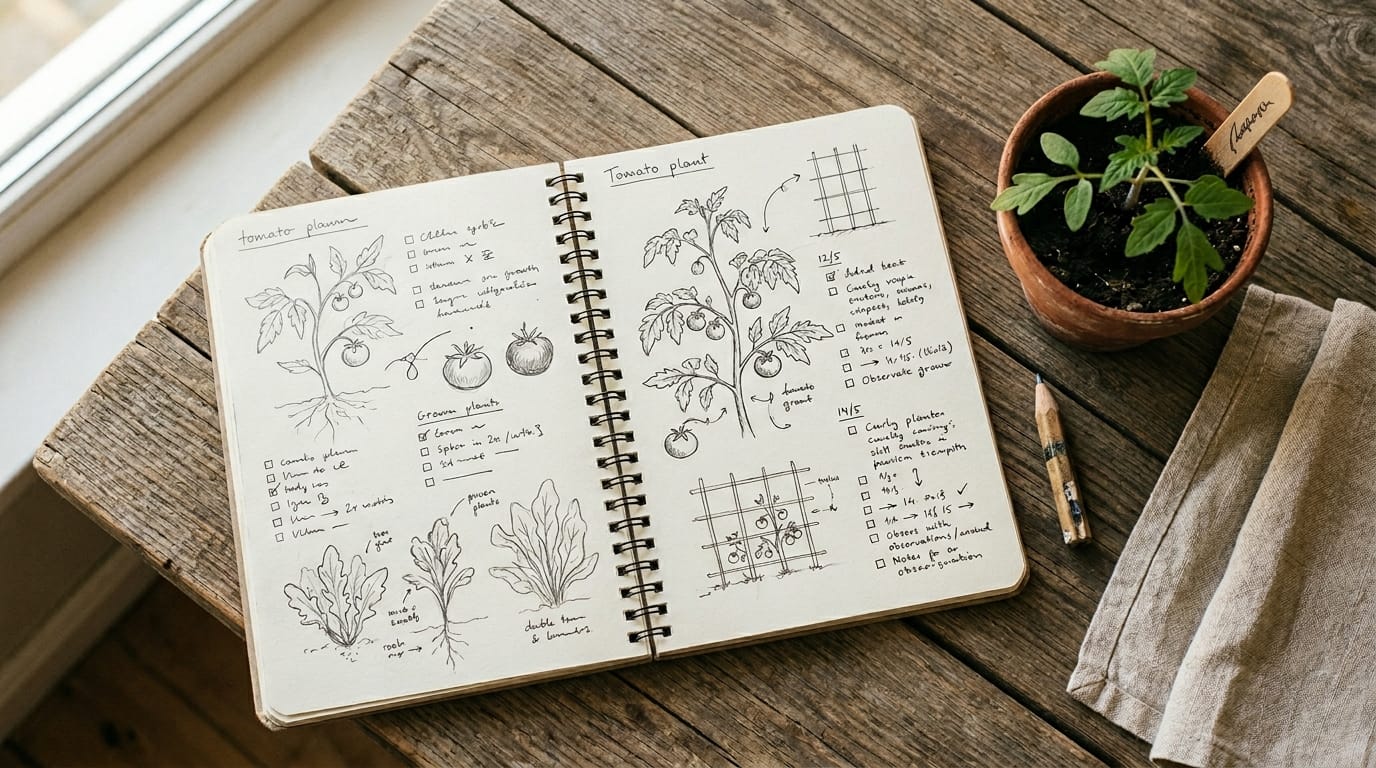
Once a week is the practical standard for most of the growing season. Fold sucker checks into the same garden pass where you check your lettuce using the cutting back plants to encourage regrowth approach, look over your zucchini for hidden overgrown fruits, and watch garlic foliage for signs that bulbs are nearing harvest. The whole check takes a few minutes once you know what you are looking for.
In hot stretches when the plants are growing fast, every 5 days is more realistic. A sucker that was a half-inch on one check can be 3 to 4 inches by the next if the weather is warm.
As your frost date approaches in fall, stop removing suckers. The plant is already beginning to slow down. Any fruit that sets from a late-season sucker is unlikely to mature before cold arrives. There is no harvest upside to continued pruning at that point, and the plant does not need the management.
A note about raised beds specifically: tomatoes in a raised bed with good amended soil often grow faster than in-ground plants during early season because the soil warms more quickly. That means suckers appear earlier and grow faster in spring. Start your weekly checks as soon as plants are established, not just when the plants look large.
What to Do With Suckers You Remove

Suckers are not waste material. A sucker that is 4 to 6 inches long is a cutting, and cuttings can become plants.
Strip the lower leaves from the sucker, leaving only the top set or two. Place the bare stem in a glass of water, somewhere with good light, a sunny windowsill works well. In warm conditions, roots typically appear within 1 to 2 weeks, though cooler temperatures or larger cuttings can slow that timeline. Once the roots are an inch or longer, the cutting is ready to go into soil.
You can transplant the rooted cutting into a container or directly into a garden bed. Treat it like any tomato transplant: harden it off for a few days first if it has been indoors, water it in, and give it support as it establishes. Rooting is not guaranteed every time, so beginners should think of this as a worthwhile experiment rather than a reliable backup plan for their main crop.
The one practical limit here is season. A rooted sucker needs at least 60 frost-free days remaining to have any realistic chance of producing fruit before cold arrives. Suckers you root in June or early July in most of the country can produce a reasonable late-season crop. Suckers rooted in August in zone 5 or 6 will likely not make it to a meaningful harvest.
For gardeners who want more plants without spending money, this is one of the better beginner tricks. An indeterminate tomato throws off enough suckers over a season to give you several free plants from a single purchase.
The One Mistake That Lets Disease Into Your Plant
Pruning tomatoes creates open wounds. That part is unavoidable. What is avoidable is turning those wounds into entry points for disease.
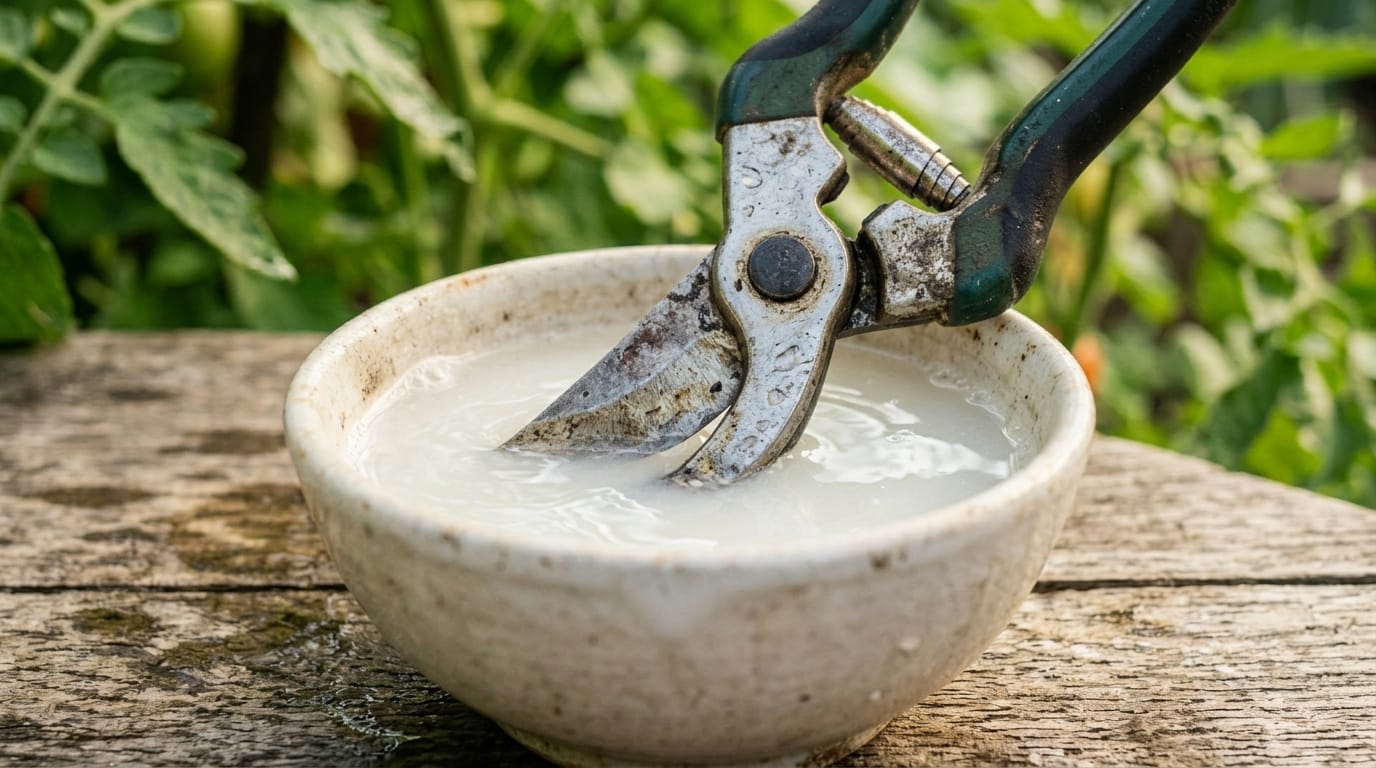
Dirty tools and wet foliage are leading entry points for bacterial speck and early blight when pruning tomatoes. Bacterial speck and early blight both spread through contact, and a blade that touched an infected plant earlier in the season carries pathogen material directly into every cut you make after that.
The protocol is straightforward. Wash your hands before you start pruning, particularly if you have been handling other plants, soil, or compost. For your pruning tool, dip the blades in a 10% bleach solution (roughly one part household bleach to nine parts water) or wipe with 70% isopropyl alcohol between plants. You do not need to sterilize between every cut on the same plant. But plant to plant, the tool should be clean.
The other firm rule: do not prune when the foliage is wet. After rain, after irrigation, after morning dew has not yet dried off. Fungal and bacterial pathogens move through moisture. A cut made on a wet stem in wet conditions is significantly more vulnerable than the same cut made on a dry morning.
These are not complicated precautions. They add about two minutes to a pruning session. Skipping them is one of those beginner shortcuts that looks harmless until you see a plant suddenly drop its lower leaves in late July.
How Hot Weather Changes the Pruning Decision
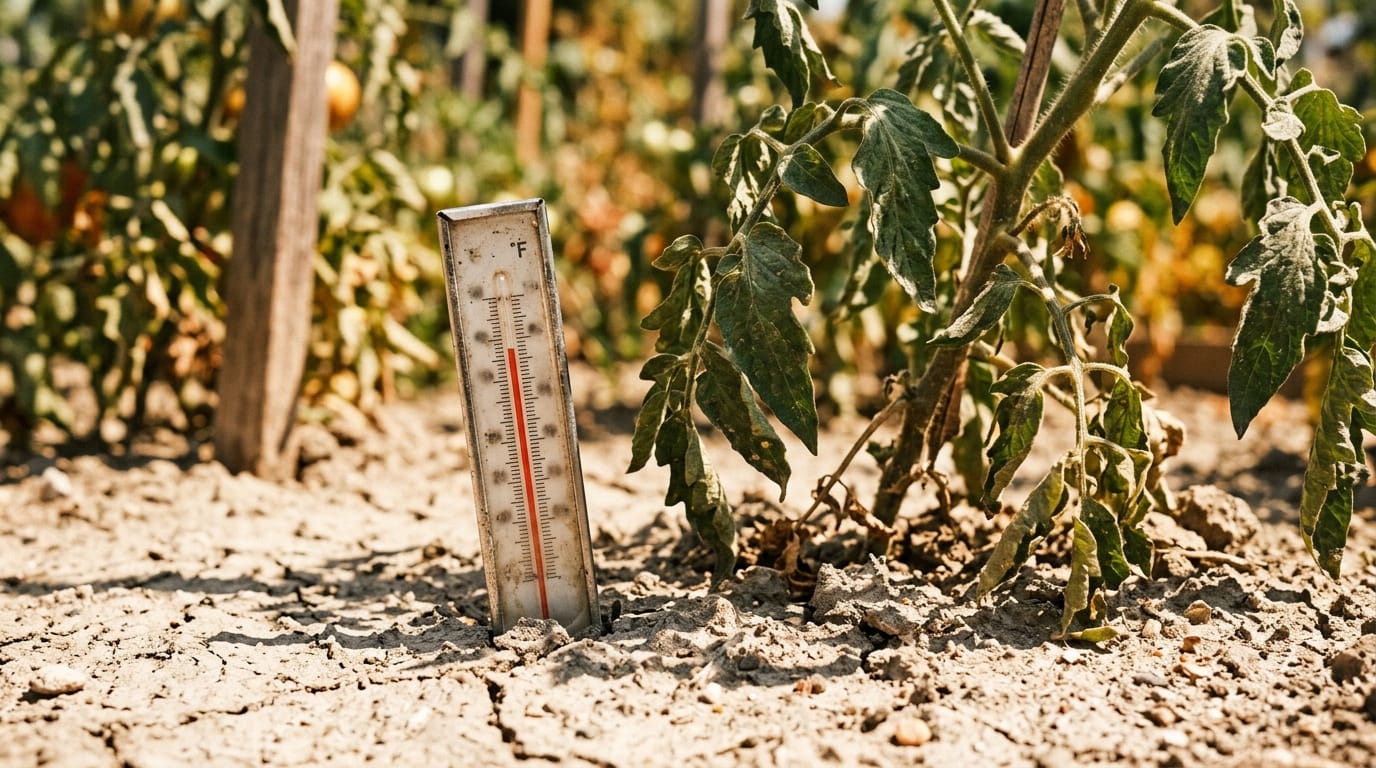
Everything above applies to a normal growing season in zones 5 through 7. If you are gardening in zones 8 and above, or if an unusual heat event pushes daytime temperatures above 90 F for a stretch, the calculus shifts.
In temperatures consistently above 90 F, heavy pruning removes the shade canopy that protects fruit from sunscald and contributes to blossom drop. Tomato blossoms are sensitive to high heat. At consistent daytime temperatures above 90 F and nighttime temperatures above 75 F, blossoms may drop without setting fruit at all. This is not something you caused by pruning. But a dense canopy of leaves helps buffer the developing fruit from direct sun and keeps soil temperatures lower, which matters when roots are already stressed by heat.
The practical adjustment is to slow down. If a heat wave is forecast, skip your weekly pruning pass and let a few extra suckers stay on the plant. Once temperatures drop back into a normal range, resume your regular schedule. This is not the standard advice for most of the country in most years. But for beginners in the South or Southwest, or for anyone facing an unusual stretch of heat, knowing the exception matters.
Sunscald shows up as pale, papery patches on the side of a tomato that faces the sun directly. Once it appears, the fruit is still edible, but the texture under the patch is often soft. Keeping a reasonable leaf canopy during heat events is easier than managing it after the fact.
The Free Garden Starter Pack
Five printable pages that take the guesswork out of a first season, plus a short email every week or two when something is worth planting, picking, or putting up.
- A garden planning worksheet you can actually fill in
- A seed-starting and planting calendar
- A harvest log to track what really produced
No spam, ever. Unsubscribe in one click.
Thank you. You are on the list.
Your Garden Starter Pack is ready right now. Grab it here:
Download the pack (PDF)Keep an eye on your inbox. The next seasonal guide lands there first.
Frequently Asked Questions About Tomato Suckers
Will my tomato plant die if I never remove suckers?
No, your plant will not die from unpruned suckers. On indeterminate varieties, though, the plant will become dense and difficult to support, and energy will spread across more stems than the root system can efficiently feed, resulting in more, smaller tomatoes and a greater disease risk from poor airflow.
Can I remove suckers that are already 6 inches or longer?
Yes, larger suckers can still be removed. Use a clean, sharp blade and cut near the base, leaving a small stub. For suckers this size, the Missouri pruning method (pinching just the growing tip instead of removing the whole stem) is gentler and leaves a smaller wound.
Do I need to remove suckers from cherry tomato plants?
Only if they are indeterminate, and many cherry tomato varieties are. Check the tag or seed packet for “indet.” before you start pruning. Sungold, Sweet Million, and most small-fruited snacking types are indeterminate and benefit from regular sucker removal.
Should I remove suckers from tomatoes growing in a raised bed?
The determinate or indeterminate type of the plant is what drives the pruning decision, not where it is planted. A raised bed does not change that. The same rules apply: prune indeterminate varieties, leave determinate varieties alone. The one difference is that raised bed tomatoes may produce suckers earlier in the season because the soil warms faster.
How do I tell a sucker from a regular branch?
Location is the only reliable indicator. A branch grows directly from the main stem. A sucker grows from the axil, the V-shaped junction between the main stem and an existing branch. Both look like ordinary green shoots when small. If the shoot is emerging from that V, it is a sucker.