Tomato Growing Supports: Cages, Stakes, and What Works
A tomato plant unsupported is a tomato plant in slow trouble. The vines look fine through June. By mid-July, when the fruit weight starts stacking up and the stems are reaching for whatever is nearby, you realize nothing is holding them. By August, the lower clusters are resting on soil, the main stem has kinked somewhere near the base, and what should have been a productive crop is half-rotted and hard to harvest.
This is one of the most common beginner mistakes in the vegetable garden, and it is almost entirely avoidable. The right tomato growing support, installed at the right time, changes what the rest of the season looks like.
The good news: you do not need expensive hardware, a greenhouse setup, or a perfectly designed raised bed. A stake and some twine will carry most backyard plants through a full season. The harder part is knowing which support to use, when to put it in, and why it matters for your specific variety.
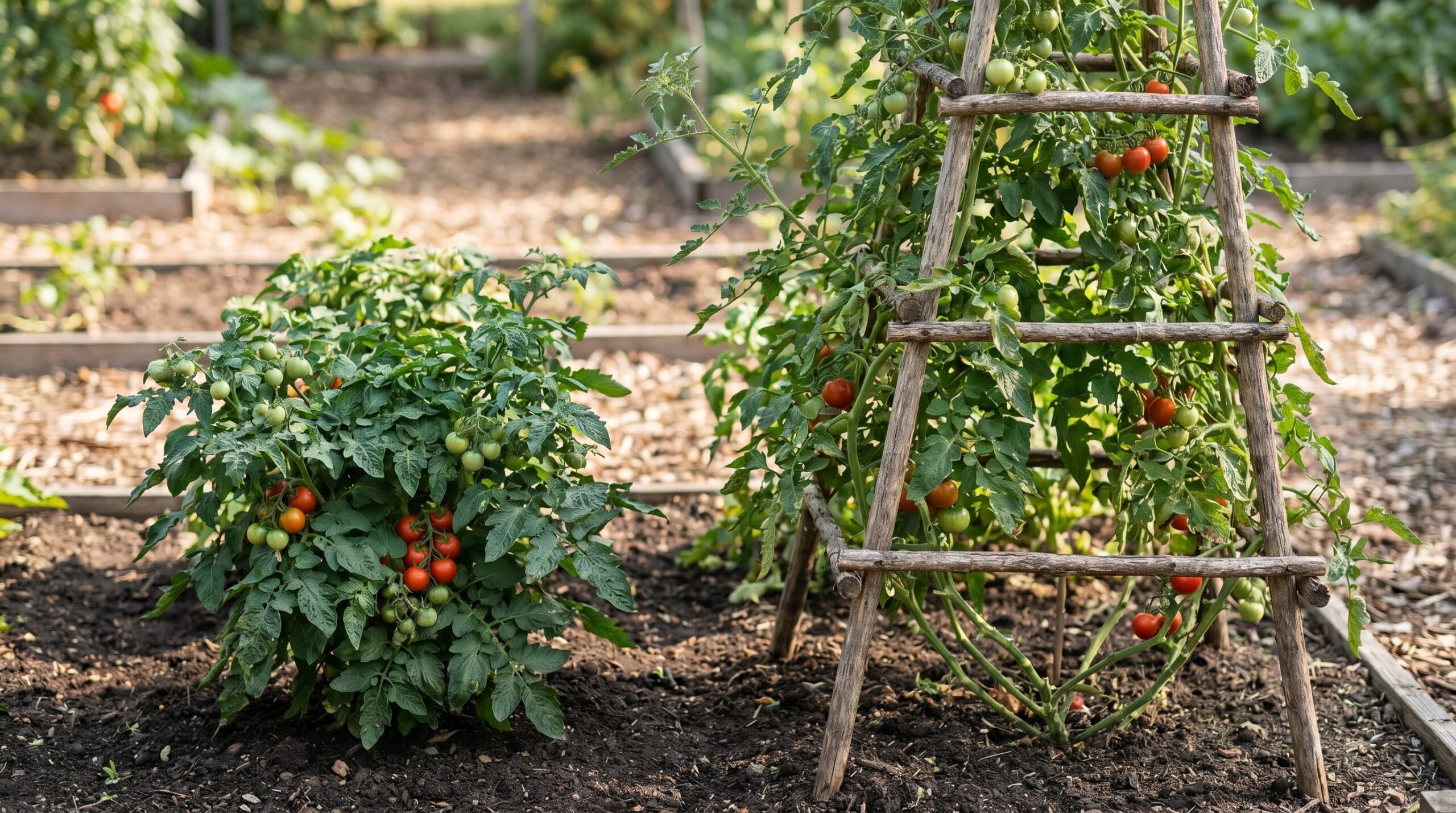
The best support for tomato plants depends on the variety. Indeterminate tomatoes, which keep growing all season and can reach 5 to 6 feet, need a sturdy cage, a 6-foot stake, or a trellis with twine. Determinate varieties stay compact and often need nothing more than a single short stake, if anything at all.
Quick Answer
- Determinate tomatoes (Roma, Celebrity, Bush Early Girl): compact, usually 2 to 4 feet, minimal support needed
- Indeterminate tomatoes (Cherokee Purple, Brandywine, most heirlooms): keep growing all season, need a 6-foot stake, a sturdy cage, or a trellis
- Install your support at planting time, not after the plant is established
- Cheap wire cages from garden centers collapse under full-sized indeterminate plants, buy heavier gauge or make your own
- Stakes + soft twine are the most budget-friendly option for most beginner gardens
- Container growers: place the stake before the roots spread; a tall heavy cage can tip a pot under 15 gallons
- Raised beds with multiple plants: a cattle-panel arch or Florida weave trellis handles a whole row efficiently
Determinate vs. Indeterminate: Why the Variety Decides Everything
Before you buy a single stake or cage, check the plant tag or seed packet. Two abbreviations tell you most of what you need to know: det. for determinate and indet. for indeterminate.
Determinate tomatoes (sometimes called bush tomatoes) grow to a fixed height, set most of their fruit in a fairly tight window, and then slow down. Most stay between 2 and 4 feet tall. Roma, Celebrity, and Bush Early Girl are classic examples. A short wooden stake or a small cage is usually enough. Some compact patio varieties need nothing at all.
Indeterminate tomatoes keep growing, flowering, and setting fruit until frost kills them. Left alone, many hit 5 to 6 feet or taller by late summer. Cherokee Purple, Brandywine, and most heirloom varieties fall into this category. Cherry tomatoes like Sungold and Black Cherry are also indeterminate and will surprise beginners with how tall they push. These plants need real structural support from day one.
If you plant an indeterminate variety and stake it like a determinate, you will run out of height, the ties will fail, and the stem will start leaning in ways that stress the plant and make disease more likely. Matching support to variety is the most important decision you will make in this process.
What Happens If You Skip Support (and When It Actually Matters)
Unsupported tomatoes do not just look messy. The failure modes are concrete.
Stem breakage is the most immediate problem. Tomato stems are brittle under load. Once fruit clusters begin developing on an unsupported vine, a single wind event or one heavy rain can snap a main stem at the base. Broken stems cannot be reattached, and you lose everything on that branch.
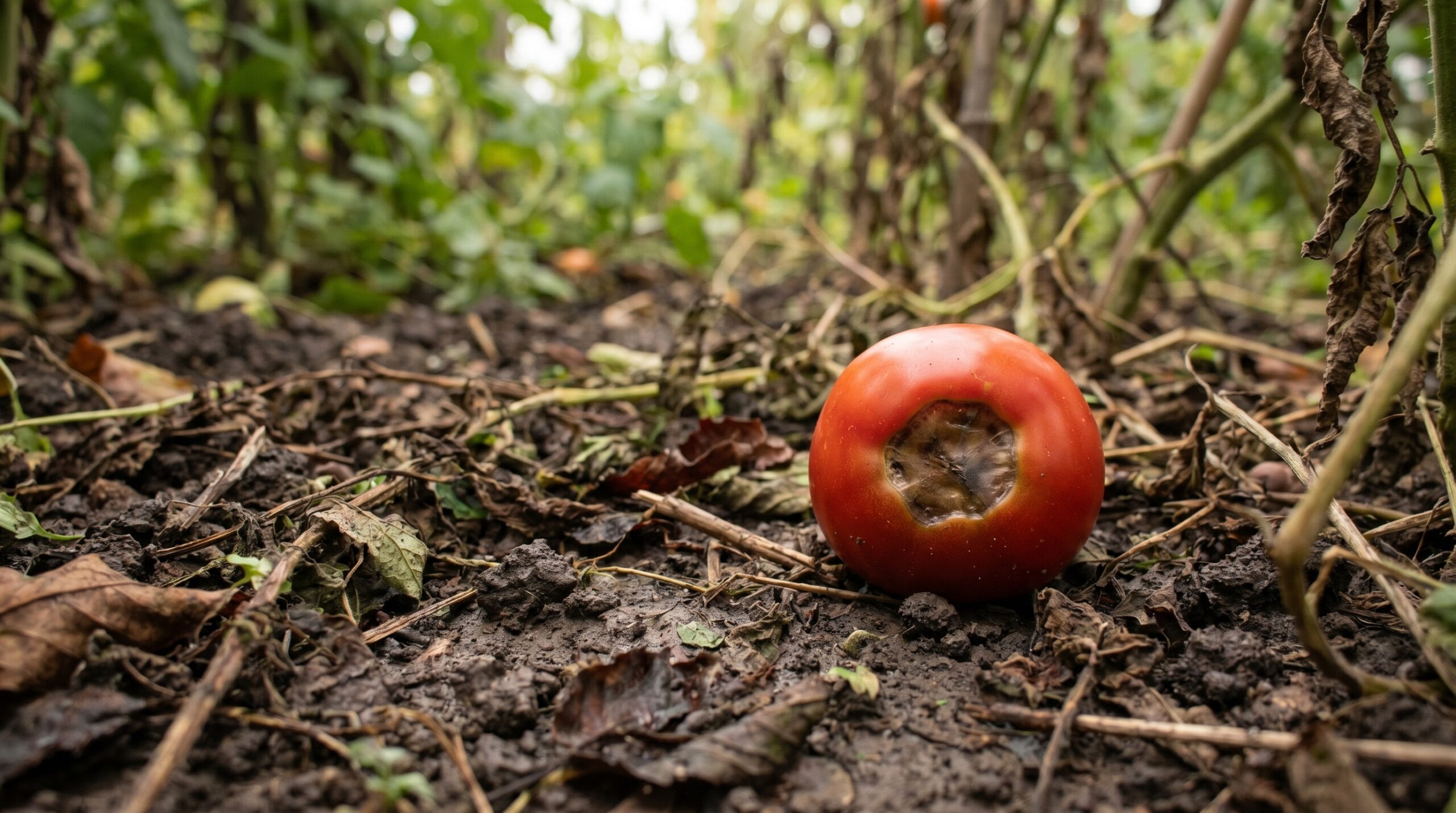
Fruit rot from ground contact is slower but just as damaging. Tomato fruit resting on soil stays wet, invites slugs, and is significantly more vulnerable to soilborne disease splash during watering or rain. Unsupported tomato fruit resting on the soil is at significantly higher risk of rot, slug damage, and soilborne disease splash. Keeping fruit elevated is one of the simplest things you can do to protect the harvest.
Reduced airflow between leaves and soil also raises humidity around the plant, which encourages fungal diseases like early blight and septoria leaf spot. Mulch around the base helps reduce splash from below, but it works best when the plant is already lifted off the ground.
Harvesting becomes genuinely difficult when vines are tangled on the ground. You end up pulling the wrong stem, missing fruit hidden in the foliage, and damaging healthy parts of the plant trying to reach what is ripe.
The one scenario where skipping support is reasonable: a low-growing determinate variety (under 2 feet) with small fruit in a sheltered spot. Outside of that, the risk is not worth it.
The Three Main Support Types: Cages, Stakes, and Trellises
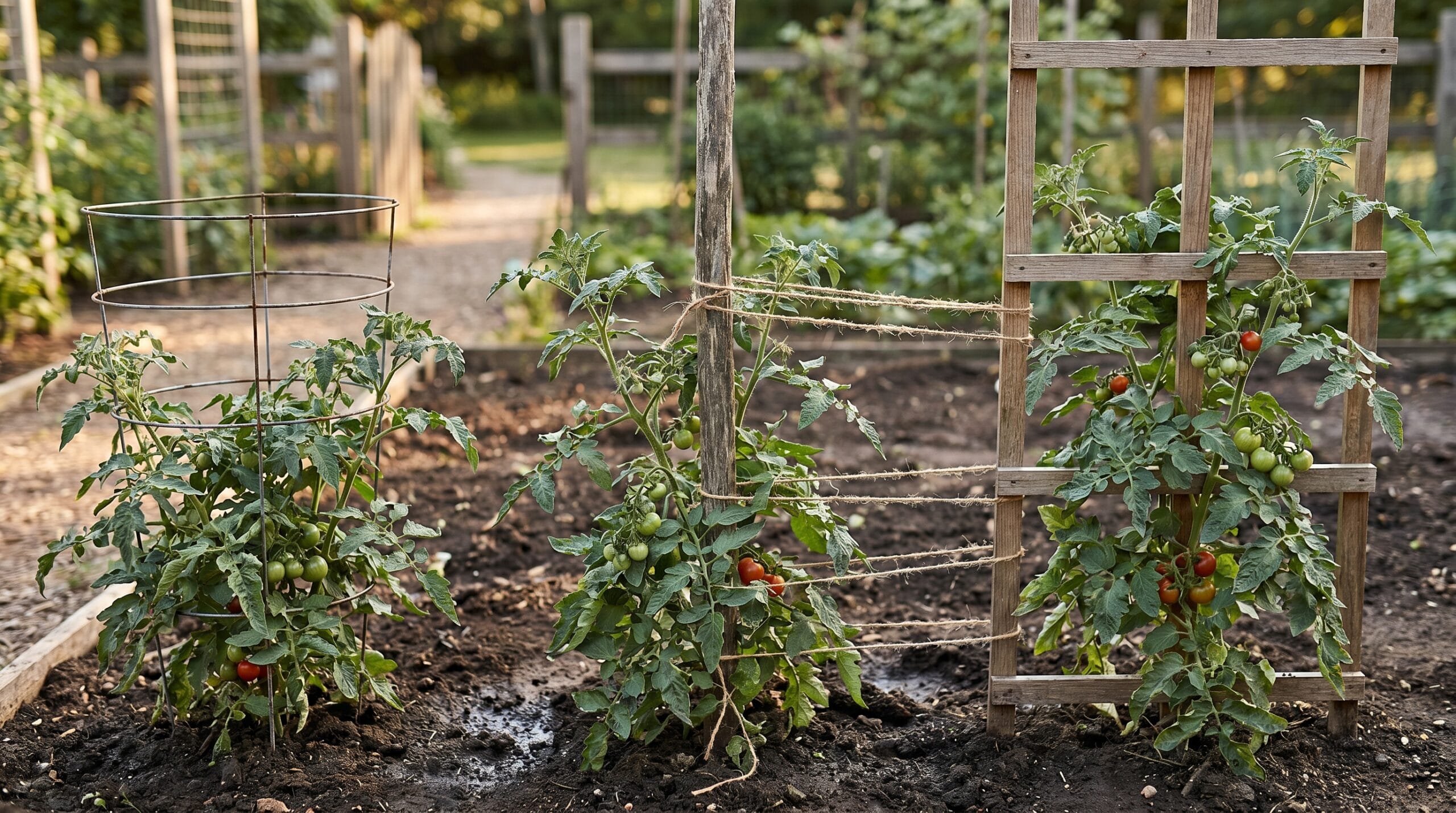
Staking, caging, and trellising are the three primary support methods recommended for home garden tomatoes, each suited to different plant sizes and row configurations. Here is what each one does, and where each one falls short.
Cages
A tomato cage is a cylinder of wire mesh that surrounds the plant and lets the stems grow up through the rings. You push the legs into the soil and the plant does the rest with minimal tying. That ease is the main appeal.
The problem: the cheap wire cages sold in most garden centers, usually under 18 inches in diameter and 3 to 4 feet tall, are sized for small determinate varieties at best. An indeterminate plant will push right through the top by July and collapse the cage sideways by August. If you go the cage route for large indeterminate plants, use heavy-gauge wire cages at least 5 feet tall and 18 to 22 inches in diameter, or make your own from concrete reinforcing mesh (remesh) or hog wire.
Stakes
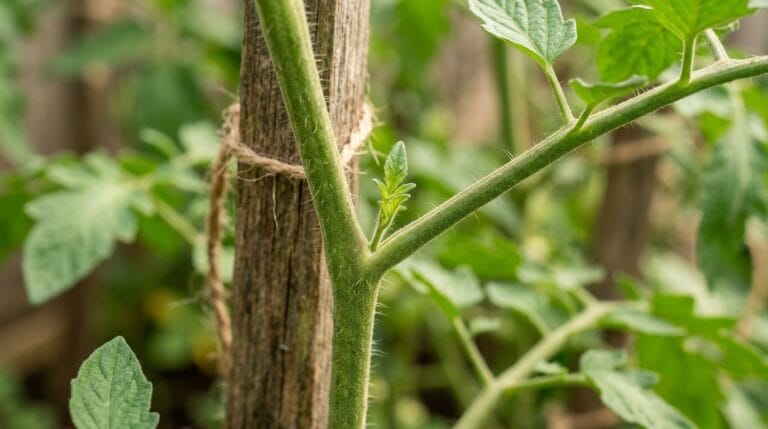
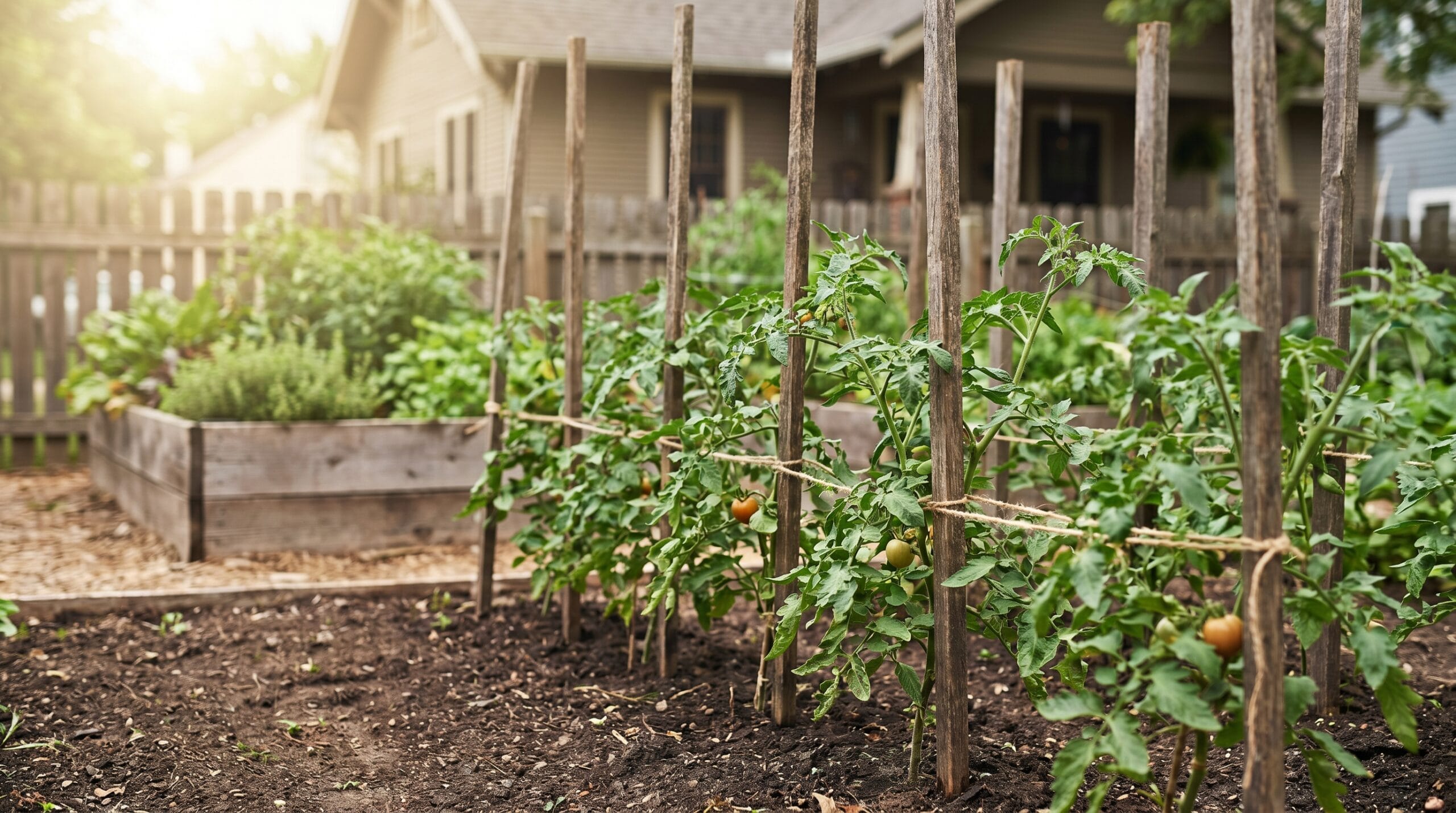
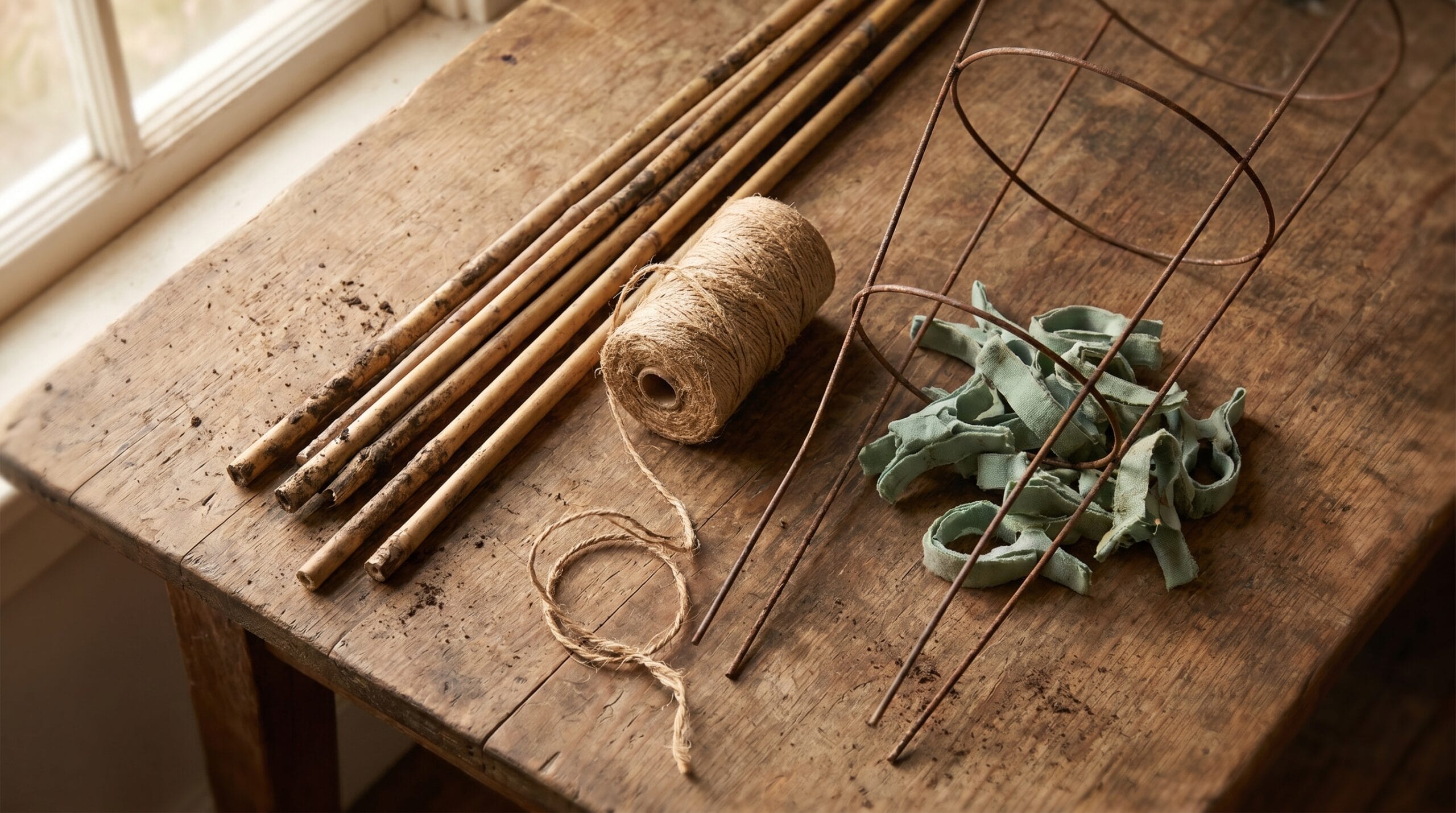
A single 6-foot wooden, bamboo, or metal stake driven 12 inches into the soil at planting time is the most straightforward option for most backyard gardens. As the plant grows, you tie the main stem loosely to the stake every 8 to 12 inches using soft twine, silicone clips, or torn strips of an old cotton or soft jersey t-shirt, avoid synthetic blends that do not stretch with stem growth.
The ties need to be loose enough that the stem can thicken without being strangled. A figure-eight tie (looping the twine around the stem and the stake separately before tying) keeps the stem from rubbing against the stake directly.
Stakes work best with one or two main stems. If you let your indeterminate plant run five or six suckers without pruning, a single stake will not hold everything. Prune to one or two main stems and the stake becomes a clean, workable system.
One note for beginners in wet climates: bamboo stakes can split or rot after a single season in consistently damp soil. Metal or hardwood stakes cost a little more upfront but hold up for several years.
Trellises
A trellis is any fixed or semi-fixed structure that the plant is trained against. Options range from a permanent hog-wire panel attached to T-posts to a simple string trellis made from posts and twine.
Trellises suit rows of four or more indeterminate plants particularly well, because you can clip or tie multiple plants to the same structure. They are also easy to scale: add more horizontal strings as the plants grow taller.
The Florida weave (also called the basket weave) is worth knowing about if you have four or more plants in a row. You drive stakes between plants and weave twine back and forth along both sides of the row, creating a horizontal sandwich that the plants grow between. It looks fussy when described, but takes under ten minutes to set up and scales across a long bed without needing individual ties on every stem. It’s common in commercial operations, but perfectly workable in a home garden row.
Supporting Tomatoes in Containers and Raised Beds
The mechanics shift slightly when you are working in a confined space. If you are growing tomatoes in a planter, two specific issues come up that do not apply to in-ground growing.
Container depth limits how far a stake can go. In a 5-gallon pot, you cannot drive a 12-inch stake base without immediately hitting the bottom. Place the stake at transplant time, before the roots fill the container. Push it against the interior wall so it leans slightly outward, and use the pot’s rim and the stake together for support.
A heavy cage can tip a light pot. A full wire cage sitting on the rim of a container under 15 gallons can destabilize the whole thing in wind. A stake-and-twine method is safer and more stable for anything under a large 20-plus gallon container.
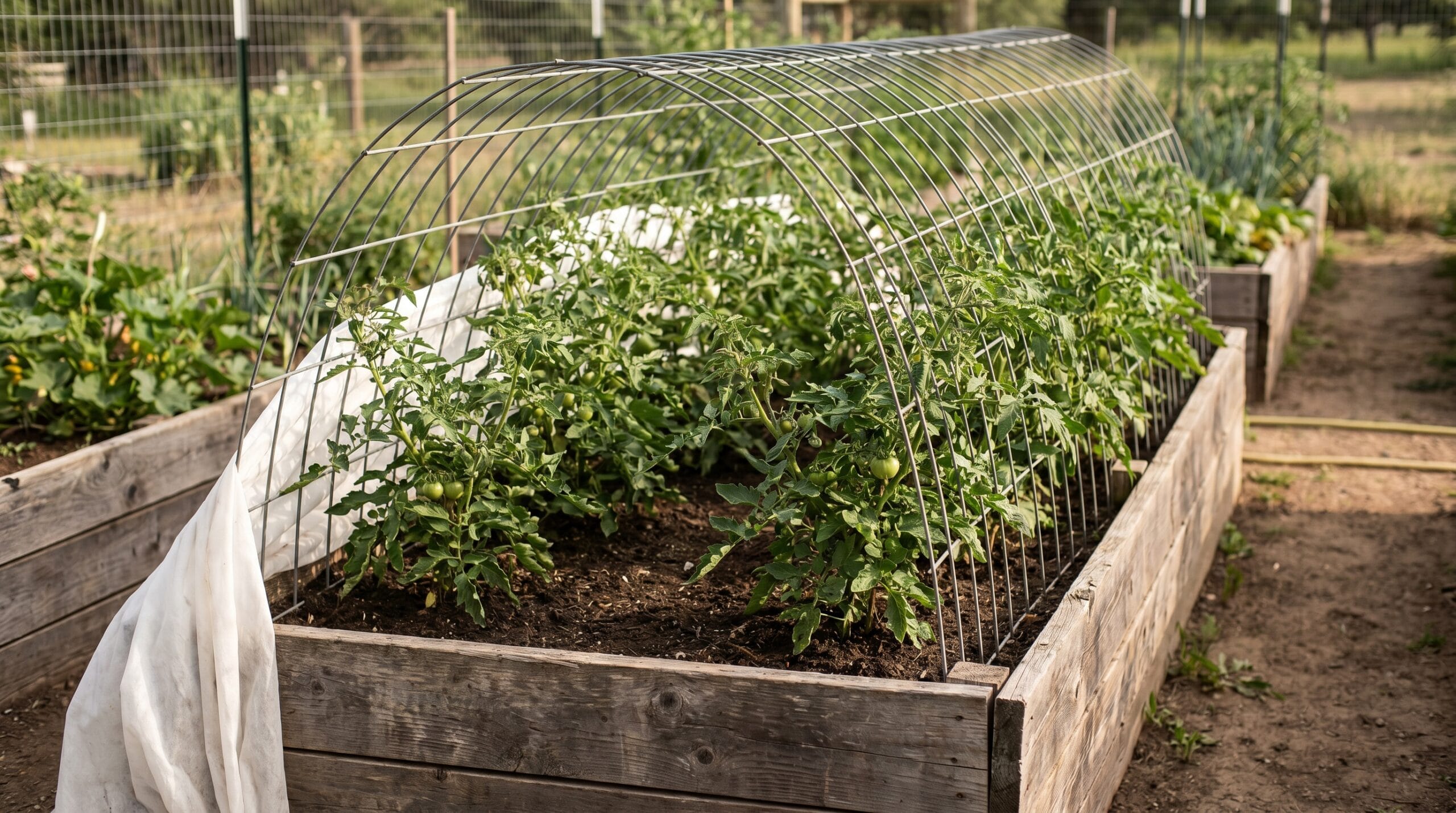
Raised beds offer more flexibility. Because a raised bed has open soil below it, you can drive stakes as deep as you would in-ground. A cattle panel or hog-wire arch over the bed is an excellent option for multiple plants: arch the panel from one side of the bed frame to the other, secure it at each end, and train plants up the inside surface. The arch doubles as a frame for floating row cover in early spring if your growing season is short, which makes it one of the more versatile investments for a small vegetable garden. Your small-space container garden setup can use the same arched-panel approach scaled to a narrow planter.
A note on soil: whether you are in a container or a raised bed, make sure you have enough compost worked into the mix before planting. A good raised bed mix typically includes around 25 to 30 percent compost by volume, though the right proportion varies depending on what else is in your mix and what is available locally. Add mulch to the surface after planting to conserve moisture and reduce disease splash from below.
When to Install Your Support (and Why Waiting Too Long Is the Most Common Beginner Mistake)
The most common timing mistake is waiting until the plant is already tall and obviously falling over. By that point, the damage is likely already happening.
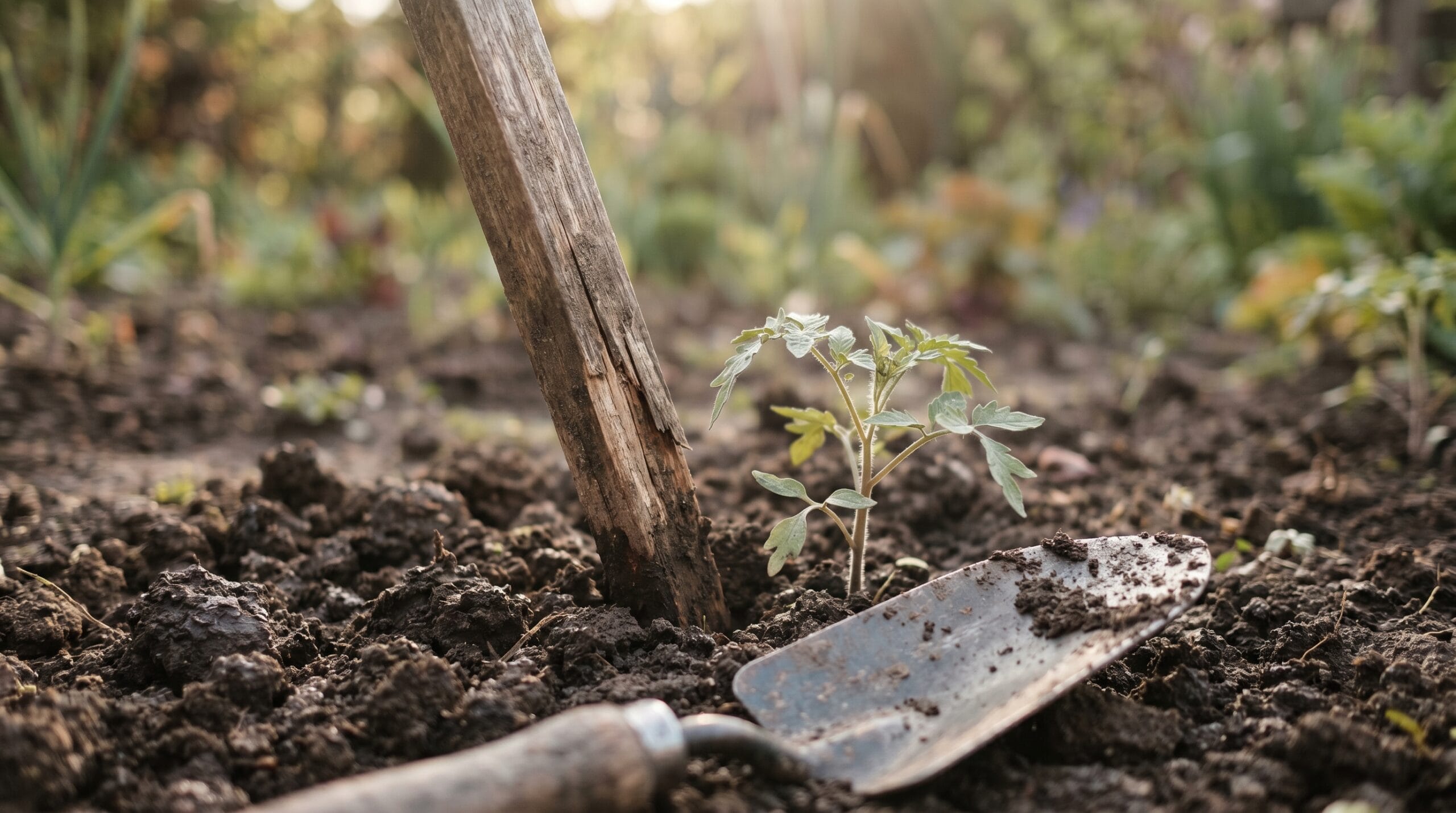
Installing stakes or cages at planting time prevents root damage and stem stress caused by driving supports into established root zones later in the season. Tomato roots spread outward quickly, and a stake driven into the soil six weeks after transplant will sever shallow feeder roots. That stresses the plant and can set it back noticeably during a critical window for fruit development.
The rule is simple: put the support in at the same time you put the transplant in, or within the first few days. Sink the stake or cage base before the roots have moved far from the transplant hole.
If you are starting from seed, plan for your support structure when you are designing the bed, not when the plants are already waist-high. For indeterminate varieties, a stake, cage, or trellis post can be set in place the same afternoon you transplant the seedling, even if the plant is only 6 inches tall. The early install does no harm. The delayed install often does.
Real Cost Comparison: Cages vs. Stakes vs. Twine for a 10-Plant Garden
Beginners often assume that tomato support is expensive. It does not have to be. Here is a rough estimate for a 10-plant garden in 2026.
| Support Method | Estimated Setup Cost | Reusable? | Notes |
|---|---|---|---|
| Budget wire cages (10) | roughly $25 to $40 | 2 to 3 seasons if stored | Adequate for determinates only |
| Heavy-gauge DIY remesh cages (10) | roughly $30 to $50 | 10+ seasons | Best long-term value for indeterminates |
| Wooden stakes (10) + twine | roughly $10 to $20 | Stakes: 2 to 3 seasons; twine: single use | Most versatile, cheapest entry point |
| Metal rebar stakes (10) + twine | roughly $15 to $25 | 10+ seasons | Durable, won’t rot; use soft twine always |
| Cattle panel arch (one 16-foot panel) | roughly $30 to $50 | 10+ seasons | Covers 4 to 6 plants in a raised bed |
| Twine-and-post trellis | roughly $5 to $15 | Posts reuse; twine is cheap | Best for a row of 4+ indeterminates |
For most backyard gardens, the cheapest reliable starting point is metal or hardwood stakes plus a roll of soft jute or sisal twine. The stakes drive cleanly, reuse for several seasons, and cost well under $2 per plant. You can add twine as the plant grows rather than buying everything upfront.
Prices vary by region. If you are in a rural area, fence posts, bamboo divisions, or conduit offcuts may be available free or near-free, while urban gardeners may pay closer to the higher end of these ranges. Zero-cost options are also real: repurpose old wooden fence pickets, conduit scraps, or bamboo poles from last year’s bean trellis. Tie-wise, torn strips of cotton fabric, old nylon stockings, or strips cut from a mesh produce bag all work as well as commercial tomato clips.
The Free Garden Starter Pack
Five printable pages that take the guesswork out of a first season, plus a short email every week or two when something is worth planting, picking, or putting up.
- A garden planning worksheet you can actually fill in
- A seed-starting and planting calendar
- A harvest log to track what really produced
No spam, ever. Unsubscribe in one click.
Thank you. You are on the list.
Your Garden Starter Pack is ready right now. Grab it here:
Download the pack (PDF)Keep an eye on your inbox. The next seasonal guide lands there first.
Frequently Asked Questions About Tomato Growing Supports
What Is the Best Support for Tomato Plants?
The best support depends on the variety. For indeterminate tomatoes, a heavy-gauge cage (at least 5 feet tall) or a 6-foot stake with soft twine is the most reliable option. For determinate varieties, a single short stake or a small cage is usually enough.
Do Tomatoes Need a Trellis or a Stake?
Whether you use a trellis or a stake comes down to how many plants you have and how your garden is laid out. A trellis makes more sense for a row of four or more indeterminate plants where you can run horizontal twine between posts. A stake is better for one or two isolated plants where you want a simple, low-cost setup.
What Are Some Cheap Ways to Support Tomato Plants?
The cheapest reliable setup is a wooden, bamboo, or metal stake plus soft twine, which can run under roughly $2 per plant in 2026. Cutting circles from remesh or concrete reinforcing wire is another option for making durable DIY cages at a fraction of the cost of store-bought versions. Repurposed fence stakes, conduit offcuts, or wooden poles all work. Tie with torn fabric strips instead of buying clips.
Is October Too Late for Tomatoes?
In most of the continental United States, October is too late to start tomatoes from seed or transplant new plants. Most regions see first frost somewhere between late September and mid-November, and tomatoes typically need roughly 60 to 85 days of frost-free weather to produce fruit, depending on the variety. If you already have plants in the ground in early October, protect them with row cover on cold nights to extend the season a few weeks. To find your area’s average first-frost date, search your zip code through your local cooperative extension service or the Old Farmer’s Almanac frost date tool. In Zone 9b and warmer (parts of Southern California, Florida, the Gulf Coast), a fall crop started in August to September is entirely reasonable.
Why Sprinkle Baking Soda Around Tomato Plants?
Baking soda is sometimes recommended as a way to raise soil pH slightly and reduce surface fungal growth. The honest answer is that the evidence for it making a meaningful difference in a home garden is thin. If you are dealing with blossom-end rot, the more reliable fix is consistent watering and adequate calcium in the soil, not baking soda. It will not harm your plants in small amounts, but it is not a substitute for proper soil preparation, good mulch, and the right tomato growing supports to keep air circulating through the plant.
Can Tomatoes Grow Near Lettuce?
Yes, and it is a common pairing in a raised bed. Lettuce tolerates the partial shade that a tall, staked tomato plant creates by midsummer, which actually extends the lettuce harvest in warm climates by keeping the soil cooler. Just make sure your tomato support does not shade the lettuce so heavily that growth stalls.
A Few Final Notes
A few things worth carrying into next season. If your indeterminate plants outgrew their cages this year, that is diagnostic information: size up to remesh or hog-wire cages, or switch to a stake-and-weave system. If your stakes pulled loose in wet soil late in the season, the fix is a longer stake driven deeper at planting time, not a heavier one added later. And if your fruit rotted at the base despite support, check whether your mulch layer is thick enough and whether the lowest stem ties are holding the plant up off the soil surface.
Support decisions compound. A cage that is too short in July is unfixable by August. A stake installed a month late has already cost the plant root damage it should not have had to absorb. The varieties, the timing, and the hardware all interact, which is why a little planning before the transplants go in pays back every week through the end of the season.