DIY Chicken Feed for Beginners: Safe Mixes, Ingredients & Mistakes to Avoid
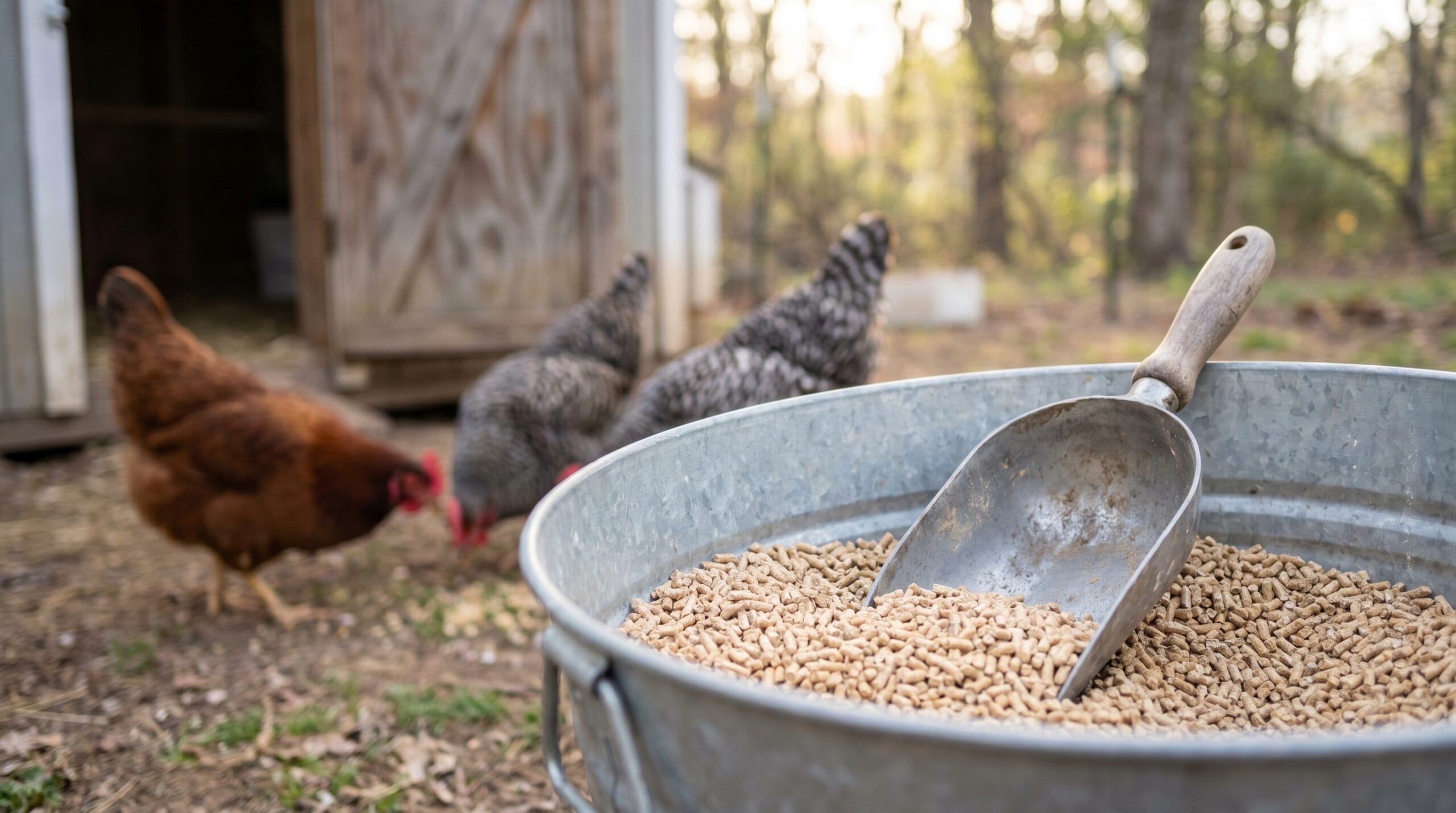
There is a particular sound a feed scoop makes when it hits the bottom of a metal bin. If you keep chickens long enough, you start to notice it. The bag that felt full a week ago is suddenly light, the hens are waiting at the feeder, and you find yourself doing the quiet math on what another 50 lb bag costs.
That is usually when beginners start wondering about DIY chicken feed.
DIY chicken feed can help you use more of what your homestead already produces, but it needs to be handled carefully. Chickens can eat many household and farm-grown foods, including grains, greens, insects, garden scraps, and seeds. But a laying hen still needs a balanced ration every day. If the diet is short on protein, calcium, amino acids, vitamins, or minerals, the first signs may be thin shells, fewer eggs, poor feathering, or birds that simply do not thrive.
For beginners, DIY chicken feed is safest when it starts with a complete commercial feed as the base, then uses carefully chosen grains, greens, insects, kitchen scraps, oyster shell, and grit as controlled supplements. A true homemade complete ration is possible, but it needs a tested formula and accurate weighing. For most backyard flocks, the better first step is reducing waste and replacing only 10 to 20 percent of the diet with safe home-grown extras, not guessing at a full chicken feed recipe.
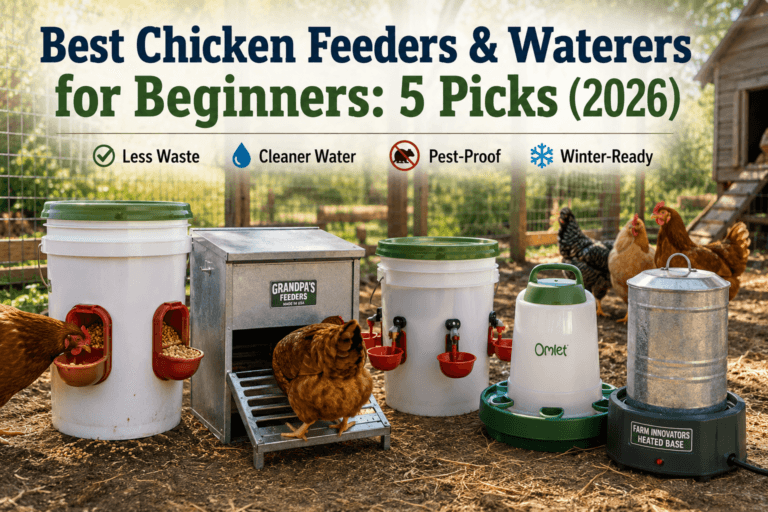
Don’t forget to check our Chicken Feeder and Waterer Guide for Beginners.
Quick Answer: The Safest DIY Chicken Feed Plan
- Complete feed should stay the foundation. For beginners, keep commercial starter, grower, all-flock, or layer feed as the main ration unless you are using a tested poultry formula.
- Use the 80 to 90 percent rule. Keep complete feed at about 80 to 90 percent of daily intake. Homemade extras should stay small and measured.
- Laying hens need steady protein and calcium. Layer diets generally need at least 14 percent protein, and many backyard layer feeds sit closer to 16 percent. Always check the feed tag.
- Treats and scratch are not complete feed. Grains, kitchen scraps, mealworms, and garden greens can help, but they dilute nutrition if they replace too much complete feed.
- Use oyster shell and grit separately. Oyster shell supplies calcium. Grit helps the gizzard grind whole grains and forage. They are not the same thing.
- Avoid moldy feed. Mold-contaminated grains and improperly stored feed can expose birds to mycotoxins.
- If egg production drops, simplify. Go back to complete feed, clean water, free-choice oyster shell, and grit only for two weeks.
DIY Chicken Feed vs. Chicken Scratch: What Is the Difference?
This is where many beginners get confused.
DIY chicken feed sounds like a complete homemade ration, but most backyard chicken keepers are actually making homemade chicken scratch or a feed supplement. Those are not the same thing.
A complete chicken feed is balanced for protein, energy, calcium, phosphorus, salt, vitamins, minerals, and amino acids. It is designed to support growth, egg production, feathering, and daily health.
Chicken scratch is usually a mix of grains, seeds, and sometimes dried insects. It gives chickens energy and encourages natural scratching behavior, but it is not nutritionally complete.
Think of it this way:
| Type | What It Does | Can It Replace Complete Feed? |
|---|---|---|
| Complete feed | Balanced daily ration | Yes, this is the main feed |
| Homemade scratch | Grain and seed supplement | No |
| Garden scraps | Seasonal extras | No |
| Mealworms or larvae | Protein-rich treat | No |
| Oyster shell | Calcium supplement | No |
| Grit | Digestive aid | No |
The safest beginner approach is not to replace the whole feed bag. It is to keep complete feed as the anchor and use homemade ingredients in small, useful amounts.
Can You Make a Complete Homemade Chicken Feed?
Yes, you can make chicken feed completely from scratch, but it is not something to guess at.
A true homemade layer feed needs the right balance of:
- Protein
- Energy
- Calcium
- Phosphorus
- Salt
- Vitamins
- Trace minerals
- Amino acids, especially methionine
- Fresh, safe, mold-free ingredients
The problem is that chickens can look full even when the ration is incomplete. A feeder full of cracked corn, oats, bread, and scraps may look generous, but it can still leave hens short on protein, calcium, or minerals.
If you want to mix a complete homemade ration, use a tested poultry feed formula, a poultry nutritionist, a local extension specialist, or a premix designed for home ration mixing. Do not build the mineral side from internet guesses.
For most homesteads, the safer beginner method is this:
Beginner rule: Keep complete feed at 80 to 90 percent of the diet and use homemade ingredients for the remaining 10 to 20 percent.
That gives you room to use what you grow without risking the flock’s health or egg production.
What DIY Chicken Feed Can and Cannot Do
The simplest way to feed a small flock is a complete feed, because it is balanced for the bird’s age and purpose.
DIY chicken feed can help you use what your homestead already produces. It can turn garden greens, sprouted grains, sunflower seeds, squash, safe kitchen scraps, and insects into useful flock nutrition. It can also make feeding more interesting for hens that spend part of the day in a run.
What it cannot do, at least not casually, is replace a formulated feed without consequences.
The simplest way to feed a small flock is a complete feed, because it is balanced for the bird’s age and purpose. That matters more than it seems. A hen laying most days is sending protein, calcium, phosphorus, energy, and trace minerals into eggs while also maintaining feathers, muscle, bone, and immune function.
If you replace too much of that complete feed with cracked corn, oats, stale bread, or random scraps, the ration becomes weaker even if the feeder looks full. The flock may still eat eagerly. Chickens are not nutritionists. They will eat the easy, tasty parts first, then leave the balanced part behind.
For a beginner, DIY chicken feed should mean this:
- A complete feed matched to age and production stage.
- A small, measured homemade scratch blend.
- Safe greens and garden extras.
- Separate oyster shell for laying hens.
- Separate grit when birds eat whole grains, forage, or fibrous material.
- Dry, sealed storage.
That is less romantic than a burlap sack of hand-mixed grain, but it keeps the birds healthy.
Homemade Chicken Feed Ingredients Beginners Can Use
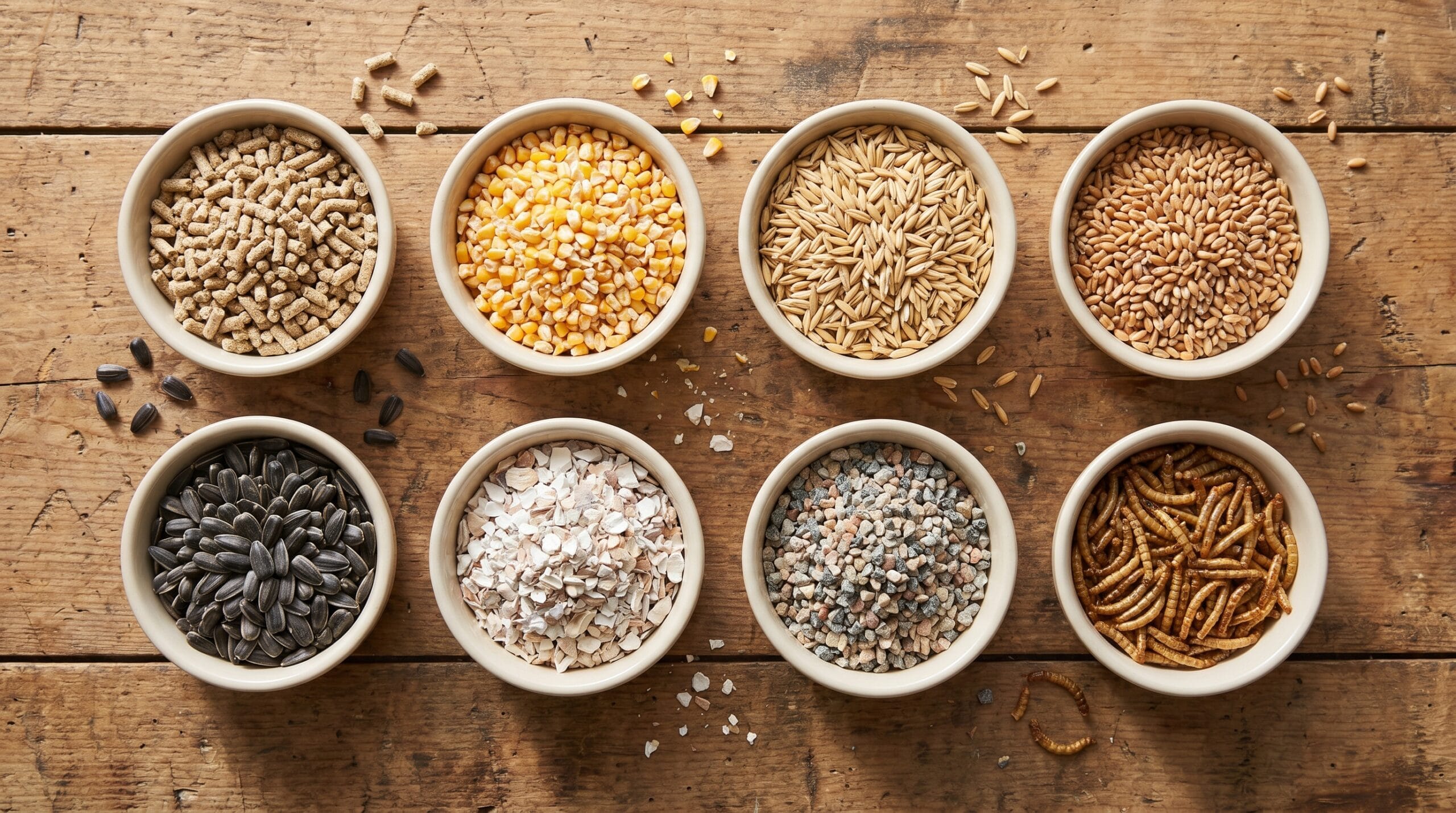
Most beginner feed mistakes come from thinking in ingredients instead of nutrients. Corn is not bad. Oats are not bad. Sunflower seeds are not bad. The problem is what happens when one ingredient crowds out what the hen needs.
Here are common homemade chicken feed ingredients and how to use them safely.
| Ingredient | Main Use | Beginner Notes |
|---|---|---|
| Complete layer feed | Main balanced ration | Keep this at 80 to 90 percent of daily intake for laying hens |
| All-flock feed | Main balanced ration for mixed flocks | Useful if you keep roosters, pullets, or different ages together |
| Cracked corn | Energy | Use sparingly; not enough protein for a complete diet |
| Whole oats | Energy and fiber | Good in small scratch blends, not as the main feed |
| Wheat berries | Energy | Useful scratch grain when fed with grit |
| Barley | Energy and variety | Better as a supplement than a main ration |
| Black oil sunflower seeds | Fat, energy, feather support | Helpful during molt or cold weather in small amounts |
| Mealworms | Protein treat | Easy to overfeed; use as a supplement only |
| Black soldier fly larvae | Protein and fat treat | Good protein extra, not a full feed |
| Garden greens | Moisture and enrichment | Feed fresh, not slimy or moldy |
| Pumpkin and squash | Seasonal treat | Remove leftovers before they rot |
| Sprouted grains | Winter enrichment | Must be rinsed, drained, and kept mold-free |
| Oyster shell | Calcium | Offer separately for laying hens |
| Poultry grit | Digestion | Offer separately when birds eat whole grains, greens, or forage |
The goal is not to use every ingredient. The goal is to understand what each one does before adding it to the feeder.
The Nutrients Chickens Actually Need
A safe homemade chicken feed plan starts with nutrients, not just ingredients.
Protein
Extension guidance notes that layer diets should contain at least 14 percent protein to maintain egg production.
Protein supports growth, egg production, feathering, and repair. Layer diets should generally contain at least 14 percent protein to maintain egg production. Many common backyard layer feeds are labeled around 16 percent crude protein.
That does not mean every bite needs to be 16 percent protein. It means the whole day’s ration needs to land in the right range. Corn is usually too low in protein to carry a laying flock by itself. Oats, wheat, barley, and scratch grains are also not enough alone.
Good protein helpers include soybean meal, field peas where locally appropriate, black soldier fly larvae, mealworms, fish meal in very small amounts, and complete feed. For a beginner, complete feed is the easiest way to avoid a hidden protein gap.
Energy
Energy mostly comes from grains and fats. Corn, wheat, oats, barley, and sunflower seed all help here. Energy is where many homemade mixes go heavy because these ingredients are easy to find and easy to store.
Too much energy with not enough protein can lead to overweight hens and fewer eggs. In cold weather, a small afternoon scratch feeding can be useful because birds burn more energy staying warm. It should not replace the morning layer feed.
Calcium
Laying hens need calcium for eggshells. The cleanest beginner method is free-choice oyster shell in a separate dish, not mixed into every ration. Hens that need it will take it. Birds that do not need extra calcium, such as roosters, chicks, and pullets not yet laying, can avoid it.
Do not use oyster shell as grit. Grit helps the gizzard grind feed. Oyster shell is mainly a calcium supplement. They belong in separate dishes.
Vitamins and Minerals
This is where homemade complete feeds get tricky. Vitamins, salt, phosphorus, trace minerals, and amino acids like methionine are not easy to balance by eye. A scoop of this and a coffee can of that will not tell you whether the ration is actually complete.
If you want to mix a true complete feed, start with a poultry nutritionist, a local extension specialist, or a tested premix designed for home ration mixing. Do not build the mineral side from internet guesses.
A Safe Beginner DIY Chicken Feed Plan
This plan is not a full replacement ration. It is a practical way to use homestead ingredients while keeping complete feed as the nutritional anchor.
For adult laying hens:
| Feed Part | Amount | Purpose |
|---|---|---|
| Complete layer feed | 80 to 90 percent of daily intake | Main balanced ration |
| Homemade scratch blend | 5 to 10 percent | Energy, foraging behavior, variety |
| Greens and garden extras | Small handfuls | Moisture, interest, seasonal nutrients |
| Protein extras | 1 to 3 times per week | Support during molt, cold weather, or low forage periods |
| Oyster shell | Free-choice | Calcium for laying hens |
| Grit | Free-choice if eating grains or forage | Gizzard grinding |
Example for Six Laying Hens
An adult laying hen eats roughly 0.25 lb of feed per day, so six hens usually eat about 1.5 lb daily.
If you are replacing 10 percent of that with a homemade scratch blend, that is only about 2.4 oz total for the whole flock per day.
That is less than most beginners expect.
That small amount is the point. It gives you room to use home ingredients without knocking the ration out of balance.
Simple Homemade Chicken Scratch Recipe
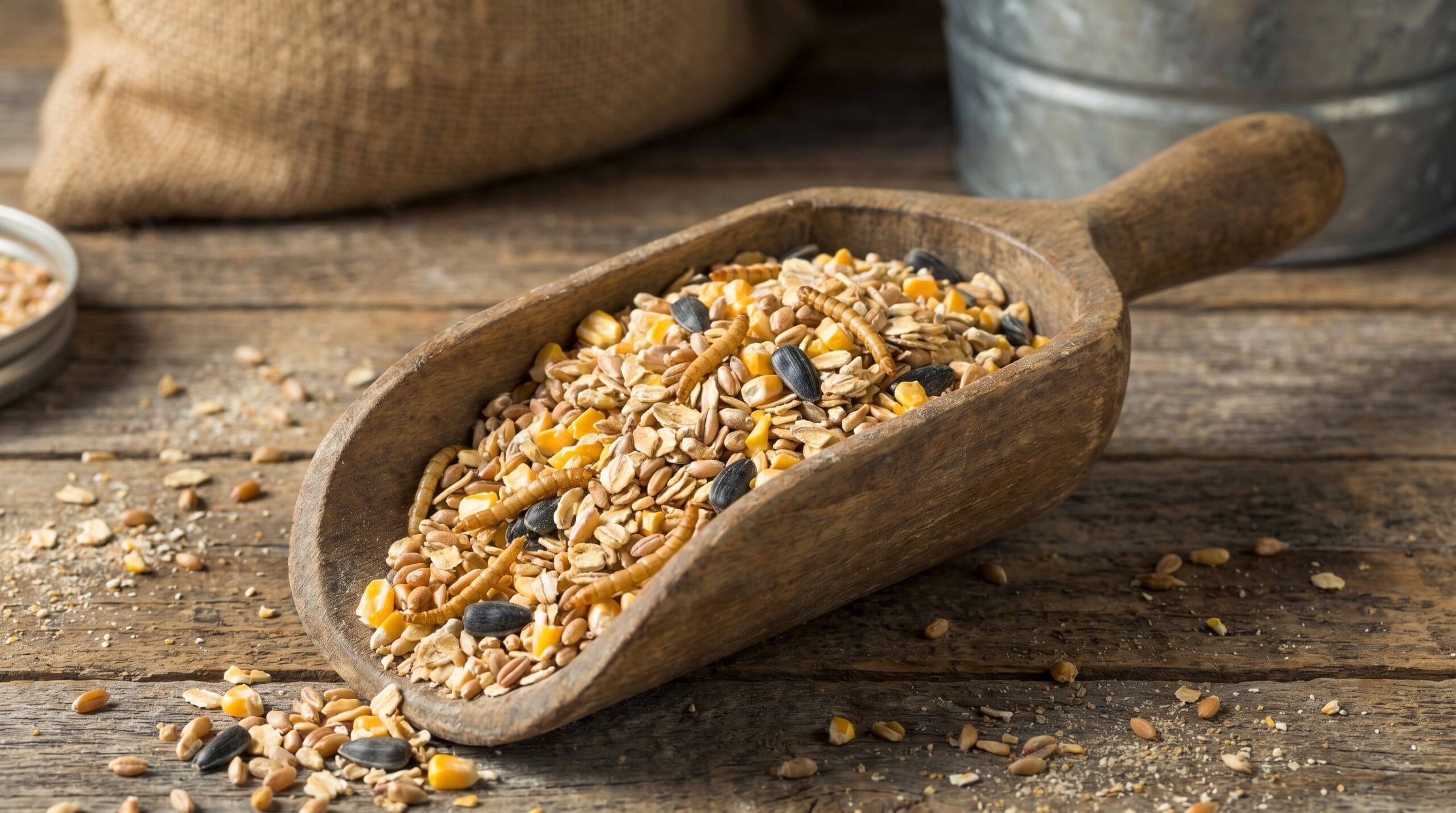
This is a homemade chicken scratch recipe, not a complete chicken feed recipe. Think of it as a controlled side dish.
Here is a beginner-friendly 5 lb batch:
| Ingredient | Amount |
|---|---|
| Cracked corn | 2 lb |
| Whole oats | 1.5 lb |
| Wheat berries or barley | 1 lb |
| Black oil sunflower seeds | 8 oz |
| Dried mealworms or black soldier fly larvae | 4 to 8 oz |
Mix it well and store it in a sealed container. Feed it in the afternoon after hens have already eaten their complete feed. The goal is to encourage scratching and use a few useful ingredients, not fill them up before they eat the balanced ration.
If your hens are on pasture or a large run, scatter a small amount so they work for it. If they are in a small run, use a pan or a treat ball so the mix does not disappear into wet bedding.
Do not make scratch available all day. Scratch grains dilute the nutrition in complete feeds when birds eat too much of them.
How Much DIY Feed Can Chickens Eat?
For a beginner flock, homemade extras should usually stay around 10 percent of the daily diet. In some situations, you may be able to go closer to 20 percent, but only if the birds are healthy, laying well, and still eating plenty of complete feed.
Here is a simple guide:
| Flock Size | Approx. Daily Feed Intake | 10 Percent Homemade Extras |
|---|---|---|
| 3 hens | 0.75 lb per day | About 1.2 oz |
| 6 hens | 1.5 lb per day | About 2.4 oz |
| 12 hens | 3 lb per day | About 4.8 oz |
| 20 hens | 5 lb per day | About 8 oz |
These amounts are for the whole flock, not per bird.
If that feels small, remember that the homemade portion is meant to supplement the ration, not replace it.
What to Grow or Save for Chicken Feed
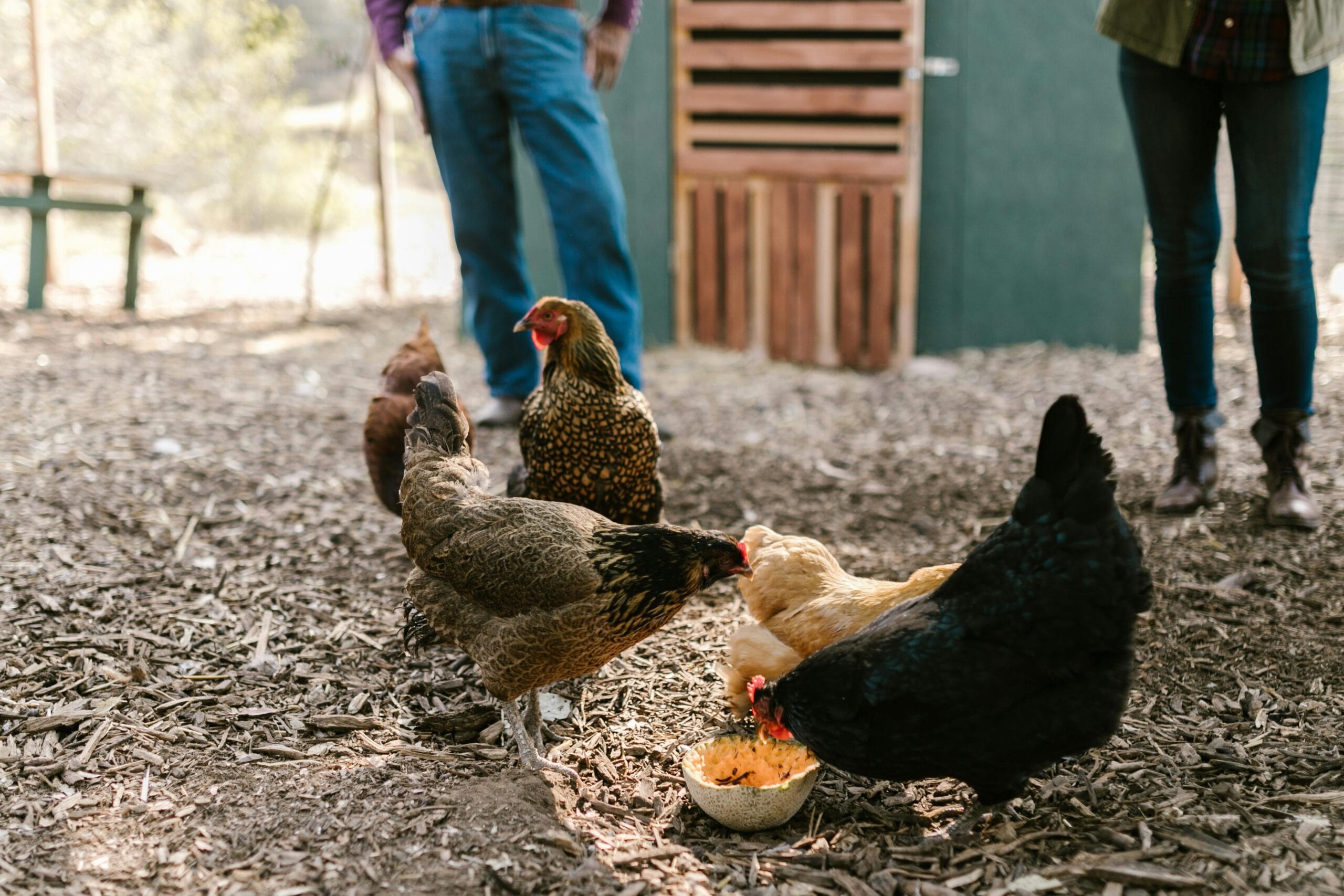
The best homestead feed extras are the ones you can produce reliably without creating storage problems.
Garden Greens
Lettuce trimmings, kale leaves, beet greens, carrot tops, weeds from unsprayed areas, and young grass clippings can all be useful. Feed them fresh, not slimy. Avoid clippings from lawns recently treated with pesticides or herbicides.
Greens are especially useful in winter if your hens are locked into a bare run. They do not replace layer feed, but they add moisture and keep birds busy.
Sunflowers and Seed Heads
Black oil sunflower seeds are easy to store and popular with hens. Whole seed heads can be hung in the run as a boredom breaker. Use them as a treat, especially during molt or cold weather.
Pumpkins and Squash
Pumpkins, winter squash, and summer squash are good seasonal extras. Cut them open so birds can access the flesh and seeds. Remove leftovers before they rot.
Sprouted Grains
Sprouted wheat, oats, or barley can stretch feed interest during winter, but they need clean handling. Rinse well, drain well, and feed before anything smells sour or develops mold. If a sprout tray smells off, throw it out.
Bugs and Larvae
Mealworms and black soldier fly larvae are high-value treats, especially during molt. They are also easy to overfeed. A spoonful per few birds is plenty for a normal day.
What Not to Put in DIY Chicken Feed
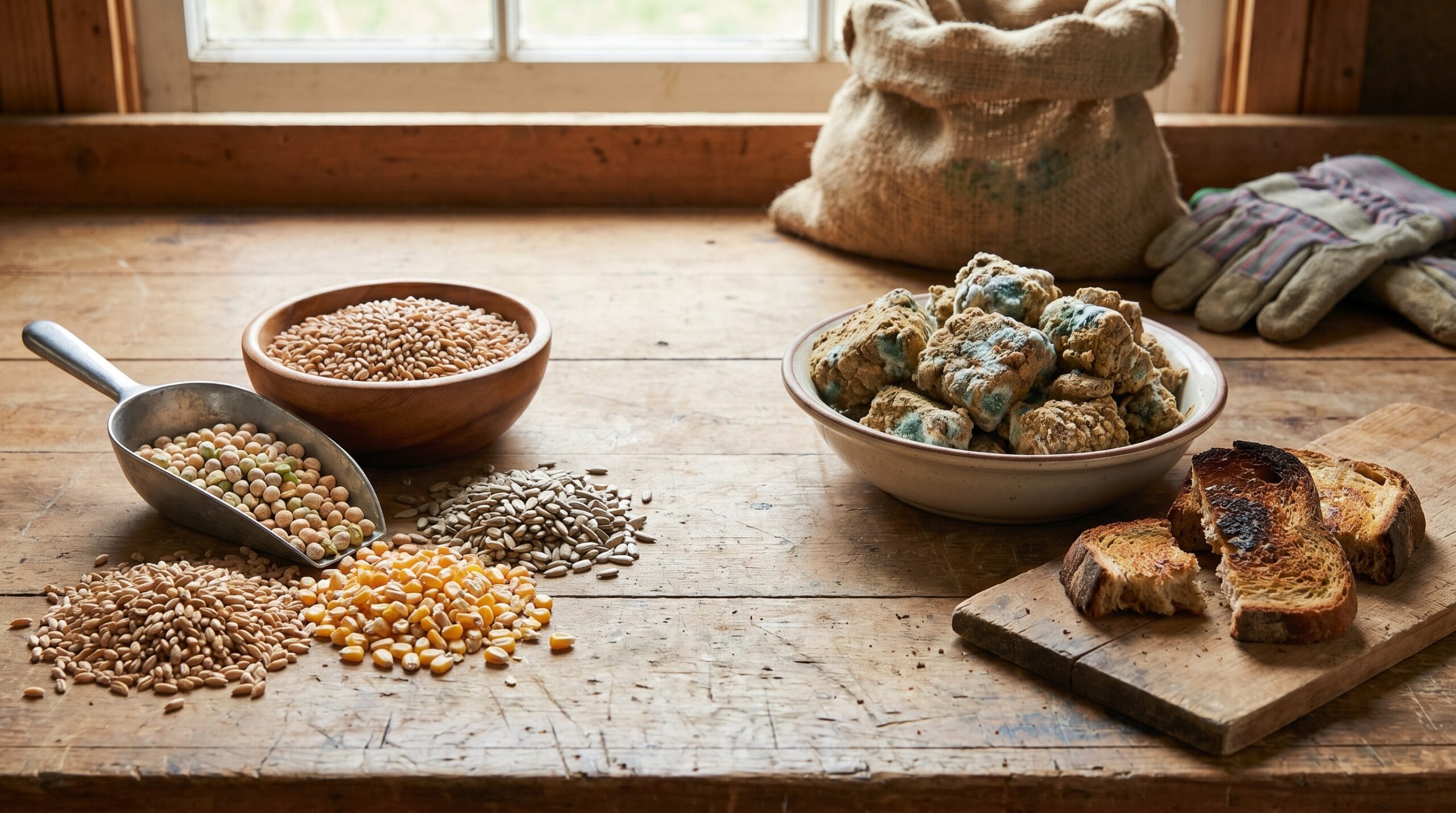
The wrong ingredient usually causes trouble in one of three ways: it dilutes the ration, goes moldy, or introduces something birds should not eat.
Avoid these:
- Moldy grain, damp pellets, or feed with a sour smell.
- Large amounts of bread, pasta, crackers, or cereal.
- Salty processed foods.
- Candy, chocolate, coffee grounds, or alcohol.
- Rotten produce.
- Lawn clippings from treated grass.
- Raw dried beans unless you have species-specific guidance from extension.
- Big daily portions of scratch grain.
Mold deserves special attention. Mycotoxins in poultry feed can have serious negative effects on animal health, and the risk increases when grains or feed are improperly stored. If you open a bin and smell must, do not try to save the batch.
Also avoid the common mistake of feeding too many kitchen scraps because they feel free. Free food is not free if egg production drops or birds lose condition.
Starter, Grower, Layer, and All-Flock Feed Are Not Interchangeable
Chicks, pullets, layers, and meat birds do not need the same ration.
Chicks are typically fed starter for the first 6 to 8 weeks, then grower or developer feed after that. Pullets usually move to layer feed once they begin laying, often around 18 to 20 weeks of age. That timing matters because layer feed has more calcium than young growing birds need.
For beginners, keep it simple:
| Bird Stage | Main Feed | DIY Extras |
|---|---|---|
| Chicks, 0 to 6 or 8 weeks | Chick starter | None or tiny safe treats with chick grit |
| Pullets, 8 to 20 weeks | Grower/developer feed | Very limited greens or grains with grit |
| Laying hens | Layer feed | Controlled scratch, greens, protein extras |
| Mixed flock with rooster | All-flock feed | Free-choice oyster shell for hens |
If you keep roosters with laying hens, an all-flock feed plus free-choice oyster shell is often cleaner than feeding layer feed to every bird. Roosters do not need the extra calcium hens use for shells.
Storage, Cost, and Waste Control
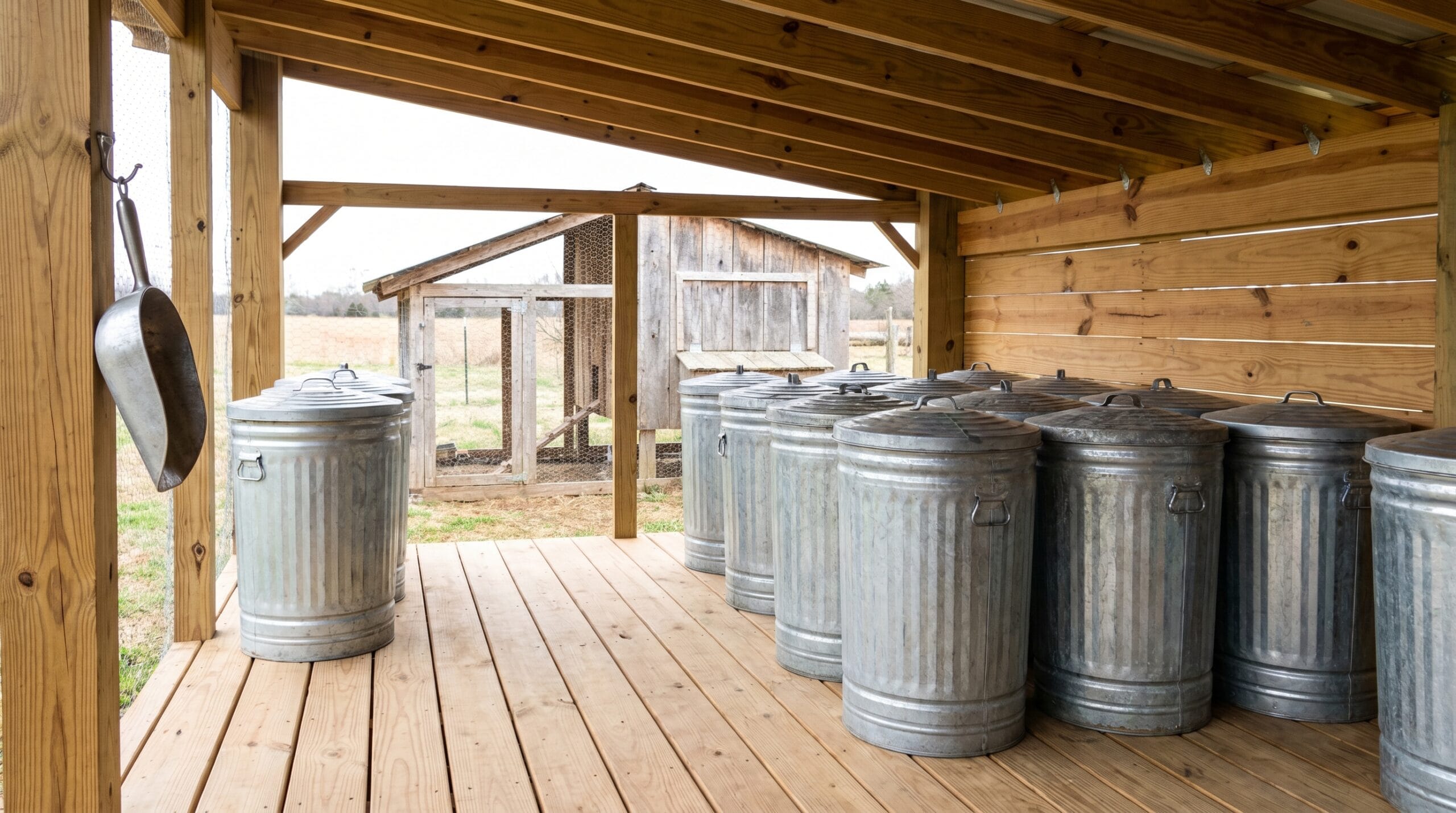
Before mixing anything, fix storage and waste. That is where most beginners save money fastest.
Store feed in a metal bin or heavy plastic container with a tight lid. Keep it dry, shaded, and off damp ground. Buy only what your flock can finish in roughly four to six weeks unless you have excellent storage. Feed that sits too long loses freshness and becomes more attractive to pests.
A 6-hen flock eating about 1.5 lb per day goes through a 50 lb bag in about 33 days. A 12-hen flock goes through the same bag in about 16 to 17 days. If your actual use is far higher than that, the problem may be waste, mice, wild birds, or a feeder set too low.
Start with the easy fixes:
- Hang the feeder at the height of a hen’s back.
- Fill hanging feeders only halfway to reduce beaking and scratching.
- Keep feed under cover.
- Use a treadle feeder if mice or wild birds are stealing feed.
- Clean spilled feed before it gets wet.
For equipment choices, the chicken feeder and waterer guide walks through feeder types, waterers, winter setups, and sizing by flock size.
DIY feed rarely saves money if it causes waste. A good feeder usually saves more than a complicated recipe.
Common DIY Chicken Feed Mistakes
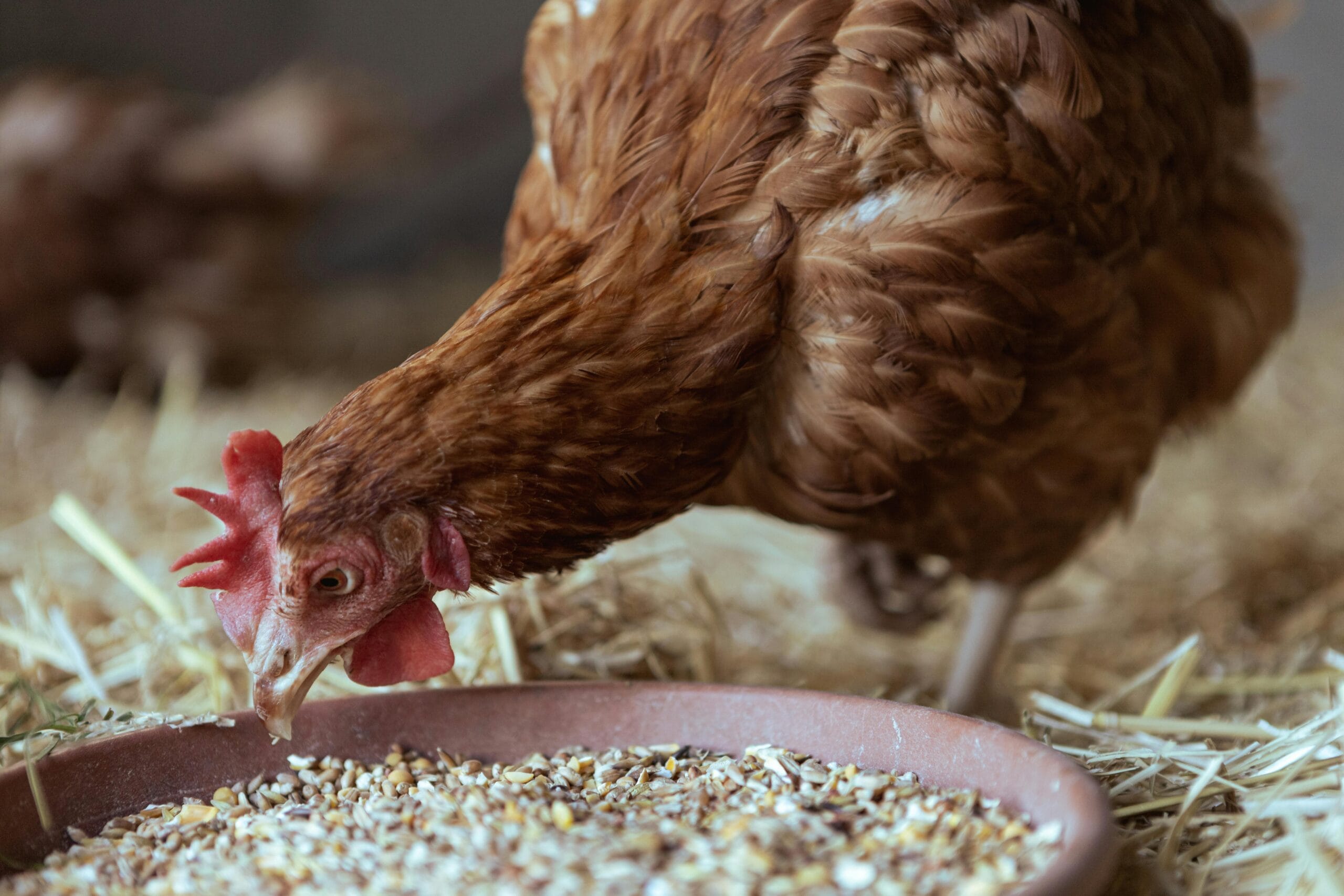
Avoiding mistakes is often more important than finding the perfect recipe.
Mistake 1: Replacing Too Much Complete Feed
This is the most common problem. A little scratch is fine. A feeder full of scratch is not. Keep complete feed as the main ration.
Mistake 2: Feeding Too Much Corn
Corn gives energy, but it does not provide everything laying hens need. Too much corn can dilute protein and minerals.
Mistake 3: Forgetting Calcium
Laying hens need calcium for strong shells. Offer oyster shell separately so hens can take what they need.
Mistake 4: Confusing Grit and Oyster Shell
Grit helps digestion. Oyster shell supplies calcium. They are not interchangeable.
Mistake 5: Saving Moldy Feed
Never feed moldy grain, sour sprouts, damp pellets, or musty scraps. When in doubt, throw it out.
Mistake 6: Feeding Kitchen Scraps Like a Main Meal
Scraps can be useful, but they are inconsistent. Too many scraps can reduce egg production and overall condition.
Signs Your Feed Mix Is Not Working
Some egg changes are related to diet, but breed also matters. If you are choosing a flock for steady production, see this guide to the best chicken breeds for eggs.
A feed problem usually shows up slowly. Watch the flock, not just the feeder.
Possible signs include:
- Egg production drops for more than a week without an obvious seasonal reason.
- Eggshells become thin, rough, or easy to crack.
- Hens lose weight even while eating.
- Feathers look dull or slow to regrow after molt.
- Birds act hungry immediately after feeding.
- Droppings become unusually loose after new treats.
- Smaller or lower-ranking hens get pushed away from the best feed.
One weird egg is not a crisis. A pattern is worth correcting.
If you suspect your DIY mix is the issue, remove extras for two weeks. Offer complete feed, clean water, oyster shell, and grit only. If shells, droppings, or energy improve, your homemade extras were probably too much or poorly balanced.
If a bird is weak, not eating, wheezing, standing fluffed up, or losing weight, treat that as a health issue, not a recipe issue. Call a poultry vet or your local extension office.
From the In Homestead Shop
Starting your first flock?
The Backyard Chickens Starter Guide covers your whole first year — feeding by age, plus breeds, feed, and daily care — sourced from cooperative extension guidance and the Merck Veterinary Manual, with two printables.
The Free Garden Starter Pack
Five printable pages that take the guesswork out of a first season, plus a short email every week or two when something is worth planting, picking, or putting up.
- A garden planning worksheet you can actually fill in
- A seed-starting and planting calendar
- A harvest log to track what really produced
No spam, ever. Unsubscribe in one click.
Thank you. You are on the list.
Your Garden Starter Pack is ready right now. Grab it here:
Download the pack (PDF)Keep an eye on your inbox. The next seasonal guide lands there first.
Frequently Asked Questions About DIY Chicken Feed
Can I make my own chicken feed completely from scratch?
You can make chicken feed from scratch, but a true complete ration needs a tested formula with balanced protein, energy, calcium, phosphorus, salt, vitamins, trace minerals, and amino acids. Beginners are usually safer keeping complete feed as the base and using homemade ingredients as supplements.
What is the cheapest way to feed chickens?
The cheapest safe way to feed chickens is usually to reduce waste first, then use controlled home-grown extras. A hanging or treadle feeder, dry storage, and measured scratch often save more money than replacing complete feed with random grains.
Is homemade chicken feed cheaper?
Homemade chicken feed is not always cheaper once you include protein, minerals, storage, waste, and the risk of unbalanced nutrition. For many backyard flocks, the biggest savings come from preventing spilled feed, keeping wild birds and rodents out, and growing small seasonal extras.
Can chickens live on corn and kitchen scraps?
Chickens should not live on corn and kitchen scraps. Corn is mostly energy, and scraps are inconsistent. A laying flock fed that way can develop protein, calcium, and mineral gaps.
Can chickens eat only garden scraps?
No. Garden scraps are treats and supplements, not a complete ration. They can add variety, moisture, and enrichment, but laying hens still need balanced feed.
How much scratch can I feed my chickens?
Scratch should be a small part of the diet, roughly 5 to 10 percent for most beginner flocks. Feed it after hens have eaten complete feed, and give only what they clean up quickly.
What is the best protein for homemade chicken feed?
Good protein helpers include complete feed, black soldier fly larvae, mealworms, soybean meal, field peas where appropriate, and small amounts of fish meal in tested formulas. Protein treats can help, but they do not automatically make a homemade mix balanced.
Do chickens need grit with homemade feed?
Chickens need grit if they eat whole grains, pasture plants, fibrous greens, or kitchen scraps. Birds eating only commercial pellets or crumbles may not need extra grit, but a free-choice dish is cheap insurance for backyard flocks.
Should I mix oyster shell into homemade feed?
Do not mix oyster shell into feed for every bird. Offer it free-choice in a separate dish so laying hens can take what they need and roosters, chicks, or pullets can avoid excess calcium.
What should I feed chickens if I run out of feed?
For a very short emergency, chickens can eat safe grains, cooked eggs, greens, squash, or other safe scraps for a day. But this should not become the normal ration. Get complete feed as soon as possible, especially for laying hens.
Why did egg production drop after I changed feed?
Egg production can drop when hens get too little protein, calcium, energy, or overall balanced nutrition. Seasonal changes, molt, stress, predators, heat, cold, and age can also affect laying. If the drop started after adding homemade feed or scratch, remove extras for two weeks and return to complete layer feed, clean water, oyster shell, and grit.
Equipment
What You Need
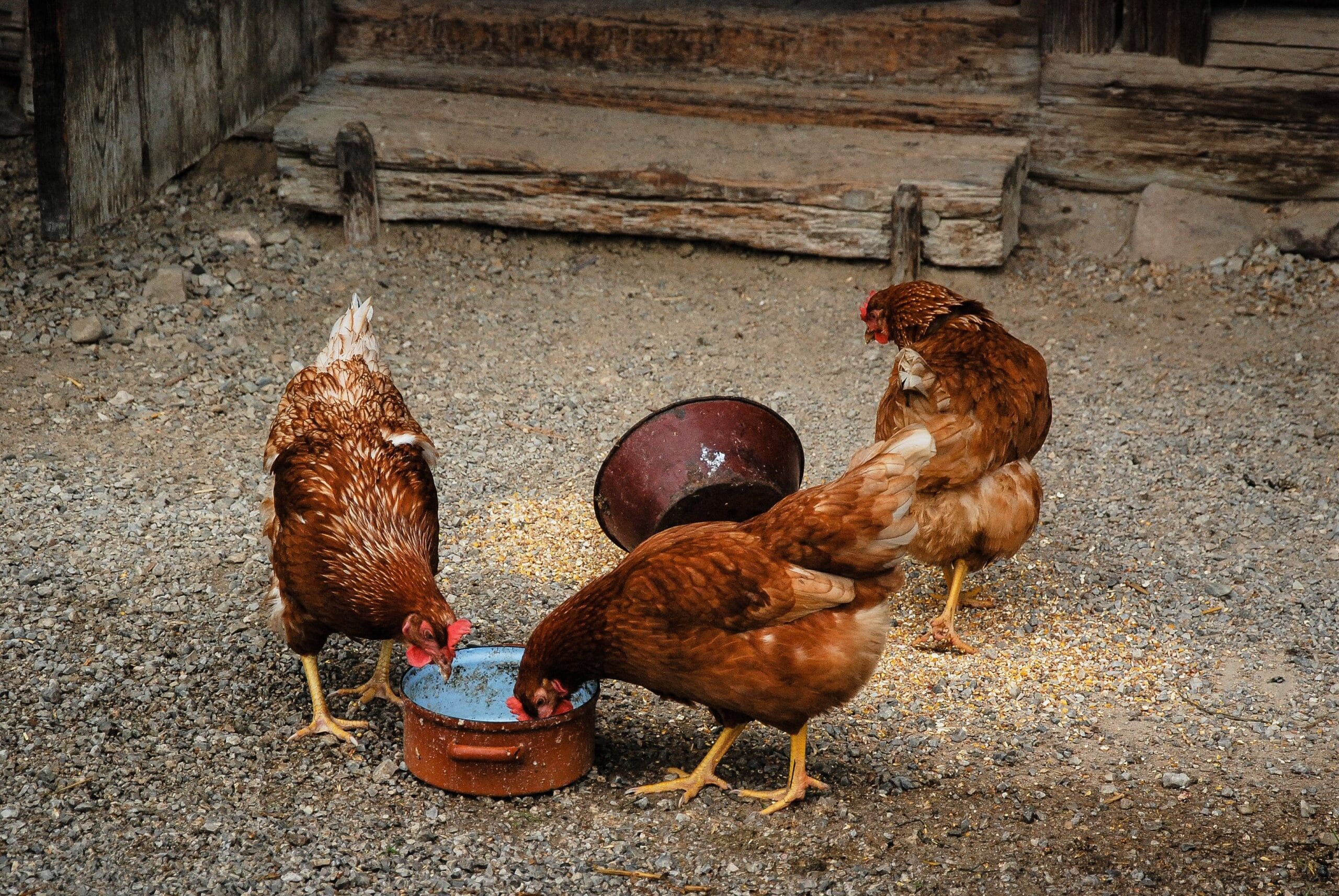
- A feeder and waterer sized to your flock. We compared five of each for beginners. The short version is that a hanging or port-style feeder wastes far less than an open trough.
- Feed, grit and oyster shell. Buy these locally. They are heavy, cheap per pound, and every farm store carries them, so shipping rarely makes sense. Oyster shell goes in a separate dish rather than mixed into the feed.
- An airtight bin for storing mixed feed. A metal can with a tight lid keeps rodents out, which matters more once you are mixing your own.
Conclusion: Start With the Scoop, Not the Spreadsheet
DIY chicken feed does not have to begin with a complicated formula. For a beginner flock, it starts with noticing what is already happening at the feeder: how fast the bag empties, how much feed lands in the bedding, whether shells are strong, and whether every bird gets a fair chance to eat.
Keep the complete feed. Add a small homemade scratch blend. Grow a few useful extras. Store everything dry. Watch the birds for a few weeks before changing anything else.
That slower approach may not feel as self-sufficient as mixing a full ration from a dozen sacks of grain, but it is the one that keeps hens laying, healthy, and much less expensive to feed over time.