What Is the Ideal Size of Hen Nesting Box?
Opening your chicken coop and finding clean, smooth eggs tucked neatly into the nesting box is one of the best little rewards of keeping chickens. But when your hens start laying eggs on the floor, crowding into one corner, cracking shells, or ignoring the boxes completely, it can quickly become frustrating.
The good news is that the problem is often simple. Your hens may not feel comfortable with the size of hen nesting box, the placement, the bedding, or the number of boxes available. A nesting box does not need to be fancy, but it does need to feel safe, quiet, and properly sized.
In this guide, you’ll learn the ideal chicken nesting box dimensions, how many boxes your flock needs, where to place them, what bedding to use, and how to build nesting boxes for hens at home.
Table of Contents
What Is the Ideal Size of Hen Nesting Box?
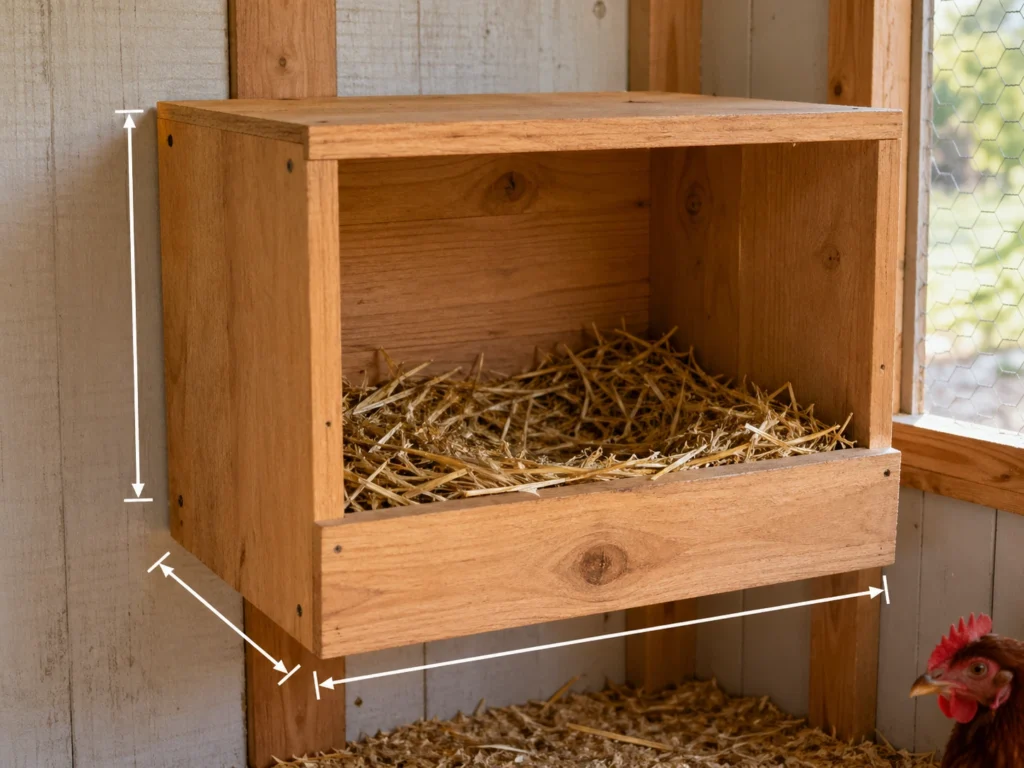
For most backyard chickens, the ideal size of hen nesting box is about 12 inches wide, 12 inches deep, and 12 inches high. This gives a standard laying hen enough room to step inside, turn around, settle down, and lay comfortably.
Penn State Extension recommends that chicken nests be at least 12 by 12 inches, with larger nesting space for bigger birds. It also notes that boxes should be large enough for the bird to enter and sit comfortably, but not so large that multiple hens crowd inside and increase egg breakage.
Quick Answer
For most standard hens, use:
| Hen Type | Recommended Nesting Box Size |
|---|---|
| Bantam hens | 10 x 10 x 10 inches |
| Standard laying hens | 12 x 12 x 12 inches |
| Large breeds | 14 x 14 x 14 inches or slightly larger |
| Roll-out nest boxes | Around 12 x 12 inches per hen space |
A good nesting box should feel cozy, not cramped. Your hen should be able to sit naturally without her tail hanging out, but the box should not be so roomy that two or three hens try to squeeze in at the same time.
Chicken Nesting Box Dimensions: Why Size Matters
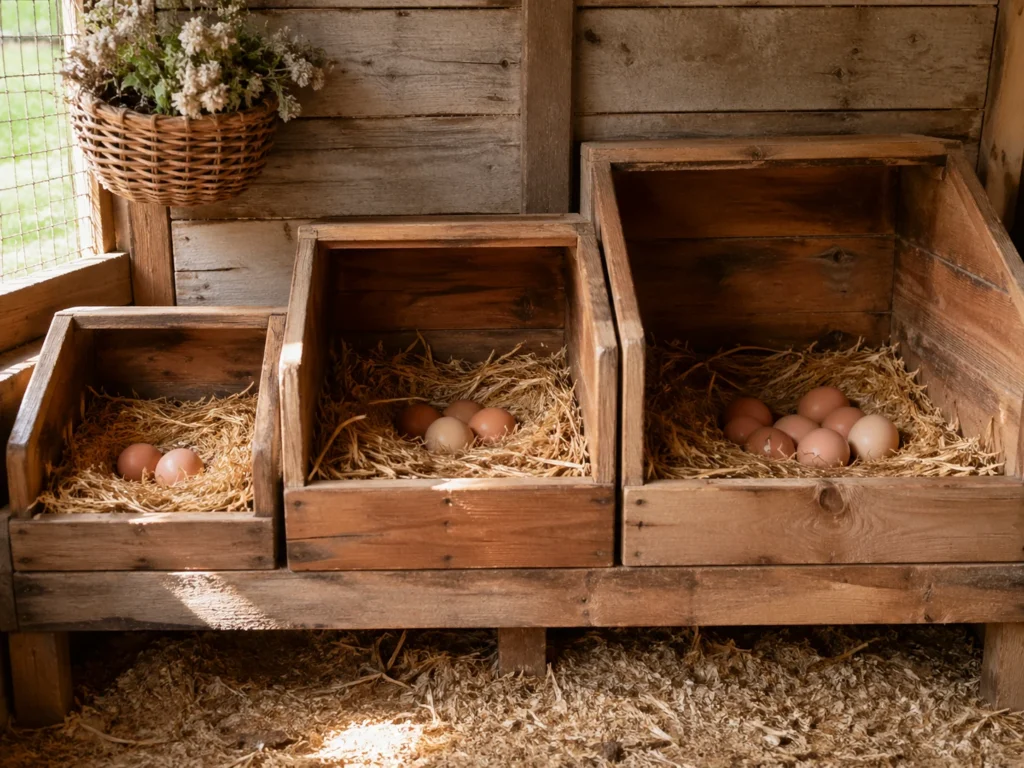
The right chicken nesting box dimensions help your hens feel secure. Chickens naturally look for quiet, darker, protected spots when they are ready to lay. If the box feels too exposed, too small, too dirty, or too busy, your hens may choose the coop floor, a hidden corner, or even an outdoor spot instead.
A properly sized nesting box can help reduce:
- Floor eggs
- Broken eggs
- Dirty eggs
- Egg eating
- Hen stress
- Crowding in one box
- Hens sleeping where they should be laying
University of Maryland Extension gives a slightly smaller guideline, noting that one 10 inch x 10 inch nest box can be adequate for four to five chickens. It also recommends clean, dry nesting material such as straw or pine shavings.
That means you have some flexibility. A small flock of average hens may do well with 12 x 12 inches, while smaller chicken breeds can use slightly smaller boxes. Large breeds, such as Brahmas, Jersey Giants, or large Orpingtons, usually need more room.
How Big Should a Nesting Box Be?
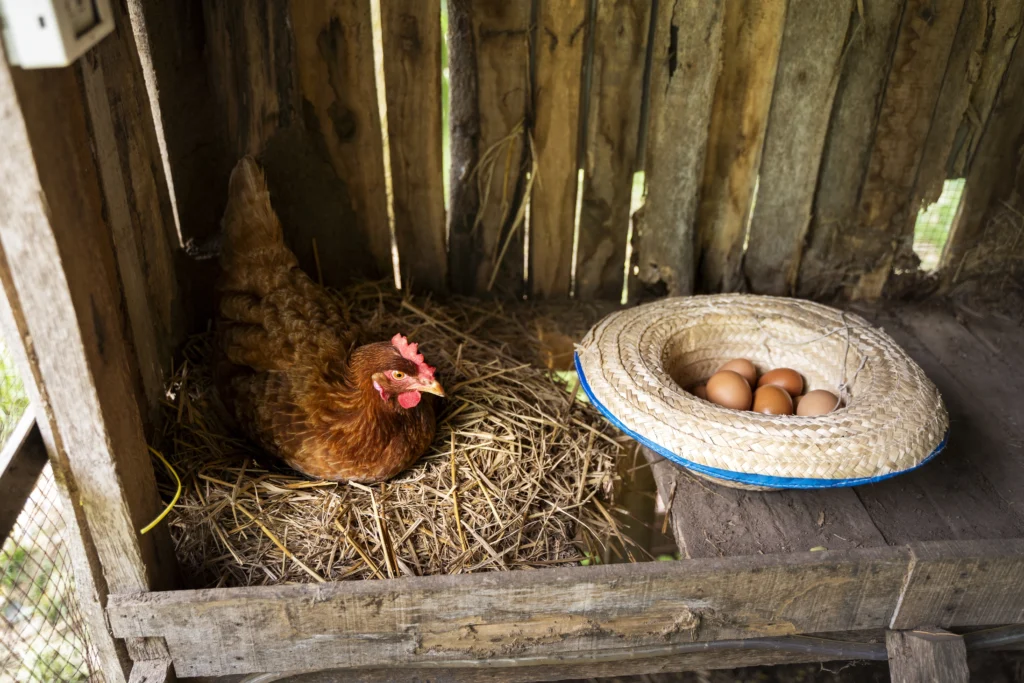
A common question is: how big should a nesting box be for laying chickens?
The best answer is this: big enough for comfort, small enough for privacy.
Your hen should be able to:
- Walk into the box easily
- Turn around without getting stuck
- Sit with her body fully inside
- Feel protected on the sides and back
- Lay without being disturbed
If the nesting box is too small, your hen may avoid it. If it is too large, several hens may try to use it at once. That can lead to cracked eggs, messy bedding, and unnecessary stress.
Simple Sizing Rule
Use this as your starting point:
| Chicken Size | Best Nesting Box Size |
|---|---|
| Small chickens or bantams | 10 x 10 inches |
| Most backyard laying hens | 12 x 12 inches |
| Heavy breeds | 14 x 14 inches |
| Extra-large breeds | 14–16 inches wide |
The goal is not to create a large open cubby. The goal is to create a calm, private laying space your hens trust.
Nesting Box Size for Chickens by Flock Size
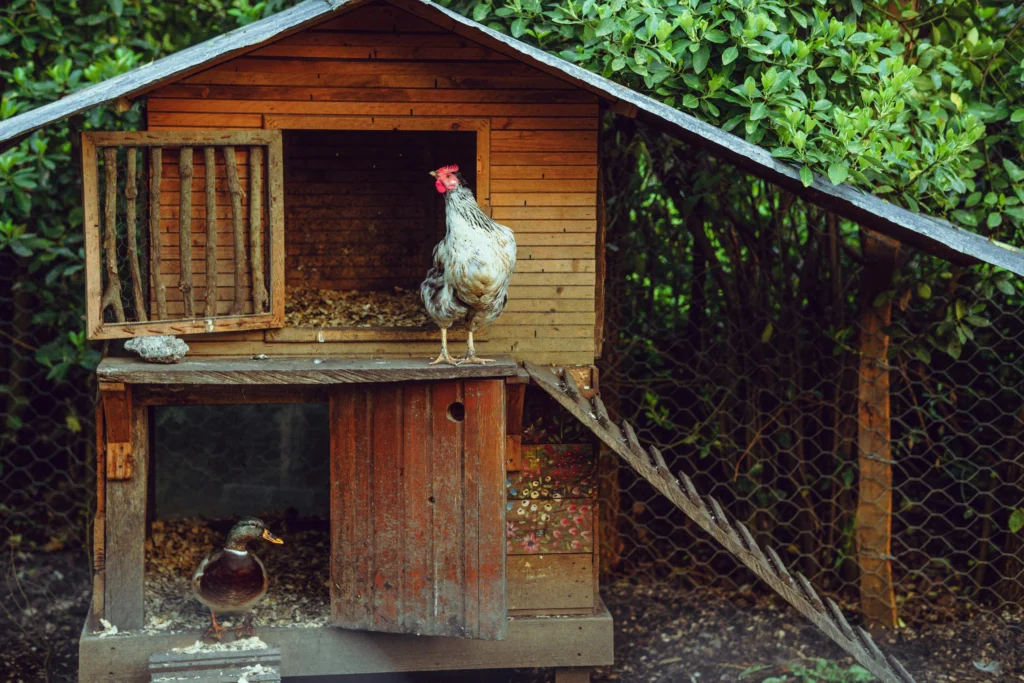
Choosing the right nesting box size for chickens is only part of the setup. You also need the right number of boxes.
Most small flocks do not need one box per hen. In fact, hens often pick a favorite box and line up for it even when other boxes are empty.
A common rule is to provide one nesting box for every four to five hens. Poultry Extension recommends one 12-inch-by-12-inch nest for every four or five hens and suggests placing nests at least 2 feet off the ground and away from roosts.
Nesting Box Quantity Guide
| Number of Hens | Suggested Nest Boxes |
|---|---|
| 2–4 hens | 1–2 boxes |
| 5–8 hens | 2 boxes |
| 9–12 hens | 3 boxes |
| 13–16 hens | 4 boxes |
| 17–20 hens | 5 boxes |
If you have a very small backyard flock, adding an extra box can still be helpful. It gives shy hens another option and reduces waiting time during busy laying hours.
Equipment
What You Need
- Aspen nesting pads sized for a 12 by 12 box. Excelsior pads let droppings fall through and cushion the eggs, so fewer crack and you are not scrubbing them. Lift the old one out, drop a fresh one in.
- A coop with the right nest box count. One box per three to four hens is the working rule. Our build guide covers dimensions, ventilation and predator-proofing.
- Clean bedding for the coop floor. Pine shavings or chopped straw. Buy it at a farm store rather than online, it is bulky and cheap.
Some links above are affiliate links. If you buy through them we earn a small commission at no extra cost to you, and it does not change what we recommend. As an Amazon Associate, we earn from qualifying purchases.
Where to Place Hen Nesting Boxes in the Coop
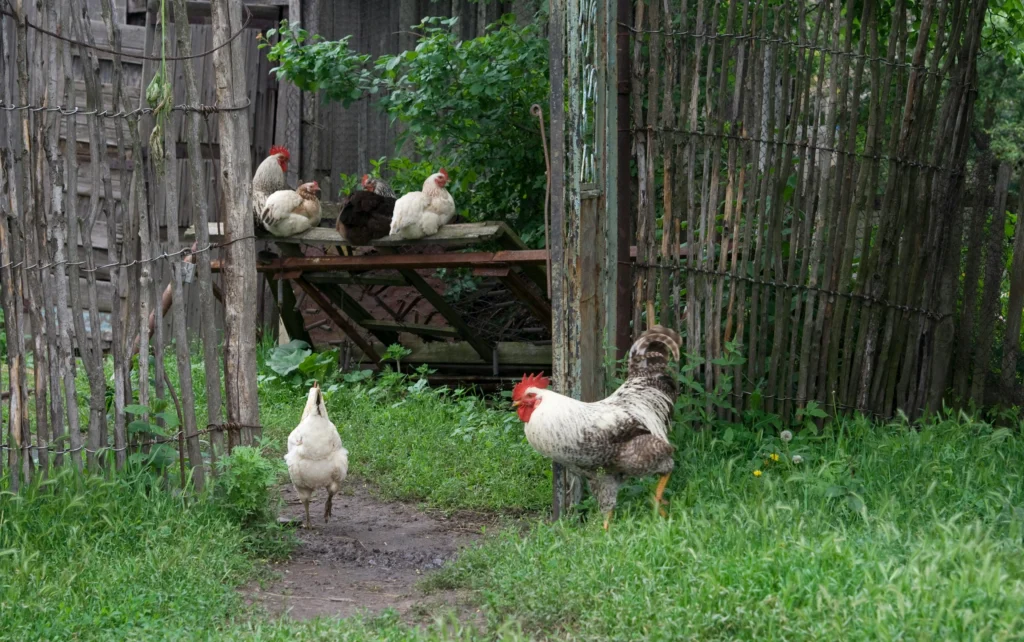
Even the perfect size of hen nesting box will not work well if the box is in the wrong place. Hens prefer calm, dim, low-traffic areas for laying. If the box sits near the coop door, feeder, waterer, or main scratching area, your hens may not feel settled enough to use it.
Best Placement Tips
Place your nesting boxes:
- In a quiet part of the coop
- Away from direct bright light
- Away from feeders and waterers
- Away from heavy foot traffic
- Lower than the roosting bars
- Far enough from roosts to keep them clean
- At a height your hens can reach comfortably
University of Maryland Extension recommends separating nesting areas from roosting areas so birds do not sleep in the nesting boxes. Dirty nesting boxes often happen when hens roost where they should be laying.
Penn State Extension also advises placing nests away from roosts to reduce dirty eggs and egg breakage.
Placement Table
| Placement Factor | Recommended Setup |
|---|---|
| Height from floor | Around 18–24 inches |
| Light level | Dim or shaded |
| Roost position | Higher than nest boxes |
| Distance from roosts | Separated from sleeping area |
| Access | Easy for hens and egg collection |
| Bedding | Clean, dry, and soft |
You do not want hens sleeping in the nesting boxes. Once they start, the boxes can become dirty quickly, and dirty boxes often mean dirty eggs.
Best Bedding for Hen Nesting Boxes
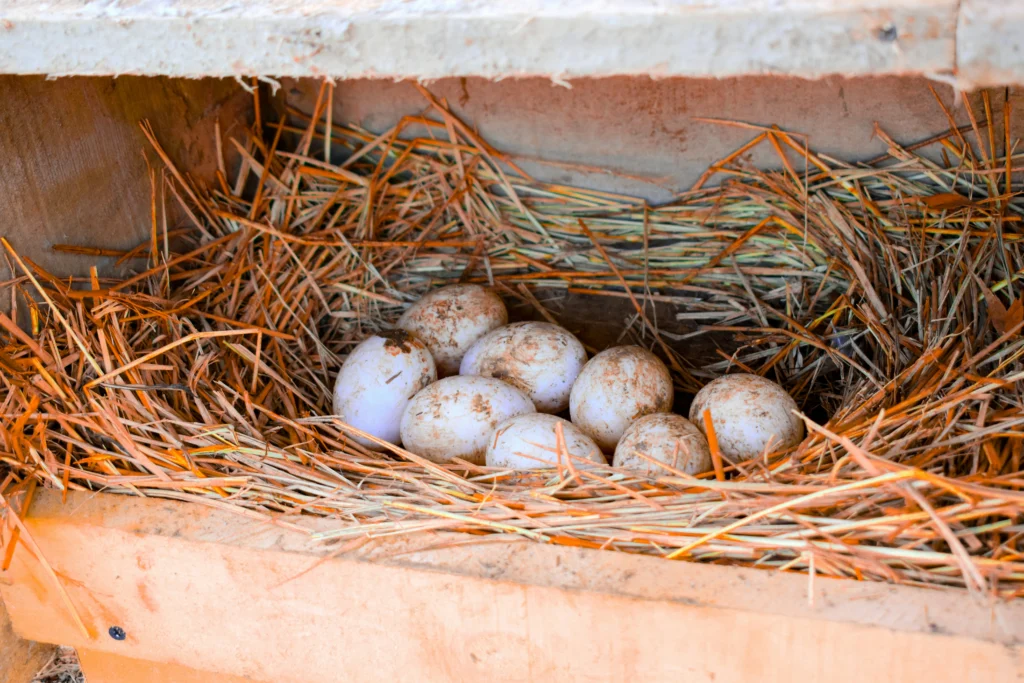
Bedding matters because it protects the egg after it is laid. It also helps the box feel inviting. A hard wooden floor may cause eggs to crack, while wet or dirty bedding can make eggs messy and less sanitary.
Good bedding options include:
- Pine shavings
- Straw
- Hemp bedding
- Nesting pads
- Chopped hay
- Wood shavings
University of Maryland Extension recommends keeping one to two inches of clean, dry nesting material in the nest. Poultry Extension recommends keeping 2 inches of clean, dry nesting material in nests as protective egg padding.
Bedding Comparison Table
| Bedding Type | Pros | Cons |
|---|---|---|
| Pine shavings | Absorbent, easy to replace | Can scatter out of the box |
| Straw | Soft, traditional, affordable | Can hold moisture if not changed |
| Hemp bedding | Absorbent and lower dust | Usually costs more |
| Nesting pads | Easy to clean and reusable | Less natural than loose bedding |
| Chopped hay | Soft and accessible | Can mold if damp |
Add a small front lip to the nesting box to keep bedding and eggs from rolling out. Penn State Extension recommends a 3- to 4-inch lip at the front of nests to hold nesting material inside.
How to Build Nesting Boxes for Hens
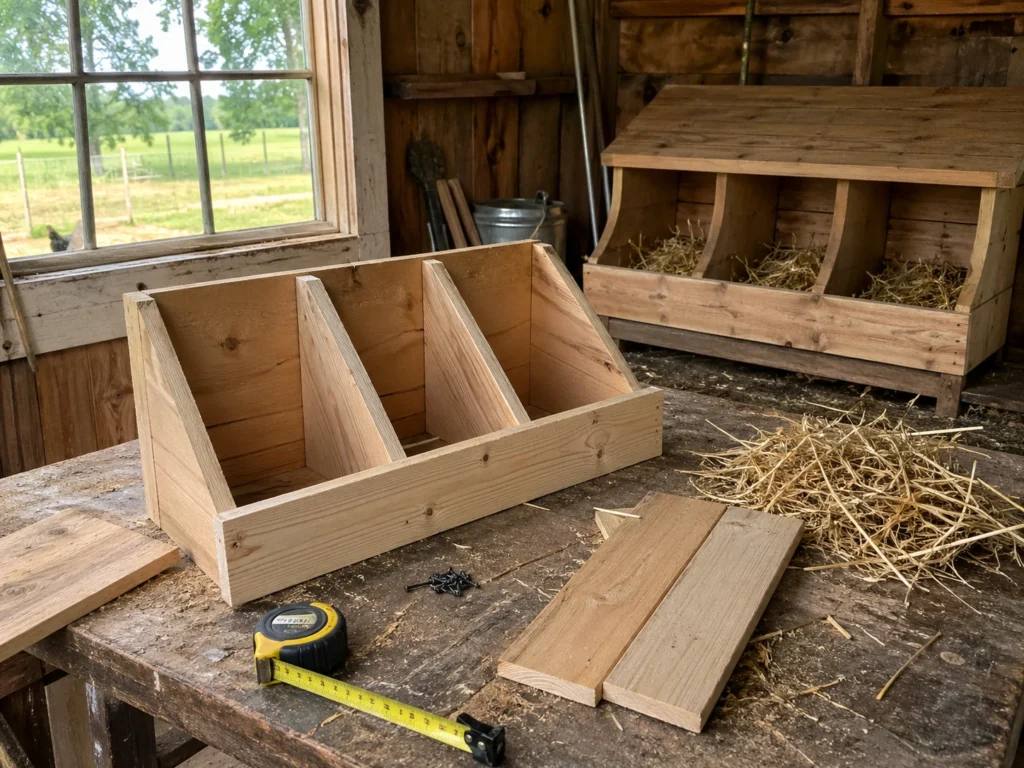
Learning how to build nesting boxes for hens is easier than many new chicken keepers expect. You do not need an expensive design. A basic wooden box with the right measurements, safe edges, and dry bedding can work very well.
Materials You May Need
| Material | Purpose |
|---|---|
| Plywood or untreated wood | Main box frame |
| Screws or nails | Assembly |
| Measuring tape | Accurate sizing |
| Saw | Cutting panels |
| Sandpaper | Smoothing rough edges |
| Front lip board | Holds bedding inside |
| Bedding material | Comfort and egg protection |
Simple DIY Nesting Box Steps
- Measure your coop wall space.
- Cut wood panels for a 12 x 12 x 12 inch box.
- Attach the bottom, sides, back, and top.
- Add a 3- to 4-inch front lip.
- Sand rough edges so hens do not scrape their feet.
- Add clean, dry bedding.
- Mount the box in a quiet, dim area of the coop.
- Check that your hens can enter and exit easily.
For large breeds, increase the box size to around 14 x 14 x 14 inches. For bantams, a 10 x 10 inch box may be enough.
Common Mistakes When Choosing the Size of Hen Nesting Box
Small setup mistakes can create daily egg problems. Before you replace your nesting boxes, check whether one of these issues is causing trouble.
Mistakes to Avoid
- Making boxes too small for your breed
- Making boxes so large that hens crowd together
- Providing too few boxes
- Placing boxes near roosting bars
- Using dirty or damp bedding
- Putting boxes in bright, noisy areas
- Forgetting a front lip
- Letting hens sleep in the boxes
- Not collecting eggs often enough
Penn State Extension notes that excess traffic and eggs left in nesting areas can increase the chance of egg breakage, which may contribute to egg eating behavior. It recommends enough nests, proper placement, and collecting eggs often.
If your hens are laying outside the boxes, do not assume they are being stubborn. They may be telling you the box feels wrong. Look at the size, privacy, bedding, and location first.
Roll-Out Nesting Boxes vs. Traditional Nesting Boxes
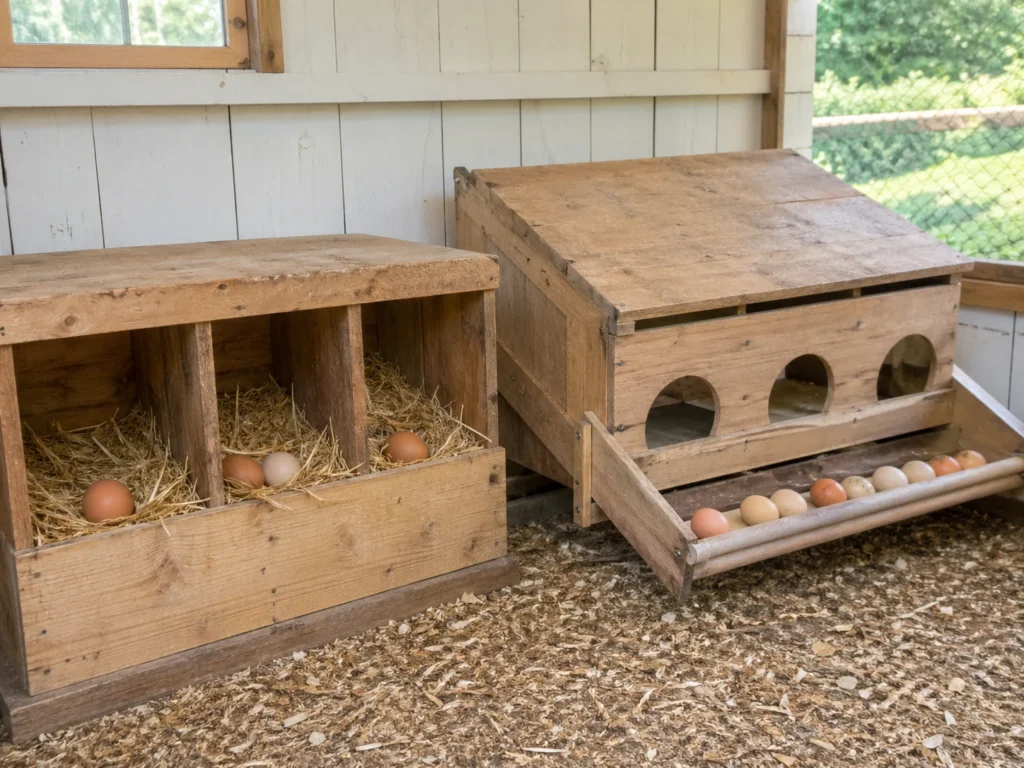
Traditional nesting boxes are simple, affordable, and easy to build. Roll-out nesting boxes are designed so eggs roll gently into a protected collection area after the hen lays them.
Which Type Should You Choose?
| Nest Box Type | Best For | Main Benefit |
|---|---|---|
| Traditional wooden box | Most backyard coops | Simple and affordable |
| Roll-out nesting box | Cleaner egg collection | Helps protect eggs |
| Plastic nesting box | Easy cleaning | Lightweight and washable |
| Community nesting box | Larger flocks | Shared laying area |
| DIY nesting box | Custom coops | Budget-friendly and flexible |
A roll-out box can be helpful if you deal with broken eggs, egg eating, or dirty eggs. But the same sizing rule still matters. Your hens still need enough room to enter, sit, and lay comfortably.
Final Checklist for the Ideal Size of Hen Nesting Box
Before you finish your coop setup, use this quick checklist:
- Choose about 12 x 12 x 12 inches for standard hens.
- Use 10 x 10 inches for bantams.
- Use 14 x 14 inches or more for large breeds.
- Provide one box for every 4 to 5 hens.
- Place boxes in a quiet, dim area.
- Keep boxes away from roosts.
- Mount boxes around 18–24 inches from the floor.
- Add clean, dry bedding.
- Use a front lip to hold bedding inside.
- Collect eggs regularly.
- Clean nesting boxes often.
When you get these basics right, your hens are more likely to lay where you want them to lay.
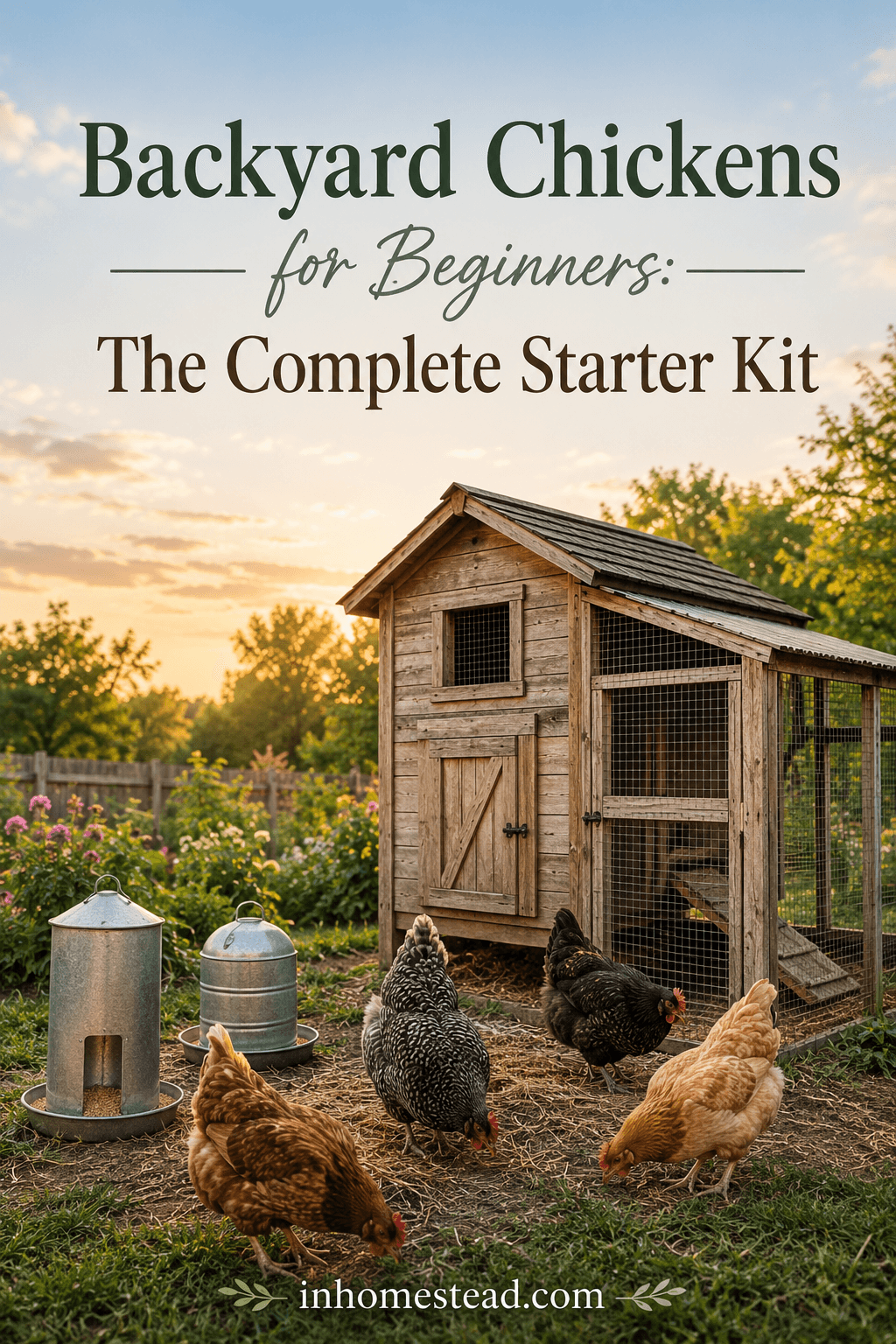
From the In Homestead Shop
Starting your first flock?
The Backyard Chickens Starter Guide covers your whole first year — sizing the coop and nesting boxes, plus breeds, feed, and daily care — sourced from cooperative extension guidance and the Merck Veterinary Manual, with two printables.
The Free Garden Starter Pack
Five printable pages that take the guesswork out of a first season, plus a short email every week or two when something is worth planting, picking, or putting up.
- A garden planning worksheet you can actually fill in
- A seed-starting and planting calendar
- A harvest log to track what really produced
No spam, ever. Unsubscribe in one click.
Thank you. You are on the list.
Your Garden Starter Pack is ready right now. Grab it here:
Download the pack (PDF)Keep an eye on your inbox. The next seasonal guide lands there first.
FAQ About Size of Hen Nesting Box
What is the best size of hen nesting box?
The best size of hen nesting box for most standard backyard hens is about 12 x 12 x 12 inches. This gives your hen enough room to enter, turn around, and sit comfortably.
What are standard chicken nesting box dimensions?
Standard chicken nesting box dimensions are usually around 12 inches wide, 12 inches deep, and 12 inches high. Larger breeds may need more space.
How big should a nesting box be for chickens?
A nesting box should be big enough for one hen to sit comfortably, but not so large that several hens try to lay in it together.
What nesting box size for chickens is best for large breeds?
For large breeds, use a nesting box around 14 x 14 x 14 inches or slightly larger. Heavy hens need more room to move comfortably.
How many nesting boxes do I need for my hens?
Most flocks do well with one nesting box for every 4 to 5 hens. Small flocks may still benefit from one extra box to reduce crowding.
Can a hen nesting box be too big?
Yes. A box that is too large can encourage several hens to use it at the same time, which may lead to broken eggs, dirty bedding, and stress.
What should I put inside a hen nesting box?
Use clean, dry bedding such as pine shavings, straw, hemp bedding, or nesting pads. Keep enough bedding inside to cushion eggs.
How high off the floor should a nesting box be?
Mount nesting boxes about 18 to 20 inches off the coop floor, and always keep them lower than your roosting bars. Hens want to sleep on the highest spot they can reach, so boxes set higher than the roosts get used as beds and the eggs end up dirty. For heavy breeds that do not fly well, 16 to 18 inches makes the boxes easier to step into, and a small landing perch in front of the opening helps older or larger hens climb in cleanly.
What size should the nesting box opening be?
An opening around 6 to 8 inches wide and 8 to 10 inches tall lets a hen step in and turn around without feeling cramped. Add a lip about 3 to 4 inches high across the bottom of the entrance so bedding and eggs stay put instead of rolling out when she leaves. Keep the entrance shaded and a little enclosed, since hens look for a dim, sheltered corner when they are ready to lay.
How many nesting boxes do I need for 5 chickens?
For a flock of 5 hens, one or two boxes is enough. The standard ratio is one nesting box for every three to four hens, and the birds usually crowd into one favorite box no matter how many you offer. A second box gives the flock a backup during the busy morning laying window and cuts down on waiting and squabbling.
Conclusion
The ideal size of hen nesting box does not need to be complicated. For most backyard chickens, a 12 x 12 x 12 inch box is a reliable choice. Smaller hens can use slightly smaller boxes, while larger breeds need extra room.
When you pair the right box size with quiet placement, clean bedding, enough boxes, and regular egg collection, your hens are more likely to lay safely and consistently. You will also enjoy cleaner eggs, fewer cracks, and a calmer coop routine.
Ready to improve your coop setup? Start by measuring your current nesting boxes today, then adjust the size, bedding, or placement so your hens have a space that feels safe, private, and comfortable.