Coccidiosis in Chickens: Treatment That Works (2026)
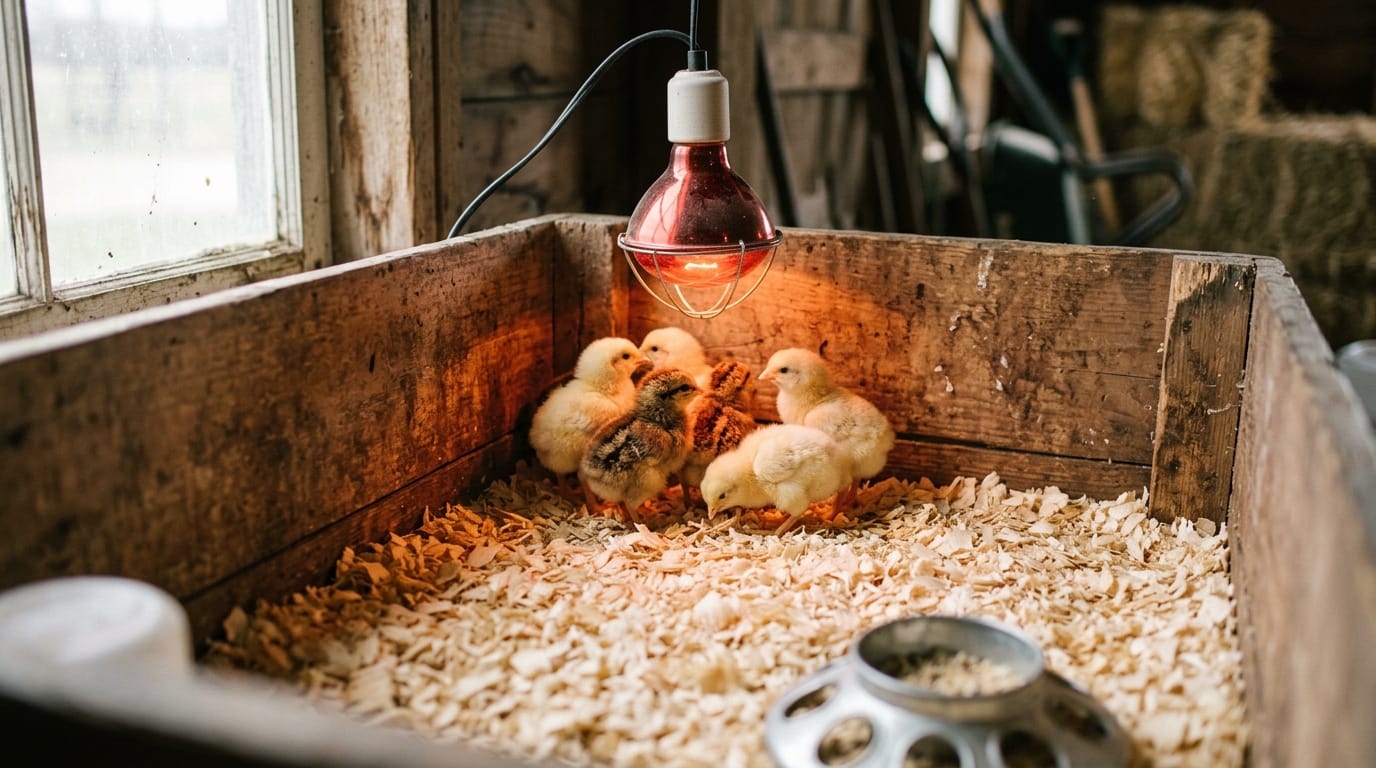
Coccidiosis in chickens treatment starts with acting fast, because a sick chick can decline within 24 to 48 hours in severe cases. A fluffed-up bird standing apart from the brooder, eyes half-closed, and not moving toward the feeder may look tired at first. Then you check the bedding and find rust-colored droppings, or worse, bright blood.
That moment is coccidiosis introducing itself. It moves fast in a brooder, faster than most new keepers expect, and the window between “something looks off” and “bird is dying” can be 24 to 48 hours in severe cases. Knowing what you are looking at, and knowing what to do next, is the difference between a recoverable outbreak and significant losses.
The good news is that coccidiosis is one of the more treatable diseases backyard chickens face. The treatment is cheap, widely available, and works quickly when you use it correctly.
Coccidiosis in chickens is treated with amprolium, sold under the brand name Corid, mixed into the flock’s drinking water for 5 to 7 days. The high-dose treatment rate is 2 teaspoons of Corid liquid per gallon of water, given as the sole water source. Remove all other water and begin treatment at the first sign of bloody stool, lethargy, or huddling.
Quick Answer
- Treatment: Corid (amprolium) liquid or powder, mixed into drinking water as the sole water source
- High dose: 2 tsp of 9.6% liquid per gallon, or 1.5 tsp of 20% powder per gallon
- Duration: 5 to 7 days minimum, do not stop early even if birds improve
- Treat the whole flock, not just visibly sick birds
- Replace medicated water every 24 hours and do not add vitamin supplements with B1 during treatment
- Improvement timeline: most flocks show signs of recovery within 2 to 3 days
- Corid is available at Tractor Supply, Rural King, and most farm supply stores, typically for roughly $16 to $22 for a 16 oz bottle in 2026
What Coccidiosis Actually Is (And Why Chicks Are Most at Risk)
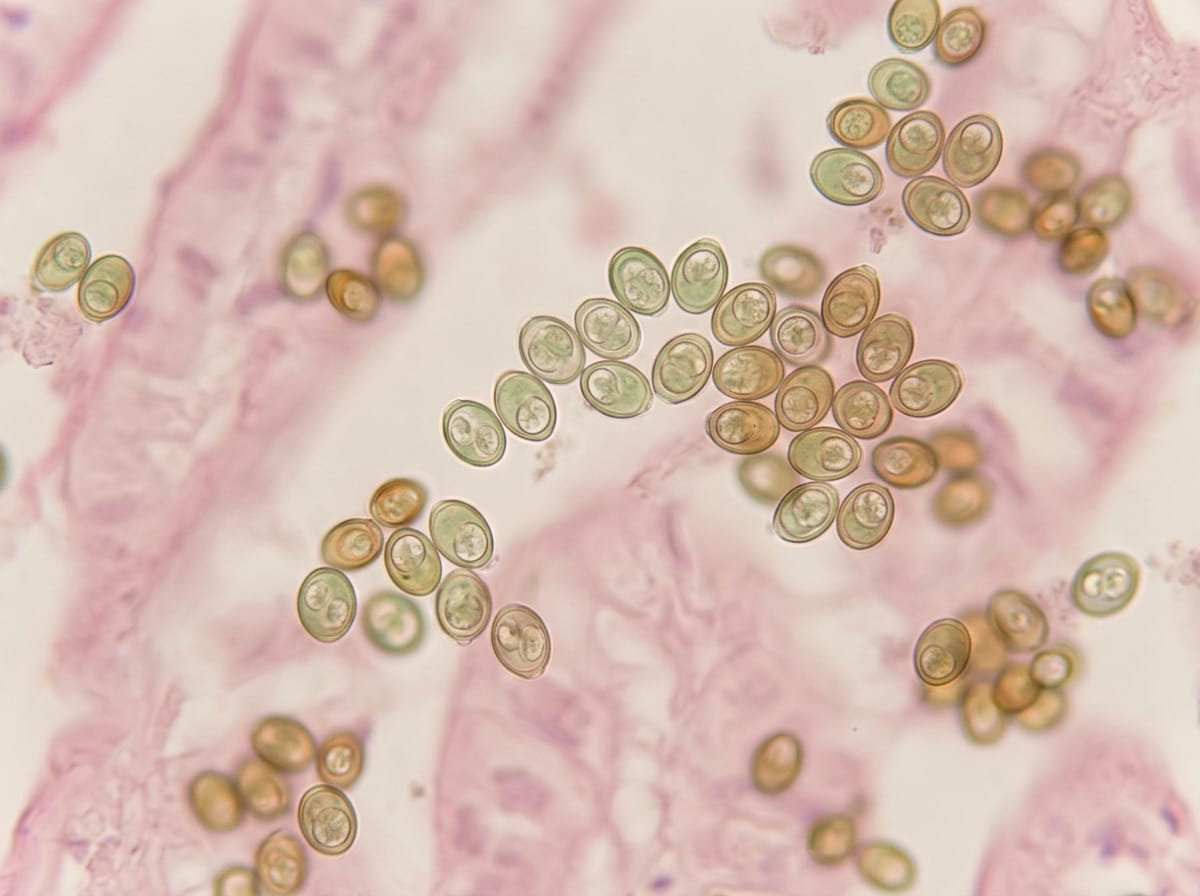
Coccidiosis is not a bacterial infection and it is not a virus. That matters because antibiotics do nothing for it. It is caused by single-celled protozoan parasites in the genus Eimeria, which invade and destroy the intestinal lining of the bird.
There are nine species of Eimeria that affect chickens. Most cause mild to moderate diarrhea, but two species, E. tenella and E. necatrix, can cause severe hemorrhagic disease and rapid death, particularly in young birds. According to Penn State Extension, the fecal-oral transmission cycle in brooder conditions accelerates quickly because chicks are eating, scratching, and drinking in close proximity to their own droppings, and Eimeria species are host-specific to chickens.
Chicks between 3 and 6 weeks old are at the highest risk. They have not yet built immune tolerance to the local strains of Eimeria in their environment. Adult birds often carry oocysts (the egg-like stage of the parasite) without showing any illness at all, because prior exposure created immunity. This is part of why introducing new adult birds to a young flock, or moving chicks into a coop that housed adults, can trigger an outbreak.
Wet litter, overcrowded brooders, and shared waterers are the engine of spread. Oocysts are shed in droppings, picked up by other birds orally, and the cycle completes within days. A brooder with any dampness becomes a transmission zone.
Symptoms of Coccidiosis in Chickens: What to Look For
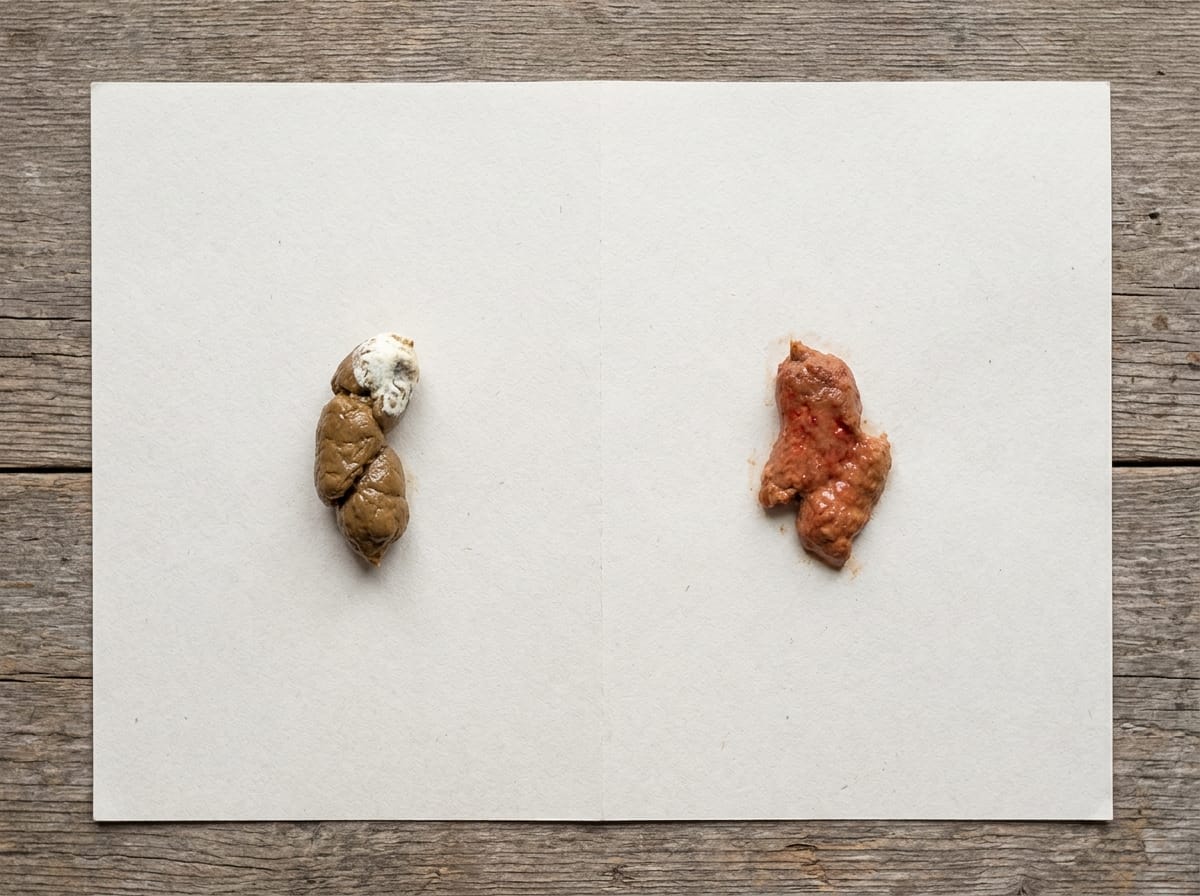
Five symptoms should put coccidiosis at the top of your differential list: bloody or rust-colored droppings, lethargy and huddling, loss of appetite, pale comb, and ruffled feathers. If you see two or more of these together in birds under 12 weeks, treat for coccidiosis while you confirm the diagnosis.
A few things beginners misread:
Not all cases produce blood. Watery, mucousy, or orange-tinged droppings can also indicate coccidiosis, depending on which Eimeria species is involved and how far along the infection is. The bloody presentation is the most dramatic but it is not always the first sign.
Know what cecal droppings look like. Chickens periodically produce cecal droppings, which are darker, mustard-brown to rust-tinted, and have a stronger smell than regular droppings. These are normal. The difference is consistency: a healthy bird’s cecal dropping is occasional and uniform in color, while a coccidiosis dropping may have visible blood, be foamy, or show a brighter red color.
Speed matters here more than with most diseases. In acute cases driven by E. tenella, mortality can occur within 2 to 4 days of symptom onset. A bird that looks slightly off at morning feeding may be in critical condition by evening. If you see bloody droppings in a brooder or pen of young birds, treat first and confirm second.
Check the vent area for signs of pasty buildup or staining, which can accompany the diarrheal stage of coccidiosis. Look at the roost bar the next morning, bloody or liquid droppings under where birds sleep overnight are a clear warning sign. Two other conditions are worth ruling out: intestinal worms can cause similar weight loss and lethargy but typically do not produce bloody droppings, and external parasites like lice cause feather damage and skin irritation rather than digestive symptoms. If the clinical picture is primarily digestive and the birds are young, coccidiosis should be your first suspect.
How to Treat Coccidiosis: Corid Dosage and What to Do First
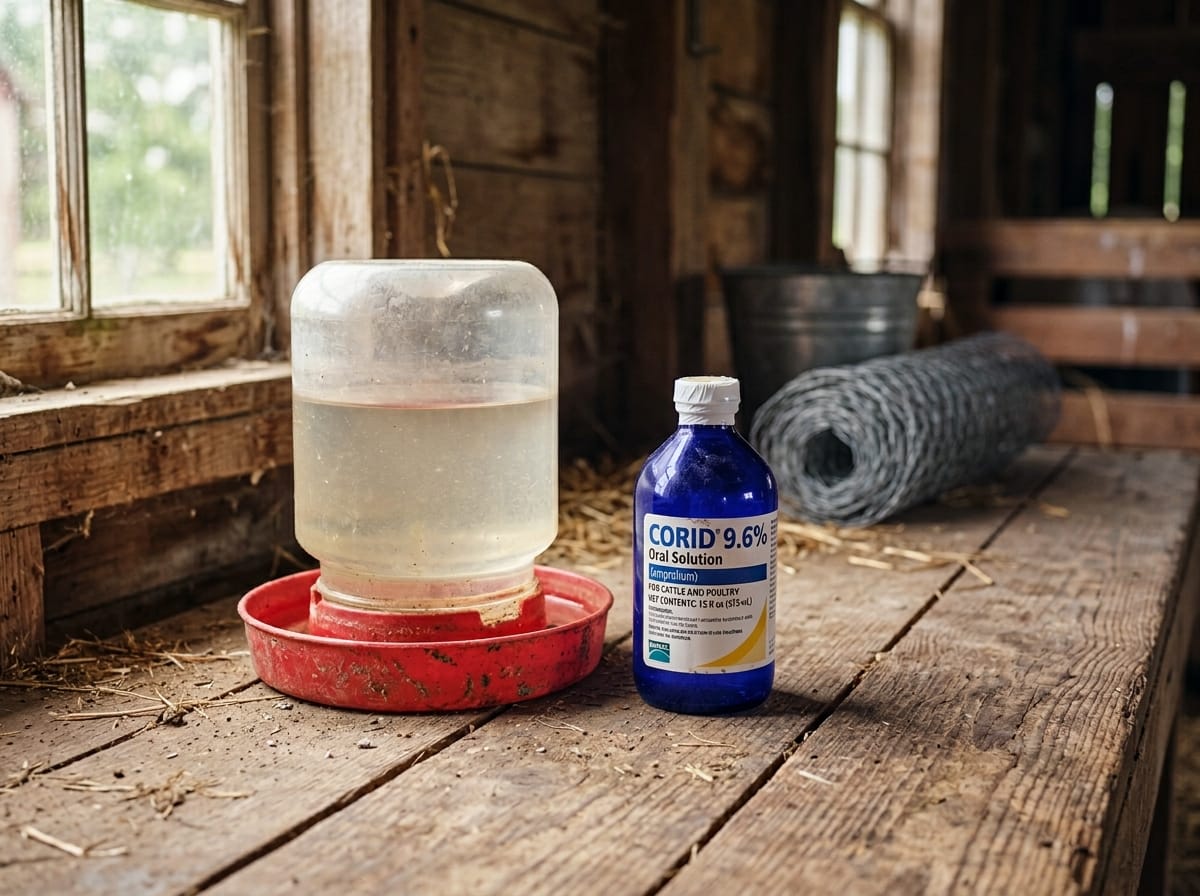
Amprolium, sold under the brand name Corid, is the standard over-the-counter treatment for coccidiosis in backyard flocks. You do not need a prescription. It is available at Tractor Supply, Rural King, and most farm and feed stores. Yes, Tractor Supply carries it, typically in the poultry section near medicated feed and supplements.
Corid comes in two forms, and the dosing is different for each.
Corid 9.6% Liquid
- High dose (treatment): 2 teaspoons per gallon of water
- Low dose (follow-up/prevention): 0.5 teaspoons per gallon of water
Corid 20% Soluble Powder
- High dose (treatment): 1.5 teaspoons per gallon of water
- Low dose (follow-up/prevention): 0.5 teaspoons per gallon of water
How to Run the Treatment
Mix the medicated water and offer it as the sole water source. Remove any other waterers. Some birds will drink less if the water tastes off to them, so watch water consumption the first day and make sure weak birds are actually drinking.
Run the high-dose protocol for 5 to 7 days. Some veterinarians recommend an additional 1 to 2 weeks at the low (maintenance) dose after the high-dose period, particularly if you have had repeat outbreaks or if the litter situation is hard to fully address.
Every bird in the flock needs treatment, not just the ones visibly struggling. Subclinical birds are shedding oocysts and will reinfect any recovering birds if left untreated.
Replace the medicated water every 24 hours. Amprolium degrades, and stale medicated water also attracts contamination.
Do not add vitamin supplements with thiamine (B1) to the water during treatment. Amprolium works by mimicking thiamine, which Eimeria needs to reproduce. Adding B vitamins to the water essentially hands the parasite a workaround. Resume vitamin supplements after the full treatment period ends.
If you have laying hens in the flock: in the US, amprolium carries a zero-day egg withdrawal period under standard label guidance, meaning eggs from treated hens are generally considered safe to eat. Confirm this against your specific Corid label and check with your vet if you are outside the US, as withdrawal requirements vary by country.
How Long Does Coccidiosis Take to Clear Up
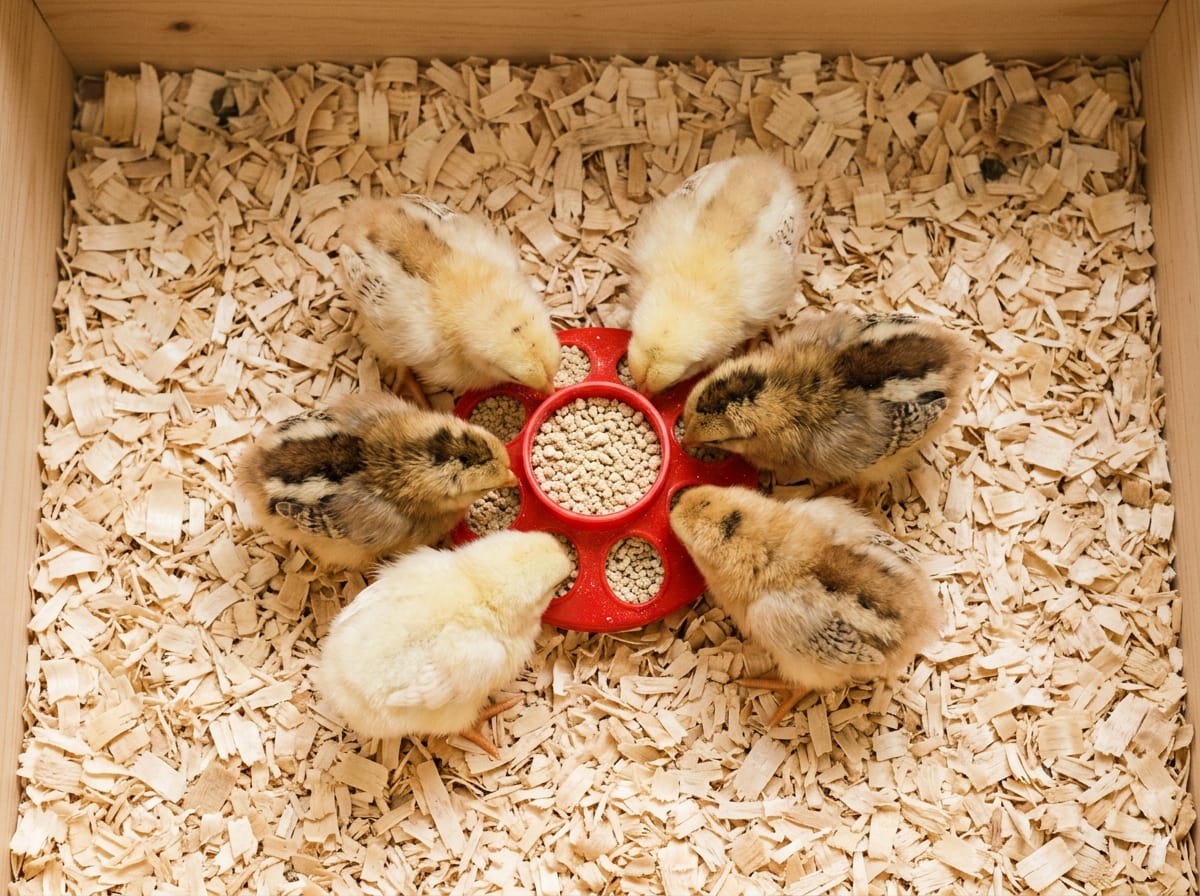
Most flocks show visible improvement within 2 to 3 days of starting Corid. Bloody droppings typically reduce or stop. Birds start moving toward the feeder again. Energy returns.
Full clearing generally takes 5 to 7 days of treatment. The temptation to stop after 3 or 4 days because the birds look fine is one of the most common mistakes beginners make, and it almost always leads to relapse. The oocyst lifecycle has not finished. Oocysts already shed in the environment can reinfect birds before they have completed building immunity.
After a complete treatment cycle, surviving birds typically develop immunity to the specific Eimeria strains they were exposed to. This is actually how natural immunity works in flocks. It is also why gradual soil exposure in young chicks, done carefully, helps build protection over time.
Relapse is common if the litter is not dried and partially refreshed between treatment cycles. Oocysts survive in damp soil and bedding for months. Treatment clears the infection in the birds, not in the environment.
One honest note: birds that are already severely affected, not eating, unresponsive, or too weak to stand, may not recover even with correct treatment started immediately. Supportive care (warmth, electrolytes, hand-watering with a dropper) can help, but severely compromised birds sometimes do not make it through even a textbook treatment protocol.
How Much Does Treating Coccidiosis Actually Cost (And What to Buy First)
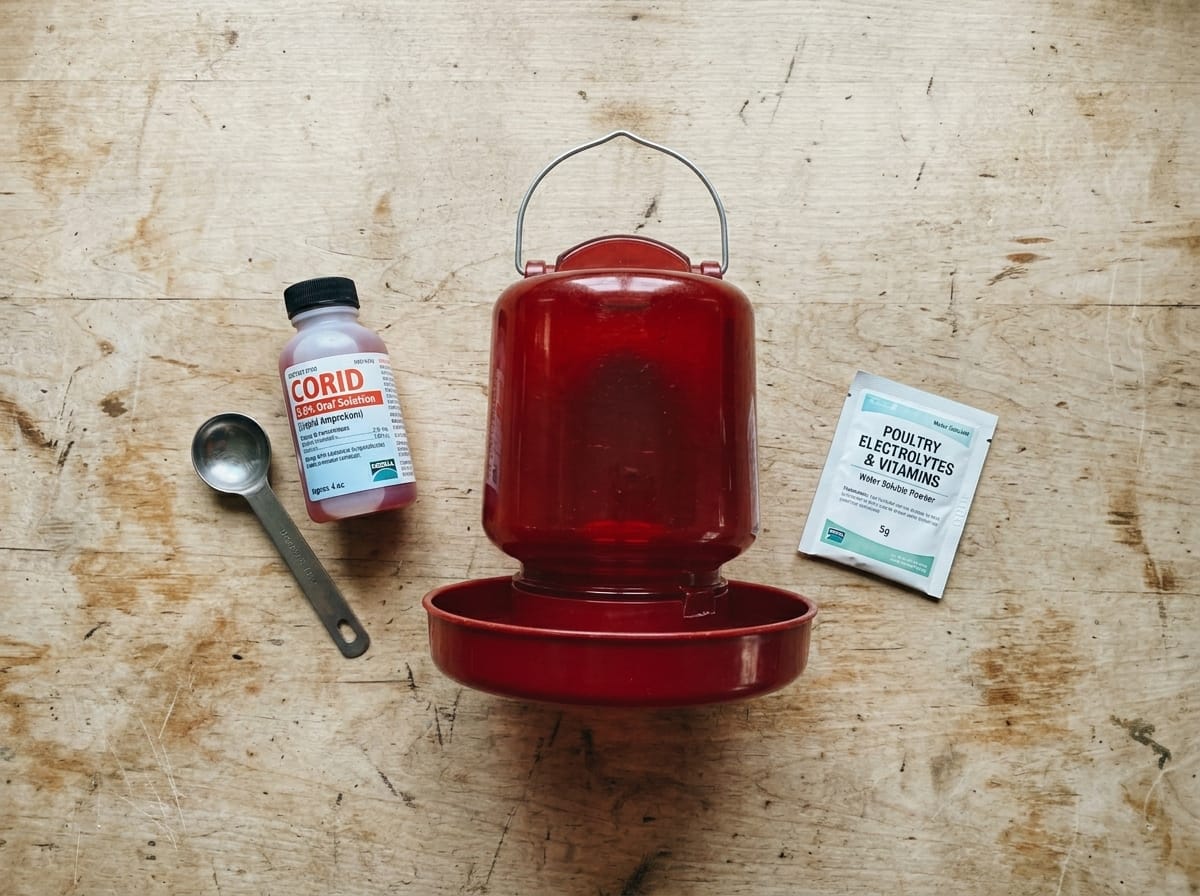
Most guides skip this entirely, leaving first-time keepers standing in the farm store aisle unsure what they need and how much to spend. The answer is simpler than it seems.
Corid 9.6% liquid (16 oz): typically $16 to $22 at Tractor Supply in 2026. A 16 oz bottle contains enough amprolium for roughly three to six full 7-day treatment rounds for a small flock using one to two gallons of water per day. That makes it one of the better values in your poultry medicine cabinet.
Corid 20% soluble powder (10 oz): usually $18 to $25. The powder dissolves easily and some keepers prefer it for precise mixing.
Electrolyte supplement (optional): priced around $5 to $10 for a packet or small container. This is not required for treatment, but it is useful for supporting weak or dehydrated birds during recovery. Mix it into a separate container after the treatment course, or offer it during treatment only if the birds are not drinking at all otherwise.
What to skip:
Herbal remedies marketed as coccidiosis treatments have no peer-reviewed evidence of efficacy at treatment doses. This includes products made with oregano oil, apple cider vinegar, and similar supplements. They may have a role in general flock wellness, but they are not a substitute for amprolium when birds are actively symptomatic.
On garlic specifically: garlic has no proven treatment efficacy for an active coccidiosis infection. Some small studies have looked at garlic extracts as a preventive or adjunct, but none support replacing amprolium with garlic when birds have bloody droppings and are declining. Do not use garlic instead of Corid when your flock is sick.
Why Treatment Fails: 3 Mistakes Beginners Make After Starting Corid
You do everything right. You mix the Corid correctly, you remove the other waterers, you start treatment on day one. And three weeks later, the bloody droppings come back. Here is why that happens.
Mistake 1: Stopping Treatment Early
Birds often look substantially better after 3 or 4 days of treatment. The bloody droppings stop, birds return to the feeder, and it feels resolved. It is not. The oocyst lifecycle means that protozoa not yet in their intracellular stage are still completing their cycle. Cutting treatment short at day 4 instead of finishing through day 7 leaves the infection partially addressed, and the population rebounds.
Complete the full 5 to 7 days regardless of how recovered the birds appear.
Mistake 2: Treating Only the Visibly Sick Birds
If one bird has bloody droppings, others are already infected subclinically. Birds that look healthy are still shedding oocysts in their droppings. Treating only the symptomatic birds leaves those carriers in the flock, where they will reinfect recovering birds as soon as treatment ends.
Treat the whole flock, every time.
Mistake 3: Not Addressing the Litter
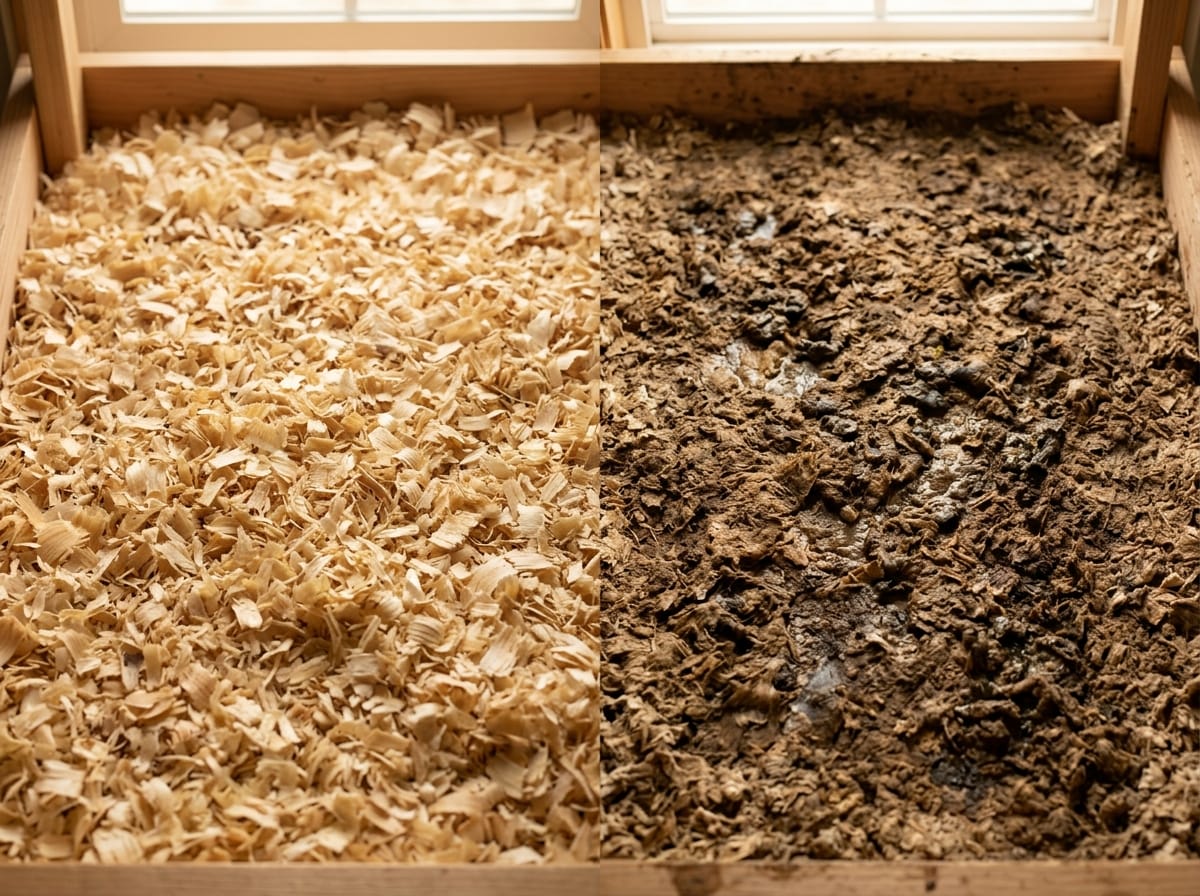
This is the one that causes the most repeat outbreaks. Treatment clears the parasite in the birds. It does not sterilize the coop floor, the brooder bedding, or the run. Oocysts survive in damp soil for months. If the wet, contaminated litter is still in place when treatment ends, reinfection is nearly guaranteed within a few weeks.
Pull damp or soiled bedding, refresh litter, and focus on keeping litter dry in the coop as a permanent management habit, not a one-time response.
One additional point worth making explicit: according to the Merck Veterinary Manual, amprolium functions as a thiamine analogue, blocking vitamin B1 uptake by the parasite. At high doses, this effect applies to the bird as well. Adding B-vitamin supplements or electrolytes containing thiamine to the treatment water reduces the drug’s efficacy. Wait until the treatment course is complete before resuming any vitamin supplementation.
When to Call a Vet Instead of Treating at Home
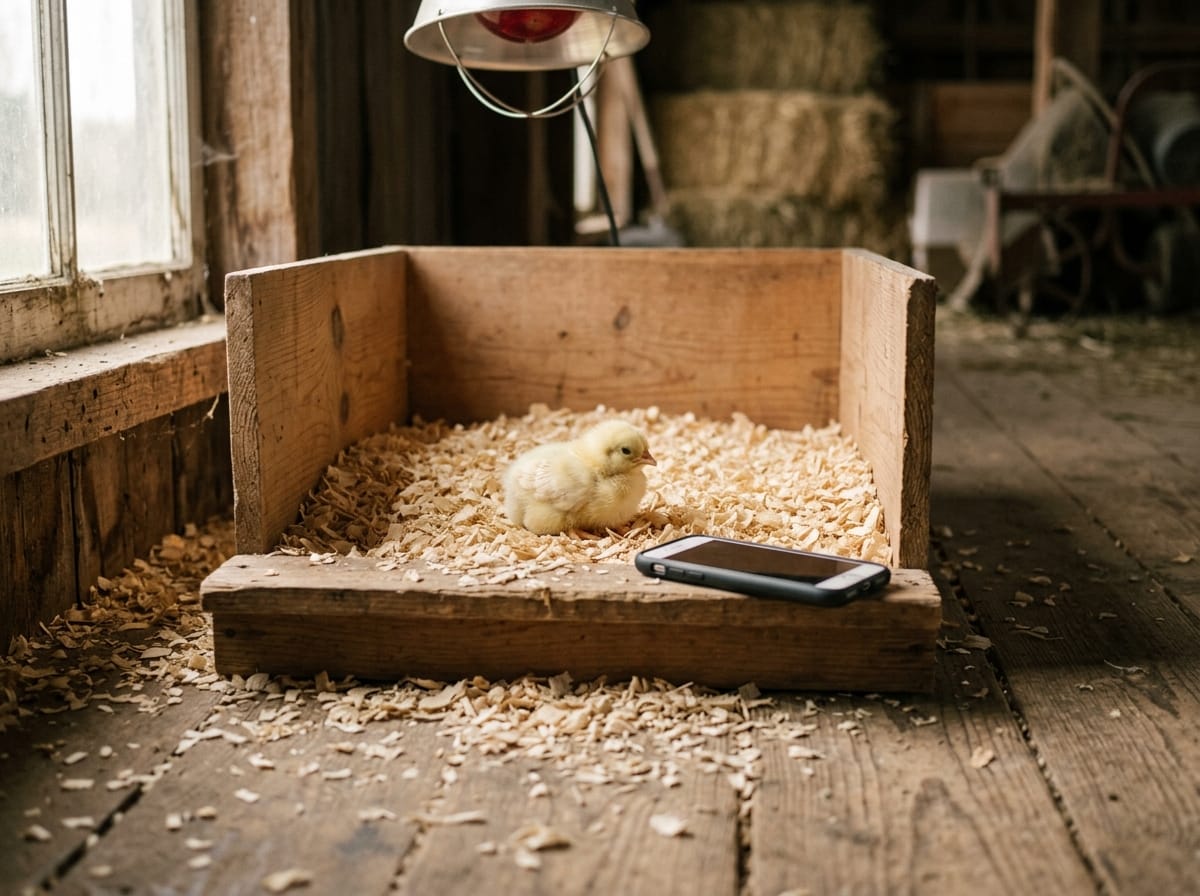
Most coccidiosis outbreaks in backyard flocks are straightforward to treat at home with Corid. But there are situations where starting OTC treatment without confirmation is the wrong move.
Treat at home if:
- Birds are under 12 weeks old
- Multiple birds show bloody droppings simultaneously
- Litter is wet and the environment is a known risk factor
- The flock recently added new birds
- This is a known problem in your area or you have had prior outbreaks
Call a vet or extension service if:
- Birds are adults showing sudden neurological signs like leg weakness, head tilting, or paralysis. These can suggest Marek’s disease, which is caused by a herpesvirus and looks superficially similar in some presentations but requires entirely different management.
- Treatment has been running for 4 days with no improvement whatsoever
- You have lost more than 2 birds in 48 hours and the cause is not clearly coccidiosis
- Worms or another pathogen may be contributing (intestinal parasites can mimic some symptoms)
A fecal float test done by a vet or state diagnostic lab can confirm the presence of oocysts under a microscope. This often falls somewhere in the range of $25 to $50, though prices vary by region and clinic, and it rules out other causes if the picture is unclear. In rural areas where poultry-specific vets are scarce, your state extension service or the nearest land-grant university veterinary clinic is a practical starting point.
Preventing Coccidiosis: What Actually Reduces Risk
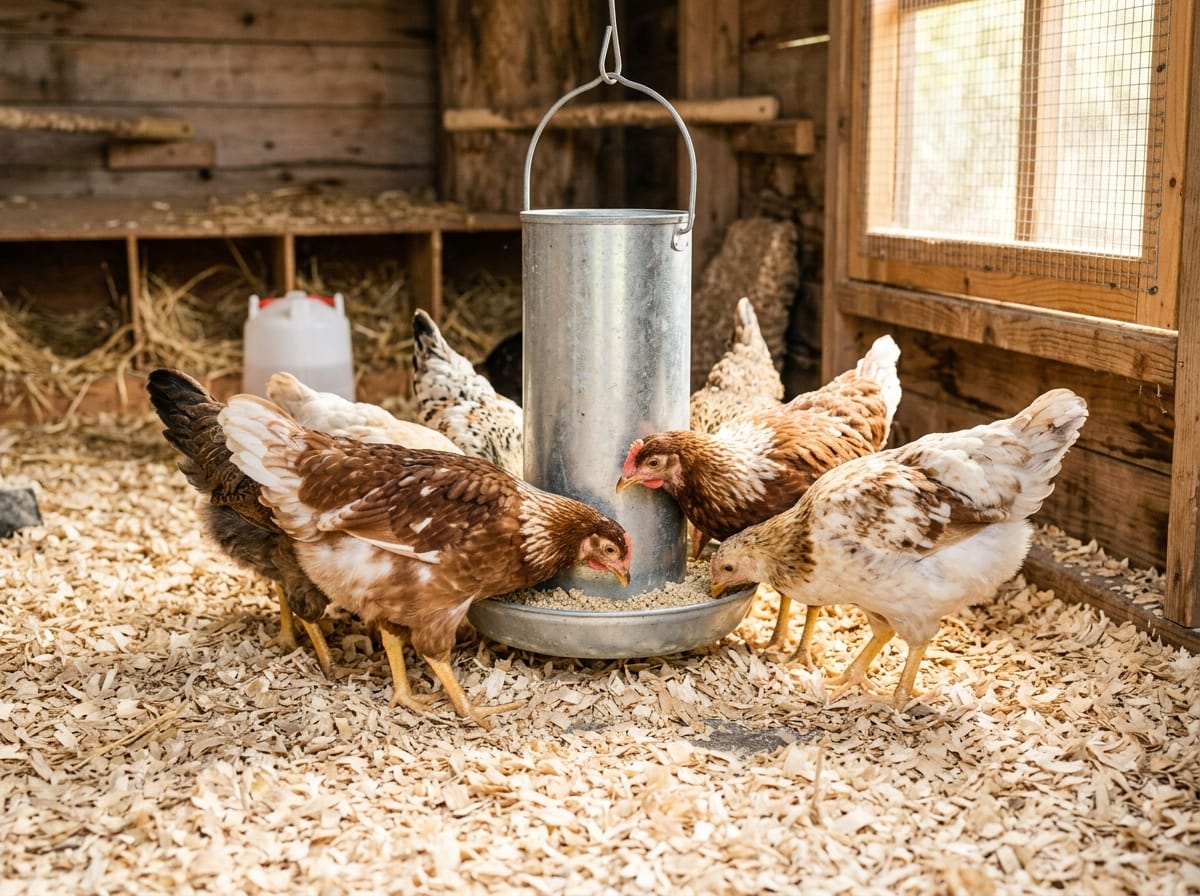
Once you have been through an outbreak, prevention starts to feel like the more urgent topic.
Medicated Chick Starter Feed
Medicated chick starter feed contains amprolium at a low, prophylactic dose. This does not treat active infection, but it slows oocyst reproduction enough to let chicks build immunity gradually as they encounter low levels of Eimeria in their environment. Use it for the first 6 to 8 weeks of life.
One critical exception: according to Extension.org, medicated chick starter and coccidiosis vaccination should not be used together. Some hatcheries vaccinate chicks for coccidiosis before shipping. If your chicks were vaccinated, the amprolium in medicated feed will interfere with the live vaccine by killing the low-level oocysts the vaccine depends on. Ask your hatchery at the time of ordering, and check the paperwork that ships with your chicks.
Keep Litter Dry
Wet bedding is the single largest controllable risk factor. Damp litter creates exactly the conditions oocysts need to sporulate and become infectious. Stir brooder bedding daily, add dry material on top of wet spots, and do full litter changes before population density and moisture climb. In the coop, good ventilation helps more than most beginners expect.
Avoid Overcrowding
High bird density increases fecal load, which increases exposure. A commonly cited guideline is 4 square feet per bird indoors and 10 square feet per bird in the run, figures you will find consistently across poultry extension resources, and disease pressure is part of the reasoning behind them.
Elevate Feeders and Waterers
Elevating feeders and waterers to reduce droppings contamination is one of the simplest management changes you can make. When birds can stand over their water source and drop into it, oocysts go directly into the drinking supply. A nipple waterer or an elevated trough waterer breaks that cycle.
Gradual Soil Exposure
Keeping chicks completely isolated from soil until they are fully grown is not necessary and arguably counterproductive. Controlled, gradual exposure to outdoor soil starting around 3 to 4 weeks gives the immune system low-level challenges that build tolerance. A small patch of dirt access in a secure run works well for this in most climates. In regions with heavy rainfall or during particularly wet stretches of spring, hold off until the ground drains, muddy outdoor access defeats the purpose and raises oocyst exposure sharply.
Handle Litter and Compost Carefully
Used coop litter contains oocysts. Do not spread it in areas where chickens free-range until it has been composted at sustained high temperatures above 130°F for several weeks. Reaching and holding that threshold is harder than it sounds in a backyard compost pile, most home piles cycle between warm and cool and never fully deactivate the parasites. If your pile does not heat reliably, keep spent litter out of the run entirely, or compost it in a separate, covered area for at least a full season before using it near your beet garden or anywhere birds access.
From the In Homestead Shop
Starting your first flock?
The Backyard Chickens Starter Guide covers your whole first year — spotting and preventing common illnesses, plus breeds, feed, and daily care — sourced from cooperative extension guidance and the Merck Veterinary Manual, with two printables.
The Free Garden Starter Pack
Five printable pages that take the guesswork out of a first season, plus a short email every week or two when something is worth planting, picking, or putting up.
- A garden planning worksheet you can actually fill in
- A seed-starting and planting calendar
- A harvest log to track what really produced
No spam, ever. Unsubscribe in one click.
Thank you. You are on the list.
Your Garden Starter Pack is ready right now. Grab it here:
Download the pack (PDF)Keep an eye on your inbox. The next seasonal guide lands there first.
Frequently Asked Questions About Coccidiosis in Chickens
What Are 5 Symptoms of Coccidiosis in Chickens?
The five most common symptoms are bloody or rust-colored droppings, lethargy and huddling, loss of appetite, pale comb, and ruffled feathers. Not all cases produce visible blood, watery, foamy, or orange-tinged droppings can also indicate infection, particularly in early or mild cases.
What Does Coccidia Poop Look Like in Chickens?
Coccidia-related droppings typically appear rust-colored to dark red, sometimes with visible frank blood, and may be foamy or mucousy. Bright red blood is most associated with E. tenella infection in the ceca. Normal cecal droppings can occasionally appear brownish-rust, but they are uniform in color and the bird otherwise appears healthy.
Can Garlic Cure Coccidiosis in Chickens?
Garlic has no proven ability to treat an active coccidiosis infection. Small studies have examined garlic extracts as preventive supplements, but none support replacing amprolium with garlic when birds are showing bloody droppings and declining. Use Corid for active infections. Save the garlic for the kitchen.
How Long Does It Take for Coccidia to Clear Up in Chickens?
Most birds show visible improvement within 2 to 3 days of starting amprolium treatment, with full clearing occurring over the 5 to 7 day treatment course. Finishing the full course matters, cutting it short even when birds look recovered gives the oocyst population time to rebound.
Does Tractor Supply Sell Coccidiosis Medicine?
Yes. Tractor Supply carries Corid (amprolium) in both liquid and powder form, typically in the poultry supply section. The 9.6% liquid in a 16 oz bottle runs $16 to $22 in 2026, and one bottle is enough to treat a small backyard flock through multiple full rounds of treatment.
A Quick Note Before You Go
Coccidiosis is manageable, and most backyard flocks that get treatment quickly do recover well. The ones that do not are almost always cases where treatment came too late, ended too soon, or the litter never got addressed.
What separates a one-time outbreak from a recurring problem is almost always the environment, not the treatment. Corid works. The part that requires more attention is keeping the brooder dry enough and the bird density low enough that oocysts do not cycle faster than immunity builds. Get familiar with what your chicks’ droppings look like on a normal day, because that baseline is what lets you catch the rust-colored shift before it becomes a blood-in-the-bedding emergency.
A bottle of Corid on the shelf before you need it is the single most practical step a new keeper can take. After that, it is mostly about litter management and not panicking when the biology works against you in a wet spring brooder.