Best Chicken Feeders & Waterers for Beginners: 5 Picks (2026)
In Homestead is reader-supported. When you buy through links on this page, we may earn a small commission at no extra cost to you — see our affiliate disclosure. As an Amazon Associate, we earn from qualifying purchases.
There is a small ritual most chicken keepers settle into without really thinking about it: the morning walk to the coop to check that everyone has clean water and enough feed. Get the Best chicken feeders & waterers right and that ritual takes thirty seconds. Get them wrong and you are scrubbing green water, sweeping up scratched-out feed, and chasing off the rats it attracts.
The good news is that the gear is simple and inexpensive, and a couple of smart choices solve almost every common headache — wasted feed, dirty water, pests, and frozen founts in winter. Below are the feeders and waterers we would actually put in a beginner’s coop, chosen for different flock sizes and problems, with the short list of what to look for before you buy.
Table of Contents
Quick Picks
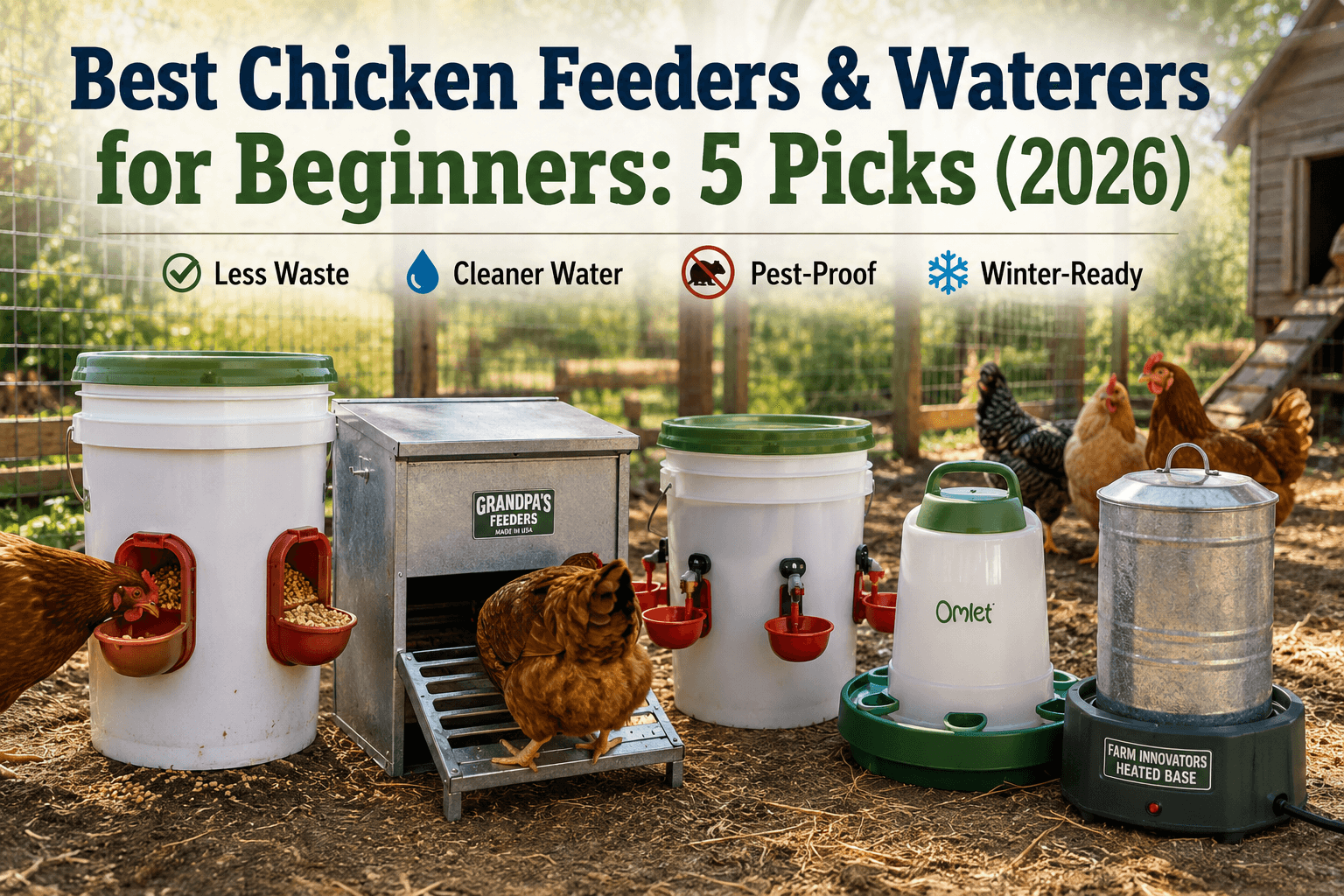
- Best no-waste feeder: No-Waste Port Feeder Kit — rain-protected ports cut spilled feed to almost nothing.
- Best rodent-proof feeder: Grandpa’s Feeders Automatic Feeder — a treadle lid that only opens for your birds.
- Best budget all-in-one: Port Feeder & Cup Waterer Set — outfit a first flock with both for very little.
- Best overall waterer: Omlet Insulated Chicken Waterer — protected cups that stay genuinely clean.
- Best for winter: Farm Innovators Heated Base — keeps a metal fount from freezing, cheaply.
What to Look for in a Chicken Feeder and Waterer
A design that doesn’t waste feed or foul the water
This is where cheap, open trough feeders and dish waterers cost you. Chickens bill feed out onto the ground (waste and pests) and stand in — and poop in — open water within hours. Port-style feeders and protected cup or nipple waterers solve both by only exposing food and water where a beak goes.
The right capacity for your flock
As a planning rule, a hen drinks roughly 1 to 2 cups of water a day — more in heat — so a 3-gallon waterer covers a small backyard flock for several days. For feed, size it so every bird can eat without crowding, and so you are not refilling more than you want to. Bigger is not always better: feed left out too long can spoil or draw pests.
Pest-proofing and weather
If rats or wild birds are a problem, a treadle feeder that closes when no one is standing on it is the single best fix. Otherwise, keep feed under cover and off the ground. And plan for winter now: in cold climates, frozen water is the number-one daily chore, so decide whether you want a heated base or a heated waterer before the first freeze.
The Best Chicken Feeders
Best No-Waste Feeder
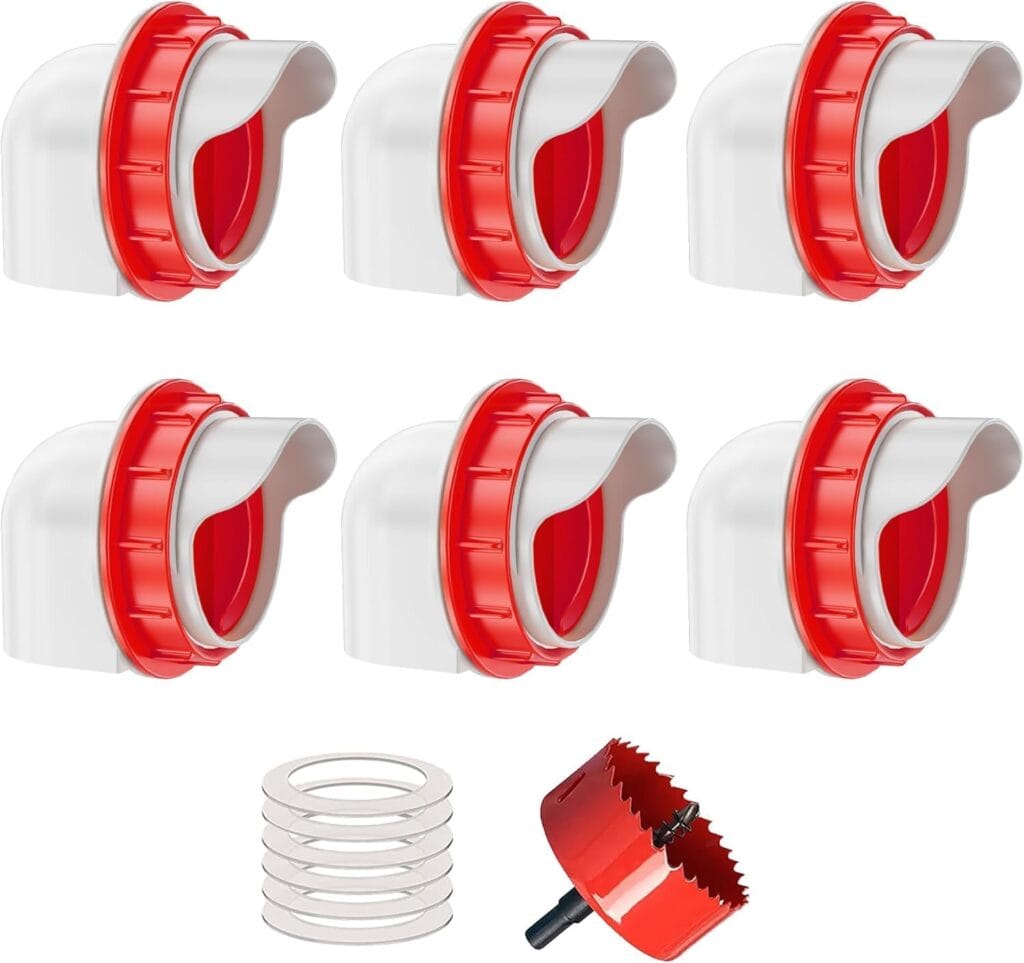
No-Waste Port Feeder Kit
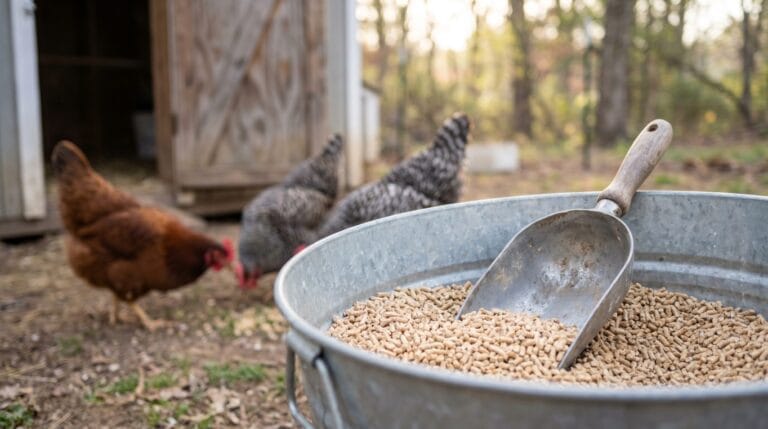
Spilled, scratched-out feed is the biggest hidden cost of keeping chickens, and rain-soaked feed grows mold. A port-style feeder fixes both: hens poke their heads into rain-protected ports to eat, so almost nothing ends up on the ground, and you bolt the ports onto any food-grade bucket to set your own capacity. With thousands of positive reviews, it is the cheapest upgrade that pays for itself in saved feed.
- Best for: cutting feed waste cheaply, and DIY-friendly keepers who want to size their own feeder.
- Keep in mind: you supply the bucket, and birds take a day or two to learn the ports.
Best Rodent-Proof Feeder
Grandpa’s Feeders Automatic Feeder (20 lb)
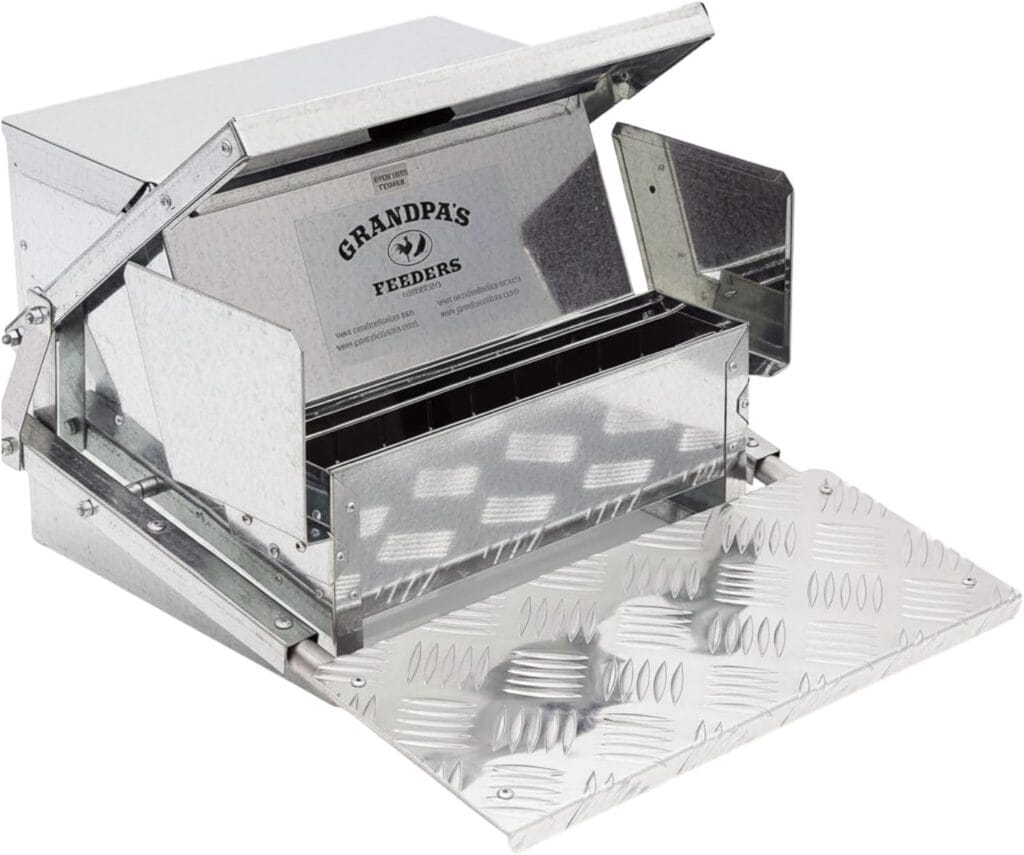
If rats, wild birds, or squirrels are raiding your feed, a treadle feeder is the answer. The bird steps on a platform, the lid opens, and it closes again when they hop off — so feed is only exposed to your flock. Grandpa’s is the long-running standard: galvanized steel, weatherproof, and it holds 20 lb, so you can leave for a weekend without a feed run.
- Best for: stopping rodents and wild birds, and cutting daily feed chores.
- Keep in mind: full-grown birds learn it quickly; young or timid birds need a few days to get the treadle.
Best Budget All-in-One
Port Feeder & Cup Waterer Set
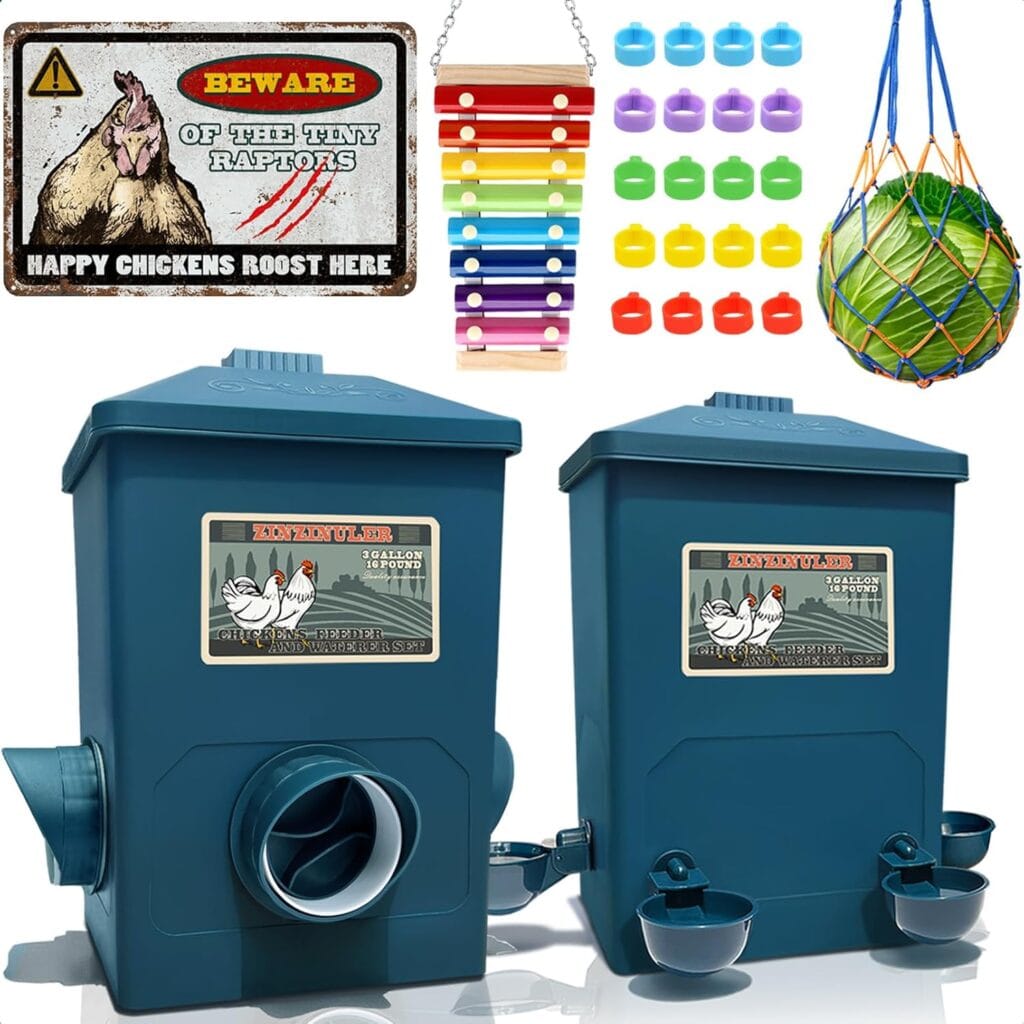
Starting from scratch and want both at once? This set pairs no-waste feeding ports with automatic water cups — attach them to two food-grade buckets you already own and you have a clean feeder and a self-refilling waterer for very little money. It is the most affordable way to outfit a first flock properly.
- Best for: brand-new keepers outfitting a first flock on a budget.
- Keep in mind: you supply two buckets, and the cups need a quick daily glance to confirm they are filling.
The Best Chicken Waterers
Best Overall Waterer
Omlet Insulated Chicken Waterer (3 Gallon)
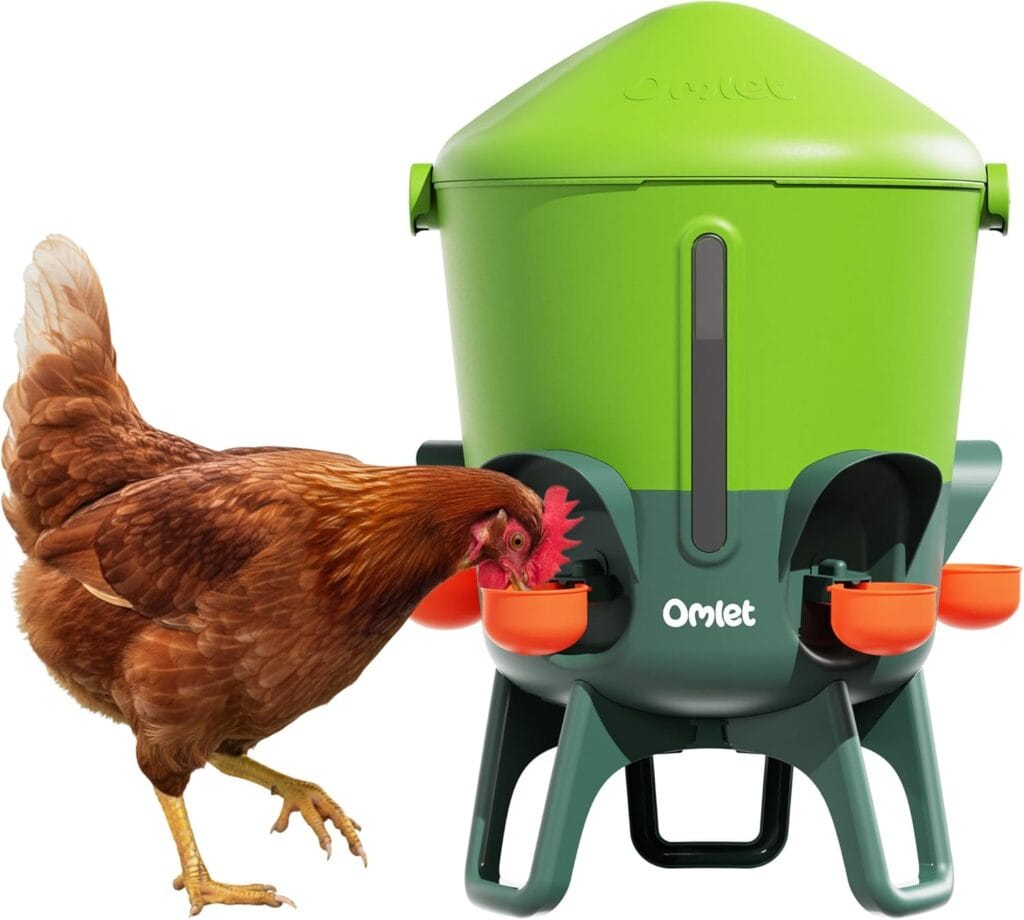
Open waterers turn into dirty, algae-filled soup fast. This insulated waterer uses protected cups that stay clean, keeps water cooler in summer, and slows freezing in shoulder-season cold. At 3 gallons it covers a small flock for days, and Omlet’s build quality earns some of the highest ratings in the whole category.
- Best for: keeping water genuinely clean with little daily fuss; small to mid-size flocks.
- Keep in mind: a premium price, and for deep winter you will still want a heat source (below).
Best for Winter
Farm Innovators Heated Base
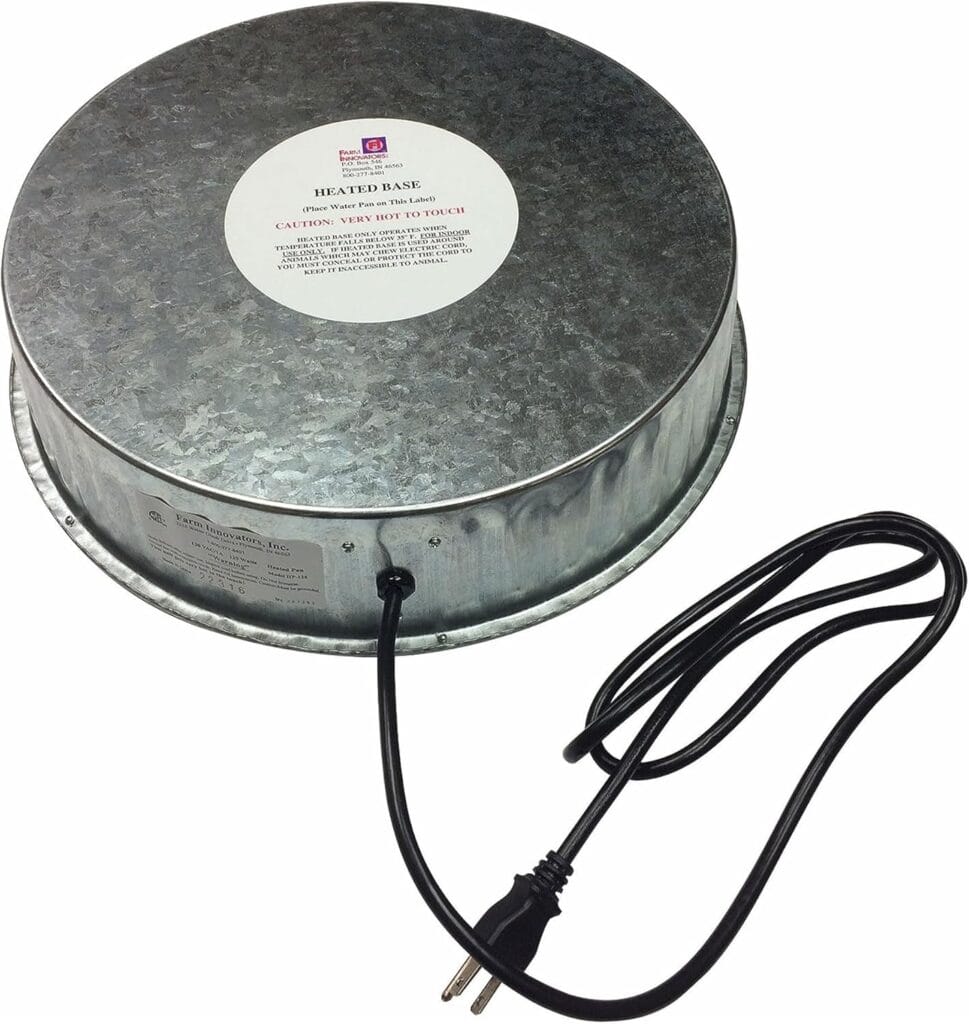
Frozen water is the number-one winter chore for chicken keepers. Instead of buying a whole heated waterer, set your existing double-wall metal fount on this thermostatically-controlled base — it only powers on near freezing, so it is cheap to run and keeps water liquid through hard cold. It has been the go-to for years, with thousands of reviews behind it.
- Best for: keeping water unfrozen all winter without hauling fresh water out twice a day.
- Keep in mind: needs a metal double-wall fount and a safe outdoor outlet; it is not for plastic waterers.
Quick Comparison
| Pick | Type | Best for |
|---|---|---|
| No-Waste Port Feeder Kit | Feeder (DIY ports) | Cutting feed waste, cheaply |
| Grandpa’s Feeders (20 lb) | Feeder (treadle) | Rodent & wild-bird proofing |
| Port Feeder & Cup Waterer Set | Feeder + waterer | Budget all-in-one start |
| Omlet Insulated Waterer | Waterer (cups) | Cleanest water, low fuss |
| Farm Innovators Heated Base | Waterer accessory | Keeping water liquid in winter |
How We Chose
We started from the problems beginners actually run into — wasted feed, dirty water, pests, and winter freezing — and looked for well-established products that solve them, with strong ratings across hundreds or thousands of reviews rather than brand-new listings. We do not list prices, since Amazon’s change often; tap through for the current price. And we only recommend gear we would put in our own coop.
From the In Homestead Shop
Starting your first flock?
The Backyard Chickens Starter Guide covers your whole first year — choosing breeds, building and predator-proofing the coop, feed and water, and daily care — sourced from cooperative extension guidance and the Merck Veterinary Manual, with two printables.
The Free Garden Starter Pack
Five printable pages that take the guesswork out of a first season, plus a short email every week or two when something is worth planting, picking, or putting up.
- A garden planning worksheet you can actually fill in
- A seed-starting and planting calendar
- A harvest log to track what really produced
No spam, ever. Unsubscribe in one click.
Thank you. You are on the list.
Your Garden Starter Pack is ready right now. Grab it here:
Download the pack (PDF)Keep an eye on your inbox. The next seasonal guide lands there first.
Frequently Asked Questions
How much feeder and water space do chickens need?
Give every bird room to eat and drink without being crowded out by flockmates — a rough guide is a few inches of feeder space per hen, and at least one drinking point per several birds. For planning water, figure roughly 1 to 2 cups per hen per day, more in hot weather. When in doubt, add a second station so lower-ranking birds always get a turn.
How do I stop my chickens from wasting feed?
Switch from an open trough to a port-style or treadle feeder so birds can’t bill feed onto the ground, raise the feeder to about the height of the birds’ backs, and don’t overfill it. Those three changes cut most feed waste — and the pests that waste attracts.
How do I keep chicken water from freezing in winter?
The simplest fix is a thermostatically-controlled heated base under a metal fount, or a purpose-built heated waterer. An insulated waterer slows freezing but won’t stop it in hard cold. For a very small flock, some keepers simply swap in fresh water a couple of times a day — but a heated base saves that chore.
Should the feeder and waterer go inside the coop or in the run?
Most keepers put them in a covered part of the run rather than inside the coop. It keeps the coop drier and cleaner, reduces spilled feed and moisture where birds sleep, and gives less reason for rodents to move in. Keep both raised off the ground and under cover from rain.
The Bottom Line
For most beginners, the simplest clean setup is a no-waste port feeder paired with the Omlet insulated waterer — add a heated base before your first freeze. If pests are your problem, start with the treadle feeder instead. Once the food and water are sorted, the rest of flock-keeping gets a lot easier — our beginner’s feeder and waterer guide, coop build guide, and guide to chicken feed walk you through the rest.