Best Egg Incubators for Beginners: 5 Picks Compared (2026)
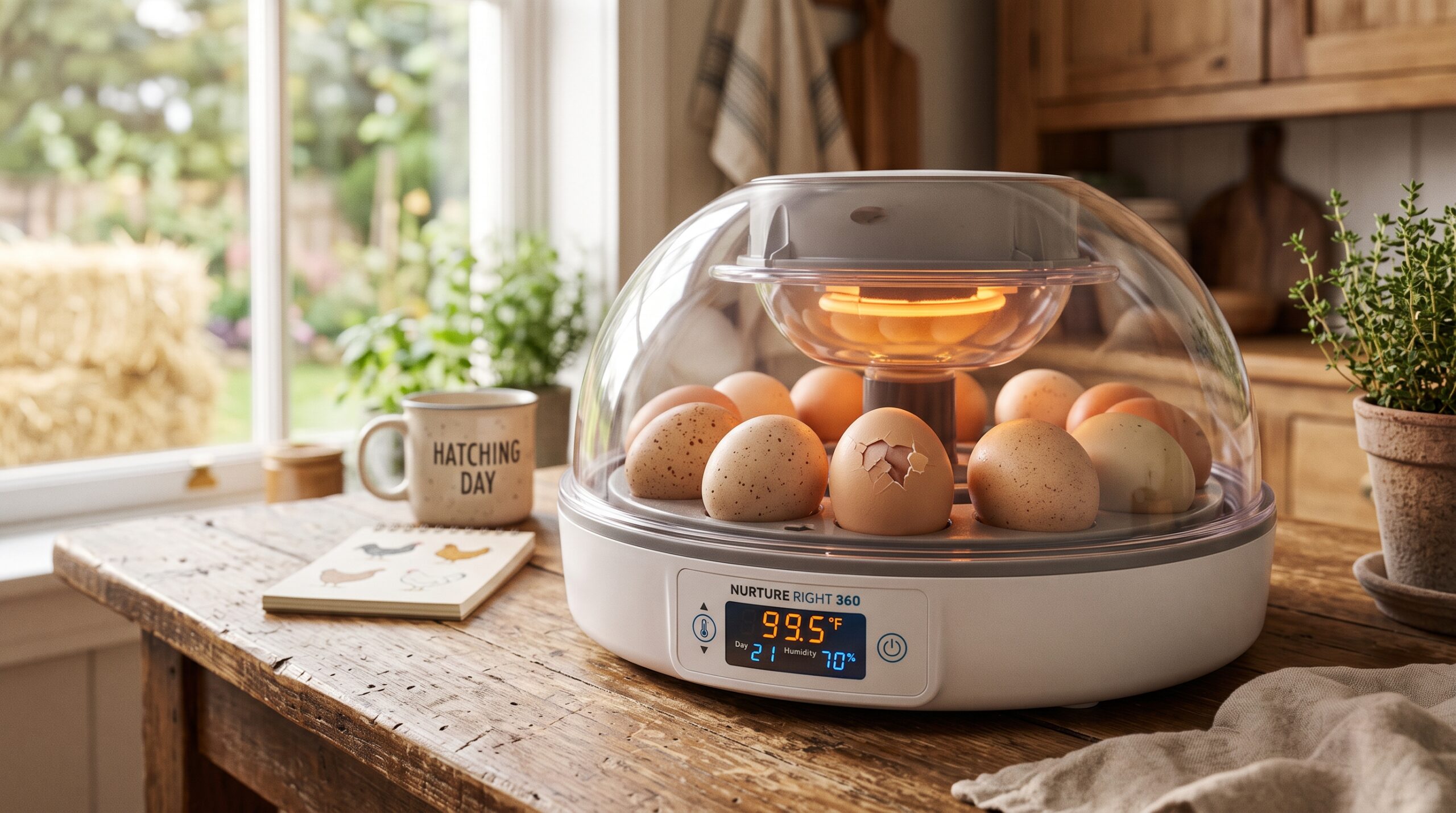
Day 21 has a sound. After three weeks of a quiet hum and a warm glow through the dome, you start hearing faint taps from inside the shells, then a thin cheep, and then the slow work of a chick breaking out. Hatching your own chicks is one of the most rewarding things you can do with a backyard flock, and almost all of it comes down to one piece of equipment holding a steady temperature and humidity while you wait.
The catch is that incubators range from a 30-dollar plastic box to a 300-dollar cabinet, and the cheap ones are exactly where beginners lose whole batches of eggs to a few degrees of temperature swing. Choosing the best incubator for chicken eggs is less about features and more about which one holds its settings reliably and turns the eggs for you, so a missed turn or a warm afternoon does not cost you the hatch.
Below are five incubators that beginners actually hatch with and rate well, sorted by who each one is for, plus a short buying guide on egg turning, capacity, and the temperature and humidity that matter. Pair it with fertile eggs from your best laying hens and you are most of the way there.
In Homestead is reader-supported. When you buy through links on this page, we may earn a small commission at no extra cost to you, see our affiliate disclosure. As an Amazon Associate, we earn from qualifying purchases.
Table of Contents
The Best Egg Incubators for Beginners at a Glance
- Best overall: Harris Farms Nurture Right 360 – the beginner standard, with 360-degree auto turning and a built-in candler.
- Best premium (small batch): Brinsea Mini II Advance – the gold-standard brand for rock-steady temperature.
- Best budget starter: 18-Egg Auto-Turning Incubator – auto turning and humidity readout at the lowest entry price.
- Best value for big hatches: Farm Innovators 41-Egg – forced-air, 41-egg capacity for the money.
- Best for serious hatchers: Brinsea Ovation 56 EX – 56 eggs with automatic humidity control.
Quick Comparison
| Incubator | Capacity (chicken eggs) | Egg turning | Best for |
|---|---|---|---|
| Harris Farms Nurture Right 360 | 12–22 | Automatic (360°) | Best overall / beginners |
| Brinsea Mini II Advance | 7 | Automatic | Premium small batch |
| 18-Egg Auto-Turning | ~18 | Automatic | Tightest budget |
| Farm Innovators 41-Egg | 41 | Automatic | Big hatches on a budget |
| Brinsea Ovation 56 EX | 56 | Automatic + auto humidity | Serious / repeat hatchers |
How I Chose These
Hatch rate lives and dies on stability, so I prioritized incubators that hold a steady temperature and turn the eggs automatically, then sorted by capacity and price. Every pick here is something beginners are actually hatching with and rating across hundreds or thousands of reviews, not a brand-new listing with a handful. I left out the bare-bones still-air boxes that need hand-turning and constant babysitting, because they are where most first-timers lose a batch. I do not list prices since Amazon changes them often, so tap through for the current number.
Automatic vs. Manual Egg Turning
Chicken eggs need turning several times a day for the first 18 days so the embryo does not stick to the shell. A manual incubator makes that your job, three to five times a day, every day, including the ones you are away. An automatic turner does it for you on a slow cycle and is the single feature most worth paying for as a beginner. Every incubator on this list turns the eggs automatically, which removes the most common reason first hatches fail.
How Many Eggs Should You Incubate?
Capacity is about how many eggs fit, not how many chicks you need. Expect a hatch rate of roughly 50 to 80 percent with shipped or first-time eggs, so a 7-egg Brinsea might give you 4 to 5 chicks and a 22-egg Nurture Right closer to a dozen. For a backyard flock, a 7 to 22-egg incubator is plenty. Go to 40 eggs or more only if you are replacing a flock, selling chicks, or hatching for neighbors.
Temperature and Humidity (the Part That Matters)
For a forced-air incubator, chicken eggs want a steady 99.5°F, with humidity around 45 to 55 percent for the first 18 days and raised to about 65 percent for the final three-day hatch, often called lockdown. The exact numbers come from sources like Penn State Extension, and the reason a good incubator matters is that holding those numbers steady is hard in a cheap box. A digital display, a fan for even heat, and stable humidity control are what you are really paying for.
Still-Air vs. Forced-Air
A still-air incubator has no fan, so heat layers unevenly and you have to run it a little hotter at the top of the eggs. A forced-air incubator has a fan that keeps the whole chamber at one temperature, which is far more forgiving for a beginner. Most of the picks here are forced-air or fan-assisted for that reason. If you see a bargain still-air model, know that it can work but leaves less room for error.
The 5 Best Egg Incubators for Beginners
Best Overall
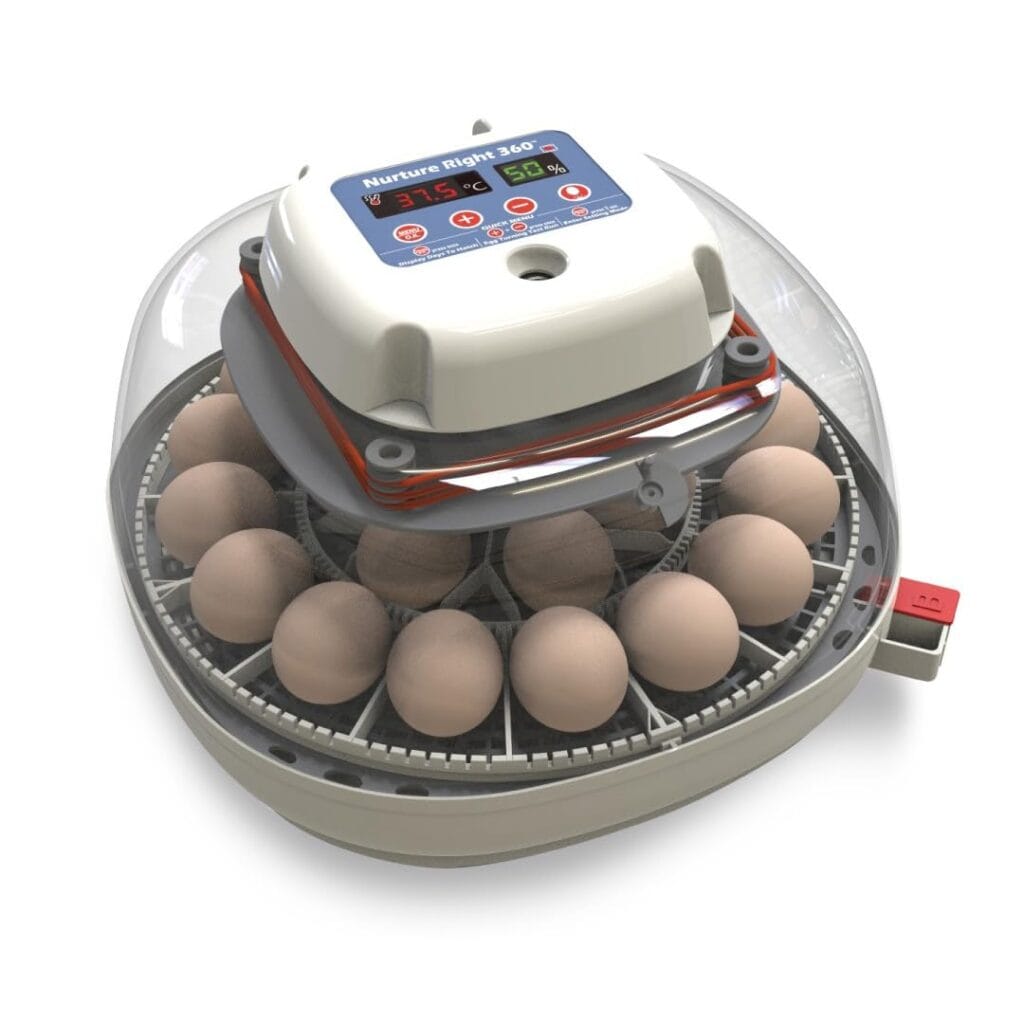
Harris Farms Nurture Right 360
4.3 stars across 5,000+ ratings
If you are not sure which to buy, this is the one most beginners should start with. The Nurture Right 360 holds 12 to 22 chicken eggs, turns them automatically with a slow 360-degree rotation, shows temperature and humidity on a clear digital display, and counts down the days to hatch. The domed lid gives you a full view of the hatch, and a built-in egg candler is included so you can check development without a separate tool. It is the most reviewed beginner incubator for good reason.
- Best for: first-time hatchers who want a reliable, view-everything incubator for a backyard-sized batch.
- Keep in mind: humidity still needs your attention at lockdown, and very cold rooms can affect its stability.
Best Premium (Small Batch)
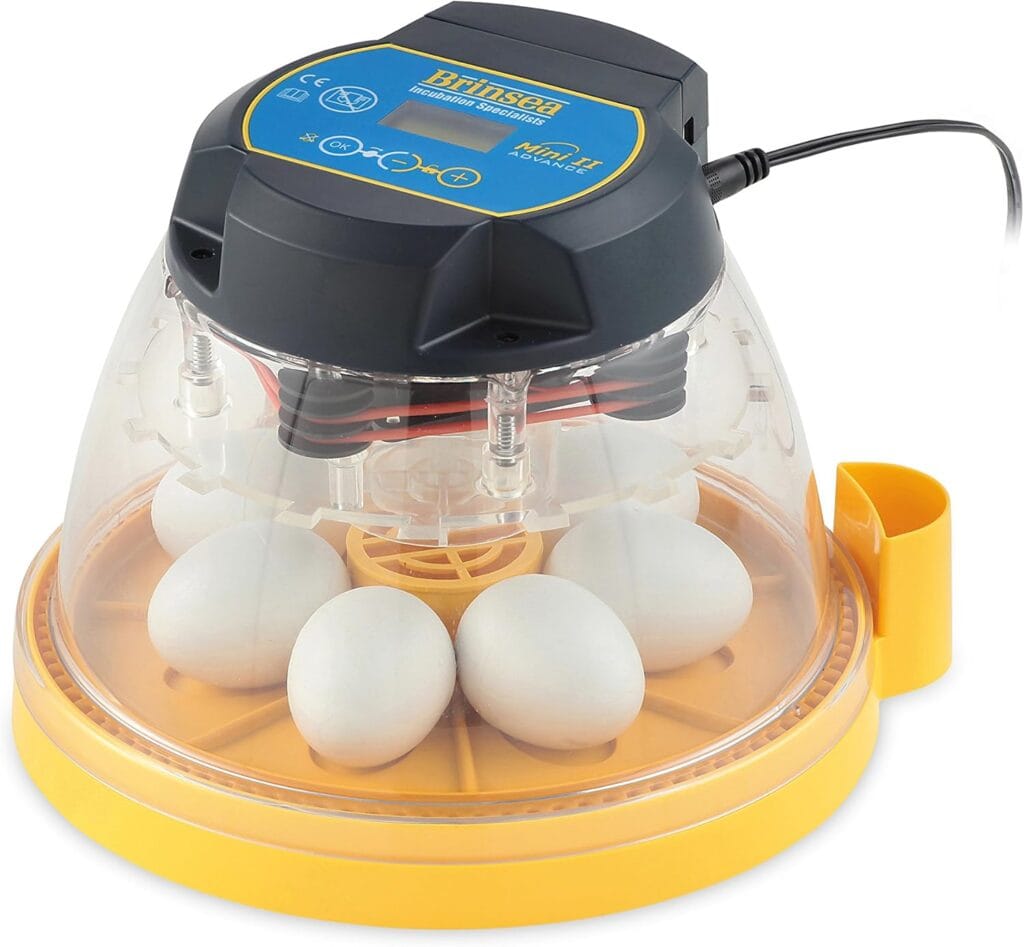
Brinsea Mini II Advance
4.5 stars across 550+ ratings
Brinsea is the trusted name in home incubation, and the Mini II Advance is the small, do-it-right option. It holds 7 chicken eggs, turns them automatically, and is known for holding temperature dead steady, which is the whole point. It costs more per egg than the big plastic units, but the build quality and reliability are why serious small-flock keepers buy it. If you only want a few chicks and you want them to hatch, this is the safe bet.
- Best for: keepers who want a few chicks and prize reliability over capacity.
- Keep in mind: only 7 eggs per batch, and the price is high for the size.
Best Budget Starter
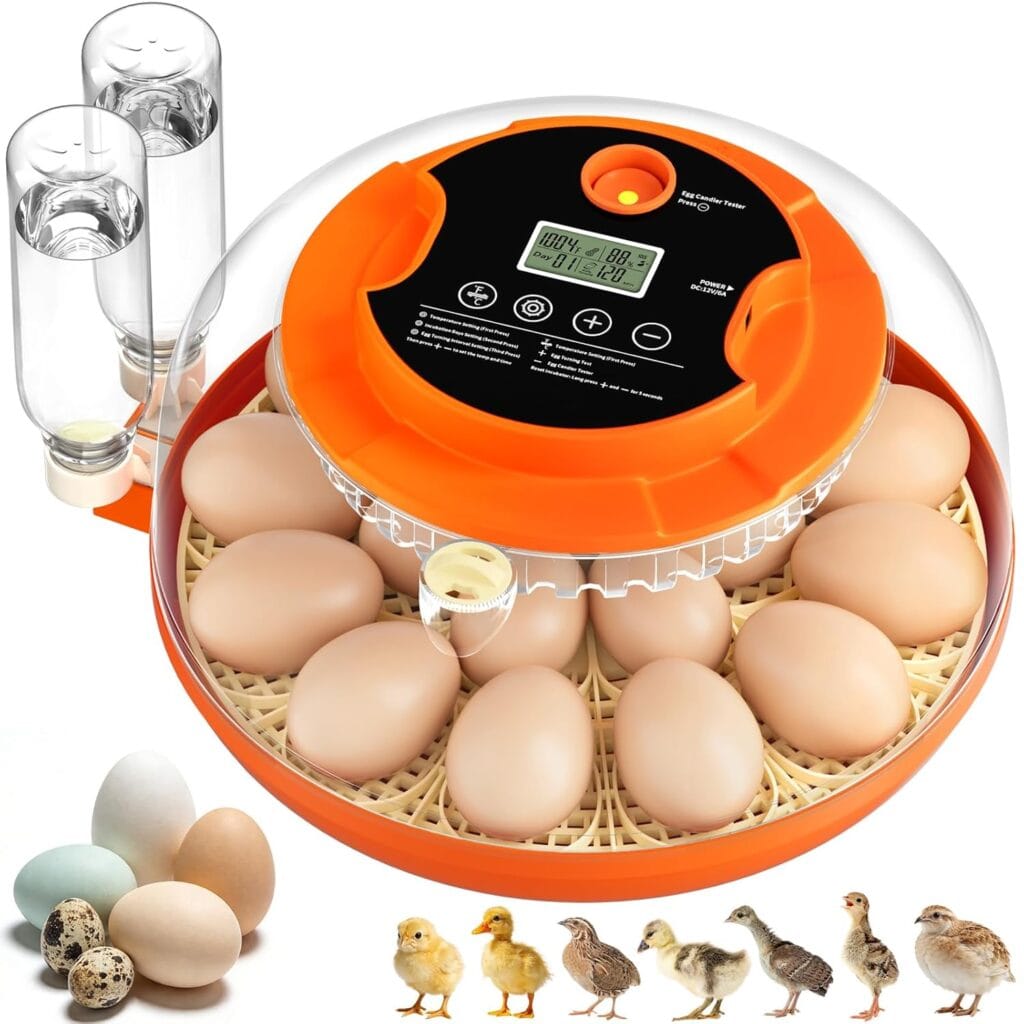
18-Egg Auto-Turning Incubator
4.3 stars across 500+ ratings
The lowest-cost way to hatch without going fully manual. This style of 18-egg incubator still gives you automatic egg turning and a temperature and humidity readout, which are the features that actually protect a hatch. It is generic and the build is basic, but plenty of first-timers get a good hatch from one. Treat it as a try-it-and-see incubator rather than a buy-it-for-life tool.
- Best for: the tightest budget and anyone testing whether hatching is for them.
- Keep in mind: less consistent than the Brinsea or Nurture Right, so watch the temperature closely, and confirm current availability since these listings rotate.
Best Value for Big Hatches
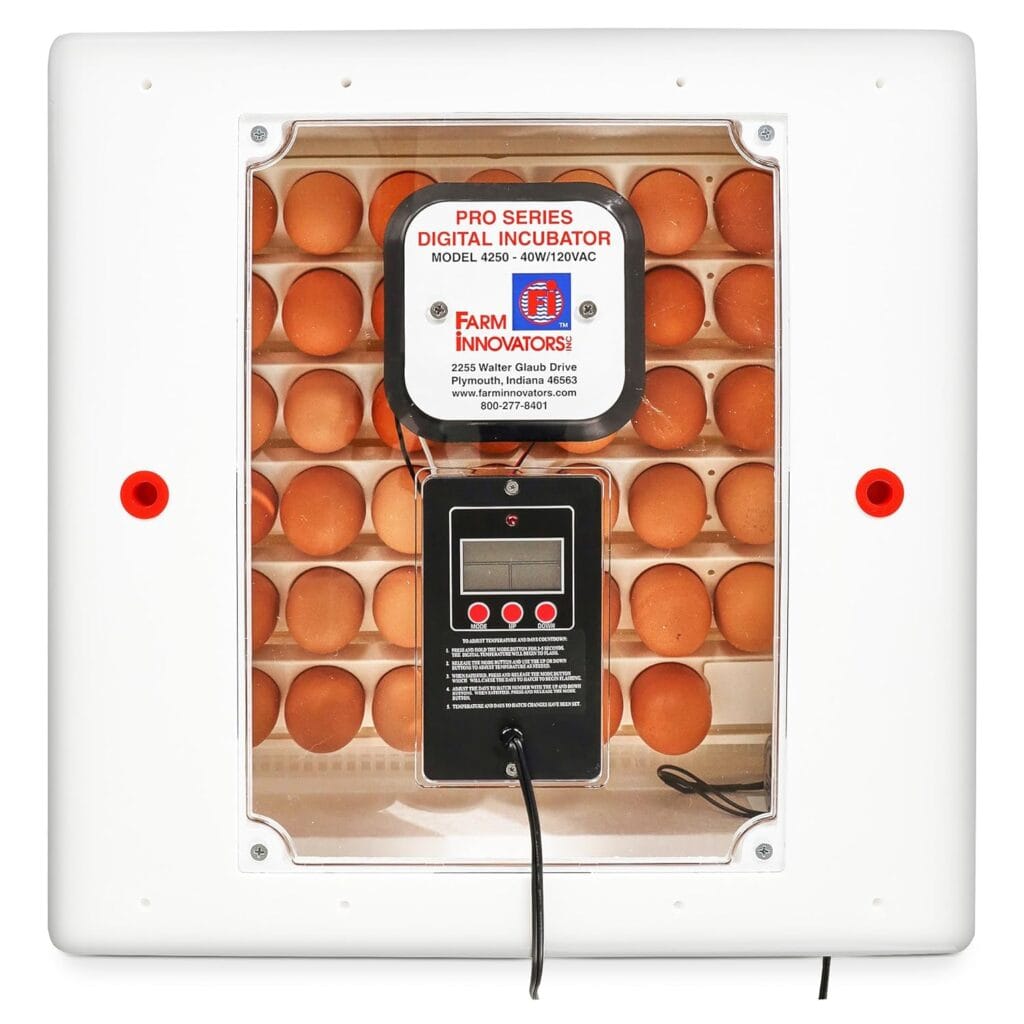
Farm Innovators 41-Egg
4.0 stars across 2,000+ ratings
When you need volume without cabinet-incubator money, the Farm Innovators 41-egg is the workhorse. It is a forced-air (circulated-air) digital unit with automatic turning and humidity, holds 41 chicken eggs, and has a long track record across thousands of reviews. It is a step up in capacity from the beginner domes while staying affordable, which suits anyone replacing or expanding a flock.
- Best for: bigger or repeat hatches on a reasonable budget.
- Keep in mind: a slightly lower average rating than the Brinsea, and the larger chamber takes more attention to keep humidity even.
Best for Serious Hatchers
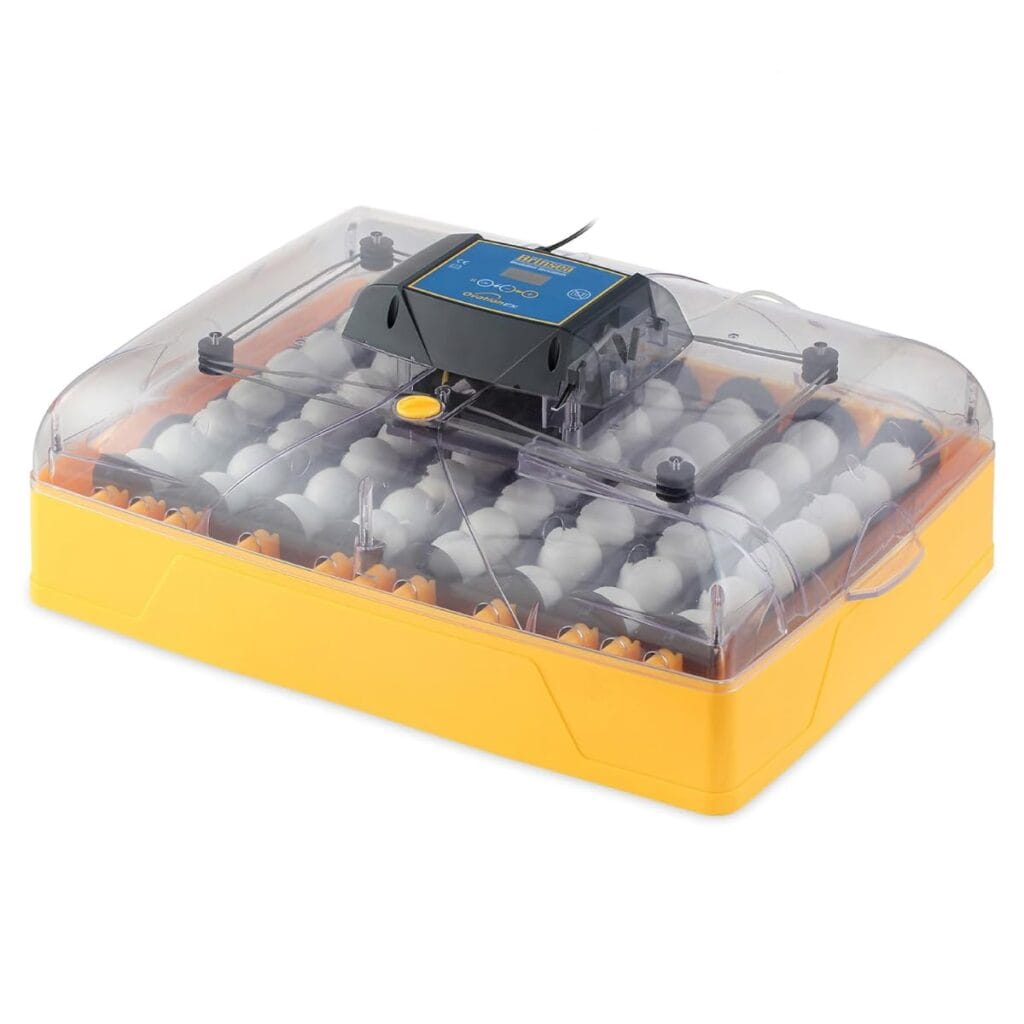
Brinsea Ovation 56 EX
4.4 stars across 380+ ratings
The upgrade pick for people who hatch often. The Ovation 56 EX holds 56 chicken eggs, turns automatically, and adds automatic humidity control, so it manages the part beginners find fiddliest on its own. It is an investment, but if hatching becomes a yearly habit or a small side income, the consistency and hands-off humidity pay for themselves over many batches.
- Best for: committed hatchers, small breeders, and anyone tired of chasing humidity by hand.
- Keep in mind: the highest price here, and more capacity than a casual backyard keeper needs.
Hatching your first chicks?
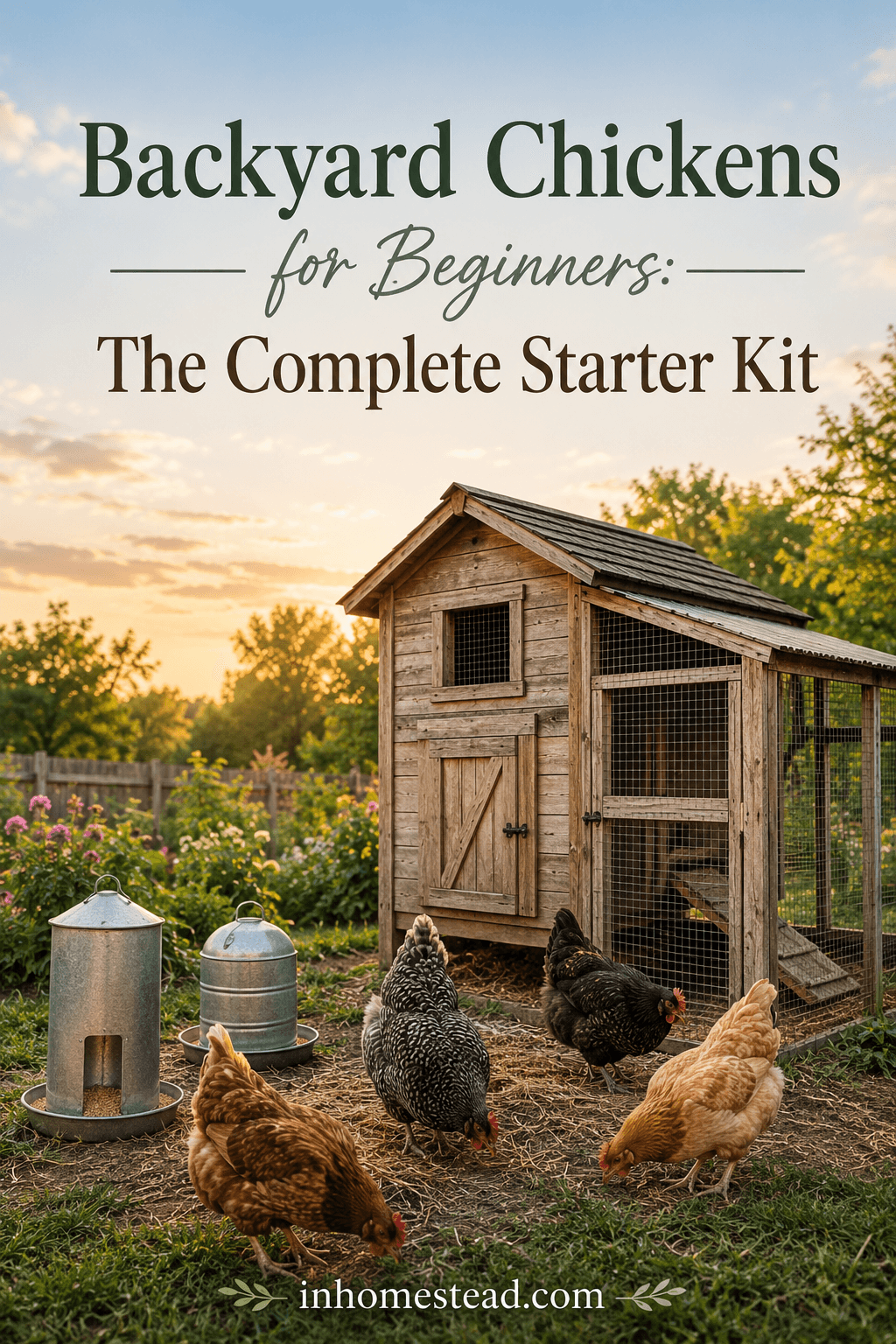
Once they hatch, you will need a brooder, the right feed, and a plan for the coop. Our Backyard Chickens Starter Guide walks you through that whole first year, step by step.
The Free Garden Starter Pack
Five printable pages that take the guesswork out of a first season, plus a short email every week or two when something is worth planting, picking, or putting up.
- A garden planning worksheet you can actually fill in
- A seed-starting and planting calendar
- A harvest log to track what really produced
No spam, ever. Unsubscribe in one click.
Thank you. You are on the list.
Your Garden Starter Pack is ready right now. Grab it here:
Download the pack (PDF)Keep an eye on your inbox. The next seasonal guide lands there first.
Frequently Asked Questions About Egg Incubators
How long does it take to hatch chicken eggs?
Chicken eggs take 21 days to hatch. You turn them for the first 18 days, then stop turning and raise the humidity for the final 3 days, the stretch known as lockdown, when the chicks position themselves and break out.
Do I really need an automatic egg turner?
For a beginner, yes. Eggs need turning several times a day for 18 days, and missed or uneven turning is one of the top reasons first hatches fail. An automatic turner does it on a steady cycle so a busy day does not cost you the batch. Every incubator on this list turns automatically.
What temperature and humidity do chicken eggs need?
In a forced-air incubator, aim for a steady 99.5°F, with humidity around 45 to 55 percent for days 1 to 18, raised to about 65 percent for the final three days. Holding those numbers steady is exactly what a good incubator buys you.
How many eggs should a beginner start with?
Start small, with a 7 to 22-egg incubator. Hatch rates for first-timers run roughly 50 to 80 percent, so even a small batch gives you a handful of chicks, and a smaller incubator is easier to keep stable. Scale up only once you have a hatch or two under your belt.
Can I hatch eggs from the grocery store?
Almost never. Store eggs are not fertilized, and even fertile eggs need a rooster in the flock and careful, fresh handling. For a real shot at hatching, use fertile eggs from your own backyard hens or a local breeder, collected within about a week and stored cool, not refrigerated.
Still-air or forced-air incubator for beginners?
Forced-air. The fan keeps the whole chamber at one even temperature, which is far more forgiving than a still-air box where heat layers unevenly. Most beginner failures trace back to temperature swings, so the steadier option is worth it.
The Bottom Line
That first cheep on day 21 is worth the three weeks of waiting, and the incubator under those eggs is what gets you there. For most beginners the Harris Farms Nurture Right 360 is the right first buy: reliable, easy to watch, and sized for a backyard hatch. Step up to a Brinsea if you want the steadiest temperature in a small batch, or size up to the Farm Innovators or Ovation for bigger hatches. Whichever you choose, start with good fertile eggs, hold your temperature steady, and read up on raising the chicks once they hatch in our guide to setting up the coop.