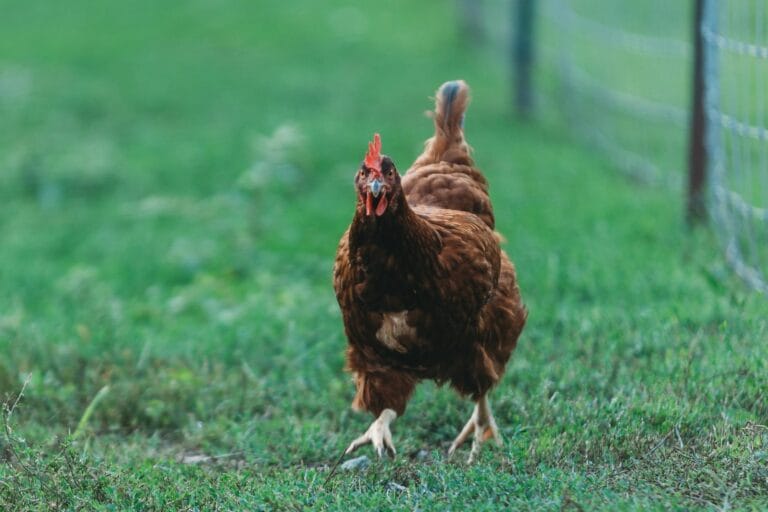
Easter Egger Chickens: Egg Colors, Temperament, and Care
There is a strange little suspense that comes with an Easter Egger pullet. You raise her for five months with no idea what color egg she will lay, because the bird herself does not advertise it. Then one morning there is a single blue-green egg in the nesting box, the color of a robin’s egg but heavier in your hand, and you find yourself calling someone over to look at it.
That is the whole appeal of the Easter Egger, and it is why they are one of the most searched-for backyard chickens in the country. A small flock of them fills the carton with blue, green, olive, and pink eggs that look nothing like the store.
Here is the part the feed store will not always tell you: the Easter Egger is not actually a breed, and the bird labeled “Ameraucana” in the chick bin next to it very often is not one either. None of that is a problem once you understand what you are buying. It just means the label matters less than the genetics.
This guide covers what an Easter Egger really is, what colors they lay and why each hen only lays one, how many eggs to expect, their temperament and hardiness, how they differ from Ameraucanas and Araucanas, and where to buy them without overpaying.
Table of Contents
Easter Egger Chicken Overview
| Trait | Easter Egger |
|---|---|
| Type | Mixed-breed hybrid carrying the blue-egg gene, not a recognized breed |
| Egg color | Blue, green, olive, pink, cream, or brown (one color per hen, for life) |
| Eggs per year | 200 to 280, large |
| Starts laying | 5 to 6 months (about 20 to 26 weeks) |
| Hen size | Around 4 to 5 lb |
| Temperament | Friendly, curious, calm, good with children |
| Comb | Pea comb, very cold-hardy and frostbite-resistant |
| Broodiness | Occasional, varies by bird |
| Lifespan | 8 to 10 years |
| Best for | Beginners who want a colorful egg basket from hardy, friendly hens |
What Is an Easter Egger Chicken?
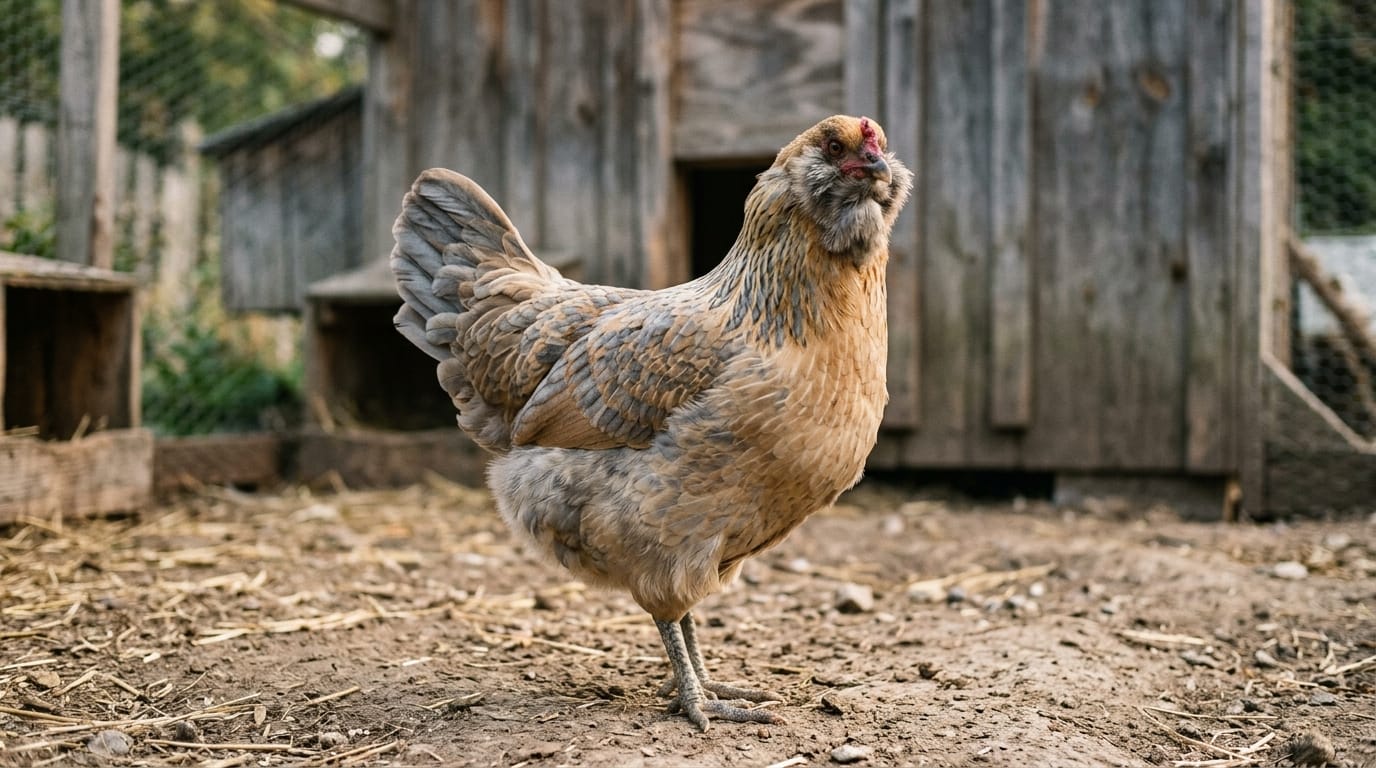
An Easter Egger is any chicken that carries the blue-egg gene but does not meet the standard for a recognized blue-egg breed. In plain terms, it is what you get when a blue-egg layer like an Ameraucana or Araucana is crossed with a brown-egg layer. The chick inherits the blue-egg gene and a grab bag of everything else, which is exactly why no two Easter Eggers look quite alike.
Because it is a mix rather than a breed, the Easter Egger has no official standard and is not recognized by the American Poultry Association. That is not a knock on the bird. It is a genuinely useful, hardy, productive hen. It simply means “Easter Egger” describes what she does, lay a colored egg, rather than a fixed set of looks the way “Orpington” or “Leghorn” does.
This is also the source of the single biggest point of confusion in backyard chickens, which is worth its own section below. For now, the short version: most birds sold as “Ameraucanas” or “Americanas” at feed stores are actually Easter Eggers. The Ameraucana Breeders Club maintains the true breed standard, and a real Ameraucana is a specific, more expensive bird.
What Color Eggs Do Easter Eggers Lay?
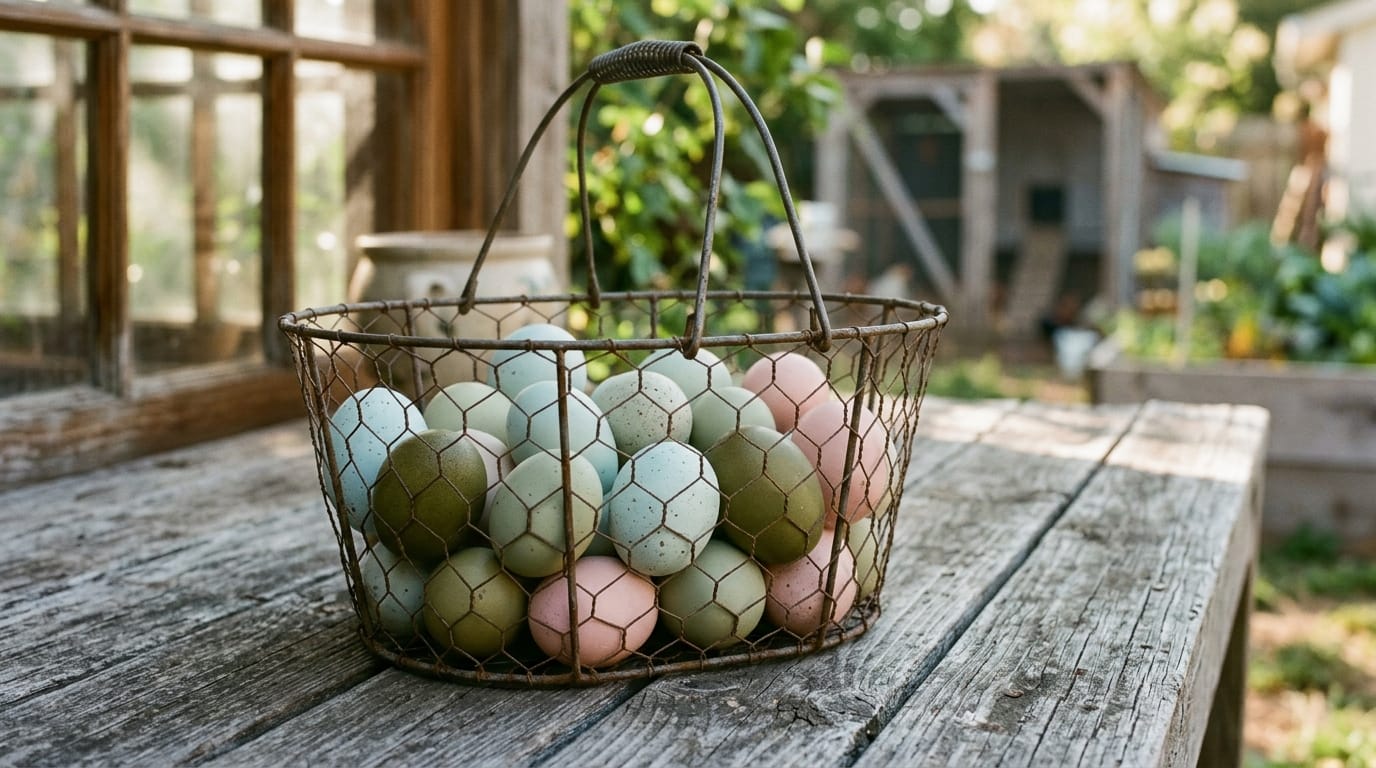
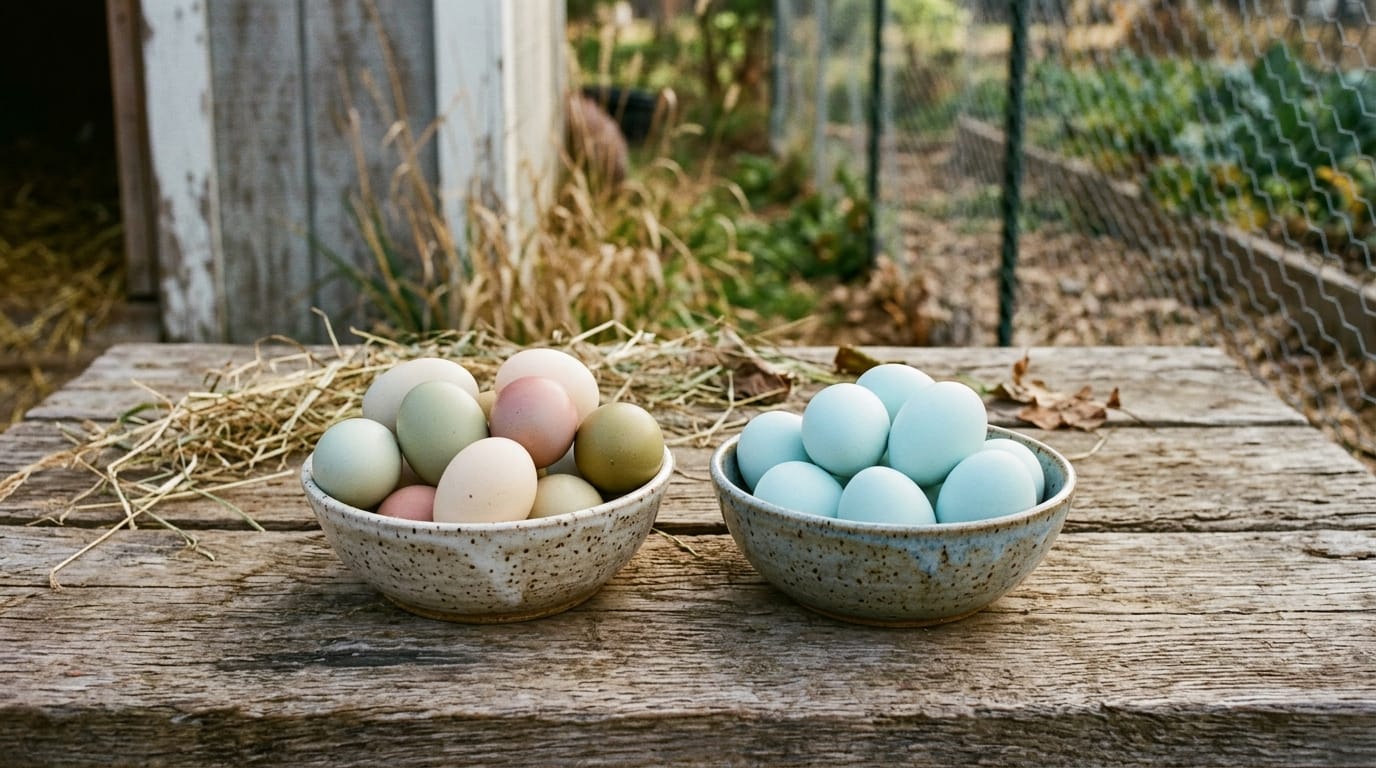
This is the reason people want them, so it is worth getting right. An Easter Egger can lay blue, green, olive, pink, cream, or plain brown. The catch that surprises every first-timer: each individual hen lays only one color for her entire life. You do not get a rainbow from one bird. You get a rainbow from a flock of them.
The color comes down to two pigments layered on the shell:
- Blue is the base gene, and it colors the shell all the way through. A hen with the blue gene and no brown overlay lays a true blue egg.
- Green happens when the blue gene is combined with a brown pigment laid over the top. Blue plus brown reads as green or sage.
- Olive is blue plus a heavy dark-brown overlay, the kind that comes from crossing in a Marans or Welsummer. A bird bred specifically for this is called an Olive Egger.
- Pink and cream come from a light brown bloom on a pale shell, with no blue gene expressed.
You will not know which color a given pullet lays until she lays her first egg, and after that it stays remarkably consistent. The shade can lighten slightly toward the end of a long laying cycle, but a blue-egg hen does not switch to brown. If a specific color matters to you, buy started pullets that are already laying so you can see the eggs, or accept the surprise, which is honestly half the fun.
How Many Eggs Do Easter Eggers Lay?
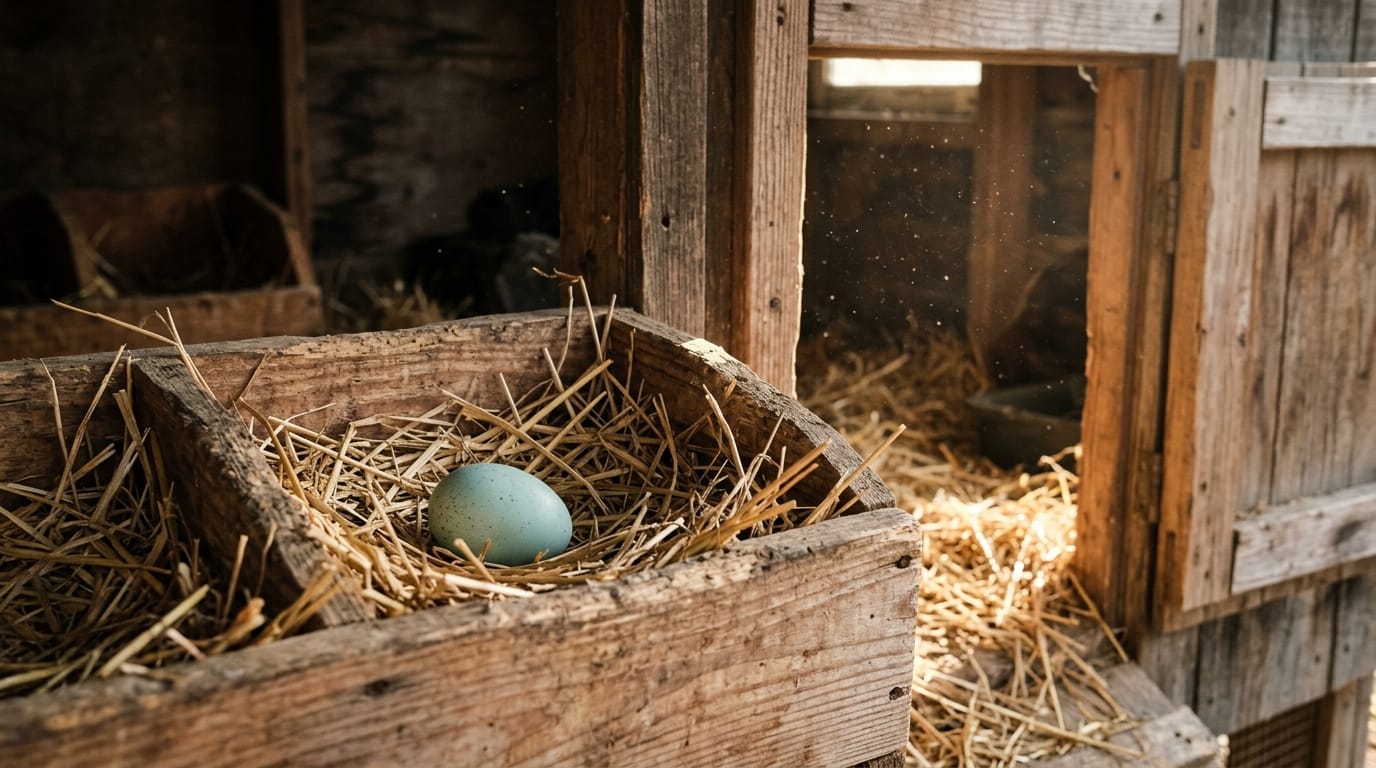
Easter Eggers are solid, dependable layers, usually 200 to 280 large eggs a year, which works out to four or five a week from a hen in her prime. That puts them behind a production hybrid like an ISA Brown but comfortably in the range of a good dual-purpose heritage bird, and they keep it up for more years than a hybrid does.
Most start laying around 5 to 6 months old. Ours have been reliable through cold weather, which is not true of every breed, thanks to that pea comb and their generally hardy build. If you want the full timeline from chick to first egg, our guide on when chickens start laying eggs walks through the signs. And if you want maximum eggs overall, our ranking of the best egg laying chickens puts their output in context against the heavy hitters.
Easter Egger Temperament
Temperament is where Easter Eggers earn their keep as a beginner bird. They are calm, curious, and friendly, the kind of hen that wanders over to see what you are doing rather than bolting for the far corner of the run. That makes them a genuinely good choice for families with children, and it is a big part of why they stay popular despite not being a “real” breed.
Because their parentage varies, personality varies a little too. Most are gentle and mid-ranking in the flock; a few are bold and talkative. They tend to handle confinement well and are rarely aggressive. In a mixed flock they usually get along without drama, though like any calm bird they can get picked on by pushier breeds, so watch a new pullet’s first week with an established flock.

What Easter Eggers Look Like
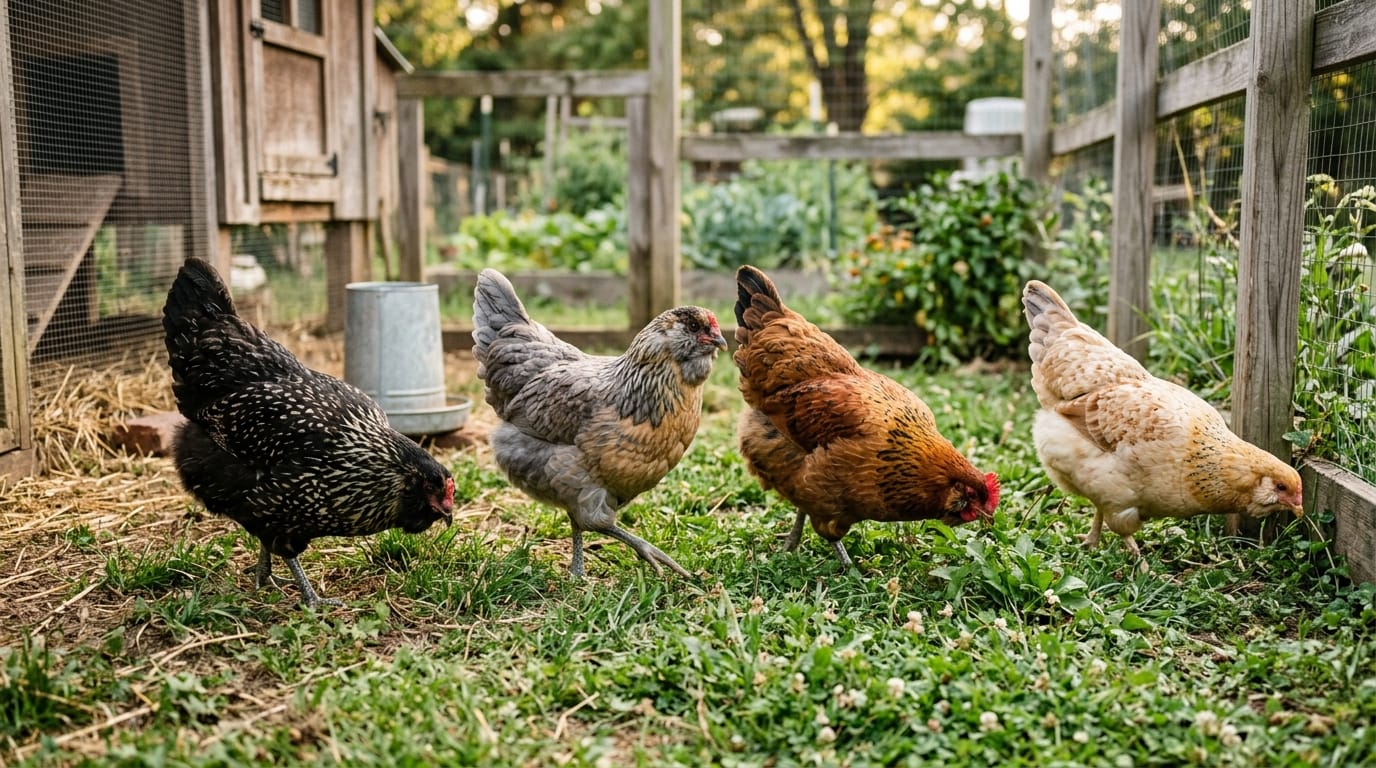
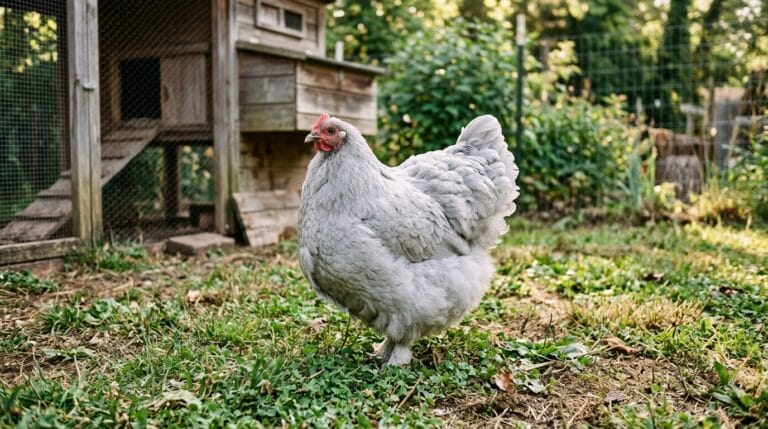
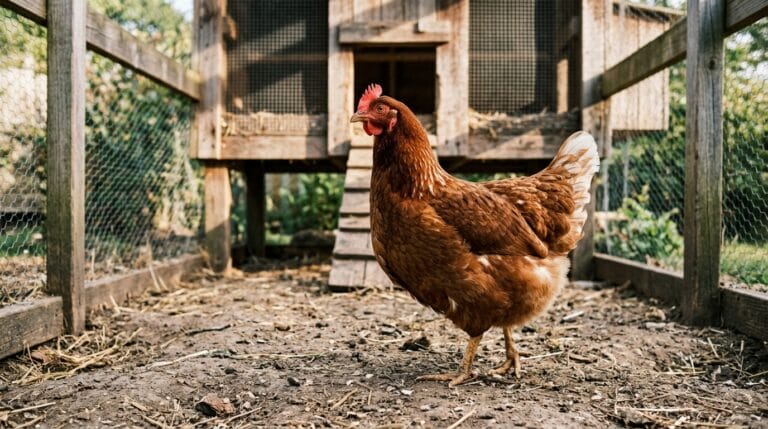
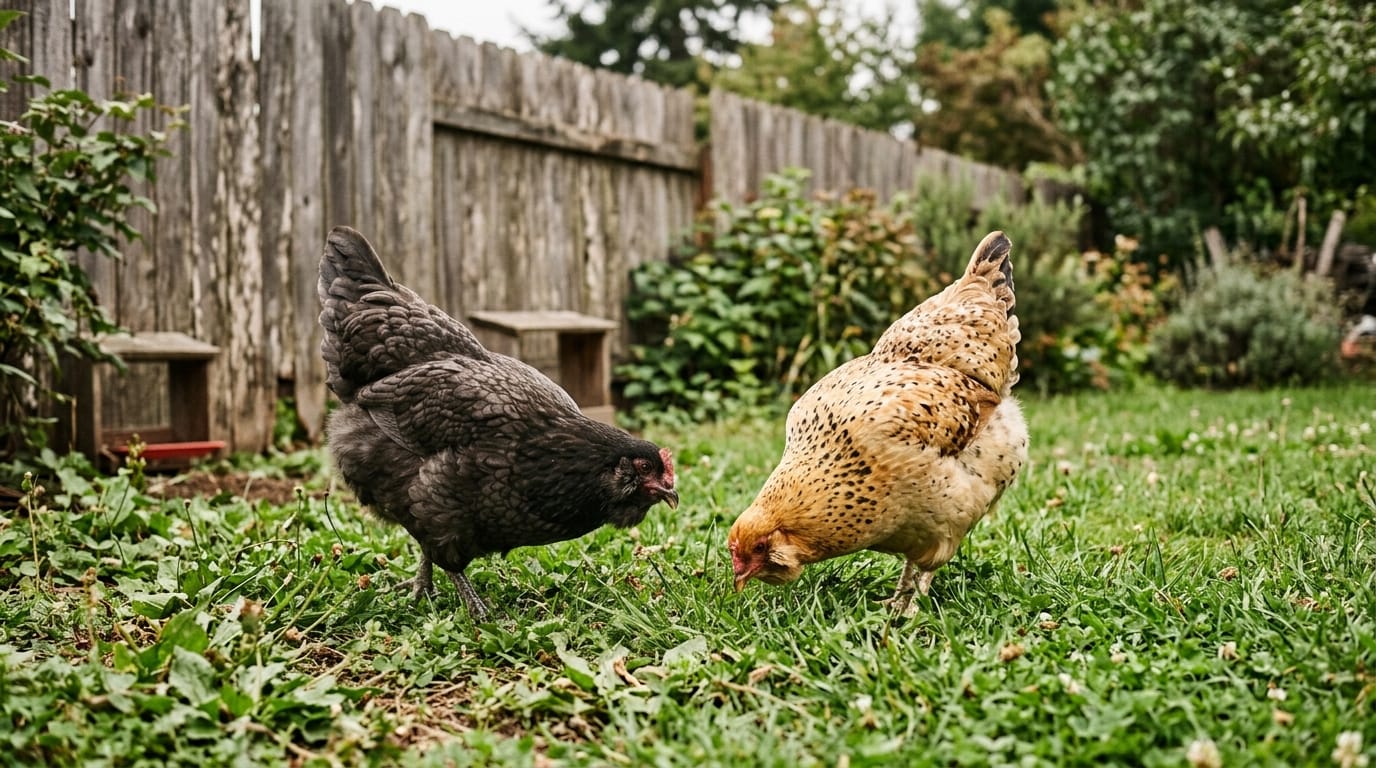
There is no single Easter Egger look, and that is the point. Because they are a mix, plumage runs the full range: black, blue, red, buff, speckled, wheaten, and every combination in between. In a flock of six you may not find two that match.
A few features show up often enough to be signatures. Many Easter Eggers have muffs and a beard, the puff of feathers around the face that gives them a chipmunk-cheeked look. Most have a pea comb, a small, low, three-ridged comb that sits close to the head and rarely gets frostbitten, which is a real advantage in cold climates. Leg color varies from slate to green to yellow. They are a medium bird, around 4 to 5 lb, lighter than a dual-purpose breed but sturdy.
Easter Egger Lifespan and Hardiness
Here is a quiet advantage of the mixed genetics. Where a high-production hybrid burns bright and lives 3 to 5 years, an Easter Egger commonly lives 8 to 10, and lays well for more of that time. The hybrid vigor of a mixed bird tends to make them tough, disease-resistant, and long-lived, closer to a heritage breed than to a commercial layer.
They handle cold particularly well. The pea comb and full feathering mean they keep laying through winter when big-combed breeds slow down and risk frostbite. They tolerate heat reasonably too, given shade and water. For most of the country, an Easter Egger is about as low-maintenance and weatherproof as a laying hen gets.
Easter Egger vs Ameraucana, Araucana, and Olive Egger
This is the confusion that trips up nearly every new keeper, usually at the feed store. All four of these birds carry the blue-egg gene, but only two are recognized breeds. Here is how they actually differ:
| Bird | Recognized Breed? | Egg Color | What Sets It Apart |
|---|---|---|---|
| Easter Egger | No, a mix | Blue, green, olive, pink, or brown | Cheap, hardy, looks vary wildly; one color per hen |
| Ameraucana | Yes (APA) | Always blue | Eight standard colors, beard and muffs, slate legs; costs more |
| Araucana | Yes (APA) | Always blue | Rumpless (no tail), ear tufts, rare and harder to breed |
| Olive Egger | No, a mix | Olive to dark green | A blue layer crossed with a dark-brown layer like Marans |
The practical takeaway: if a hatchery or feed store sells you an “Ameraucana” for a few dollars alongside the other chicks, it is almost certainly an Easter Egger, and that is fine if a colorful egg is what you want. A true Ameraucana comes from a breeder, costs considerably more, meets a color standard, and always lays blue. Neither is better. They are answers to different questions. Just know which one you are paying for, and do not pay Ameraucana prices for an Easter Egger.
Easter Egger Roosters
Easter Egger roosters are often strikingly colorful, since the same mixed genetics that scramble the hens’ plumage produce some beautiful males. They tend to be reasonable-tempered as roosters go, though as always individuals vary.
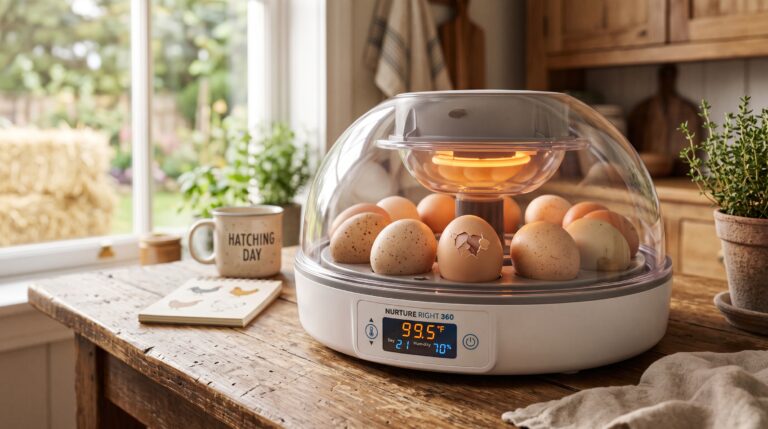
One buying note that matters: unlike a sex-link hybrid, Easter Eggers cannot be reliably color-sexed as chicks. That means “straight run” Easter Egger chicks are a genuine coin flip on roosters, so if your town does not allow them or you only want layers, buy sexed pullets rather than straight run. If you do keep an Easter Egger rooster over blue-egg or dark-egg hens, you can breed your own colorful layers, which is how a lot of Olive Eggers get made. Hatching your own is its own project, and our guide to the best egg incubators for beginners covers what that takes.
Where to Buy Easter Egger Chicks
Easter Eggers are one of the easiest chickens to find and among the cheapest, usually just a few dollars for a sexed chick. Mail-order hatcheries carry them year-round, often under names like Easter Egger, Rainbow Layer, or, misleadingly, Americana. Feed stores stock them every spring, which is where most of the “Ameraucana” mislabeling happens.
A few honest pointers before you buy. Order sexed pullets unless you want the rooster gamble. If egg color is the whole reason you want them and you cannot bear the wait, look for started pullets already laying so you can see the color. And if you want eggs this season, remember chicks are five to six months from their first egg, so plan a brooder and the wait, or buy older birds. Whichever route you take, a good beginner breed lineup pairs Easter Eggers well with a steady brown layer or two so the basket has range.

From the In Homestead Shop
Starting your first flock?
The Backyard Chickens Starter Guide covers your whole first year: choosing the best breeds for eggs, plus breeds, feed, and daily care, sourced from cooperative extension guidance and the Merck Veterinary Manual, with two printables.
The Free Garden Starter Pack
Five printable pages that take the guesswork out of a first season, plus a short email every week or two when something is worth planting, picking, or putting up.
- A garden planning worksheet you can actually fill in
- A seed-starting and planting calendar
- A harvest log to track what really produced
No spam, ever. Unsubscribe in one click.
Thank you. You are on the list.
Your Garden Starter Pack is ready right now. Grab it here:
Download the pack (PDF)Keep an eye on your inbox. The next seasonal guide lands there first.
Equipment
What You Need
- A 10 by 10 inch brooder heating plate. Radiant heat with no glowing element, so none of the fire risk a heat lamp carries. Height-adjustable as the chicks grow, and it warms 15 to 20 of them.
- An incubator, if you plan to hatch. Only needed if you are hatching rather than buying started pullets. We compared five, from a small starter unit to a cabinet.
- A coop with the right nest box count. One box per three to four hens is the working rule. Our build guide covers dimensions, ventilation and predator-proofing.
Some links above are affiliate links. If you buy through them we earn a small commission at no extra cost to you, and it does not change what we recommend. As an Amazon Associate, we earn from qualifying purchases.
Frequently Asked Questions About Easter Egger Chickens
What color eggs do Easter Eggers lay?
Blue, green, olive, pink, cream, or brown, depending on the individual bird. Each hen lays a single color for her whole life, so a colorful basket comes from keeping several hens rather than from any one of them.
How many eggs do Easter Eggers lay?
About 200 to 280 large eggs per year, or four to five a week from a hen in her prime. They lay dependably through winter better than most breeds, thanks to their cold-hardy pea comb.
Are Easter Eggers friendly?
Yes. They are calm, curious, and tolerant of handling, which makes them one of the better first chickens for families with children. Personalities vary a little because their parentage varies, but aggression is rare.
What is the difference between an Easter Egger and an Ameraucana?
An Ameraucana is a recognized breed that meets a color standard and always lays blue eggs. An Easter Egger is a mixed bird carrying the blue-egg gene that may lay blue, green, olive, or pink. Most “Ameraucanas” sold cheaply at feed stores are actually Easter Eggers.
When do Easter Eggers start laying eggs?
Most begin around 5 to 6 months of age. A spring chick will usually lay her first egg by late summer or early fall, and you will not know her egg color until that first one appears.
How long do Easter Eggers live?
Commonly 8 to 10 years, longer than a production hybrid, because their mixed genetics tend to make them hardy and disease-resistant. They also lay productively for more of those years than a hybrid does.
Final Thoughts
Years into keeping chickens, the Easter Egger eggs are still the ones visitors pick up off the counter. A blue one, a sage-green one, a pinkish one, all from three plain-looking hens who happen to carry interesting genetics.
If you want a hardy, friendly, cold-tolerant hen and a carton that never looks store-bought, order two or three sexed Easter Egger pullets this spring, add a steady brown layer for contrast, and wait for that first surprise in the nesting box. It is one of the small, reliable pleasures of keeping your own flock.