Best Automatic Chicken Coop Doors: 5 Picks, Compared (2026)
In Homestead is reader-supported. When you buy through links on this page, we may earn a small commission at no extra cost to you. See our affiliate disclosure. As an Amazon Associate I earn from qualifying purchases.
There is a particular kind of quiet outside a chicken coop just before sunrise. The hens are awake, shifting on the roost and making the soft, impatient sounds that mean they are ready to come out. You are still inside, warm, and the door is still shut.
An automatic chicken coop door handles that first trip of the morning and the last one at dusk. More importantly, it removes the weak point in most coops: the night you get home late, forget the latch, or assume someone else closed it. You do not need Wi-Fi or a complicated control box. You need a door that fits the opening, closes securely, stops when a hen is in the way, and keeps working in wet and cold weather.
This guide compares five automatic doors for different coops and power situations. Penn State Extension advises secure doors and predator-proof housing for small flocks, and the University of Minnesota Extension stresses that a closed coop at night is a core part of keeping hens safe. An automatic door can take over that routine, but you still check that it works and that every bird is in. It does not replace solid walls, hardware cloth and a secure run.
Table of Contents
Quick Picks
- Best overall: the NyPots Solar Coop Door. Solar charging, light sensor or timer, and a remote, with no wiring to run.
- Best smart door: the Omlet Smart Autodoor. Wi-Fi status and alerts, a sideways-sliding door and a published cold-weather test range.
- Best wired door: the FarmLite 12V Door. External 12 V power instead of a small internal battery.
- Best for large breeds: the INNOLAND Large Door. A bigger opening on a reinforced gear track, powered by AA batteries.
- Runner-up solar door: the Asfrost Solar Door. A 7 W panel, light sensor or timer, and a remote.
What to Look for in an Automatic Chicken Coop Door
The best door is not the one with the longest feature list. It is the one that fits your coop wall, your weather and the way your flock comes in at night.
A Door That Cannot Be Lifted From Outside
A closed door should stay closed when a raccoon paws at the bottom edge. Look for a drive that stays engaged when the door is down, a sideways-sliding panel, or a design that keeps a paw from getting underneath. A thin gravity-drop panel without a lock can close right on schedule and still be the weakest part of the coop.
The door is only one part of the shell. Gaps beside it, soft wood around the frame and chicken wire over windows can undo the best motor. If you are still planning the coop, our beginner coop building guide covers framing the pop door.
Light Sensor, Timer or App Control
A light sensor follows the seasons without you changing the clock, which makes it the easiest choice for most people. Placement matters, though. A sensor under a deep roof overhang, beside a security light, or facing a coop camera’s infrared glow can misread dusk.
A timer gives you a predictable schedule, which helps if one hen always wanders in late or you do not want the flock released at the first gray hint of dawn. App control adds remote status and alerts, but only if Wi-Fi reaches the coop reliably. For many small flocks, a light sensor with an adjustable delay is enough.
A Safe Closing Mechanism
Chickens do not file through a doorway neatly. One stops to peck, another turns around, and a third stands in the opening deciding whether it is dark enough. Choose a door that stops or reverses when it meets resistance, then test that it actually does after installation, using something soft like a rolled towel. Make sure the door also has a manual override for when batteries fail or bedding jams the track.
Power That Fits the Coop
Ordinary AA batteries are often the simplest answer. They keep the door working through a power outage and need no cable across the yard. Built-in solar makes sense when the coop is far from an outlet and gets dependable sun, and is less convincing under trees or on the north side of a building. Wired 12 V power removes battery worries but needs a supply at the coop. Whatever you choose, put a battery or charge check on the same seasonal list as cleaning the feeder and waterer.
Opening Size and Installation Clearance
Measure the bird opening, the flat wall around it, and the clearance above or beside it. Vertical doors need room above for the raised panel; sideways doors need clear wall space to the side. Standard openings suit most laying hens, but large breeds like Brahmas and Jersey Giants need more room, and our beginner breed guide notes which breeds run large. Do not assume the outside dimensions on a listing are the usable opening.
The 5 Best Automatic Chicken Coop Doors
Best Overall
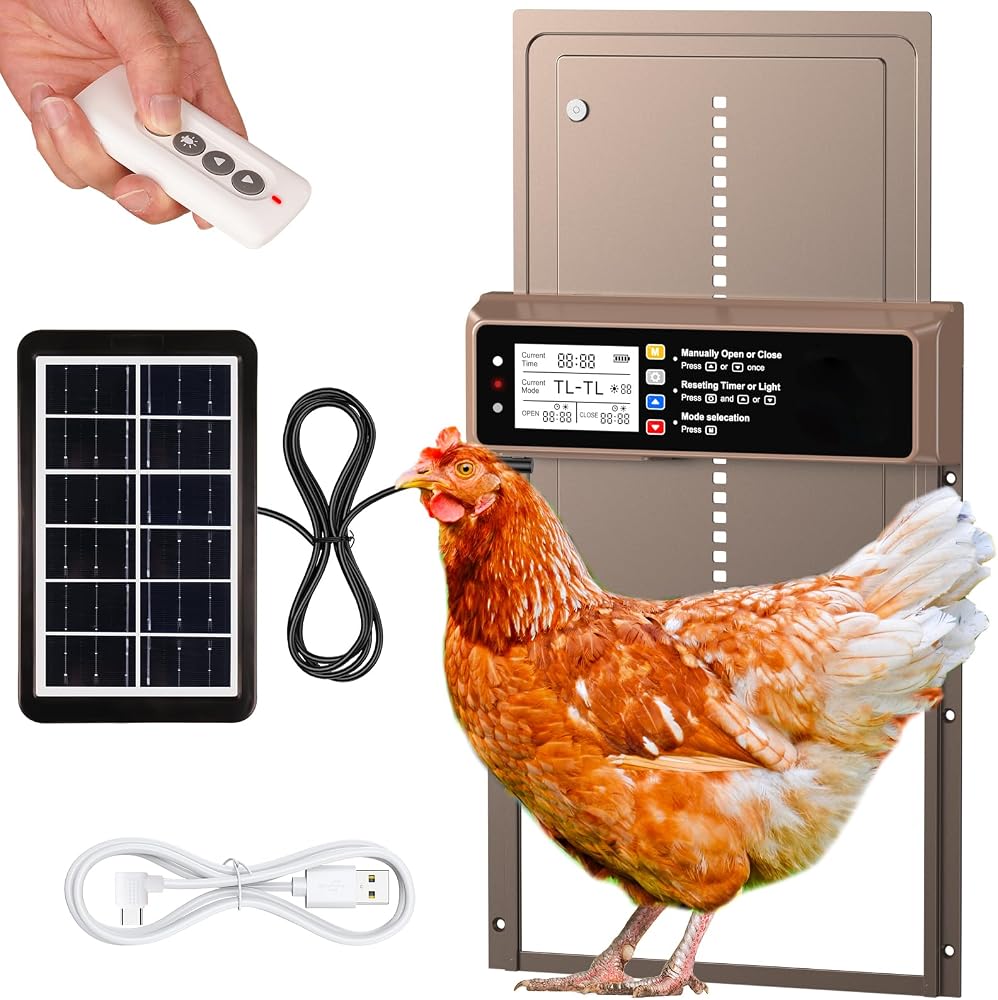
NyPots Solar Automatic Chicken Coop Door (CD04)
This is the door we would point most backyard keepers to first. It charges an internal rechargeable battery from an included solar panel, with USB-C as a backup, so there is no cable to run and no routine AA battery changes. You can set it to open and close by light sensor or by timer, and a remote lets you override it.
The listed opening is about 8.2 by 9.6 inches, which suits standard laying hens, and the door is aluminum alloy with an advertised anti-pinch function. Similar solar doors are sold under several names, which means plenty of owners have already worked out installation questions online.
- Best for: standard-size laying hens in a coop with decent sun and no nearby outlet.
- Keep in mind: the small solar panel still needs real daylight, so a coop under heavy shade may need the USB-C backup in winter. Several similar-looking solar doors are sold under other names, so confirm the brand and model.
Best Smart Door
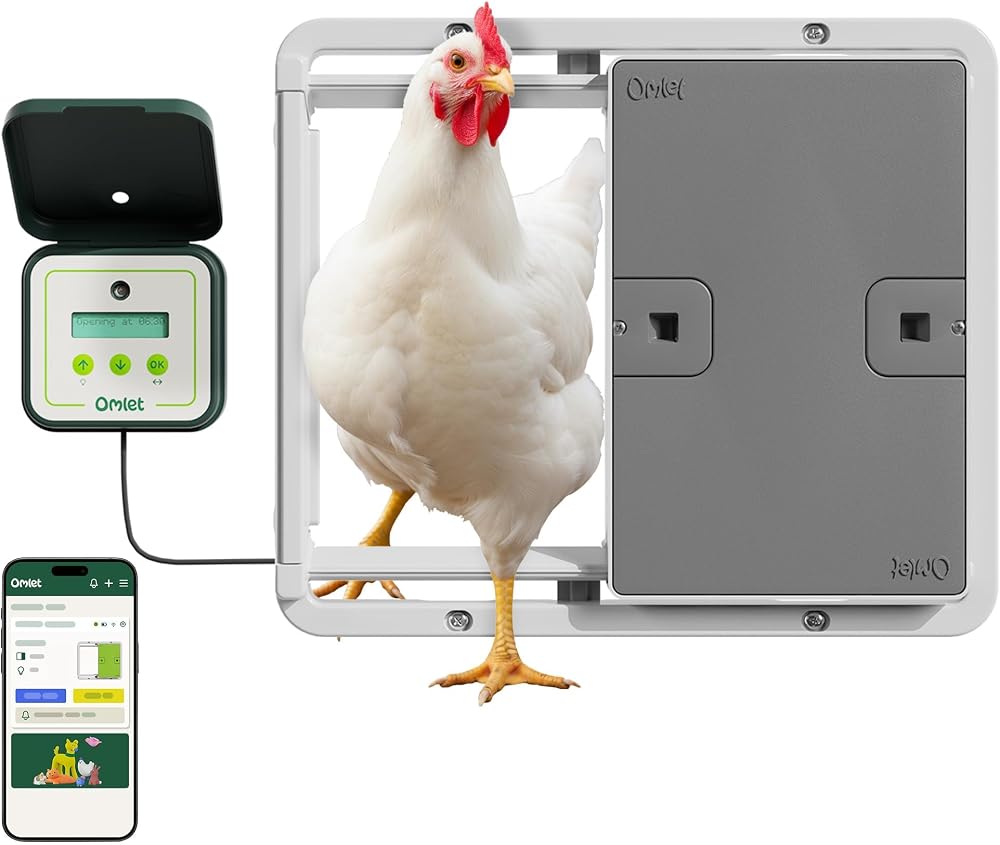
Omlet Smart Automatic Chicken Coop Door Opener
Omlet’s door is the premium choice for keepers who want to know, from the house, whether the coop is shut. The Smart version connects to Wi-Fi so you can check the door, change the schedule and get notifications on your phone. It opens and closes by timer, light sensor or manually, and it stops when a bird blocks the door.
The door slides sideways rather than dropping, which makes it hard for a predator to lift. Omlet’s size diagram shows an opening of about 9.5 by 14.3 inches, it runs on four AA batteries or an optional Omlet mains adapter, and Omlet says it tested the Smart version from -4 F to 150 F. If you do not need the app, the non-smart Omlet Autodoor has the same door and controls without Wi-Fi.
- Best for: keepers who travel or work late and want remote status and alerts.
- Keep in mind: on battery power, app commands can take up to about ten minutes to reach the door, and Omlet warns against third-party solar power. The unit needs clear wall space beside the opening for the sliding panel.
Best Wired Door
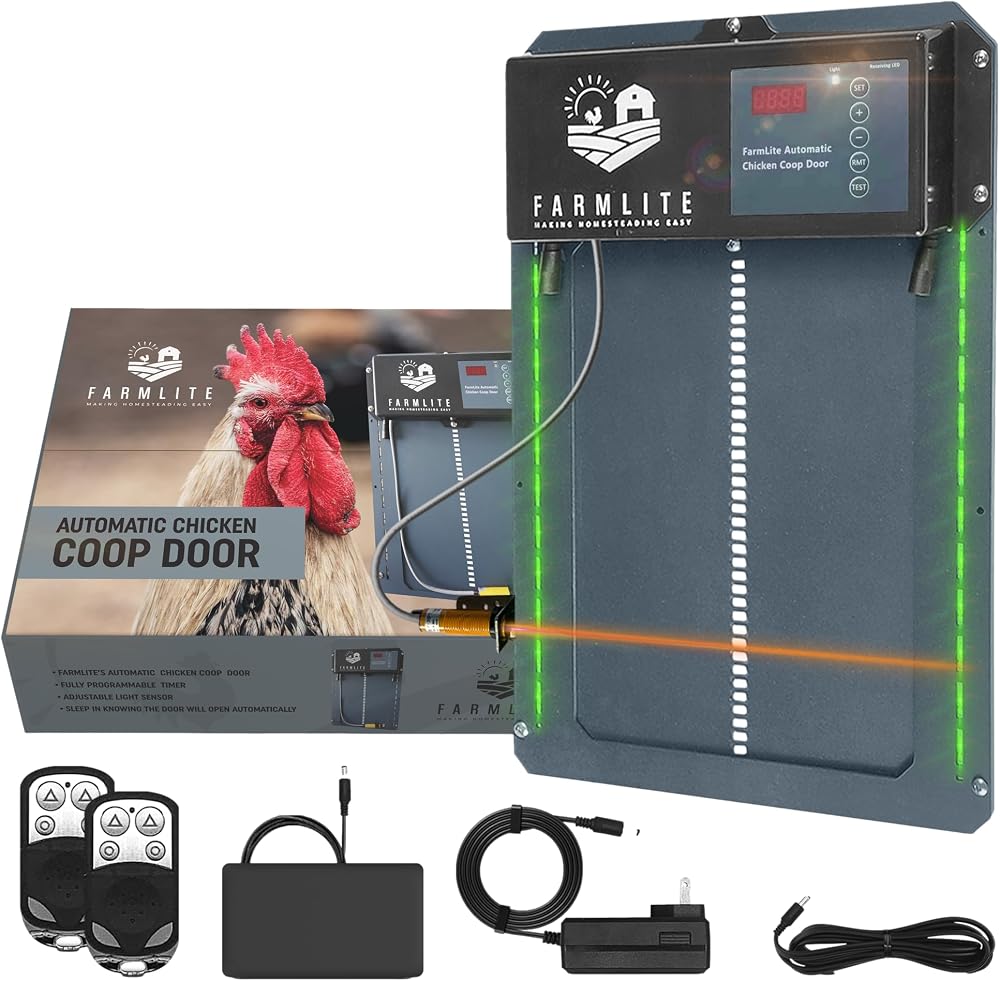
FarmLite 12V Automatic Chicken Coop Door Opener
FarmLite markets this as a non-battery door, which needs explaining: it runs on external 12 V DC power, either from a plug-in supply or a solar and battery setup that FarmLite sells separately. The small AA pack is for emergencies, not daily use. The benefit is that it does not depend on a tiny built-in lithium battery that may struggle in the cold.
It opens by timer or light sensor, has manual and remote functions and an infrared obstruction sensor, and the listed opening is about 8.55 by 10.5 inches. FarmLite publishes troubleshooting guides and sells replacement parts, and states a 12-month warranty.
- Best for: coops near an outlet or with an existing 12 V solar setup.
- Keep in mind: you need to run power to it or buy the extra solar kit. FarmLite notes the clock can reset if voltage drops below 12 V, and the track can stiffen in cold weather.
Best for Large Breeds
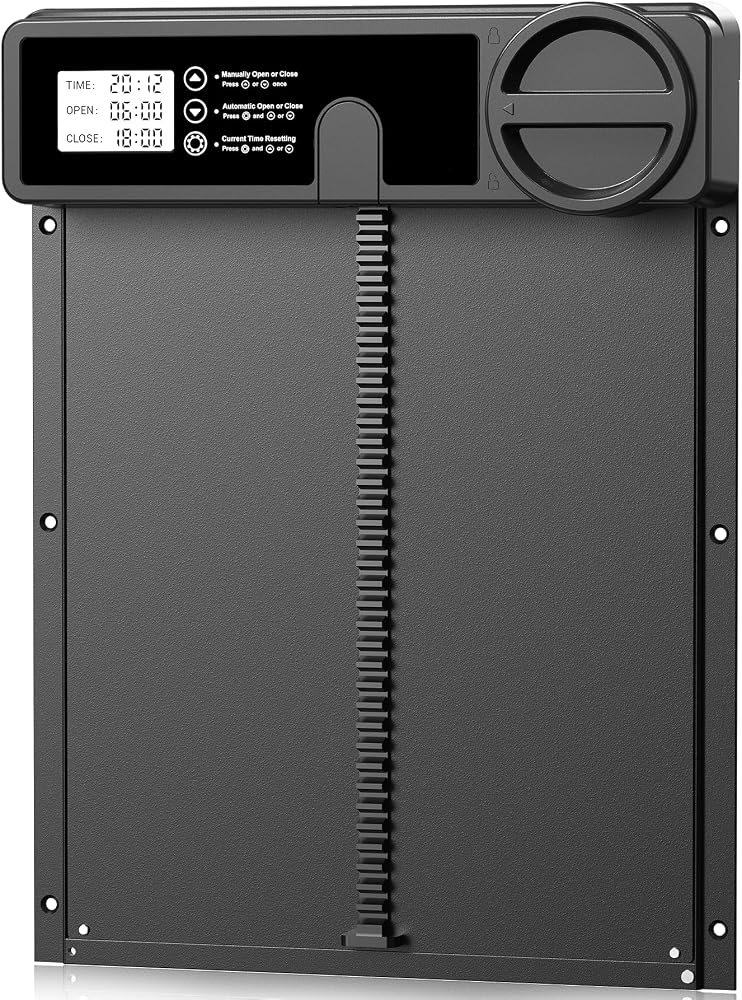
INNOLAND Large Automatic Chicken Coop Door
Bigger birds need a bigger opening, and this door is listed at about 11 by 9.5 inches, larger than most of the solar doors. It uses an aluminum door on a reinforced external gear track and runs on three AA alkaline batteries, which are easy to find and replace.
Opening and closing is by timer, with manual operation and obstruction reversal. The seller lists an operating range of -14.8 F to 140 F. The gear drive is easy to see and keep clear, which helps in a dusty coop.
- Best for: large breeds such as Brahmas and Jersey Giants, once you have measured your biggest bird against the installed opening.
- Keep in mind: it is timer-only in the documented description, with no light sensor or remote, so you will adjust the schedule as the seasons change. The temperature range is the seller’s claim, not an independent test.
Runner-Up Solar Door
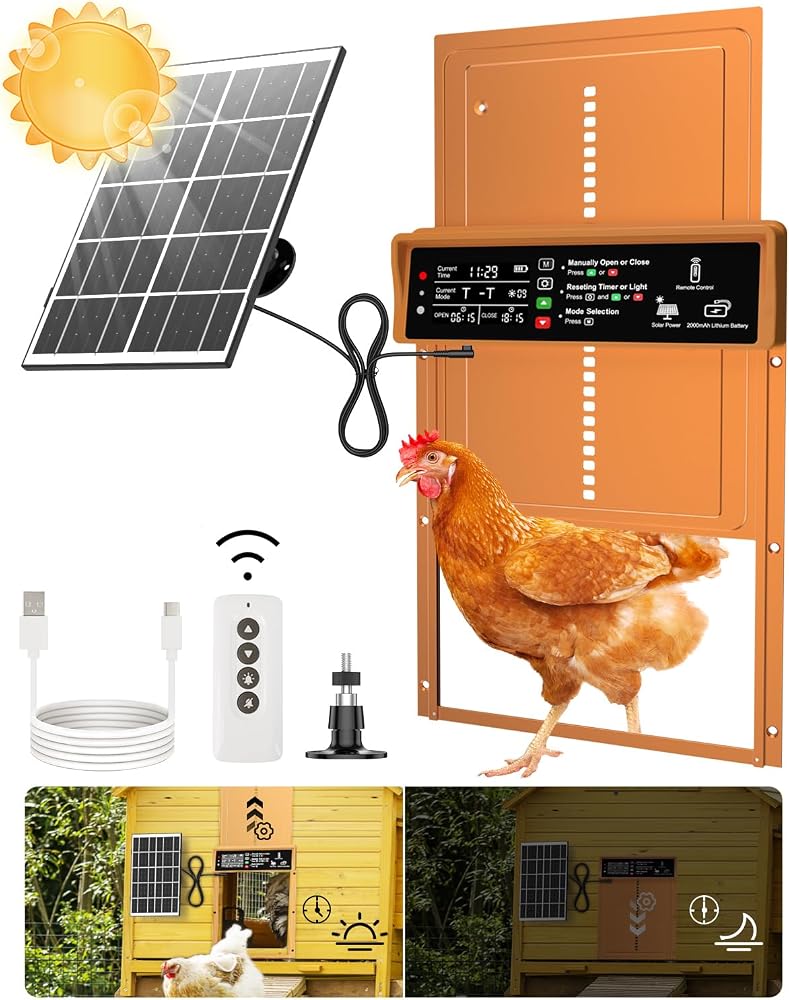
Asfrost Solar Automatic Chicken Coop Door
The Asfrost is a solid alternative to our top pick if you want solar with a larger panel. It comes with a 7 W solar panel and a rechargeable lithium-polymer battery, with USB-C charging as a fallback, and opens and closes by timer or light sensor with a remote for overrides.
The door is aluminum and ABS with an advertised anti-pinch function, and the listed opening is about 9.53 by 8.27 inches.
- Best for: sunny coops where you want solar and an easy manual override.
- Keep in mind: the opening is on the narrow side for large breeds, and winter charging and anti-pinch performance have no independent test we could find. The listed warranty is one year.
Quick Comparison
| Model | Power | Trigger | Listed Opening | Best For |
|---|---|---|---|---|
| NyPots CD04 | Solar + rechargeable battery | Light or timer | About 8.2 x 9.6 in | Most coops |
| Omlet Smart Autodoor | 4 AA or mains adapter | Light, timer or app | About 9.5 x 14.3 in | Remote status |
| FarmLite 12V | 12 V external | Light or timer | About 8.55 x 10.5 in | Coops with power |
| INNOLAND Large | 3 AA | Timer | About 11 x 9.5 in | Large breeds |
| Asfrost Solar | 7 W solar + battery | Light or timer | About 9.53 x 8.27 in | Sunny coops |
Installing an Automatic Door and Training the Flock
- Mount it on solid wood. Screw the frame into framing or a solid panel, not thin plywood that flexes, and keep the track square so the door cannot bind.
- Place the sensor or panel carefully. Put a light sensor where it sees open sky, away from security lights. Point a solar panel toward the sun and keep it clear of snow.
- Test the obstruction stop. Close the door on a rolled towel before any chicken is near it.
- Leave it open for a few days. Let the flock get used to the new door before it starts moving on its own.
- Set closing after you have watched when the flock goes in. Most hens head in as light fades. A delay after sunset gives stragglers time; adjust it to your flock, and a headcount for the first week tells you if anyone is being left out.
Check the door more often in cold weather. Ice and packed bedding in the track are the most common reasons a door stalls, and our guide to keeping chickens warm in winter covers the rest of the winter routine.
How We Chose
These doors were researched rather than tested side by side on our own coop, and we would rather say that plainly. We compared power source, open and close triggers, obstruction safety, opening size, door material, published temperature ranges and warranties, using manufacturer documentation where it exists and flagging where a figure comes only from a seller listing.
We only included doors sold on Amazon, so every pick is easy to buy and return, and we looked at recurring the limitations each listing documents. We do not list prices, because they change constantly. Use the buttons to check current prices.
Setting up a coop for the first time?
The Backyard Chickens Starter Guide walks through coop setup, predator-proofing, feeding and daily care for a first flock, in plain language with checklists you can print.
Frequently Asked Questions About Automatic Chicken Coop Doors
Are automatic chicken coop doors safe for chickens?
An obstruction stop reduces the risk, as long as it works in your installation. Test it, watch the flock at closing time for the first week, and keep a manual override available. Doors without one can trap or injure a bird standing in the opening, so treat that feature as essential rather than optional.
Will an automatic door keep out raccoons?
It helps a lot, but only if the door cannot be lifted from outside and the rest of the coop is secure. Raccoons are persistent and good with their hands. Pair the door with hardware cloth over openings and a secure latch on any people door.
What happens if a chicken is still outside when the door closes?
It stays outside, which is why closing time matters. Set the door to close a little after dusk, watch the first few evenings, and do a quick headcount. Most flocks learn the routine quickly once they find the door shuts on schedule.
Is a light sensor or a timer better?
A light sensor is easier because it follows the seasons on its own. A timer is more predictable and is better if a security light or deep shade confuses the sensor. Many doors offer both, which gives you the option to switch.
Do automatic coop doors work in winter?
Most do, but cold is where weak points show. Batteries lose capacity, solar panels get less light and can be covered by snow, and tracks can freeze. Choose a door with a published temperature range where possible, keep the track clear, and check it more often in a hard freeze.
The Bottom Line
For most backyard flocks, the NyPots Solar Coop Door is the easy choice: no wiring, a light sensor or timer, and a remote for the odd late evening. If you want to check the coop from your phone, the Omlet Smart Autodoor is worth the extra cost. Whichever you choose, the door is one layer of protection, so finish the job with a secure coop and a well-planned nesting area inside.