Best Bread Machines for Beginners: 5 Picks, Compared (2026)
In Homestead is reader-supported. When you buy through links on this page, we may earn a small commission at no extra cost to you. See our affiliate disclosure. As an Amazon Associate I earn from qualifying purchases.
There is a particular smell that fills a house when bread is baking: warm, yeasty, faintly sweet. With a bread machine, you can wake up to it. You measure flour, water, yeast and salt into a pan the night before, press a button, and the machine mixes, kneads, rises and bakes on its own schedule.
The catch is that bread machines are easy to buy badly. Some make tall, oddly shaped loaves that are hard to slice for sandwiches. Some struggle with whole wheat. Some have a dozen programs you will never use and are missing the one you need. You do not need the most expensive machine to bake good bread, but you do need one that matches how you plan to use it.
This guide compares five bread machines for beginners, from a reliable all-rounder to a premium two-paddle machine for whole-grain bakers, and explains when a bread machine makes more sense than a stand mixer or kneading by hand.
Table of Contents
Quick Picks
- Best overall: the Cuisinart CBK-110NAS. Three loaf sizes, the programs most people need, and a compact footprint.
- Best premium: the Zojirushi Virtuoso Plus. Two paddles and a horizontal pan for a sandwich-shaped loaf, with strong whole-grain settings.
- Best budget: the Hamilton Beach Digital Bread Maker. A simple, inexpensive way to find out whether you will actually use a bread machine.
- Most presets for the money: the Elite Gourmet 2 lb Bread Maker. Nineteen presets, three loaf sizes and a long delay timer at a low price.
- Best for crust: the Cuisinart CBK-210NAS Convection. A convection fan for even browning and the only automatic add-in dispenser here.
What a Bread Machine Does Well, and What It Does Not
A bread machine is a kneading and baking appliance in one box. It is very good at the parts of bread making that beginners find hardest to judge: kneading long enough, keeping the dough warm while it rises, and baking at a steady temperature. Measure carefully and it will turn out a consistent loaf with almost no effort.
It is less good at the things that make bakery bread special. Crusts are softer, loaves are shaped by the pan, and there is usually a small hole in the bottom where the paddle sat. Many experienced bakers use their machine mainly on the dough cycle: the machine does the kneading and first rise, then they shape the dough by hand and bake it in the oven. That one setting turns a bread machine into a tool for rolls, pizza dough and cinnamon buns as well as sandwich loaves. King Arthur Baking has a good walkthrough of baking machine-made dough in the oven.
What to Look for in a Bread Machine
Loaf Size and Pan Shape
Most machines make loaves up to 2 lb, which is a full-size sandwich loaf for a family. Smaller households often prefer a machine that also bakes 1 or 1.5 lb loaves, so the bread is eaten before it goes stale. Pan shape matters too. Many machines bake a tall, nearly square loaf. A horizontal pan bakes a conventional loaf shape that fits a toaster and makes even sandwich slices.
One Paddle or Two
A single paddle works well for white and light wheat breads. Two paddles knead a long horizontal pan more evenly, which helps with heavier whole-grain doughs. Every paddle leaves a hole in the bottom of the loaf, so two paddles mean two small holes.
The Programs You Will Actually Use
Ignore the total number of programs on the box. For most homes, five settings do the real work: basic white, whole wheat, dough, quick bread or cake, and gluten-free if anyone in your house needs it. A jam setting is a nice bonus for small batches of freezer-style jam, but it is no substitute for tested canning recipes if you plan to store jars on a shelf.
Delay Timer and Add-In Dispenser
A delay timer is what makes waking up to fresh bread possible. Avoid delaying recipes that contain milk, eggs or other perishable ingredients for many hours at room temperature. An automatic dispenser drops in nuts, seeds or dried fruit at the right point in kneading, so you do not have to listen for a beep.
Pan Coating
Most pans are nonstick, and some makers now advertise PFAS-free coatings or ceramic pans. Whatever the coating, it lasts longest if you avoid metal utensils, let the pan cool before washing, and wash it by hand. A worn pan can retire an otherwise working machine, so check whether replacement pans are sold for the model you choose.
The 5 Best Bread Machines for Beginners
Best Overall
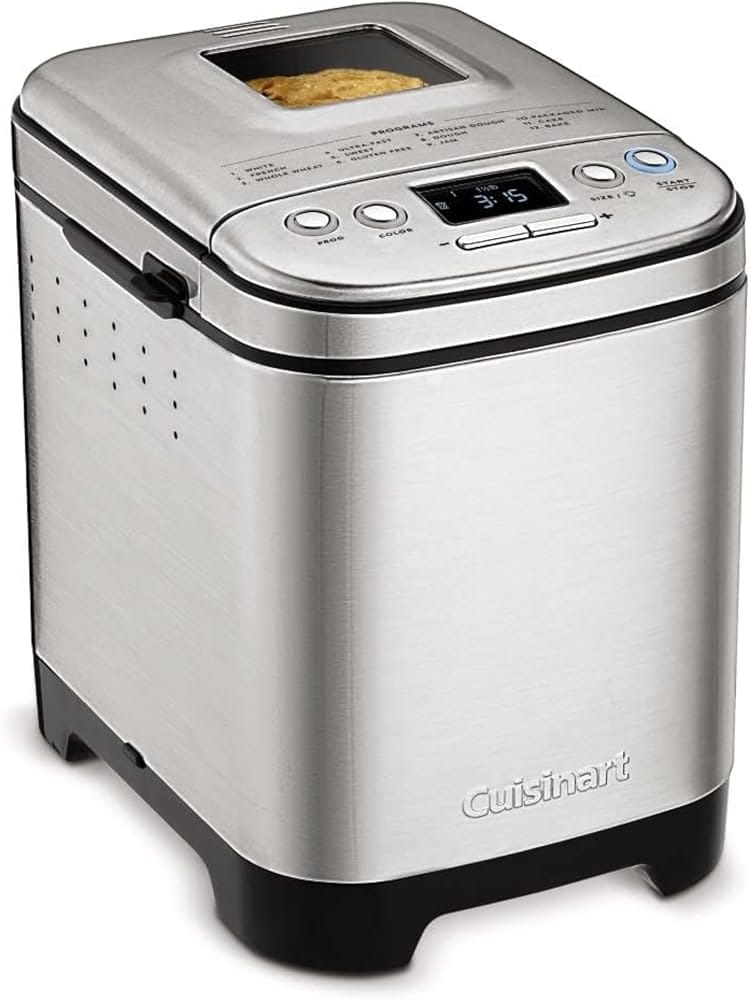
Cuisinart CBK-110NAS Compact 2 lb Bread Maker
This is the machine to start with if you are not sure what you need yet. It bakes 1, 1.5 or 2 lb loaves, has 12 programs that include whole wheat, gluten-free, dough and jam, and offers a 13-hour delay timer. The footprint is small enough to live on a crowded counter.
It holds up well in independent testing: Good Housekeeping’s hands-on bread machine test rated its loaves highly. Cuisinart’s three-year limited warranty is longer than most in this group. The current version is sold as the CBK-110NAS.
- Best for: first-time bread bakers and smaller households that want the choice of a 1 lb loaf.
- Keep in mind: it bakes a tall, vertical loaf, and there is no automatic dispenser, so you add nuts or fruit when it beeps.
Best Premium
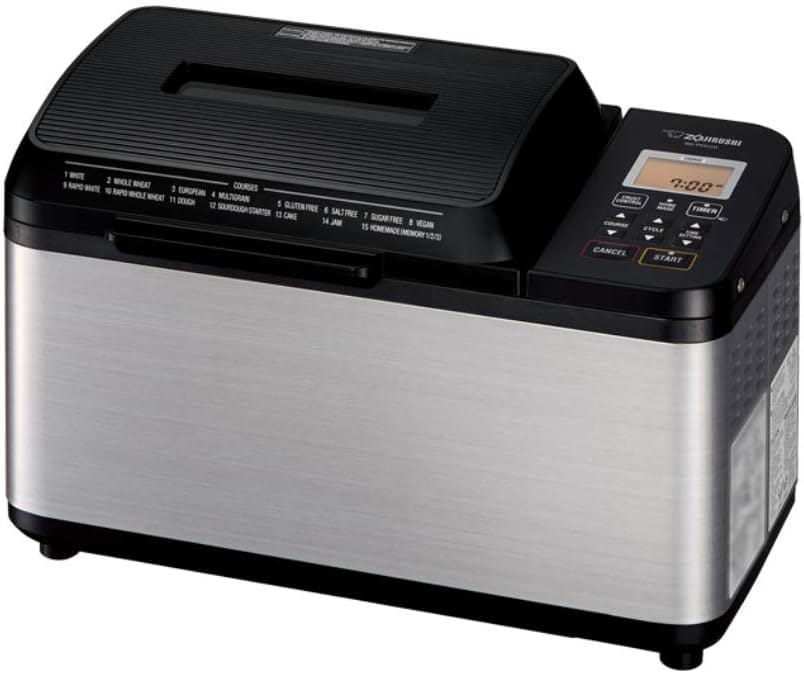
Zojirushi Virtuoso Plus BB-PDC20
The Virtuoso Plus is the machine for people who plan to bake often, especially whole-grain bread. Two kneading blades work a horizontal pan, so you get a conventional, sandwich-shaped loaf instead of a tall block, and the dough is kneaded more evenly end to end.
It has whole wheat, rapid whole wheat, gluten-free, dough, sourdough starter and jam courses, a 13-hour delay, a lid heater for even browning, and memory slots for your own custom cycles. Good Housekeeping’s testers called its bread bakery-quality.
- Best for: frequent bakers, whole-wheat loaves, and anyone who wants slices that fit a toaster.
- Keep in mind: it takes much more counter space than the others. Zojirushi’s one-year warranty excludes the pan and blades, and add-ins are manual.
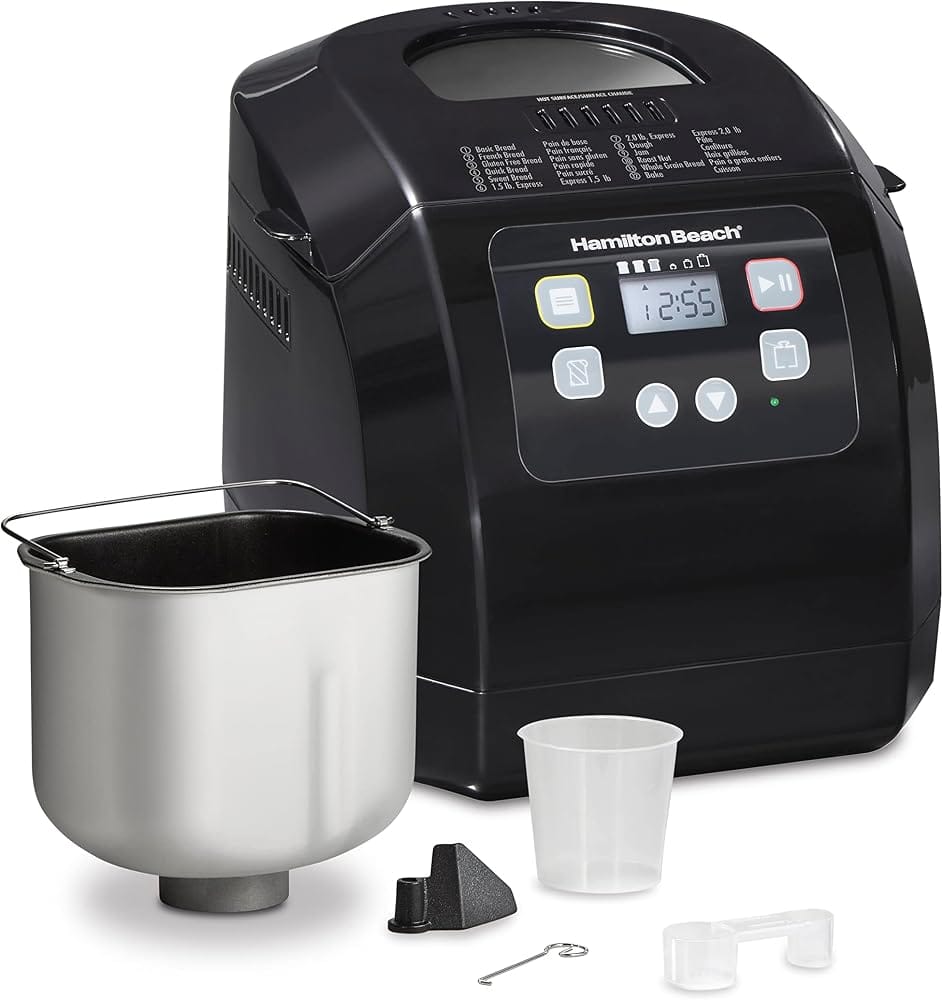
Best Budget
Hamilton Beach Digital Bread Maker
If you want to find out whether a bread machine fits your life before spending much, this is the one. It offers 1, 1.5 and 2 lb loaves and 12 cycles, including whole grain, gluten-free, dough and jam, and the listing describes the pan as PFAS-free nonstick.
The pan and paddle are dishwasher safe, which is unusual, and the controls are simple. Good Housekeeping chose a Hamilton Beach digital bread maker as its value pick, though we could not confirm it was this exact model.
- Best for: trying bread machines on a small budget, and households that prefer a dishwasher-safe pan.
- Keep in mind: the delay timer only works on some cycles and its 15-hour figure includes the baking time, so plan overnight loaves accordingly. Add-ins go in at the beep.
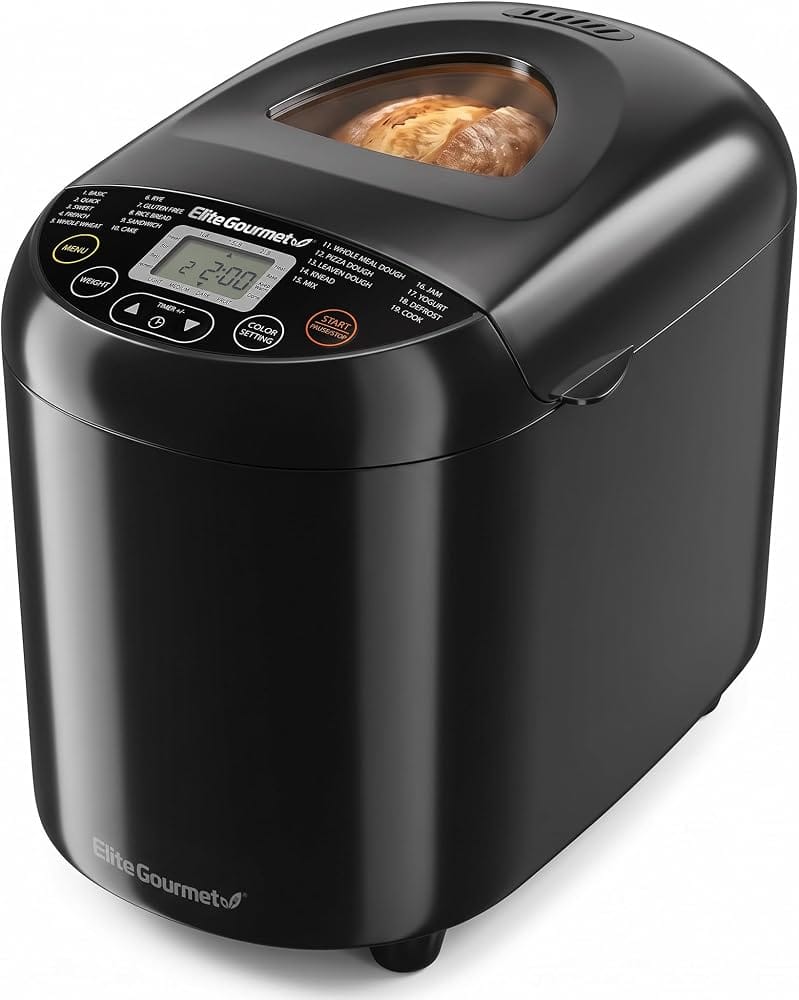
Most Presets for the Money
Elite Gourmet 2 lb Programmable Bread Maker
Elite Gourmet packs a lot of options into an inexpensive machine: 1, 1.5 and 2 lb loaves, 19 presets including whole wheat, gluten-free, dough and jam, a 15-hour delay and an hour of keep-warm.
The current Amazon listing advertises a Ceralast ceramic pan. The manual we found for this model does not mention a ceramic pan, so if the coating is the reason you are buying it, confirm it on the listing or with the seller before you order.
- Best for: bakers who like having a preset for everything, on a modest budget.
- Keep in mind: the pan coating claim needs checking, there is no documented automatic dispenser, and the warranty is one year.
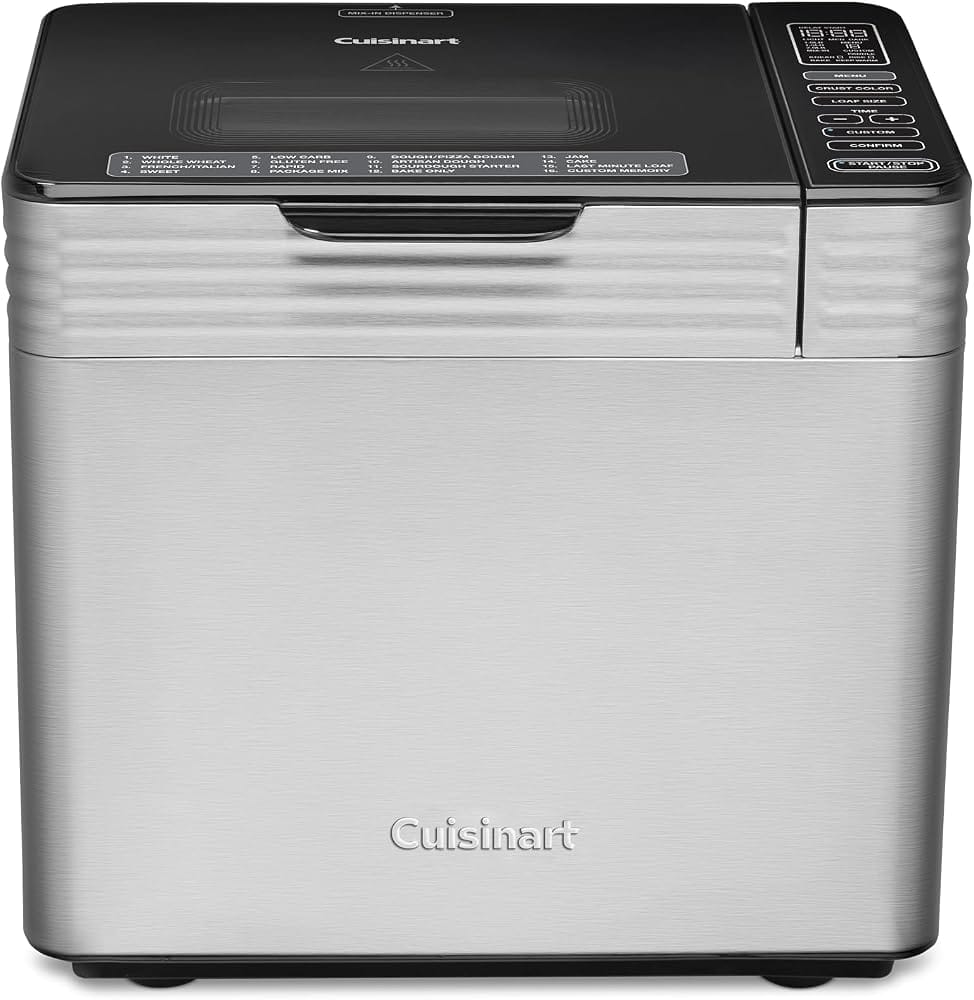
Best for Crust
Cuisinart CBK-210NAS Convection Bread Maker
This Cuisinart adds a convection fan, which circulates air during baking for more even browning, and it bakes 1, 1.5 or 2 lb loaves in a horizontal shape. It is also the only machine here with an automatic fruit and nut dispenser.
It has 16 programs, including whole wheat, gluten-free, dough, sourdough starter and jam, plus a 13-hour delay. Good Housekeeping found it distributed mix-ins evenly. Like the CBK-110, it carries a three-year limited warranty, and the current version is sold as the CBK-210NAS.
- Best for: bakers who care about crust and want add-ins handled automatically.
- Keep in mind: Good Housekeeping found the included white-bread recipe came out dense with all-purpose flour, so use bread flour or a trusted recipe, and expect a thicker crust.
Quick Comparison
| Model | Best For | Loaf Sizes | Paddles | Main Trade-Off |
|---|---|---|---|---|
| Cuisinart CBK-110NAS | Most homes | 1, 1.5, 2 lb | 1 | Tall loaf, manual add-ins |
| Zojirushi Virtuoso Plus | Whole grains, sandwich shape | 1.5, 2 lb | 2 | Size and cost |
| Hamilton Beach | Trying one on a budget | 1, 1.5, 2 lb | 1 | Delay on some cycles only |
| Elite Gourmet | Many presets, low price | 1, 1.5, 2 lb | 1 | Confirm pan coating |
| Cuisinart CBK-210NAS | Crust, auto add-ins | 1, 1.5, 2 lb | 1 | Thicker crust |
Bread Machine, Stand Mixer or By Hand?
All three make good bread. The right one depends on how much hands-on time you want to give it.
- A bread machine is the most hands-off. It suits busy households that want a sandwich loaf several times a week, and it can bake on a timer while you sleep or work.
- A stand mixer kneads, but you still handle rising, shaping and baking. It suits people who want bakery-style loaves, larger batches, and a machine that also does cookies and cakes. Our guide to the best stand mixers for bread dough compares the ones that handle heavy dough.
- Kneading by hand costs nothing and teaches you what good dough feels like. It takes about 10 minutes of work per loaf, plus rising time.
If you want naturally leavened bread, start with our beginner sourdough guide. Most bread machines rely on commercial yeast and their fixed timings do not suit sourdough well.
Getting a Good First Loaf
Most disappointing first loaves come from measuring, not from the machine.
- Weigh the flour if you can. A cup of flour can vary a lot depending on how it is scooped, and a few extra tablespoons is enough to make a dense, short loaf. A simple kitchen scale fixes this, and King Arthur Baking’s bread machine guide explains why weight beats volume.
- Add ingredients in the order the manual gives. Most machines want liquids first and yeast last, kept away from the salt and water until mixing starts, especially on the delay timer.
- Use the right yeast. Instant or bread-machine yeast is the easiest. Check the date on the jar or packet.
- Peek during the first knead. After about 5 minutes the dough should form a smooth ball. If it looks dry and crumbly, add water a teaspoon at a time. If it is sticking to the sides like batter, add flour a teaspoon at a time.
- Take the loaf out promptly. Bread left in the pan on keep-warm steams and softens the crust. Turn it out onto a rack and let it cool for at least 30 minutes before slicing.
A homemade loaf freezes well, sliced, for up to a few months. Fresh bread also goes nicely with homemade butter if you want to take the from-scratch idea one step further.
How We Chose
These machines were researched rather than tested side by side in our kitchen, and we would rather say that plainly than imply a test kitchen we do not have. We compared loaf sizes and pan shape, paddle design, the programs that matter for everyday baking, pan coatings and replacement-part availability, and published warranties. We compared manufacturer specifications, manuals and published warranties, named independent tests where they exist, and the specific limitations we could verify, and we flag any figure that comes only from a seller listing.
We weighted the needs of a beginner baking for a household: a reliable sandwich loaf, a usable dough cycle, and a machine that will not be retired after a year because the pan wore out. We do not list prices, because they move constantly. Use the buttons to check current prices.
Frequently Asked Questions About Bread Machines
Is a bread machine worth it?
If you would bake bread at least once a week, usually yes. Homemade loaves cost less per loaf than most bakery bread and you control the ingredients. If you bake once a month, a mixing bowl and your oven will do the job without taking up counter space.
Can you make whole wheat bread in a bread machine?
Yes. Use the whole wheat setting, which typically gives the dough a longer knead and rise. Loaves made with 100 percent whole wheat flour will be denser than white bread. Mixing in some bread flour, or choosing a two-paddle machine, gives a lighter loaf. King Arthur’s 100 percent whole wheat bread machine recipe includes useful advice on checking the dough as it kneads.
Why is there a hole in the bottom of the loaf?
That is where the kneading paddle sat during baking. You can reduce it by removing the paddle after the final knead, before the last rise, if your machine lets you open the lid safely at that point. Or use the dough cycle and bake the loaf in a regular pan.
Can you make sourdough in a bread machine?
Some machines include a sourdough starter or homemade program, but true sourdough needs a longer, flexible rise than most machines allow. Many bakers use the machine to mix and knead, then let the dough rise and bake it in the oven.
Can you bake the dough in a regular oven instead?
Yes, and it is one of the most useful features. Run the dough cycle, shape the dough into a loaf pan, rolls or a pizza base, let it rise again, and bake it in your oven. You get the machine’s easy kneading with a conventional crust and shape.
The Bottom Line
For most beginners, the Cuisinart CBK-110NAS is the machine to start with: three loaf sizes, the programs that matter, and a footprint that fits a crowded counter. If you bake mostly whole-grain bread and want a conventional loaf shape, the Zojirushi Virtuoso Plus is worth the extra cost. Whichever you choose, weigh your flour for the first few loaves, and try our homemade crackers when you want another easy from-scratch project.