Can You Freeze Milk? Yes. Here Is How (Every Kind)
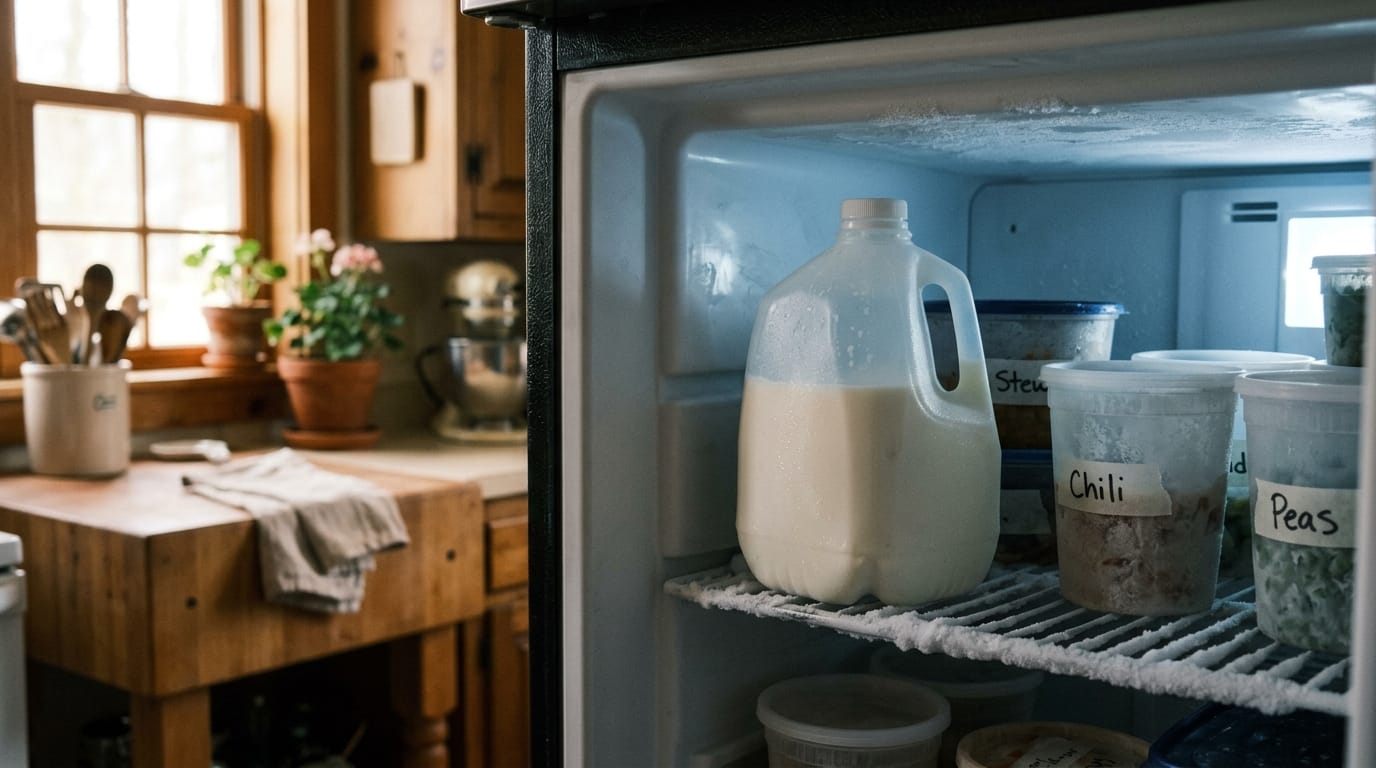
The first time I froze a half gallon of milk, I nearly threw it out at thawing time. The milk had turned faintly yellow in the freezer, and after a night in the refrigerator it sat in the jug in two layers, watery below and grainy above. It looked ruined. It was completely fine, and ten seconds of hard shaking put it back together.
Nobody had told me that frozen milk is supposed to look like that, which is really the whole story of freezing milk. The freezer part is easy. Knowing what is normal on the other side is what saves the jug.
Can You Freeze Milk? Yes, you can freeze milk. Nearly every kind, dairy or plant, freezes safely; what changes is the texture, and how much you will care depends on whether you drink it or cook with it. Pour off a little to leave room for expansion, freeze it fast, thaw it in the refrigerator, and shake it hard before you use it.
This guide covers the how and the how long, plus what actually happens to whole milk, almond milk, coconut milk, oat milk, and evaporated milk in the freezer, because they do not all come back the same.
Table of Contents
The Quick Answer
- Milk freezes safely. Kept at 0 F, frozen food stays safe indefinitely; only the quality declines with time.
- For best quality, use frozen milk within about 3 months.
- Leave 1 to 2 inches of headspace in the container. Milk expands as it freezes and will split a full jug.
- Thaw in the refrigerator, never on the counter, then shake hard to recombine.
- Expect a slightly grainy texture after thawing. Lower-fat milk comes back smoothest; whole milk separates more.
- Plant milks (almond, oat, coconut in cartons) separate the most. Thawed, they are better in smoothies and baking than in a glass.
What Actually Happens When You Freeze Milk
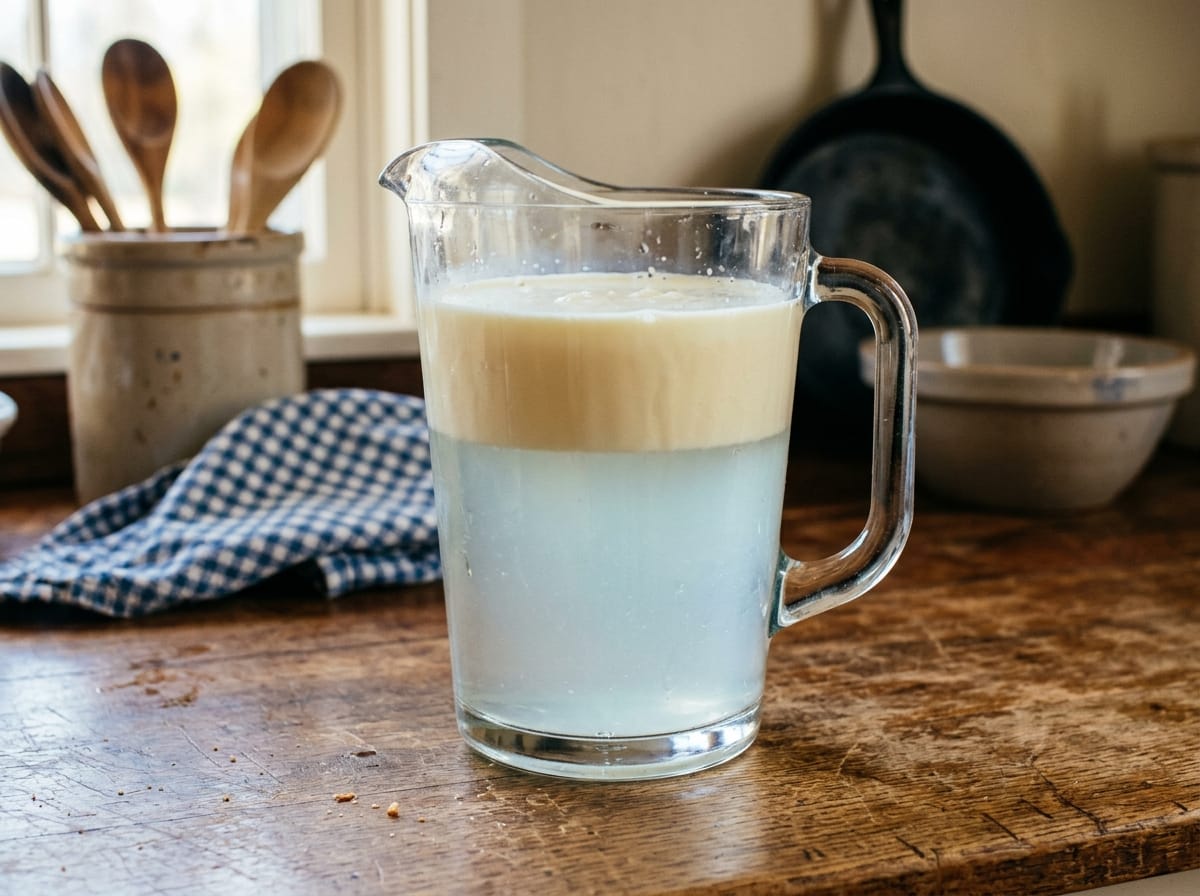
Milk is mostly water holding fat and protein in suspension. Freezing pushes the water into ice crystals and shoves the fat out of suspension, which is why thawed milk separates into layers and can feel slightly grainy on the tongue. The yellow tint that scared me is normal too; it is the color of the milk solids concentrating as the water freezes, and it disappears when the milk thaws and gets shaken back together.
None of that is spoilage. Per USDA guidance on freezing, food kept frozen at 0 F stays safe indefinitely; freezing holds microbes dormant, and time in the freezer only costs you quality, not safety. The FoodSafety.gov cold storage chart puts milk’s best-quality window at about 3 months frozen.
The honest expectation to set: thawed milk is at its best in cooking, baking, smoothies, and coffee. Plenty of people drink it straight and never mind it. If your household includes a picky milk drinker, plan the frozen jug for pancakes and creamy soup bases rather than the cereal bowl, and nobody will complain.
How to Freeze Milk, Step by Step
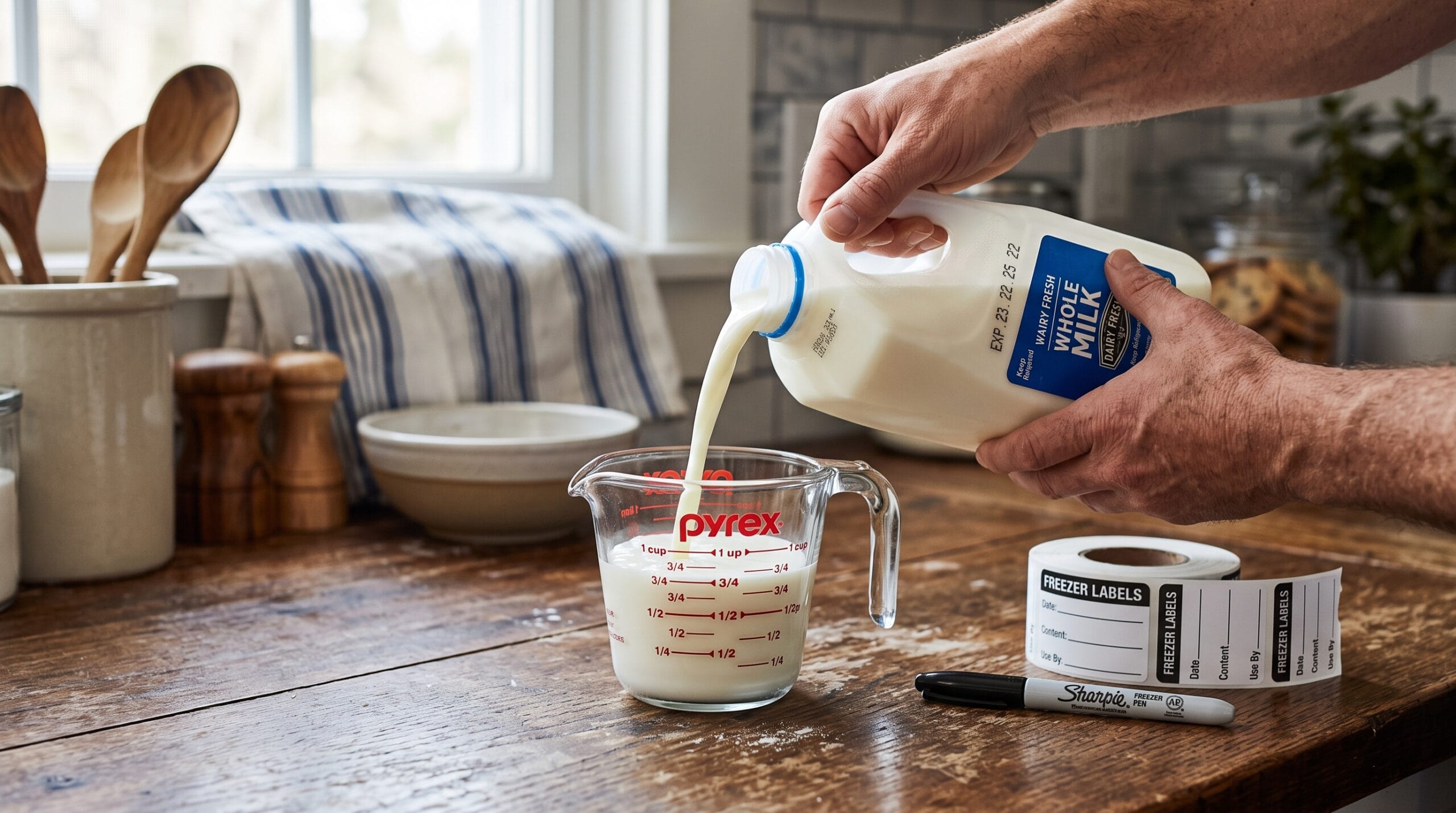
- Start with fresh milk. Freezing pauses the clock; it does not rewind it. Milk frozen three days before its date thaws as milk three days before its date.
- Make room for expansion. Pour a cup or so out of a full jug, or fill your container only about three-quarters full. Milk expands as it freezes and will split a sealed, full container. Never freeze a glass bottle of milk.
- Seal and date it. The original plastic jug works fine once you have made headspace. For smaller households, split a gallon into pint or quart containers so you only thaw what you will use in a few days.
- Freeze it fast. Set the container against the freezer wall or floor, not balanced on top of other packages. Faster freezing means smaller ice crystals and a smoother texture on the other side.
One trick worth stealing: freeze some milk in an ice cube tray, then bag the cubes. Two or three cubes drop straight into a soup, a smoothie, or a morning coffee with no thawing and no half-used jug taking up refrigerator space. It is the same portion logic we use for freezing green beans: freeze in the size you actually cook with.
How Long Does Frozen Milk Last?
Aim to use it within about 3 months for the best flavor and texture. It remains safe past that as long as it stays solidly frozen, but milk picks up freezer smells and its texture gets rougher the longer it sits. If a jug has been buried in the chest freezer for eight months, it is still safe; just point it at cooking rather than drinking, and give it a sniff after thawing like you would any milk.
How to Thaw Frozen Milk
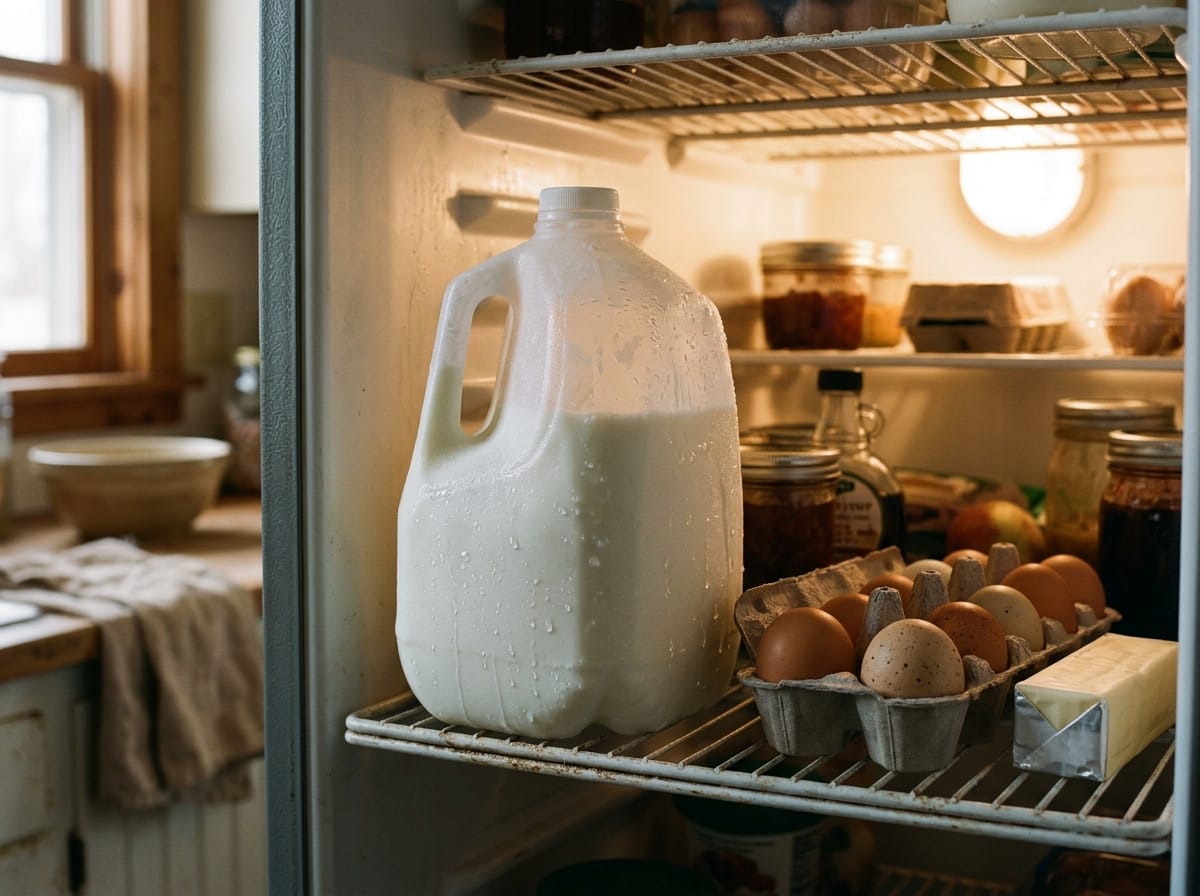
Move the container to the refrigerator and give it time. A quart takes a day or so; a half gallon can take two. Never thaw milk on the counter, where the outer layer sits in the bacterial danger zone while the core is still frozen. If you are in a hurry, stand the sealed container in a bowl of cold water and change the water as it warms, then refrigerate.
Thawed milk will look separated. Shake the jug hard for a good ten seconds, or run it briefly through a blender if the graininess bothers you; blending recombines it better than shaking ever will. Use thawed milk within a few days, and do not refreeze a jug once it has fully thawed. Refreezing is not a safety problem if the milk stayed cold, but the texture takes a second, harder hit.
Can You Freeze Every Kind of Milk?
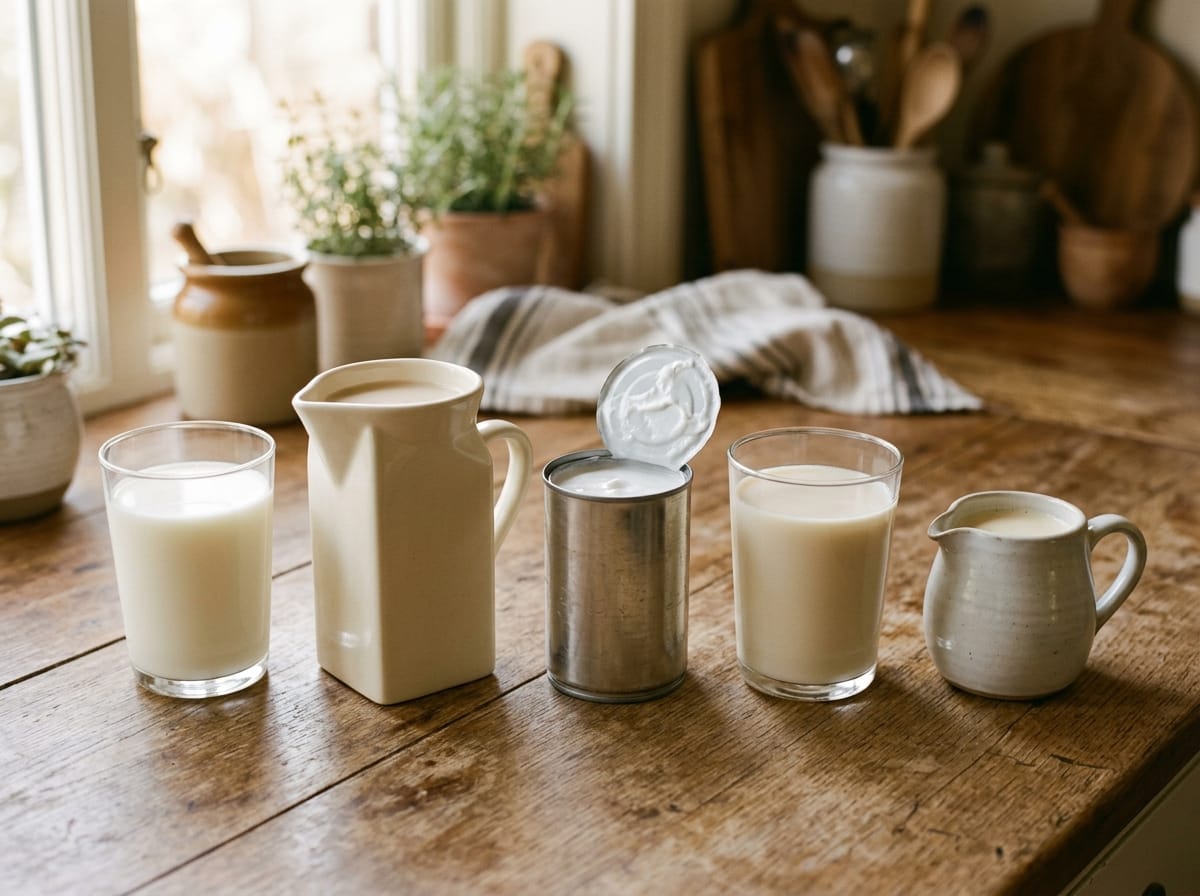
Almost. Here is how each one behaves, starting with the quick view:
| Milk | Freezes? | After Thawing | Best Use Afterward |
|---|---|---|---|
| Skim and 2 percent | Yes, best of all | Mild separation, shakes back well | Anything, including drinking |
| Whole milk | Yes | More fat separation, slightly grainy | Cooking, baking, coffee; drinkable after a hard shake |
| Almond milk | Yes, with caveats | Separates noticeably, gritty | Smoothies and baking, not the glass |
| Oat milk | Yes, with caveats | Separates, texture turns thin and gritty | Smoothies, oatmeal, baking |
| Coconut milk (canned) | Yes, out of the can | Separates; whisks back for cooking | Curries, soups, sauces |
| Evaporated milk | Yes, out of the can | Grainy | Cooking and baking only |
| Buttermilk | Yes | Separated, thin | Pancakes, biscuits, marinades |
Can You Freeze Whole Milk?
Yes, and it is the one I freeze most. The catch is that more fat means more separation, so whole milk comes back grainier than skim or 2 percent. Shake it hard or blend it, and it is fine in a glass and excellent in cooking. If you have more surplus whole milk than your freezer can hold, there is a better fate for it anyway: skim the cream line off a non-homogenized gallon and turn it into butter, then freeze the butter, which freezes beautifully.
Can You Freeze Almond Milk?
You can, though the carton usually tells you not to, and the carton has a point. Almond milk is an emulsion of ground almonds and water, and freezing breaks it thoroughly; thawed almond milk separates into gritty solids and thin liquid, and no amount of shaking makes it pour like new. Frozen in cubes for smoothies, though, it is perfect, and it behaves fine in baking and cooked dishes where texture gets absorbed into the recipe.
Can You Freeze Coconut Milk?
Yes, and for canned coconut milk it is genuinely useful, since recipes so often need half a can. Never freeze the sealed can itself; pour the leftover milk into a freezer container or ice cube tray first. Thawed coconut milk separates into cream and water, which a warm whisking brings mostly back together, and in a simmering curry or soup you will never know the difference. Carton coconut milk beverage behaves more like almond milk: freeze it for smoothies and cooking, not for drinking.
Can You Freeze Oat Milk?
Yes, with the same honesty required: thawed oat milk turns thin and slightly gritty, and it will not foam for coffee the way fresh oat milk does. For oatmeal, smoothies, pancakes, and baking it works without complaint. Cubes are the best format here too.
Can You Freeze Evaporated Milk?
Yes, but only after it leaves the can; a sealed can in the freezer can split as the contents expand. Pour leftover evaporated milk into a small airtight container with headspace. Expect a grainy texture after thawing, which disappears into mashed potatoes, casseroles, and baked goods but would be noticeable poured over anything. If you cook with it often, freeze it in 2-tablespoon cubes and thaw exactly what the recipe needs.
Can You Freeze Buttermilk?
Yes, and you probably should, since almost nobody finishes a carton before it turns. Thawed buttermilk separates and looks alarming, but its acidity survives freezing intact, which is what your pancakes and biscuits care about. Freeze it in half-cup or one-cup portions matched to your most-used recipes.
From the In Homestead Shop
Want every water-bath recipe in one place?
The Beginner’s Canning eBook gathers 12 tested recipes — this tomato sauce included — with every processing time pulled straight from the USDA and the National Center for Home Food Preservation, plus a printable safety card for the kitchen wall.
The Free Garden Starter Pack
Five printable pages that take the guesswork out of a first season, plus a short email every week or two when something is worth planting, picking, or putting up.
- A garden planning worksheet you can actually fill in
- A seed-starting and planting calendar
- A harvest log to track what really produced
No spam, ever. Unsubscribe in one click.
Thank you. You are on the list.
Your Garden Starter Pack is ready right now. Grab it here:
Download the pack (PDF)Keep an eye on your inbox. The next seasonal guide lands there first.
Frequently Asked Questions About Freezing Milk
Can you freeze milk in its original container?
Plastic jugs and cartons, yes, as long as you pour off a cup or two first so the milk has room to expand. Never freeze milk in glass or in a sealed can; both can crack or split as the contents expand.
Why does frozen milk turn yellow?
The water in milk freezes first, concentrating the fat and milk solids, and that concentration reads as a yellowish tint. It is normal, not spoilage, and the color returns to white as the milk thaws and recombines.
Does frozen milk taste different?
The flavor stays close to fresh; texture is what changes. Thawed milk can feel slightly grainy because freezing breaks the fat out of suspension. A hard shake fixes most of it, a quick blend fixes nearly all of it, and in cooking you will not notice at all.
Can you refreeze milk after thawing?
If it thawed in the refrigerator and stayed cold, refreezing is safe, but the texture degrades further with each cycle. The better plan is to freeze milk in small containers so you never thaw more than you will use in a few days.
Can I thaw milk on the counter to save time?
No. The outside of the container warms into the temperature range where bacteria multiply while the core is still frozen. Thaw in the refrigerator, or in a bowl of cold water if you are short on time, then refrigerate immediately.
Is freezing milk worth it?
If milk regularly goes sour in your refrigerator, or you buy gallons on sale, yes. Freezing costs nothing, saves the difference between the sale price and the sour jug, and fits alongside the other home food preservation methods that keep a homestead kitchen ahead of its groceries instead of behind them.
Final Thoughts
That yellow, two-layered half gallon I almost poured out has become a routine. When milk goes on sale, two jugs come home, one loses a cup to the coffee and goes straight into the freezer, and a month later it thaws in the refrigerator door while nobody in the house notices anything except that we never seem to run out of milk.
Start with one jug this week. Pour off a cup, date it, freeze it, and give it a real shake when it thaws. Once you have seen the separation put itself back together, the freezer stops being the place milk goes to be forgotten and becomes what it should have been all along: the cheapest insurance in the kitchen.