Fermented Dill Pickle Recipe (No Vinegar, 4 Ingredients)
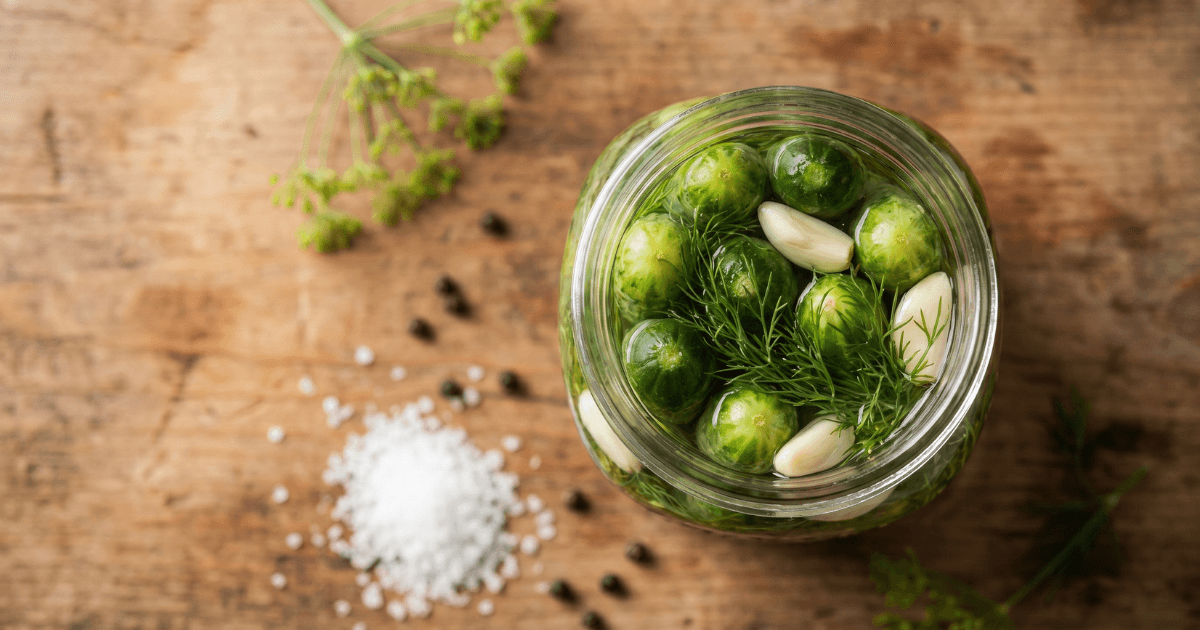
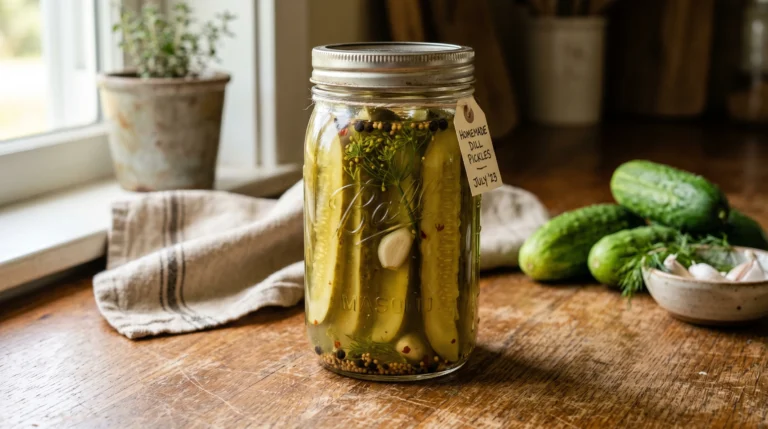
A jar of cucumbers sitting on the counter, doing nothing visible for two days, then quietly beginning to fizz and cloud. That is fermentation. It looks like neglect. It is actually one of the oldest food preservation techniques humans have used, and it requires almost no equipment.
The failure rate for first batches is high, though. Not because the process is difficult, but because a few early decisions quietly determine the outcome before you even put a lid on the jar. Wrong cucumber variety, iodized table salt, chlorinated tap water: any one of those three choices can stall fermentation entirely or produce a soft, flavorless result that makes you think you did something wrong when the mistake happened at the grocery store.
This guide covers the fermented dill pickle recipe itself, the exact brine ratio, which cucumbers to buy (and which to skip), and what to do when something looks off.
A basic fermented dill pickle brine uses 1 tablespoon of non-iodized pickling salt per 2 cups of water. Pack cucumbers into a mason jar with garlic and fresh dill, pour the brine over to cover, and ferment at room temperature for 3 to 7 days. Taste daily after day 3; move to the refrigerator when they reach your preferred sourness.
Table of Contents
In Homestead is reader-supported. When you buy through links on this page, we may earn a small commission at no extra cost to you. See our affiliate disclosure. As an Amazon Associate, we earn from qualifying purchases.
Quick Answer
- Use 1 tablespoon of pickling salt per 2 cups of filtered water
- Pickling cucumbers only (Kirby, National Pickling); avoid waxed store cucumbers
- Trim the blossom end off every cucumber before packing
- Ferment at 65 to 75 F for 3 to 7 days, taste on day 3
- Cloudy brine and bubbles are normal and good
- Refrigerate when they taste right; keeps 2 to 3 months
- Never use iodized table salt or unfiltered municipal tap water
What Fermented Pickles Actually Are (and How They Differ from Vinegar Pickles)
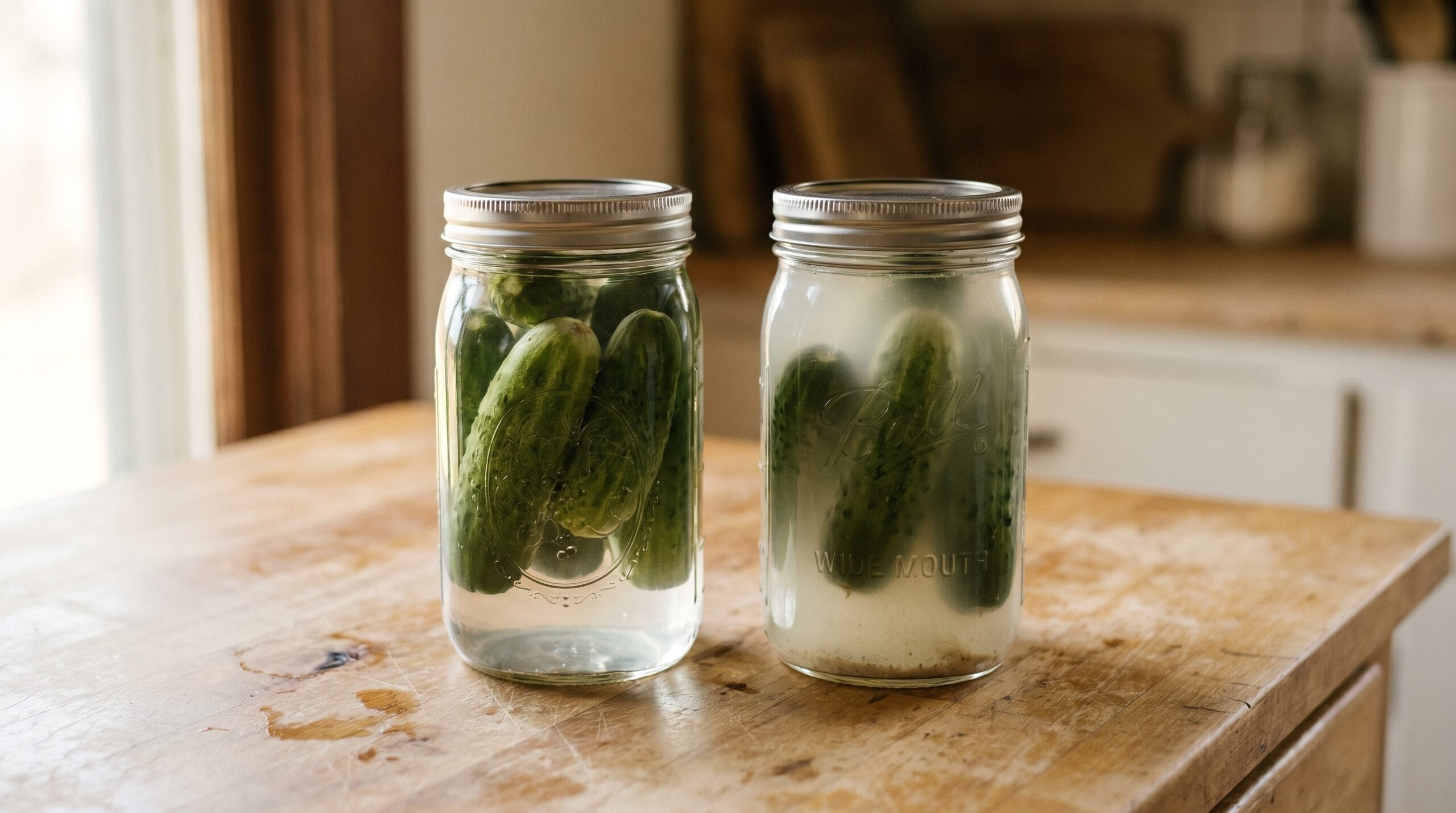
A vinegar pickle gets its sourness from acid you add at the start: usually white or apple cider vinegar. The acidity is immediate and stays constant. Nothing is alive in the jar once the lid goes on, and the texture tends to be crunchier upfront but can soften over time.
A fermented pickle starts with just salt and water. The salt creates an environment where lactobacillus bacteria (naturally present on cucumber skin and in the air) thrive and multiply. Those bacteria consume the natural sugars in the cucumber and produce lactic acid as a byproduct. That lactic acid is what makes the pickle sour. The sourness builds gradually over days, which is why you taste-test as you go.
Lacto-fermentation is one of the oldest preservation methods still widely used at home. The resulting pickles contain live cultures, produce a softer, more complex sourness than vinegar, and have a distinct cloudiness in the brine that signals active bacterial activity.
Neither style is better. They are different products. If you want shelf-stable vinegar-brined pickles, that is a separate process. If you want a tangy, probiotic-rich half-sour or full-sour dill pickle, you are in the right place.
How to Pick the Right Cucumbers (and Which Ones to Avoid)
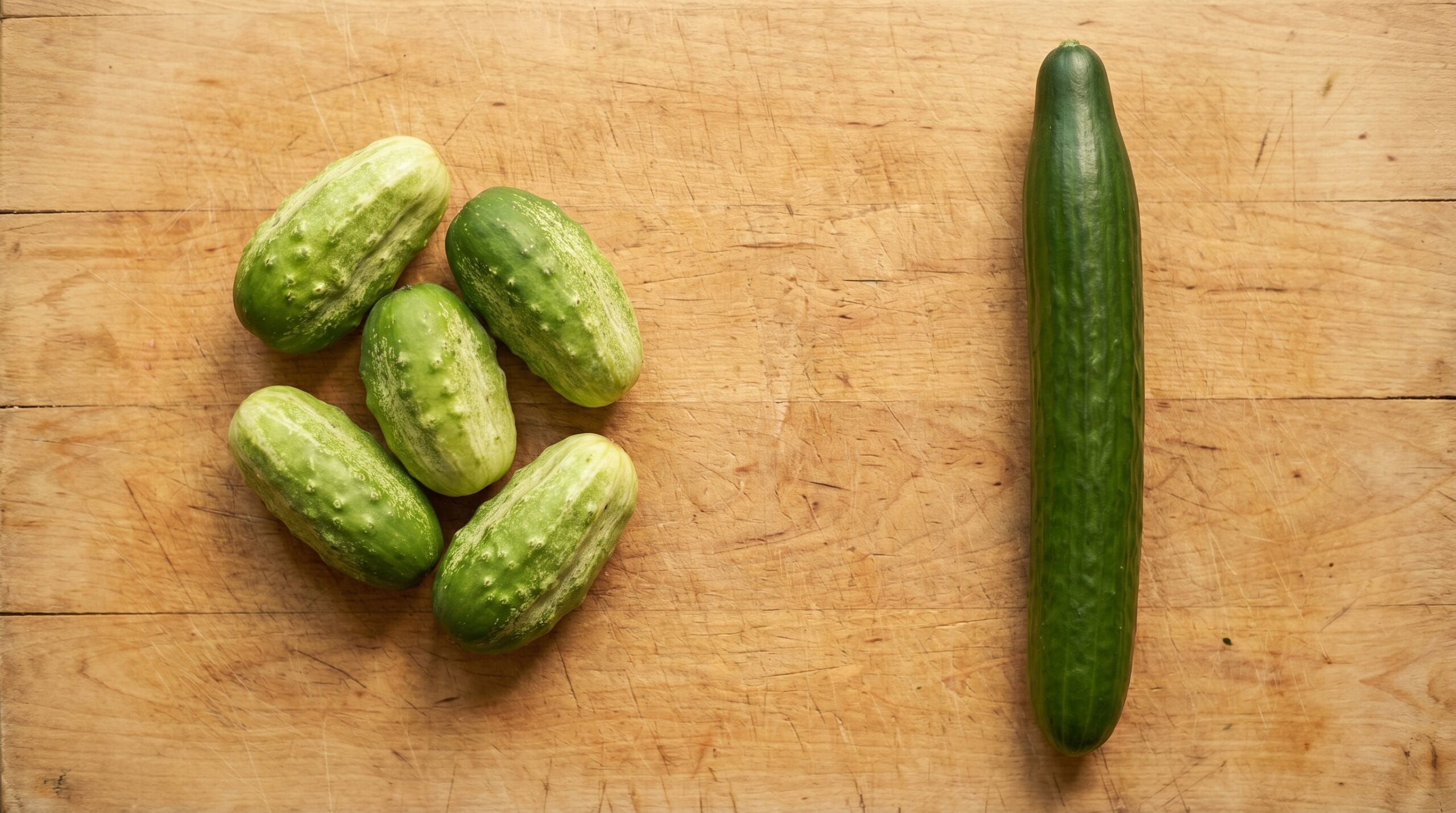
This is the decision most beginner guides skip entirely, and it is the one that most often determines whether your first batch is edible.
Cucumbers That Work
Pickling-variety cucumbers have firm flesh, thin skins, small seed cavities, and lower water content than their slicing counterparts. Common varieties that work well include Kirby and National Pickling. Smaller is usually better: 3 to 5 inch cucumbers pack vertically into a quart jar without cutting. Larger cucumbers can be sliced into spears, though spears tend to soften faster than whole pickles.
Fresh matters more here than in almost any other recipe. A cucumber that has been sitting in your refrigerator for a week is already losing firmness. Same-day from the garden or farmers market is ideal. If you are buying from a store, look for firm skin with no soft spots.
Cucumbers to Avoid
Waxed cucumbers (most standard supermarket cucumbers) have a thin coating applied after harvest to extend shelf life. That coating blocks brine absorption. The brine sits on the surface rather than penetrating the flesh, and you end up with a cucumber that looks pickled but is not.
English cucumbers and standard slicing cucumbers have a higher water content and thinner cell walls. They go soft during fermentation. The brine turns out fine, but the cucumber itself ends up with an unpleasant texture.
What Type of Salt and Water to Use
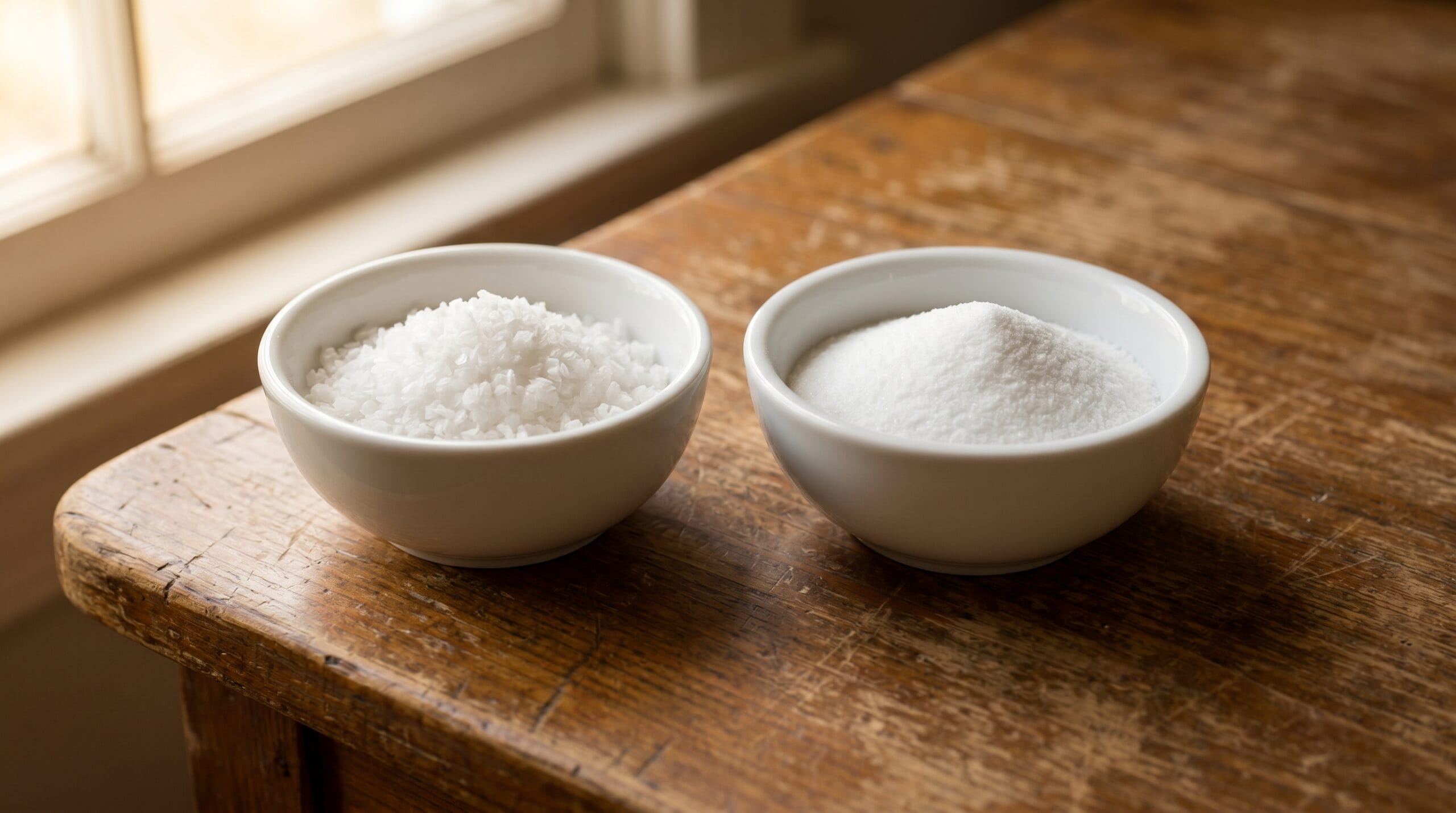
Salt and water are the only two ingredients in your brine, which means they have an outsized effect on what happens in the jar.
Salt
Use pickling salt or a coarse kosher salt (non-iodized). The iodine added to standard table salt inhibits lactobacillus bacteria, which are the microorganisms responsible for lacto-fermentation. According to university extension resources, iodized salt is not recommended for fermentation because it can slow or prevent the bacterial activity you are trying to encourage.
Pickling salt is inexpensive. A standard box typically costs around $2 to $4 depending on brand and location, and will make enough brine for many batches.
Water
Municipal tap water in most U.S. cities contains chlorine or chloramine added to suppress bacterial growth. That is good for drinking water safety. It is bad for fermentation, where you want bacteria to grow. As noted by cooperative extension guidance on lacto-fermentation, chlorinated water can inhibit or prevent the fermentation process entirely.
Filtered water, bottled water, or well water are the reliable options. Before you consider tap water as a fallback, check whether your municipal system uses chloramine rather than plain chlorine. Chloramine does not off-gas and cannot be removed by letting water sit in an open container overnight. The off-gassing method only applies to plain chlorine, and many large U.S. city water systems have switched to chloramine. Your water utility’s annual consumer confidence report will tell you which one your tap water contains.
If you have confirmed your tap water uses only plain chlorine (not chloramine), letting it sit uncovered for 24 hours may reduce it enough to use. For most beginners, a gallon of filtered or bottled water costs roughly $1 to $2 at most grocery stores and yields enough brine for several quart jars. It removes the variable entirely.
Ingredients and Equipment You Actually Need
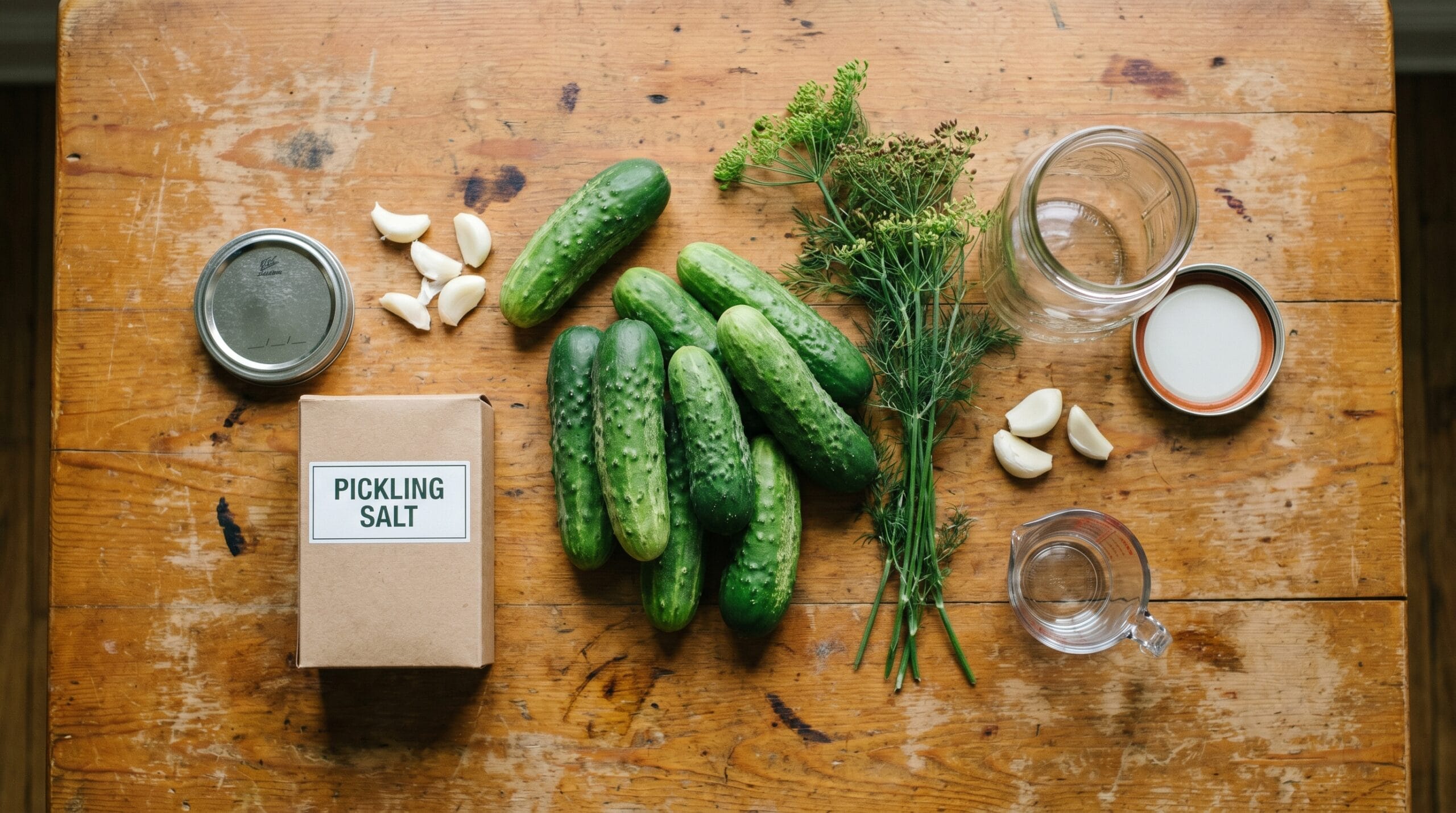
Ingredients
- Cucumbers: 1 to 1.5 lb pickling-variety (enough to fill a quart jar tightly)
- Fresh dill: 2 to 3 heads or a generous handful of fronds
- Garlic: 3 to 4 cloves, peeled and lightly crushed
- Pickling salt: non-iodized
- Water: filtered or non-chlorinated
Optional additions worth considering: a few whole black peppercorns for complexity, a pinch of mustard seed for mild heat, a small piece of oak leaf or a few whole dried red chiles. If you want extra crunch, add 1 teaspoon of loose black tea leaves or a grape leaf, both contain tannins that help maintain cell structure during fermentation.
One entity worth noting: some fermenters add a small piece of tomato leaf or a beet slice to the jar for tannins or color. A thin beet slice will tint the brine pink; the flavor contribution is minimal but the color is striking.
Equipment
- Wide-mouth quart mason jar
- Lid and band (the jar’s standard two-piece lid works; leave the band loose to let gas escape, or use a dedicated airlock lid)
- A small weight to keep cucumbers submerged (a zip-lock bag filled with brine works; so does a small jar of water that fits inside the mouth)
- That is all
No canner. No pressure cooker. No starter culture. No special fermentation setup is required for a basic batch.
The Brine: Salt-to-Water Ratio That Works
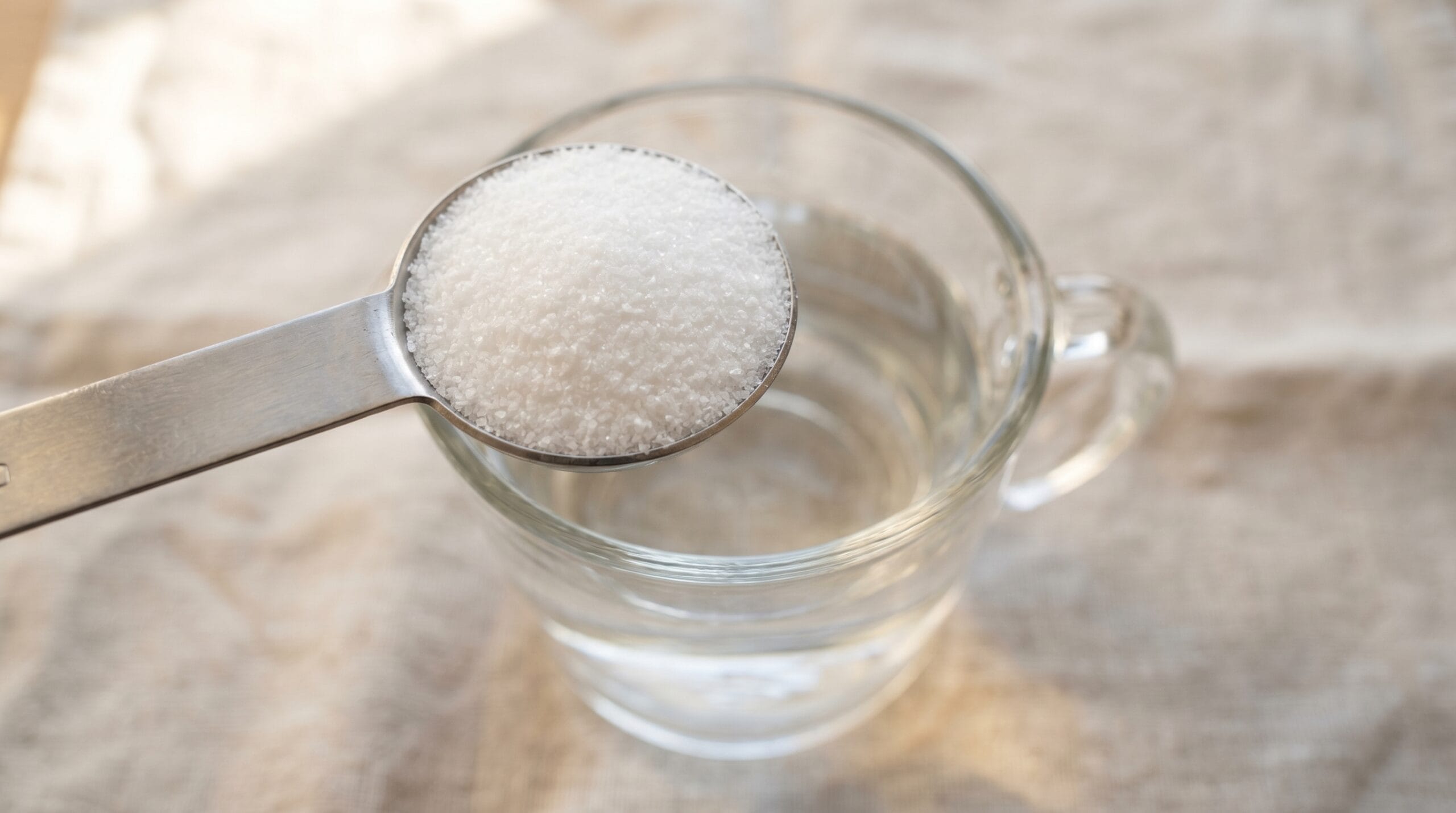
The brine ratio is the single most important variable in fermented pickles. Too little salt and you invite off bacteria and soft pickles. Too much and fermentation stalls and the pickles taste like ocean water.
The standard ratio that works reliably for dill pickles:
1 tablespoon of pickling salt per 2 cups of water (approximately 2% brine)
If you are scaling up, that is roughly 14 to 15 grams of pickling salt per 2 cups of water. Weight measurements are more precise if you are making large batches or have a kitchen scale available.
A brine below about 1.5% salt produces soft pickles and creates conditions where undesirable bacteria can gain a foothold before lactobacillus establishes dominance. Above 3%, the salt concentration actively slows bacterial activity and the resulting pickle is too salty for most people.
You do not need to heat the brine to dissolve pickling salt. Stir it in cold or room-temperature water until fully dissolved. Heating is unnecessary and will add time to your prep without any benefit.
For a standard quart jar you will need approximately 2 to 3 cups of brine, depending on how tightly you pack the cucumbers.
Step-by-Step Fermented Dill Pickle Recipe
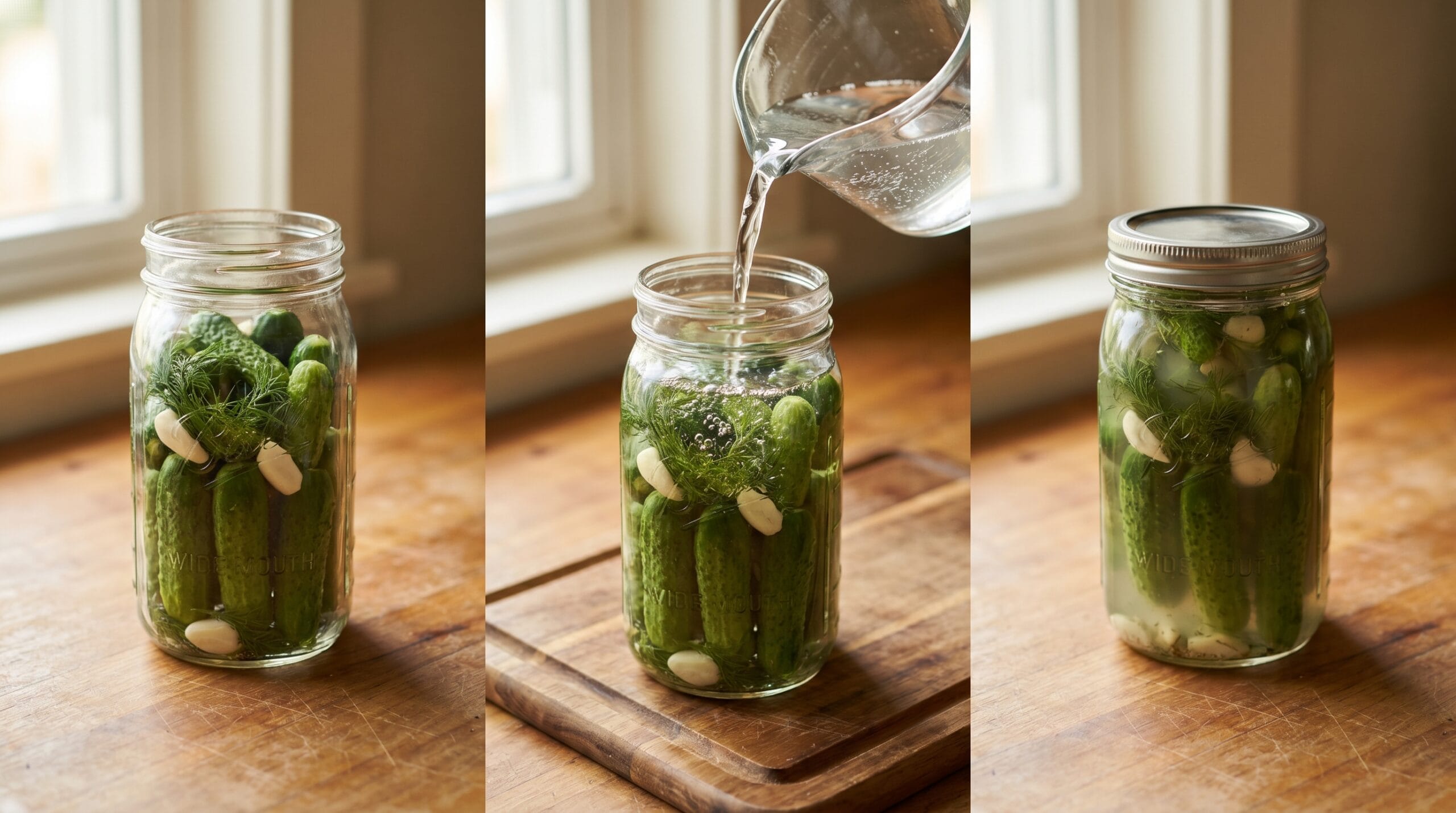
This makes one quart jar of fermented dill pickles.
Trim the blossom end. Cut a thin slice off the blossom end (the end opposite the stem) of each cucumber. The blossom end contains enzymes that cause softening; removing it is a small step that makes a noticeable difference in texture.
Add aromatics to the jar first. Place 2 to 3 dill heads (or fronds) and 3 to 4 crushed garlic cloves in the bottom of a clean wide-mouth quart mason jar. Add peppercorns or other optional spices here if using.
Pack the cucumbers. Stand cucumbers vertically in the jar, packing them snugly. The tighter they fit, the less they will float up into the headspace. Leave about 1 to 2 inches of headspace at the top.
Mix and pour the brine. Dissolve 1 tablespoon of pickling salt in 2 cups of filtered water. If needed, make a second cup (using the same ratio) to fully submerge the cucumbers. Pour brine over the cucumbers, maintaining about 1 inch of headspace below the lid ring.
Weigh the cucumbers down. Use a small zip-lock bag filled with extra brine, a small jar that fits inside the mouth, or a dedicated fermentation weight to keep cucumbers fully below the brine surface. Any cucumber exposed to air is a candidate for mold.
- Best for: anyone who has had a batch go fuzzy, and anyone who does not want to.
- Keep in mind: check the size matches your jar mouth; these are made for wide-mouth jars, not regular.
Cover loosely. Screw the band on finger-tight only. This lets carbon dioxide escape without letting air in. Alternatively, use a cloth secured with a rubber band for the first 24 hours, then switch to a loose lid as fermentation becomes active. If your kitchen runs warm (above 75 F), check the jar more frequently and consider moving it to the coolest available spot; warmer temperatures accelerate fermentation and increase the chance of kahm yeast forming on the surface.
Ferment at room temperature. Set the jar on a small plate (it may overflow slightly as it becomes active) in a location with a temperature between 65 and 75 F. Burp the jar once a day if using a sealed lid, unscrew briefly to release gas, then reseal.
- Best for: anyone fermenting more than one jar, or who travels during a ferment.
- Keep in mind: they replace the flat lid, not the band, and are for wide-mouth jars only.
Taste on day 3. Open the jar, fish out a pickle, and taste. If it is pleasantly sour and still firm, it is done. If you want more sourness, let it go another 1 to 2 days.
Refrigerate when ready. Seal the jar with a tight lid and band and move it to the refrigerator. Cold temperatures slow fermentation to a near-stop without killing the culture.
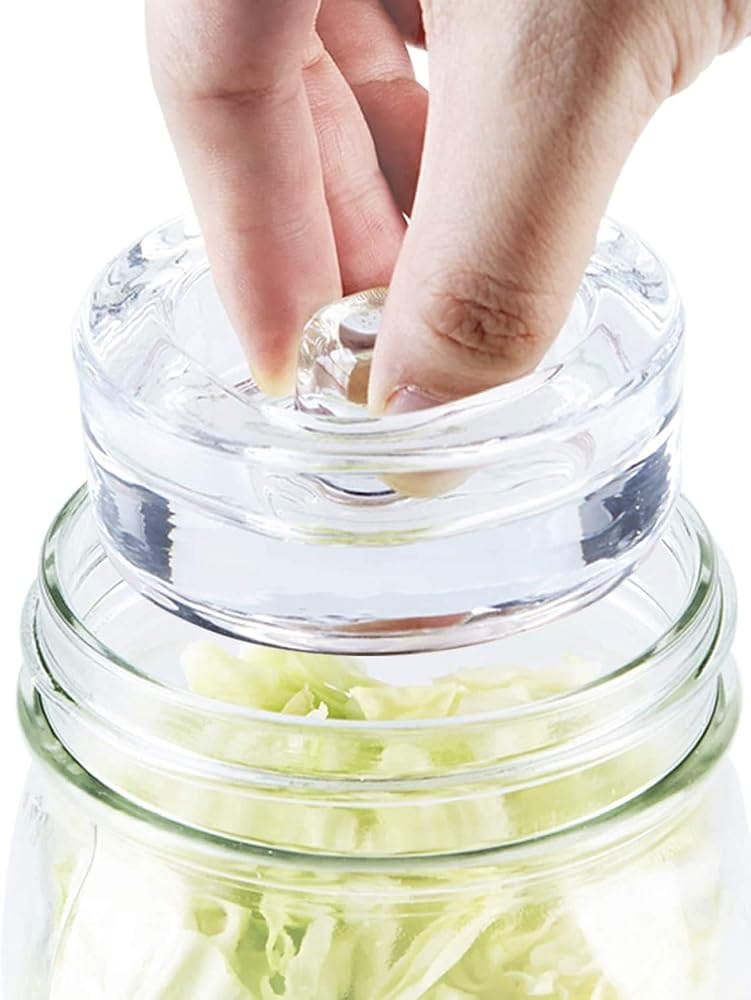
Solves the #1 Failure
Glass Fermentation Weights (4-Pack)
Every failure mode in the troubleshooting section below traces back to the same thing: a cucumber that floated above the brine. A zip-lock bag of brine works, and a dedicated glass weight works better, because it sits flat, will not leak, and has a grip handle so you can lift it out without fishing around in the jar. This 4-pack is the most-used option we found by a wide margin, at 4.6 stars across more than 6,200 reviews with 5,000-plus sold in the last month. If you would rather buy the whole setup at once, the Masontops complete kit pairs weights with airlock lids and rates 4.8 stars.
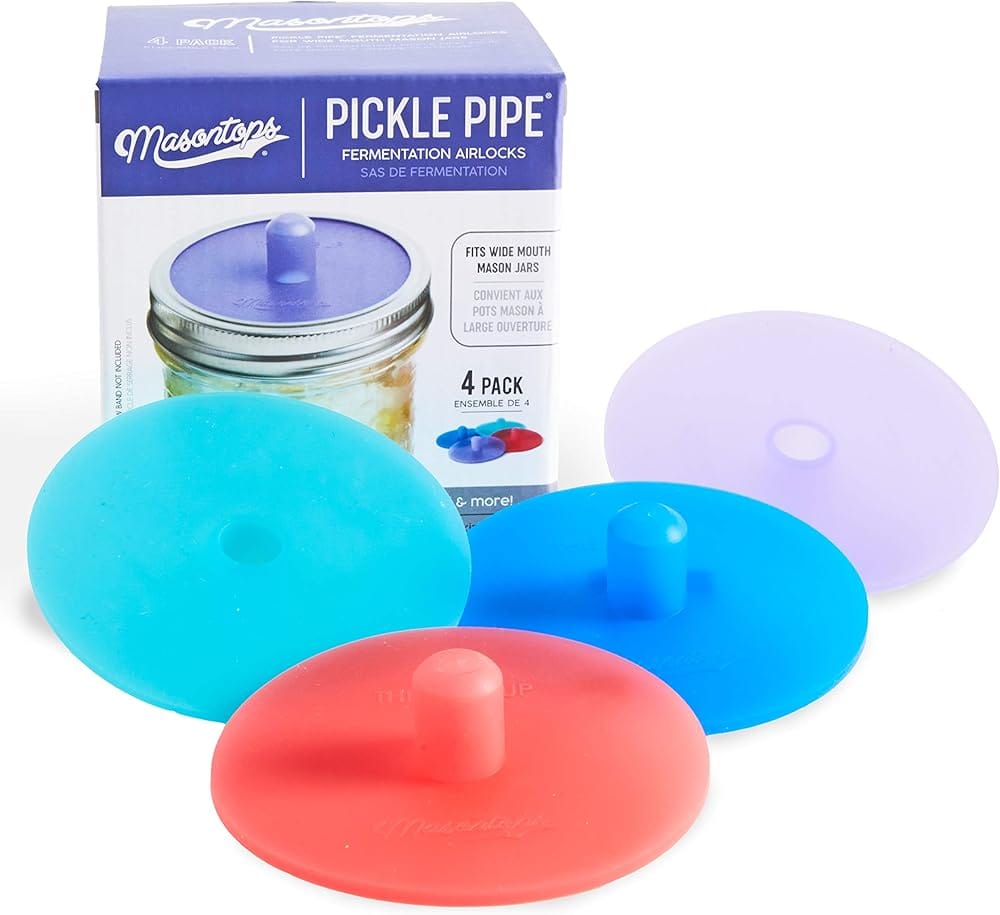
If You Would Rather Not Burp Jars
Masontops Pickle Pipes Airlock Lids
Burping a jar daily is easy to forget, and forgetting is how pressure builds or air sneaks in. An airlock lid removes the chore: the one-way valve lets carbon dioxide escape on its own and keeps oxygen out, so you can leave the jar alone until you taste it on day 3. These are the widely used silicone version, at 4.7 stars across roughly 4,700 reviews, and they fit a standard wide-mouth mason jar.
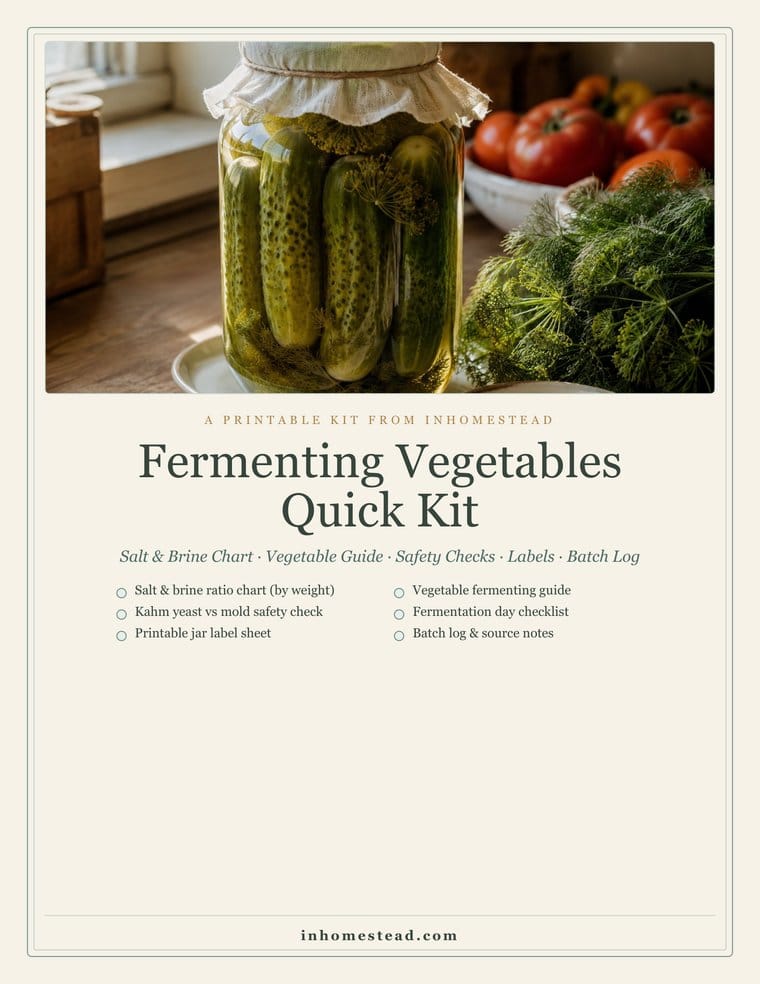
New in the In Homestead Shop
Take the guesswork out of your next batch
The Fermenting Vegetables Quick Kit turns this method into a printable — a by-weight salt & brine ratio chart, a kahm-yeast-vs-mold safety check, a vegetable fermenting guide, jar labels, and a batch log — all sourced from the USDA and the National Center for Home Food Preservation.
Fermentation Time, Temperature, and What to Expect
Temperature and Timing
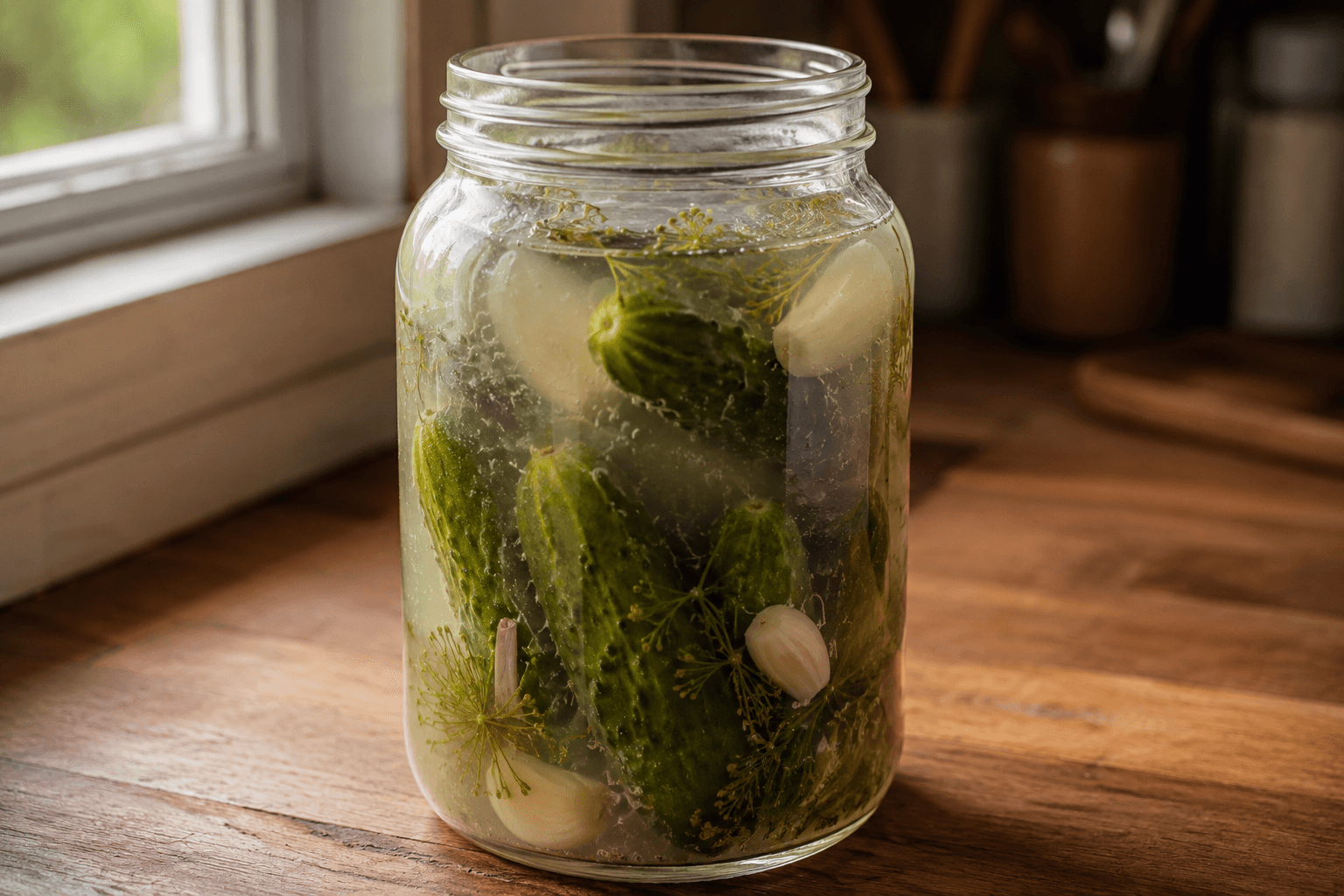
The 65 to 75 F range is not arbitrary. Below 60 F, lactobacillus activity slows to a crawl, your pickles will eventually ferment, but it may take two to three weeks instead of days. Above 80 F, fermentation moves too fast, beneficial bacteria can be outcompeted, and the cucumbers tend to soften before they sour properly.
A cool kitchen countertop is usually fine in spring and fall. In summer, find the coolest spot in the house. In winter, the warmest spot that is still below 75 F.
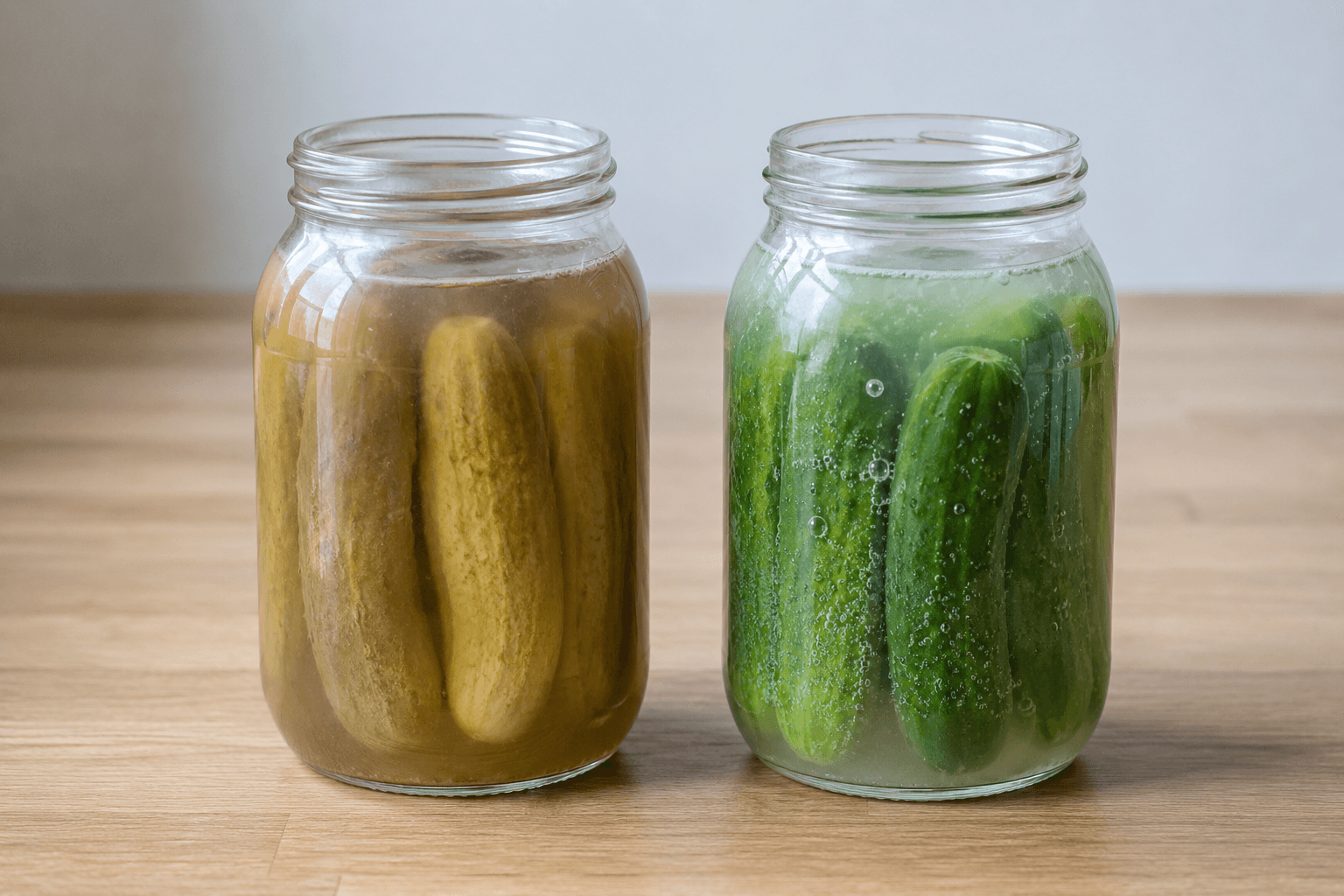
Half-sour pickles (mild, still bright green, lightly tangy) take about 3 to 4 days. Full-sour pickles (deeply tangy, olive-green, with more complex flavor) take 5 to 7 days. Your preference determines which target you aim for.
What Normal Looks Like
- Cloudy brine: expected, starts around day 2. This cloudiness is suspended bacteria and byproducts of active fermentation. It is a good sign.
- Bubbles: you may see small bubbles clinging to the cucumbers or rising slowly. This is carbon dioxide from bacterial activity.
- Sour, yeasty smell: a mildly funky, pleasantly sour smell when you open the jar means things are working.
- White film on the brine surface: this is likely kahm yeast, a harmless surface yeast that can appear in ferments. Skim it off and continue.
What Is Not Normal
Fuzzy mold in any color other than white is not kahm yeast. It is a sign of contamination, usually caused by cucumbers above the brine surface or a too-weak brine. Per NCHFP guidance on fermented vegetables, any batch showing fuzzy or colored mold should be discarded entirely. Do not skim and continue.
After active fermentation, properly fermented dill pickles stored in the refrigerator will keep safely for 2 to 3 months.
Why Your Fermented Pickles Failed (and How to Fix It Before You Start)
Most beginner failures trace back to one of four root causes. Knowing them before you start saves a batch.
Soft Pickles
The cucumber went soft before or during fermentation. Likely causes: slicing cucumber variety (too much water content), blossom end not trimmed (softening enzymes), fermentation temperature above 80 F (too fast, weakens cell structure), or cucumbers that were past-prime before the jar was packed.
Fix: use fresh, firm pickling cucumbers the same day you buy them, trim the blossom end, and keep the ferment in a cool spot.
No Bubbles by Day 2 (Stalled Fermentation)
The beneficial bacteria never got started. Almost always caused by chlorinated tap water or iodized table salt, either of which independently suppresses lactobacillus. Brine that is too cold (below 60 F) can also cause a slow start.
Fix: pour out the brine, mix a new batch using filtered water and pickling salt, and pour it over the same cucumbers if they have not softened yet.
Off Smell (Not Pleasantly Sour)
A rotten or unpleasant smell rather than a tangy-sour smell suggests that the brine was too weak, the temperature was too warm, or cucumbers were exposed above the brine surface. These conditions can allow the wrong microorganisms to establish before lactobacillus takes over.
Discard the batch and begin again with the correct salt ratio, filtered water, and a weight to keep cucumbers submerged. Do not attempt to repack or rescue a batch that already smells off. A beginner fermenter cannot reliably distinguish a fixable stall from actual spoilage, and the risk is not worth it. When in doubt, throw it out.
Fuzzy Colored Mold
This is not salvageable. Discard the batch. Fuzzy mold above the brine surface means cucumbers were not kept submerged. Next time, use a weight and check daily that everything stays below the brine line.

From the In Homestead Shop
Want every water-bath recipe in one place?
The Beginner’s Canning eBook gathers 12 tested recipes — fermented dill pickles included — with every processing time pulled straight from the USDA and the National Center for Home Food Preservation, plus a printable safety card for the kitchen wall.
The Free Garden Starter Pack
Five printable pages that take the guesswork out of a first season, plus a short email every week or two when something is worth planting, picking, or putting up.
- A garden planning worksheet you can actually fill in
- A seed-starting and planting calendar
- A harvest log to track what really produced
No spam, ever. Unsubscribe in one click.
Thank you. You are on the list.
Your Garden Starter Pack is ready right now. Grab it here:
Download the pack (PDF)Keep an eye on your inbox. The next seasonal guide lands there first.
Frequently Asked Questions About Fermented Dill Pickles
How Long Do Dill Pickles Need to Ferment?
Fermented dill pickles need 3 to 7 days at room temperature (65 to 75 F). A half-sour pickle with mild tang is usually ready in 3 to 4 days. A full-sour pickle with deeper flavor takes 5 to 7 days. Taste on day 3 and move to the refrigerator when they reach your preferred sourness.
What Is the Secret to Crisp Dill Pickles?
The secret to crisp fermented pickles is trimming the blossom end off each cucumber before packing, using very fresh pickling-variety cucumbers, and keeping the fermentation temperature on the cooler end of the 65 to 75 F range. Adding a tannin source (a grape leaf, a few oak leaves, or a teaspoon of loose black tea) helps maintain cell structure during fermentation. Cucumbers that have been sitting in the refrigerator for several days before fermenting will be soft regardless of technique.
Is It Better to Pickle or Ferment?
Neither method is objectively better. They produce different results. Vinegar pickling is faster (ready same-day for refrigerator pickles), more predictable, and yields a consistent crunch. Fermented pickles develop more complex flavor over days, contain live cultures from active lacto-fermentation, and have a deeper sourness that mellows over time. The choice depends on what you want out of the finished jar, not on one method being superior.
What Is the 3-2-1 Rule for Pickles?
The 3-2-1 rule (3 cups vinegar, 2 cups water, 1 cup sugar) is a brine ratio used for some vinegar-based pickling recipes. It has no application to fermented dill pickles, which use no vinegar and no sugar. If you see this rule referenced in the context of lacto-fermented pickles, the source is conflating two different methods. For fermented pickles, the only ratio that matters is the salt-to-water ratio: 1 tablespoon of pickling salt per 2 cups of water.
What Are Common Problems With Fermented Pickles?
The most common problems are soft pickles (wrong cucumber variety or blossom end not trimmed), stalled fermentation with no bubbles (chlorinated water or iodized salt), and fuzzy mold from cucumbers not held below the brine surface. Most of these are preventable before you start. The troubleshooting section above covers each one with its root cause and fix.
One Last Step Before You Start
Set out a quart mason jar, a box of pickling salt, and a jug of filtered water before you go looking for cucumbers. That way when you find a good bag of Kirbys at the farmers market, you are not scrambling back to the store.
The process has fewer moving parts than most preservation methods. Keep the cucumbers submerged, use the right salt and water, stay in the temperature range, and taste starting on day 3. Those four controls cover the majority of what can go wrong.
Once you have one batch under your belt, you will have a clearer sense of how your kitchen temperature affects timing and how sour you actually want the finished pickle. That information makes the next batch faster to dial in. Start with one jar.