Best Raised Garden Beds for Beginners: 5 Picks Compared (2026)
Walk your hands into any garden forum and you will find the same story on repeat: someone spent a whole spring weekend building a beautiful raised bed, filled it with expensive soil, and watched their tomatoes stall in August because the bed was 9 inches deep and the roots had nowhere left to go. The bed is the one purchase in a vegetable garden where the wrong choice quietly caps everything you grow in it.
You do not need a carpenter, a truckload of cedar, or a $500 kit to get this right. Below are five raised garden beds that beginners actually buy and rate well, chosen from live Amazon research, sorted by who each one is for, plus a plain-English buying guide covering depth, materials, and the galvanized-steel safety question everyone eventually googles.
In Homestead is reader-supported. When you buy through links on this page, we may earn a small commission at no extra cost to you, see our affiliate disclosure. As an Amazon Associate, we earn from qualifying purchases.
Quick Picks: The 5 Best Raised Garden Beds
| Pick | Best for |
|---|---|
| Vego Garden 17″ Tall 9-in-1 | Best overall: deep, modular, built to outlast the decade |
| Land Guard Galvanized Oval Kit | Best budget: the most-bought bed on Amazon |
| 8x4x2 ft Deep-Root Galvanized Bed | Best for big harvests and root crops |
| DIIYIV Elevated Planter with Legs | Best for patios, renters, and bad knees |
| Quictent Bed with Greenhouse Cover | Best for cold springs and pest pressure |
What Actually Matters in a Raised Bed
Strip away the marketing and a raised bed is a box that holds soil. Four things separate a good one from a regret. Depth comes first: 12 inches grows most vegetables, but 17 inches or more gives tomatoes, squash, and root crops the room they want and saves your back a hundred small bends a season. Material is second: coated galvanized steel now outlasts untreated lumber several times over and never feeds termites. Steel thickness is the quiet spec, since very thin panels can bow outward under wet soil on long spans. And footprint should fit your reach, because a bed wider than 4 feet means stepping on your soil, which is the thing raised beds exist to prevent.
The Best Material for Raised Garden Beds: Metal, Wood, or Plastic?
Material is the first fork in the road, so here is the honest comparison before the picks.
| Material | Typical lifespan | Cost | The honest trade |
|---|---|---|---|
| Coated galvanized steel | 10–20 years | $–$$$ | Best value per year of life; farmyard look until plants soften it |
| Cedar or redwood | 10–15 years | $$$ | Beautiful and cool in heat, but good kits are scarce online |
| Untreated pine or fir | 3–5 years | $ | Cheapest start; plan on rebuilding it |
| Plastic or resin composite | 5–15 years | $$ | No rot or rust, but thin walls can bow and sag in heat |
For most beginners the best material for raised garden beds today is coated galvanized steel, which is why metal dominates the picks below: it costs less per year of service than anything else, ships flat, and shrugs off the rot, warping, and termites that end wood beds. Wood still wins on looks and on staying cooler in extreme summer heat, and we cover choosing the right wood further down.
The 5 Best Raised Garden Beds for Beginners
Best Overall
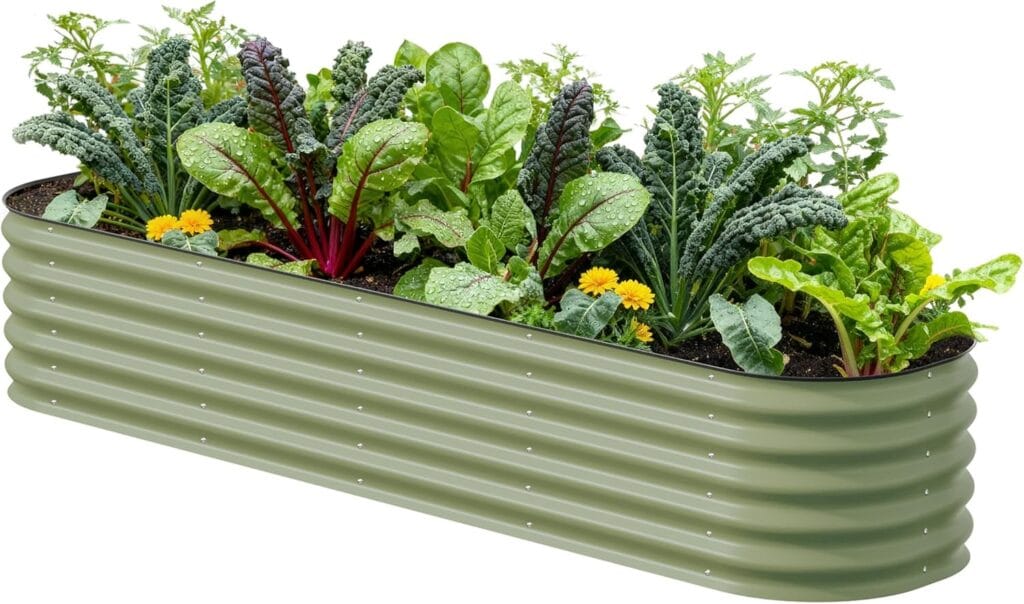
Vego Garden 17″ Tall 9-in-1 Modular Bed
4.8 stars across 1,600+ ratings
Vego is the brand that turned metal beds from a compromise into the default, and this 9-in-1 kit is why. The powder-coated, aluminum-zinc steel panels bolt together into nine different shapes up to roughly 8 by 2 feet, so the same kit can be one long border bed this year and two squares next year. At 17 inches deep it grows everything, including tomatoes and carrots, without a false bottom, and the rolled safety edging means no cut fingers at assembly. It is the most expensive bed on this list and still earns a 4.8 after 1,600 ratings, which tells you how rarely it disappoints.
- Best for: a first serious bed you never want to replace, deep-rooted crops, and gardeners who like rearranging.
- Keep in mind: assembly means a lot of bolts, and filling 17 inches takes more soil than you think, so read our filling guide below.
Best Budget
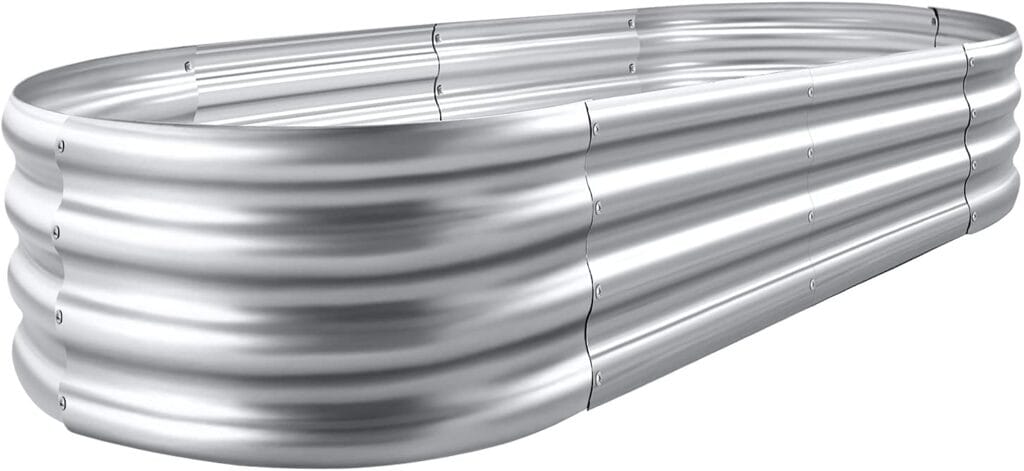
Land Guard Galvanized Oval Kit
4.5 stars across 12,600+ ratings
This is the bed America actually buys. The oval galvanized kit holds a 4.5-star average across more than twelve thousand ratings, assembles in about twenty minutes with a screwdriver, and costs less than a bag of premium potting mix. The 12-inch depth handles lettuce, beans, peppers, herbs, and bush tomatoes without complaint, and the oval shape has no weak corners to bow. It is thinner steel than the Vego, which is the honest trade at this price, but the oval geometry hides it well.
- Best for: first-year gardeners testing whether raised beds are for them without committing real money.
- Keep in mind: 12 inches suits most vegetables but not long carrots or parsnips, and the silver finish is more farmyard than showpiece.
Best for Big Harvests
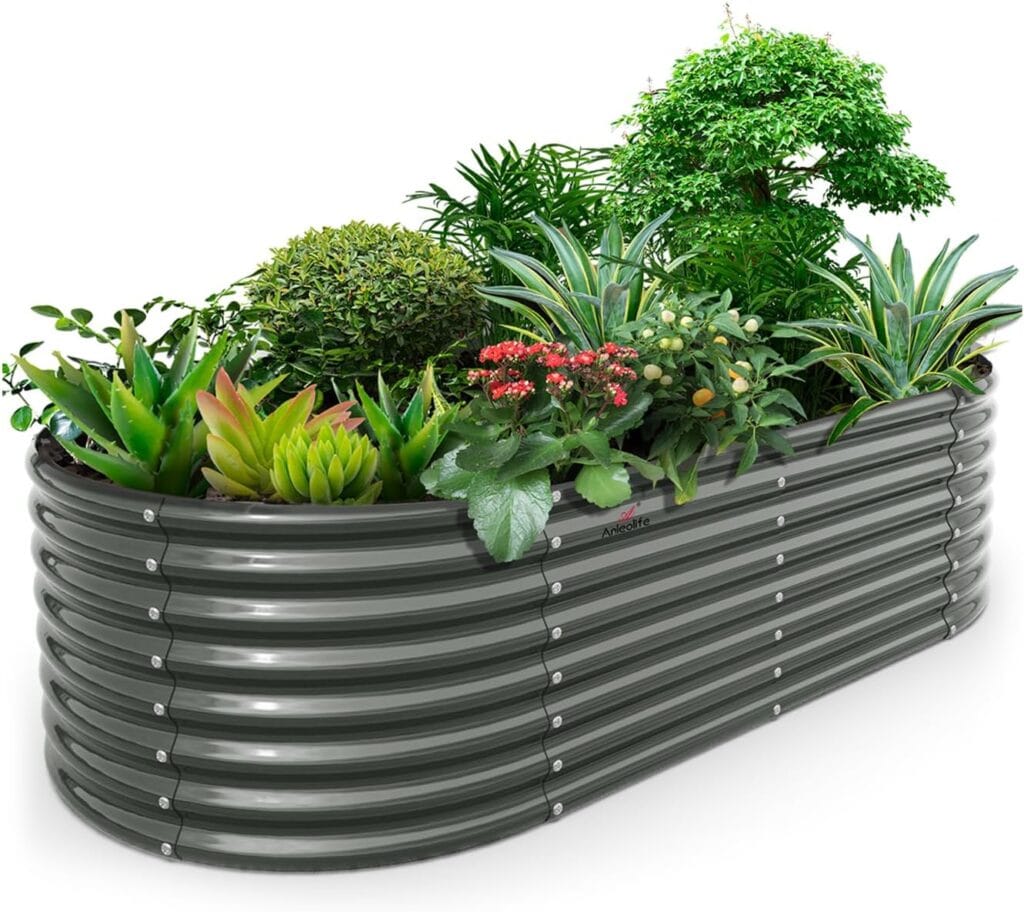
8x4x2 ft Deep-Root Galvanized Bed (478 Gallon)
4.7 stars across 775+ ratings
When you are done experimenting and ready to grow real quantities, this is the format: a full 8 by 4 feet and 2 feet deep, about as much growing volume as four budget kits combined. The 2-foot depth swallows hugelkultur fill, so you can pack the bottom half with logs and branches instead of purchased soil, and the height means harvesting standing up. Reviewers rate it 4.7 and repeatedly mention the thicker panels holding shape on the long 8-foot spans.
- Best for: families growing a serious share of their vegetables, and anyone planning deep root crops in quantity.
- Keep in mind: it is a two-person assembly, and at 4 feet wide you need access from both sides, so do not park it against a fence.
Best Elevated
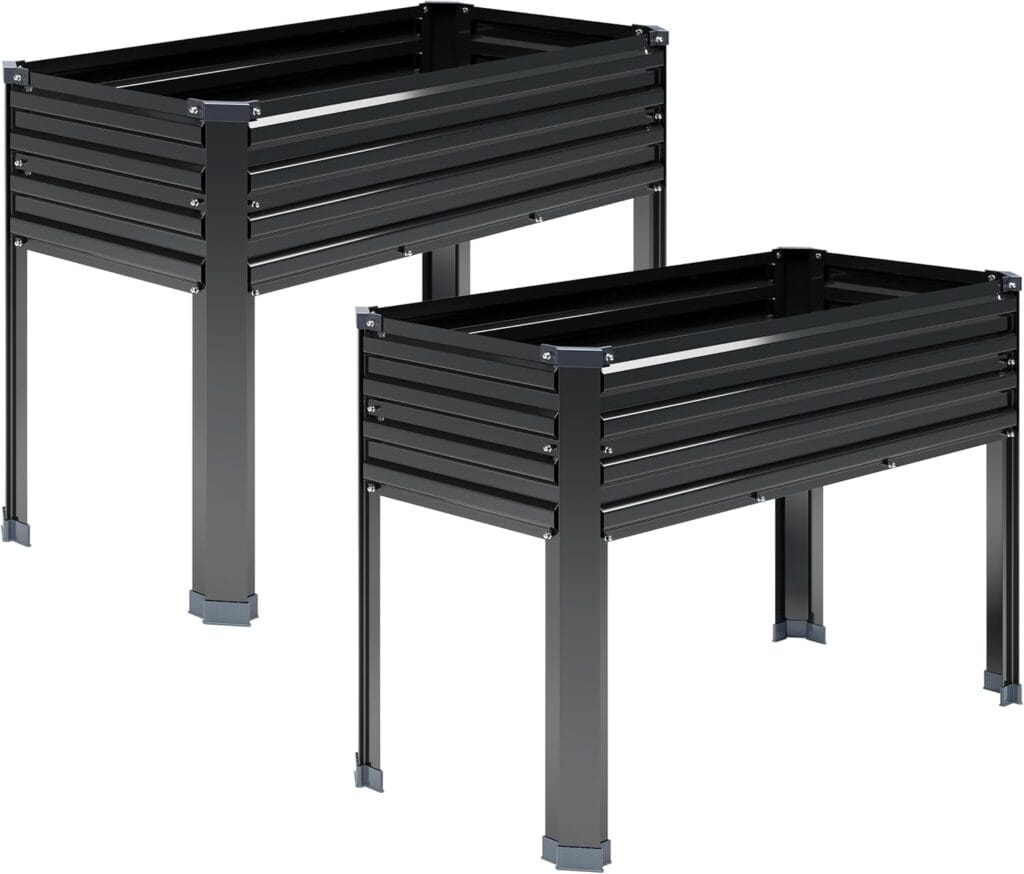
DIIYIV Elevated Planter Box with Legs (2 Pack)
4.3 stars across 1,200+ ratings
Not every garden gets to live in the ground. This two-pack of waist-high planters puts 30 inches of standing height under an 18-inch-wide growing trough, rated to 300 pounds of wet soil each, which covers salad greens, herbs, strawberries, and compact peppers on a patio, balcony, or rental where digging is not an option. Gardeners with knee or back trouble consistently call elevated beds the thing that kept them growing, and getting two units for this price is the best value in the category.
- Best for: renters, patio gardeners, and anyone for whom kneeling is the hard part of gardening.
- Keep in mind: the shallow trough dries out faster than a ground bed, so plan to water more often in high summer.
Best with Cover
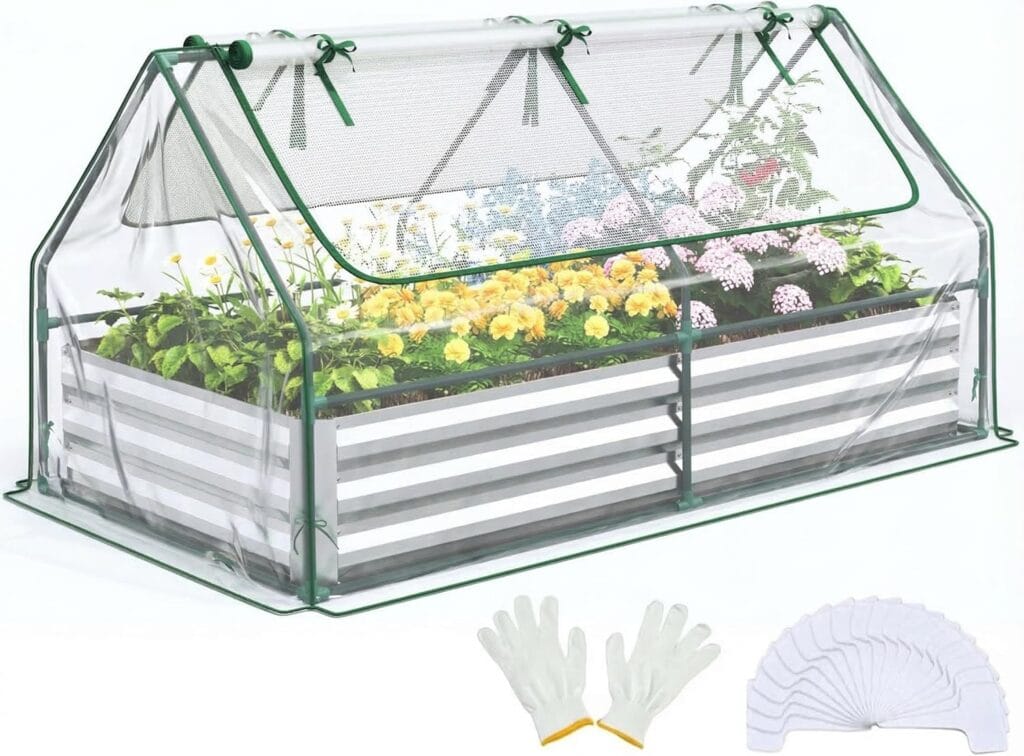
Quictent Raised Bed with Greenhouse Cover
4.3 stars across 3,100+ ratings
This one solves two beginner heartbreaks at once: the late frost that takes your seedlings and the cabbage moths that find your brassicas. It is a standard 6×3 galvanized bed with a zippered clear cover and two screened windows, effectively a mini greenhouse that starts your season weeks earlier and comes off entirely once summer settles in. Three thousand reviewers keep it at 4.3, and the recurring praise is exactly what you would hope: seedlings alive after cold nights that flattened the neighbors’ transplants.
- Best for: cold climates, short seasons, and gardens under heavy insect or bird pressure.
- Keep in mind: the cover needs venting on sunny spring days or it cooks the seedlings it just saved, and the film is a consumable you may replace after a few seasons.
The Best Wood for Raised Garden Beds (If You Go That Route)
Here is the honest answer you will not find on most lists: the wood-bed category on Amazon is thin. The classic cedar kit brands have mostly disappeared from the platform or sit with a handful of reviews, and the boutique options like VegTrug drift in and out of stock. Wood is still a lovely material with real advantages, it stays cooler in extreme heat and looks at home in a cottage garden, but the good cedar today is at your local lumberyard, not in a shipped kit.
If your heart is set on wood, the better path is building it yourself for less than a kit costs. Our guide on how to make raised garden beds walks through the cuts, the corner posts, and which woods to avoid around food.
If you do build, the wood you choose decides how many seasons you get. Ranked by how they actually hold up in wet soil:
- Cedar is the best wood for a raised garden bed for most people: naturally rot-resistant oils, widely available, and good for a decade or more.
- Redwood and cypress match cedar for rot resistance and beat it for looks, at a higher price and mostly regional availability.
- Black locust outlasts them all, decades in ground contact, if a local mill carries it.
- Untreated pine, fir, or hemlock is the budget play: expect 3 to 5 seasons, and treat the rebuild as part of the price.
- Skip: railroad ties (creosote) and any old pressure-treated lumber from before 2004 (arsenic-based CCA). Modern pressure-treated lumber uses copper-based preservatives that extension services consider acceptable near food, but if it makes you hesitate, cedar removes the question.
How Deep Should Your Raised Bed Be?
| Depth | What it grows |
|---|---|
| 6–8 inches | Lettuce, spinach, herbs, radishes, and other shallow feeders |
| 12 inches | Most vegetables: beans, peppers, bush tomatoes, beets, garlic, onions |
| 17–24 inches | Everything, including indeterminate tomatoes, squash, carrots, and parsnips |
When in doubt, go deeper. Extra depth is insurance you buy once, and it doubles as a back-saver every time you weed. If you are planting a fall crop of garlic, 12 inches is plenty; if next summer’s tomato jungle is the dream, spend up for 17.
Is Galvanized Steel Safe for Growing Food?
Yes, and this question deserves a straight answer because it stops a lot of beginners. Galvanized coating is zinc, and zinc barely dissolves at the near-neutral pH of garden soil. Meaningful leaching requires strongly acidic conditions, well below where vegetables grow happily, and zinc is a micronutrient plants need in trace amounts anyway. Millions of gardens grow in galvanized stock tanks for exactly this reason. Buy a bed with an intact coating, skip anything visibly rusted through, and put your worry into soil quality instead.
Filling It Without Buying a Pallet of Soil
The sticker shock of a raised bed is rarely the bed, it is the 20 bags of soil the big ones swallow. You do not have to fill the whole depth with purchased mix: the bottom third of a deep bed can be logs, branches, and rough compost that break down into fertility over the years. Our guide on how to fill a raised garden bed lays out the layers, and home compost keeps topping it up for free. Once the bed is filled, the easiest vegetables for beginners are the right first planting.
Planning what goes in the bed?
The Complete Garden Planner is a 30 page printable with bed maps, spacing charts, planting calendars, and harvest logs, so your new bed earns its keep from the first season.
The Free Garden Starter Pack
Five printable pages that take the guesswork out of a first season, plus a short email every week or two when something is worth planting, picking, or putting up.
- A garden planning worksheet you can actually fill in
- A seed-starting and planting calendar
- A harvest log to track what really produced
No spam, ever. Unsubscribe in one click.
Thank you. You are on the list.
Your Garden Starter Pack is ready right now. Grab it here:
Download the pack (PDF)Keep an eye on your inbox. The next seasonal guide lands there first.
Frequently Asked Questions About Raised Garden Beds
Do I need to line the bottom of a raised garden bed?
Usually no. An open bottom lets roots run deep and worms move in, which is what you want. The exceptions are gopher country, where a layer of hardware cloth under the bed is cheap insurance, and beds placed over concrete or treated surfaces, which benefit from a landscape-fabric barrier.
Do metal raised beds get too hot for plants?
Less than you would guess. Soil is an excellent insulator, so only the outer inch or two against the wall warms up, and roots simply grow toward the cooler center. In very hot climates a lighter panel color and steady mulch layer keep the edge effect small.
What size raised bed should a beginner start with?
One bed around 4×2 or 6×3 feet and at least 12 inches deep. That is enough space to matter, small enough to weed in ten minutes, and narrow enough to reach the middle without stepping in it. Most people add a second bed the following spring once the first one earns its keep.
How long do galvanized raised beds last?
Longer than the reason you bought them. Plain galvanized kits are commonly good for a decade or more in garden conditions, and the aluminum-zinc coated steel used by premium brands like Vego carries ratings around 20 years. Untreated pine, for comparison, often starts failing at year three to five.
What is the best wood for a raised garden bed?
Cedar. It resists rot naturally, lasts a decade or more in soil contact, and is stocked at most lumberyards. Redwood and cypress perform as well where they are local, and black locust lasts longest of all if you can find it. Avoid railroad ties and pre-2004 pressure-treated lumber around food.
What is the best soil mix for a raised garden bed?
A reliable starting blend is roughly half quality topsoil, a third compost, and the rest an aeration material like coarse bark fines or perlite. Deep beds do not need that mix all the way down, the bottom of a 17 inch or 2 foot bed can be logs and rough organic matter. Our guide to filling a raised bed covers the layers and the math.
Can I put a raised bed on grass?
Yes. Mow the spot short, lay plain cardboard directly on the grass inside the bed footprint, wet it down, and fill the bed on top. The cardboard smothers the grass and breaks down by the time roots reach it, no digging required.
The Bottom Line
If you want the last bed you will ever buy, get the Vego Garden 17-inch 9-in-1 and let its depth do the heavy lifting. If you are testing the waters, the Land Guard oval kit proves the concept for the price of a nice dinner. Either way, the bed is only the container. The soil you fill it with and the plan you plant it to decide the harvest, and both of those are skills you already have a head start on.