Flower Pot Ideas for Beginners
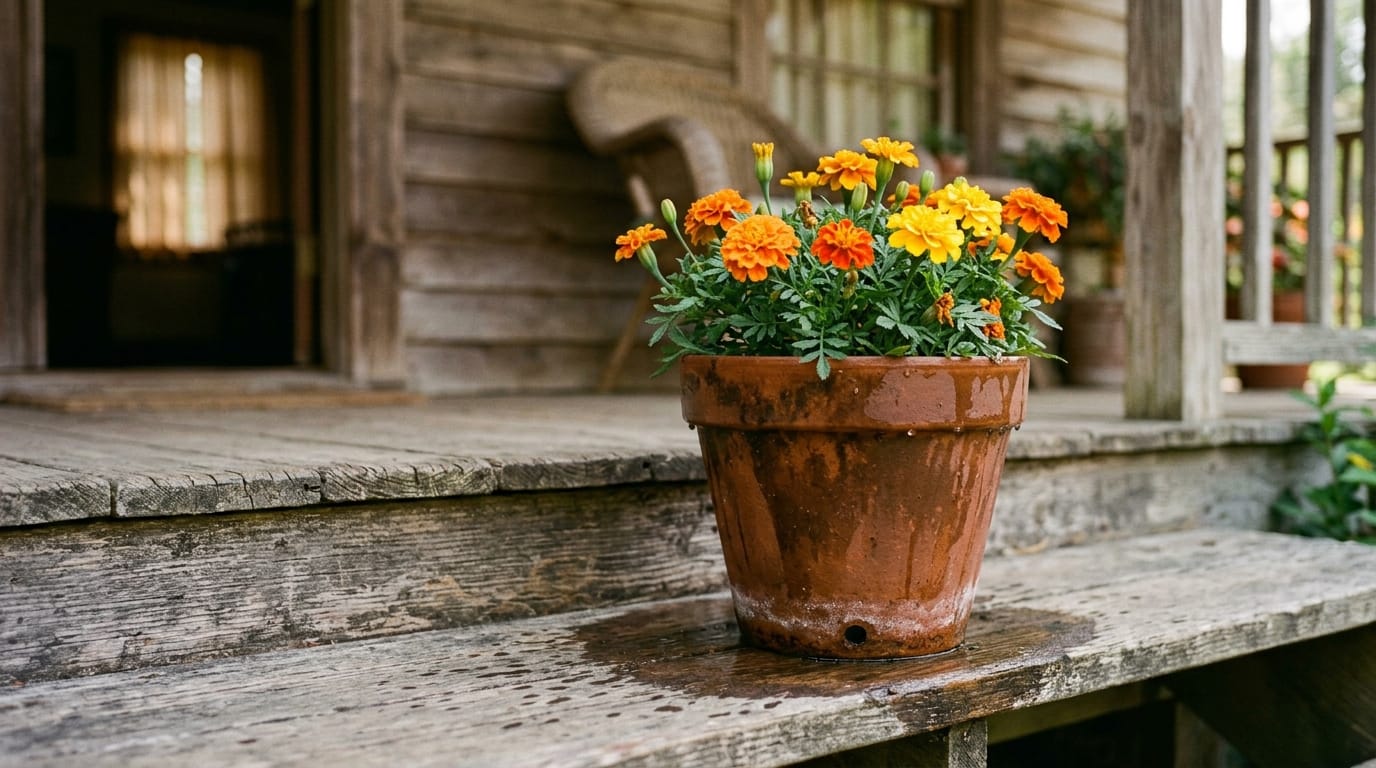
The first warm Saturday of spring, you carry a single pot out to the porch, scoop in some soil, and tuck in a six-pack of marigolds you grabbed on impulse. A week later you notice you slow down a little every time you walk past it. That is the quiet thing flower pots do. One container, planted well, changes how a doorway feels.
You might not have a garden yet. Maybe you have a front porch, a small patio, a balcony, or one sunny corner by the back door. Maybe you have walked past someone else’s planters and thought you would have no idea where to start.
You do not need a greenhouse, a big yard, or years of practice. You do not need to get it perfect the first time. You need one pot with a drainage hole, a bag of potting mix, and a few flowers that match how much sun the spot gets. That is the whole list.
This guide walks through the easiest flower pot ideas for beginners, how to combine plants so a pot looks full instead of sparse, which flowers forgive a missed watering, and the handful of mistakes that sink most first pots. If you are brand new to all of this, our guide to starting a garden as a complete beginner pairs well with everything below.
Why Flower Pots Are Perfect for Beginner Gardeners
Flower pots forgive you. A garden bed is a commitment. A pot is an experiment you can pick up and move. If an arrangement looks off, you slide it to a better spot. If a plant sulks, you pull it and try another. If the porch feels bare, you add one more container instead of digging up the yard.
That forgiveness is what makes containers the right place to start, especially if space is tight. You can grow on a porch, patio, balcony, deck, walkway, or the step beside the kitchen door. A few well-placed pots make a home feel tended without much work.
- They are quick to set up and easy to move.
- They work in small spaces with no yard at all.
- They need far less weeding than a bed.
- They are simple to refresh each season.
- They teach you watering, light, and feeding on a small, low-stakes scale.
One thing matters more than the rest: your pot needs a drainage hole. Without one, water collects at the bottom and the roots sit in it, which is the fastest way to lose a plant. Wet soil leaves no room for air around the roots, and root rot is hard to come back from. Before you buy any container, turn it over and check for holes. If you want the full version of this, our walkthrough of container garden ideas for small spaces covers it in more depth.
Best Flower Pot Ideas for Beginners
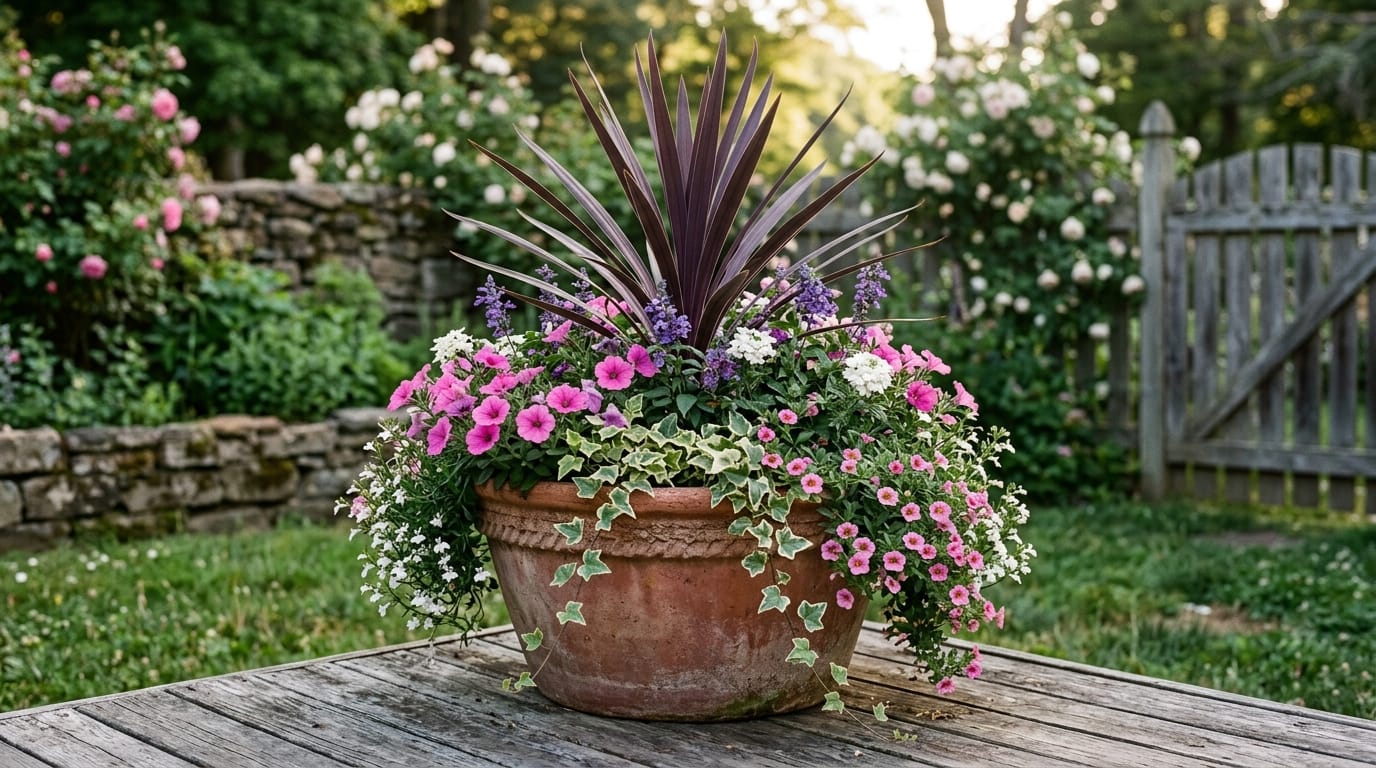
There are a hundred ways to design a pot, but you do not need to overthink the first one. Pick a style that matches your space and how much fuss you actually want to take on.
Classic Porch Flower Pots
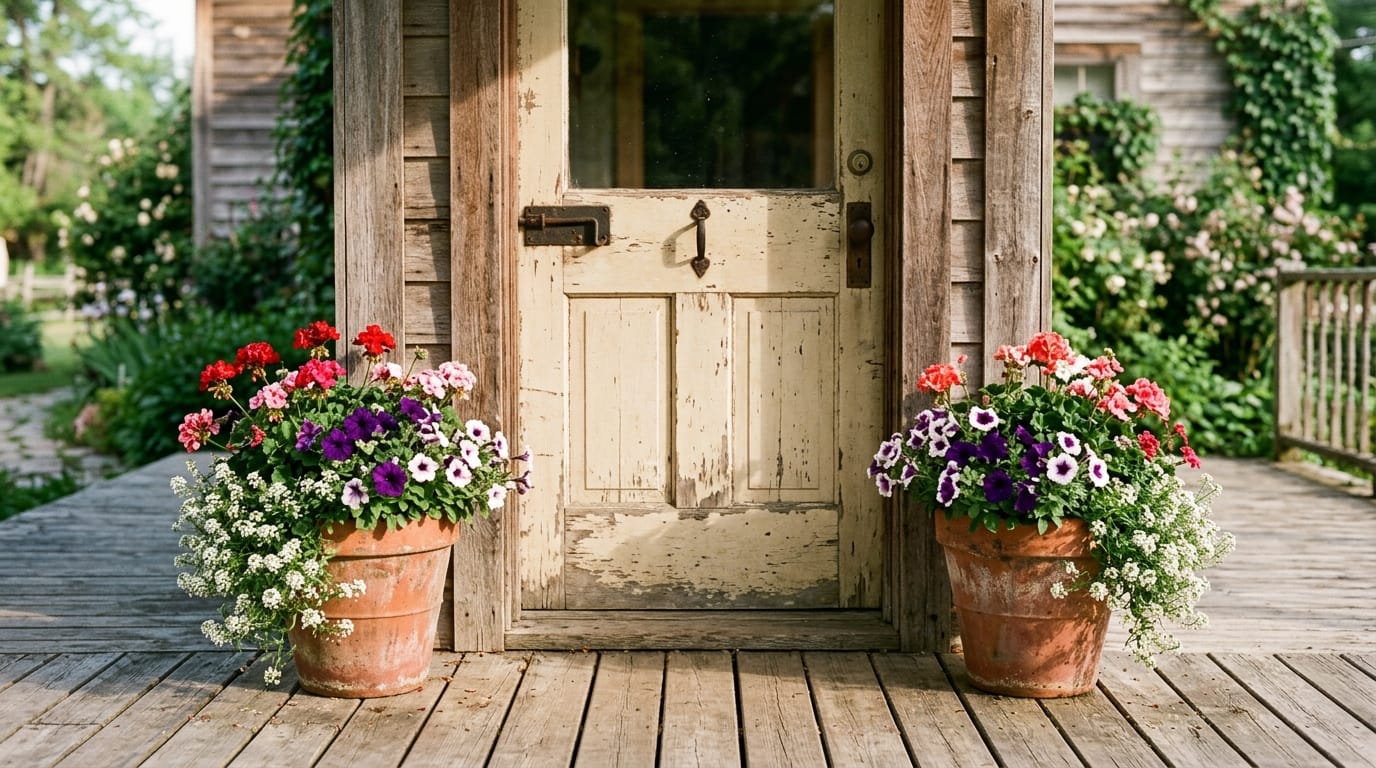
Classic porch pots are the easiest entry point. Set one on each side of the front door, or put a single large pot near the steps. Matching containers make an entryway look finished with almost no effort. Reliable choices include petunias, marigolds, geraniums, pansies, begonias, and sweet alyssum.
The simplest way to build the look: one taller plant in the center, a few medium flowers around it, and a trailing plant near the rim. That gives you height, fullness, and a little spill over the edge without any guesswork.
Cottage-Style Flower Pots
If you like a softer, slightly wild look, cottage-style pots are a lovely fit for a farmhouse porch or homestead patio. The trick is mixing heights and textures rather than lining up one kind of flower. Lavender, cosmos, calendula, snapdragons, sweet alyssum, and violas all play well together here.
Cottage pots do not need to look tidy. They usually look better a little loose and overgrown, like a small garden that climbed into a container and kept going.
Herb and Flower Pot Combinations
If you want a pot that earns its keep, mix flowers with herbs. It works beautifully by the kitchen door or next to a small vegetable patch. The herbs bring fragrance and something to cook with, the flowers bring color and pull in pollinators.
| Flower | Herb | Why It Works |
|---|---|---|
| Marigold | Basil | Bright, useful, and handy right by the kitchen |
| Nasturtium | Parsley | Edible flowers and fresh herb in one pot |
| Calendula | Thyme | Cheerful and low-maintenance |
| Lavender | Rosemary | Fragrant, drought-tolerant, and forgiving |
| Violas | Chives | Compact and colorful for small pots |
The one rule when you combine plants: pair ones that want the same conditions. Rosemary and lavender both like sun and soil that dries out between waterings. Basil and marigolds both want warmth and steady moisture. Put a thirsty plant next to a drought-lover and one of them will always be unhappy. If you want the whole pot to be productive, our guide to growing vegetables in a planter shows how far you can take edibles in containers.
Pollinator-Friendly Flower Pots
A pollinator pot is a small, genuinely useful thing. You do not need a meadow to feed bees and butterflies. A single container of the right flowers near your vegetables earns its space by drawing in the insects that pollinate them.
Good choices include zinnias, calendula, lavender, nasturtiums, bee balm, coneflowers, and borage. Set the pot near a raised bed, a patio, or a walkway you pass often. You get color, and your other plants get the visitors they need.
Shade Flower Pot Ideas
Not every porch gets sun, and that is fine. Shade pots just lean on flowers and foliage that prefer less direct light: begonias, impatiens, coleus, ferns, hostas, and heuchera. Coleus is the workhorse here. Its leaves come in deep reds, limes, and burgundies, so the pot stays full and interesting even when nothing is blooming.
Sunny Patio Flower Pots
If your patio bakes in afternoon sun, choose heat-tolerant flowers and go up a pot size. Sunny spots dry out fast, and a bigger container holds more soil, which holds more water and buys you time between waterings. Petunias, marigolds, geraniums, zinnias, lantana, and verbena all take the heat and bloom for a long stretch with regular water and the occasional feeding.
Easy Flower Pot Recipes for Beginners
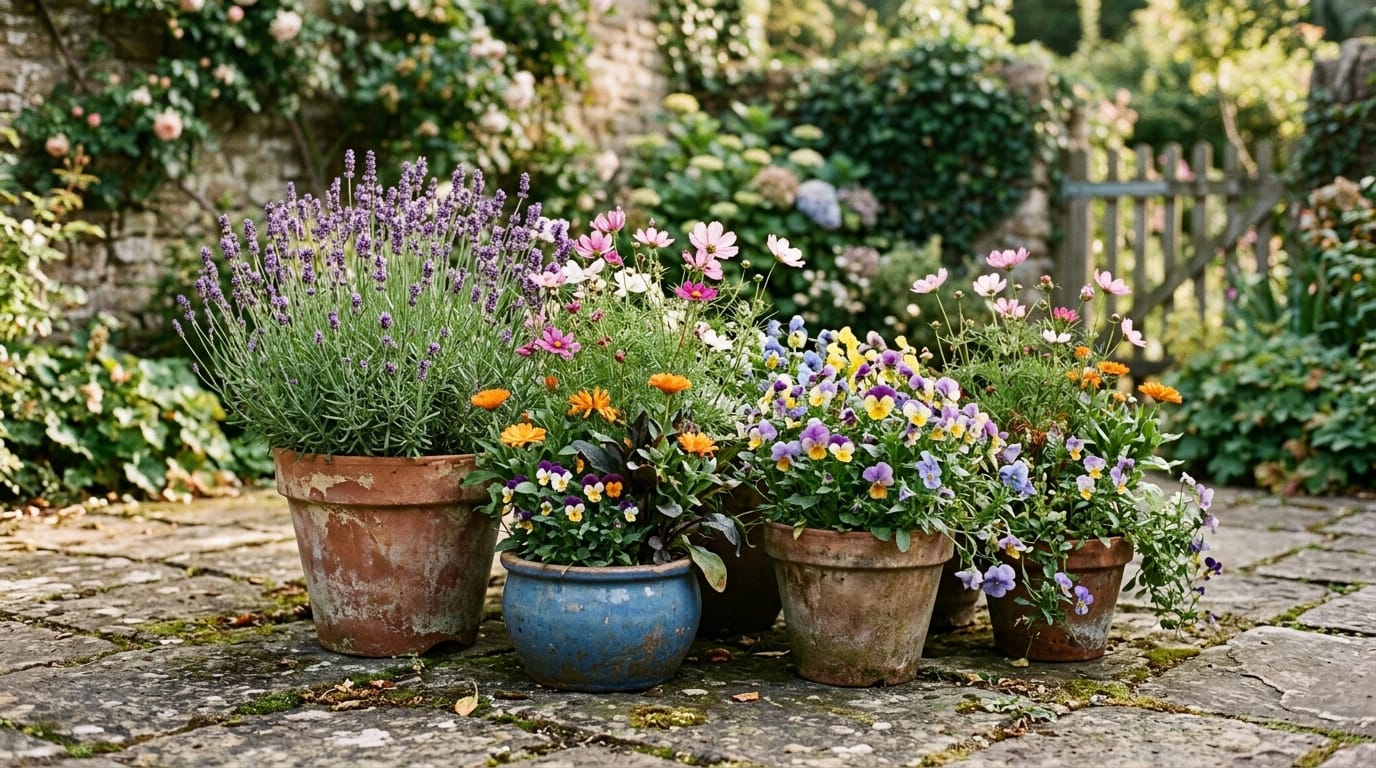
A flower pot “recipe” is just a plant combination that works. Instead of guessing what goes together, you follow a simple formula that horticulturists call thriller, filler, spiller:
- Thriller: one tall plant for height, in the center or the back.
- Filler: medium plants around it that make the pot look full.
- Spiller: a trailing plant near the rim that hangs over the edge.
That one habit is the difference between a pot that looks balanced and one that looks flat. Penn State Extension uses the same framework in its guide to the art of container gardening, so you are in good company starting there.
Simple Flower Pot Recipe Table
| Style | Thriller | Filler | Spiller | Best Location |
|---|---|---|---|---|
| Sunny Porch Pot | Geranium | Petunias | Sweet potato vine | Full sun |
| Cottage Pot | Snapdragons | Calendula | Sweet alyssum | Sun or part sun |
| Pollinator Pot | Lavender | Zinnias | Nasturtium | Full sun |
| Shade Pot | Coleus | Begonias | Creeping Jenny | Shade or part shade |
| Herb and Flower Pot | Rosemary | Marigolds | Thyme | Full sun |
One beginner tip worth repeating: every plant in a pot shares the same soil and the same watering can, so keep their sun and water needs in the same range. A drought-tolerant sun plant and a moisture-loving shade plant will never both be happy in one container.
How to Choose the Right Flower Pot
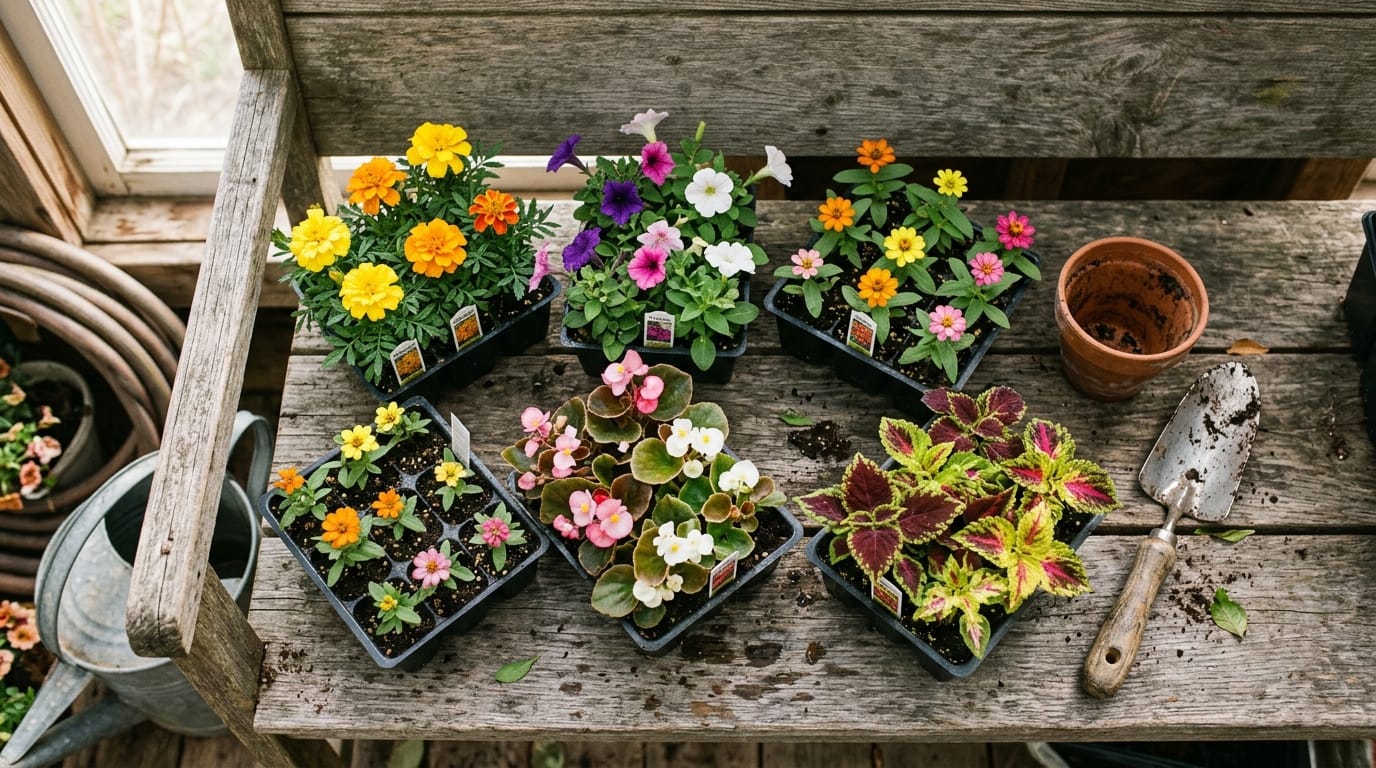
The pot matters nearly as much as the plant. A healthy flower can struggle in the wrong container, usually because it is too small or has nowhere for water to go.
Start bigger than feels necessary. Small pots dry out within hours on a hot day, which is the single most frustrating thing for a new gardener. A container at least 10 to 14 inches wide holds enough soil to stay evenly moist and gives roots room to grow. And always check for drainage holes. If you fall for a decorative pot with no holes, use it as a cachepot: drop a plain nursery pot with drainage inside it and lift that out to water.
Best Flower Pot Materials
| Material | Pros | Cons | Best For |
|---|---|---|---|
| Terracotta | Natural look, breathable, classic | Dries out quickly, can crack in frost | Herbs and Mediterranean plants |
| Plastic or resin | Lightweight, affordable, holds moisture | Can fade or get brittle over time | Beginners and large pots |
| Ceramic (glazed) | Decorative and sturdy | Heavy and often pricey | Porches and patios |
| Metal | Rustic or modern look | Heats up fast in sun | Decorative outer pots |
| Wood | Natural homestead feel | Can rot eventually | Rustic planters and boxes |
If you are just starting, plastic or resin is the kindest choice. It is light, cheap, and does not pull water away from roots the way unglazed terracotta does. Terracotta is beautiful, but it dries fast and will test your watering habits before you have built them.
Best Flowers for Beginner Flower Pots
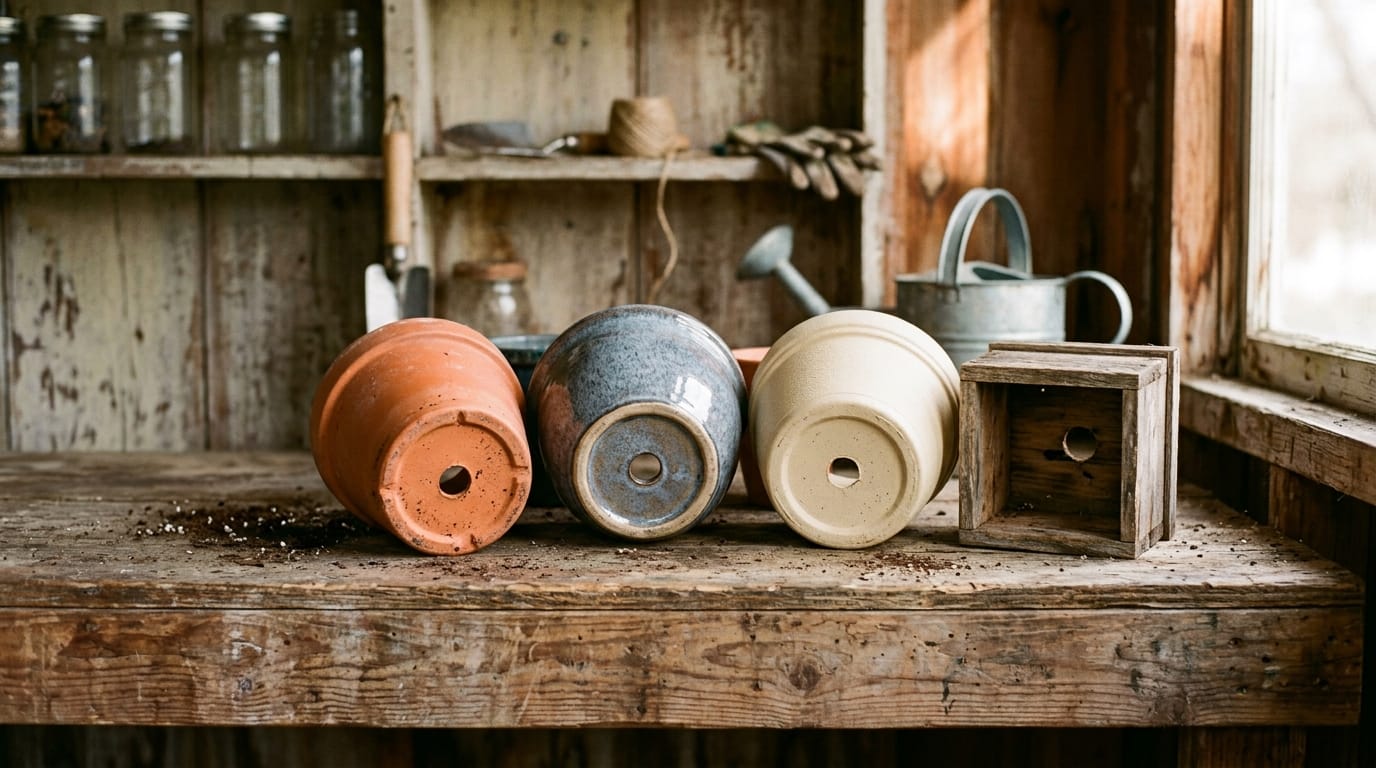
The best beginner flowers are easy to find, easy to grow, and slow to punish a mistake. Match them to your light first. Full sun means a spot that gets at least six hours of direct sun a day; shade means a few hours of morning light or dappled sun at most.
Easy Flowers for Full Sun Pots
Choose these if your pot gets six or more hours of direct sun: marigolds, petunias, zinnias, geraniums, verbena, lantana, calendula, and nasturtiums. Marigolds are about as forgiving as a flower gets, cheap and cheerful and hard to kill. Zinnias are the other safe bet if you want bright blooms and a steady stream of bees and butterflies.
Easy Flowers for Shade Pots
Choose these for covered porches and shady corners: begonias, impatiens, coleus, pansies, ferns, hostas, and heuchera. Shade pots look best when you lean on foliage as much as flowers. Leaves carry the color and fullness through the stretches when little is in bloom.
Edible Flowers for Homestead Flower Pots
If you like the idea of a pot you can eat from, edible flowers belong in the mix. Beginner-friendly ones include nasturtium (peppery, good in salads), calendula (a mild saffron-colored petal, more for color than flavor), violas, borage (a light cucumber taste), and chive blossoms.
Two safety rules matter here, and they are firmer than most beginner guides admit. Only eat a flower you can identify with confidence, and never eat flowers that came from a florist, garden center, or nursery. According to University of Minnesota Extension, those plants are not grown for eating and are often treated with chemicals that are not food-safe. Grow your own from seed or buy plants labeled for edible use, skip any pesticides, and introduce a new flower slowly the first time in case it does not agree with you.
Where to Place Flower Pots Around the Home or Homestead
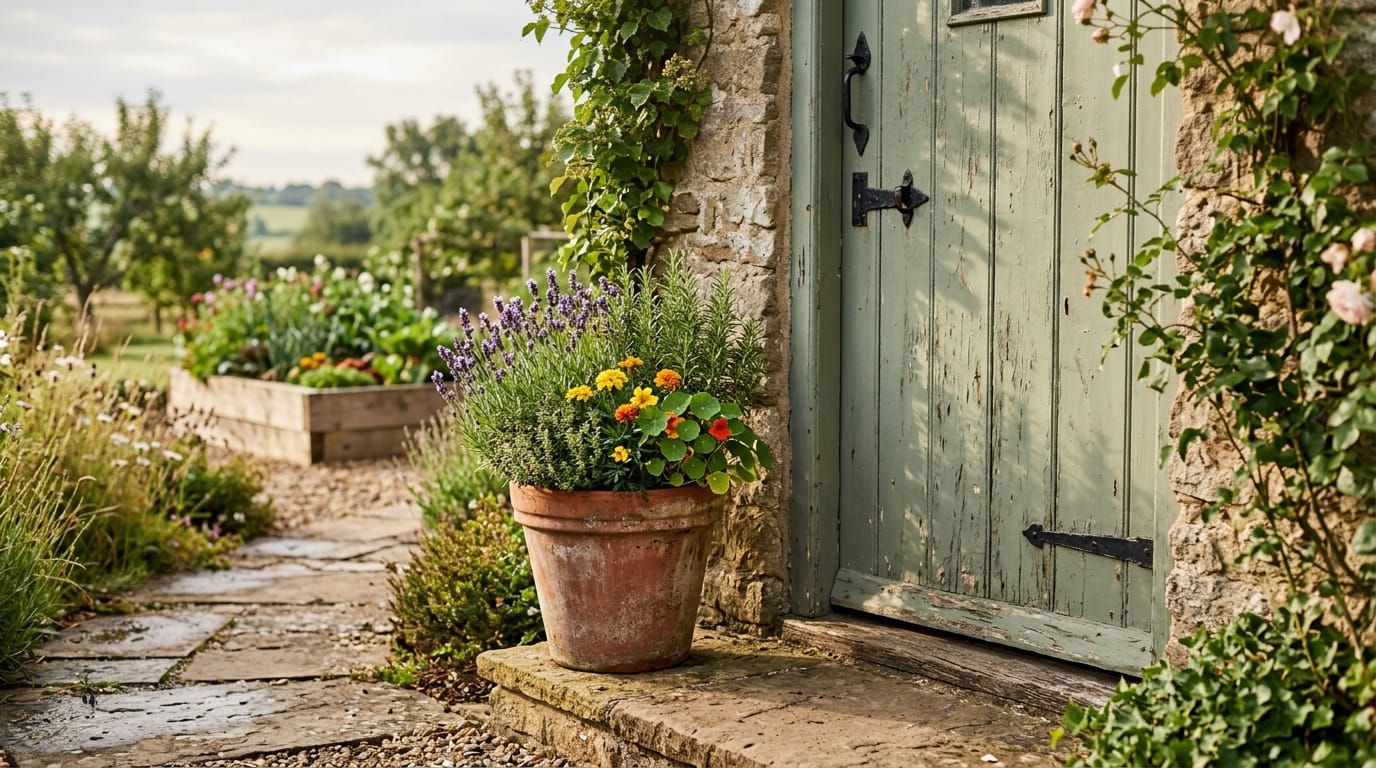
Placement does quiet work. The right pot in the right spot makes a space feel cared for. The same pot tucked somewhere you never walk past gets forgotten and unwatered.
Start with the places you see every day. You will enjoy the flowers more, and you will actually remember to water them. Front porch, patio, deck, balcony, garden entrance, kitchen door, walkway edges, around a raised bed, beside a seating area, or near the shed all work well.
Simple Placement Ideas
| Location | Best Flower Pot Idea |
|---|---|
| Front door | Matching statement pots |
| Patio corner | One large mixed container |
| Kitchen door | Herb and flower pot |
| Garden path | Small repeated pots |
| Balcony | Railing planters or compact pots |
| Beside a raised bed | Pollinator-friendly pot |
Start with two or three pots in spots that get the most foot traffic. You do not need to fill every corner the first season. A few good containers you keep alive beat a dozen you let dry out.
Common Flower Pot Mistakes Beginners Should Avoid
Most first-pot trouble comes from the same short list. Once you know what to watch for, you sidestep nearly all of it.
- No drainage holes. Water has to go somewhere. With nowhere to drain, roots sit in water and rot.
- Wrong light. A sun flower sulks in deep shade; a shade plant scorches in hot afternoon sun.
- Pot too small. Tiny pots dry out fast and cramp the roots.
- Overwatering. Soggy soil is as deadly as bone-dry soil.
- Underwatering. Pots dry out far faster than the ground, especially in wind and heat.
- Crowding. Those little starter plants get big. Give them room now.
- Garden soil instead of potting mix. Garden soil packs down hard in a pot and can carry weed seeds and disease. Use a bagged potting mix made for containers.
- Skipping deadheading. Pinching off spent blooms keeps many flowers producing more.
- Never feeding. A pot holds limited nutrients, so flowers eventually need a little fertilizer.
That garden-soil mistake catches almost everyone. Illinois Extension notes that ordinary garden soil drains poorly in a container and can bring weed seeds and pathogens with it, which is why a lighter potting mix is worth the few dollars.
Beginner Flower Pot Care Checklist
- Check soil moisture before you water.
- Water deeply, until it runs from the drainage holes.
- Pinch off dead or faded blooms.
- Feed lightly when growth slows or blooms thin out.
- Trim leggy stems to keep the plant bushy.
- Turn the pot now and then so it does not lean toward the light.
- Pull a struggling plant and replace it rather than waiting it out.
Simple Flower Pot Care Tips
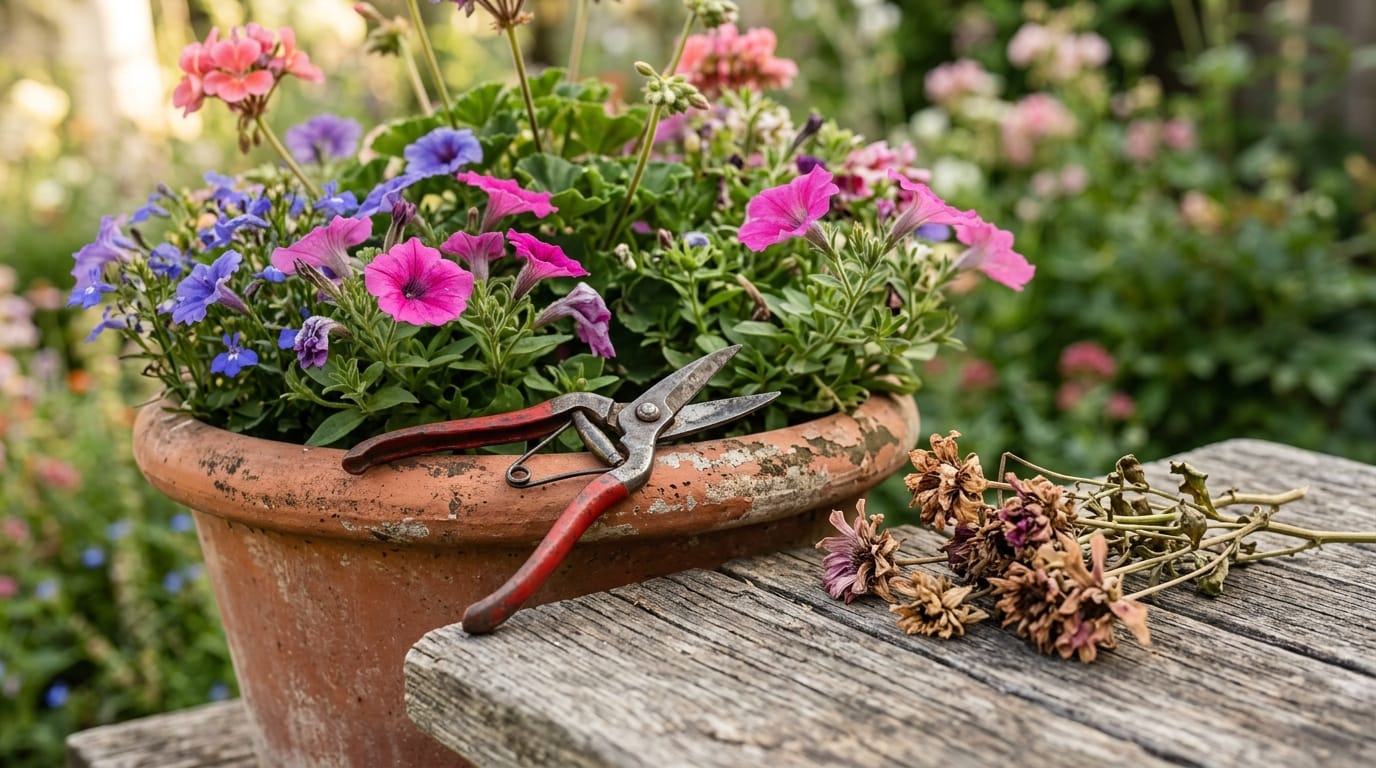
Once a pot is planted, keeping it looking good is mostly a few small habits, not a complicated routine.
How Often Should You Water Flower Pots?
Pots dry out faster than garden beds, and in a hot, dry summer week some need water every single day. Do not water on a fixed schedule. Check first: press a finger into the top inch of soil, and if it feels dry, water deeply until it runs out the bottom. Illinois Extension recommends watering when that top inch is dry and soaking the whole root ball each time rather than giving a daily splash.
Aim for the soil, not the leaves. Morning is the best time, since the plant can take up water before the heat of the day and the foliage dries before evening.
Should You Fertilize Flower Pots?
Yes, eventually. A pot has only so much soil, and every watering rinses a little nutrition out the bottom. You can mix a slow-release fertilizer into the soil at planting, use a diluted liquid feed every couple of weeks, or work a little finished homemade compost into the top inch.
Go light. Too much fertilizer pushes soft, leafy growth and fewer flowers. Follow the label and start with less than you think you need.
How to Keep Flower Pots Blooming
To keep a pot full and flowering: deadhead spent blooms, give it enough sun, water consistently, feed lightly, trim leggy stems, and remove yellowing leaves. When an annual is simply worn out by late summer, swap it for something fresh. A pot is not meant to stay the same all season. Refreshing it as plants fade is part of the fun, not a failure.
Seasonal Flower Pot Ideas
One of the best things about pots is that you can change them with the seasons and keep the porch looking alive all year.
Spring Flower Pot Ideas
Spring pots feel like relief after a long winter. Lean on cool-season flowers and soft colors: pansies, violas, snapdragons, primroses, daffodils, tulips, and sweet alyssum. They look right near front steps, on porch railings, or by a garden gate.
Summer Flower Pot Ideas
Summer pots can be bold and full. Reach for heat-lovers like petunias, marigolds, zinnias, geraniums, lantana, verbena, and cosmos. Go up a pot size in summer so the soil does not cook dry by noon.
Fall Flower Pot Ideas
Fall pots turn a porch warm and cozy. Use rich colors and texture: mums, pansies, ornamental kale, calendula, ornamental grasses, and heuchera. A few small pumpkins, dried seed heads, or branches tucked in finish the look.
Winter Flower Pot Ideas
Even in winter a pot can hold its own. You are not growing flowers, but you can build a decorative container from evergreen branches, pinecones, winterberry, dried hydrangeas, birch branches, and a few decorative twigs. It looks especially good by the front door through the cold months.
The Free Garden Starter Pack
Five printable pages that take the guesswork out of a first season, plus a short email every week or two when something is worth planting, picking, or putting up.
- A garden planning worksheet you can actually fill in
- A seed-starting and planting calendar
- A harvest log to track what really produced
No spam, ever. Unsubscribe in one click.
Thank you. You are on the list.
Your Garden Starter Pack is ready right now. Grab it here:
Download the pack (PDF)Keep an eye on your inbox. The next seasonal guide lands there first.
Frequently Asked Questions About Flower Pot Ideas
What are the easiest flower pot ideas for beginners?
Use a simple combination: one tall plant in the center, two or three medium flowering plants around it, and one trailing plant near the rim. That gives you height, color, and fullness without a complicated plan.
What flowers grow best in pots?
Marigolds, petunias, geraniums, begonias, pansies, zinnias, impatiens, calendula, and nasturtiums are all reliable in containers. Pick based on how much sun the spot gets rather than on looks alone.
Can you mix flowers and herbs in the same pot?
Yes, as long as they want the same conditions. Rosemary and lavender both like sun and drier soil. Basil and marigolds both like warmth and steady moisture. Keep the sun and water needs matched and the pot will thrive.
What size pot is best for beginner flower pot ideas?
Medium to large is easier. A container at least 10 to 14 inches wide holds more soil and moisture, so it dries out slower and forgives a missed watering. Very small pots need attention almost daily in summer.
Do flower pots need drainage holes?
Yes. Drainage holes let excess water escape so roots do not sit in it and rot. If a decorative pot has no holes, set a plain nursery pot with drainage inside it and lift that out when you water.
How do you make flower pots look full?
Use the thriller, filler, spiller method: one tall plant, several medium plants, and a trailing plant around the edge. Mixing leaf textures and bloom shapes adds to the full, layered look.
What are good flower pot ideas for a small porch?
Try matching front-door pots, a hanging basket, railing planters, or one herb-and-flower pot by the door. Choose compact plants and avoid crowding a tight space with too many large containers.
Start With One Simple Flower Pot
You do not need a finished garden to begin. You need one pot, a few good plants, and the willingness to see what happens.
Pots are the gentlest way into gardening. They brighten a porch, soften a patio, feed a few bees, and let you practice watering and feeding before you ever dig a bed. Pick a pot with a drainage hole, fill it with potting mix, choose flowers that match your light, and try one recipe from the table above this season. Once you have the rhythm, you can carry it straight into the easiest vegetables to grow for beginners.
Go pick one sunny or shady spot you walk past every day, choose a single idea from this guide, and plant your first pot this week. It does not have to be perfect. It just has to be planted, like that first pot of marigolds slowing you down on the porch.