Best Grow Lights for Seedlings and Seed Starting: 4 Picks (2026)
In Homestead is reader-supported. When you buy through links on this page, we may earn a small commission at no extra cost to you. See our affiliate disclosure. As an Amazon Associate I earn from qualifying purchases.
By late winter, every tomato and pepper you plan to grow starts as a seed in a tray of damp mix. Give those seedlings too little light and they stretch into pale, floppy stems that topple over before they ever reach the garden. Give them a good grow light and they come up short, green and sturdy.
You do not need an expensive setup. A couple of LED bars under a shelf, an outlet timer and a little attention to height will grow better transplants than most windowsills. The trick is choosing a light that matches your trays and hanging it at the right distance.
This guide compares four grow lights for seedlings, from budget LED bars to a dimmable panel, and explains how far to hang them, how many hours to run them and what the wattage numbers really mean, using extension guidance.
Table of Contents
Quick Picks
- Best overall for a seed-starting shelf: Barrina T5 2-ft LED bars. Slim, linkable and easy to hang close to seedlings.
- Best budget single fixture: Feit 19W 2-ft grow light. Inexpensive, with a three-year warranty.
- Best panel for larger setups: Mars Hydro TS1000. Dimmable, for several trays or growing on.
- Best for small spaces: SANSI clip-on grow light. For a few pots on a desk or sill.
Why Seedlings Need a Grow Light
Late winter windows rarely give seedlings enough steady light. Seedlings on a sill stretch and lean toward the glass, growing long, weak stems, and a run of cloudy days makes it worse. University of Maryland Extension recommends starting vegetable seeds under fluorescent or LED fixtures kept close to the plants instead.
A grow light gives you control: the same amount of light every day, right where the seedlings are, so they grow stocky and ready to transplant. If you are new to growing food, our guide to the easiest vegetables to grow is a good place to choose what to start.
What to Look for in a Grow Light for Seedlings
Actual Watts, Not “Equivalent” Watts
Many listings advertise “1000W equivalent” or put a big number in the model name. That tells you nothing about how much usable light reaches your trays. Look for the actual power draw instead, and treat it as a rough guide; serious makers also publish PPF, the total usable light a fixture produces, or PPFD maps showing how much light lands at a given distance.
Coverage That Matches Your Trays
A standard seed tray is about 10 by 20 inches, and seedlings at the edges get less light than those in the middle. With strip lights, plan on at least two bars side by side over each tray so the outer cells are not left in the shadows. Advertised coverage for panels describes a growing area, not an evenly lit seed tray.
Spectrum: White Light Works Fine
Seedlings grow well under ordinary white LEDs, and white light makes it far easier to see yellowing leaves, pests or dry soil than the purple glow of red-and-blue lights. Purple lights are not harmful, but they are not necessary either. Intensity, distance and hours matter more than color.
Easy Height Adjustment
Seedlings grow fast, and you will be raising the light every few days. Lights hung on adjustable chains or ratchet hangers, or stands with sliding fixtures, make that easy. Strips zip-tied flat under a shelf mean raising the plants instead, with blocks or upturned trays.
Linking and Timers
Linkable lights let you run several fixtures from one plug, but every maker sets a limit; stay within it. And buy an outlet timer, since few lights have a timer that runs the 14 to 16 hours seedlings need.
The 4 Best Grow Lights for Seedlings
Best Overall for a Seed-Starting Shelf
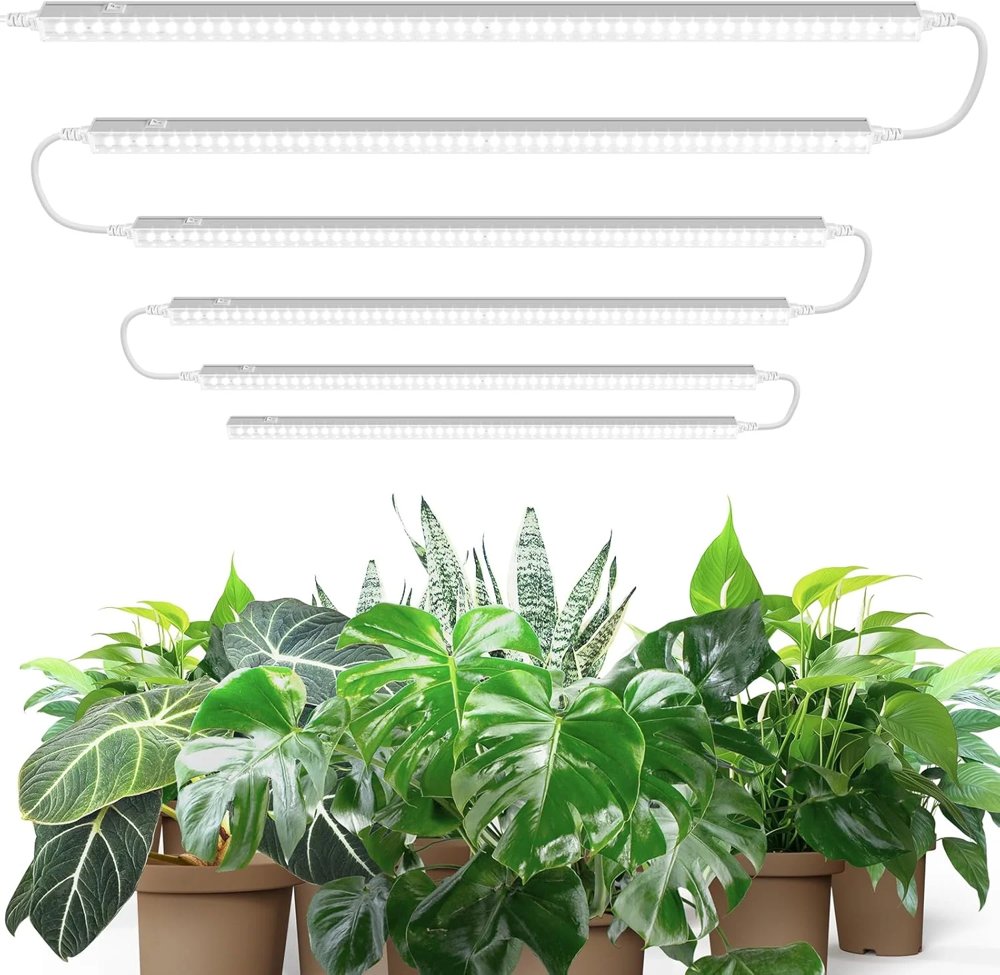
Barrina T5 LED Grow Lights, 2 ft, 5000K (MF10)
These slim 2-foot LED bars are the simplest way to light a shelf of seed trays. Each bar draws an actual 10 watts, they link end to end, and Barrina says up to 16 can run in series, so you can light one shelf now and add more later. The kit comes with clips, cable ties and linking cords to fasten them under a wire shelf.
The 5000K white light is easy on the eyes and makes it simple to spot problems on your seedlings. Because they are low-output bars, you can hang them close to the plants, which is exactly how extension guides recommend lighting seedlings.
- Best for: beginners setting up one or more shelves of seed trays.
- Keep in mind: there is no dimmer or built-in timer, so add an outlet timer. Test every bar and cord when it arrives, and check you are buying the MF10 5000K version, since Barrina sells many similar-looking kits.
Best Budget Single Fixture
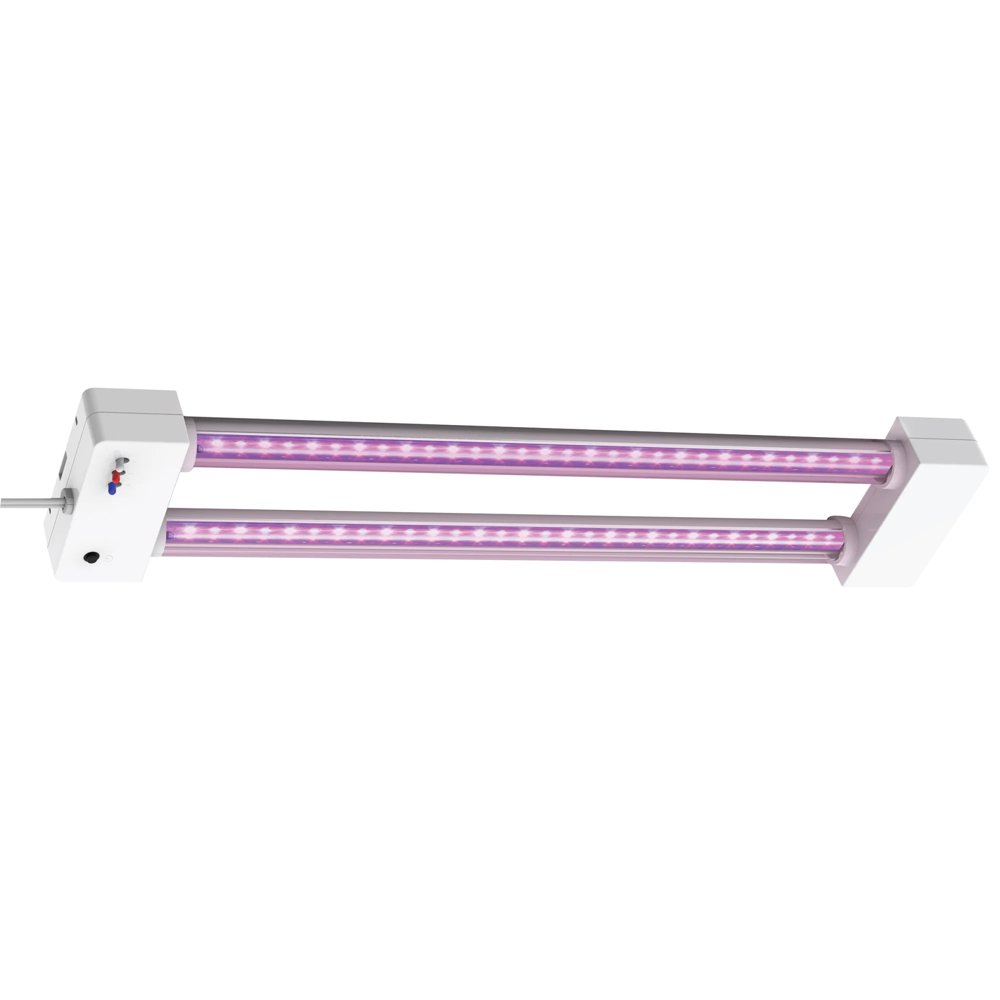
Feit Electric 24-Inch 19W Selectable Spectrum LED Grow Light
If you are starting a single tray, one Feit 2-foot fixture is an inexpensive way in. It draws an actual 19 watts and lets you switch between blue, red and white light or combine them. It can hang from chains or mount flush under a shelf.
Feit backs it with a three-year warranty, and you can link more fixtures as your setup grows.
- Best for: a single tray or a small first setup.
- Keep in mind: Feit does not publish light measurements at the edges of a tray, so check the outer cells and add a second fixture if they need more light. Feit’s own pages give different linking limits, so stay within the lower figure in its grow lighting FAQ.
Best Panel for Larger Setups
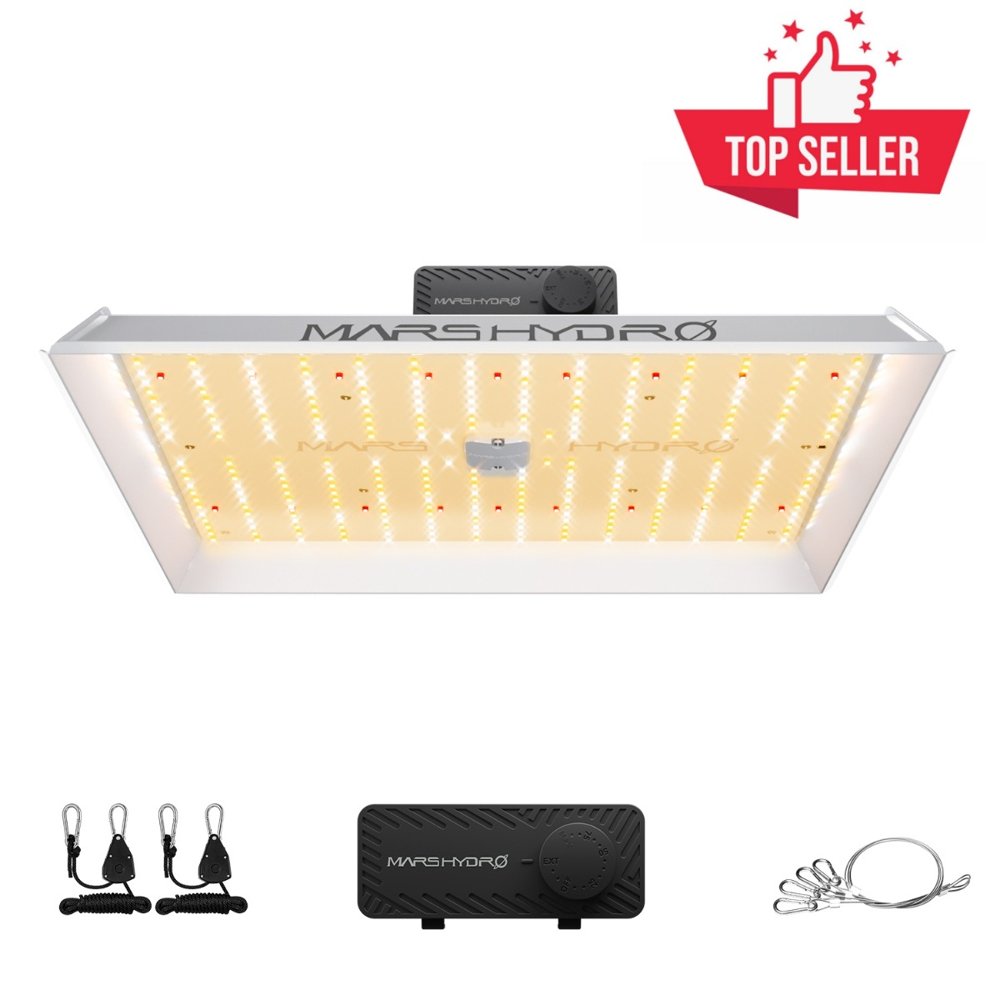
Mars Hydro TS1000 LED Grow Light
If you want a dimmable light for a larger growing area, or one that can also grow plants on indoors, a panel like this makes sense; check light levels across your trays. The Mars Hydro TS1000 draws an actual 150 watts, has a 0 to 100 percent dimmer, and Mars Hydro rates its vegetative coverage at about 2.3 by 2.3 feet.
The dimmer is what makes it work for seedlings: start low and raise it as they grow, rather than hanging a powerful light a couple of inches above tiny plants.
- Best for: larger seed-starting setups and growing on to bigger plants.
- Keep in mind: it is more light than a single tray needs, it needs hanging space, and it has no built-in timer. Follow Mars Hydro’s hanging height and dimmer guidance for seedlings rather than the 2-to-6-inch rule for strips. Mars Hydro offers up to a five-year warranty.
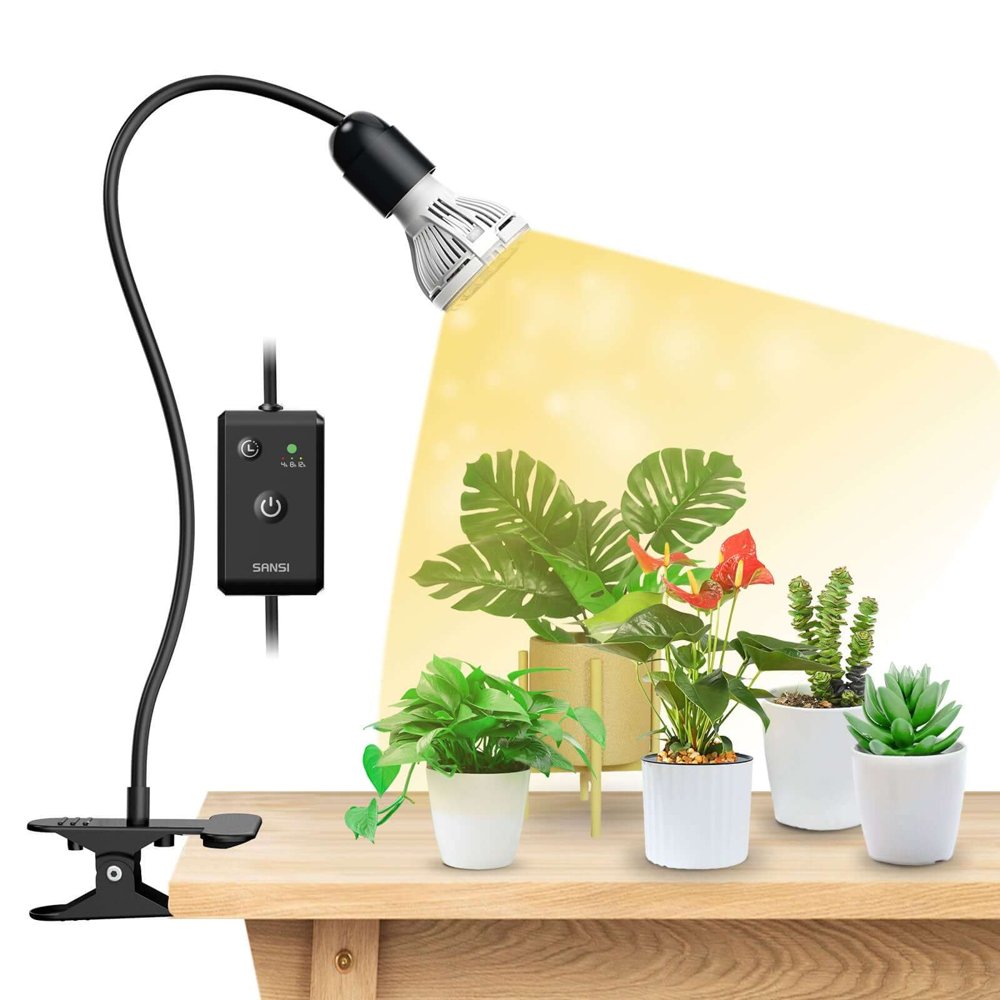
Best for Small Spaces
SANSI 10W Clip-On LED Grow Light with Timer
For a few pots of herbs or a couple of seedling cups on a desk or windowsill, a clip-on light can provide the extra light they need; check that it reaches each plant. The SANSI draws an actual 10 watts through a gooseneck you can aim where you want it, and the timer version switches itself off.
It is the easiest way to give a struggling windowsill seedling a boost without building a shelf.
- Best for: a few pots, herbs or a small corner.
- Keep in mind: it is not enough for a full tray, and its built-in timer runs 4, 8 or 12 hours, so use an outlet timer for the 14 to 16 hours seedlings need. Check the gooseneck can reach over your plants before you clip it on.
Quick Comparison
| Pick | Actual power | Spectrum | Mounting | Built-in timer |
|---|---|---|---|---|
| Barrina T5 (MF10) | 10 W per 2-ft bar | White 5000K | Linkable, up to 16 | No |
| Feit 19W 2-ft | 19 W | Selectable blue, red, white | Linkable | No |
| Mars Hydro TS1000 | 150 W | Full spectrum, dimmable | Hang from ceiling or tent | No |
| SANSI clip-on | 10 W | White 4000K | Clip and gooseneck | 4, 8 or 12 hr |
How to Set Up Grow Lights for Seedlings
How Far Above the Seedlings
University of Maryland Extension recommends keeping fluorescent and LED fixtures 2 to 6 inches above the plants and adjusting as they grow. That suits low-output strips and shelf lights. Powerful panels are different: hang them at the height the maker gives for seedlings, or dim them, rather than a few inches away.
How Many Hours a Day
Maryland Extension recommends 14 to 16 hours of light a day, on an outlet timer so it is the same every day. Leave the lights off for the rest; more is not better, and round-the-clock light is not recommended.
Germination, Heat Mats and Domes
Most seeds need warmth and moisture to sprout rather than light, though Penn State Extension notes that a few, such as begonias and coleus, need light to germinate, so check the packet. Maryland Extension says a seedling heat mat speeds up germination, which helps warm-season crops like tomatoes and peppers, and that any plastic cover should come off as soon as sprouts appear. From then on, the seedlings need the lights. For the rest of the setup, see our guides to seed starting trays and seed starting mix.
Signs of Too Little or Too Much Light
Long, pale stems that lean or flop are the classic sign of too little light: lower the light or add another fixture. Bleached or scorched patches on leaves can mean the light is too close or too strong, but watering, fertilizer and cold can cause similar symptoms, so check those too before moving the lamp.
Hardening Off Before Transplanting
Seedlings raised indoors are not ready for full sun and wind. Over about one to two weeks before transplanting, set them outside for a few hours in shade, then gradually lengthen the time and the sun exposure. Skipping this step can scorch or stunt even the sturdiest seedlings. Our guide to raised garden beds for beginners covers getting them a good home.
Electrical Safety
- Keep plugs, connectors, power strips and timers well above where water can splash or pool.
- Unplug the lights before you water or move them.
- In a basement or other damp spot, plug into a GFCI-protected outlet.
- Never link more fixtures than the maker allows, and use a timer rated for the load.
How We Chose
These lights were researched rather than tested side by side, and we would rather say that plainly. We compared actual power draw rather than “equivalent” wattage, published output and coverage, spectrum, how easily each adjusts as seedlings grow, linking limits, timers and warranties, and we read owner reviews for recurring issues without treating them as failure rates. Our setup advice follows extension guidance.
We do not list prices, because they change constantly. Use the buttons to check current prices.
Frequently Asked Questions About Grow Lights for Seedlings
How far should a grow light be from seedlings?
For fluorescent tubes and low-output LED strips, about 2 to 6 inches above the tops of the seedlings, raised as they grow. Follow the maker’s guidance for powerful LED panels, which usually hang much higher.
How many hours of light do seedlings need?
About 14 to 16 hours a day, set on a timer. Give them a dark period each night rather than leaving the lights on around the clock.
Can I use a regular LED shop light for seedlings?
Yes. Many gardeners start seeds under ordinary white LED shop lights. Keep them close to the seedlings, as with any low-output light, and make sure they cover the whole tray.
Are purple grow lights better than white?
Not for seedlings. Red-and-blue lights grow seedlings fine, but white light does too and makes it much easier to see how your plants look. Choose on intensity and coverage, not color.
Can I start seeds on a windowsill instead?
You can, but seedlings on a late-winter windowsill usually stretch and lean toward the light. A south-facing window helps, and a small clip-on light can make up the difference for a few pots. For a full tray, a grow light is the reliable choice. See our guide to starting a garden for the basics.
The Bottom Line
For most beginners, a set of Barrina T5 LED bars under a wire shelf, on an outlet timer set to 14 to 16 hours and kept a few inches above the seedlings, is the best mix of cost, coverage and flexibility. Want a finished station instead? Gardener’s Supply’s SunLite 2.0, sold on its own site, bundles a frame, tray, light and timer. Starting just a few pots? The SANSI clip-on can give them the extra light they need.