Best Dutch Ovens for Bread and Sourdough: 7 Picks (2026)
In Homestead is reader-supported. When you buy through links on this page, we may earn a small commission at no extra cost to you. See our affiliate disclosure. As an Amazon Associate I earn from qualifying purchases.
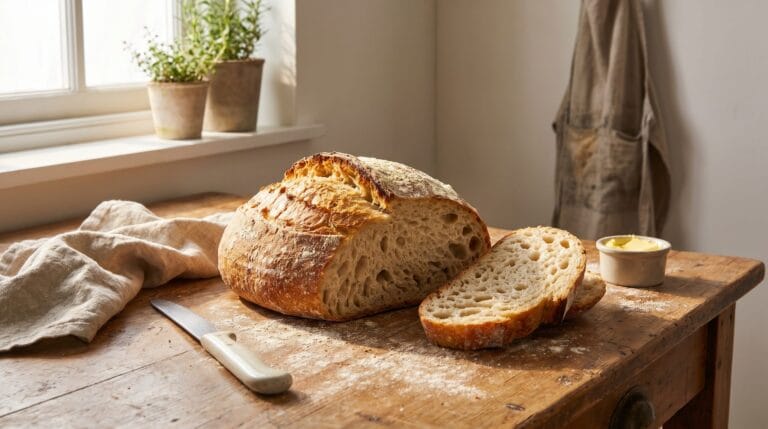
Lift the lid off a Dutch oven partway through a bake and the room fills with steam and the smell of toasted grain. Underneath, a loaf that went in pale and slack has opened along its score and risen high. That moment is the whole reason home bakers swear by a heavy lidded pot.
A Dutch oven is the simplest way to get a crackly, well-risen loaf from a home oven, but not every pot suits bread. Some are hard to load without burning your wrists, some have knobs that cannot take a hot oven, and some are the wrong shape for the loaves you make. You do not need the most expensive pot. You need one that fits your loaf, takes the heat and is easy to load.
This guide compares seven Dutch ovens and bread bakers, from budget cast iron to dedicated bread pans, and explains size, materials, temperature limits and loading, checked against the makers’ own care guidance.
Table of Contents
Quick Picks
- Best overall for bread: the Lodge Double Dutch Oven. A shallow skillet lid you load onto, and a 5 quart pot for everything else.
- Best budget enameled: the Lodge Essential Enamel 6 Quart. Rated to 500 F including the knob, and easy to care for.
- Best compact combo cooker: the Lodge Combo Cooker. The easiest loading for one standard loaf.
- Best for oval loaves: the Le Creuset Signature Oval. Room for a bâtard, with a 500 F stainless knob.
- Best premium round: the Staub 5.5 Quart Round Cocotte. A heavy, tight-fitting lid and a metal knob.
- Best dedicated bread pan: the Challenger Bread Pan. Built only for bread, and fits round and oval loaves.
- Best lighter option: the Emile Henry Bread Cloche. Ceramic, at about half the weight of cast iron.
Why Bake Bread in a Dutch Oven?
As bread heats, the dough releases moisture. A lidded pot traps that steam around the loaf, which keeps the surface soft long enough for the bread to expand fully, then lets the crust set thin and crisp once you take the lid off. King Arthur Baking explains how this mimics the steam-injected ovens bakeries use.
That is why a Dutch oven matters most for crusty, free-form loaves like sourdough. For soft sandwich bread in a loaf pan, you do not need one at all, and one of our best bread makers can handle that job for you. Our beginner sourdough guide walks through a full bake.
What to Look for in a Dutch Oven for Bread
A Size and Shape That Fit Your Loaf
For a typical 1 to 2 pound round loaf, a 5 to 7 quart round pot is a flexible range, but capacity alone does not tell you whether a loaf fits. What matters is the usable floor width compared with your shaped dough. The Perfect Loaf favors 4 to 5 quart pots, or a 3.2 quart combo cooker for single loaves. If you shape oval bâtards, an oval pot or bread pan keeps them from pressing against round walls.
Bare Cast Iron, Enamel or Ceramic
Bare cast iron handles high heat, has no coating to chip and is usually the cheapest, but it needs drying and oiling after washing. Enameled cast iron needs no seasoning and doubles as everyday cookware, but the enamel should be protected from knocks, abrasive cleaners and sudden temperature changes. Ceramic is lighter but can break from an impact.
Oven Temperature Limits, Including the Knob
Many sourdough recipes preheat the pot at 450 to 500 F. King Arthur Baking’s beginner sourdough workbook preheats its covered baker at 450 F. Check the limit for both the pot and the knob. Le Creuset rates its stainless knobs to 500 F but its older phenolic knobs to only 390 F.
Easy Loading
Lowering soft dough into a deep, 450 F pot is the most nerve-wracking part of the bake. Pots with a shallow base, like a combo cooker, the Double Dutch or a bread pan, let you place the loaf on a low surface and cover it. With a deep pot, a parchment sling helps; trim the excess, because exposed parchment can scorch at bread temperatures.
The 7 Best Dutch Ovens for Bread
Best Overall for Bread
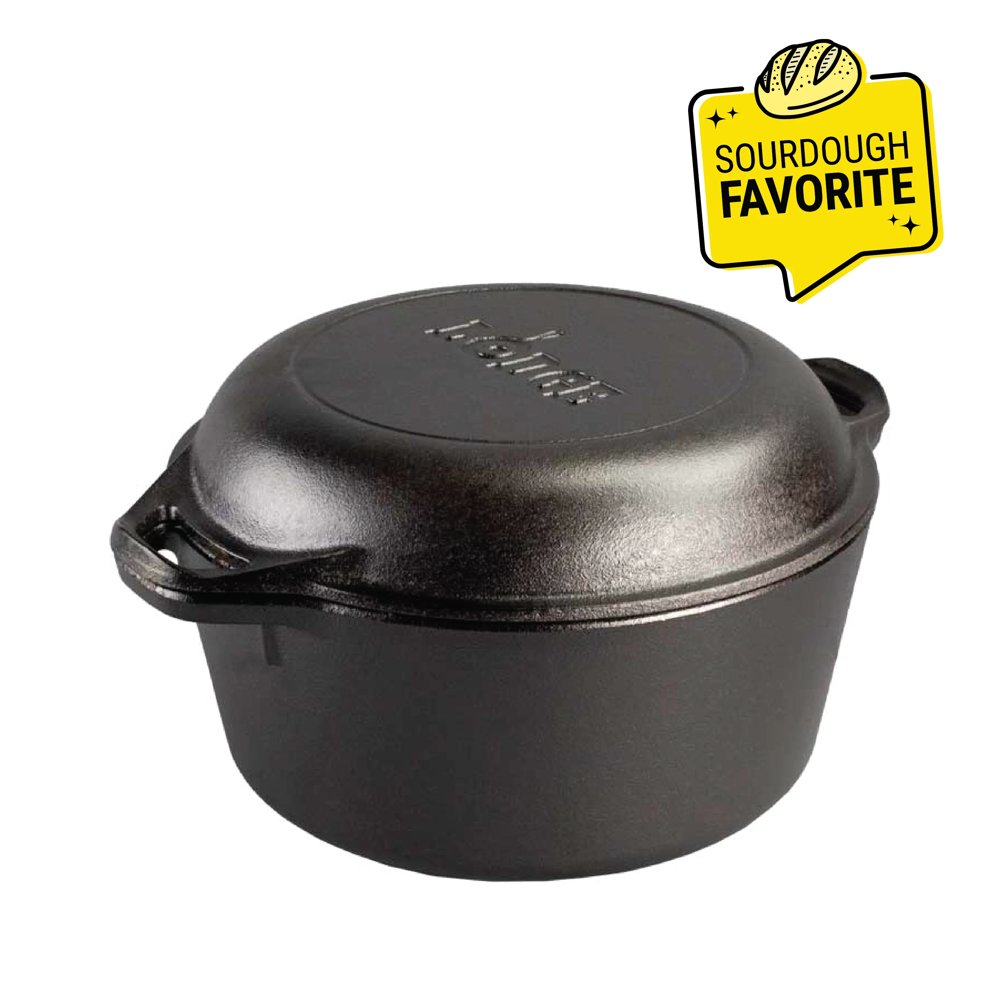
Lodge 5 Quart Cast Iron Double Dutch Oven
This is the pot that solves the hardest part of baking in a Dutch oven: getting the dough in without burning your wrists. The lid is a shallow skillet, so you flip the set over, lower the loaf onto the shallow side and cover it with the deep pot. Lodge lists the shallow piece at about 9.5 inches across inside, which suits a typical round loaf.
It is seasoned bare cast iron with no separate knob to worry about, it doubles as a skillet and a regular 5 quart pot the rest of the week, and Lodge backs it with its limited lifetime warranty.
- Best for: first-time bread bakers who want easy loading and one pot that does everything.
- Keep in mind: at over 12 pounds it is heavy, and bare iron needs drying and a light coat of oil after washing.
Best Budget Enameled
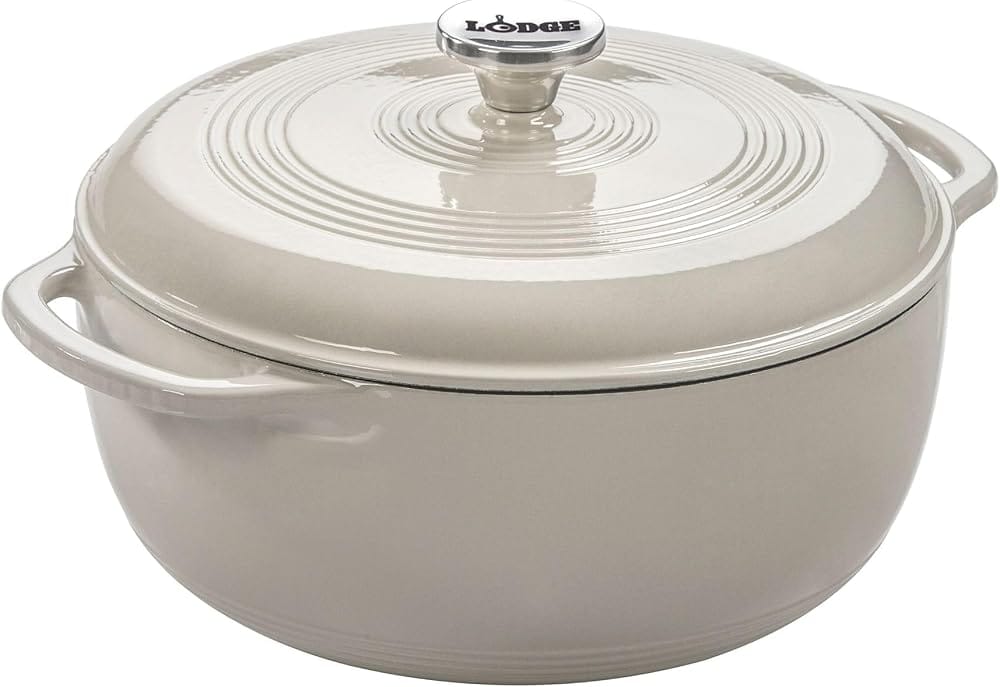
Lodge Essential Enamel Dutch Oven, 6 Quart
If you want an enameled pot that also handles soups and braises, this is the sensible starting point. Lodge rates the pot and its stainless steel knob for oven use up to 500 F and permits preheating it empty in the oven, though it warns that prolonged exposure to high temperatures can damage the enamel.
The 6 quart size gives plenty of room for a round loaf, and the enamel needs no seasoning. It is the same pot we recommend in our sourdough starter kit guide.
- Best for: bakers who want one easy-care pot for bread and everyday cooking.
- Keep in mind: deep sides make loading harder, it weighs about 13.5 pounds, and owners report chipped enamel, so inspect it on arrival. Do not confuse this imported Essential line with Lodge’s USA Enamel line.
Best Compact Combo Cooker
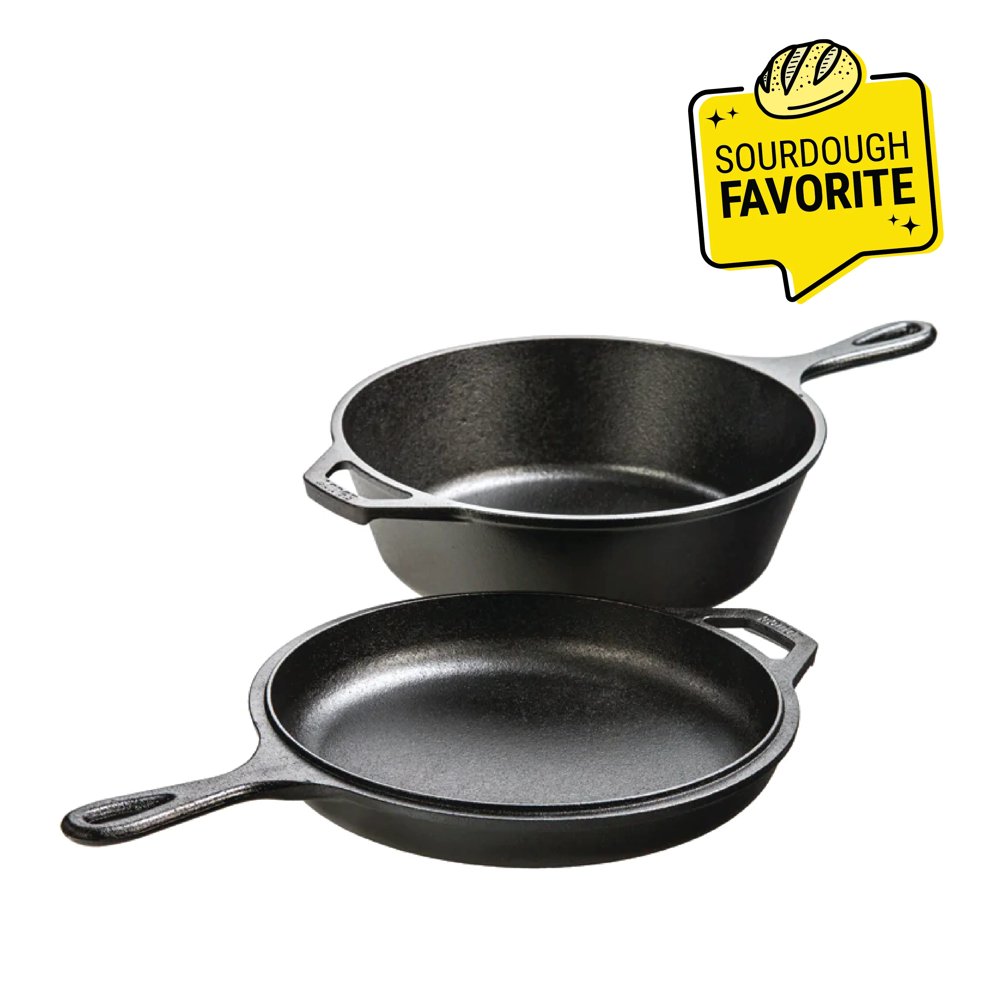
Lodge 3.2 Quart Cast Iron Combo Cooker
The combo cooker is a favorite of serious home bakers for the same reason as the Double Dutch: the shallow half becomes the base, so you load the dough onto a low surface instead of into a deep, hot pot. It is a smaller set, a 3.2 quart deep pot with a skillet lid.
The Perfect Loaf reports fitting roughly 500 to 900 grams of dough in it, which covers most single loaves. Like other bare Lodge iron, it carries a limited lifetime warranty.
- Best for: bakers making one standard loaf at a time who want the easiest loading.
- Keep in mind: it is too small for large loaves, still weighs nearly 13 pounds, and needs drying and oiling to prevent rust.
Best for Oval Loaves
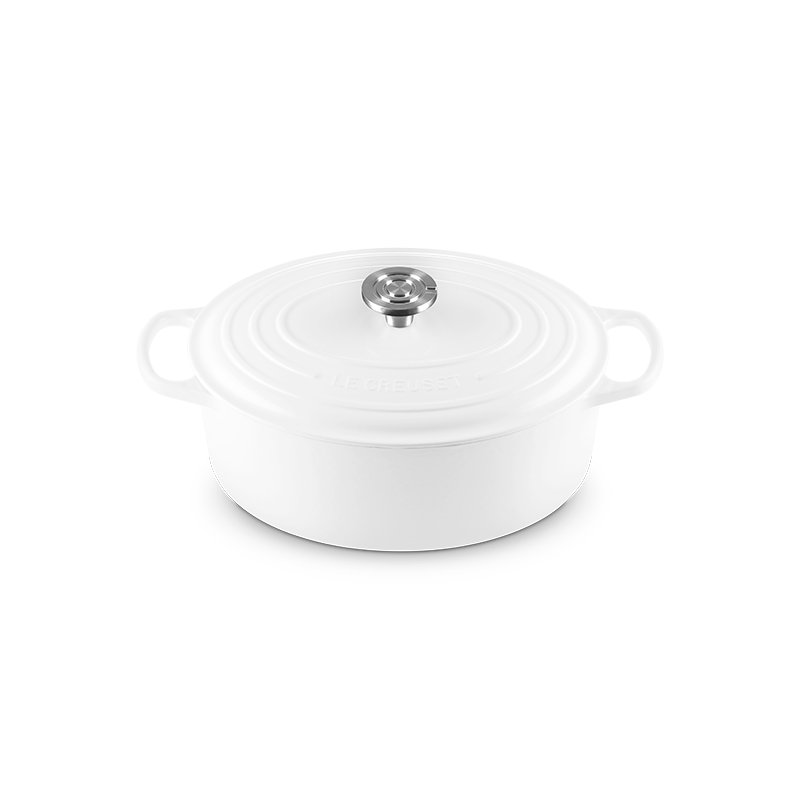
Le Creuset Signature Oval Dutch Oven, 6.75 Quart
If you shape bâtards, an oval pot gives the loaf room to keep its shape instead of pressing against round walls. The Le Creuset Signature Oval has an interior of about 12 by 9 inches, enough for a long loaf.
Le Creuset rates the pot and its standard stainless knob to 500 F and covers it with a limited lifetime warranty. It is also a beautiful roasting pot, which helps justify the price.
- Best for: bakers who shape oval loaves and want a premium pot that lasts.
- Keep in mind: it is expensive and heavy. Le Creuset rates its older phenolic (black plastic) knobs to only 390 F, so check which knob your lid has.
Best Premium Round
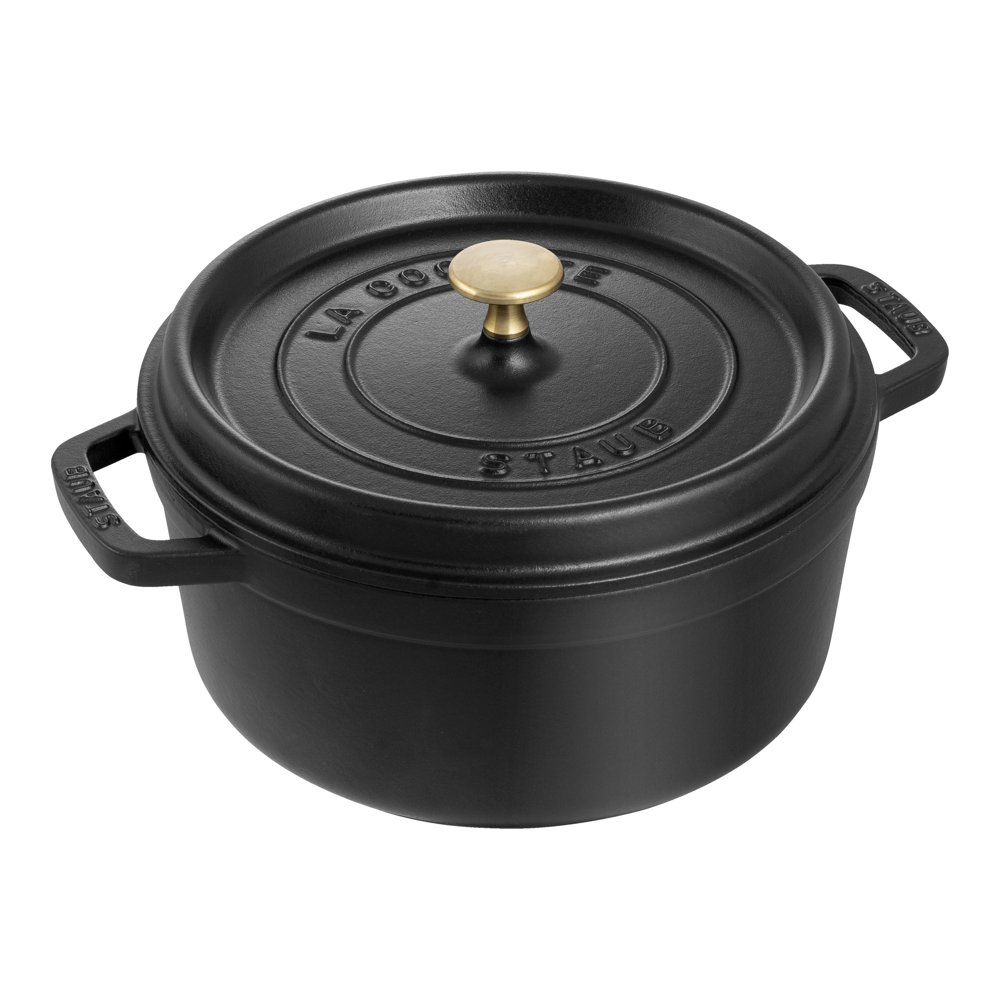
Staub 5.5 Quart Round Cocotte
Staub’s round cocotte is a premium enameled pot with a heavy, tight-fitting lid and a metal knob rated, with the lid, to 500 F. The 5.5 quart size suits a typical round loaf.
The matte black interior hides staining well, and Staub offers a limited lifetime warranty.
- Best for: bakers who want a premium round pot for bread and braising.
- Keep in mind: Staub’s care guidance cautions against heating enameled cast iron empty, so follow the instructions that come with it before planning an empty preheat. The dark interior also makes browning harder to judge.
Best Dedicated Bread Pan
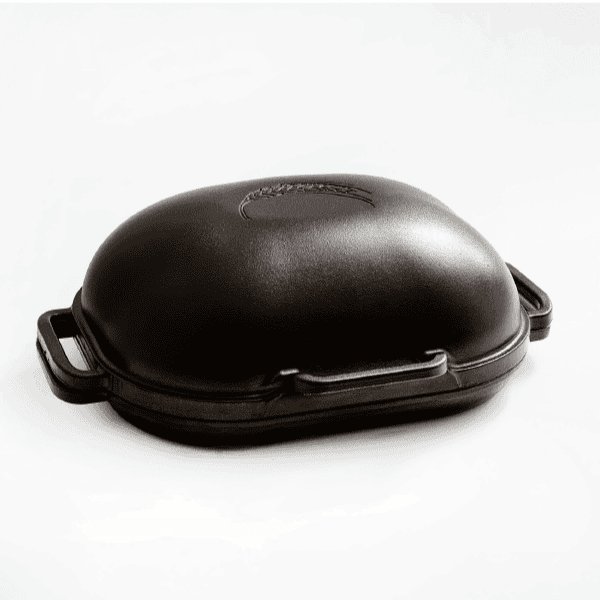
Challenger Bread Pan
The Challenger is a cast iron pan designed primarily for bread. The base is a low tray and the deep cover drops over the loaf, with an interior of about 11.5 by 9 by 5 inches that fits both round and oval loaves. The maker rates it to 500 F.
Loading is as easy as it gets, and the shape handles bâtards that crowd a round pot.
- Best for: dedicated bakers who bake several times a week and want one tool built for it.
- Keep in mind: it is expensive, weighs about 20 pounds, and some bakers report very dark bottoms, which a baking sheet on the rack below can help with.
Best Lighter Option
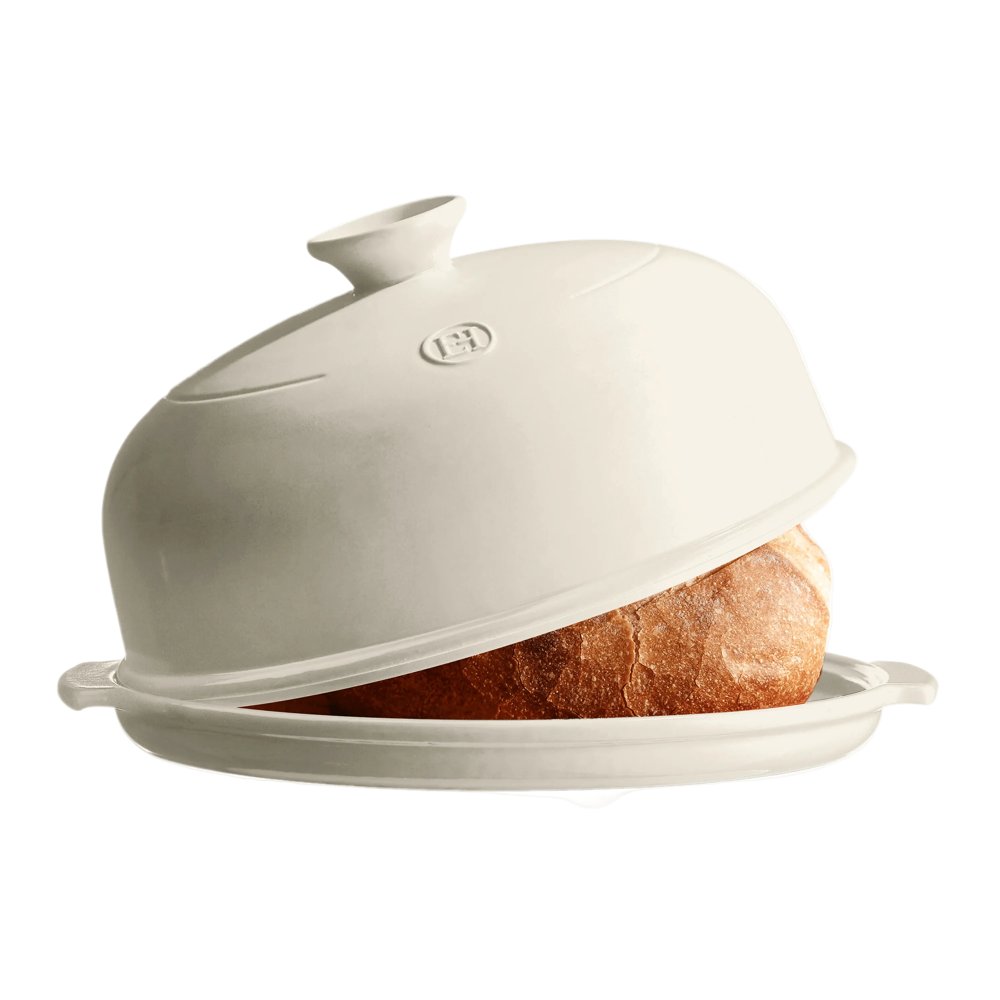
Emile Henry Bread Cloche
A ceramic bread cloche does the same job as a Dutch oven with a shallow base and a dome lid, at about 6.5 pounds, half the weight of most cast iron. Emile Henry rates it to 500 F and offers a ten-year warranty against manufacturing defects.
The shallow base makes loading easy, and the lighter weight helps if lifting heavy iron out of a hot oven is a concern.
- Best for: bakers who want something lighter than cast iron.
- Keep in mind: ceramic can crack if dropped or knocked, and it is not meant for stovetop cooking. Check the warranty terms if you buy from a third-party seller.
Quick Comparison
| Pick | Material | Size | Max Oven Temp | Best For |
|---|---|---|---|---|
| Lodge Double Dutch | Bare cast iron | 5 qt | See Lodge guidance | Easy loading, all-purpose |
| Lodge Essential Enamel | Enameled cast iron | 6 qt | 500 F incl. knob | Budget enamel |
| Lodge Combo Cooker | Bare cast iron | 3.2 qt | See Lodge guidance | Single loaves |
| Le Creuset Oval | Enameled cast iron | 6.75 qt | 500 F (stainless knob) | Bâtards |
| Staub Round | Enameled cast iron | 5.5 qt | 500 F | Premium round |
| Challenger Bread Pan | Bare cast iron | About 11.5 x 9 in inside | 500 F | Frequent bakers |
| Emile Henry Cloche | Ceramic | 4.75 qt | 500 F | Lighter weight |
How to Bake Bread in a Dutch Oven
- Preheat the pot with the oven to the temperature your recipe gives, staying within the pot and knob limits, but only if the maker permits empty preheating. Staub, for one, does not.
- Turn the dough out onto parchment, if you use it, and trim the exposed paper to a small sling. Check the paper’s temperature rating, since many are rated below 500 F.
- Score the top with a sharp blade or lame.
- Load it carefully. Lower the loaf on its sling into the pot, or onto the shallow base of a combo cooker or bread pan, using dry, heavy oven mitts.
- Bake covered, then uncovered. Keep the lid on for the first part of the bake to trap steam, then remove it so the crust can brown, following your recipe’s times.
- Cool the loaf on a rack before slicing.
Do not add ice cubes or water to a hot enameled pot for extra steam. Lodge warns that sudden cold can crack hot enamel, and the lid already traps plenty of steam.
Caring for the Pot After a Bake
Let the pot cool before washing. Dry bare cast iron thoroughly, warm it briefly and wipe on a thin coat of oil so it does not rust. For enameled pots, avoid metal scouring pads and sudden temperature changes.
Empty preheating is where brands differ. Lodge’s enamel care guide permits preheating its enameled pots empty in the oven, while Staub’s care guidance cautions against heating enameled cast iron empty. Follow the instructions for the exact pot you own. Between bakes, a good Dutch oven is just as useful for stews and broth; our beef broth recipe is a good example.
How We Chose
These pots were researched rather than tested side by side in our kitchen, and we would rather say that plainly. We compared usable size and shape for common loaves, material, the makers’ published temperature limits for pots and knobs, loading design, weight and warranty, and noted recurring owner issues such as chipped enamel without treating them as failure rates.
We do not list prices, because they change constantly. Use the buttons to check current prices.
Frequently Asked Questions About Dutch Ovens for Bread
What size Dutch oven is best for sourdough?
For a typical single loaf, about 4 to 6 quarts, or a 3.2 quart combo cooker. What matters most is that the floor is wide enough for your shaped dough with a little room to spare.
Do you need a Dutch oven to bake sourdough?
No, but it is the easiest way to get a good crust at home. You can also bake on a stone or steel with a source of steam, though results are less consistent for beginners.
Is enameled or bare cast iron better for bread?
Both bake excellent bread. Bare iron is cheaper and tough, but needs seasoning care. Enamel is easier to clean and doubles as everyday cookware, but the coating can chip and some brands restrict empty preheating.
Can you preheat an enameled Dutch oven empty?
It depends on the maker. Lodge permits empty oven preheating for its enameled pots; Staub cautions against heating enameled cast iron empty. Check the care instructions for your exact pot.
Round or oval for bread?
Round for round boules, oval for bâtards. If you make both, a bread pan with a wide interior, like the Challenger, handles either shape.
The Bottom Line
For most home bakers, the Lodge Double Dutch Oven is the one to start with: easy to load, durable with proper care and useful long after the bread is cooled. If you would rather have enamel, the Lodge Essential Enamel 6 Quart is the budget pick. Then pair it with a good starter from our sourdough starter kit guide, or let a stand mixer handle the kneading.