How to Ripen Green Tomatoes Before the Frost
The evening air feels different when you walk out to pick tomatoes in a sweater. Under the leaves, there are still clusters of firm green fruit, and the forecast is running out of warm nights. You do not have to leave every one of them to the frost.
To ripen green tomatoes indoors, pick mature, healthy fruit before frost, arrange it in a single layer, and keep it out of direct sunlight. A room around 65 to 70 degrees Fahrenheit is a useful target. Check regularly and remove fruit as it ripens or begins to spoil. The important first step is choosing tomatoes that are developed enough to finish ripening.
This guide explains which tomatoes are worth bringing in, how to set up a simple ripening box, and when a green tomato needs a different plan. You need a little shelf space, not special equipment.
Table of Contents
How to Ripen Green Tomatoes: The Short Answer
- Watch your local forecast and harvest before frost reaches the crop.
- Favor full-size, pale-green fruit or tomatoes already showing a blush.
- Keep damaged and decaying tomatoes out of the ripening batch.
- Use a shallow box or tray so you can see and check each tomato.
- Choose gentle room warmth, not a sunny windowsill or refrigerator.
- Never can tomatoes from dead or frost-killed vines.
Pick Before Frost, Not After the Vines Collapse
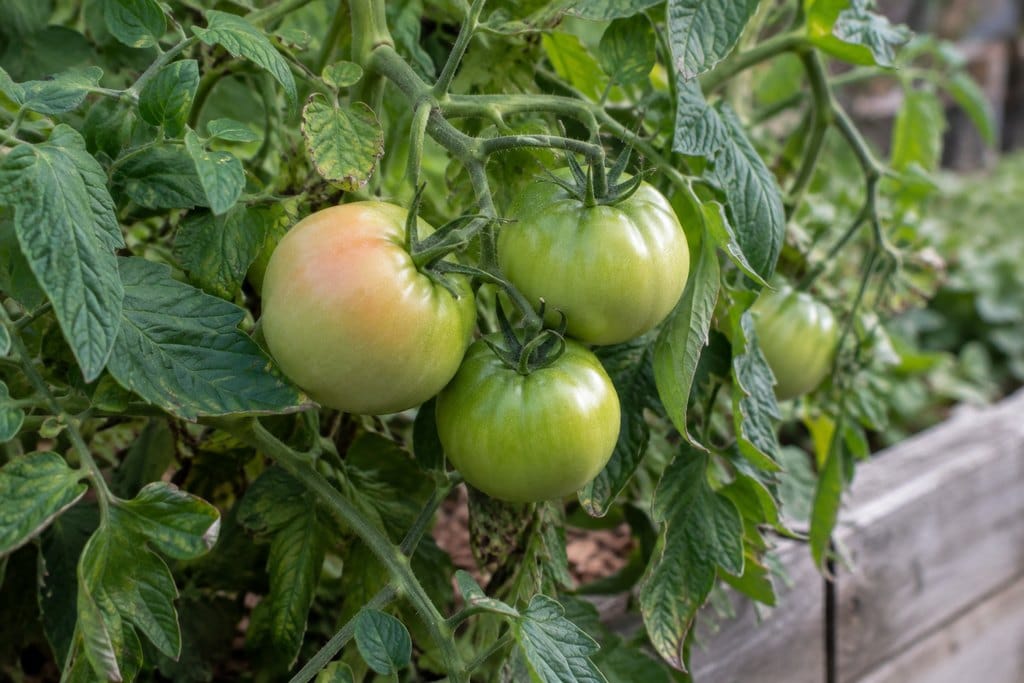
A forecast matters more than the month on the calendar. A September harvest deadline in one garden can be weeks earlier than the deadline in another. Check conditions for your location rather than copying a national “first frost” date. Our fall vegetable garden guide explains how local frost timing fits into the rest of your autumn garden.
Do not wait for frozen leaves as your signal. Colorado State’s guidance on ripening green tomatoes notes that prolonged cold can interfere with flavor and ripening before a frost kills the plant. It also cautions that covers help nearly ripe fruit more than they help mature green fruit.
If frost is close and you have a full afternoon available, spend it harvesting and sorting. That is a more manageable last-minute job than trying to force a whole plant to finish overnight. Bring a shallow container into the garden so the first tomatoes picked are not buried under the rest.
Which Green Tomatoes Will Ripen Indoors?
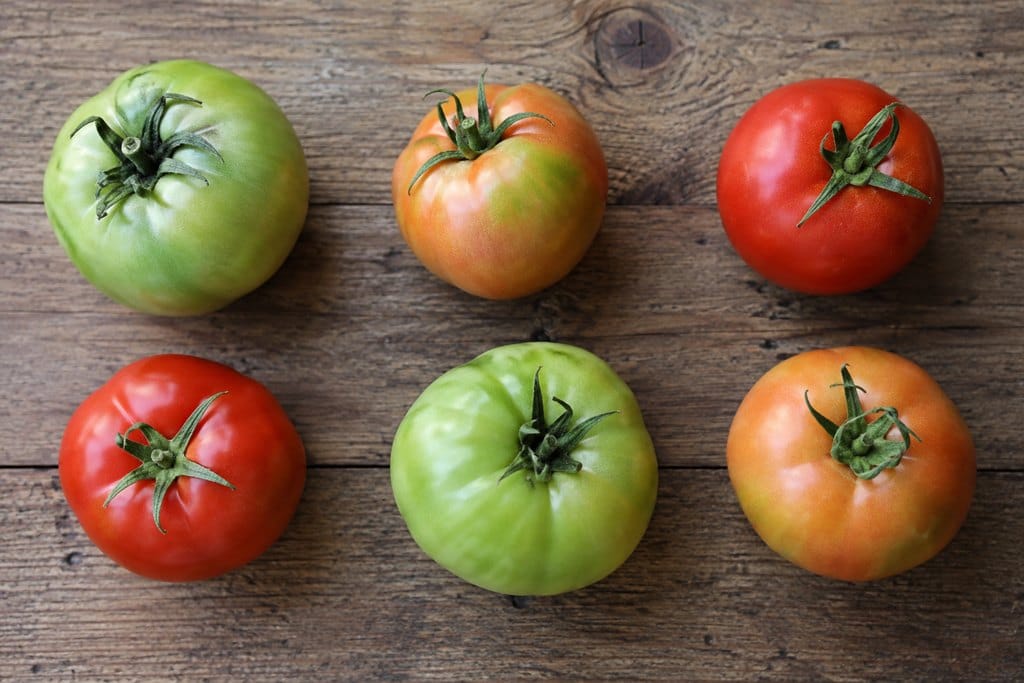
Green is a color, not a complete description of maturity. A tomato can still be green after it has finished most of its development, or it can be green because it is nowhere near ready.
Colorado State Extension distinguishes mature-green fruit by its shine and a pale star or lighter area at the blossom end, opposite the stem. A first blush of pink is an even easier sign to recognize on a red-fruited variety. Small, dull-green fruit is a poor candidate.
| What You Have | Where It Goes |
|---|---|
| Firm fruit with a first blush of its ripe color | The ripening tray, where you can check it easily. |
| Full-size, light-green fruit with a pale blossom end | The ripening batch, with more patience than the blushing fruit needs. |
| Undersized, hard, uniformly dark-green fruit | A separate group. Do not count on it for ripe tomatoes. |
| Fruit with mold, leaking areas or active decay | Discard it, not the storage box. |
“Full-size” means full-size for that variety. A cherry tomato should not be judged against a slicing tomato. If you grew several kinds, sort each kind separately before deciding which fruit looks underdeveloped.
Sound tomatoes that are not good ripening candidates can have a different use. Iowa State’s green-tomato guide points to cooked dishes such as fried green tomatoes. Choose a recipe written for green tomatoes; do not keep questionable fruit in the hope that cooking or canning will rescue it.
Check Whether Your Variety Stays Green When Ripe
Not every tomato is supposed to turn red. Iowa State’s cultivar guide lists green-fruited varieties such as Green Zebra and Green Grape, alongside yellow, orange and other colors. Look up the name on your seed packet or plant tag before treating a green-ripe variety as an unfinished crop.
Keep those varieties separate from ordinary green, unripe tomatoes. Otherwise it is easy to keep waiting for a color change that was never part of the variety’s description.
Set Up a Simple Indoor Ripening Box
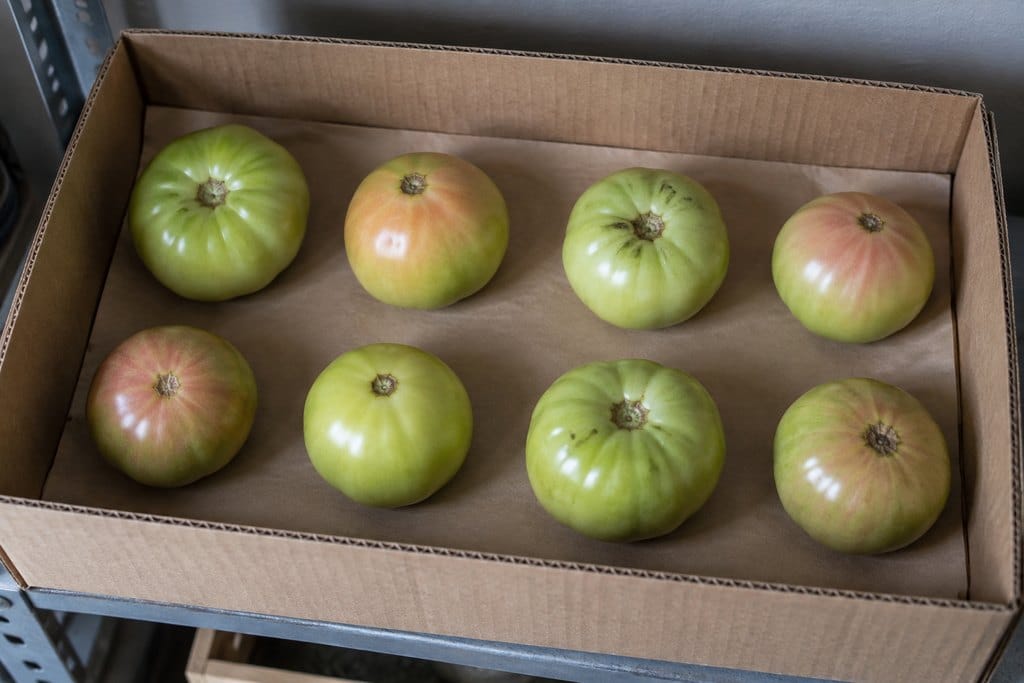
The easiest setup to manage is one you can inspect without unpacking it. Use a clean, shallow cardboard box or tray and a little clean paper underneath. Leave it somewhere you will remember, rather than behind a stack of storage bins.
- Sort first. Keep only sound fruit for ripening. Separate tomatoes already coloring from the fully green ones.
- Handle the stems gently. Remove them without tearing the skin. A tomato with a puncture or torn shoulder should not disappear into a long-held batch.
- Clean and dry the fruit. If you wash it, let the surface dry completely before packing.
- Spread tomatoes in one layer. Leave space between them rather than making a pile. Choose a second tray when the first is full.
- Move the tray out of direct sun. An indoor shelf at a suitable temperature is enough; a window is not required.
The stem removal, cleaning and drying steps follow Iowa State’s indoor-ripening advice. The University of Minnesota recommends a single layer with fruit spaced apart and makes a useful distinction: warmth matters more than light.
If counter space is tight, choose a wider shallow box instead of a deeper one. Add a scrap of paper with the harvest date and variety name. That note is especially useful when a second harvest comes indoors a few days later.
Do You Need to Wrap Each Tomato?
No, the open, single-layer method above is a workable option. Iowa State also describes wrapping tomatoes individually in newspaper, holding them in a dark place at 60 to 65 F, then unwrapping and moving them to room temperature when color develops.
Wrapping is a different storage setup, not an extra step you must add. If you choose it, you still need to unwrap and inspect the fruit. For a first small batch, visible tomatoes make that job easier.
Choose the Temperature, Then Allow Enough Time
Oregon State recommends 65 to 70 F for ripening mature-green tomatoes. It also warns that extended cold exposure can damage quality. The refrigerator is not a holding area for tomatoes you are still trying to ripen.
For planning, Colorado State’s indoor guide estimates roughly two weeks near 70 F and about a month near 55 F. Those are approximate windows, not appointments. Starting maturity and the condition of the fruit change what you will see in your own box.
A cheap room thermometer is more useful here than guessing how warm a shelf feels. A spare bedroom may work well; an unheated garage may swing too cold overnight. Check the actual spot where the tray will sit, especially if the house cools substantially after bedtime.
Do not try to make up for a cold garden with a radiator, heating vent or hot windowsill. You are looking for steady, modest warmth. If you need ripe tomatoes for a particular dinner, count the ones already coloring rather than promising yourself that the whole box will be ready.
Will a Paper Bag and a Banana Help?
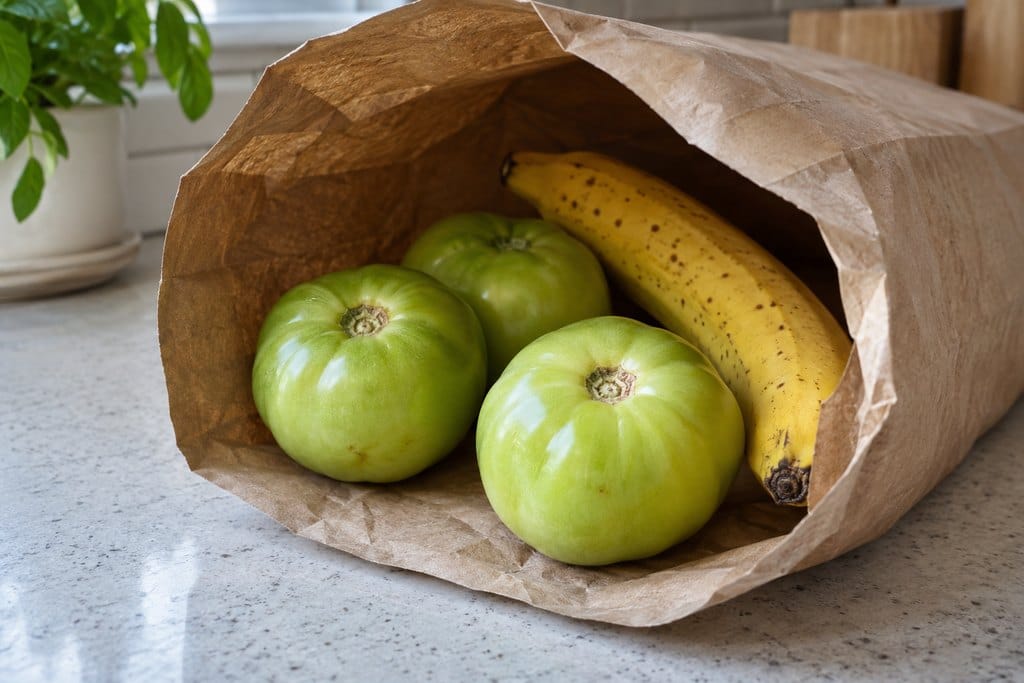
A ripe fruit companion can help a mature tomato along. Iowa State explains that ethylene released by ripe fruit encourages ripening and suggests putting green or partly ripe tomatoes in a bag or box with a ripe tomato. Colorado State also describes adding a banana.
For a small batch, put a few sound tomatoes and a ripe banana in a paper bag and fold the top loosely. Keep it out of direct sun and open it regularly to check every fruit. You want a convenient small ripening space, not a forgotten bag at the back of the pantry.
Do not expect this to turn a tiny, undeveloped tomato into the equivalent of a mature harvest. Use the bag for fruit that passed your first sorting check. There is no need to add a banana to every box if you are happy with the pace of ripening.
Check the Batch Before Small Problems Spread
Look through the tomatoes every couple of days, more often as they approach eating ripeness. Lift each one gently so you can see the underside. Remove ready fruit for meals and discard any that develop mold or decay.
Iowa State’s storage advice notes that excess humidity encourages mold, while very dry conditions can cause shriveling. If a box feels damp, do not seal it more tightly to “trap the ripening.” Replace wet paper, check the fruit and improve the setup’s ventilation. A sealed plastic bag is not the same as a breathable paper bag.
Set the ready tomatoes in a separate bowl. That simple change makes the harvest visible to everyone in the kitchen, instead of leaving ripe fruit hidden among the green ones. If more ripens than you can use fresh, our guide to drying tomatoes covers a separate way to preserve suitable ripe fruit.
Keep Frost-Damaged Fruit Out of the Canning Plan
Do not can tomatoes from dead or frost-killed vines. The University of California’s Master Food Preserver guidance explains that these tomatoes can be too low in acid for safe canning. It also excludes decayed, damaged, moldy and over-mature tomatoes.
A tomato turning red on the counter does not erase its harvest history. Keep track of which plants the fruit came from. Adding extra lemon juice on your own is not a reason to ignore the fruit-selection requirements of a tested recipe.
For suitable fruit, use a complete tested preservation method. Our whole-tomato canning guide covers selection, acidification and processing. This ripening guide is not a shortcut around those instructions.
Frequently Asked Questions
Do Green Tomatoes Need Sunlight to Ripen?
No. Minnesota Extension says light is not necessary for harvested tomatoes to finish ripening. A suitable indoor temperature and mature fruit matter more than finding the brightest window.
Should I Leave Them on the Vine Until They Turn Red?
Not when frost is threatening. Harvesting mature fruit gives you an indoor option. For pruning decisions earlier in the season, our tomato sucker guide explains why plant type matters; heavy last-minute pruning is not a substitute for harvesting before cold weather.
Can I Hang the Whole Plant Upside Down?
Iowa State lists hanging a pulled plant in a cool, dark place as an alternative. It takes more space and leaves you checking fruit among the stems. A shallow tray is usually the simpler household setup.
Will Indoor-Ripened Tomatoes Taste Like Summer Tomatoes?
Keep expectations modest, especially with fully green fruit. A tomato already showing its first blush is a better flavor prospect than a very immature one. The aim is a useful final harvest, not a guarantee that every saved tomato will match your best August slicer.
Give the Last Harvest a Place in the Kitchen
Before you bring in the next basket, clear the space where it will live. A box you can reach, a note with the harvest date, and a regular glance while you make coffee are easier to keep up with than an elaborate storage arrangement. Save the fruit worth saving, and let the smallest unfinished tomatoes be the end of the season rather than another chore.