Growing a Fall Garden: What to Plant and When by Zone
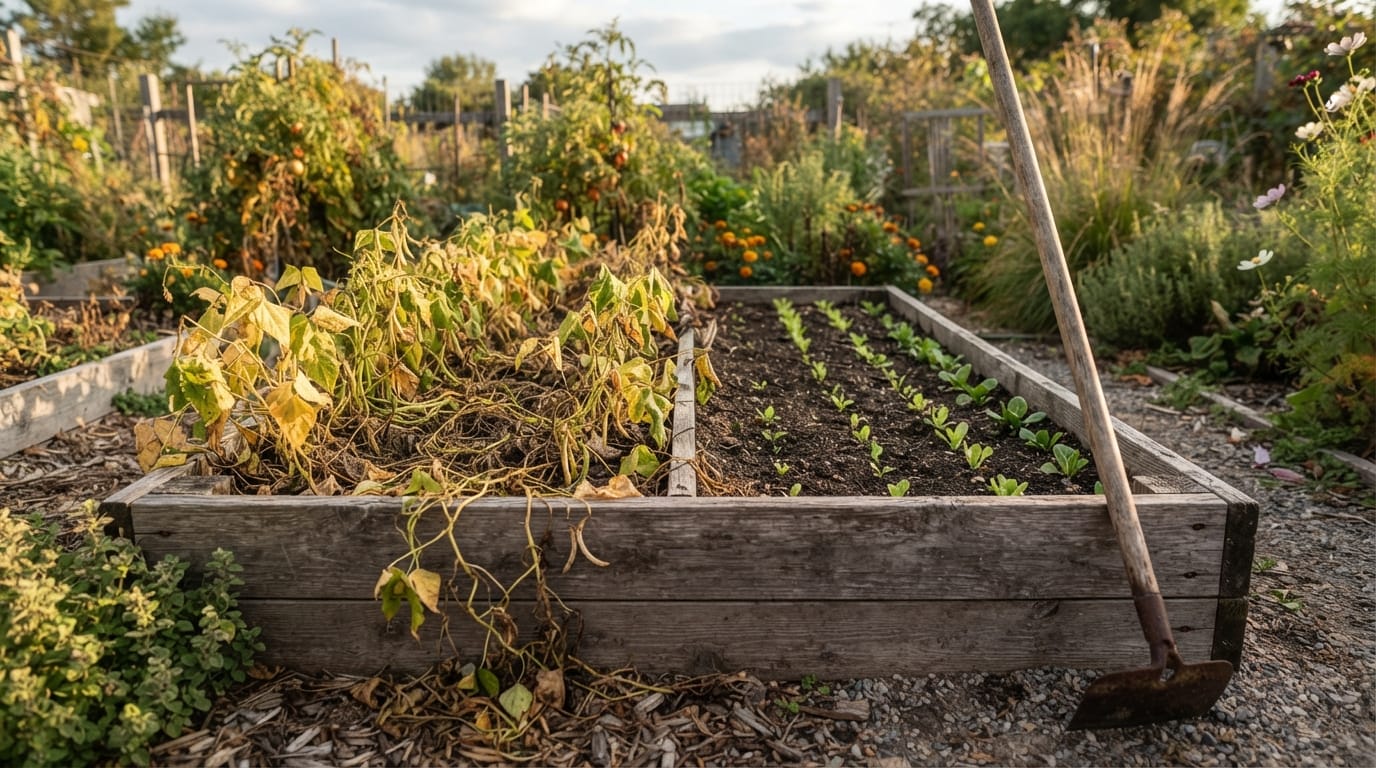
By the third week of August our spring garden looks finished. The lettuce has bolted into bitter towers, the spinach went over weeks ago, and the bean plants have that yellow, spent look of something that has done its job. The instinct is to pull it all out, rake it over, and call the season done.
That instinct costs you the best growing of the year.
Fall is the easier season for a lot of vegetables. The heat that made your lettuce bolt in July is going away instead of arriving, the pests that shredded the brassicas are thinning out, and several crops taste better after a frost than before it. What makes a fall garden feel complicated is that you cannot plant by feel. You have to count backwards from a date that has not happened yet. This guide covers that arithmetic, what to plant, what survives which temperature, and the two jobs that matter more in August than they ever did in April.
Table of Contents
The Short Answer
- Find your average first frost date. Everything else is counted backwards from it.
- Take the days to maturity off the seed packet, then add one to two weeks for what Illinois Extension calls the fall factor: cooler weather slows growth down.
- Add another week or two of harvest window, because you want to be picking before frost, not on the day of it.
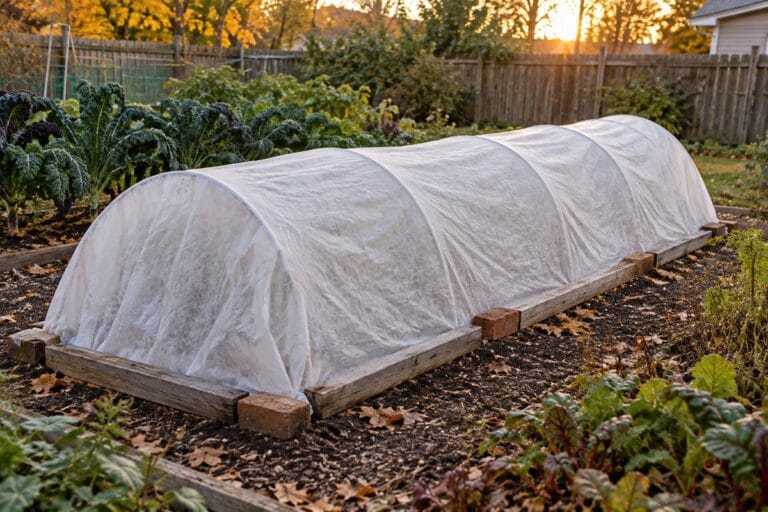
- Hardy crops such as broccoli, cabbage, radishes and spinach take a hard frost around 28 F. Semi-hardy crops such as beets, carrots, cauliflower and lettuce take a light frost at 32 F.
- Your USDA zone is the wrong number for this. Zones describe winter lows, not when fall frost arrives.
- The last useful sowings are radishes, spinach and leaf lettuce. Where frost holds off until late October you can still make them into early September. Where it comes at the end of September, late August is already the edge.
The Only Math That Matters
Every fall planting guide is a variation on one calculation. Illinois Extension states it plainly: work out when your first frost usually happens, then count backwards for the number of days it takes the crop to mature.
The refinement that separates a fall garden that works from one that gets caught out is the next line. Illinois recommends adding a week or two for the fall factor, because temperatures are getting cooler and development slows compared with spring. In April a seedling is growing into rising warmth and lengthening days. In September it is growing into the opposite, and the seed packet number was not written for that.
So the full version is three numbers, not one:
- Days to maturity from the packet.
- Plus 7 to 14 days for the fall factor.
- Plus a harvest window, usually another week or two, because a crop that matures the same week as your frost gives you nothing to pick. Iowa State makes the same point: allow time for the harvest.
Count that total back from your frost date and you have the last day it is worth putting that seed in the ground. Anything earlier is fine. Anything later is a gamble you will probably lose.
One detail people get wrong: days to maturity on a packet is counted from direct sowing for crops you sow in place, and from transplanting for crops you set out as seedlings. If you are buying broccoli starts, the clock begins the day they go into the bed, not the day somebody sowed them in a greenhouse.
Find Your First Frost Date, Not Your Zone
This is the part most fall gardening articles get wrong, including ones that promise planting dates by zone.
A USDA hardiness zone describes the average annual extreme minimum winter temperature for an area. It answers whether a perennial will survive your winter. It says nothing about when your first fall frost arrives, and two places in the same zone can have first frosts three or four weeks apart depending on elevation, how far they are from water, and whether they sit in a valley where cold air pools.
So looking up planting dates for zone 6 is a rough approximation at best. What you want is your own average first frost date, which you can get from your county extension office, from NOAA’s freeze and frost date records, or from a neighbor who has gardened there for twenty years and will give you a better answer than either.
Two cautions about whatever date you find. It is an average, which means roughly half the time frost arrives earlier than that. And a light frost is not the end of the garden for most of what you will plant now, which is the whole reason fall crops are worth the trouble.
What to Plant, and How Long It Takes
Days to maturity below are the ranges Iowa State Extension gives for fall planting. Varieties differ, sometimes by three weeks, so check your own packet before you do the arithmetic. Sort the list by that middle column and you have your planting order.
| Crop | Days to maturity | Hardiness | Sow or transplant |
|---|---|---|---|
| Radish | 25 to 40 | Hardy | Direct sow |
| Leaf lettuce | 45 to 60 | Semi-hardy | Direct sow |
| Spinach | 45 to 60 | Hardy | Direct sow |
| Turnip | 45 to 70 | Hardy | Direct sow |
| Beets | 50 to 70 | Semi-hardy | Direct sow |
| Kale | 55 to 75 | Hardy | Either |
| Broccoli | 60 to 65 | Hardy | Transplant |
| Carrots | 60 to 80 | Semi-hardy | Direct sow |
Radishes are the crop that makes fall gardening feel easy. Twenty-five days is quick enough that you can sow them when you are already too late for everything else, and quick enough to sow twice more before the ground gets cold. If you have never grown a fall crop, sow a row of radishes this weekend and let that be the experiment.
Leaf lettuce is the other reliable one, and it is worth knowing that you can keep taking from it rather than pulling whole heads. We covered harvesting leaf lettuce so it keeps producing separately, and that technique matters more in fall, when regrowth is slower and every leaf counts.
Garlic belongs in this conversation too, though it plays a different game. It goes in the ground in fall and comes out the following summer, so it is the one thing you plant now with no intention of harvesting this year. Our guide to growing garlic covers timing, which is usually a few weeks after your first frost rather than before it.
Hardy, Semi-Hardy, Tender: What Survives What
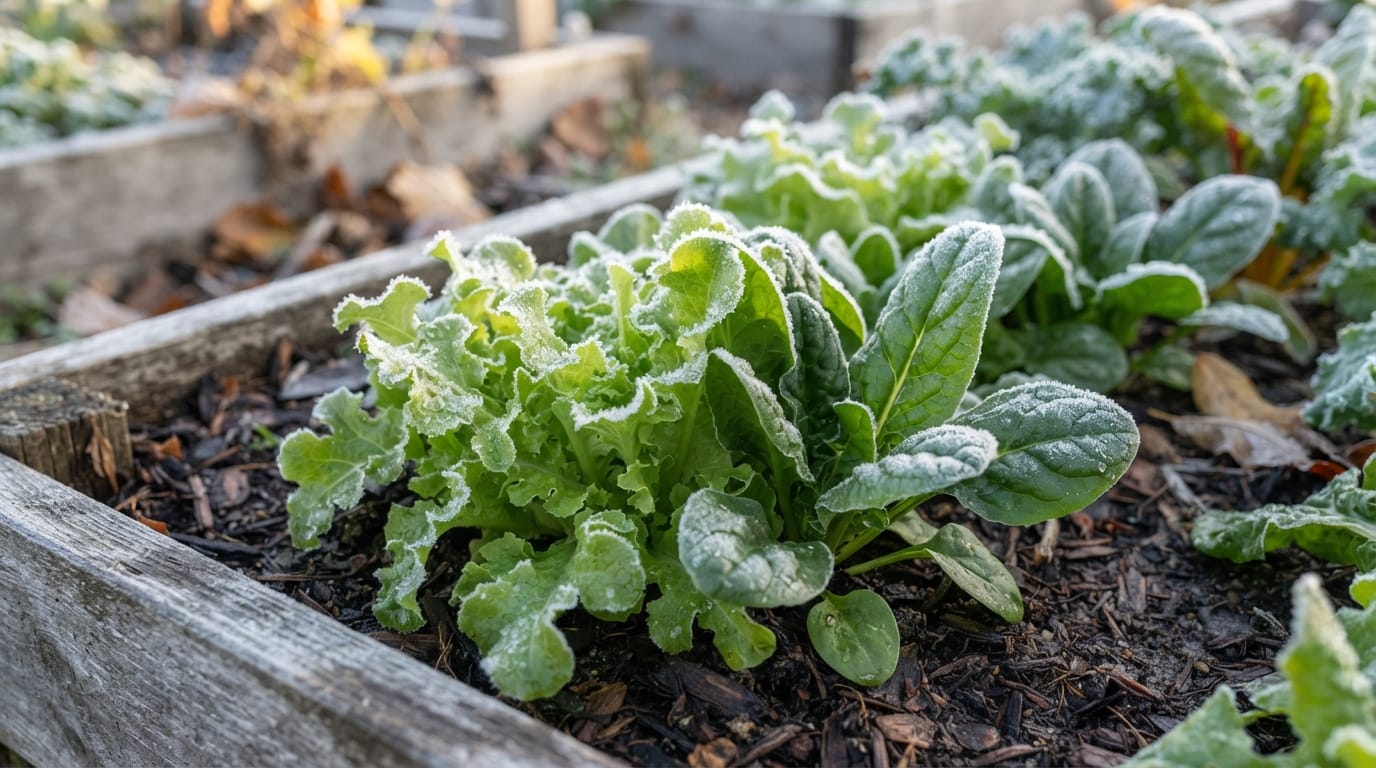
Frost is not one event. A light frost and a hard freeze do different things, and knowing which crops take which is what lets you keep harvesting for weeks after the first cold night that scares you.
| Category | Takes | Crops |
|---|---|---|
| Hardy | Hard frost, around 28 F and below | Broccoli, cabbage, radishes, spinach, kale, turnips |
| Semi-hardy | Light frost, around 32 F | Beets, carrots, cauliflower, lettuce |
| Tender | No frost at all | Beans, cucumbers, squash, tomatoes, peppers, basil |
Those bands come from Illinois Extension, which puts hardy plants at hard frosts around 28 F and semi-hardy at light frosts at 32 F. Iowa State describes the same three categories slightly differently, with hardy crops taking the mid to lower 20s and semi-hardy the upper 20s.
The two sources also sort a few crops differently, which is worth saying out loud rather than papering over. Treat the categories as a reliable guide and the exact numbers as approximate, because variety, plant maturity, how long the cold lasts and whether the plants were watered all move the real answer around.
Practical version: when the forecast says a light frost, cover the semi-hardy things and ignore the rest. When it says the mid 20s, harvest what you want and accept that the lettuce is finished.
Your Last Sowing Dates, Worked Out
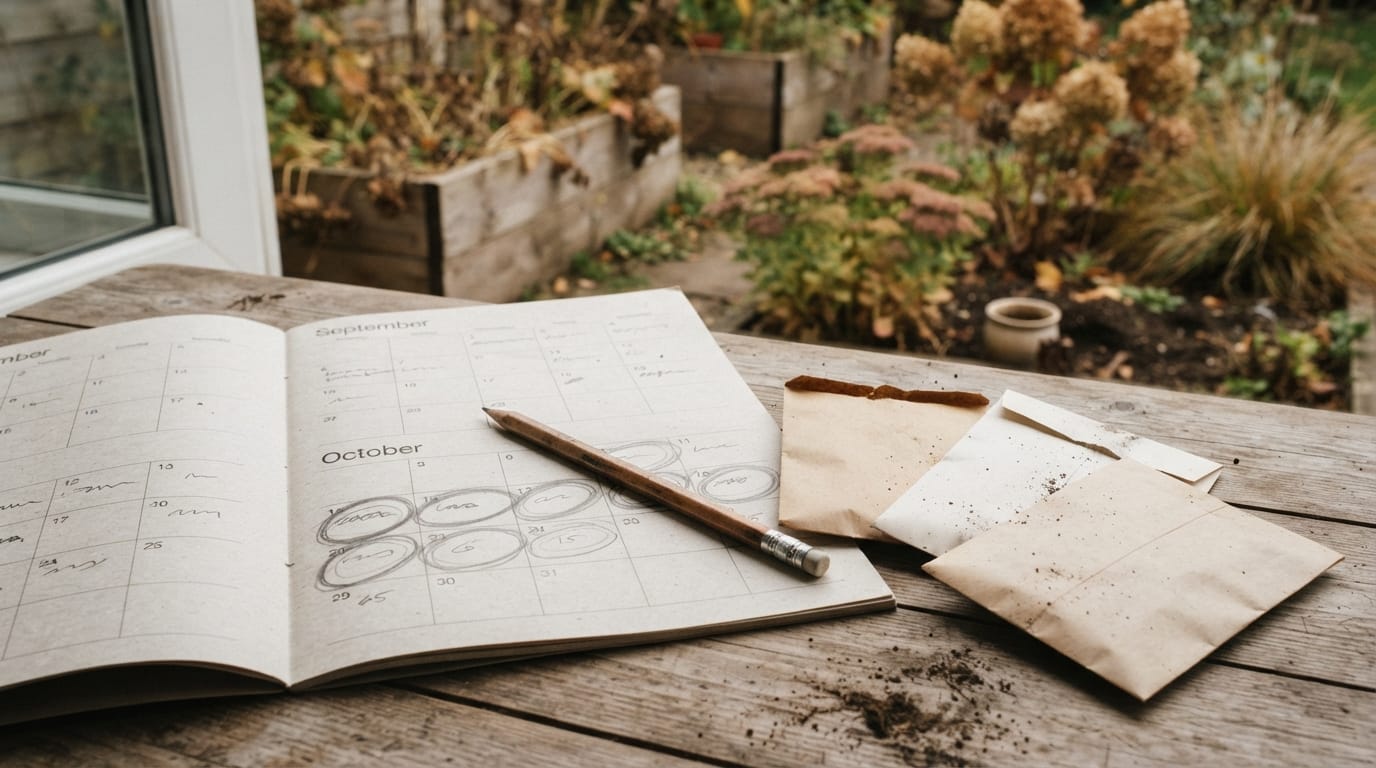
Rather than guess at your zone, find the column closest to your own first frost date. These are the crop’s days to maturity plus 10 days of fall factor plus 10 days of harvest window, counted backwards. Round to the nearest week and do not agonize over a day or two.
| Crop | Frost around Sep 30 | Frost around Oct 15 | Frost around Oct 31 |
|---|---|---|---|
| Radish (30 days) | Aug 11 | Aug 26 | Sep 11 |
| Leaf lettuce (50 days) | Jul 22 | Aug 6 | Aug 22 |
| Spinach (50 days) | Jul 22 | Aug 6 | Aug 22 |
| Turnip (55 days) | Jul 17 | Aug 1 | Aug 17 |
| Beets (60 days) | Jul 12 | Jul 27 | Aug 12 |
| Kale (65 days) | Jul 7 | Jul 22 | Aug 7 |
| Broccoli (60 days, transplant) | Jul 12 | Jul 27 | Aug 12 |
| Carrots (70 days) | Jul 2 | Jul 17 | Aug 2 |
Read that table honestly, because it is less generous than most fall planting articles. If your frost lands around the end of September and it is already late August, the strict arithmetic says even radishes have sailed. In practice you still have one move: a fast 25-day variety, sown now and pulled small, usually beats the table because the padding I built in is harvest comfort rather than survival. Sow it, then put a note in next year’s calendar for mid-July, which is the real fix.
If your frost is late October, you have most of the list still open, and the coming two weeks are the busiest planting window you will get until spring.
The hardy crops are more forgiving than this table suggests, because they do not stop dead at frost. Spinach and kale sown late will sit through cold weather and finish in early spring, which is a genuinely useful trick and the reason experienced gardeners sow them later than the arithmetic says.
Sowing in August Is Not Like Sowing in April
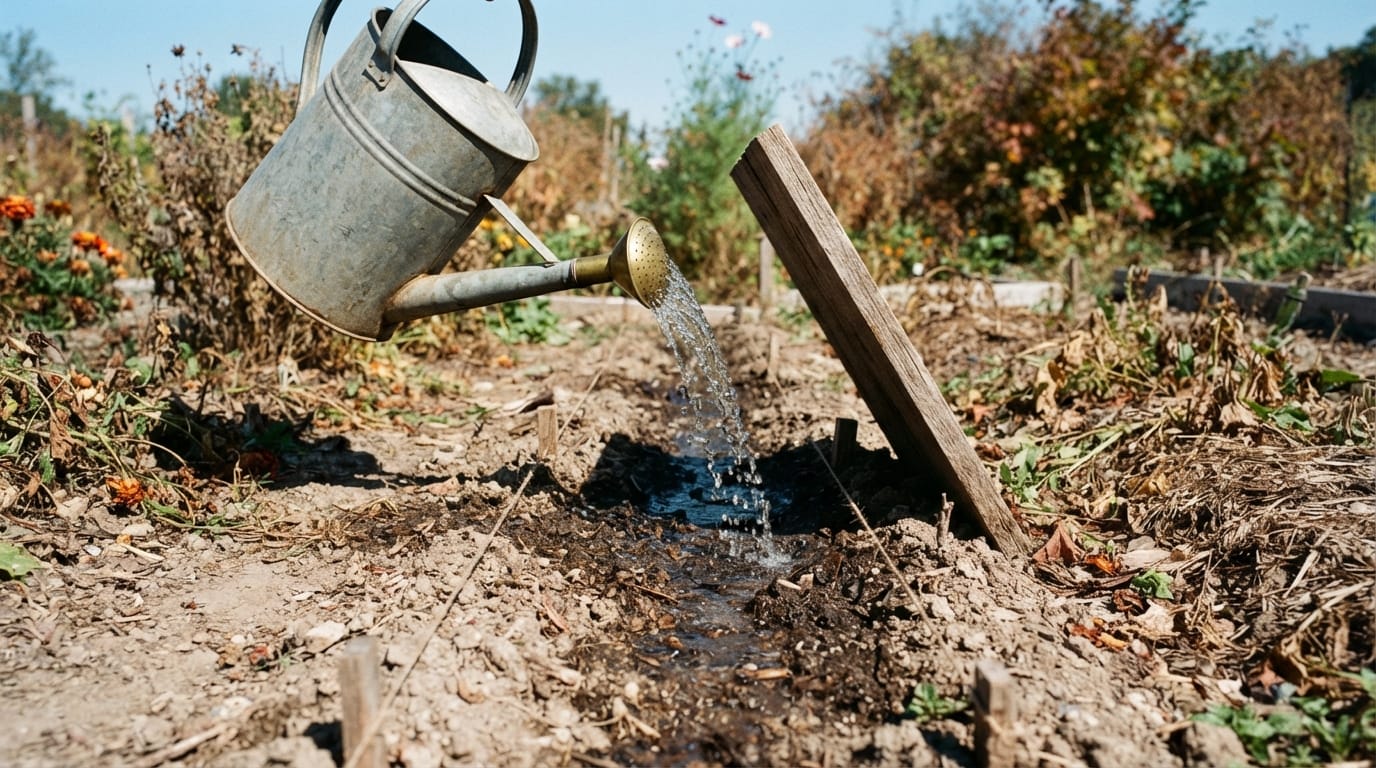
The seeds are the same. The conditions are not, and two jobs get much harder.
Germination in Hot Soil
Lettuce and spinach in particular sulk in warm soil, and a bed that has been baking all August can be well above what they want. The fixes are all low-tech: sow slightly deeper than you would in spring, water the furrow before you sow rather than after, and shade the row with a board, a piece of shade cloth or a plank propped on bricks until you see green.
Watering, Which Is Now Your Main Job
A spring sowing gets rain and cool nights. An August sowing gets neither, and a seed row that dries out once at the wrong moment simply does not come up. Plan to water lightly every day until germination, which feels excessive and is not.
Mulch helps once the seedlings are up rather than before, and a bed that has had compost worked into it holds moisture noticeably longer through a dry September. If you are building beds for this, how and how much compost to use covers the rates, and raised beds warm and drain faster, which cuts both ways in fall.
The Pest Situation Improves
This is the compensation. Many of the insects that make brassicas miserable in early summer are winding down by September, and the ones that remain slow with the temperature. Fall broccoli and fall cabbage are often cleaner than the spring crop for no extra work.
What Not to Bother Planting Now
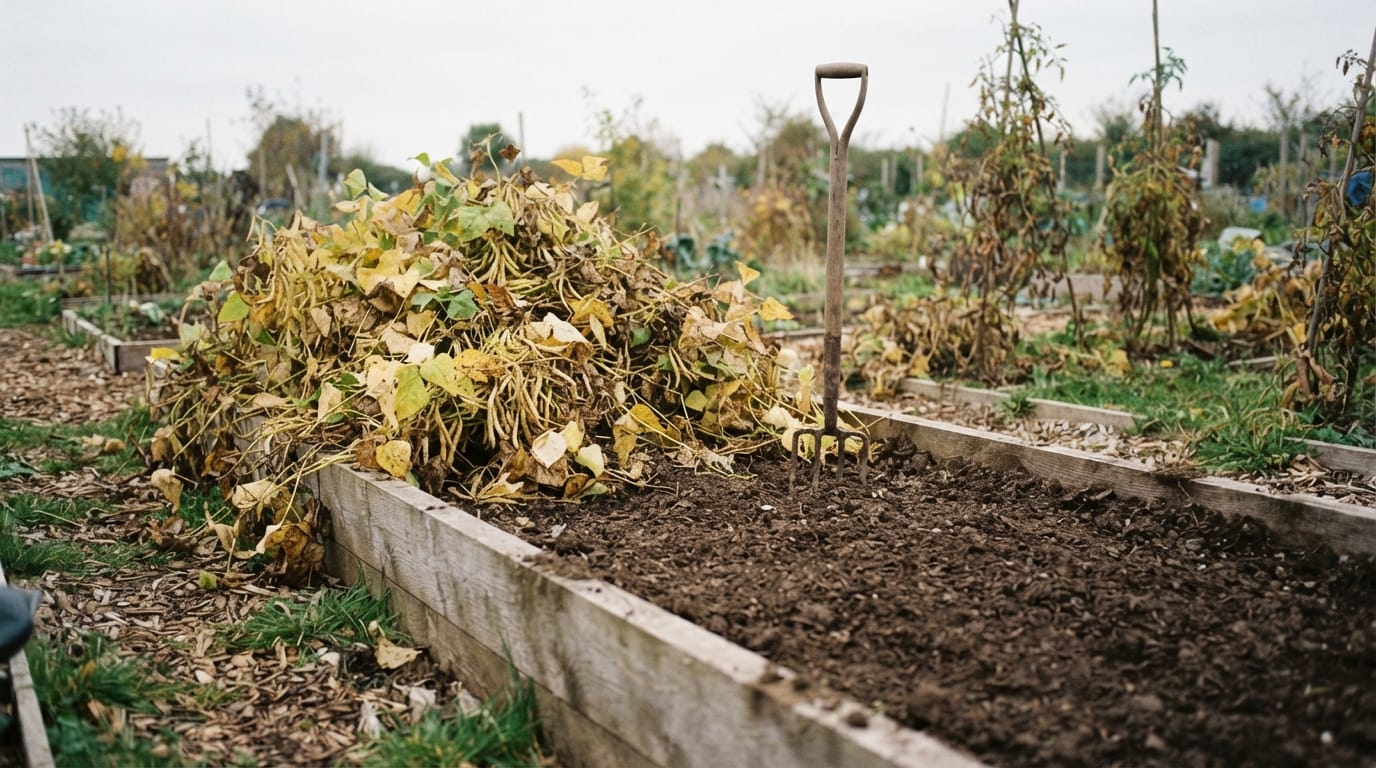
Tomatoes, peppers, eggplant, squash, melons, cucumbers and beans. All of them are tender, all of them need warmth to ripen rather than just to grow, and all of them will be killed by the first frost whether or not they have finished.
You will read about people getting a fall cucumber crop, and in a long-season southern garden that is real. Everywhere else, sowing a 60-day fruiting crop into shortening days in late August produces a healthy plant and no harvest. The plant is not the goal.
If you have the space and the impulse to fill it, sow a cover crop instead. Cereal rye or oats put down roots, hold the soil over winter and give you something to turn in come spring, which is a better use of an empty bed than a row of doomed beans.
The Part Where Frost Helps You
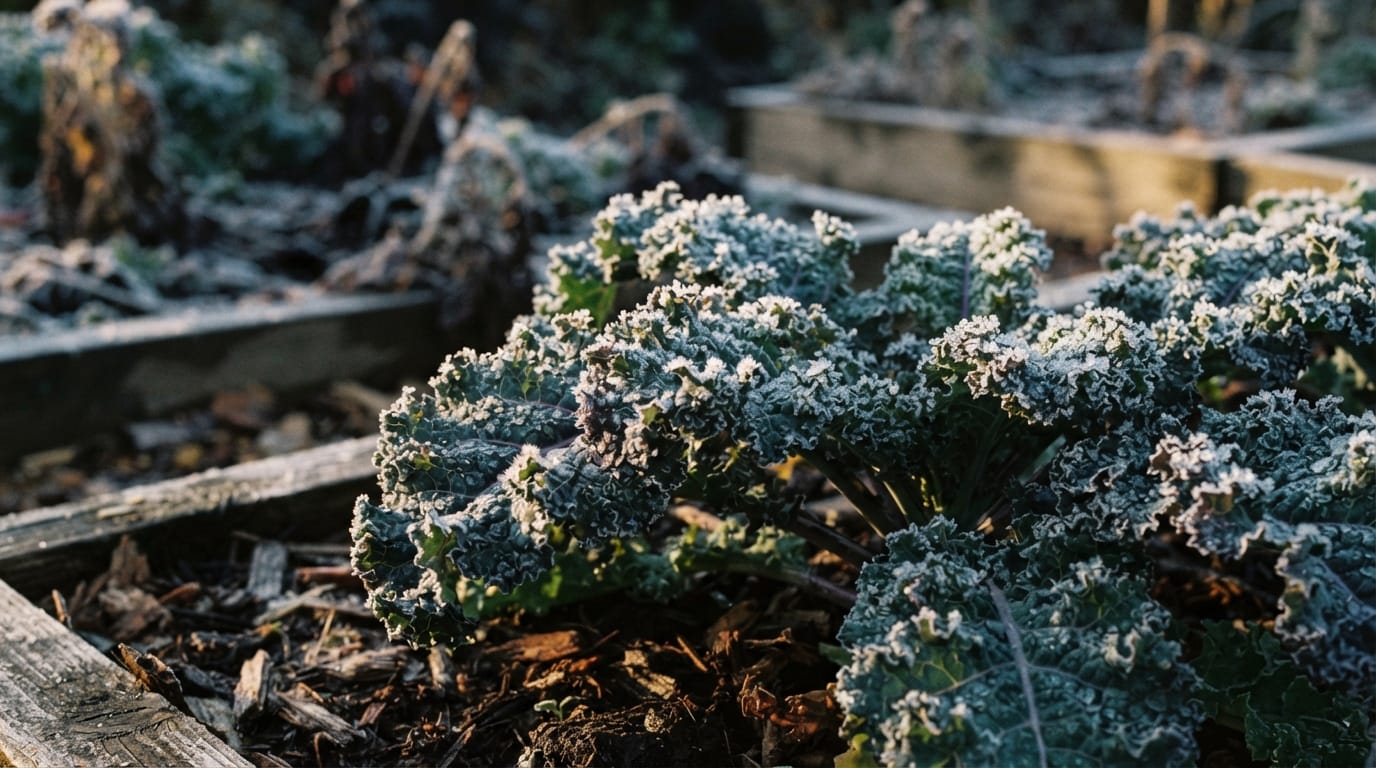
Illinois Extension notes that some vegetables develop better flavor when grown in fall, particularly after they have gone through a frost. Kale, parsnips, carrots, brussels sprouts and collards are the usual names attached to this, and it is the single best argument for planting in July for October eating.
Which means the frost date you spent this whole article counting backwards from is not really a deadline for the hardy crops. It is closer to a seasoning. The tender things end that night. The kale gets better.
Planning next season on paper?
The Complete Garden Planner is a 30-page printable set with frost-date and spacing charts, a square-foot planting guide, bed maps and a harvest log. Fall is when the count-back math above is worth writing down, so next July you are not doing it from memory.
The Free Garden Starter Pack
Five printable pages that take the guesswork out of a first season, plus a short email every week or two when something is worth planting, picking, or putting up.
- A garden planning worksheet you can actually fill in
- A seed-starting and planting calendar
- A harvest log to track what really produced
No spam, ever. Unsubscribe in one click.
Thank you. You are on the list.
Your Garden Starter Pack is ready right now. Grab it here:
Download the pack (PDF)Keep an eye on your inbox. The next seasonal guide lands there first.
Frequently Asked Questions About Fall Gardens
Is it too late to plant a fall garden?
Work it out rather than guess. Take your first frost date, count back the days to maturity plus about two to three weeks, and see what still fits. Radishes at 25 to 40 days fit almost everywhere well into September, and spinach and kale sown late will overwinter and finish in early spring even if they do not mature this year.
What can I plant in a fall garden?
Cool-season crops: radishes, leaf lettuce, spinach, turnips, beets, kale, broccoli, cabbage, carrots and cauliflower. Skip anything that fruits, since tomatoes, peppers, squash and beans are all tender and need heat they are not going to get.
What planting dates should I use for my zone?
Zones are the wrong tool. A USDA hardiness zone describes average extreme winter lows, which tells you what perennials survive, not when your first fall frost lands. Two gardens in the same zone can differ by weeks. Look up your local average first frost date and count back from that.
Do I need to start seeds indoors for a fall garden?
Mostly no. Root crops and greens all resent transplanting and go straight into the ground. Broccoli, cabbage and cauliflower are the exceptions, and at this point in the season buying transplants is usually the sensible move, since the clock on those starts the day they go into the bed.
Will one frost end my fall garden?
Not for most of it. Hardy crops take a hard frost around 28 F and semi-hardy ones take a light frost at 32 F. A single cold night usually takes out the tender leftovers from summer and leaves the fall planting standing. Cover the semi-hardy rows if a light frost is forecast and you will stretch the harvest by weeks.
Why did my fall seeds not come up?
Almost always the soil dried out, or it was too warm for the crop. Lettuce and spinach are the fussiest about heat. Water the furrow before sowing, sow a little deeper than you would in spring, shade the row with a board until you see green, and water lightly every single day until they are up.
Start This Weekend
Look up one number, your average first frost date. Then take the seed packets you already have, subtract days to maturity plus about three weeks, and see which ones still land in the future. That is your list, and it takes ten minutes.
Ours is mostly radishes and spinach by this point in August, going into the bed where the beans just came out. The lettuce that bolted in July is coming out with them, which turns out to be the same job I was going to do anyway, only now there is something going back in.