How to Protect Plants From Frost in a Small Garden
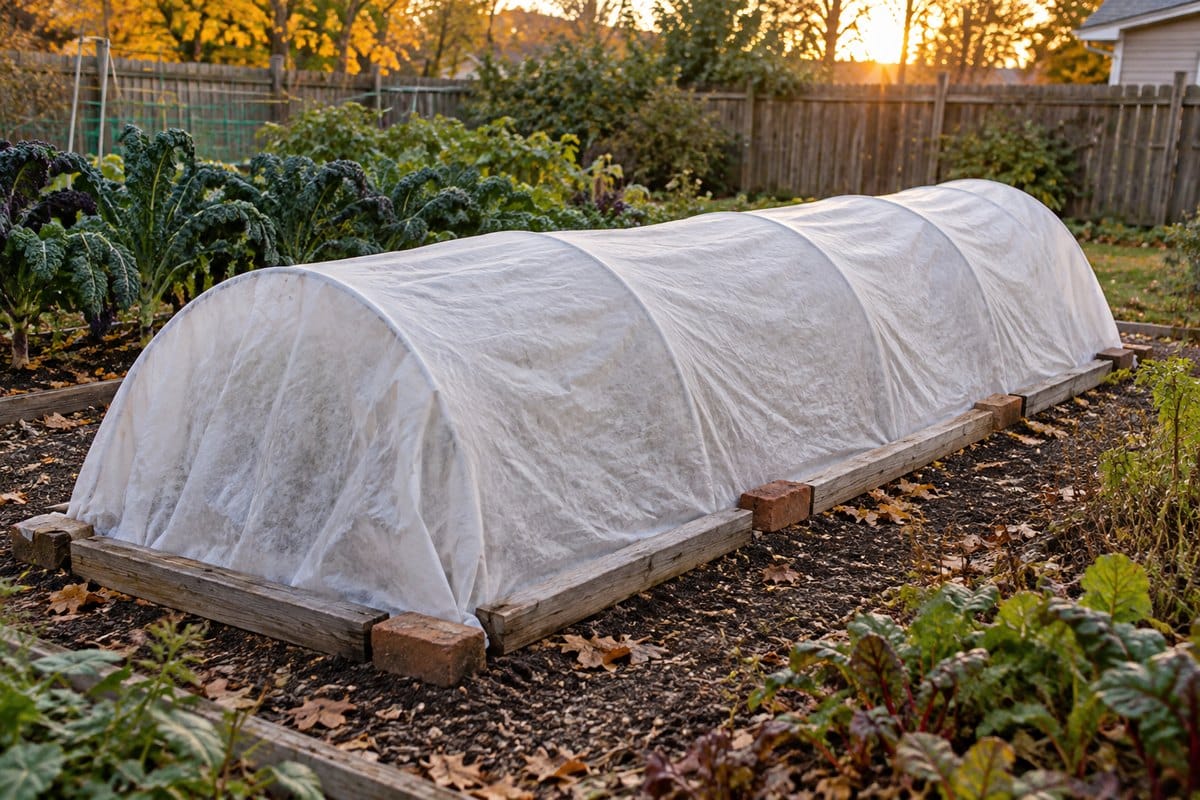
The last light slips across the vegetable bed, catching on a pepper you meant to pick yesterday. A folded sheet waits beside the back door, and tonight’s forecast looks colder than the garden feels. Before you cover everything, decide what actually needs help.
Learning how to protect plants from frost is mostly about choosing your priorities and fitting a cover properly. In a small garden, that might mean sheltering one bed, carrying two pots inside, and bringing the last useful tomatoes to the kitchen.
Quick Answer
- Start with tender crops and movable pots, not every plant in the yard.
- Cover before sunset, using supports and enough material to reach the ground on every side.
- Weigh down the edges. A wrap around the leaves alone does not capture warmth from the soil.
- Remove sheets and blankets the following day once temperatures rise above freezing. Manage purpose-made row cover according to its grade and the weather.
- Harvest or move plants when a deep or prolonged freeze makes a simple cover an unreliable choice.
Table of Contents
Read the Forecast, Not Just the Calendar
Your average first frost date is a planning tool, not a promise about tonight. Check the local forecast, the expected low, wind, and how long freezing conditions may last. A garden in a mild coastal area needs a different autumn routine from one inland or at higher elevation.
Begin paying attention when predicted lows reach the mid-30s Fahrenheit. Leaves can fall below freezing even when the reported air temperature stays a little above 32°F. Clear, calm nights and a windy cold front are different situations; covers are less dependable when a strong freeze arrives. Iowa State Extension’s frost and freeze guide explains why both temperature and duration matter.
Below about 28°F, simple covers may not provide enough protection for tender plants. That is a reason to choose a backup plan, not a precise cutoff at which every crop behaves the same way.
Keep your decisions small and specific: which bed matters tonight, which pots can move, and what food is already ready to pick? For the larger seasonal picture, our fall vegetable garden guide fits alongside this overnight routine.
Choose Which Plants to Protect First
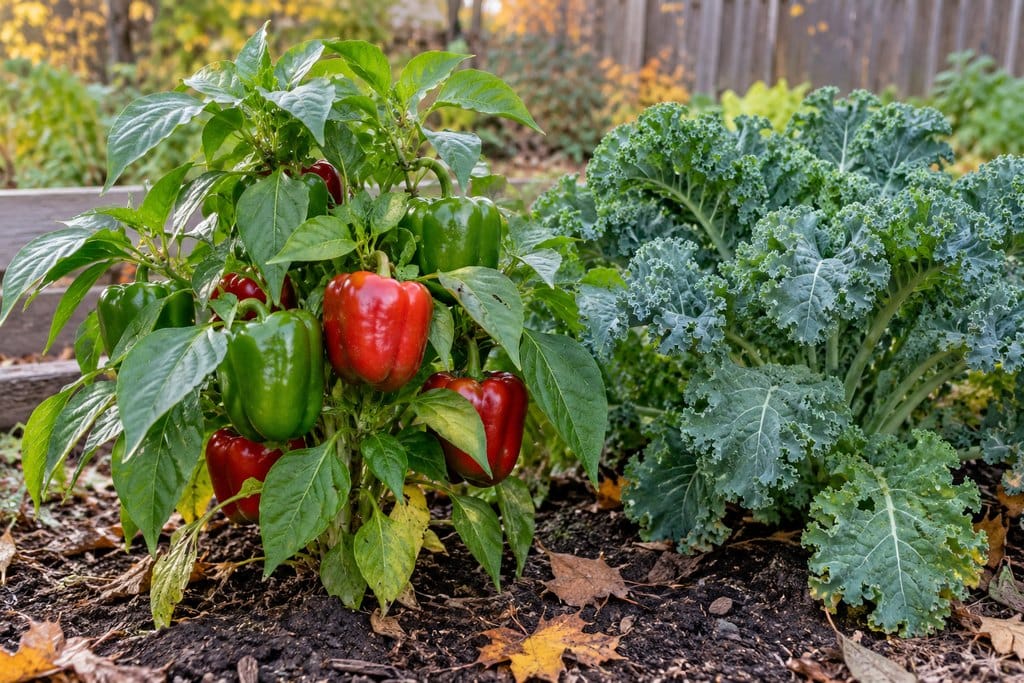
You do not need to give a basil plant and an established kale plant equal space beneath your only cover. Basil and bush beans are frost-sensitive, while kale and cabbage tolerate considerably more cold. Leaf lettuce can survive light frost, but that does not make it equivalent to the hardiest greens. University of Minnesota Extension’s crop hardiness table is useful for sorting these differences.
- Protect or harvest first: tender summer crops with something worthwhile left to pick, and tender herbs you want to keep.
- Assess separately: cool-season vegetables. Match the particular crop and its condition to the forecast rather than assuming all greens have the same tolerance.
- Make a moving list: manageable containers that can spend the night in suitable indoor shelter.
For a beginner, the most useful question may be: “What am I trying to save?” A few nearly ready peppers suggest a different amount of effort from a tired plant carrying only tiny new flowers. You can protect less space more carefully when the purpose is clear.
As you learn which crops suit your garden, the beginner vegetable guide can help you keep the next season manageable, too.
Choose a Cover You Can Manage
Look for enough width to cover both the plants and the space around them. Measure with the supports in place; material that reaches across an empty bed may fall short once it has to pass over tall foliage.
| Material | Useful Role | Important Limit |
|---|---|---|
| Purpose-made frost cloth or row cover | A reusable cover for beds and low tunnels | Protection and light transmission vary by grade. Thin insect netting is not interchangeable with frost fabric. |
| Dry bedsheet or light blanket | An overnight fallback for a small area | Support its weight and remove it during the day. Wet fabric can make protection worse. |
| Plastic sheeting | A cover for a properly framed, actively managed structure | Keep it off foliage and ventilate or remove it promptly in daylight. It can overheat. |
For the details behind these choices, see Colorado State Extension on temporary fabric covers, UGA Extension on row-cover grades, and UF/IFAS on plastic contact and overheating. None is a guarantee against any temperature.
For a first small-bed setup, breathable frost cloth on hoops is an easier routine to manage than an improvised plastic enclosure. Whatever you choose, lay it out in daylight once before you need it.
Cover the Bed Before Nightfall
A cover helps conserve heat already held by the ground. It is not a heater. University of Georgia Extension’s freeze-protection guidance recommends covering before sundown and notes that cool, cloudy preceding weather reduces the heat available to capture. UF/IFAS also explains the value of moist soil, while warning against prolonged saturation.
- Check soil moisture. If the bed is dry, water the soil during the day as needed. Do not turn an already damp bed into a waterlogged one. This is ordinary soil watering, not a recommendation to run sprinklers over plants through a freeze.
- Set supports. Use stable hoops or stakes to keep a heavy sheet from bending stems. Check for sharp points that could tear your cover.
- Spread the material before sunset. Allow enough slack to pass over the plants without pulling the edges up.
- Close the bottom. Bring the cover to ground level on all sides and hold the hem down with boards, bricks, or other suitable weights. Check the ends, not just the long sides.
- Plan the morning opening. Leave yourself a clear path to reach the weights and remove the cover without stepping into the bed.
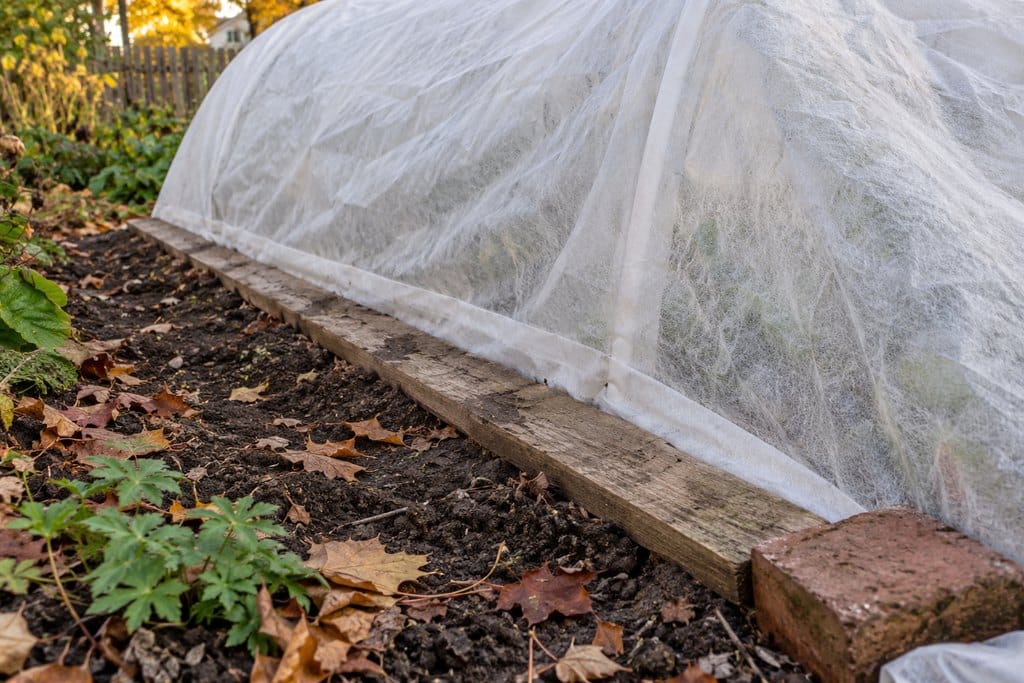
Think of a small shelter over the bed, not a scarf tied around a plant. UGA Extension’s home-garden guidance emphasizes ground contact around the cover and supports that prevent branch damage.
Before going inside, walk around the setup once. Look for a lifted corner, a stem caught beneath a weight, or fabric stretched tight enough to pull loose. Set a morning reminder while the job is still fresh in your mind.
Move Tender Pots Into Suitable Shelter
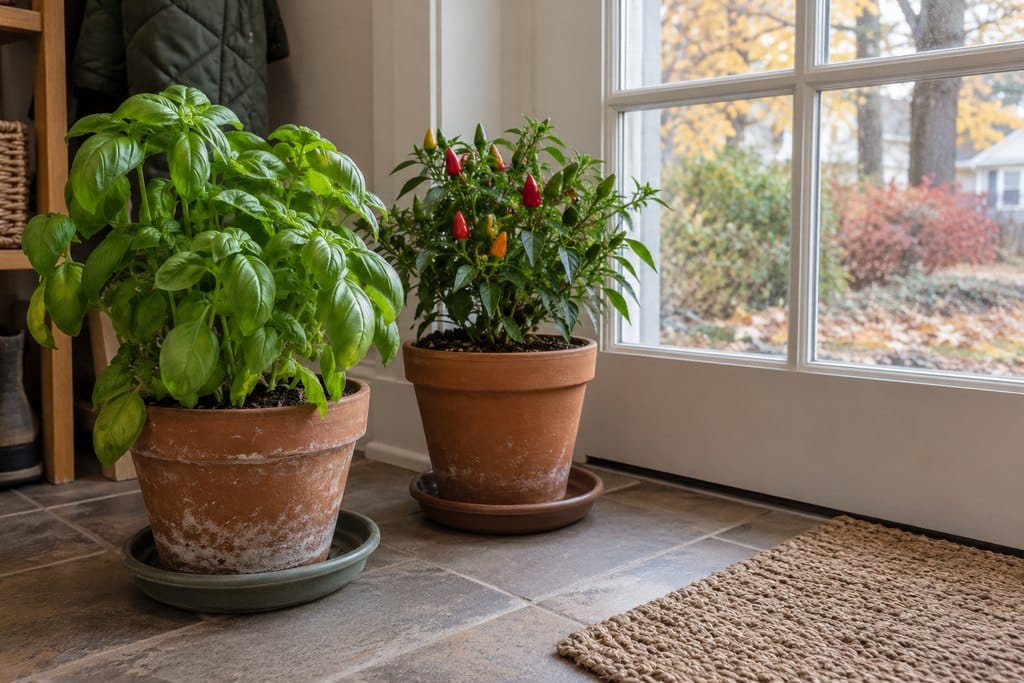
Container roots have less insulation than roots in the ground. Moving a manageable tender plant into a house, garage, or other protective structure can be more practical than covering it outdoors, as the UGA guide explains.
Check the actual temperature of the space. An unheated shed is not automatically frost-free, and tropical plants may need more warmth than simply staying above freezing. Choose conditions appropriate to the plant.
Clear a place for the pots before carrying them in, use trays to protect the floor, and keep doorways passable. One night’s shelter is a different project from keeping a plant indoors all winter, which also calls for suitable light and ongoing care.
If containers are central to your garden, our guide to growing vegetables in a planter covers the everyday setup around this seasonal task.
Return to the Garden in the Morning
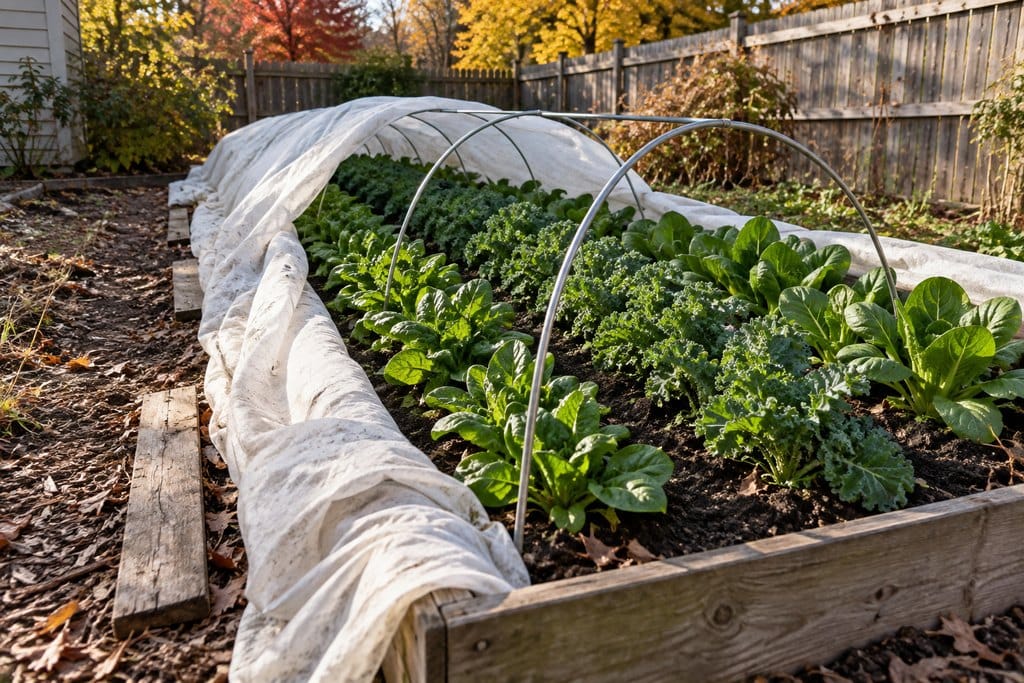
Remove temporary sheets and blankets once temperatures rise above freezing so the bed can receive daylight and warm again. Do not leave a plastic enclosure shut in sunshine. Purpose-made row cover may remain longer, depending on its light transmission, the crop, and conditions; flowering crops that need insects also need pollinator access. These distinctions are covered in Colorado State’s row-cover guidance.
Fold and store temporary fabric when dry, and keep its weights together. Check the next night’s forecast before packing everything away. A small, repeatable routine is easier to maintain than rebuilding a complicated shelter each evening.
Know When Harvesting Makes More Sense
If the coming weather exceeds what your cover can reasonably handle, collecting the usable crop is a sensible finish. You do not have to keep every summer plant growing to make the season worthwhile.
Tomatoes are one useful example. University of Minnesota Extension recommends bringing fruit inside before frost and distinguishes mature green fruit from truly immature tomatoes. Full-sized fruit beginning to lose its deep green color has a better chance of ripening indoors than tiny, undeveloped fruit.
Our guide to ripening green tomatoes indoors walks through that next step. Bring a shallow container out with your cover supplies so harvesting remains part of the decision, not an afterthought.
Common Frost Protection Questions
At What Temperature Should I Cover Plants?
For frost-sensitive plants, start preparing when forecast lows approach the mid-30s F. Use the local forecast and the crop’s needs, not 32°F as a universal safe-or-unsafe switch.
Can I Use an Old Bedsheet?
Yes, as a dry, supported overnight cover that reaches the ground. Remove it during the day. If rain is likely, a sheet is a less dependable choice because wet fabric loses its usefulness.
Will One Cover Keep Summer Vegetables Growing All Winter?
Do not plan on it. A temporary frost cover is a short-term measure, not a heated greenhouse. Choose crops and season-extension methods suited to your local winter.
On a cold evening, a smaller, well-fitted cover and a basket of picked vegetables can be enough. Start with the plants that matter most, and leave yourself an easy job for morning.