How to Can Whole Tomatoes (Raw Pack and Hot Pack)
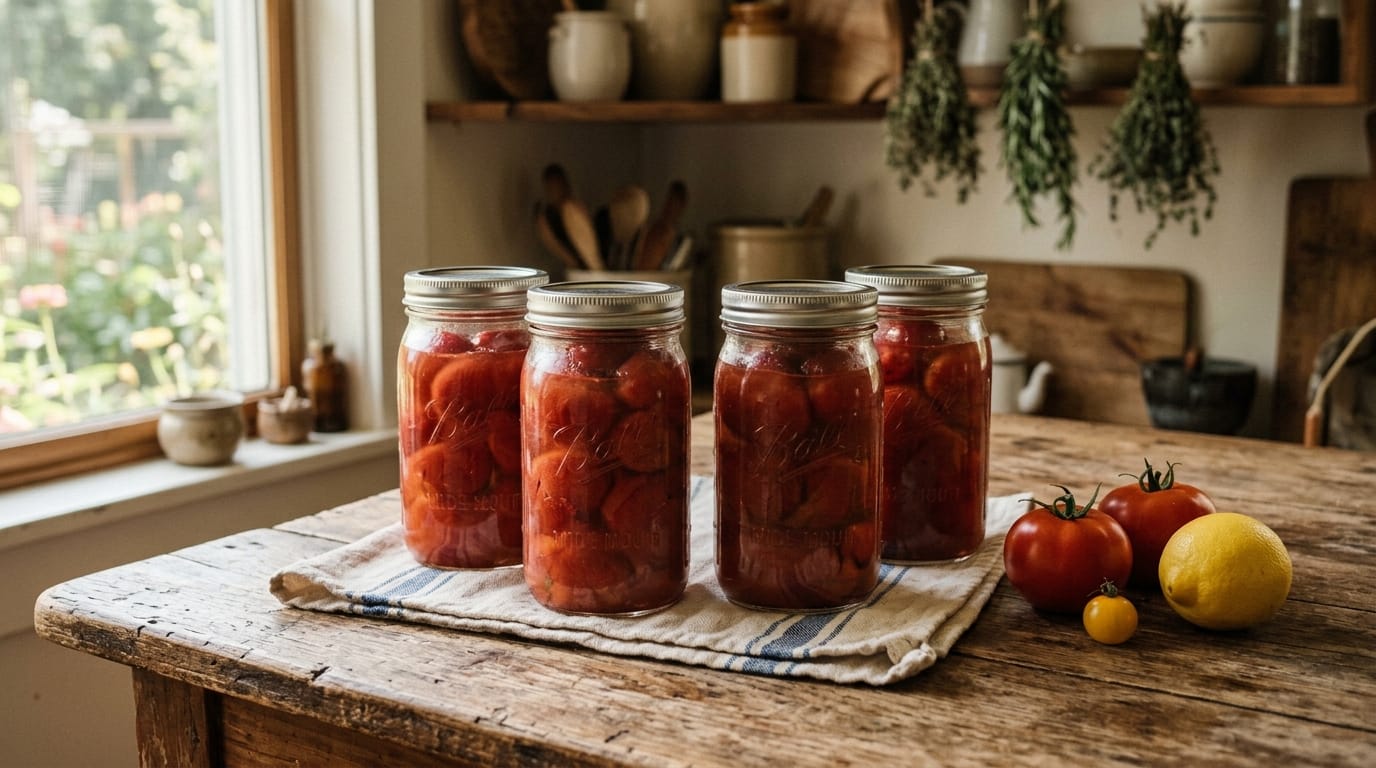
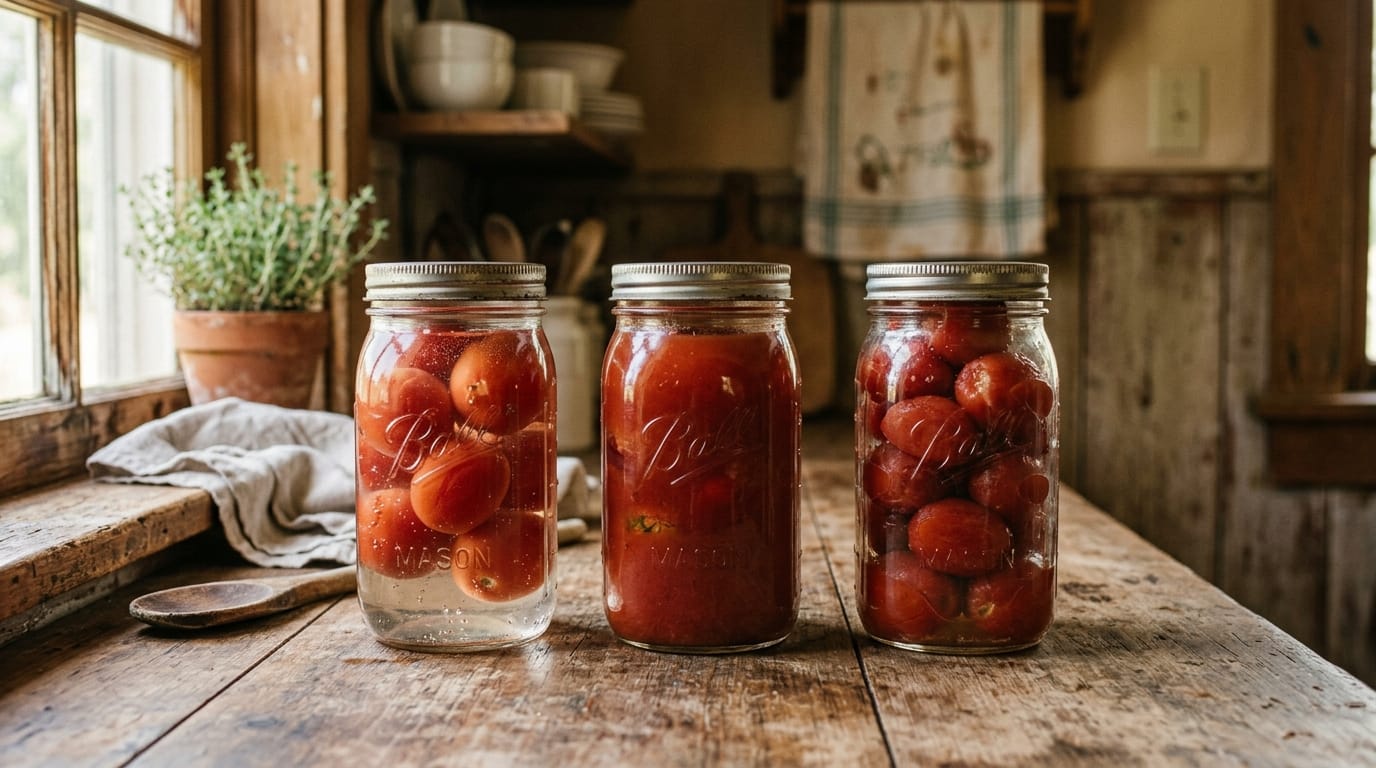
The first quarts of whole tomatoes I put up came out of the canner looking wrong. Each jar had two inches of clear liquid sitting at the bottom and a raft of tomatoes crowded up under the lid, as though the fruit had climbed away from the water.
Nothing was wrong with them. The lids had sealed, the tomatoes tasted like August, and we ate them all winter. What had happened was simply that raw tomatoes shrink when they finally get hot, and I had packed mine into water instead of packing them into themselves.
Learning how to can whole tomatoes is the most forgiving tomato project there is. You do not need a pressure canner, a food mill, or a whole free weekend. What trips beginners up is not the steps. It is that there are three different ways to fill the jar, each one has its own processing time, and the gap between the shortest and the longest is 45 minutes. This guide walks through all three packs, the acid every jar needs, the raw pack and hot pack steps, processing times by altitude, and what to do when the jars come out looking odd.
Table of Contents
The Short Answer
- Peel the tomatoes. Boiling water for 30 to 60 seconds until the skins split, then cold water, then the skins slip off.
- Acid goes in every jar, regardless of how ripe or tangy the tomatoes taste: 1 tablespoon of bottled lemon juice per pint, 2 tablespoons per quart.
- Leave 1/2 inch of headspace for every pack.
- Packed in water, process pints for 40 minutes and quarts for 45 minutes in a boiling water canner at up to 1,000 feet.
- Packed in tomato juice or packed raw in their own juice, process pints and quarts for 85 minutes. The denser pack heats more slowly, so it needs the longer time.
- Expect some floating and some liquid loss. Neither one means the jar is unsafe.
Three Ways to Pack a Jar of Whole Tomatoes
Whole or halved tomatoes have three tested packs, and the only real decision you have to make is which liquid ends up in the jar with them. That choice sets your processing time before you have peeled a single tomato, so it is worth making on purpose rather than by accident.
| Pack | What fills the jar | Boiling water canner, 0 to 1,000 ft | Best for |
|---|---|---|---|
| Packed in water | Hot or raw tomatoes covered with boiling water | 40 min pints, 45 min quarts | The fastest canning day and the mildest flavor |
| Packed in tomato juice | Tomatoes covered with hot tomato juice | 85 min pints and quarts | A richer jar you will later turn into sauce or soup |
| Raw packed, no added liquid | Raw tomatoes pressed until their own juice fills the gaps | 85 min pints and quarts | The most tomato per jar, and nothing to buy or heat |
Those times come from the National Center for Home Food Preservation, which publishes each pack as a separate tested procedure: whole or halved tomatoes packed in water and packed raw without added liquid.
The reason the water pack finishes so much faster is straightforward. A jar of tomatoes floating in water heats through quickly. A jar packed tight with fruit and thick juice heats slowly toward the center, so the tested time has to be long enough for the coldest spot in the jar. You cannot borrow the 45 minute time for a denser pack because the two jars were never the same problem.
If your goal is jars of tomatoes to open in January and cook down, the water pack is the easy pick. If you want the liquid in the jar to be worth keeping, pack in juice and plan for the longer processing time.
Equipment
What You Need
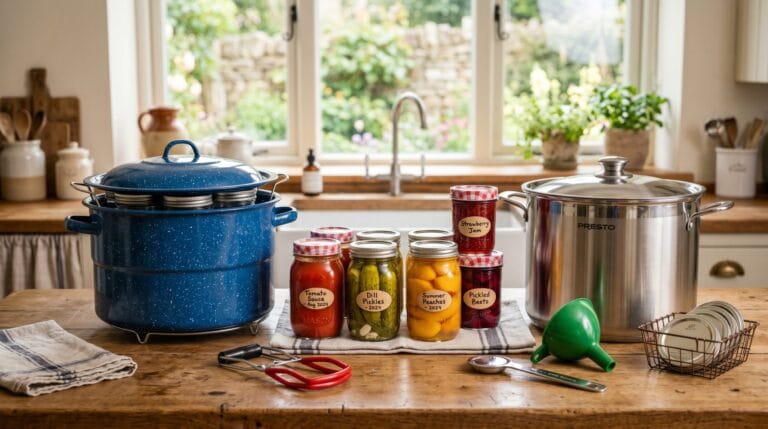
- A canning tools kit that includes a rack. The rack is the part that matters. It keeps jars off the bottom of the pot, which means a deep stockpot you already own can do the job of a canner. The kit also has the jar lifter, funnel, magnetic lid lifter and headspace tool.
- An 18-piece canning tools kit. Tongs, jar wrench, magnetic lid lifter, funnel, bubble tool and labels. No rack in this one, so pick it if you already own a canner.
- Jars, lids and bands. Buy these locally. They are heavy, inexpensive and stocked by most hardware and grocery stores, so shipping them rarely makes sense. Lids are single-use for sealing. Jars and bands last until a rim chips or a band rusts.
- Bottled lemon juice or citric acid. Grocery store shelf, a few dollars, and the single most important thing on this list.
- A big bowl of ice water. Free, and it is what makes peeling fast.
Some links above are affiliate links. If you buy through them we earn a small commission at no extra cost to you, and it does not change what we recommend. As an Amazon Associate, we earn from qualifying purchases.
Choosing Tomatoes That Stay Whole
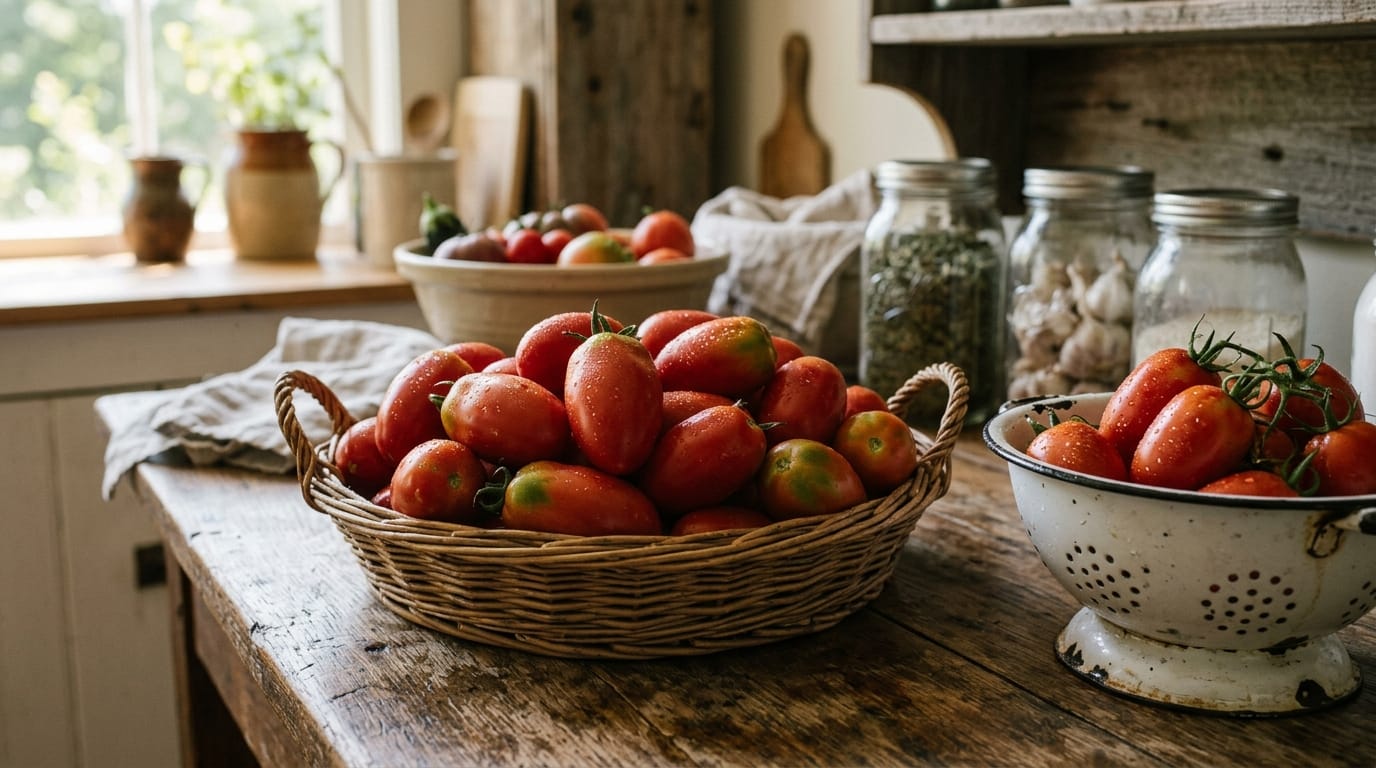
Paste types such as Roma and San Marzano hold their shape best. They have thicker walls, less gel and fewer seeds, so a halved Roma still looks like a tomato after 45 minutes in a canner. Slicing tomatoes work too, they just slump more and give up more liquid.
Pick firm, vine-ripened, disease-free fruit and can it as soon after picking as you can manage. Two rules matter more than variety. NCHFP is direct about the first one: do not can tomatoes from dead or frost-killed vines. The acidity of that fruit is unpredictable, which is exactly the thing the whole process depends on.
The second is a pleasant surprise. Green tomatoes are more acidic than ripe ones, not less, so they can be canned safely with the same procedures. The end-of-season bucket of green fruit is not a lost cause.
For planning, an average of 21 lb of tomatoes fills a canner load of 7 quarts, and 13 lb fills a load of 9 pints. That is roughly 3 lb per quart. A bushel weighs 53 lb and yields 15 to 21 quarts, which is a useful number when someone offers you a bushel and you have to guess how many jars to wash.
Peeling Tomatoes Takes About a Minute a Batch
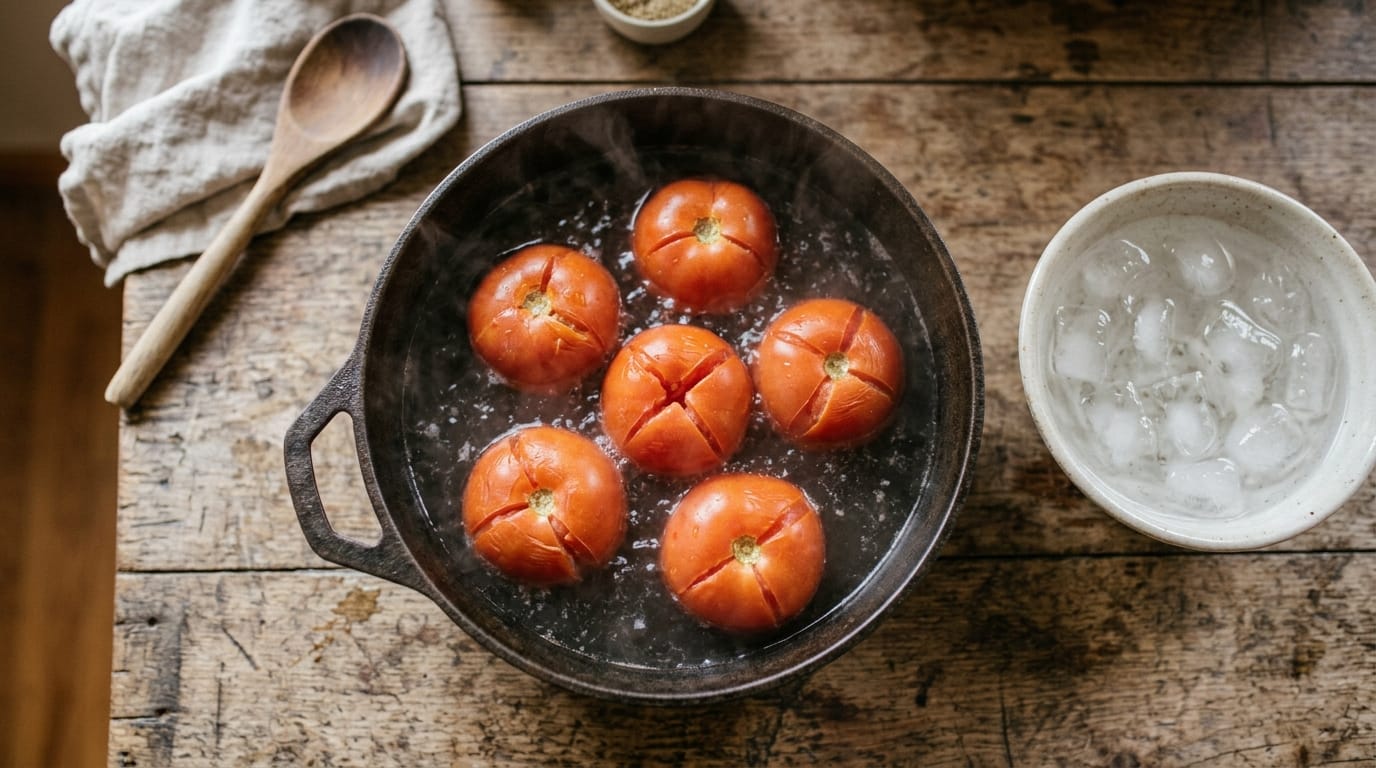
Skins do not soften in the jar. They curl into tough little scrolls that float around the tomatoes, which is why every tested whole-tomato procedure starts with peeling. The good news is that it takes about a minute per batch and no special equipment.
- Wash the tomatoes and get a pot of water boiling and a bowl of ice water ready beside it.
- Drop tomatoes into the boiling water for 30 to 60 seconds, or until the skins split.
- Move them straight into the cold water. The temperature change is what loosens the skin.
- Slip the skins off with your fingers, cut out the core, and leave the tomatoes whole or cut them in half.
Work in batches of five or six so the boiling water does not lose its heat. If a skin does not slip, that tomato needed a few more seconds, not a knife. Send it back.
Acid Goes in Every Jar, Before the Tomatoes
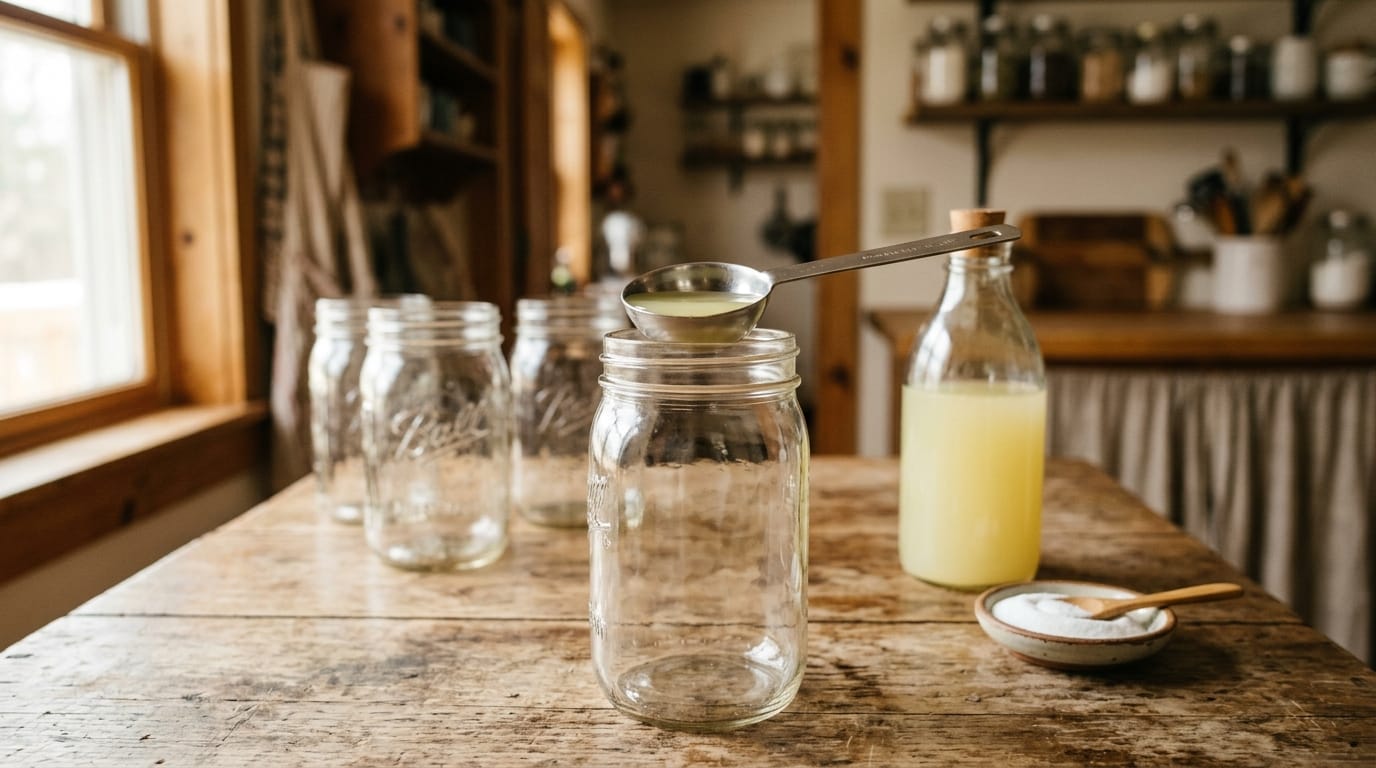
Penn State Extension describes tomatoes as borderline between a high-acid and a low-acid food, and that one sentence explains the whole rule. Some tomatoes land on the safe side of the line and some do not, and there is no way to tell by taste, color or variety. Adding a measured acid to every jar moves all of them to the same side.
Add it to the empty jar first, then fill with tomatoes. It is far easier to keep track of which jars got their acid when you are looking at a row of empty ones.
| Acid | Per pint | Per quart |
|---|---|---|
| Bottled lemon juice | 1 tablespoon | 2 tablespoons |
| Citric acid | 1/4 teaspoon | 1/2 teaspoon |
| Vinegar, 5% acidity | 2 tablespoons | 4 tablespoons |
Those amounts are the NCHFP acidification directions. Three details are worth holding onto. Use bottled lemon juice, not fresh: bottled juice is standardized, and the acidity of the lemon in your fruit bowl is not. Vinegar works but can change the flavor in a way most people do not enjoy in plain tomatoes. And if the acid taste bothers you, add sugar to balance it rather than reducing the acid.
Salt is different. A teaspoon per quart is flavor only, and you can leave it out with no effect on safety. The same acid logic drives the rules for canning tomato sauce and for canning salsa, where the vegetables in the jar shift the balance further.
Raw Pack, Step by Step
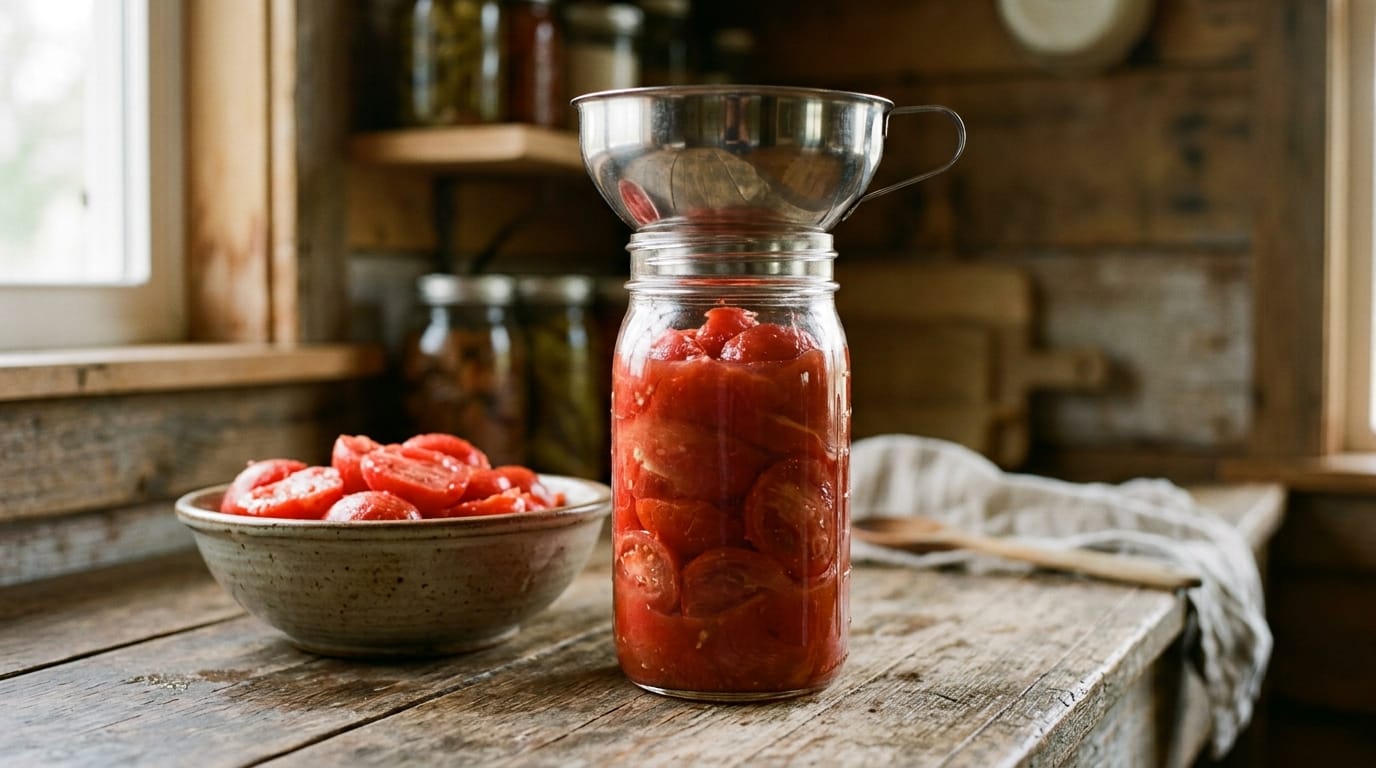
Raw pack means the tomatoes go into the jar cold and do their cooking during processing. It is the faster path on a hot afternoon, and it is the only option if you want tomatoes packed in nothing but their own juice.
- Wash your jars and keep them hot. Sterilizing is not required for a process this long, but clean, hot jars are less likely to crack when you fill them.
- Add the bottled lemon juice or citric acid to each empty jar, plus 1 teaspoon of salt per quart if you want it.
- Fill the jars with peeled raw tomatoes, whole or halved.
- For the own-juice pack, press the tomatoes down in the jar until their juice rises and fills the spaces between them. Leave 1/2 inch of headspace.
- For the water pack, cover the tomatoes with boiling water instead, leaving 1/2 inch of headspace.
- Run a plastic spatula around the inside of the jar to release trapped air, then re-check the headspace.
- Wipe the rims with a clean damp cloth, set the lids on, and tighten the bands to fingertip tight.
Pressing the tomatoes down feels wrong the first time. Push anyway. Air pockets are what turn into that inch of empty space at the top of the finished jar.
Hot Pack, Step by Step
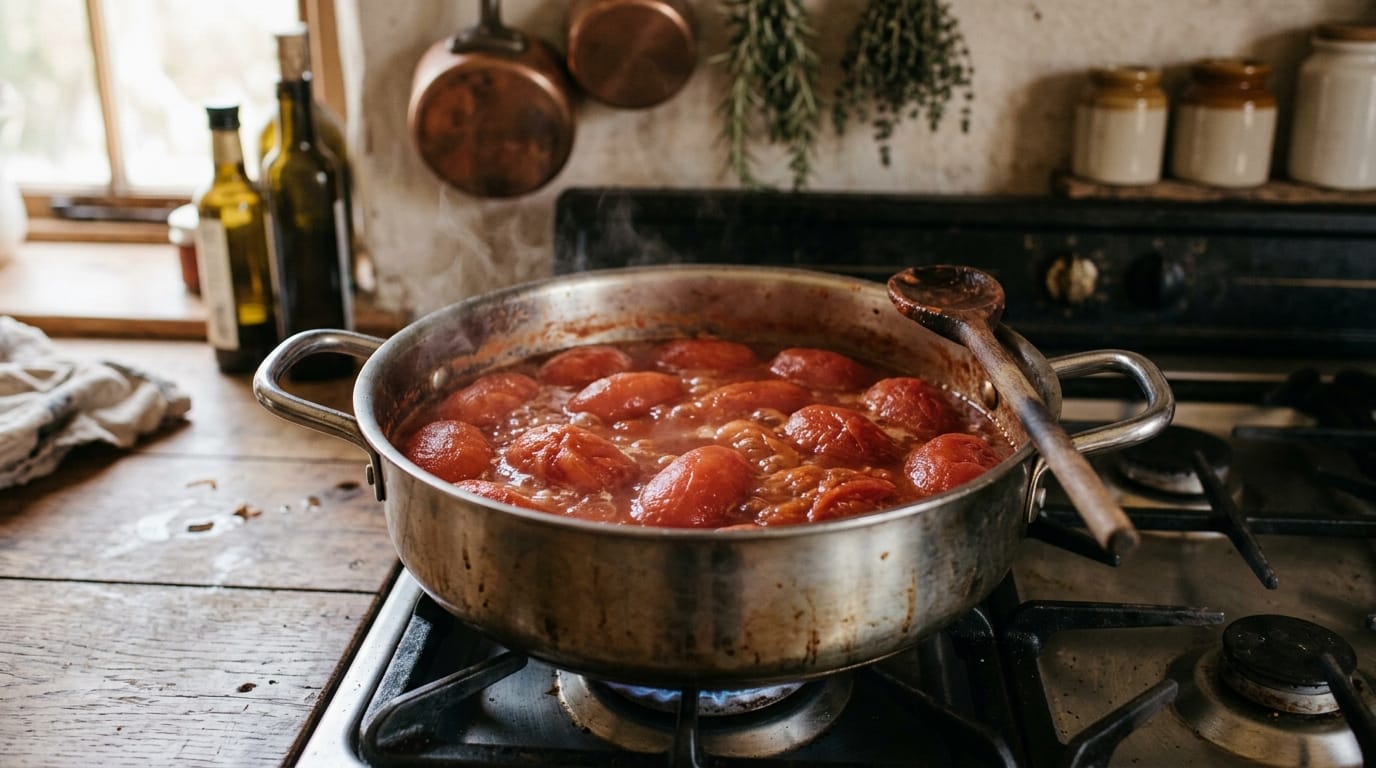
Hot pack means the tomatoes are boiled briefly before they go into the jar. It costs you one extra pot and about ten minutes, and it buys you two things: jars that pack fuller, and noticeably less floating.
- Put the peeled tomatoes in a large saucepan and add enough water, or enough tomato juice, to cover them completely.
- Boil them gently for 5 minutes. They will slump, and that is the point.
- Add the acid and optional salt to each hot, empty jar.
- Fill the jars with the hot tomatoes, leaving 1/2 inch of headspace.
- Ladle in the hot cooking liquid to cover the tomatoes, still leaving 1/2 inch of headspace.
- Release air bubbles, wipe the rims, and apply lids fingertip tight.
If you are packing in tomato juice, heat the juice in its own saucepan rather than boiling the tomatoes in it, unless you want the softer texture that comes from cooking them together. Both versions are tested. They just produce different jars.
Processing Times by Altitude
Water boils cooler as you climb, so higher elevations need longer processing. Find your elevation once, write it on a card, and tape it inside a cupboard door. Guessing is the one place in this process where being approximately right is not good enough.
| Pack and jar size | 0 to 1,000 ft | 1,001 to 3,000 ft | 3,001 to 6,000 ft | Above 6,000 ft |
|---|---|---|---|---|
| Packed in water, pints | 40 min | 45 min | 50 min | 55 min |
| Packed in water, quarts | 45 min | 50 min | 55 min | 60 min |
| Packed in tomato juice, pints or quarts | 85 min | 90 min | 95 min | 100 min |
| Raw, no added liquid, pints or quarts | 85 min | 90 min | 95 min | 100 min |
Jars need 1 to 2 inches of water over the tops for the whole time, and the clock starts when the water returns to a full boil, not when the jars go in. If you are shopping for the pot itself, our comparison of water-bath canners for beginners covers what actually matters at this size.
A pressure canner is an option for every one of these packs, and it is much faster. Water-packed whole tomatoes process for 15 minutes, and the juice-packed and own-juice packs process for 40 minutes, at 6 lb in a dial-gauge canner up to 2,000 feet. One thing does not change: the acid is still required. The pressure times were calculated for acidified tomatoes, not for tomatoes on their own. If you are weighing the two machines, we compared pressure canners for beginners separately.
Floating Tomatoes, Lost Liquid, and Other Things That Look Wrong
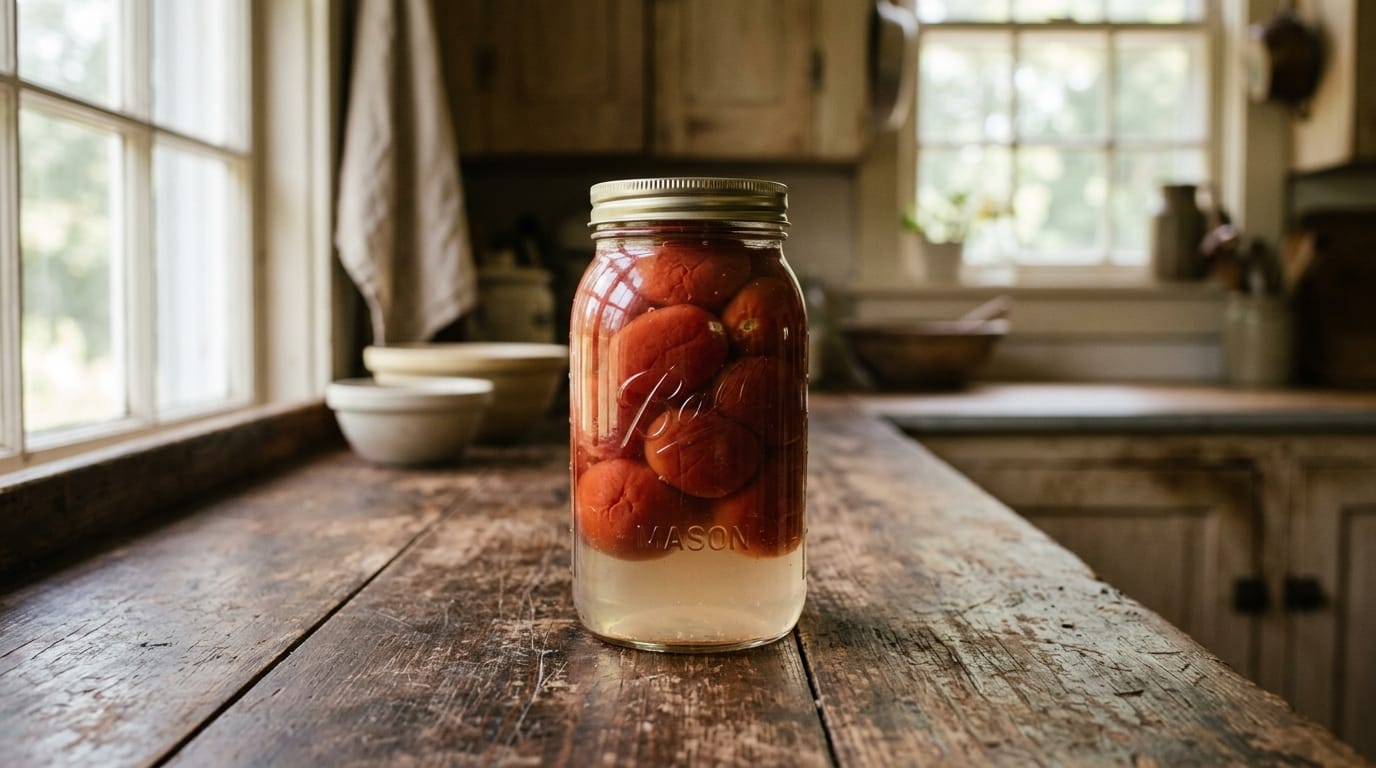
This is the section most beginner guides skip, and it is the one you will actually reach for the morning after your first canning day.
Tomatoes Floating Above the Liquid
Raw fruit is full of air. When it heats, the air escapes and the tomato shrinks, so what was a full jar becomes fruit riding above a layer of liquid. NCHFP’s own fix for floating is to use firm ripe fruit and heat it before packing, which is the hot pack. Raw packs float. It is cosmetic, not a safety problem.
Liquid Missing From the Jar After Processing
Losing liquid during processing is called siphoning, and NCHFP is blunt about the response: do not open the jar to replace it, and it is not a sign of spoilage. The usual causes are jars packed too tightly, air bubbles that were never released, water that did not cover the jars, bands screwed down too hard, or a canner whose temperature swung during the process. Fix those next time. This time, if the lid sealed, store the jar and use it first.
The Tomatoes at the Top Have Darkened
Air left in the jar oxidizes whatever it touches, so fruit sitting above the liquid line goes dull or brown at the top. Sealed jars with darkened tops are safe. Better bubble removal and correct headspace prevent it.
What Actually Means Throw It Out
An unsealed lid found more than 24 hours later. A bulging lid. Spurting liquid, an off smell, mold, or anything fizzing. Do not taste a jar to find out. Dispose of it without sampling, the same rule that applies to every other project on the home preservation shelf.
Canning Stewed Tomatoes and Tomatoes With Vegetables
This is where a lot of beginner canning days go sideways, because stewed tomatoes are the version most people grew up eating. The honest answer is more useful than a recipe.
Classic stewed tomatoes contain celery, onion and green pepper. Those are low-acid vegetables, and adding them to a jar changes the acidity of the whole thing. There is no tested boiling-water procedure for that mixture in the USDA and NCHFP recipe set. Penn State Extension’s guidance is the practical one: can the tomatoes plain, and add the ingredients that make stewed tomatoes when you are ready to serve them. A quart of plain tomatoes plus fifteen minutes with an onion on the stove is the same dinner, with none of the risk.
If you want vegetables in the jar itself, there is one tested option: tomatoes with okra or zucchini, about 3 lb of tomatoes to 1 lb of the vegetable. It is pressure canner only, 30 minutes for pints and 35 minutes for quarts at 11 lb in a dial-gauge canner up to 2,000 feet. There is no water-bath version of it, and that is the whole point: once the low-acid vegetables go in, boiling water is no longer hot enough.
Checking Seals and Storing the Jars
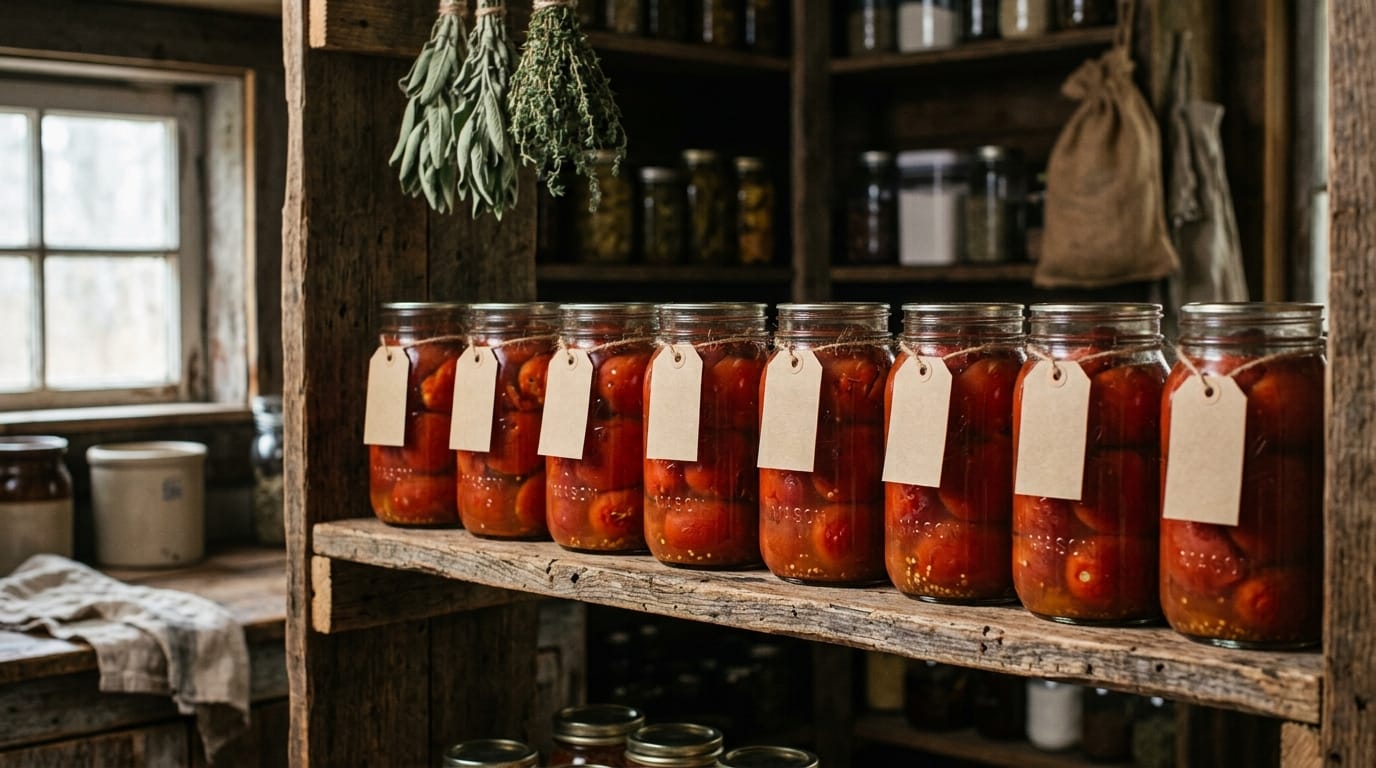
Let the jars sit undisturbed for 12 to 24 hours, then take the bands off before you test anything. NCHFP gives three checks: press the center of the lid and watch for spring-back, tap it with the bottom of a teaspoon and listen for a ring rather than a dull thud, and look across the lid at eye level to confirm it curves down slightly in the center.
Wash the outside of each sealed jar, because syrup and tomato residue on the glass feeds mold during storage. Label and date every jar. Store them without the bands, which keeps the jars dry and means a failed seal announces itself instead of hiding under a ring of metal.
Keep them somewhere clean, cool, dark and dry, ideally between 50 and 70 F, and never above 95 F or next to a furnace or hot pipe. Plan to use them within a year. Tomatoes canned this season stay safe well past that if the seal holds, but the color and flavor drift, and a jar of August tomatoes eaten in March is the whole reason you did this.
Putting up more than tomatoes this season?
The Beginner’s Canning eBook covers water-bath canning end to end: altitude and headspace charts, the acidity rules that decide what is safe, and step-by-step walkthroughs for a first season. The Canning Starter Bundle adds both Quick Kits for jar prep and fermenting.
The Free Garden Starter Pack
Five printable pages that take the guesswork out of a first season, plus a short email every week or two when something is worth planting, picking, or putting up.
- A garden planning worksheet you can actually fill in
- A seed-starting and planting calendar
- A harvest log to track what really produced
No spam, ever. Unsubscribe in one click.
Thank you. You are on the list.
Your Garden Starter Pack is ready right now. Grab it here:
Download the pack (PDF)Keep an eye on your inbox. The next seasonal guide lands there first.
Frequently Asked Questions About Canning Whole Tomatoes
Do I really have to add lemon juice if my tomatoes taste acidic?
Yes. Taste is not a measure of pH, and modern tomato varieties vary enough that the safety rules treat all of them as borderline. The measured acid is what makes the boiling-water process valid, and it is required even if you choose the pressure canner option instead.
Can I can whole tomatoes without a canner?
You can use a deep stockpot as long as it holds a rack that keeps the jars off the bottom and lets water cover them by 1 to 2 inches for the full time. What you cannot do is set jars directly on the base of a pot, or process in an oven, dishwasher or microwave. None of those reach or hold the right temperature.
Why do my canned tomatoes float?
Raw tomatoes shrink as the air cooks out of them, so a raw-packed jar almost always ends up with fruit above the liquid. Hot packing, which means boiling the tomatoes gently for 5 minutes first, is the fix. Floating alone does not affect safety.
Do I have to peel the tomatoes?
For the tested whole and halved tomato procedures, yes. Every one of them starts with peeled fruit, and the processing times were developed on that basis. Skins also toughen in the jar and separate from the flesh, so leaving them on costs you texture as well.
Can I use a pressure canner instead of a boiling water canner?
Yes, and it saves a lot of time. Water-packed whole tomatoes take 15 minutes and the denser packs take 40 minutes, at 6 lb in a dial-gauge canner up to 2,000 feet. Follow every preparation step exactly as written, including the acid. The pressure options were never developed for un-acidified tomatoes.
How long do home-canned tomatoes last?
Plan on a year for best quality, stored cool and dark. A properly sealed jar kept below 70 F is safe beyond that, but the color fades and the flavor flattens. Can only what you will realistically eat before next summer’s crop comes in.
Before You Start
Decide on your pack before you start peeling. That single choice sets your processing time, tells you whether you need to heat a pot of juice, and is the difference between a canning day that runs 45 minutes at the stove and one that runs 85.
Then let the jars look however they look. Mine still float. The liquid still separates into a clear layer while they cool, and it still settles back when I shake the jar in January. What matters is the row of sealed lids on the counter the next morning, curved down in the middle, waiting for a winter that has not arrived yet.