Canning Applesauce: A Tested Beginner Method
A pot of apples softening on the stove makes the kitchen smell like the season has changed. Canning applesauce turns that short-lived harvest into something useful for a winter breakfast, a packed lunch, or a quick side dish.
For the NCHFP method used here, pack boiling-hot applesauce into hot jars with ½-inch headspace, then process in a boiling-water canner. At elevations up to 1,000 feet, the published times are 15 minutes for pints and 20 minutes for quarts. Higher elevations need the longer times in the table below. Sugar is optional.
This guide follows the National Center for Home Food Preservation’s tested applesauce procedure. It walks you through preparation, the exact water-bath processing table, and the checks to make before a jar goes on the pantry shelf.
Table of Contents
Canning Applesauce: The Short Answer
- Use fresh, sound apples without decay or mold.
- Follow one complete published recipe, including its preparation and any added acid.
- Keep the sauce hot for filling, and measure the space below each jar rim.
- Choose the processing time for both your jar size and elevation.
- Start timing only when the loaded canner reaches a full boil.
- A lid that pops down is not a substitute for correct processing.
Choose Apples You Would Want to Eat Fresh
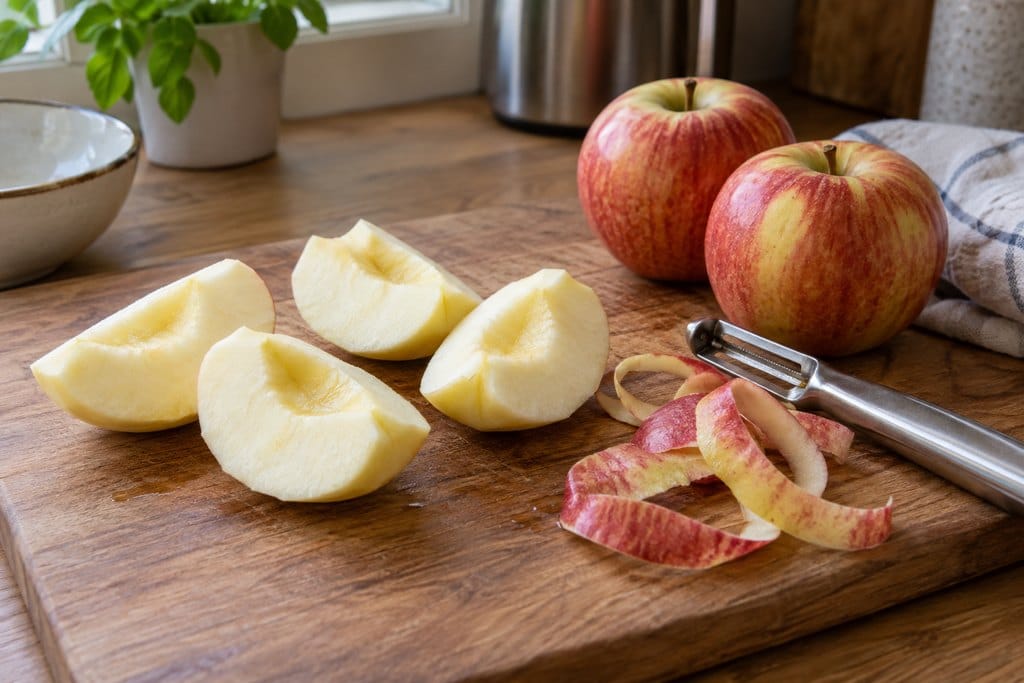
The canning pot is not the place to rescue moldy or decaying fruit. Start with a fresh batch that smells clean and has good flavor. A mixture of sweeter and tarter apples lets you adjust the finished taste without making sugar the main ingredient.
For shopping, NCHFP estimates about 13½ lb of apples for nine pints, or 21 lb for seven quarts. Those are planning averages, not guaranteed yields. Peeling, coring, variety, and the fruit itself affect how much sauce ends up in the jars.
Choose jars around how you eat applesauce. A quart may suit a family meal, while pints are easier when only one or two people want some. You do not need to fill a whole pantry on your first attempt. One manageable canner load gives you enough to learn the routine.
Do You Need Sugar or Lemon Juice?
You may leave the sugar out of the NCHFP applesauce recipe. Sweetening is a taste choice here, not a replacement for processing.
Lemon juice is a recipe-specific question. NCHFP’s published applesauce procedure does not call for it. Its current statement on acid in apple recipes says its recommendations remain unchanged, advises using fresh apples, and suggests refrigerating or freezing apple products when their acidity is in question.
Other authoritative recipes differ. Ball’s applesauce recipe includes bottled lemon juice and specifies its own processing directions. If you choose that recipe, follow it completely. Do not omit its lemon juice because a different source leaves it out, or combine its ingredients with the table in this guide.
Set Up the Canner Before Cooking
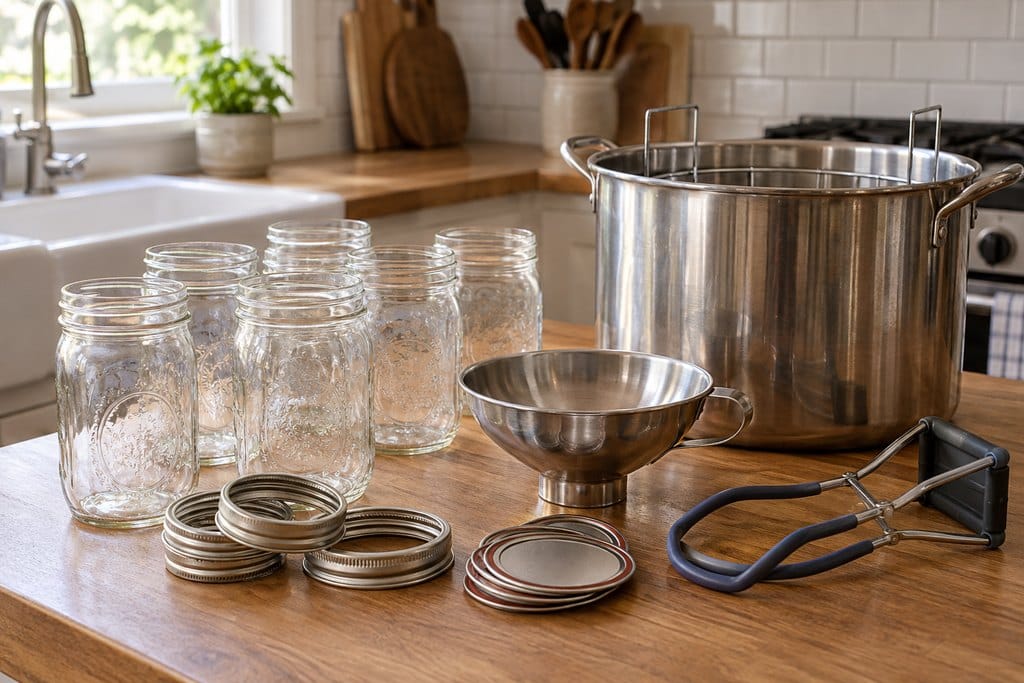
A jar of hot sauce cools while you hunt for the funnel. Set everything out first, clear a landing space for hot jars, and check your elevation before the apples go into the pot.
- A boiling-water canner or suitable deep pot with a lid and canning rack.
- Pint or quart home-canning jars without cracks or chipped rims.
- New flat lids and sound screw bands, prepared according to their manufacturer’s instructions.
- A jar lifter, wide-mouth funnel, ladle, and nonmetallic bubble-removing tool.
- A tool for measuring headspace, plus clean cloths and a towel or rack for cooling jars.
- A large cooking pot, peeler, knife, and sieve or food mill if you want smooth sauce.
- A timer and an elevation reading for the location where you are canning.
Check your stove manufacturer’s canning guidance, especially for a glass cooktop. If you are choosing equipment, our water-bath canner comparison explains the practical differences between setups.
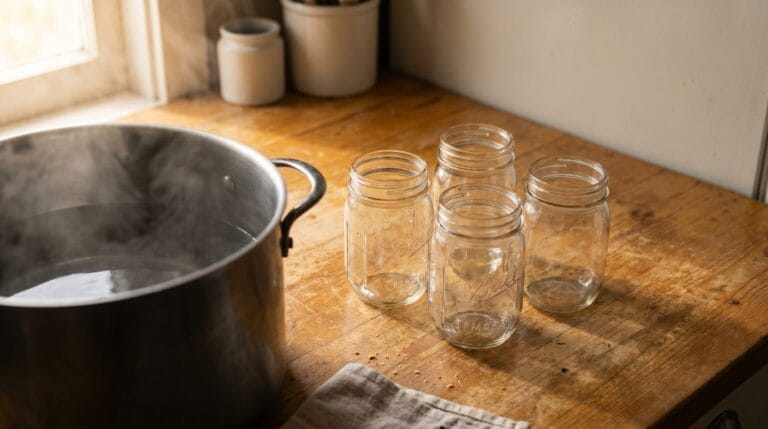
Wash jars well and keep them hot until filling. NCHFP does not require pre-sterilizing empty jars when the filled jars will be processed for 10 minutes or longer. All the times in this article exceed that threshold. Clean and hot still matter; “no separate sterilizing step” does not mean “use an unwashed jar.” Our jar-sterilizing guide explains that distinction.
Cook the Apples and Bring the Sauce Back to a Boil
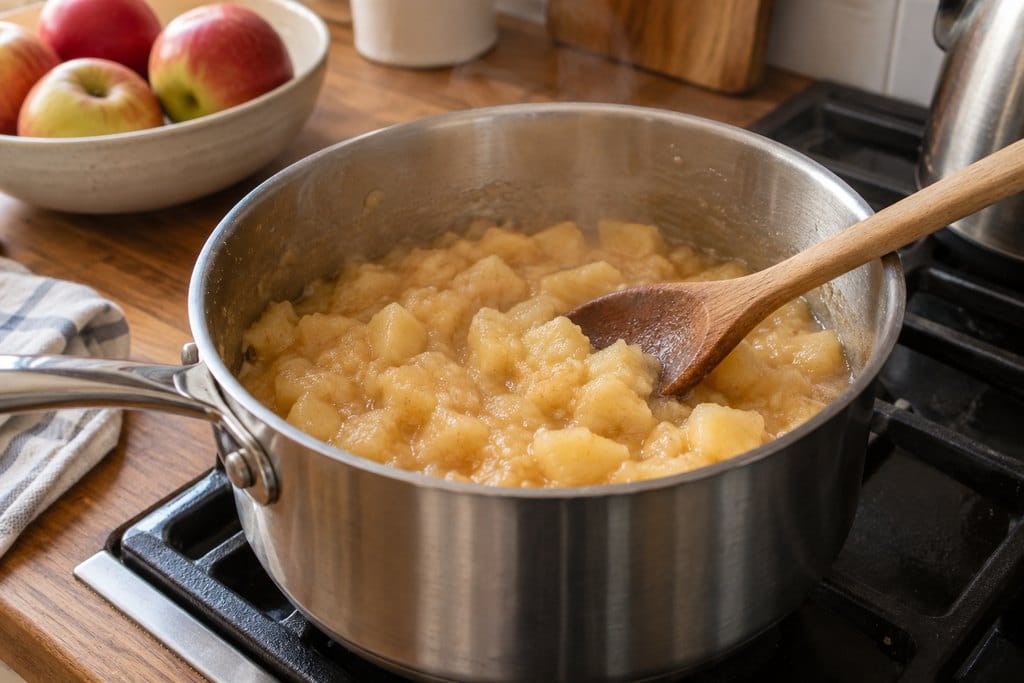
- Wash, peel, core, and slice the apples. An ascorbic-acid pretreatment is optional for limiting browning; follow the product’s directions and drain before cooking.
- Cook until tender. NCHFP specifies an 8- to 10-quart pot with ½ cup water. Heat promptly and stir to prevent scorching. Tenderness may take 5 to 20 minutes depending on the apples. Work in manageable potfuls.
- Choose the texture. Press tender apples through a sieve or food mill for smooth sauce, or omit that step for a chunkier result. Do not reduce the sauce into a thick apple butter.
- Sweeten only if wanted. The source suggests starting with ⅛ cup sugar per quart of sauce and adjusting to taste.
- Return the finished sauce to boiling. Keep it hot while filling the jars.
The reheating step is easy to overlook after you have spent time working the food mill. Penn State’s applesauce troubleshooting guidance explains that pureeing can incorporate air. Heating the sauce again helps drive that air out and reduces the chance of sauce being pushed out during processing.
For the first batch, keep the recipe plain. Add cinnamon, butter, or other serving additions after opening a jar, rather than improvising a new shelf-stable recipe. Write your flavor ideas on the label or a kitchen note if you want to remember them.
Fill the Jars and Process in Boiling Water
Bring the canner water to about 180 F for this hot-packed food. Ladle sauce into hot jars, leaving ½ inch between the top of the sauce and the jar rim. Release trapped bubbles gently, check the headspace again, and wipe the rims clean. Fit lids and tighten bands as their manufacturer directs.
Lower the jars upright onto the rack. Follow UGA’s boiling-water canner instructions: cover jar tops with at least 1 inch of water, or 2 inches for a process longer than 30 minutes. Cover the canner and bring it to a full boil.
Applesauce Water-Bath Processing Times
This is NCHFP’s table for hot-packed applesauce. Find your elevation down the left side, then use the column for your jar size. These are processing minutes after the water boils, not the total time the jars spend in the pot.
| Elevation | Pint Jars | Quart Jars |
|---|---|---|
| 0–1,000 ft | 15 minutes | 20 minutes |
| 1,001–3,000 ft | 20 minutes | 25 minutes |
| 3,001–6,000 ft | 20 minutes | 30 minutes |
| Above 6,000 ft | 25 minutes | 35 minutes |
Keep the water boiling for the entire processing time. If it stops, return it to a full boil and restart the full timer. Add boiling water as needed to maintain coverage. Do not use this table for a different recipe, a larger jar, or a pressure canner.
When processing is complete, turn off the heat, remove the lid carefully, and wait 5 minutes before lifting jars out upright. Set them at least 1 inch apart on a towel or rack, away from a cold draft.
If you have followed our peach-canning guide, the equipment routine will feel familiar. The preparation and processing table still belong to the food in the jar. Canning times are not interchangeable.
Cool, Check the Seals, and Store
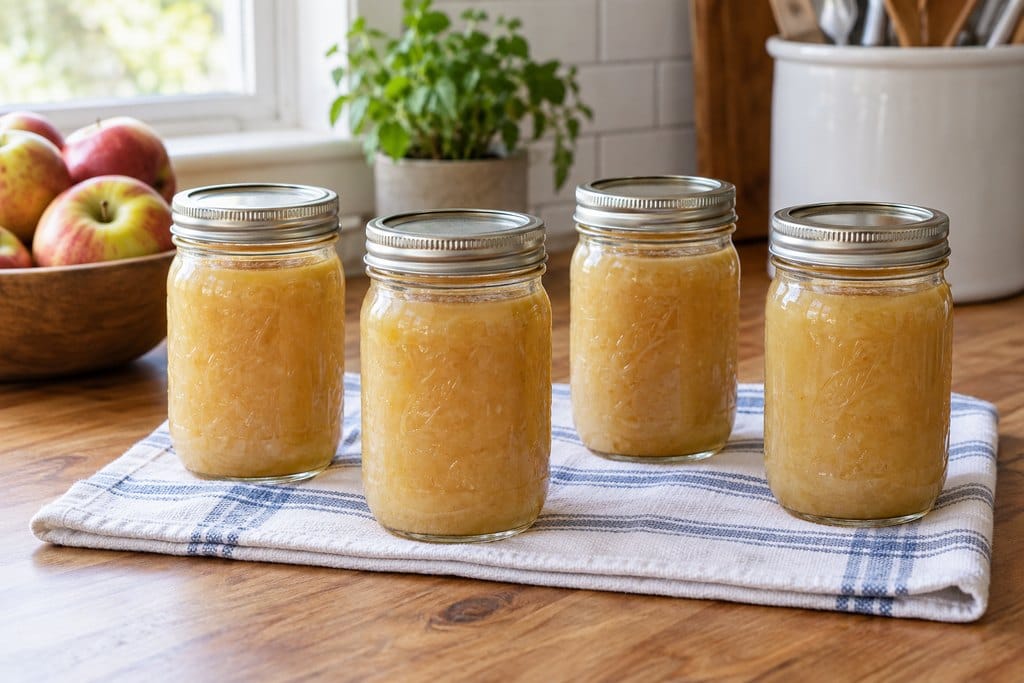
Leave jars undisturbed at room temperature for 12 to 24 hours. Do not retighten bands or press the lid centers while the jars are hot. A quiet counter is all they need; turning jars upside down is not part of this method.
After cooling, remove the screw bands and check each lid. A sealed lid is concave and does not spring up when pressed. The NCHFP cooling and seal-check instructions also cover failed seals. If a correctly processed jar fails to seal, refrigerate it promptly after the cooling period and use it within several days, or follow the full reprocessing instructions within 24 hours. Do not put it on the pantry shelf.
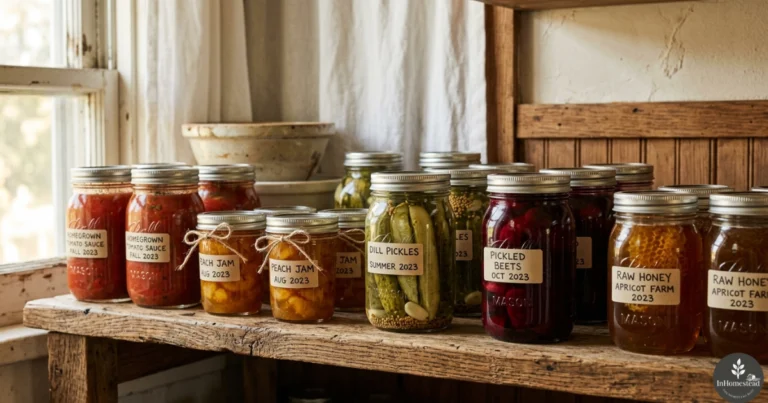
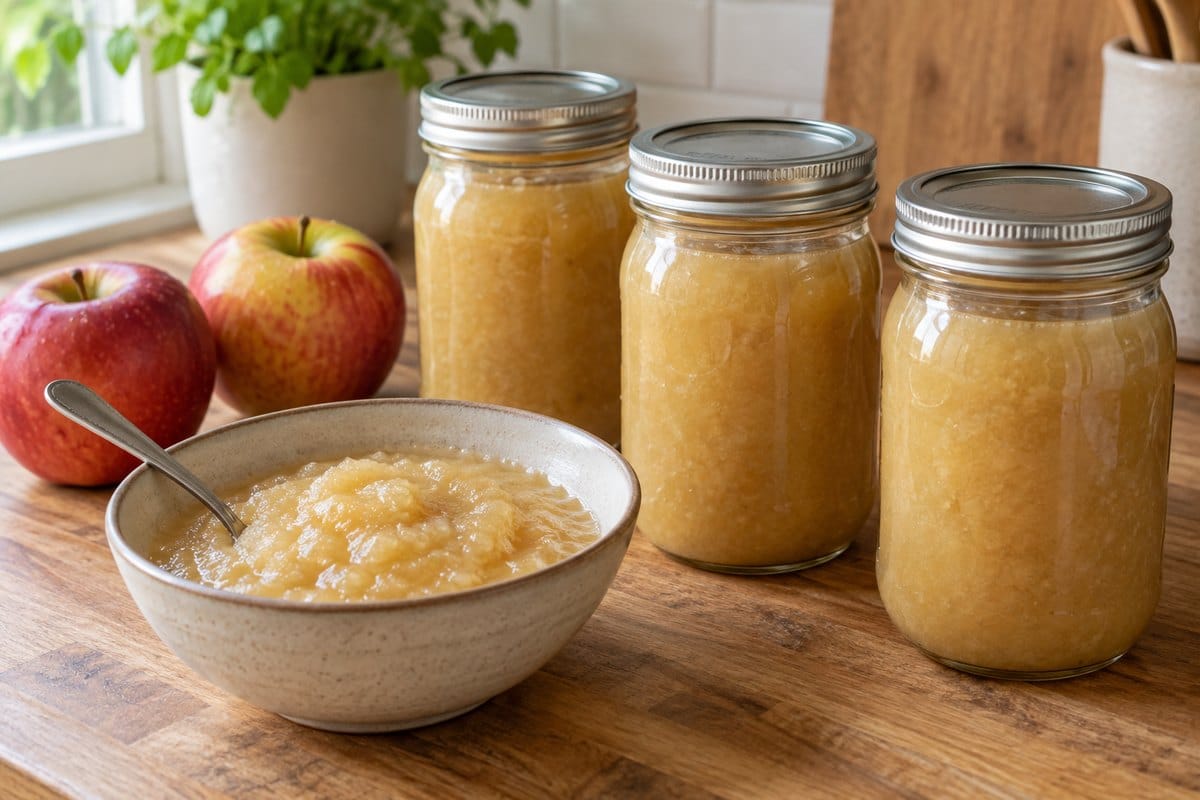
Wipe sealed jars clean, label them with the product and date, and store them without the screw bands. NCHFP recommends a clean, cool, dark, dry storage place, ideally around 50 to 70 F, and using home-canned food within a year for best quality. A shelf beside a hot oven is not a good storage spot.
Refrigerate after opening. Check jars before serving: a loose or bulging lid, leakage, mold, spurting liquid, or an unusual odor means the food should not be eaten. Never taste a suspicious jar to decide whether it is safe, and do not scrape mold off applesauce and use the rest.
Common Problems With Canned Applesauce
Sauce Escaped Under the Lid
This is called siphoning. Reheating after pureeing, removing bubbles, leaving the correct headspace, maintaining a steady boil, and pausing before lifting the jars help reduce it. Penn State notes that very thick sauce is more prone to the problem.
Do not open a cooled jar just to top it up. Assess the seal and processing history. If the process was interrupted, the loss is substantial, or you are unsure what happened, ask your local Extension office before treating it as pantry-safe.
The Sauce Turned Darker
Cut apples brown when exposed to air. An appropriate pretreatment and prompt heating help limit that change. Darkening alone is not a complete safety test, and attractive color does not prove a jar was processed correctly.
The Lid Sealed Without a Water Bath
A seal alone does not make applesauce shelf-stable. Penn State specifically advises against hot-fill-and-invert or open-kettle applesauce canning at home. Use the complete processing method, not the sound of a lid popping as your finish line.
Frequently Asked Questions About Canning Applesauce
Can Applesauce Be Water-Bath Canned?
Yes, using a published recipe intended for boiling-water processing. Follow its preparation, jar size, headspace, and elevation-adjusted time as a complete set of instructions.
Can You Can Applesauce Without Sugar?
Yes, the NCHFP method used here allows unsweetened applesauce. You still need the same complete canning process.
Do I Need to Add Lemon Juice?
Follow the exact recipe you choose. NCHFP’s current applesauce method does not include lemon juice; Ball’s linked recipe does. If there is doubt about your apples’ acidity or freshness, choose refrigeration or freezing instead.
Can I Pressure-Can Applesauce Instead?
Yes, NCHFP publishes separate pressure-canning directions for applesauce. Follow that full method, including canner type and altitude-adjusted pressure; the water-bath table above is not a pressure-canning table.
How Long Does Home-Canned Applesauce Keep?
For best quality, plan to use properly processed, sealed jars within a year, stored in a cool, dark, dry place. That is a quality guideline, not a promise that every jar is safe for that long. Check the seal and look for signs of spoilage before opening, and refrigerate after opening.
Can I Freeze Applesauce Instead of Canning It?
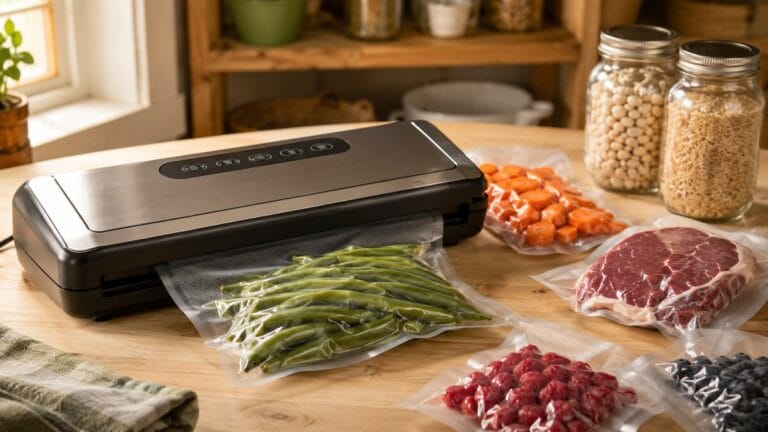
Yes. Freezing is a separate preservation option, not a shortened canning method. Use freezer-safe packaging with room for expansion; our home food-preservation overview helps you choose a method that fits your kitchen and storage space.
Finish One Batch Well
The useful part is not a counter covered with jars. It is knowing which recipe you followed, which processing time you used, and that every jar passed its seal check. Record those details with the date, put the oldest jars at the front, and leave the next batch for another day if you need to.