Which Harvest Right Freeze Dryer Should You Buy? Small vs Medium vs Large
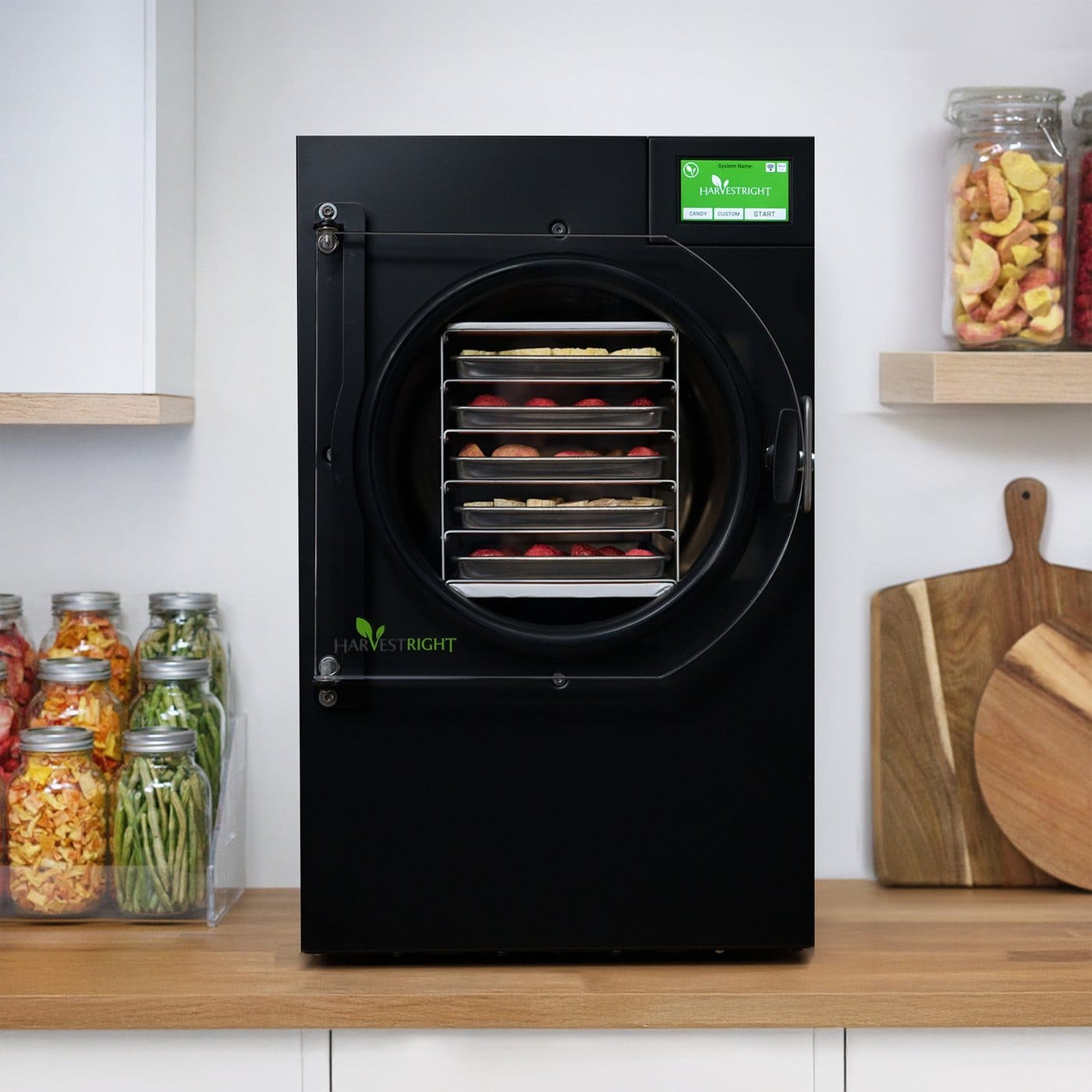
The freeze dryer conversation arrives every year at the same moment, somewhere around the end of canning season, when the counters are finally clear and somebody works out what all those jars actually cost in hours. Freeze drying is the version where the food keeps for decades, the texture survives, and the machine does the standing around instead of you.
Then you look at the price list and find four sizes between roughly seventeen hundred dollars and five thousand, and no obvious way to tell which one belongs in your house.
Almost everything written about this is either a brochure or a review by somebody who owns one and loves it. What is missing is the boring part: the batch capacities, the footprints, the running costs nobody quotes, and an honest way to work out which size matches how much food you actually process in a year. That is what this guide is.
The links to Harvest Right on this page are affiliate links. If you buy through them we earn a commission at no extra cost to you, and it does not change what we recommend. We do not own a freeze dryer. This is a researched buying guide about which size fits which household, not a review of a machine we have used, and it is written that way on purpose.
Table of Contents
The Short Answer
- There are four Home sizes, and they hold 6 to 10, 10 to 15, 18 to 27 and 40 to 50 lb of fresh food per batch.
- Medium is the one most households should buy. It is the size where the batch is big enough to be worth the run time and the machine still fits on a normal floor.
- Small suits one or two people, apartments, and anyone who wants to find out whether they will actually use it.
- Large earns its keep if you garden seriously, buy in bulk, or feed a big family. X-Large is a 258 lb machine and is genuinely a small-business decision.
- A batch takes roughly a day, so the real limit is how many days a week the machine runs, not how big it is.
- Budget beyond the sticker: mylar bags, oxygen absorbers, pump oil or an oil-free pump, and in most cases a dedicated 15 amp circuit.
The Four Sizes, Side by Side
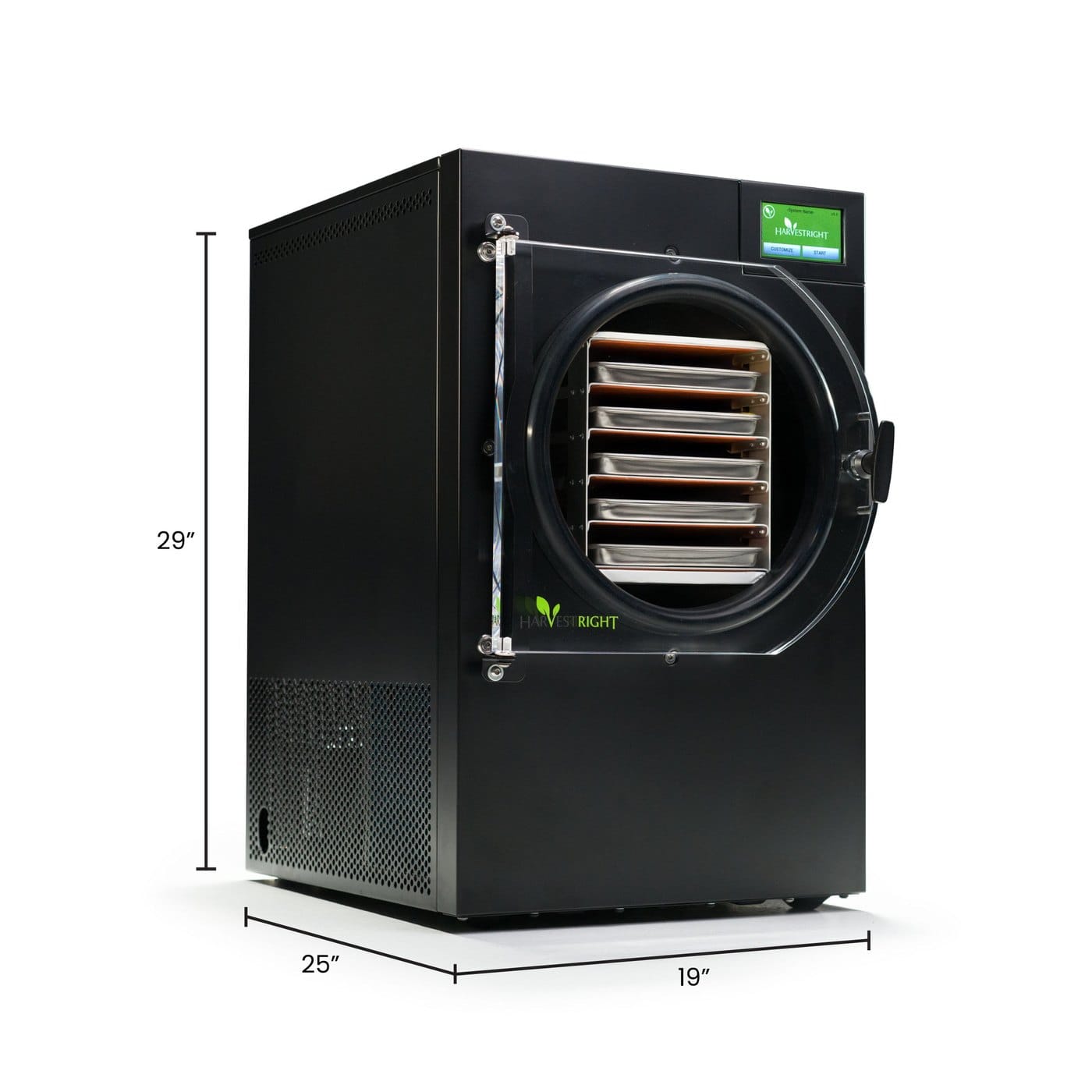
These are the manufacturer’s own figures for the Home Freeze Dryer line, checked on 1 September 2026. Every size is the same machine in a different body: same touchscreen, same process, same vacuum pump arrangement.
| Small | Medium | Large | X-Large | |
|---|---|---|---|---|
| Fresh food per batch | 6 to 10 lb | 10 to 15 lb | 18 to 27 lb | 40 to 50 lb |
| Trays | 4 | 5 | 6 | 7 |
| Width x depth x height | 17.4 x 21.5 x 26.8 in | 19 x 25 x 29 in | 21.3 x 27.5 x 31.3 in | 24.3 x 37.4 x 35.6 in |
| Weight | 91 lb | 119 lb | 143 lb | 258 lb |
| Power | 110V | 110V | 110V | 110V |
| Approximate price | From about $1,695 | From about $2,395 | From about $2,995 | About $4,995 |
Two honest notes about that bottom row. Harvest Right runs frequent sitewide sales, so the number you see today may not be the number next week, and the figures above were the advertised prices on 1 September 2026 for the least expensive finish in each size. Stainless steel and some colors cost more, and at the time of writing several color options were out of stock. Check the live price on the product page rather than trusting any article, including this one.
Size It by Batches, Not by Ambition
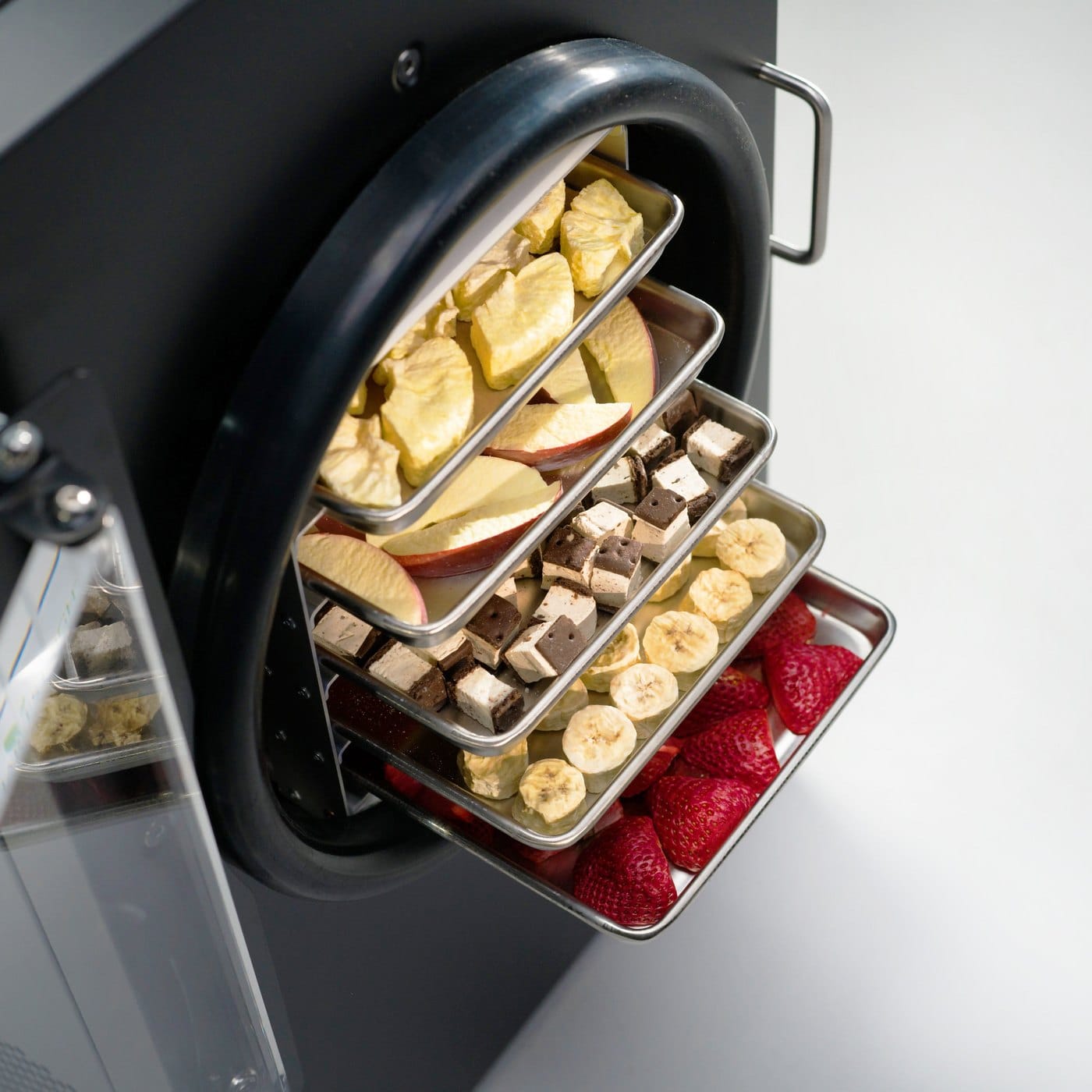
The mistake people make is buying for the harvest they imagine rather than the one they process. Here is the arithmetic that actually decides this.
A freeze drying cycle runs somewhere in the region of 20 to 40 hours depending on what is in it and how wet it is. Call it a day per batch as a planning number. That means the machine’s real annual capacity is not its tray space, it is batch size multiplied by the number of days a week you are willing to run it.
| Size | Per batch | Two batches a week | Four batches a week |
|---|---|---|---|
| Small | 6 to 10 lb | about 620 to 1,040 lb a year | about 1,250 to 2,080 lb a year |
| Medium | 10 to 15 lb | about 1,040 to 1,560 lb a year | about 2,080 to 3,120 lb a year |
| Large | 18 to 27 lb | about 1,870 to 2,800 lb a year | about 3,740 to 5,600 lb a year |
| X-Large | 40 to 50 lb | about 4,160 to 5,200 lb a year | about 8,320 to 10,400 lb a year |
Those are fresh weights, and they are deliberately startling. Even the Small, run twice a week, handles more food in a year than most households preserve by every other method combined. Harvest Right’s own marketing for the Small quotes up to 1,800 lb of fresh food a year, and attaches the honest caveat that this assumes running it four times a week.
So the question is not which size can hold your harvest. It is which size clears your harvest in the number of runs you will genuinely commit to. If the honest answer is that you will use it hard for six weeks in late summer and occasionally the rest of the year, size for those six weeks and stop worrying about the annual figure.
Who Each Size Actually Suits
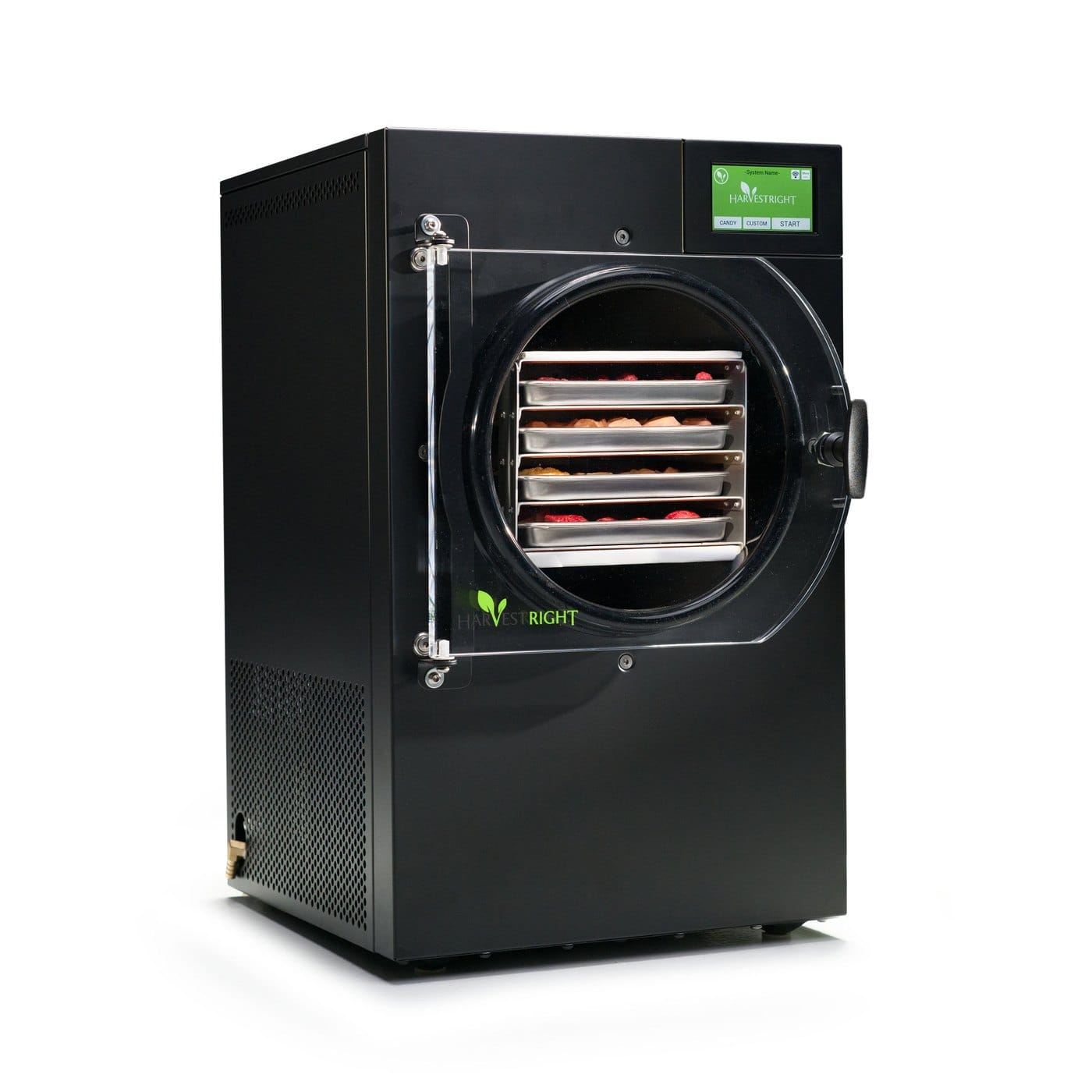
Small
Small: 4 trays, 6 to 10 lb a batch
- Best for: one or two people, apartments and small kitchens, and anyone who wants to find out whether freeze drying becomes a habit before committing three thousand dollars to the idea.
- Keep in mind: at 91 lb it is the only one that two people can realistically move without planning. Tray space is 434 square inches, so a batch of something bulky like strawberries fills it faster than the weight figure suggests.
- The honest catch: the gap in price between Small and Medium is smaller than the gap in capacity, which is why most people who start here eventually wish they had gone one size up.
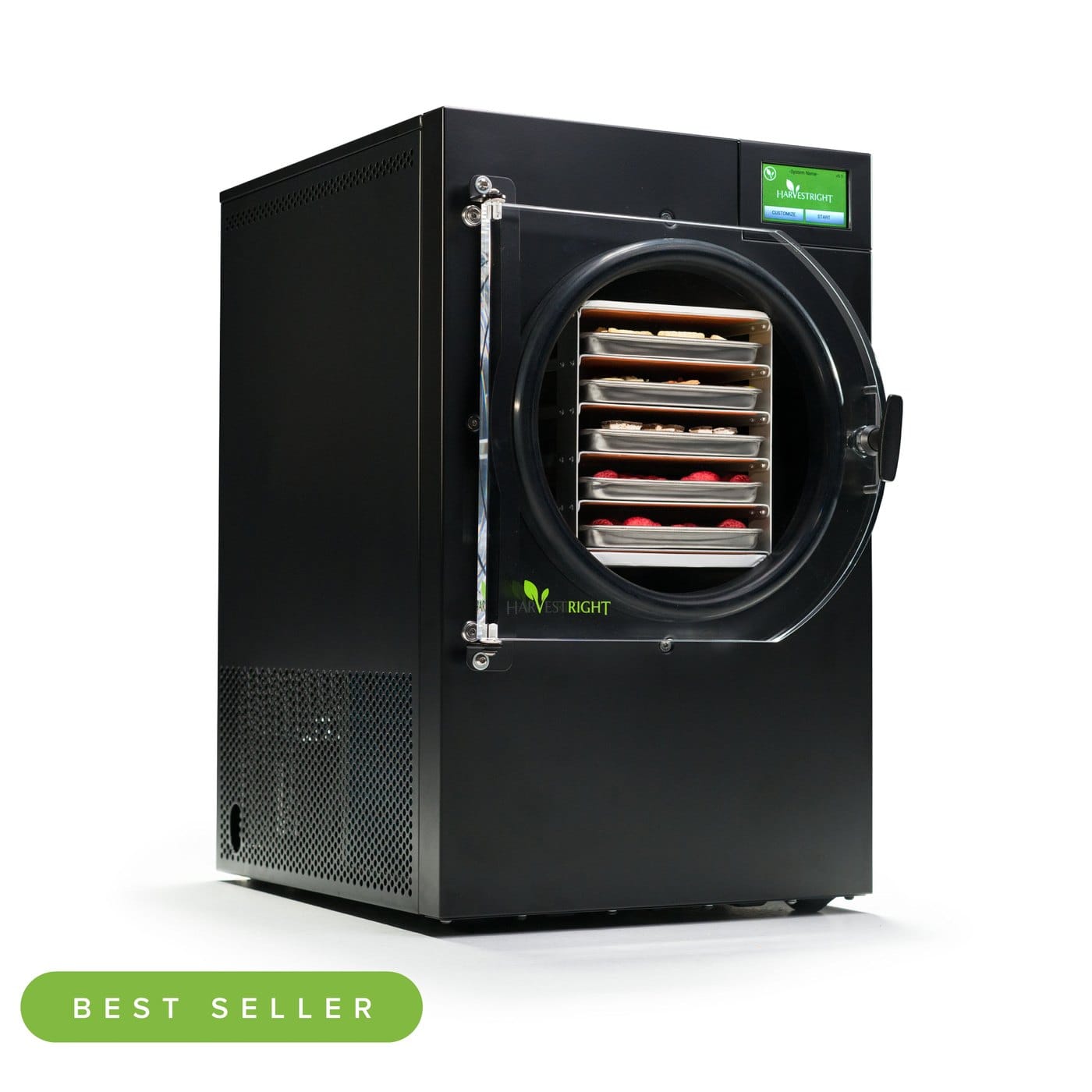
Medium
Medium: 5 trays, 10 to 15 lb a batch
- Best for: most households. A family of three to five, a productive garden, or anyone buying meat and produce in bulk.
- Keep in mind: 119 lb and 19 by 25 inches of floor, which fits in a pantry, a utility room or a basement corner without rearranging the house.
- Why it is the default: the batch is large enough that a day-long cycle feels worth starting, which is the thing that actually determines whether a freeze dryer gets used or becomes an expensive shelf.
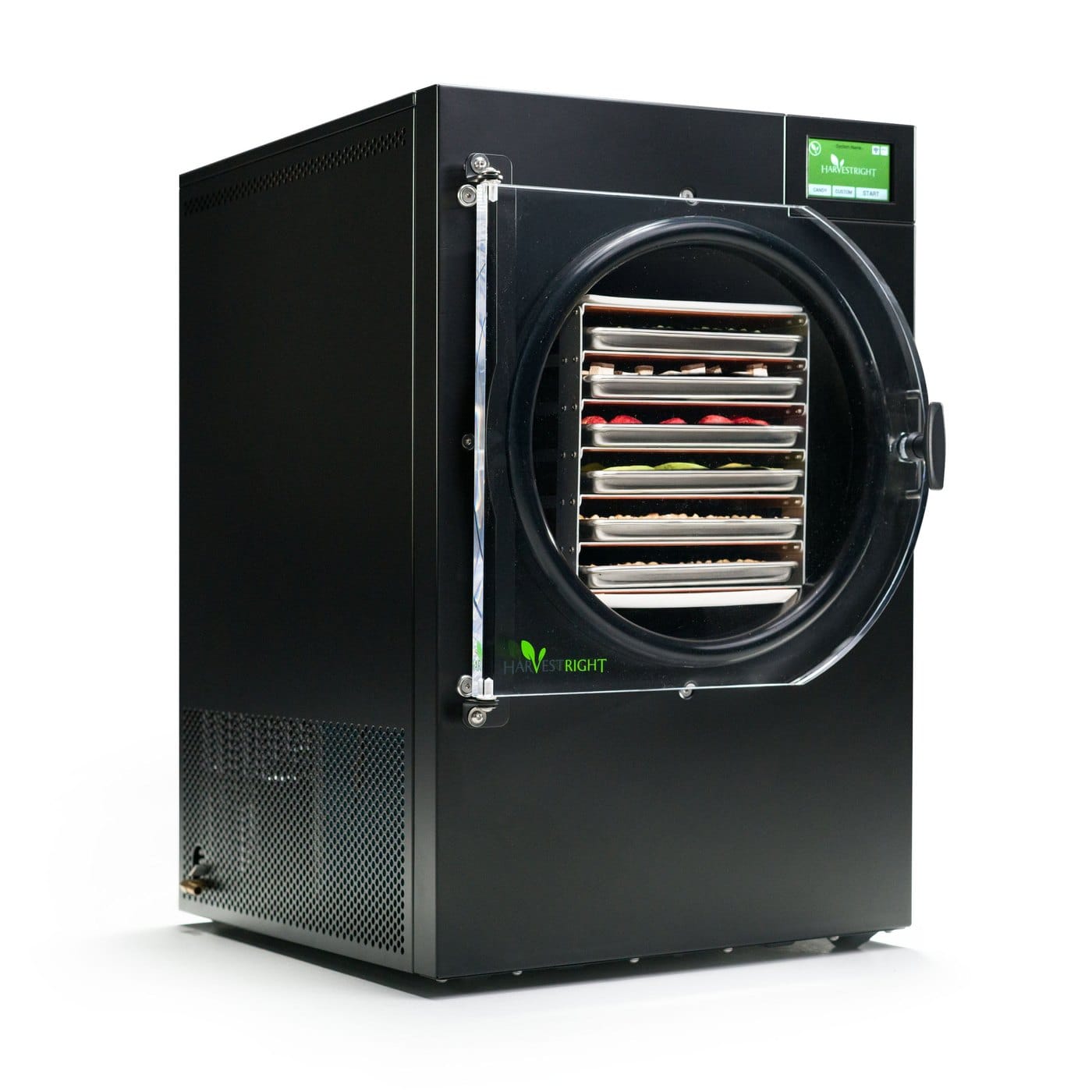
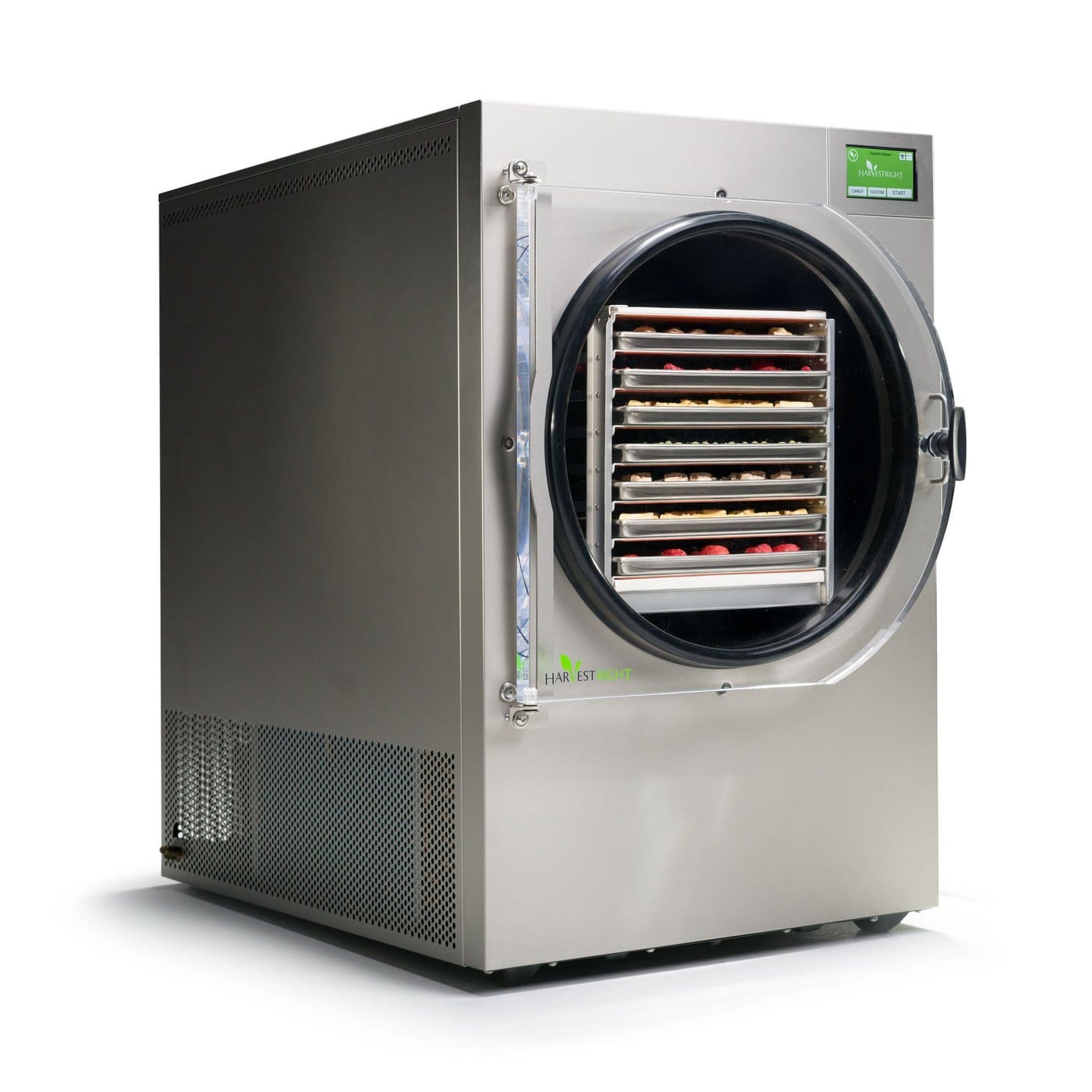
Large
Large: 6 trays, 18 to 27 lb a batch
- Best for: big families, serious gardeners putting up a real harvest, and anyone processing whole animals or bulk buys.
- Keep in mind: 143 lb, and it ships as a single package weighing around 243 lb. Delivery is to physical addresses only, so plan how it gets from the pallet to where it lives.
- Worth knowing: Harvest Right includes a 10 CFM industrial vacuum pump with this size at no extra cost, which they value at $895.
X-Large
X-Large: 7 trays, 40 to 50 lb a batch
- Best for: homesteads producing at scale, families preserving for several households, or anyone edging toward selling what they make.
- Keep in mind: 258 lb and 24.3 by 37.4 inches of floor. This is appliance-sized in the way a chest freezer is, and it is not moving again once it is placed.
- Be honest with yourself: at roughly five thousand dollars this is a business decision rather than a kitchen one. If the food is only for your own family, the Large almost certainly does the job.
What the Price Tag Does Not Include
The machine is the large number, and it is not the only number. None of this is hidden exactly, it just never appears in the same place as the price.
- Mylar bags and oxygen absorbers. Freeze dried food only keeps for decades if the oxygen and moisture are kept out of it. Jars with oxygen absorbers work too. This is an ongoing consumable cost for as long as you own the machine.
- A heat sealer for the bags, unless you are storing exclusively in jars.
- Pump oil, or an oil-free pump. The standard pump needs oil changed and filtered periodically. Harvest Right sells an oil-free pump that fits any size and removes that chore, at additional cost.
- Electricity. A cycle runs most of a day with a compressor and a vacuum pump both working. This is a real line on the bill, not a rounding error.
- Shelf space. A year of output takes up a surprising amount of storage, which is easy to forget when the food comes out weighing almost nothing.
The Practical Constraints Nobody Mentions
Three things that decide whether the machine you chose actually works in your house.
The Electrical Circuit
Harvest Right specifies a 110 volt NEMA 5-15 outlet and states that a dedicated 15 amp circuit is required. That is the detail most likely to turn into an unexpected electrician’s bill. Before you order, work out which outlet it will use and what else is on that circuit.
Weight and Getting It Into Place
From 91 lb for the Small to 258 lb for the X-Large, with shipping weights higher again. Delivery is to physical addresses only. A basement installation with a narrow staircase is a genuinely different proposition at each size, and it is worth measuring the route before the pallet arrives.
Noise and Running Time
A vacuum pump running for the better part of a day is not quiet. Most owners put the machine somewhere other than the room they sit in, which is a large part of why the footprint question matters more than the price question for a lot of households.
Is a Home Freeze Dryer Worth It?
This is the question the whole category runs on, and the honest answer is that it depends on a number you already know: how much food you preserve now.
Freeze drying wins on three things. Shelf life is measured in decades rather than a year. The texture and flavor come back far closer to fresh than anything canned. And it handles foods that other methods simply cannot, including full meals, dairy and eggs.
It loses on cost and on time-to-value. This is a four-figure purchase before you preserve a single pound, against a water bath canner that costs less than a tank of gas. And a cycle takes a day, so it is not the tool for the evening a bushel of tomatoes goes soft.
The way we would frame it for anyone on the fence: if you are currently preserving a few hundred pounds a year and finding the limit is your time rather than your equipment, a freeze dryer changes the arithmetic. If you are preserving twenty jars of jam a summer, it will not, and the money buys a great deal of other equipment.
Where a Freeze Dryer Fits Next to Canning and Freezing
A freeze dryer does not replace what you already do. It sits alongside it, and the sensible homestead runs all three.
| Freeze drying | Canning | Freezing | |
|---|---|---|---|
| Shelf life | Decades, sealed with oxygen absorbers | Best within a year | 8 to 12 months for quality |
| Needs power to store | No | No | Yes, continuously |
| Up-front cost | Four figures | Low | Low if you own a freezer |
| Time per batch | About a day, mostly unattended | An afternoon, mostly attended | Under an hour |
| Best at | Meals, dairy, eggs, long storage | Acidic foods, pickles, jams | Speed and fresh flavor |
In practice the tomatoes still get canned, because canning whole tomatoes is an afternoon and a freeze drying cycle is a day. The peaches still get frozen, because freezing peaches takes twenty minutes. What changes is that the things none of those methods handle well, like a cooked meal or a tray of eggs, finally have somewhere to go.
If you are still building out the basics, our comparison of water-bath canners for beginners and the guide to home preservation methods are the cheaper places to start.
Preserving the ordinary way in the meantime?
The Beginner’s Canning eBook covers water-bath canning end to end: altitude and headspace charts, the acidity rules that decide what is safe, and step-by-step walkthroughs for a first season. The Canning Starter Bundle adds both Quick Kits for jar prep and fermenting.
The Free Garden Starter Pack
Five printable pages that take the guesswork out of a first season, plus a short email every week or two when something is worth planting, picking, or putting up.
- A garden planning worksheet you can actually fill in
- A seed-starting and planting calendar
- A harvest log to track what really produced
No spam, ever. Unsubscribe in one click.
Thank you. You are on the list.
Your Garden Starter Pack is ready right now. Grab it here:
Download the pack (PDF)Keep an eye on your inbox. The next seasonal guide lands there first.
Frequently Asked Questions About Harvest Right Sizes
Which Harvest Right size is best for a family of four?
The Medium, in most cases. It takes 10 to 15 lb of fresh food per batch, fits in a pantry or utility room at 19 by 25 inches, and produces batches large enough that starting a day-long cycle feels worthwhile. Step up to the Large if you garden seriously or buy meat in bulk.
How much food does a Harvest Right freeze dryer hold?
Per batch: 6 to 10 lb fresh for the Small, 10 to 15 lb for the Medium, 18 to 27 lb for the Large and 40 to 50 lb for the X-Large. Since a cycle takes roughly a day, multiply that by how many days a week you will realistically run it to get your true capacity.
Is the Small Harvest Right big enough?
For one or two people, or as a way to find out whether you will use it, yes. Run twice a week it still handles several hundred pounds of fresh food a year. The common regret is not that the Small fails, it is that the price gap to the Medium is smaller than the capacity gap.
Do I need a special electrical outlet?
Harvest Right specifies a 110 volt NEMA 5-15 outlet and a dedicated 15 amp circuit. That means nothing else of consequence should be drawing from the same circuit while it runs. Check this before ordering, because it is the most common unbudgeted cost.
How long does a freeze drying cycle take?
Broadly 20 to 40 hours depending on the food, how wet it is and how thickly it is loaded. Most of that is unattended. Plan around a day per batch rather than a fixed number.
Can you finance a freeze dryer?
Harvest Right offers layaway on their own site, and the price varies with frequent sales, so the effective cost moves. Check the current terms on the product page rather than budgeting from a figure in an article.
How to Decide This Week
Answer two questions honestly and the size chooses itself. How many pounds of food do you actually preserve in a year, and how many days a week will you commit to running a machine that takes a day per batch.
If those numbers are modest, the Small is a real answer rather than a compromise. If they are the numbers of a household that already fills a chest freezer and a pantry wall every autumn, buy the Medium and stop deliberating. The size almost nobody needs is the one they were about to buy because it looked more serious.