Composting Leaves: Leaf Mold or a Mixed Compost Pile?
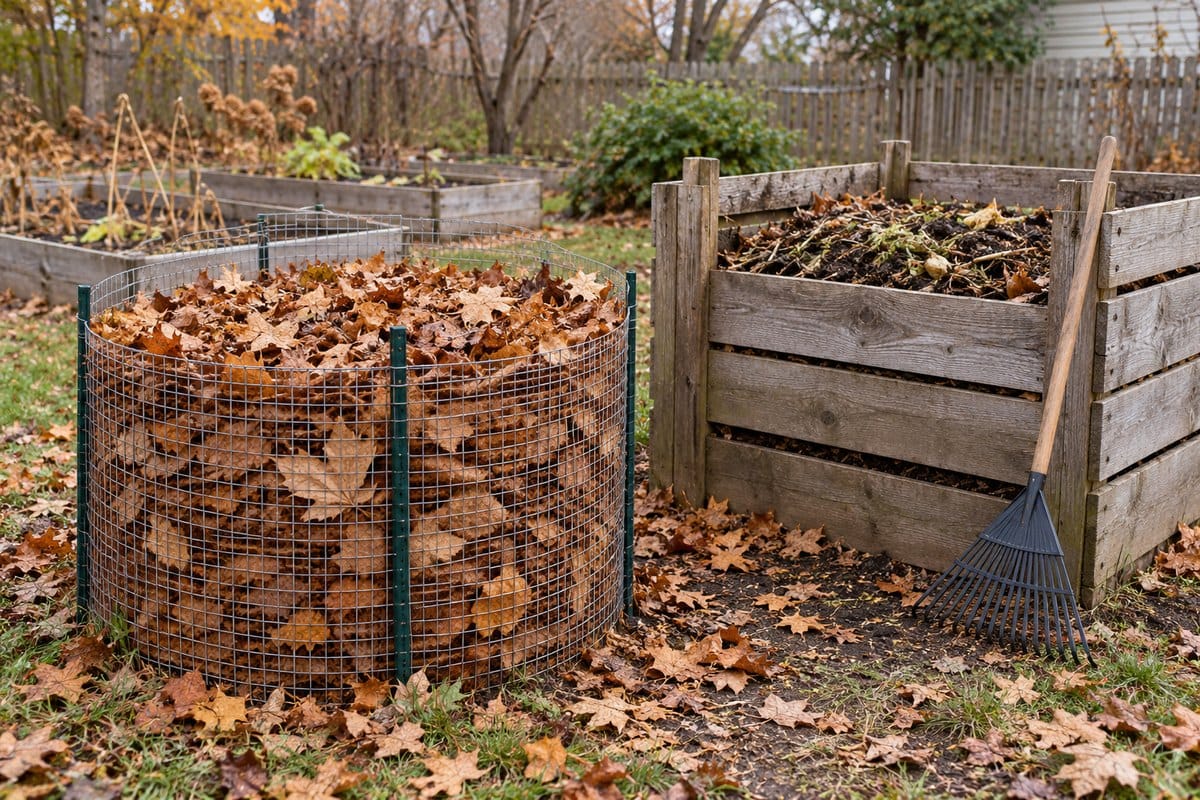
The rake catches on a damp layer beneath the crisp leaves. What looked like a light afternoon cleanup has become a heap that will not fit in the compost bin. You do not need to force the whole lot into one container.
Composting leaves works in two useful ways: keep a leaf-only pile for slow leaf mold, or mix some leaves with nitrogen-rich materials for ordinary compost. Choose by the ingredients, space and attention you have, not by a promise that every autumn pile will be ready for spring planting.
Quick Answer
- Choose leaf mold if you mostly have fallen leaves and want a low-input soil conditioner. Contain the leaves, keep them damp and give them time.
- Choose mixed compost if you also have suitable greens and can manage moisture and turning.
- Shredding helps either method, but whole leaves can still decompose.
- Separate visibly diseased material and remove litter before building your pile.
- Keep a reserve of leaves rather than overfilling your working bin.
Penn State describes both leaf mold and a stored leaf supply. That is a useful backyard arrangement: one place for the autumn surplus, another for the compost you are actively managing.
Table of Contents
Leaf Mold or Mixed Compost: Which Fits Your Yard?
Leaf mold is decomposed leaf material, with fungi doing much of the work. Mixed compost uses a wider ingredient mix. Neither is made by simply putting leaves in a sealed, waterlogged container.
| Your Situation | Better Starting Point | Main Trade-Off |
|---|---|---|
| Mostly leaves, little time for turning | A contained leaf-mold pile | Slow breakdown; value is mainly soil conditioning |
| Leaves plus suitable greens and regular access | A mixed compost pile | More moisture, ingredient and aeration management |
| More leaves than your bin can hold | A separate leaf reserve | You need somewhere to contain the surplus |
Iowa State emphasizes leaf mold’s value for soil structure and moisture retention rather than plant nutrition. It is not a complete fertilizer. If the larger composting process is new to you, our beginner composting guide covers the basic setup; this guide stays with the autumn leaves.
Collect the Leaves You Need, Then Sort Them
Start with leaves you know the source of. Pull out plastic, string, stones and woody branches. Keep the collection step separate from shredding so hidden debris does not go through equipment.
Visibly diseased leaves deserve a separate decision. Minnesota Extension recommends keeping diseased debris out of ordinary home compost, which may not heat enough throughout the pile. Ask your local Extension office or yard-waste service about an appropriate disposal route; commercial facilities have their own acceptance rules.
You do not need to clear every leaf from every corner. UNH explains how fallen leaves shelter overwintering wildlife. Keep suitable habitat areas undisturbed rather than treating the whole garden as material to harvest.
Be careful with the greens you bring in, too. Oregon State warns that some herbicides can persist through composting, particularly via contaminated grass, hay and manure. Do not assume a hot pile makes an unknown ingredient safe. Check treatment history and product-label composting restrictions.
Shred If Practical, Without Making It a Barrier
Smaller pieces break down more readily and are easier to mix. Illinois Extension suggests a mower or leaf shredder and notes that leaf type, size and moisture affect decomposition. Follow your equipment’s instructions, keep people and pets clear, and do not process a pile containing hidden debris.
If you have no suitable machine, use the leaves whole and allow longer. Avoid buying equipment merely to meet an imaginary deadline. The useful improvement is a pile you can keep damp and accessible, not the smallest possible leaf confetti.
How to Make Leaf Mold From Fallen Leaves
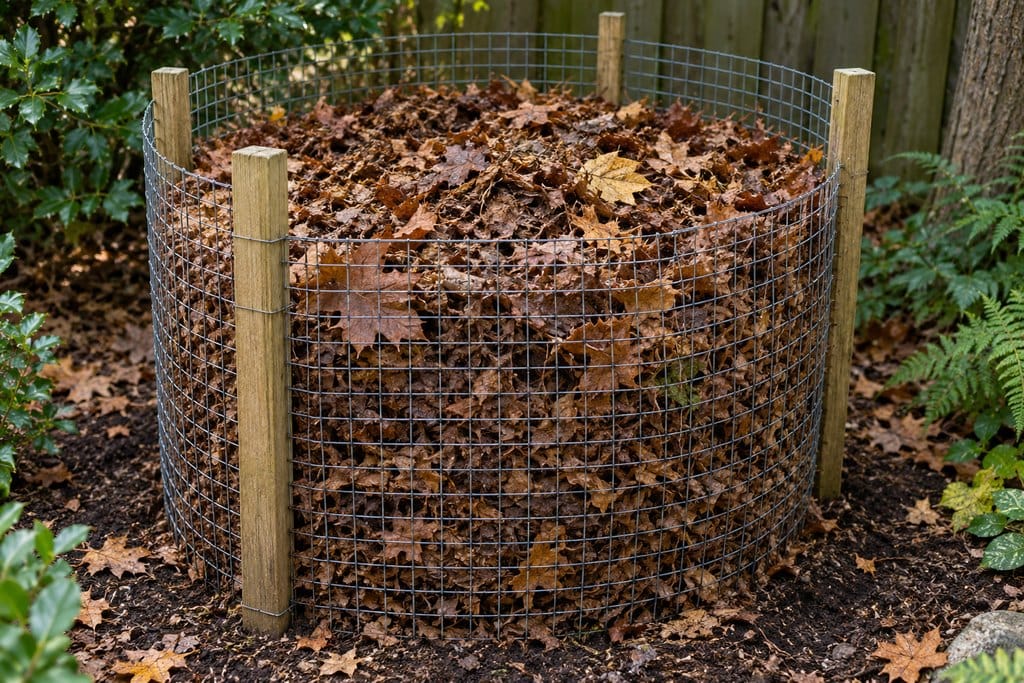
A simple enclosure is enough. You are containing leaves while they decay, not building an airtight storage box.
- Choose an accessible spot. Leave room to open or reach the enclosure and carry material away later.
- Contain the leaves. A supported wire ring or an open garden bin keeps the pile from blowing apart. Secure sharp wire ends.
- Moisten as you fill. Water dry pockets through the pile rather than only wetting the surface.
- Check after dry spells. Pull back the outside leaves to inspect the interior. A damp top does not tell you much about the center.
- Let the batch age. Keep new autumn collections separate when practical so you can identify the older material.
Iowa State gives one to two years for a leaf pile roughly 3 feet tall and wide. Shredding can shorten the wait, but leaf species, moisture and local conditions matter. Think in seasons, not in a fixed number of weekends.
No regular supply of kitchen scraps is required for this leaf-only route. If you start adding greens to accelerate it, you are moving toward a mixed compost pile and should manage it accordingly.
How to Mix Leaves Into a Compost Pile
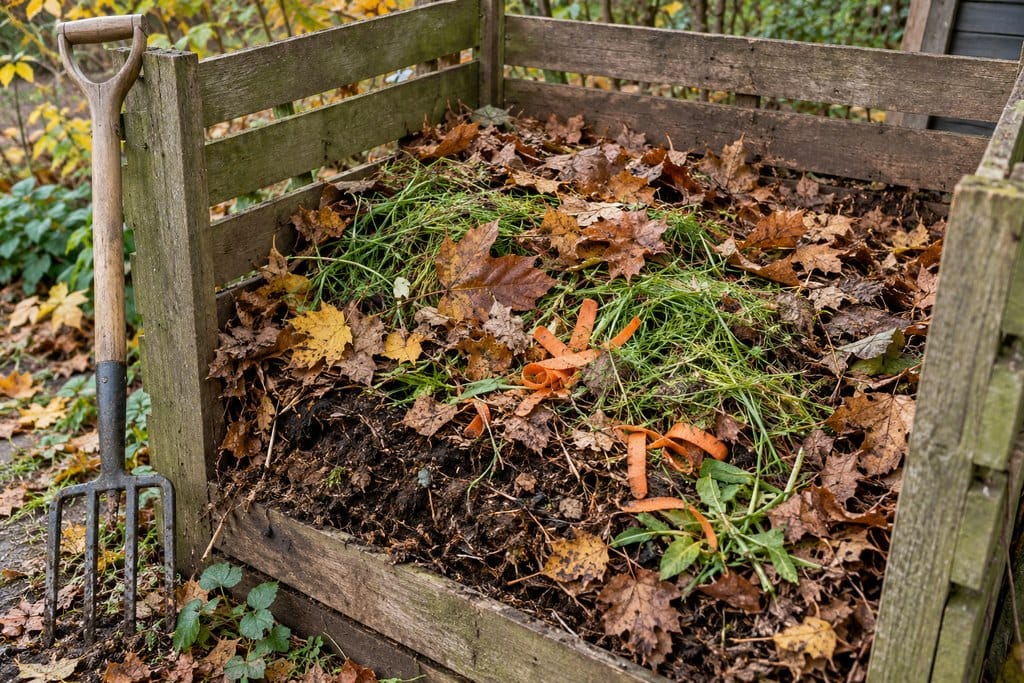
Dry fallen leaves are browns. Suitable greens include untreated fresh grass clippings, vegetable scraps and coffee grounds. Brown and green describe their composting roles, not just their visible color.
EPA’s starting guidance is at least two to three volumes of browns for each volume of greens. Use the same bucket for measuring. That is a practical volume guide, not a laboratory carbon-to-nitrogen calculation.
- Mix leaves with greens rather than leaving a thick, compressed layer of grass.
- Moisten the mix toward the feel of a wrung-out sponge.
- Leave access for turning and bringing outside material into the middle.
- Cover food scraps with 4 to 8 inches of leaves or other browns; use a suitably pest-resistant bin where rodents are a concern.
An open leaf cage is not automatically a suitable food-scrap bin. Keep meat, dairy and greasy leftovers out. The illustration shows ingredients before covering, not a recommendation to leave food exposed.
For active composting, Maryland Extension describes a batch built at once, with a minimum size of about 3 × 3 × 3 feet. A small container can still decompose material, but it should not be sold as the same heat-retaining setup.
Once a batch is established, save new leaves separately instead of continually topping it with fresh material. If kitchen scraps are your main ongoing input and outdoor space is limited, our indoor composting guide explains alternatives.
Fix the Condition, Not Just the Calendar
Check below the surface before adding anything. Dry leaves can hide inside a pile that looks wet after rain. A compacted wet mat needs a different response from a dry, airy heap.
| What You Find | What to Check | Useful Next Step |
|---|---|---|
| Dry leaves still crisp inside | Whether water reached the interior | Open the pile, moisten and redistribute |
| Sour smell and sodden clumps | Excess water and poor air movement | Loosen the material; address drainage or rain exposure |
| Mixed pile stays slow | Moisture, leaf size and availability of suitable greens | Correct the limiting condition rather than adding random amendments |
| Cool leaf-only pile | Whether you intended leaf mold | Keep it damp and allow more time; heat is not the goal |
Iowa State’s leaf-specific advice focuses on shredding, adequate nitrogen for mixed compost, water and turning. More nitrogen is not the answer to every slow pile, especially one already wet and compacted.
Avoid using lime as a shortcut. Maryland cautions that lime can encourage nitrogen loss as ammonia. You do not need to correct a leaf pile’s acidity by guesswork.
When Are Composted Leaves Ready to Use?
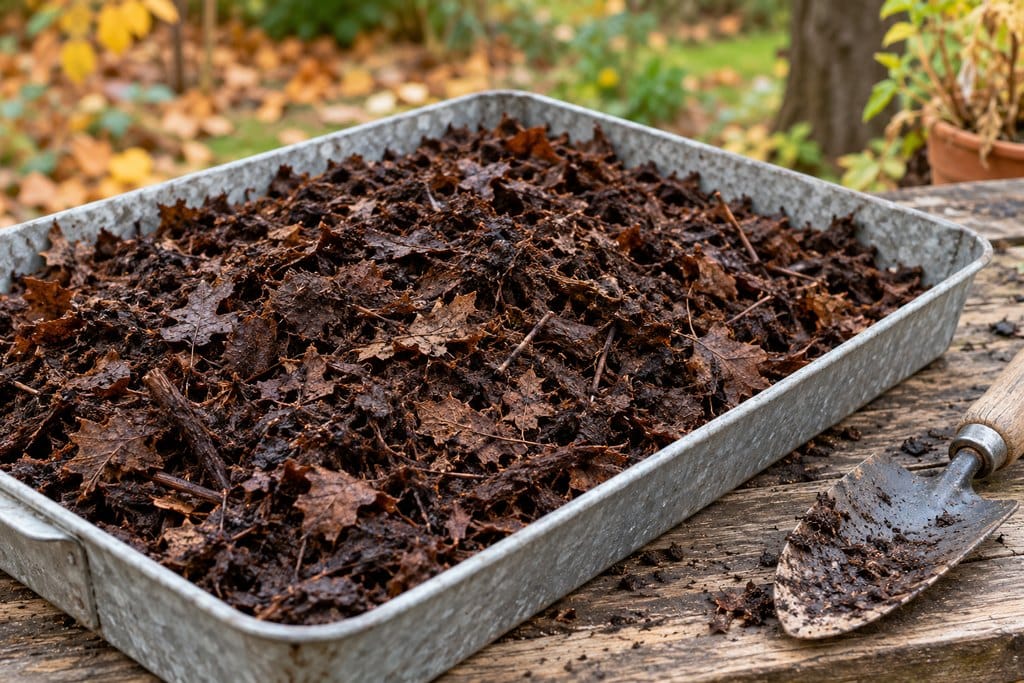
Leaf mold becomes darker, softer and crumbly, with an earthy smell. Some leaf fragments may remain. Penn State describes a couple of years for a simple pile, with faster breakdown possible when leaves are shredded and managed. The image illustrates texture only; color by itself does not establish readiness.
For mixed compost, recognizable food scraps should be gone and turning should no longer restart heating. EPA recommends at least four weeks of curing after that stage. A cold pile in winter is not necessarily finished. If the ingredients still look fresh, give them more time.
Keep the end use modest. Oregon State describes leaf material as useful garden mulch and gives 1 to 2 inches for fall mulching in annual vegetable or flower beds. Do not bury growing plants or smother an established cover crop. Match additions to the bed and its existing condition.
For finished mixed compost, our guide to using compost in the garden covers application choices. Neither leaf mold nor homemade compost should be assumed to replace a complete seed-starting or container mix.
Frequently Asked Questions About Composting Leaves
Can Leaves Compost on Their Own?
Yes. A damp, contained leaf-only pile can become leaf mold without a regular addition of greens. The cost is time. If you want mixed compost instead, add suitable nitrogen-rich materials and manage the whole mix.
Are Oak Leaves Too Acidic to Compost?
They can be composted. Maryland notes that initially acidic materials such as oak leaves do not necessarily produce acidic finished compost. Shred where practical and do not add lime simply because the leaves came from an oak.
Do You Have to Turn a Leaf-Mold Pile?
Not on the same schedule as an actively managed mixed pile. Occasional redistribution can help with uneven moisture, but slow decomposition is expected. Check the inside before deciding that the whole heap needs rebuilding.
Will Leaves Collected This Fall Be Ready by Spring?
Do not count on it. Whole leaves and cold conditions can make that unlikely. Plan spring planting around material that is actually ready, and let the autumn collection continue breaking down if it needs another season.
Start With the Heap You Already Raked
That heap beside the full bin does not need to go anywhere today. Composting leaves comes down to one honest choice: a contained, damp leaf pile you can leave alone, or a smaller share mixed with greens in a pile you will actually tend.
Set aside the leaves your bin can take, put the rest somewhere they can sit and stay moist, and check both before the ground freezes. Whatever is not ready by spring is still on its way to becoming something useful for the garden.