Canning Jalapenos: Pickled Rings, Step by Step
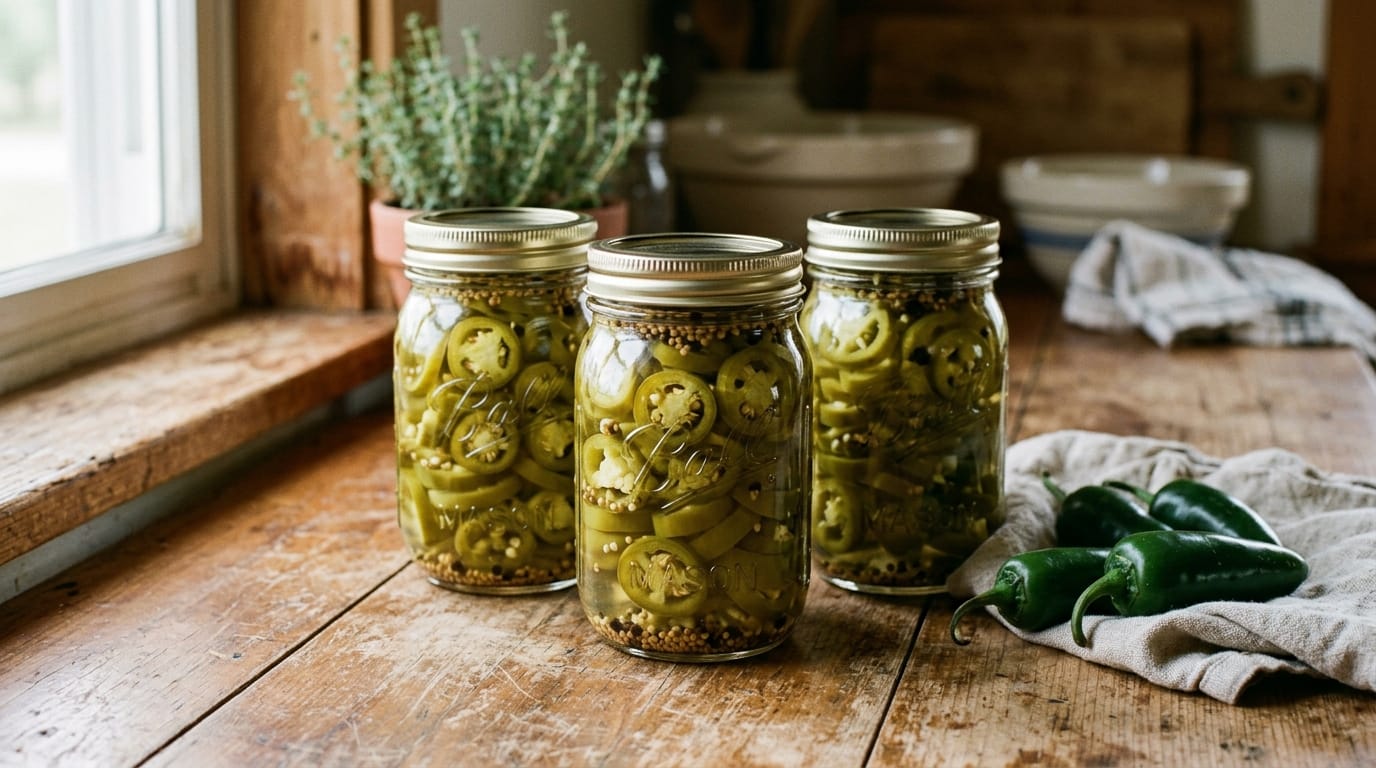
Our jalapeno plants do nothing for two months and then hand over everything at once. Four plants, a bowl on the counter that keeps getting refilled, and the slow realization that nobody in this house eats fresh jalapenos at the rate a jalapeno plant produces them.
The obvious answer is the jar of pickled rings you get at a taqueria, so I went looking for a tested recipe and found something I did not expect. The one the National Center for Home Food Preservation publishes for jalapeno rings starts with an 18 hour soak in pickling lime, followed by three separate rinse-and-soak cycles. That is a two-day project before a jar goes near a canner.
There is a second tested recipe that skips the lime entirely, and it costs you a different chore instead. Almost nothing written about canning jalapenos mentions that you have a choice, so this guide covers both, what each one actually asks of you, the processing times, the refrigerator version for when you want none of it, and why the rings go soft.
Table of Contents
The Short Answer
- There are two tested recipes for canning jalapenos, and they trade different work. Pickled Jalapeno Rings needs an 18 hour pickling lime soak and a triple rinse. Pickled Hot Peppers needs no lime, but you blister and peel the peppers.
- Both process for 10 minutes for pints in a boiling water canner at up to 1,000 feet, with 1/2 inch of headspace.
- The lime is for crispness, not safety. What is a safety step is rinsing it back out, and NCHFP is emphatic about doing that exactly as written.
- Wear gloves. Both recipes open with that instruction and it is not decorative.
- If you want jalapenos this afternoon rather than this weekend, make refrigerator pickles. They are not shelf stable and they are ready the next day.
- Do not reduce the vinegar in either recipe. It is what makes the jar safe.
Two Tested Recipes, and the Chore Each One Costs
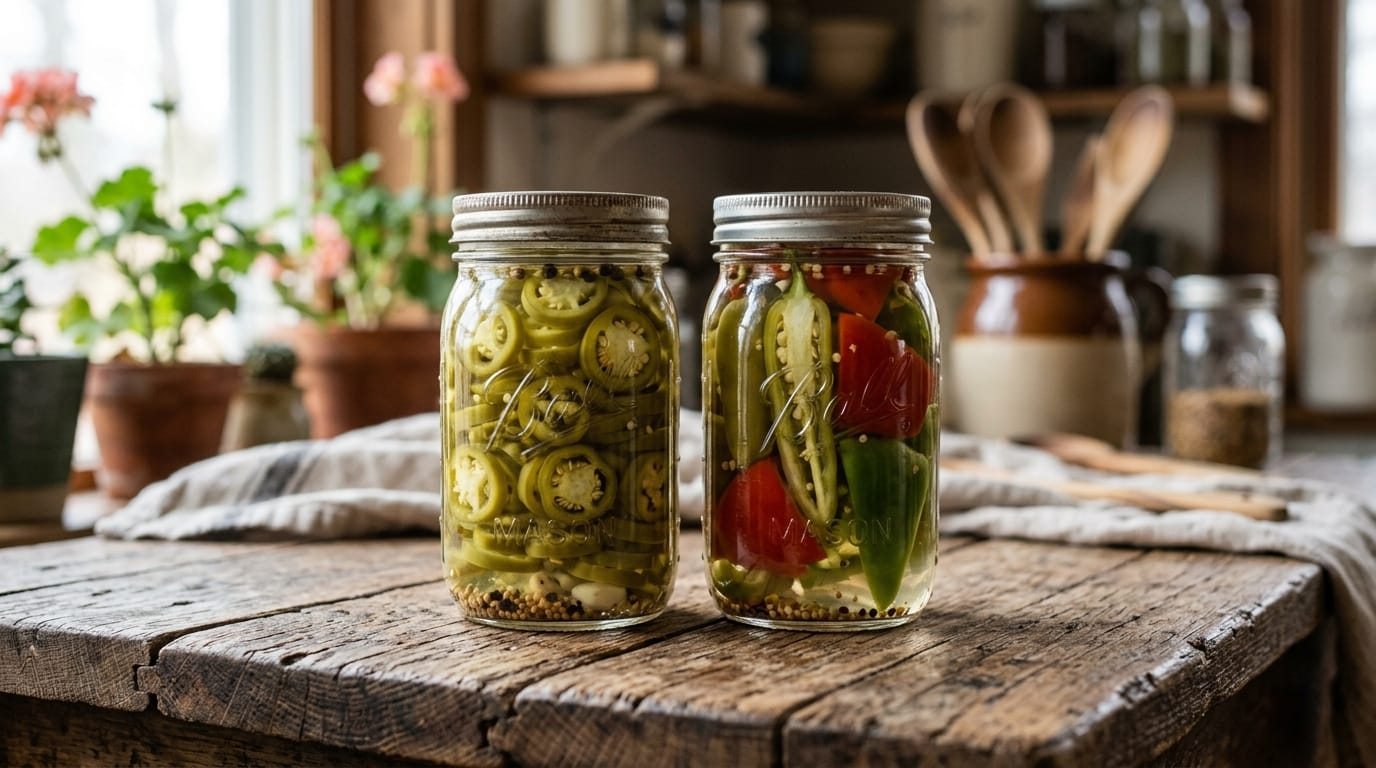
Most articles about canning jalapenos publish one untested recipe and move on. There are actually two procedures with real testing behind them, and choosing between them is the first decision, because they are different amounts of work in different places.
| Pickled Jalapeno Rings | Pickled Hot Peppers | |
|---|---|---|
| The chore | 18 hour pickling lime soak, then rinse, soak and drain three times | Blister and peel every pepper |
| Cut style | 1/4 inch rings | Whole with slits, or quartered |
| Peppers needed | 3 lb jalapenos | 4 lb hot peppers plus 3 lb sweet peppers |
| Yield | About 6 pints | About 9 pints |
| Vinegar | 7 1/2 cups cider vinegar plus 1 3/4 cups water | 5 cups vinegar plus 1 cup water |
| Processing | Pints, 10 minutes at up to 1,000 ft | Half-pints or pints, 10 minutes at up to 1,000 ft |
| Texture | Firmer, closer to the taqueria jar | Softer, more like a roasted pepper |
If you want the crisp rings you get on nachos, the lime recipe is the one that produces them. If you want jalapenos in jars this weekend without ordering an ingredient you have never bought, the second recipe is right there and it is equally tested.
Recipe 1: Pickled Jalapeno Rings
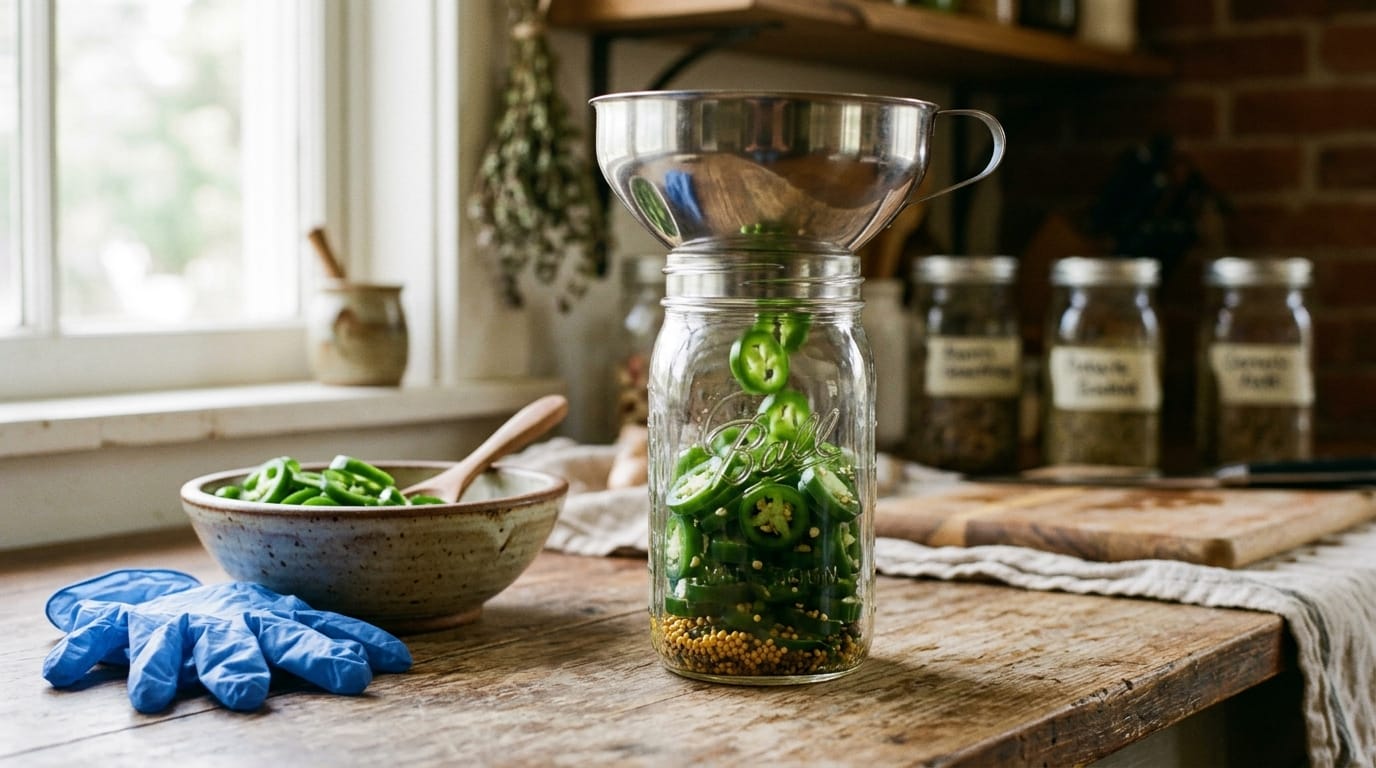
This is the NCHFP Pickled Jalapeno Rings recipe, developed at the University of Georgia. The quantities are theirs. The commentary is mine.
Yields about 6 pint jars
Pickled Jalapeno Rings
- 3 lb jalapeno peppers
- 1 1/2 cups pickling lime
- 1 1/2 gallons water, for the lime soak
- 7 1/2 cups cider vinegar (5%)
- 1 3/4 cups water, for the brine
- 2 1/2 tablespoons canning salt
- 3 tablespoons celery seed
- 6 tablespoons mustard seed
The lime and its 1 1/2 gallons of water are a soaking solution that gets thrown away. Only the vinegar, the 1 3/4 cups of water, the salt and the seeds end up in the jar.
- Put gloves on. NCHFP opens with it: wear plastic or rubber gloves and do not touch your face while handling or cutting hot peppers.
- Wash the peppers and slice them into 1/4 inch rings. Discard the stem ends. A mandoline makes this fast and even, and is also how people cut themselves, so use the guard.
- Mix the pickling lime into the 1 1/2 gallons of water in a stainless steel, glass or food grade plastic container. Avoid inhaling the lime dust while you do it.
- Soak the rings in the lime water in the refrigerator for 18 hours, stirring occasionally. Anywhere from 12 to 24 hours is acceptable.
- Drain off the lime solution. Rinse the rings gently but thoroughly, cover them with fresh cold water and soak for 1 hour in the refrigerator, then drain.
- Repeat that rinse, soak and drain twice more, then drain thoroughly. This is three full cycles and it is not the step to shorten.
- Wash pint jars and keep them hot. Put 1 tablespoon of mustard seed and 1 1/2 teaspoons of celery seed in the bottom of each one.
- Pack the drained rings into the jars, leaving 1/2 inch of headspace.
- Bring the cider vinegar, the 1 3/4 cups of water and the canning salt to a boil. Ladle the boiling brine over the rings, leaving 1/2 inch of headspace, and make sure the rings are covered.
- Remove air bubbles, adjust the headspace, wipe the rims with a clean damp paper towel and apply two-piece lids.
- Process in a boiling water canner using the table below, then cool undisturbed for 12 to 24 hours and check the seals.
The Pickling Lime Question
Pickling lime is calcium hydroxide, and it turns up in older pickle recipes because soaking vegetables in it firms them up. In a jalapeno ring, which is thin and full of water, that is the difference between a crisp ring and a limp one. It is a texture ingredient, not a preservative.
The part that matters is what comes after it. NCHFP’s own wording: it is very important to follow the soaking instructions as written, and then to follow the multiple steps of rinsing, soaking in fresh cold water and draining three times as written, because excess lime absorbed by the pepper rings must be removed to make safe pickles for the canning process recommended.
Read that carefully, because it inverts the usual intuition. The lime itself is optional in the sense that it is doing texture work. The rinsing is not optional at all, because lime is alkaline and lime left in the peppers works against the acidity that makes the jar safe. If you use lime, you rinse it exactly as written.
Which leads to the sensible conclusion for most people: if you do not want to buy pickling lime, do not improvise around this recipe. Do not soak in something else, and do not skip the soak and use the rest of the recipe as written. Use the second tested recipe instead, which was developed without lime in the first place.
You will find pickling lime in the canning aisle next to the pectin, or online. It is cheap, it keeps, and one box lasts years.
Recipe 2: Pickled Hot Peppers, No Lime Required
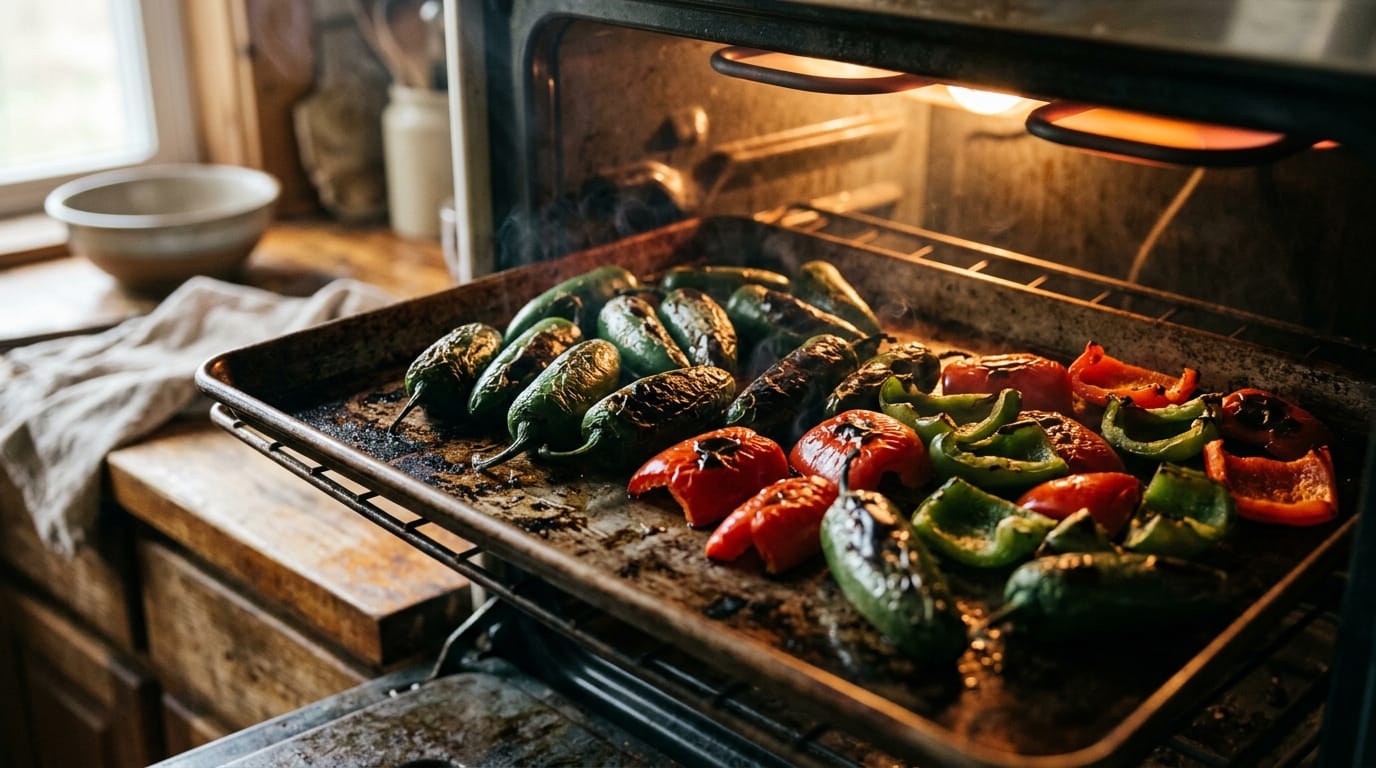
The NCHFP Pickled Hot Peppers recipe names jalapenos explicitly in its subtitle, alongside Hungarian, banana and chile peppers. No lime anywhere. The trade is that you blister and peel the peppers first.
Yields about 9 pints
Pickled Hot Peppers
- 4 lb hot long red, green or yellow peppers
- 3 lb sweet red and green peppers, mixed
- 5 cups vinegar (5%)
- 1 cup water
- 4 teaspoons canning or pickling salt
- 2 tablespoons sugar
- 2 cloves garlic
The sweet peppers are part of the tested recipe, not a garnish. Keep the ratio as written rather than making it all jalapenos.
- Gloves on again. Same caution, same reason.
- Wash the peppers. Leave small ones whole and cut 2 to 4 slits in each, or quarter the large ones.
- Blister the skins so they will peel. NCHFP gives two methods: a hot oven or broiler at 400 F for 6 to 8 minutes until the skins blister, or a range-top method with heavy wire mesh over the burner and the peppers on top for several minutes.
- Cool them and peel the skin off. Flatten the small ones.
- Fill the jars, leaving 1/2 inch of headspace.
- Combine the vinegar, water, salt, sugar and garlic, heat to boiling and simmer for 10 minutes. Remove the garlic.
- Pour the hot pickling solution over the peppers, leaving 1/2 inch of headspace.
- Adjust the lids and process using the table below.
The garlic comes out before the brine goes into the jars, which surprises people. It is flavoring the liquid rather than riding along in the jar, and it is a low-acid ingredient you do not want to add more of.
Processing Times and Altitude
Conveniently, both recipes process for the same length of time.
| Recipe | Jar size | 0 to 1,000 ft | 1,001 to 6,000 ft | Above 6,000 ft |
|---|---|---|---|---|
| Pickled Jalapeno Rings | Pints | 10 min | 15 min | 20 min |
| Pickled Hot Peppers | Half-pints or pints | 10 min | 15 min | 20 min |
Both are raw packs, both want 1/2 inch of headspace, and both need the jars covered by 1 to 2 inches of water for the whole time. Start the clock when the water returns to a full rolling boil, not when the jars go in.
Ten minutes is short enough that it is worth mentioning the sterilizing rule: jars processed for less than 10 minutes need to be pre-sterilized, and at exactly 10 minutes you are on the line. Clean hot jars plus the full processing time covers you, and if you would rather be certain, sterilizing the jars first costs you ten minutes and removes the question.
If you are still choosing a pot, our comparison of water-bath canners for beginners covers what matters at this size. A short process like this one is forgiving of equipment.
Equipment
What You Need
- A canning tools kit that includes a rack. The rack matters most. It keeps jars off the base of the pot, so a deep stockpot you already own works as a canner. The kit also brings the jar lifter, funnel and headspace tool.
- An 18-piece canning tools kit. Tongs, jar wrench, magnetic lid lifter, funnel and bubble tool. No rack, so pick this one if you already have a canner.
- Disposable gloves. Both tested recipes open by telling you to wear them. Seven pounds of peppers is not the batch to test that advice on.
- Pint jars, new lids and bands. Buy locally. Heavy, cheap and stocked everywhere, so shipping rarely makes sense.
- Pickling lime, only if you are making the rings. Canning aisle, near the pectin.
Some links above are affiliate links. If you buy through them we earn a small commission at no extra cost to you, and it does not change what we recommend. As an Amazon Associate, we earn from qualifying purchases.
Quick Pickled Jalapenos, With No Canning at All
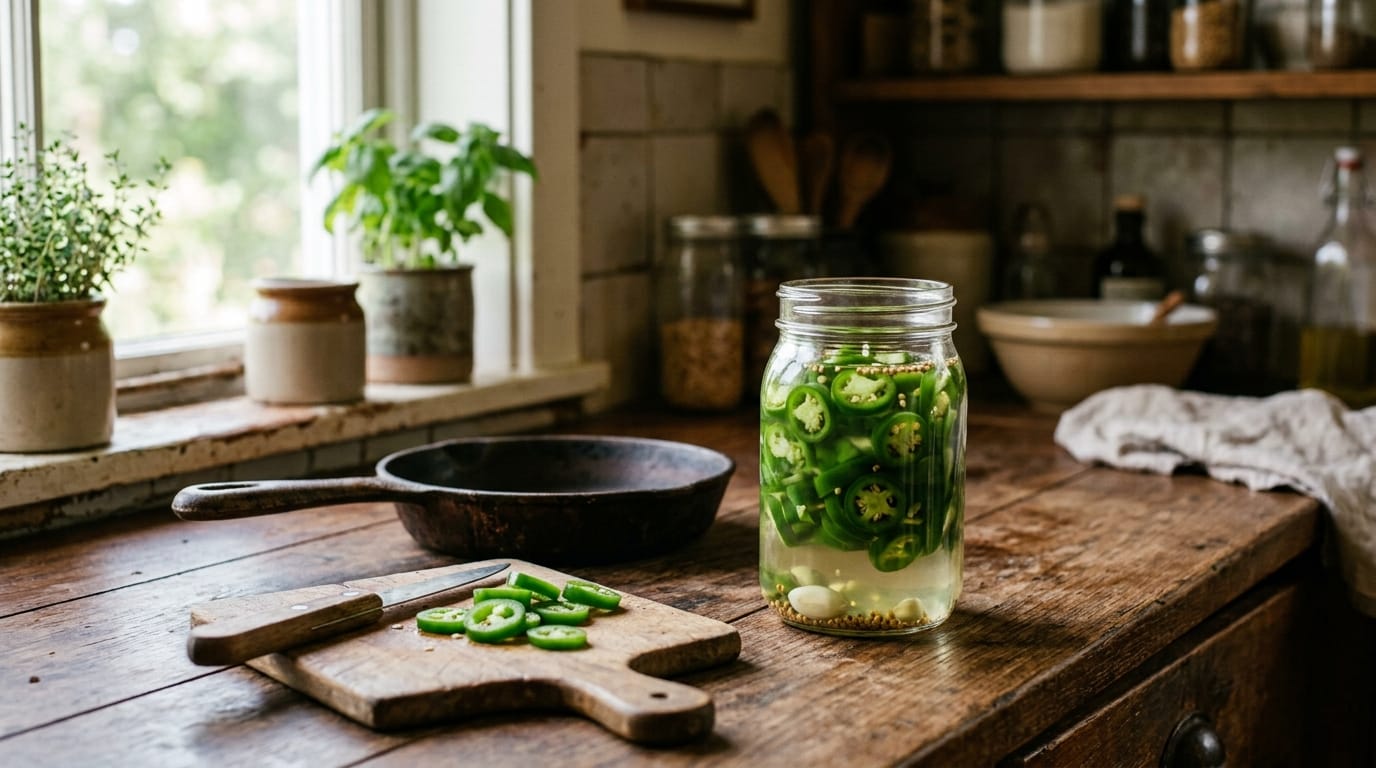
If the whole point was a jar of rings for tacos this week, canning is more machinery than the job needs. Refrigerator pickles take about fifteen minutes.
Slice the jalapenos into rings, pack them into a clean jar with a little garlic and whatever seeds you like, and pour over a hot brine of equal parts vinegar and water with salt and a little sugar dissolved in it. Let the jar cool on the counter, then refrigerate. They are good the next day and better after a week.
Be clear about what you have made, though. These are not shelf stable. There is no processing, no tested acidity, and nothing sterilizing the jar, so they live in the refrigerator and get eaten within a month or two. That is not a lesser version, it is a different product with a different storage rule, and the same logic applies to refrigerator cucumber pickles.
What you must not do is make a refrigerator recipe and then decide to process it in a canner because you made too much. Untested brine ratios plus a boiling water bath is exactly the combination the tested recipes exist to prevent.
Rings, Whole, or With Carrots?
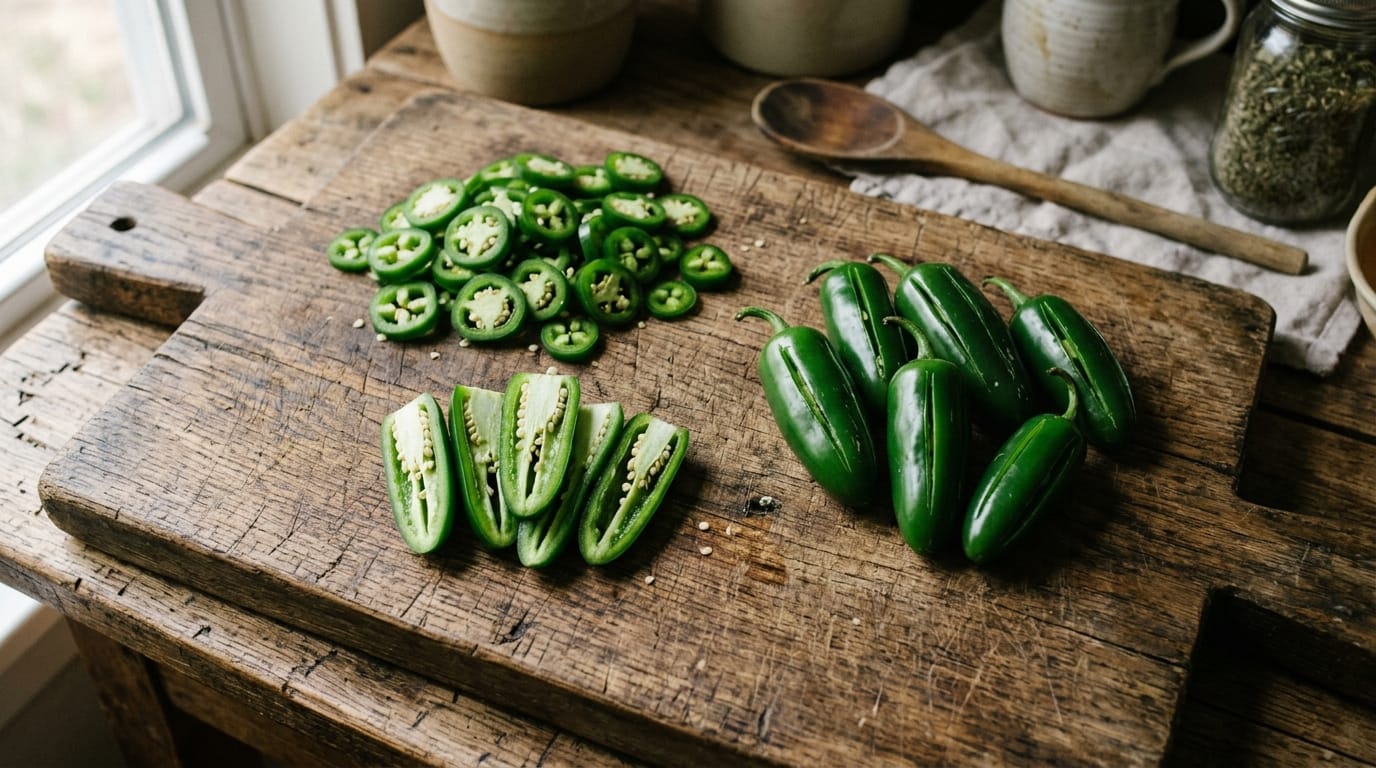
Three variations people ask about, with honest answers about which are covered by a tested recipe.
Rings
Covered, by the first recipe. Rings are the standard because they pack tightly, take up brine fast, and come out of the jar ready to put on something.
Whole Peppers
Covered, by the second recipe, which tells you to leave small peppers whole and cut 2 to 4 slits in each. The slits are the point. A sealed whole pepper does not let brine in, which means the inside is not pickled and the acidity you are relying on has not reached it.
With Carrots, the Escabeche Style
This is the jar you get at a Mexican restaurant, and it is the one I would be most careful with. Carrots and onions are low-acid vegetables, and adding them to a tested pepper recipe changes the balance the recipe was tested at. There is no NCHFP recipe for jalapenos with carrots that I could find.
The safe version is to make it as a refrigerator pickle, where nothing is being stored at room temperature and the acidity does not have to carry the whole load. It is genuinely good made that way, and it takes twenty minutes.
Why Your Pickled Jalapenos Went Soft
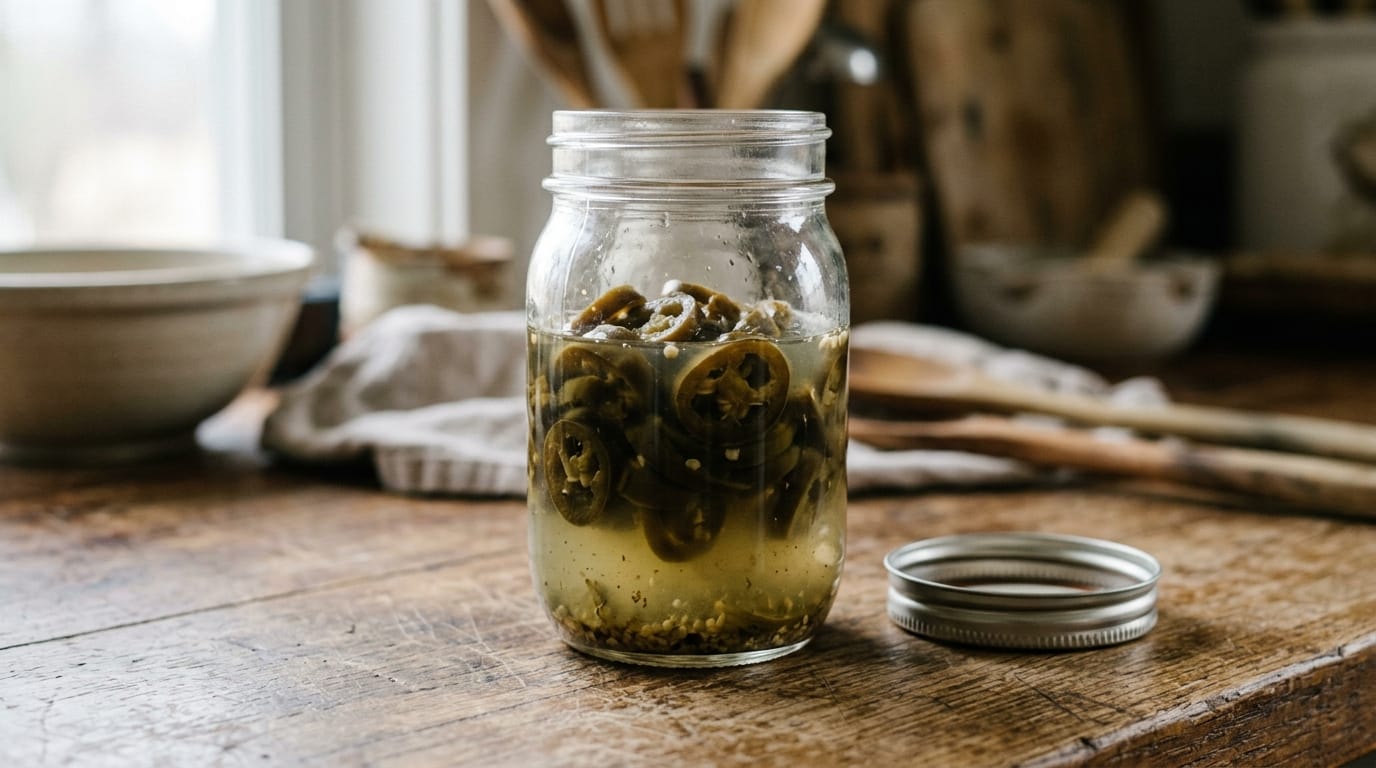
| What happened | Why | What to do next time |
|---|---|---|
| The rings are limp | Usually old peppers, or the lime step skipped or shortened. | Use firm fresh peppers canned the day you pick them, and follow the lime soak as written if you want crisp rings. |
| The brine went cloudy | Table salt with anti-caking additives, hard water, or seeds settling out. | Use canning or pickling salt and soft water. Seed sediment is cosmetic. |
| The peppers floated | Packed loosely, or air left in the jar. | Pack more firmly and use the bubble tool. A sealed jar is still fine. |
| The jar did not seal | Brine or seed debris on the rim. | Wipe rims with a clean damp cloth before the lid goes on. Refrigerate that jar and eat it within a few weeks. |
| They are far hotter than expected | Jalapeno heat varies enormously by plant, and rises late in the season and in dry, stressed growing conditions. | Remove seeds and the pale membrane for a milder jar, or mix in some sweet peppers. |
If You Wanted Sweet Instead
Everything above makes a savory, vinegary pickle. If what you actually had in mind was the sweet-hot version that goes over cream cheese, that is a different product with a different tested recipe, and we covered cowboy candy, the candied jalapeno separately.
Same pepper, same gloves, same canner. The difference is cups of sugar and a simmer in syrup before jarring, which gives you soft sweet rings rather than firm sharp ones. Plenty of people make both in the same afternoon from the same picking, which is a reasonable use of one set of gloves.
Storage and Shelf Life
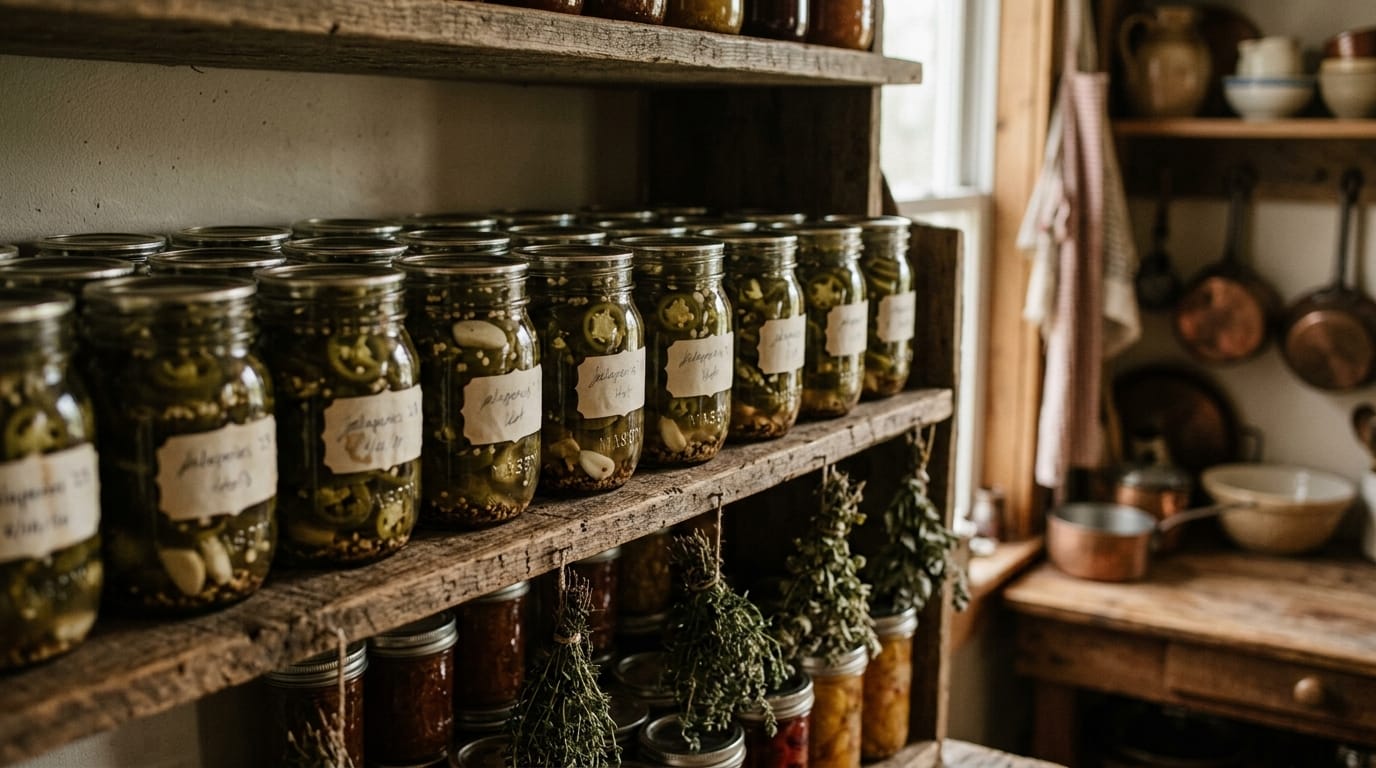
Let the jars sit undisturbed for 12 to 24 hours, then take the bands off and check the seals. Press the center of each lid: it should not flex. Wash the outside of the jars, label them with the date, and store them without the bands somewhere cool, dark and dry.
Plan to use them within a year for best quality. A sealed jar stays safe longer than that, but pickled peppers soften gradually on the shelf, and a jar of jalapenos is not something you want to find at the back in three years. Once a jar is open it goes in the refrigerator and keeps for a couple of months.
Give them at least a couple of weeks before you open the first one. Pickles taste raw and sharply vinegary straight out of the canner and settle down considerably, which is the same pattern as every other project on the preserving shelf.
Working through a pepper glut?
The Beginner’s Canning eBook covers water-bath canning end to end: altitude and headspace charts, the acidity rules that decide what is safe, and step-by-step walkthroughs for a first season. The Canning Starter Bundle adds both Quick Kits for jar prep and fermenting.
The Free Garden Starter Pack
Five printable pages that take the guesswork out of a first season, plus a short email every week or two when something is worth planting, picking, or putting up.
- A garden planning worksheet you can actually fill in
- A seed-starting and planting calendar
- A harvest log to track what really produced
No spam, ever. Unsubscribe in one click.
Thank you. You are on the list.
Your Garden Starter Pack is ready right now. Grab it here:
Download the pack (PDF)Keep an eye on your inbox. The next seasonal guide lands there first.
Frequently Asked Questions About Canning Jalapenos
Do I have to use pickling lime to can jalapenos?
No, but you have to choose your recipe accordingly. The tested jalapeno rings recipe includes a lime soak for crispness and a mandatory triple rinse afterwards. If you would rather not use lime, use the tested Pickled Hot Peppers recipe, which never involved it. What you should not do is delete the lime step from the rings recipe and follow the rest.
Can I can jalapenos without pickling them?
Not in a boiling water canner. Peppers on their own are a low-acid vegetable, so plain canned peppers have to be pressure canned. Pickling adds the vinegar that makes a boiling-water process valid, which is why every water-bath jalapeno recipe is a pickle.
How long do you process pickled jalapenos?
Ten minutes for pints in a boiling water canner at up to 1,000 feet, for both tested recipes. Add five minutes between 1,001 and 6,000 feet, and ten minutes above 6,000. The clock starts when the water comes back to a full rolling boil.
Why are my canned jalapenos mushy?
Most often the peppers were not fresh enough, or the crisping step was skipped. Peppers canned the day they are picked hold up far better than ones that sat in a bowl for a week. Overcooking the brine or processing longer than the recipe says will also soften them.
Can I add carrots and onions like the restaurant version?
Not to a shelf-stable jar without a tested recipe that includes them, because both are low-acid and they change the acidity the recipe was validated at. Make that version as a refrigerator pickle instead, where it is both safe and very good.
Do pickled jalapenos need to be refrigerated?
Properly canned and sealed jars do not, until you open them. After opening, refrigerate. Quick refrigerator pickles that were never processed live in the refrigerator from the start and should be eaten within a month or two.
Before You Put the Gloves On
Pick your recipe first, because the two of them start on different days. The rings need you to begin the lime soak the evening before. The hot pepper recipe is a single afternoon, start to sealed jars.
Ours is usually the second one, because the peppers come in faster than I can plan two days ahead, and because a tray of peppers under the broiler is a better job than mixing lime water. The rings are still better on nachos. Some years I get organized enough to prove it.