Free Range vs Pasture Raised: What the Labels Actually Mean
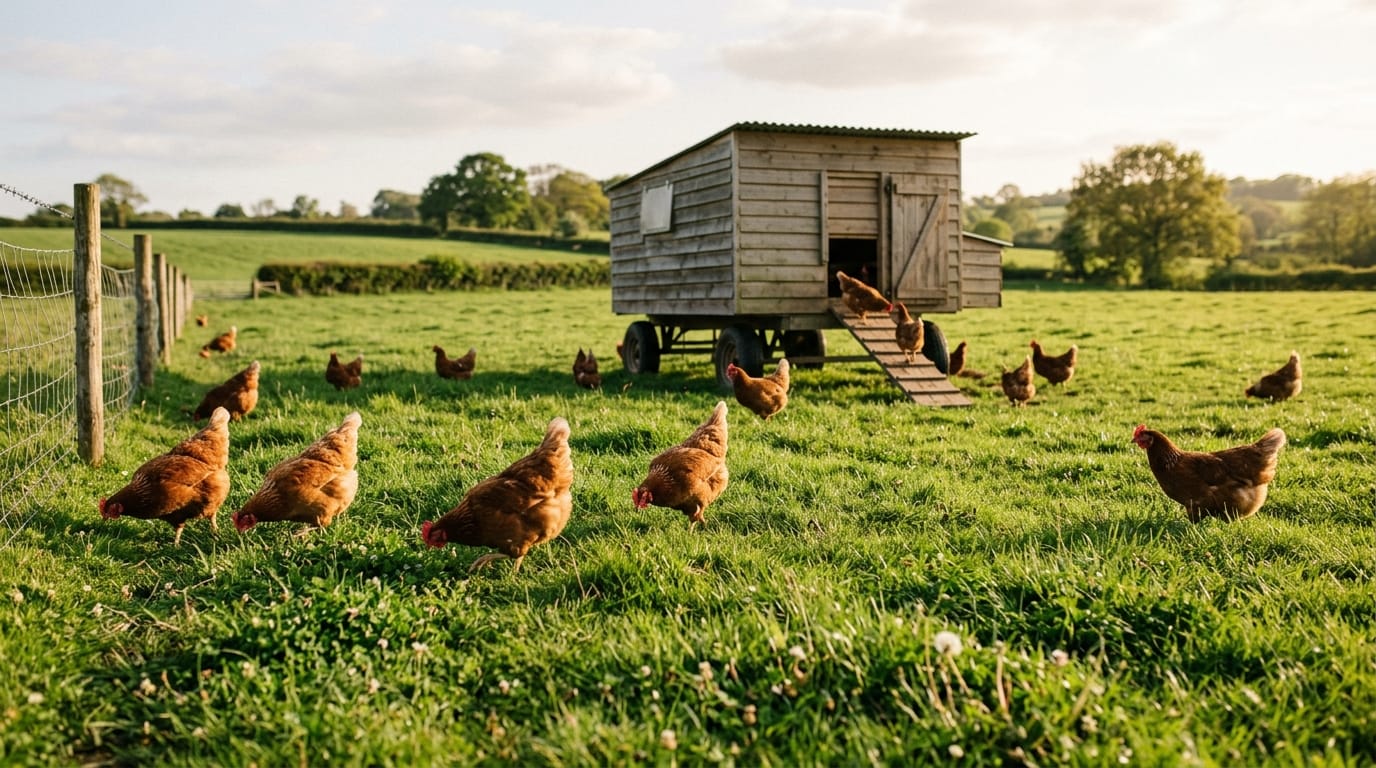
There is a moment in front of the egg case that most people have had. Six cartons, prices running from about three dollars to about nine, and every one of them printed with the same picture: a red barn, a green field, two or three hens standing in sunshine.
You pick up the expensive one and read the front. Pasture raised. You pick up the middle one. Free range. The cheap one says cage free, which sounds close enough to the other two that it is hard to see where six dollars went.
The frustrating part is that the difference is real and it is large. It just is not printed on the front of the carton, and one of the three terms is not defined by anyone at all unless a certifier is standing behind it. This guide covers what each label legally guarantees, which ones the USDA actually regulates, the space each one gives a hen, and the gap between two of them that is bigger than most people would guess.
Table of Contents
The Short Answer
- Cage free means no cages. It says nothing about how much space a hen gets, nothing about going outdoors, and it is not verified by inspection.
- Free range means the hens are allowed access to the outside. It does not say how much outside, for how long, or whether anything is growing on it.
- Pasture raised is the strongest claim and, on its own, the least defined. The USDA does not set requirements for it.
- The numbers only exist when a certifier is attached. Certified Humane free range is 2 square feet per bird. Certified Humane pasture raised is 108 square feet per bird.
- Organic is the one term on the carton the USDA genuinely regulates, with defined standards and on-farm inspections.
- No hormones on an egg carton tells you nothing. Federal law already requires it of every producer.
Every Egg Label, Side by Side
This is the whole article in one table. Everything below it is detail.
| Label | Outdoor access | Space per bird | Who enforces it |
|---|---|---|---|
| Cage free | Not required | Not specified | Nobody, unless certified. Not verified by inspection. |
| Free range | Access to the outside required | Not specified by the USDA. 2 sq ft under Certified Humane. | USDA expects producers to substantiate the claim. Certifiers verify it. |
| Pasture raised | Not defined by the USDA. Year round under Certified Humane. | Not defined by the USDA. 108 sq ft under Certified Humane. | Only a certifier. The bare term has no USDA requirements behind it. |
| Certified organic | Required. Organic hens are considered free range. | Not stated as a figure on the carton | The USDA, with defined standards and on-farm inspections. |
| Grade AA, A or B | Nothing to do with housing | Nothing to do with housing | The USDA, but it grades the egg, not the hen. |
The last row catches people out. Egg grades describe the shell, the white, the yolk and the air cell. Certified Humane puts it plainly: grades are not indicators of hen welfare or nutrition, only the quality of the egg itself. A Grade AA egg from a crowded barn is still Grade AA.
Cage Free
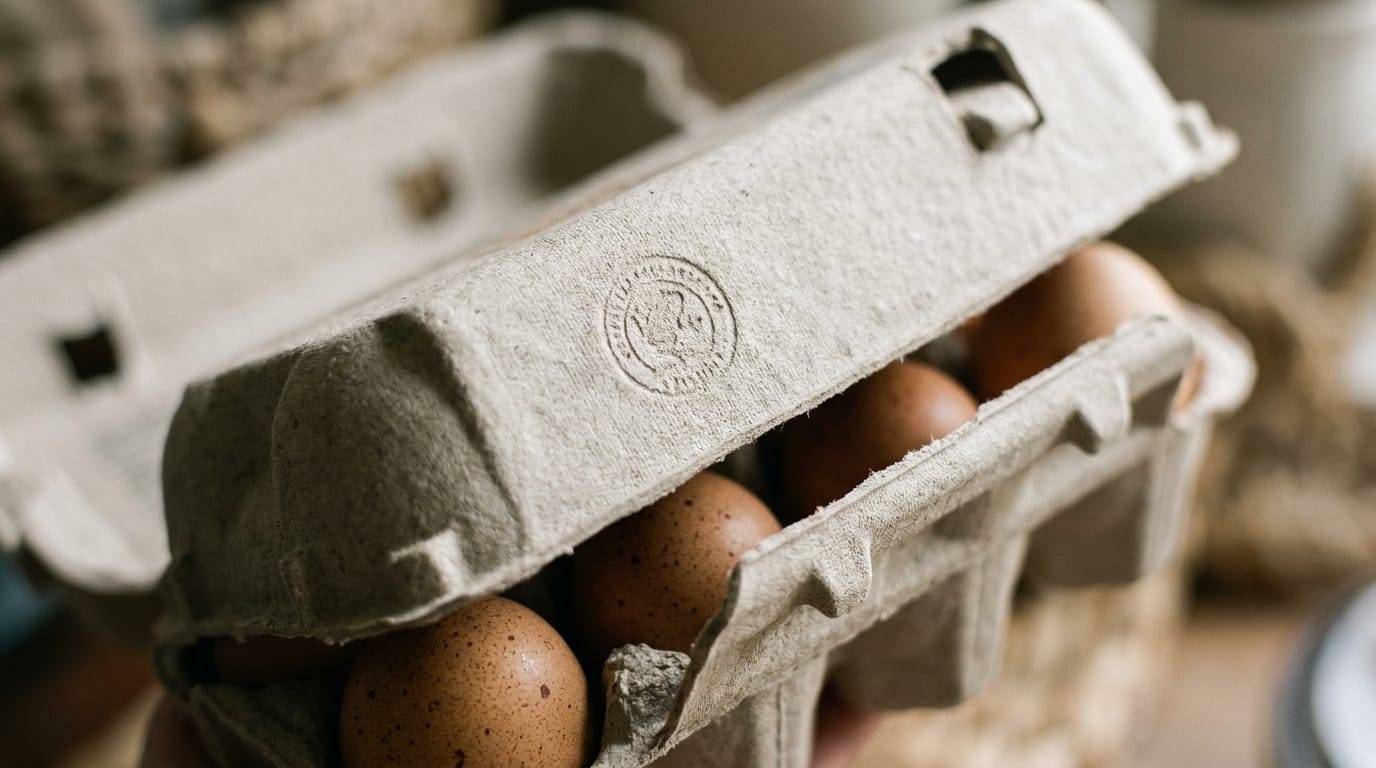
Cage free means exactly one thing: the hens are not in cages. They live loose in a barn and can move around inside it.
What it does not promise is almost everything else. Certified Humane’s own summary is that the label does not specify or guarantee how much space the hens are given, does not guarantee access to the outdoors, and is not enforced by inspection. Hens can be, and often are, packed tightly into a shed.
This is a genuine improvement over battery cages, and it is worth what it is worth. It is not a description of hens outdoors, which is what the carton photograph is usually suggesting.
Free Range
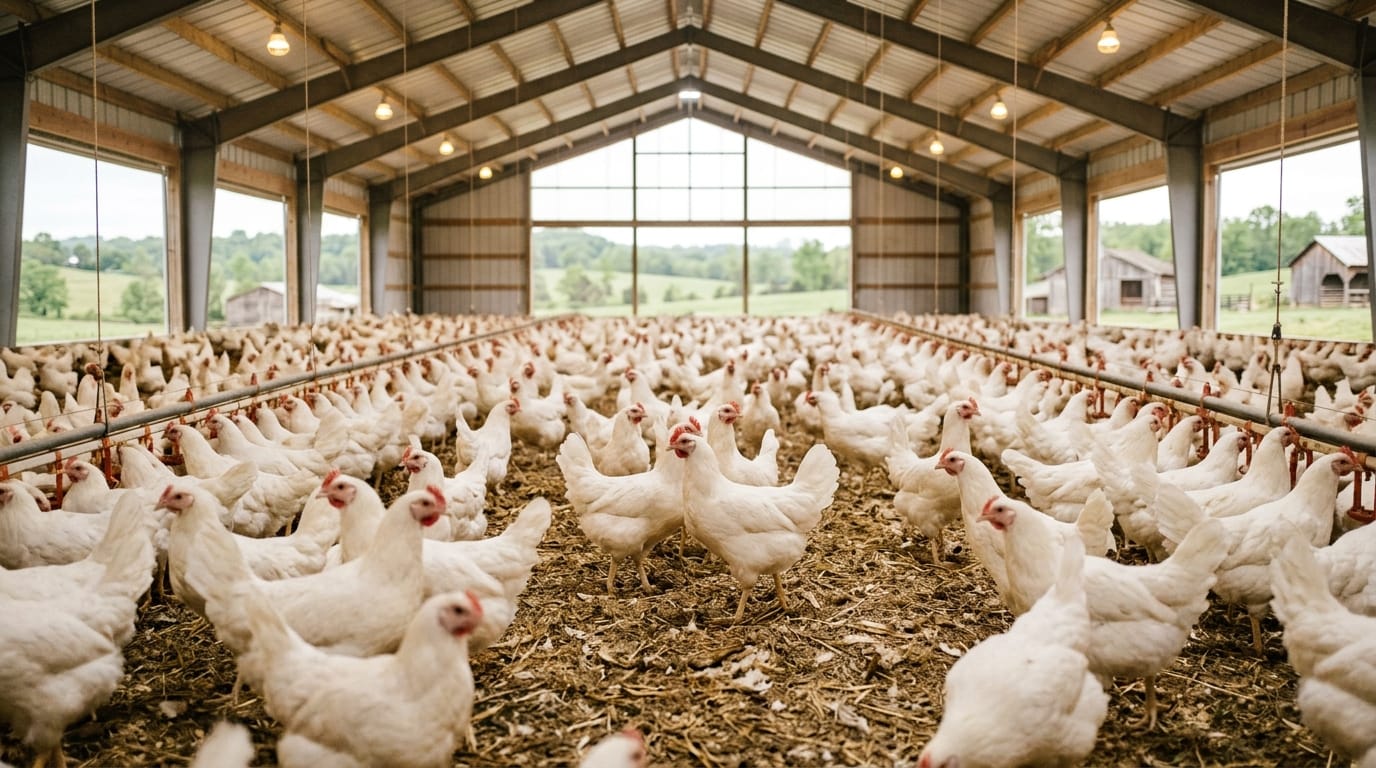
Free range adds one requirement to cage free: the birds are allowed access to the outside. According to the USDA, as Certified Humane summarizes it, free range only means that hens are allowed access to the outside.
Read that sentence carefully, because the load-bearing word is access. It does not say how large the outdoor area is, how long the birds are out there, whether they actually go, or whether the ground is grass, gravel or bare dirt. Certified Humane makes the point bluntly: technically a producer could put in a few small windows and call the birds free range.
That is not an accusation that every free-range producer does this. It is a description of how much room the term leaves. If you want a floor under it, you need a certifier, and then the number is 2 square feet per bird with at least six hours outdoors on weather-permitting days.
Pasture Raised
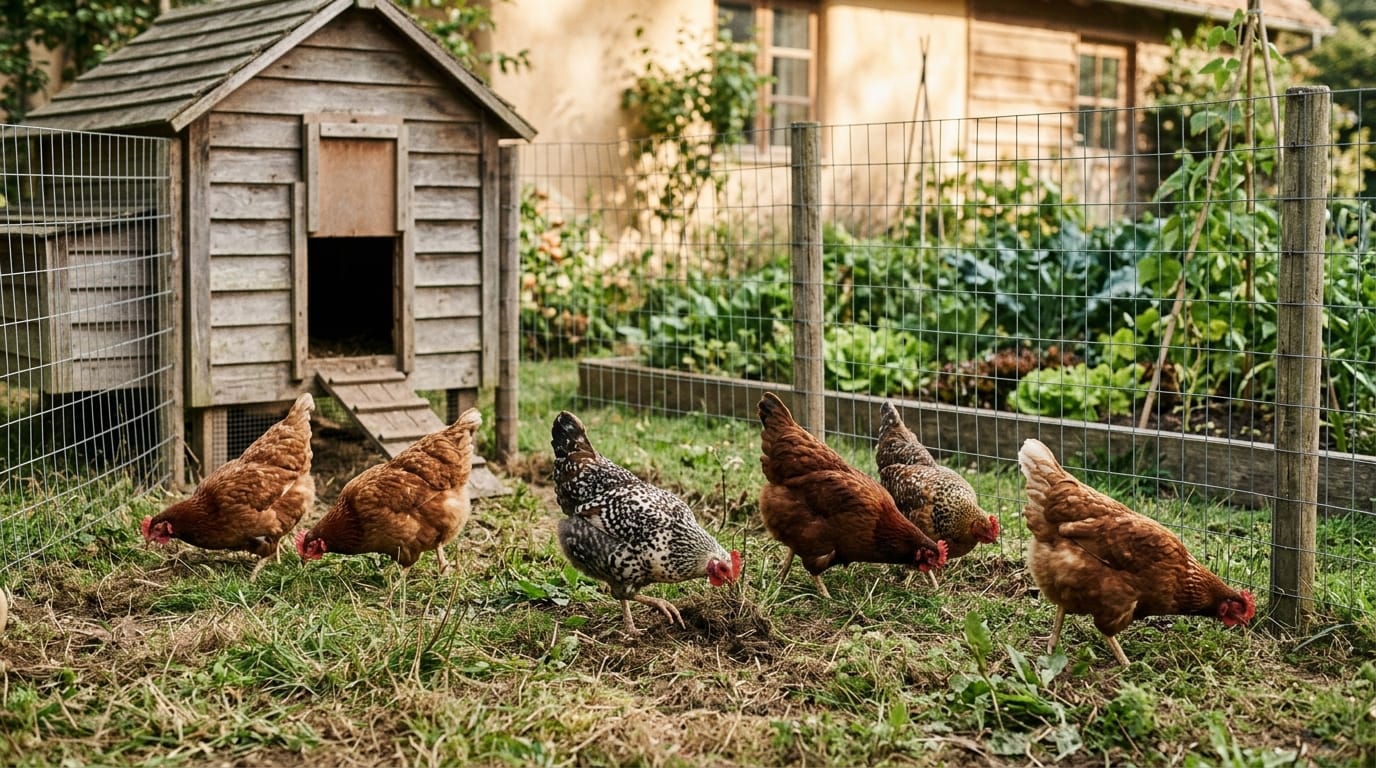
Pasture raised is the label most people reach for when they want the picture on the carton to be true, and it usually is closest to it. It is also, on its own, the weakest legally.
Certified Humane describes pasture raised as a step above free range and cage free, and a good indicator that birds are mostly raised outdoors with the ability to roam and forage. Then comes the caveat that matters: the requirements for this label are not established by the USDA, so it is best when it comes attached to an animal welfare certification.
So the phrase itself is doing no legal work. A carton that says pasture raised and carries no certification seal is making a claim it has defined for itself. A carton that says pasture raised and carries a certifier’s seal is making a claim somebody inspected.
This is the single most useful habit to take to the store: stop reading the words on the front and start looking for the seal.
Where the USDA Draws a Line, and Where It Does Not
It is worth being precise about the regulator’s role here, because it is smaller than most shoppers assume.
The USDA’s Food Safety and Inspection Service publishes a consumer glossary of meat and poultry labeling terms. It defines natural, organic, no hormones, no antibiotics, fresh, kosher, halal and a dozen others. As of its most recent update, free range, cage free and pasture raised do not appear on that page at all.
What FSIS does have is a guideline on substantiating animal-raising claims, updated in August 2024, which tells producers what documentation they should keep to support a claim like pasture raised. It is worth understanding what that is and is not. It governs whether a producer can defend the words they chose. It does not set a square footage that all pasture-raised hens must get. And FSIS attaches the standard disclaimer to it: guidance documents lack the force and effect of law unless expressly authorized by statute.
Two labels on the carton are different. Organic is regulated by the USDA with defined standards and on-farm inspections, and organic hens are considered free range, fed only organic feed, and never given antibiotics or hormones. And no hormones is regulated in a way that makes it meaningless as a comparison: federal law already requires that hens be raised without supplemental hormones, so the claim is true of every carton in the case, including the ones that do not print it.
The Certifications Are Doing the Real Work

If the words are soft, the seals are not. Certified Humane lists the labels that are defined and enforced by third-party animal welfare organizations: Certified Humane, Animal Welfare Approved, American Humane Certified, Global Animal Partnership, and the United Egg Producers certifications. To use one, a farm has to pass an inspection.
That inspection is the difference. It converts a marketing phrase into a number somebody checked. It is also why two cartons that both say pasture raised can be genuinely different products, and why the one with a seal usually costs more.
You do not need to memorize the certifiers. You need to notice whether there is one.
Two Square Feet Against 108
Here is the comparison that makes the whole thing concrete. Under Certified Humane’s standards:
| Certified Humane label | Space per bird | Time outdoors |
|---|---|---|
| Free range | 2 square feet | Outdoors at least 6 hours per day, weather permitting |
| Pasture raised | 108 square feet (no more than 1,000 birds per 2.5 acres) | Outdoors year round, minimum 6 hours per day, weather permitting, on pasture covered mainly with living vegetation |
Fifty-four times the space. Both labels sound like outdoor birds, both cartons show a field, and the gap between them is the difference between a doorway onto a small yard and an actual paddock with grass growing in it.
That is the number to carry around. When someone asks what the difference is between free range and pasture raised, the honest answer is not a paragraph about philosophy. It is 2 against 108, and only if there is a seal on the box.
The Label You Cannot Buy
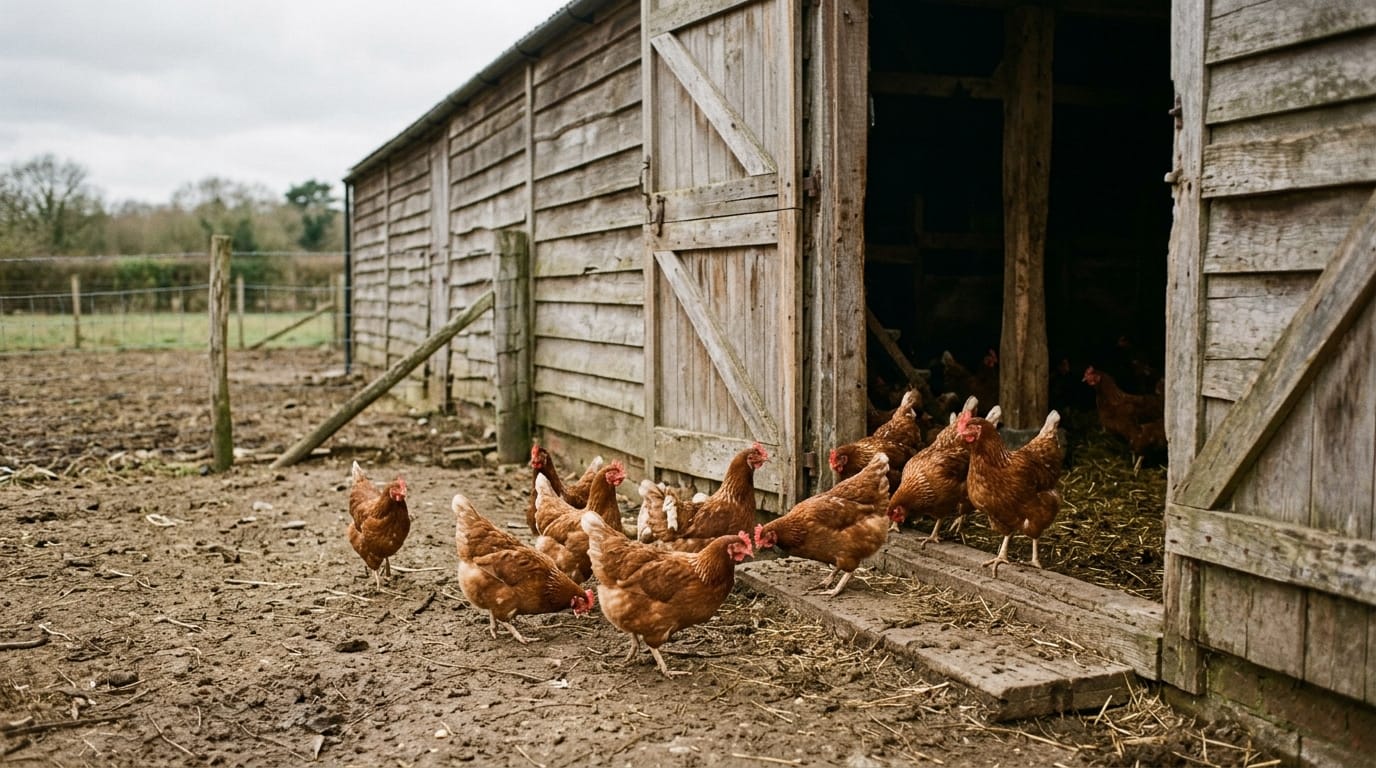
Now the part that only matters if you are reading this on a homesteading site, which you are.
Run the arithmetic on a small backyard flock. Six hens with a modest 20 by 30 foot run have 600 square feet between them, which is 100 square feet each. Six hens with the run of a quarter-acre yard for part of the day are past 108 square feet before lunch. A typical backyard setup clears the strictest commercial pasture-raised standard without trying, and most people who keep chickens have never thought of it in those terms.
This is not an argument that everyone should keep chickens. Hens are a daily commitment, they cost more per egg than the cheap carton for the first year or two, and they do not stop needing you in February. It is an argument that the premium you are paying at the egg case is buying space, and space is the one input a backyard has in surplus.
If you are working out whether that is a trade you want to make, the practical questions are how many birds, what housing, and which breeds. We covered building a coop and run with the space each bird needs, the breeds that actually lay well if eggs are the point, and when to expect the first egg, which is later than most people plan for. The feeder and waterer setup is the part that decides how much of your morning this takes.
One more honest note for anyone making the comparison on freshness rather than welfare. Supermarket eggs are often several weeks old by the time you buy them, and there is a simple way to check what you have: our guide to telling whether an egg is still good covers the float test and the three others worth knowing.
What About Chicken Meat Rather Than Eggs?
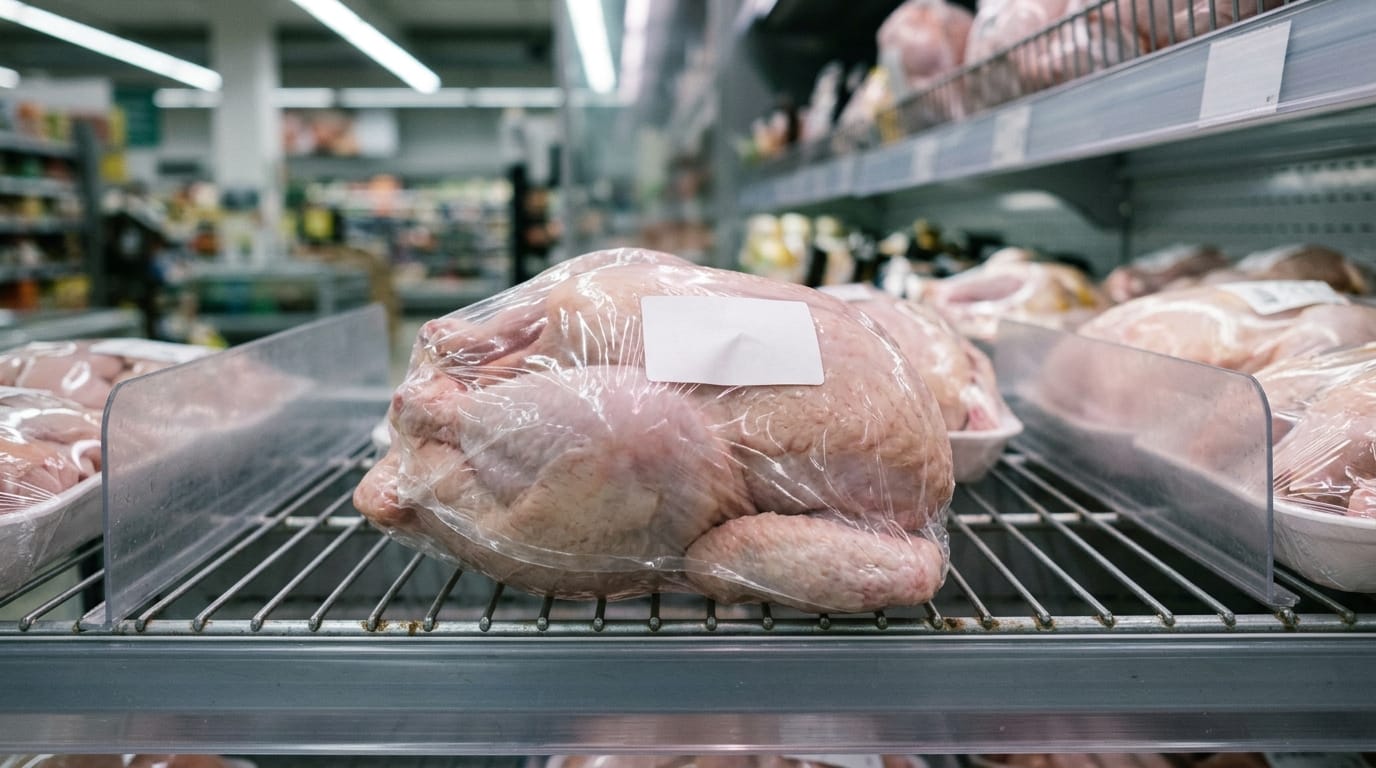
The same words appear on packages of chicken, and they behave the same way. Free range on a whole bird means the flock had access to the outside. Pasture raised on a whole bird is a claim the producer has defined and, under the 2024 FSIS guideline, should be able to document if asked.
Two differences are worth knowing. Chicken meat labels fall under FSIS, which reviews label claims before they go on the package, so there is a paperwork step behind the words even where there is no numeric standard. And FSIS now encourages producers to use third-party certification to back these claims up, which is the same conclusion the egg aisle reaches by a different road: the seal is the signal.
The other thing to know is that meat birds live a fraction as long as laying hens, so the practical difference a label makes is compressed into a much shorter window.
Thinking about skipping the labels entirely?
The Backyard Chickens Starter Guide covers what a first flock actually costs and needs: choosing breeds, sizing a coop and run, feed, the first winter, and what to expect from your own eggs in year one.
The Free Garden Starter Pack
Five printable pages that take the guesswork out of a first season, plus a short email every week or two when something is worth planting, picking, or putting up.
- A garden planning worksheet you can actually fill in
- A seed-starting and planting calendar
- A harvest log to track what really produced
No spam, ever. Unsubscribe in one click.
Thank you. You are on the list.
Your Garden Starter Pack is ready right now. Grab it here:
Download the pack (PDF)Keep an eye on your inbox. The next seasonal guide lands there first.
Frequently Asked Questions About Egg Labels
What is the difference between free range and pasture raised eggs?
Free range requires that hens are allowed access to the outside, with no stated amount of space or time. Pasture raised has no USDA requirements at all on its own. Where both are certified by Certified Humane, free range means 2 square feet per bird and pasture raised means 108 square feet per bird with year-round access to growing vegetation.
Is pasture raised the same as cage free?
No, and they are the two ends of the range. Cage free only means the hens are not in cages and carries no outdoor requirement at all. Pasture raised, when certified, means the birds live outdoors on vegetation. Uncertified, pasture raised is a claim the producer wrote themselves.
Are pasture raised eggs worth the extra money?
If what you are buying is hen welfare and outdoor space, a certified pasture-raised carton delivers something measurably different from cage free, and the price reflects real cost: land, fencing, moving birds, and fewer hens per acre. If you are buying it expecting a nutritionally different egg, that is a separate claim that the label itself does not make. An uncertified pasture-raised carton is the one worth thinking twice about.
Does cage free mean the hens go outside?
No. Cage free does not guarantee access to the outdoors and is not enforced by inspection. The hens are loose inside a building rather than in cages, which is the entire claim.
Which egg label is the most trustworthy?
Any of them, if a third-party certifier’s seal is on the carton, because that means a farm passed an inspection. Without a seal, certified organic is the one term the USDA itself regulates with defined standards and on-farm inspections.
Do egg grades AA, A and B tell me anything about the hens?
Nothing at all. Grades describe the shell, white, yolk and air cell of the egg, not the conditions the hen lived in. Certified Humane is explicit that grades are not indicators of hen welfare or nutrition.
What to Do at the Egg Case
Turn the carton over and look for a certifier’s seal before you read a single word on the front. If there is one, the claim has a number behind it and somebody checked. If there is not, you are reading marketing, and the only term that still means something on its own is certified organic.
And if you find yourself standing there doing this arithmetic every week, working out what 108 square feet per bird would cost you, it is worth knowing that six hens and a decent run in your own backyard clear that bar on the first morning.