How to Store Potatoes Without a Root Cellar
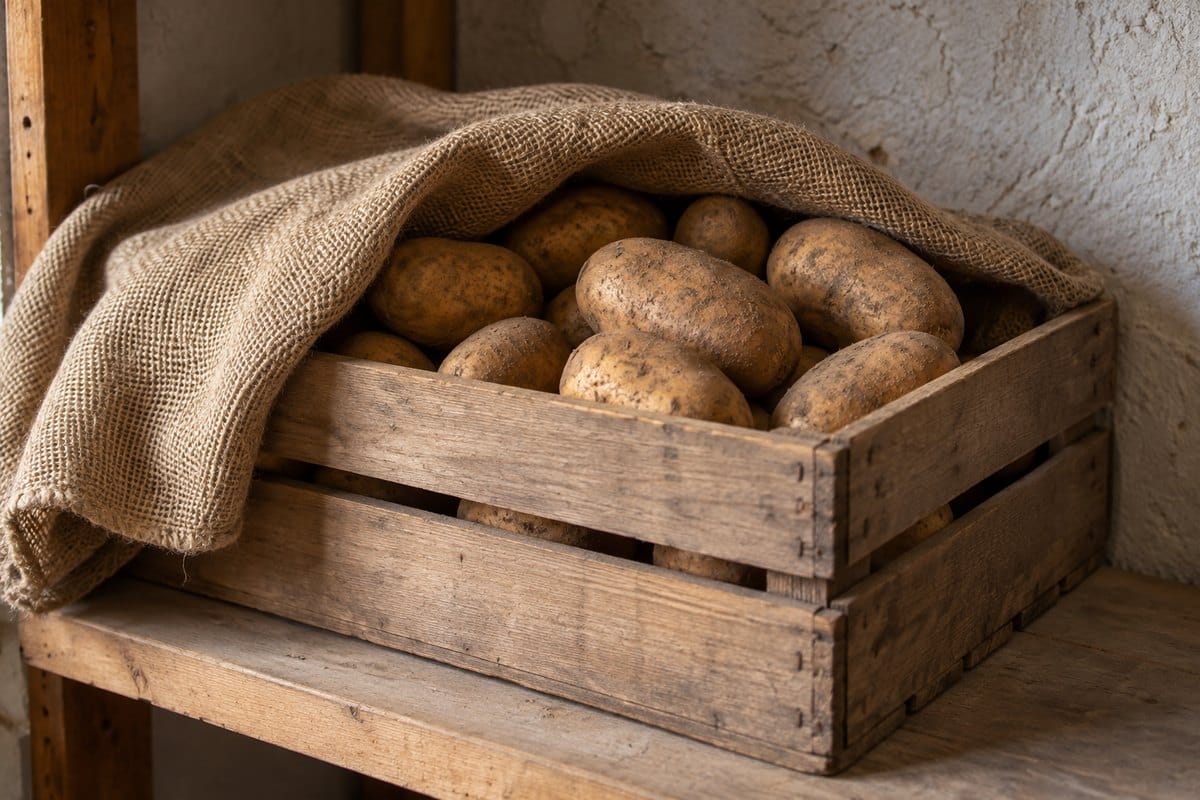
A paper sack settles onto the kitchen floor with a soft thud. There are more potatoes inside than you will cook this week, and the cupboard beside the oven suddenly seems a little too warm. A good harvest or a useful bargain still needs somewhere sensible to go.
Knowing how to store potatoes starts with matching the amount you have to the space you actually have. A small grocery bag needs a cool, dark place and regular use. A homegrown crop intended for winter needs sorting, curing, and closer attention to temperature and humidity. You do not need to build a root cellar to make either job easier.
Quick Answer
- Store whole raw potatoes away from light, with ventilation and dry surfaces. Keep them separate from ripening fruit.
- For a household supply, a cool spot around 45 to 50 degrees Fahrenheit is useful. A warm kitchen means buying or keeping less, not expecting months of storage.
- Cure mature homegrown potatoes before long-term storage. Grocery potatoes do not need you to repeat a harvest-curing routine.
- Use a breathable container, not an airtight tub. Humid air and wet potatoes are not the same thing.
- Check the batch regularly. Remove spoiled potatoes promptly, and discard heavily green or badly sprouted, shriveled tubers.
These priorities follow North Dakota State Extension’s potato guide and the Michigan State potato food-safety sheet. The details below separate short-term kitchen storage from keeping a harvested crop.
Table of Contents
Start With the Potatoes You Have
Before choosing a box, empty the bag where you can see each potato. This is a quick sorting job, not a reason to scrub the entire batch.
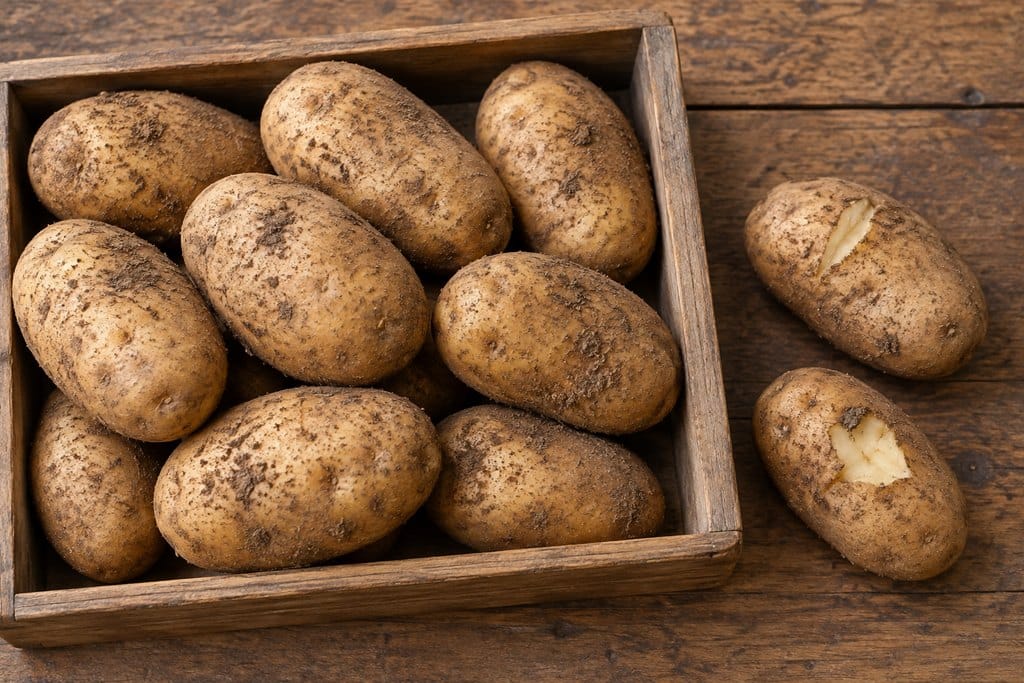
- Keep for storage: firm, sound potatoes with intact skins.
- Use promptly: otherwise sound potatoes with a fresh harvest nick or scrape. Keep these apart from the storage batch.
- Discard: potatoes with rot, mold, leaking or mushy areas. Do not put a questionable potato back in the sack to decide about later.
A potato dug early for a summer meal is different from a mature storage potato. New potatoes have thin skins and lose moisture readily. Treat them as food to use soon, not as the beginning of a winter reserve. NDSU explains why maturity and a well-set skin matter.
For grocery potatoes, start with this inspection and go straight to storage. Their age and handling before purchase are usually unknown, so the purchase date is not a reliable starting point for a months-long promise. Buy an amount that fits your meals and storage space.
If you grow your own, keep this job alongside the other end-of-season tasks in our fall vegetable garden guide. The harvest is not finished until you have decided what stays fresh and what needs another preservation method.
Cure a Homegrown Storage Crop First
Curing gives mature, freshly harvested potatoes time to develop tougher skins and heal minor harvest wounds. It does not turn a rotten or diseased potato into a sound one.
For a clearly defined home-garden method, Iowa State Extension recommends 50 to 60 F, 85 to 90 percent relative humidity, and two weeks of curing. Afterward, its long-term target is about 40 F with 90 to 95 percent relative humidity. Those are controlled-storage conditions, not a description of every basement.
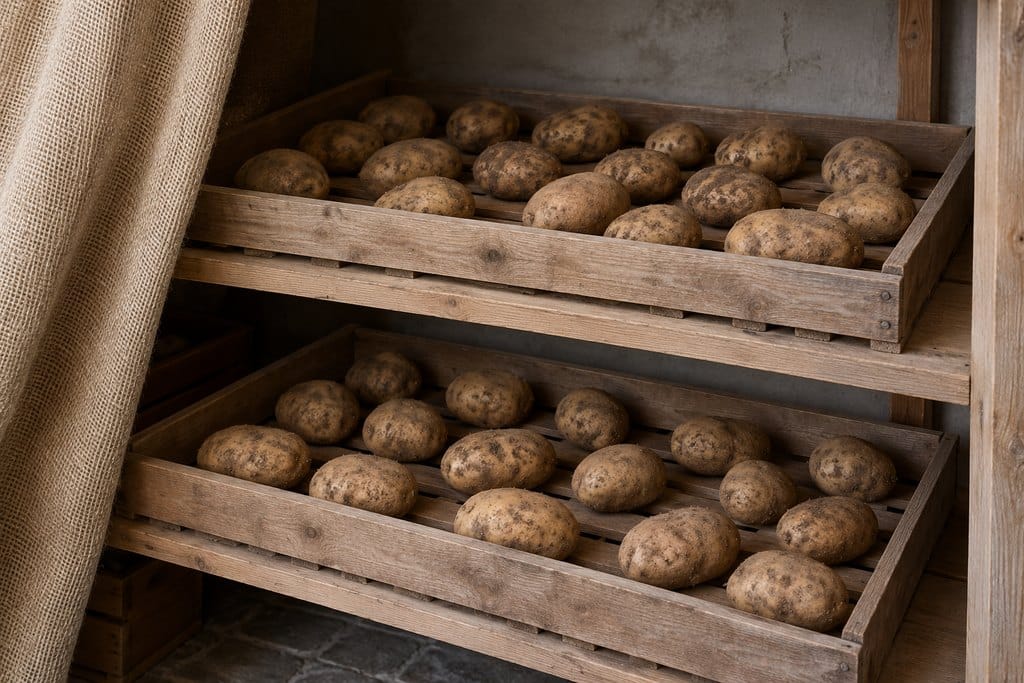
Set sound potatoes in shallow trays in a dark space where air can circulate. Handle them gently. Brush off loose dry soil rather than soaking the crop for storage; save thorough washing for food preparation. If potatoes are wet, let their surfaces dry before putting them away.
A thermometer and humidity meter make the room less of a guessing game. Check the spot you intend to use, not the weather forecast outside. A utility room can be cool at night and warm beside a running appliance during the day.
Do not try to achieve high humidity by sealing wet potatoes in a container. NDSU distinguishes the humid air that limits moisture loss from condensation that encourages rot. If your home cannot provide suitable curing or storage conditions, keep a smaller batch and plan to use it sooner.
Choose a Household Location, Not Just a Container
A useful location stays cool, excludes light, and lets you get to the potatoes without moving half the room. Start with the spaces you already have. Measure their temperature before committing a large harvest.
| Location | When It May Work | What to Check |
|---|---|---|
| Cool basement shelf | A possible homegrown-crop storage area | Temperature, humidity, darkness, pests, and whether heating equipment warms the room |
| Unheated spare room or pantry | A smaller household supply | Actual temperature, sunlight, and nearby appliances |
| Insulated garage | Only where conditions stay suitable | Freezing nights, warm afternoons, and separation from fuel, chemicals, and vehicle activity |
| Ordinary kitchen cupboard | A short-term fallback | Heat from the oven, dishwasher or pipes; keep the quantity small |
These are places to evaluate, not guaranteed storage solutions. A dark garage that freezes is not an improvement over a pantry. A basement next to the furnace may not be cool at all. Move the potatoes if your measurements stop matching the conditions you chose.
For a modest supply, Michigan State recommends a cool, humid, dark, ventilated setting around 45 to 50 F. If all your available spaces are warmer, the useful adjustment is a shorter rotation and fewer potatoes, not a more elaborate storage bin.
Autumn brings several different storage jobs at once. Our frost-protection guide helps with crops still outside; these potato instructions are for sound tubers already harvested.
Choose a Breathable Container and Block the Light
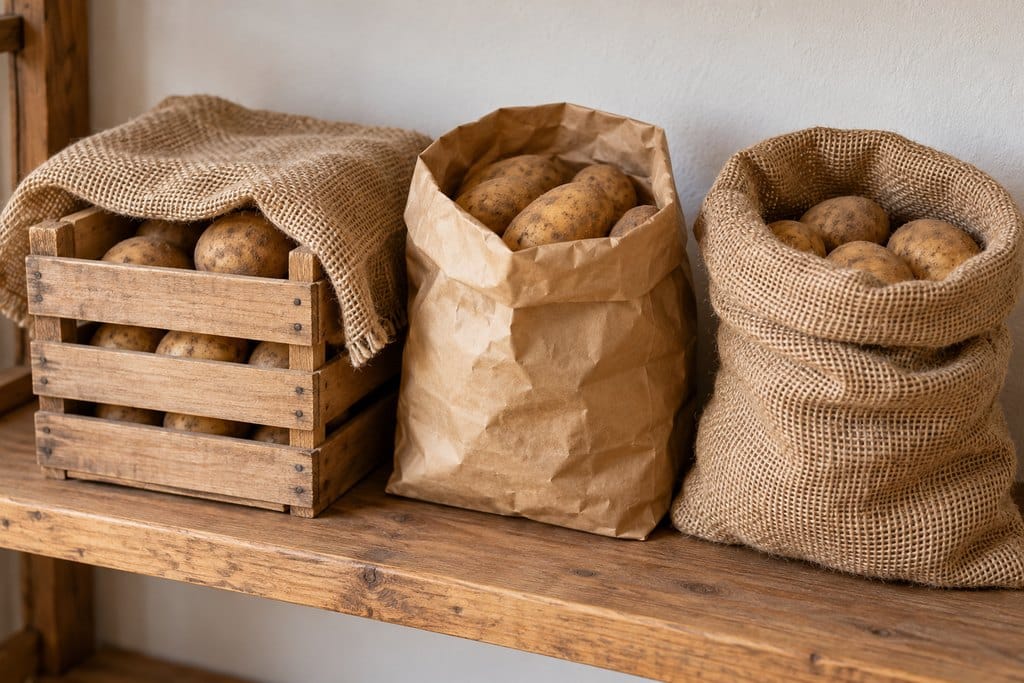
A paper bag, burlap sack, or slatted bin can make the routine easier. The container should let air move and let you inspect the contents. An opaque bag helps exclude light; an open crate needs a genuinely dark location or a loose, breathable light-blocking cover.
Oregon State Extension recommends perforated plastic bags or well-ventilated containers, which hold some humidity while still letting air move. A clear plastic bag under the kitchen lights does not solve the darkness problem, even if it has holes.
- Do not cram the container so tightly that you cannot inspect it.
- Keep a separate, easy-to-reach batch for the potatoes you intend to cook next.
- Use a clean shelf away from household chemicals and pest activity.
- Keep ripening apples and other fruit elsewhere, rather than in the same storage bin.
Check the cover as well as the potatoes. Damp paper or condensation means the setup needs attention. The aim is protected storage with air exchange, not a sealed package.
How Long Will Potatoes Keep?
There is no dependable shelf-life number that applies equally to a grocery bag, thin-skinned new potatoes, and a cured late-season crop. Variety, maturity, damage, and storage conditions all change the result.
For comparison, University of Minnesota lists an expected six-month storage life under its specified cold, moist conditions. That is not a six-month guarantee for a household cupboard. Oregon State also notes that warmer storage shortens keeping time and that thick-skinned, late-maturing varieties generally store better.
Label the container with the purchase or harvest date and note the variety if you know it. Make a weekly check part of your routine, and check more often if the space warms up or you find a problem. This is a practical inspection schedule, not a deadline at which spoilage starts.
If the batch is deteriorating faster than you can use it, stop planning around months of storage. For the wider choice between fresh storage, freezing, drying and other methods, see our guide to preserving food at home. Each food needs its own preparation and process.
Check Green, Sprouted, and Spoiled Potatoes
Light can make potatoes green. The color itself is chlorophyll, but it can accompany higher levels of glycoalkaloids such as solanine. A green potato is a warning to assess, not a sign that it is ripening into something better. Oregon State’s glycoalkaloid guidance explains why pronounced greening is a reason not to eat the potato.
- A small green patch on an otherwise firm potato: remove the green area thoroughly before cooking. Do not eat the green skin.
- Extensive greening: discard the potato.
- A few sprouts on a firm, otherwise sound potato: remove the sprouts and eyes before preparation and use it promptly.
- Many sprouts with pronounced shriveling, or signs of decay: discard it.
The trimming and discard distinctions follow Michigan State’s guidance. Do not taste a suspect potato to test whether it is acceptable. Remove spoiled tubers from storage immediately and inspect the ones touching them.
Do not rely on boiling or baking to make a heavily green potato acceptable. Oregon State notes that glycoalkaloids are heat stable; cooking is not a substitute for discarding a suspect tuber.
Frequently Asked Questions About How to Store Potatoes
Should You Store Raw Potatoes in the Refrigerator?
For potatoes you plan to fry, roast or bake, a cool, dark, ventilated place outside the refrigerator is the straightforward choice. FDA advises this because refrigerator storage can increase acrylamide formation during later cooking. Cold storage can also change sweetness and browning.
You may see colder storage in crop-storage recommendations. Minnesota distinguishes general cold storage from its warmer 40 to 50 F range for frying potatoes. Do not turn up your household refrigerator to accommodate potatoes; other perishable foods depend on a properly cold refrigerator.
Should You Wash Potatoes Before Storing Them?
For the simple household routine, brush away loose soil and leave washing until you are ready to prepare the potatoes. If cleaning a clay-covered homegrown crop requires rinsing, make sure the surfaces dry completely before storage, as Oregon State explains. A damp sack is not a curing method.
Can You Store Sweet Potatoes the Same Way?
No. This guide covers ordinary potatoes, not sweet potatoes. They have different curing and storage requirements. Do not transfer the temperatures above to sweet potatoes or assume that every autumn vegetable belongs on the same shelf. Even pumpkins have a different next step: our pumpkin puree and freezing guide covers that job separately.
Does This Advice Apply to Cooked Potatoes?
No. Cooked potatoes are perishable leftovers, not cupboard-stored produce. Refrigerate them promptly in shallow containers. FDA’s two-hour rule applies to foods needing refrigeration, reduced to one hour when the air temperature is above 90 F.
Start With One Sack and One Measured Shelf
That sack on the kitchen floor does not need a root cellar. Once you know how to store potatoes in the space you have, the job comes down to a cool, dark, ventilated spot, a container that breathes, and a weekly look through the batch.
Start with one manageable container and a place you have actually measured. Keeping a few potatoes in good condition is more useful than keeping a large sack you cannot inspect or use in time.