How to Freeze Peaches (No Browning, 3 Methods)
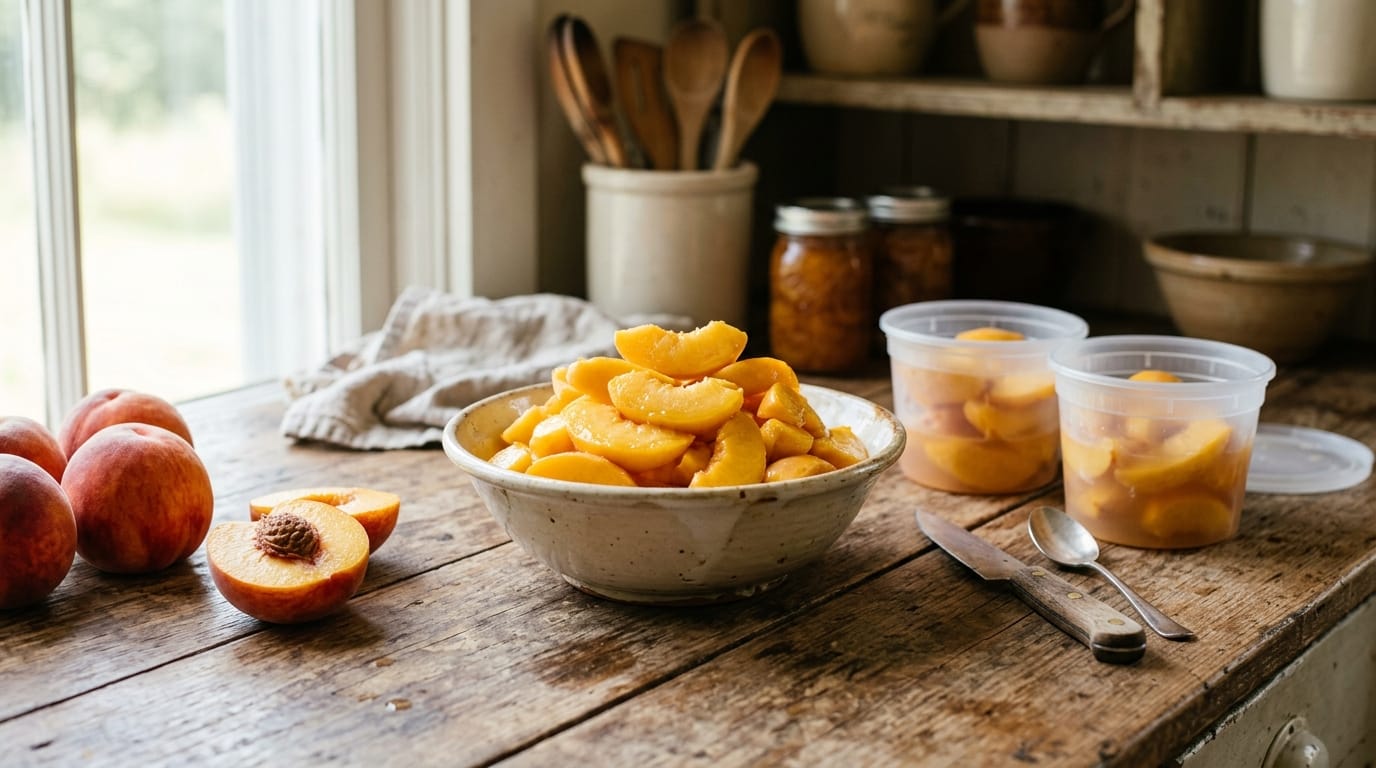
A half bushel of peaches arrives ripe all at once. They come home rock hard from the orchard, sit on the counter for three days doing nothing, and then on the fourth morning the whole box is soft at the same time and the kitchen smells like a candle.
The first year we did this I sliced them straight into freezer bags, proud of how fast it went, and pulled out a bag in January that had gone the color of weak tea. They tasted fine. Nobody wanted to eat them, including me.
Browning is the whole problem with frozen peaches, and it is not a freezer problem. It happens in the ten minutes between cutting the fruit and getting it cold, and it is fixed with a spoonful of something you can buy in the canning aisle. This guide covers the three tested packing methods, which one to use for what, how much sugar and acid each one needs, and the shortcut version for when the box has already gone soft and you have an hour.
Table of Contents
The Short Answer
- Peaches brown because of an enzyme reaction that starts the moment you cut them. Ascorbic acid, sold as Fruit Fresh or plain vitamin C powder, is what stops it.
- Syrup pack gives the best texture and color. Use 40 percent syrup with 1/2 teaspoon of ascorbic acid per quart of syrup.
- Sugar pack is faster and better for baking. Use 2/3 cup sugar per quart of fruit, with the ascorbic acid dissolved in water and sprinkled on first.
- Tray pack uses no sugar at all and gives you loose slices in a bag. It also browns the most, so it is the trade-off method.
- Leave 1/2 inch of headspace in pint containers for the two wet packs. Liquid expands and the container will crack if you fill it.
- Frozen fruit keeps 8 to 12 months at 0 F. After that it is still safe, just not as good.
Why Peaches Brown, and What Actually Stops It
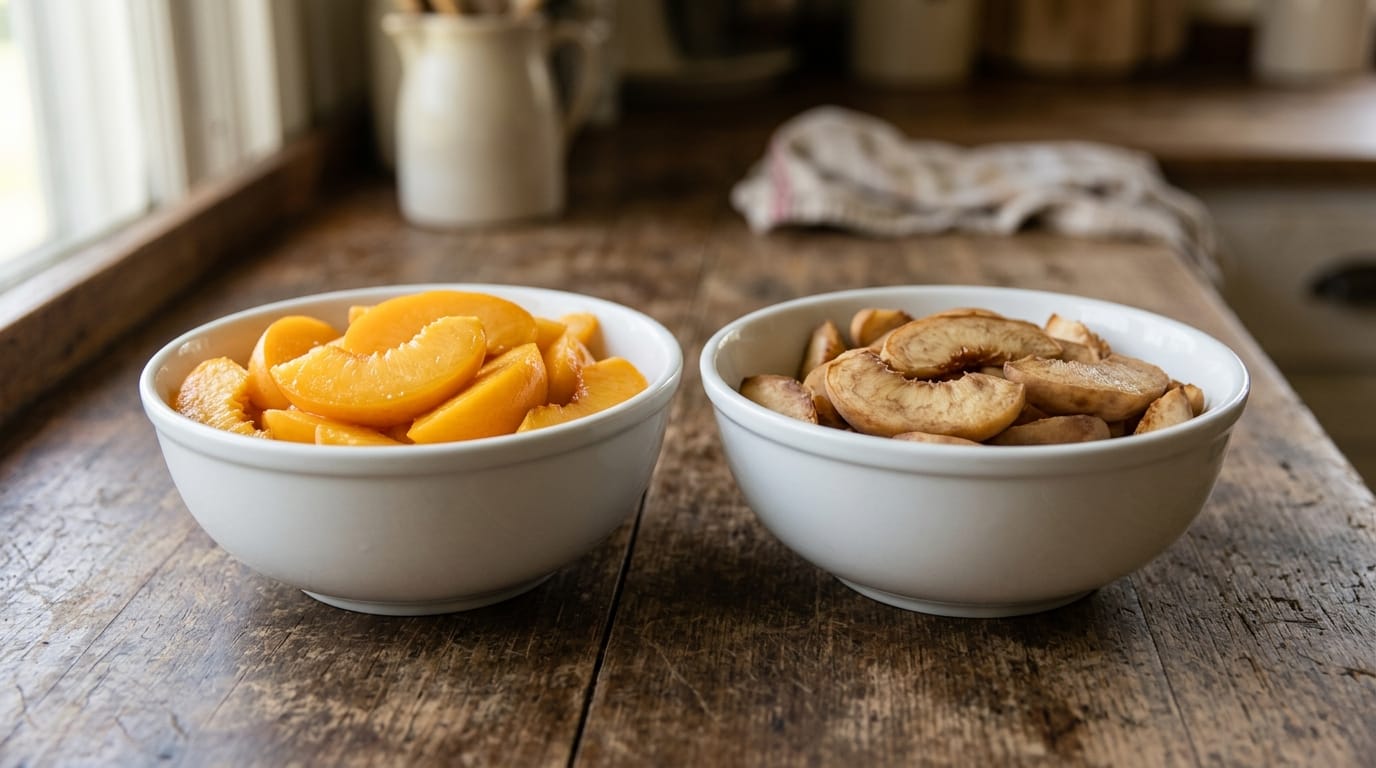
Cut a peach and you expose its flesh to air. An enzyme in the fruit reacts with that oxygen and produces the brown pigment you see on a cut apple, an avocado or a peach left on the board while you deal with the next one. Freezing does not stop it. It only slows it down, which is why fruit that looked fine going into the freezer can look tea-stained coming out.
The fix is ascorbic acid, which is vitamin C. It interrupts the reaction, and every tested peach freezing method uses it in some form. You can buy it three ways:
- Commercial fruit protector, sold as Fruit Fresh or a store equivalent in the canning aisle. This is mostly ascorbic acid with citric acid and sometimes sugar mixed in. Convenient, and the one most people find.
- Pure ascorbic acid powder, sold for canning or as plain vitamin C. This is what the tested amounts below are written for.
- Crushed vitamin C tablets, which work if you check the milligrams on the bottle and crush them properly.
A note on the amounts, because this trips people up. NCHFP gives the doses in both teaspoons and milligrams, and the milligram figure is the one that transfers between products: 1/2 teaspoon of ascorbic acid is 1,500 mg. If you are using a commercial fruit protector, follow the label on the tub rather than these numbers, because the blends are diluted differently and the label has done the conversion for you.
Lemon juice gets recommended a lot and it does help, since it contains ascorbic acid. It is much weaker per spoonful, and it makes the peaches taste of lemon. Use it if it is what you have, knowing that it is the weakest of the options.
Picking and Peeling the Peaches
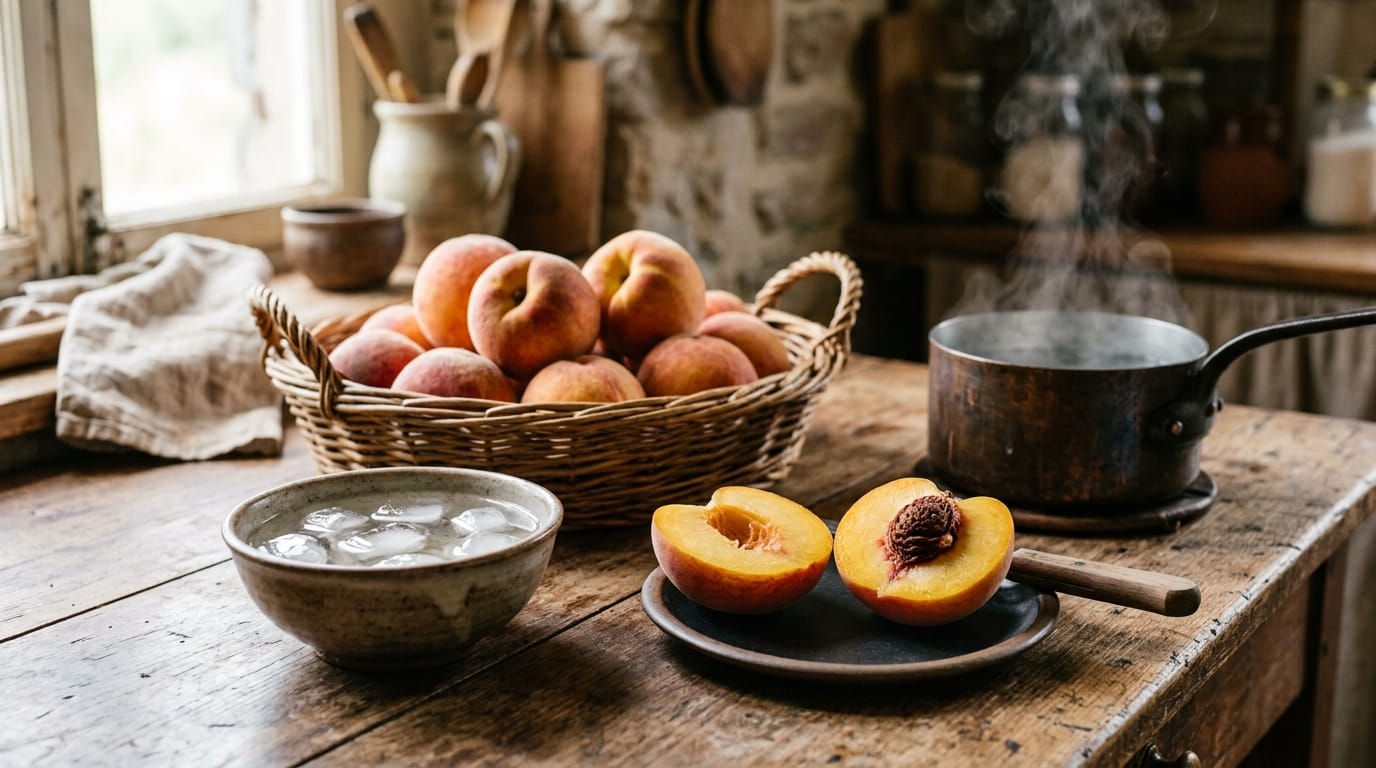
NCHFP’s instruction for the fruit itself is short: select well-ripened fruit and handle carefully to avoid bruising, then sort, wash and peel. Two words in that sentence are doing work.
Well-ripened matters because freezing does not ripen anything. A hard peach frozen hard is a hard peach forever. Let them soften on the counter until they give to gentle pressure at the shoulder and smell like peach from a foot away.
Freestone is not in that sentence but should be in your shopping. Freestone varieties release the pit cleanly, and clingstone ones do not, which turns a twenty-minute job into an hour of hacking fruit off the stone. Late-summer peaches are usually freestone. Ask at the stand.
Peeling is the same trick as tomatoes. Score a shallow cross in the bottom of each peach, drop them into boiling water for 30 to 60 seconds until the skins loosen, then move them straight into ice water. The skins slip off with your thumbs. If a skin fights you, that peach needed a few more seconds in the pot, not a knife. It is the same method we use for canning whole tomatoes, and it works for the same reason.
Work in small batches and keep a bowl of water with your ascorbic acid dissolved in it beside the board. Slices go in there as you cut them, and the browning clock never really starts.
Method 1: Syrup Pack
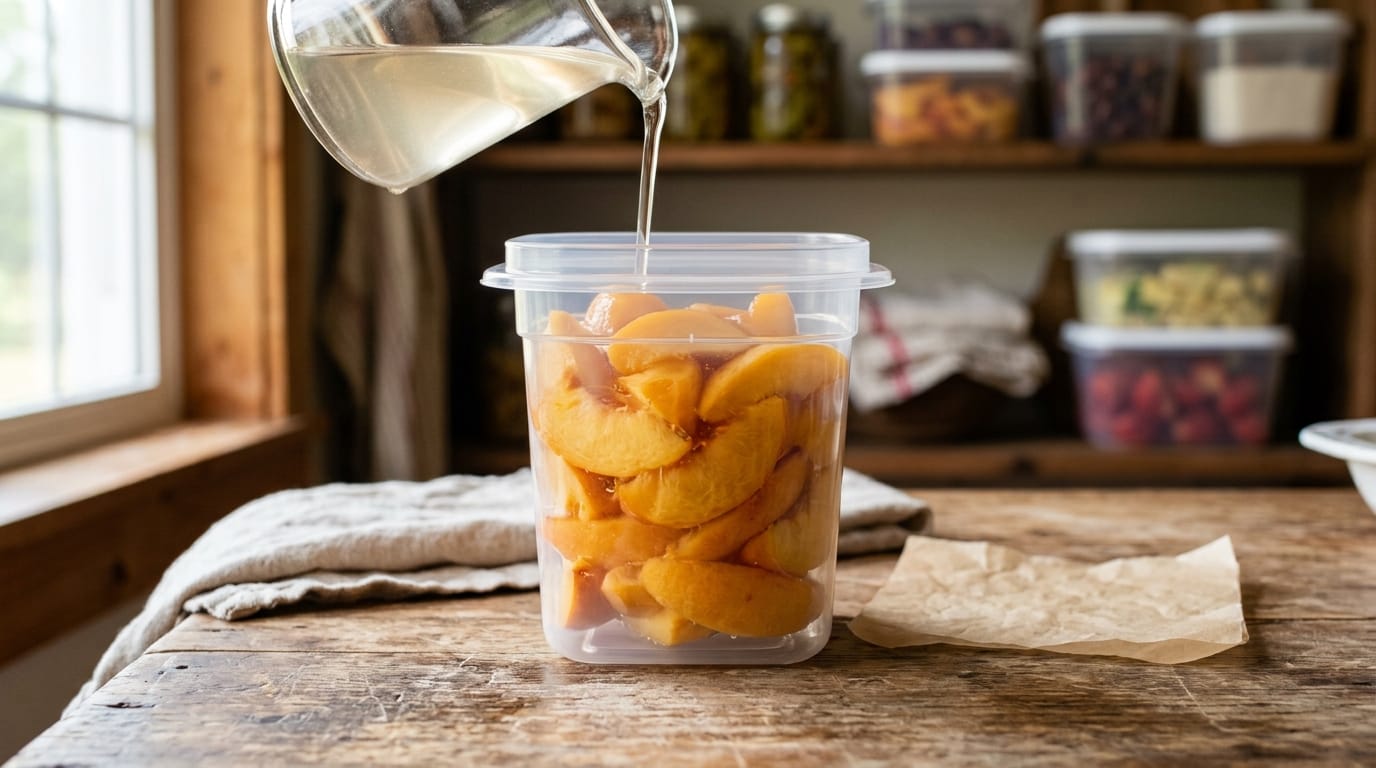
This is the method that produces the best-looking, best-textured peaches, because the syrup physically keeps air off the fruit. It is what you want if the peaches are going into a bowl, over ice cream, or anywhere they will be seen.
Syrup pack
What You Need
- 40 percent syrup: 2 3/4 cups sugar dissolved in 4 cups water, which makes about 5 1/3 cups
- 1/2 teaspoon (1,500 mg) ascorbic acid per quart of syrup
- About 1/2 to 2/3 cup of syrup per pint container
- Peeled, sliced, well-ripened peaches
Syrup proportions from the NCHFP syrup table, ascorbic acid amount from their peach freezing directions. Up to a quarter of the sugar can be replaced with corn syrup or a mild honey.
- Dissolve the sugar in lukewarm water until the solution runs clear, then chill the syrup before you use it. Warm syrup on cut fruit is the opposite of what you want.
- Stir the ascorbic acid into the cold syrup.
- Put about 1/2 cup of cold syrup into each pint container first, then add the peach slices to it. Fruit goes into syrup, not syrup onto fruit.
- Press the fruit down and add syrup until it is covered, leaving 1/2 inch of headspace.
- Lay a small piece of crumpled water-resistant paper or parchment on top to hold the fruit under the syrup. This is the step everyone skips and it is why their top layer browns.
- Seal, label with the date, and freeze.
Method 2: Sugar Pack
Faster than the syrup pack, and better for baking, because the fruit comes out of the container already sweetened and swimming in its own juice rather than in added water. This is the one to use for pies, cobblers and anything cooked.
Sugar pack
What You Need
- 2/3 cup sugar per quart of prepared fruit, which is about 1 1/3 pounds
- 1/4 teaspoon (750 mg) ascorbic acid dissolved in 3 tablespoons cold water, per quart of fruit
- Peeled, sliced, well-ripened peaches
Amounts from the NCHFP peach freezing directions. Note the order matters: the acid goes on before the sugar.
- Dissolve the ascorbic acid in the 3 tablespoons of cold water.
- Sprinkle it over the peaches first, before any sugar. NCHFP is specific about this order, and the reason is that you want the acid on the cut surfaces rather than trapped under a sugar coating.
- Add the sugar and mix gently but thoroughly.
- Stir until the sugar dissolves, or let the bowl stand for about 15 minutes and let the juice do it for you.
- Pack into containers leaving 1/2 inch of headspace, seal, label and freeze.
The fruit will look dry when you add the sugar and wet fifteen minutes later. That liquid is peach juice drawn out by the sugar, and it is what protects the fruit in the container, so do not drain it off.
Method 3: Tray Pack, the Freezer Bag Method
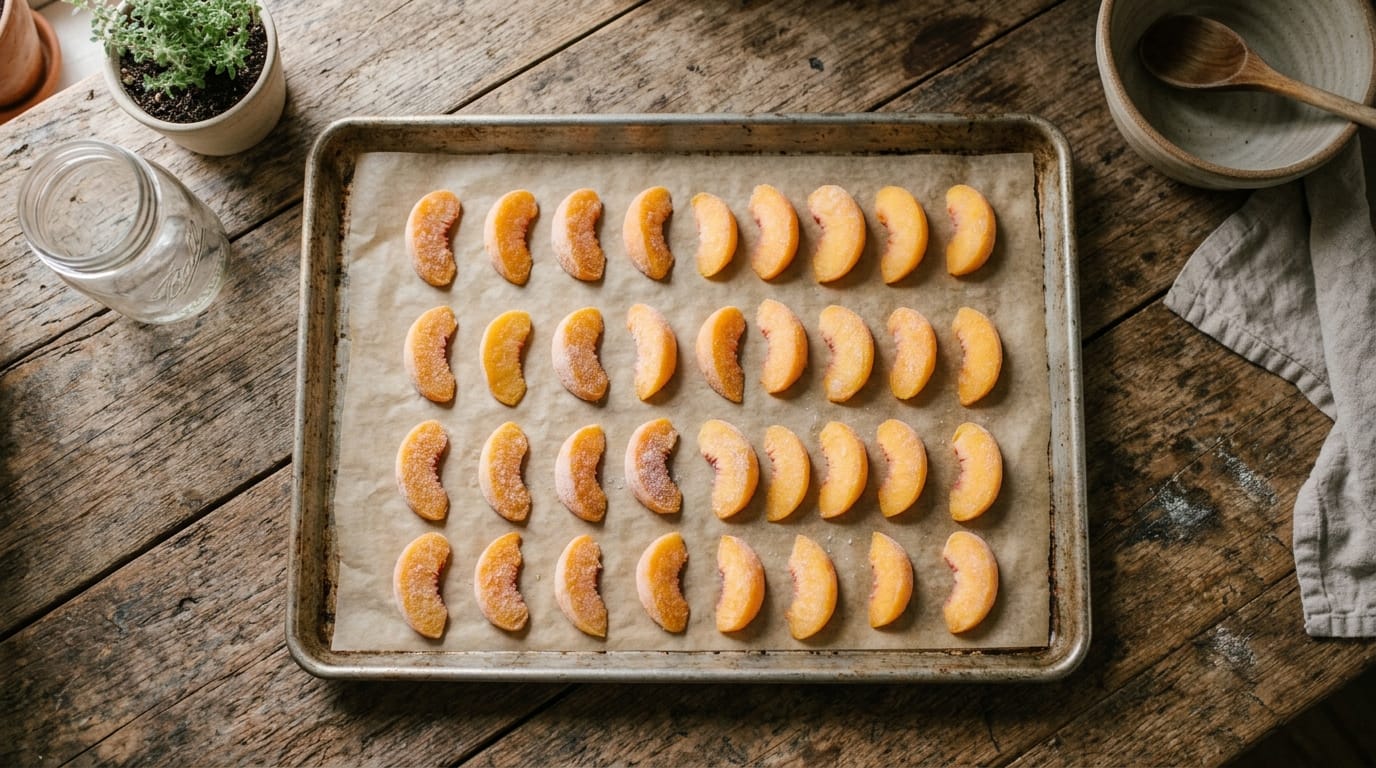
This is the one most people actually want: loose slices in a bag that you can pour out by the handful, with no sugar and no syrup. NCHFP calls it a dry or tray pack, and the method is exactly what it sounds like.
- Toss the peeled slices in ascorbic acid solution and drain them.
- Spread them in a single layer on a shallow tray and freeze until solid.
- Package promptly once frozen and return them to the freezer. NCHFP is firm about the promptly, because slices left uncovered on a tray pick up freezer burn quickly.
The pieces stay loose, so you can pour out what you need and reseal the bag. It is the most convenient method by a distance.
Be honest with yourself about the trade-off, though. With no syrup and no sugar there is nothing sealing air away from the fruit, so tray-packed peaches brown more and soften more than either wet pack. They are fine in a smoothie or a cobbler. They are not the ones to serve in a bowl in February. Softer fruit is also the right candidate for a batch of peach jam, where texture stops mattering altogether.
If you own a vacuum sealer this is the method it pays off on, because pulling the air out of the bag addresses exactly the weakness of a dry pack. We compared vacuum sealers for a home kitchen separately, including the important caveat that vacuum sealing is not a preservation method on its own.
Which Method Should You Use?
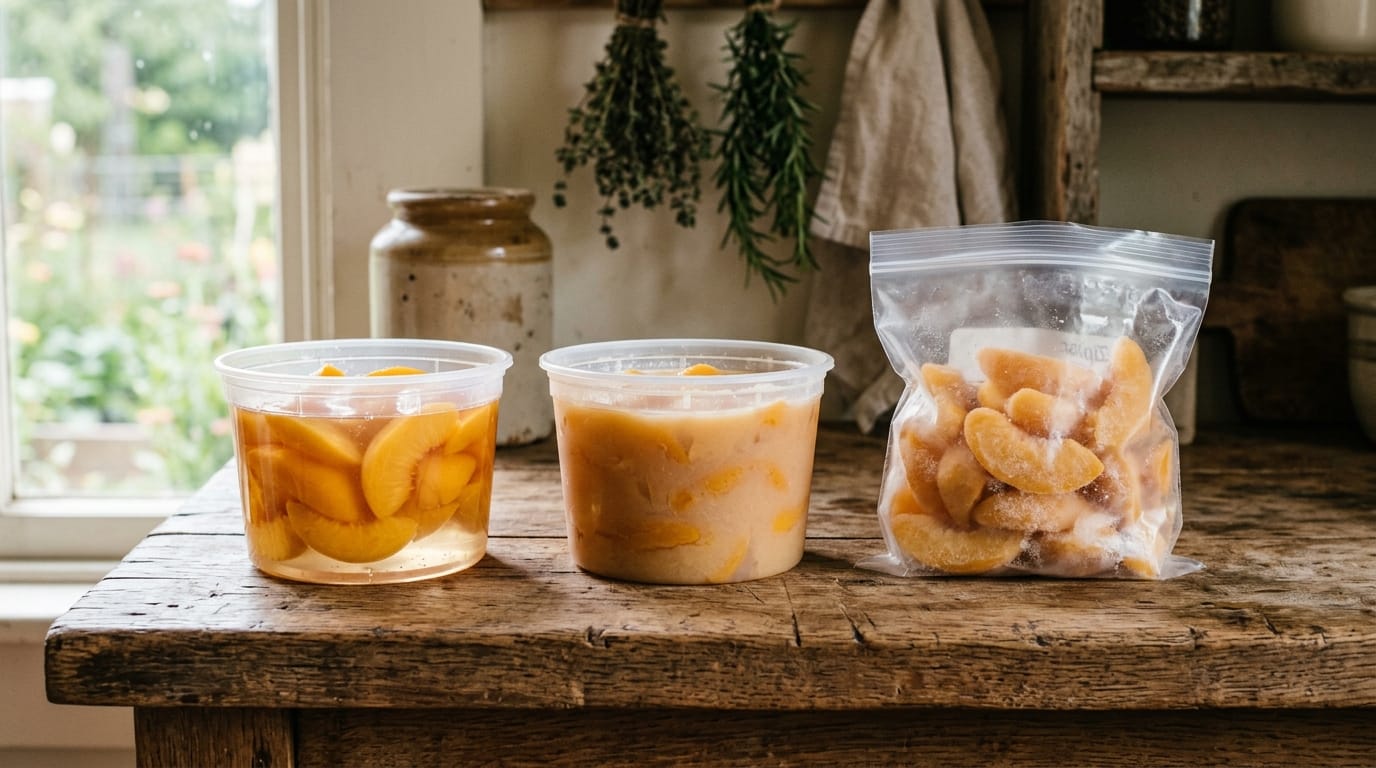
| Syrup pack | Sugar pack | Tray pack | |
|---|---|---|---|
| Best for | Eating as fruit, serving in a bowl | Pies, cobblers, anything baked | Smoothies, cooking, grabbing a handful |
| Added sugar | Most | Moderate | None |
| Color and texture | Best | Good | Browns and softens most |
| Effort | Most, and you have to chill syrup first | Middling | Least |
| Comes out as | Slices in liquid | Slices in thick juice | Loose slices |
If you are doing a big batch and cannot decide, split it. Tray pack half for cooking and syrup pack a few pints for eating. That is what we settled on after the tea-colored year, and the syrup pints get rationed while the bags get used without thinking.
Headspace, and Why Frozen Jars Break
Water expands as it freezes, and a container filled to the brim with syrup and fruit has nowhere to put that expansion. Glass cracks. Plastic lids pop off and let air in, which brings you back to the browning problem.
The NCHFP headspace table for freezing:
| Type of pack | Pint, wide opening | Quart, wide opening | Pint, narrow opening | Quart, narrow opening |
|---|---|---|---|---|
| Liquid pack (syrup, sugar, juice, crushed) | 1/2 inch | 1 inch | 3/4 inch | 1 1/2 inches |
| Dry pack (no sugar or liquid added) | 1/2 inch | 1/2 inch | 1/2 inch | 1/2 inch |
Note that a dry pack needs the same half inch regardless of size, while a liquid pack needs progressively more the bigger and narrower the container. A narrow-mouth quart of syrup pack wants a full inch and a half, which looks like a lot of wasted space and is not.
Tray-packed slices in a zip bag are the easy case. Press the air out, leave the bag slightly loose, and lay it flat to freeze so it stacks.
Can You Freeze Peaches Whole?
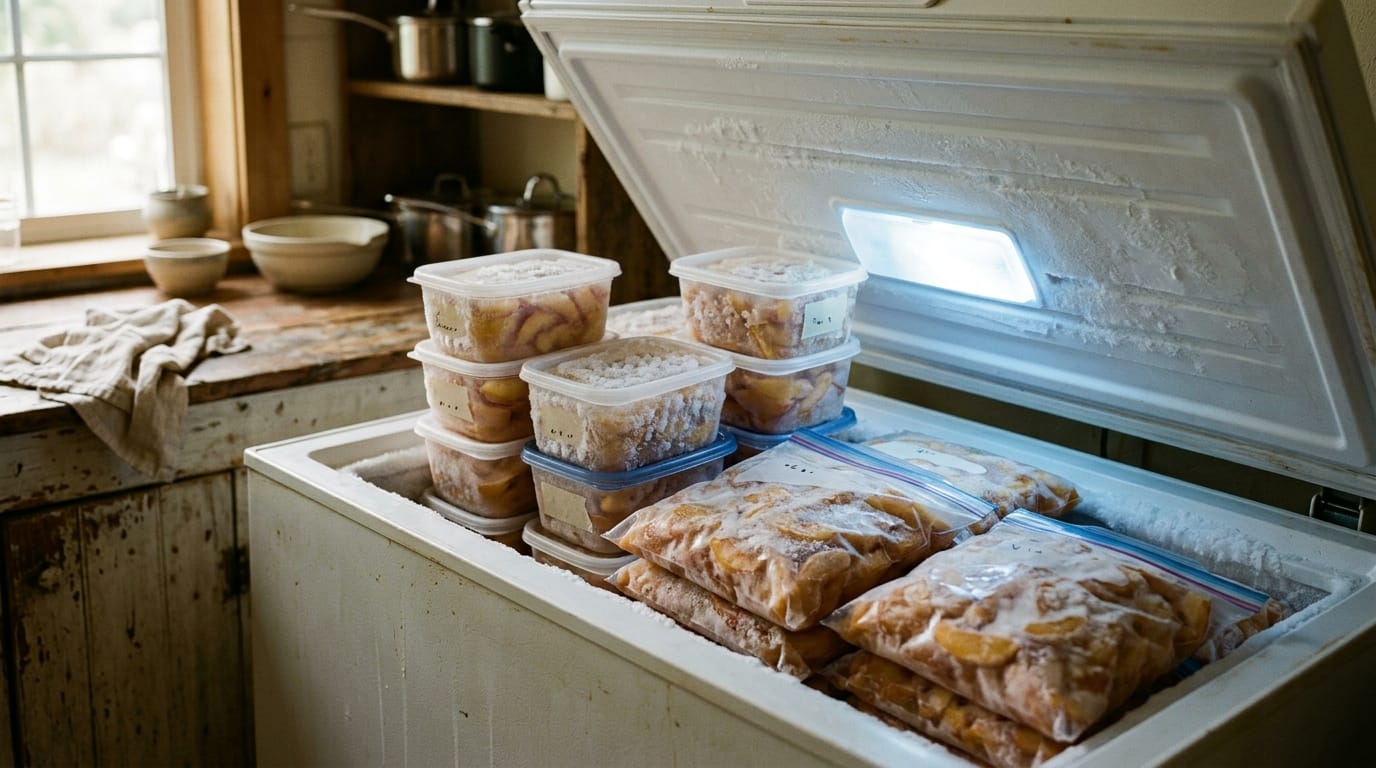
You can put a whole peach in the freezer and it will freeze. Whether it is worth doing is a different question, and the honest answer is usually no.
There is no tested procedure for freezing peaches whole in the NCHFP directions, which give syrup, sugar and crushed or pureed packs only. The practical problems are the ones you would expect: the skin and pit are still in there, so you have to deal with both later on a thawing, softening fruit, and none of the anti-browning treatment reaches the flesh because you never cut it.
What people usually mean by the question is that they are out of time and the fruit is going over tonight. If that is the situation, the tray pack is your shortcut, not whole fruit. Peel, slice, dunk in ascorbic acid solution, spread on a tray. It is twenty minutes for a large bowl of peaches and it produces something you will actually use.
How Long They Keep, and How to Thaw Them
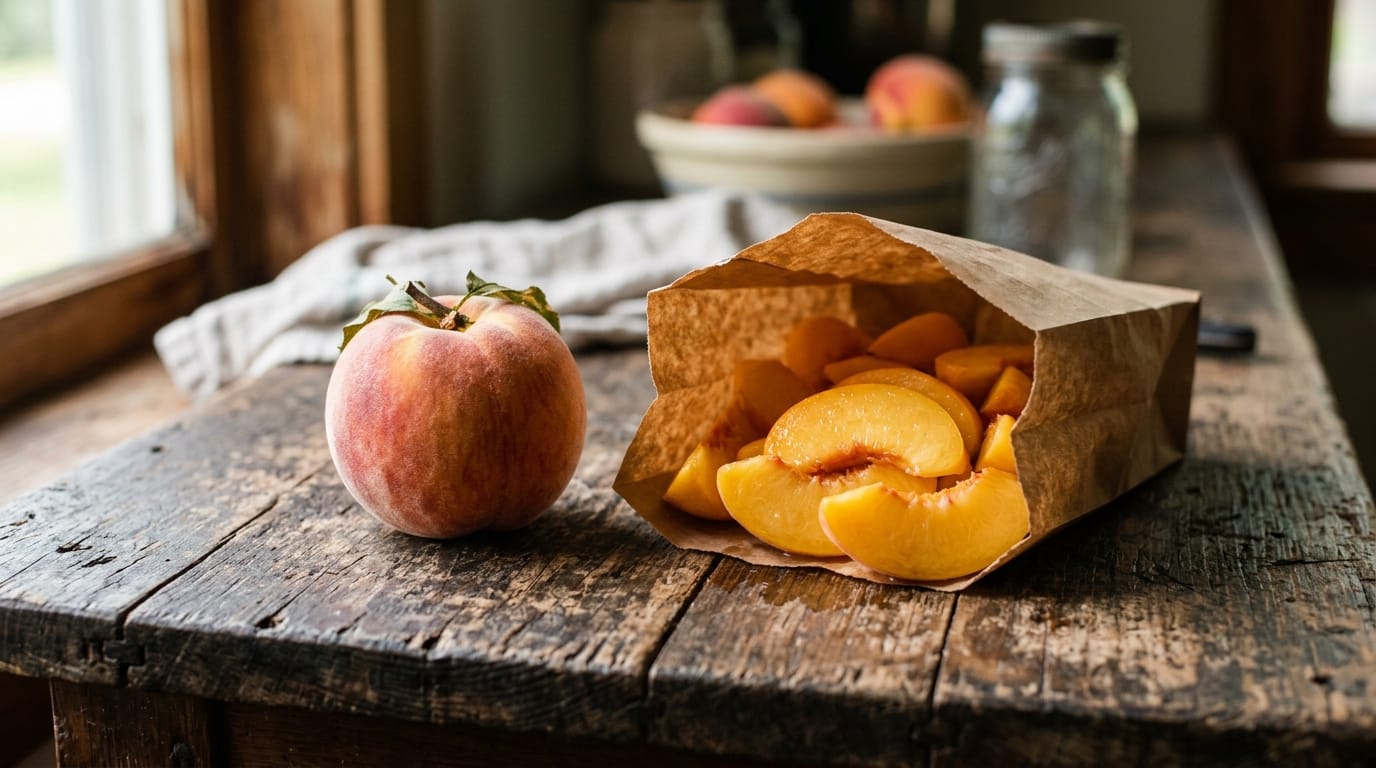
NCHFP puts fruits and vegetables at 8 to 12 months of storage at 0 F, and notes that after those times the food should still be safe, just lower in quality. Use the shorter end of that range for best results, which conveniently means finishing last year’s peaches around the time this year’s arrive.
Label every container with the date. Frozen peach slices look identical in March whether they went in last August or the August before.
For thawing, leave the container in the refrigerator and give it several hours. Peaches thawed on the counter go soft and weep more, and syrup-packed fruit is at its best while there are still a few ice crystals in it, so serve it slightly under-thawed rather than fully slack.
For baking, do not thaw at all. Tip the frozen slices straight into the pie or the cobbler and add a little extra thickener, since frozen fruit releases more liquid than fresh. If you would rather have shelf-stable peaches next time, we covered canning peaches in syrup as well, and the two methods suit different kitchens: the freezer is faster today, the jars need no electricity in February.
Putting up more than peaches this season?
The Beginner’s Canning eBook covers water-bath canning end to end: altitude and headspace charts, the acidity rules that decide what is safe, and step-by-step walkthroughs for a first season. The Canning Starter Bundle adds both Quick Kits for jar prep and fermenting.
The Free Garden Starter Pack
Five printable pages that take the guesswork out of a first season, plus a short email every week or two when something is worth planting, picking, or putting up.
- A garden planning worksheet you can actually fill in
- A seed-starting and planting calendar
- A harvest log to track what really produced
No spam, ever. Unsubscribe in one click.
Thank you. You are on the list.
Your Garden Starter Pack is ready right now. Grab it here:
Download the pack (PDF)Keep an eye on your inbox. The next seasonal guide lands there first.
Frequently Asked Questions About Freezing Peaches
Do you have to peel peaches before freezing them?
Yes, for anything you plan to eat as fruit. Peach skin toughens in the freezer and separates from the flesh on thawing, so you end up picking it out of the bowl. NCHFP’s directions start with sorting, washing and peeling for the same reason. The blanch-and-slip method takes under a minute a batch.
How do you freeze peaches without them turning brown?
Ascorbic acid, and getting it onto the cut surfaces quickly. Keep a bowl of ascorbic acid solution next to the cutting board and drop slices in as you go. Then use a pack that keeps air off: syrup is best, sugar is good, a bare bag is the weakest.
Can you freeze peaches with Fruit Fresh?
Yes, and it is the easiest option to find. Fruit Fresh and similar products are ascorbic acid blends made for exactly this. Follow the amounts on the container rather than the teaspoon measures for pure ascorbic acid, because the blends are diluted differently.
Can I freeze peaches without sugar?
Yes. The tray pack uses no sugar at all: treat the slices with ascorbic acid, freeze them in a single layer on a tray, then bag them. The sugar in the other methods is about texture and color protection rather than safety, so leaving it out costs you quality, not safety.
How long do frozen peaches last?
Eight to twelve months at 0 F for best quality. They stay safe indefinitely at that temperature if the freezer holds, but the texture and flavor drift, so aim to eat them within the year.
Why did my frozen peaches turn mushy?
Either they were overripe going in, or they were thawed too far before use. Freezing bursts cell walls in any fruit, so some softening is unavoidable, and it is why frozen peaches suit cooking better than a fruit salad. Serve them while still a little icy and the difference is much smaller.
Before the Box Goes Soft
Decide tonight which of the three methods you are doing, because the decision is easier before the fruit is demanding it. If the peaches are for eating, chill a batch of syrup this evening. If they are for pies, you need nothing but sugar and a bowl. If they are just going to get away from you, put a tray in the freezer and start peeling.
Whichever one you pick, keep the bowl of ascorbic acid water next to the board. That single habit is the difference between the bag I threw out in January and the ones we finished by March.