Cornstarch Substitute: 7 Swaps That Work (With Exact Ratios)
The gravy is already in the pan. The drippings are hot, the whisk is in your hand, and the box of cornstarch in the back of the cupboard turns out to hold about half a teaspoon and a hardened lump. Everyone who cooks regularly has had this exact moment, usually with people waiting to eat.
The good news is that cornstarch is one of the easiest ingredients in the kitchen to replace. You almost certainly have a workable substitute within arm’s reach right now, and for most of what cornstarch does, plain flour will get you there.
What trips people up is the ratios, because they are not one-to-one, and one specific mix-up: corn flour and cornstarch are the same thing in some countries and completely different products in others. That single piece of confusion ruins more batches than any other substitution question in cooking.
This guide gives you the exact swap ratios, which substitute to use for thickening versus frying versus baking, and a straight answer on the corn flour question.
Table of Contents
The Quick Answer
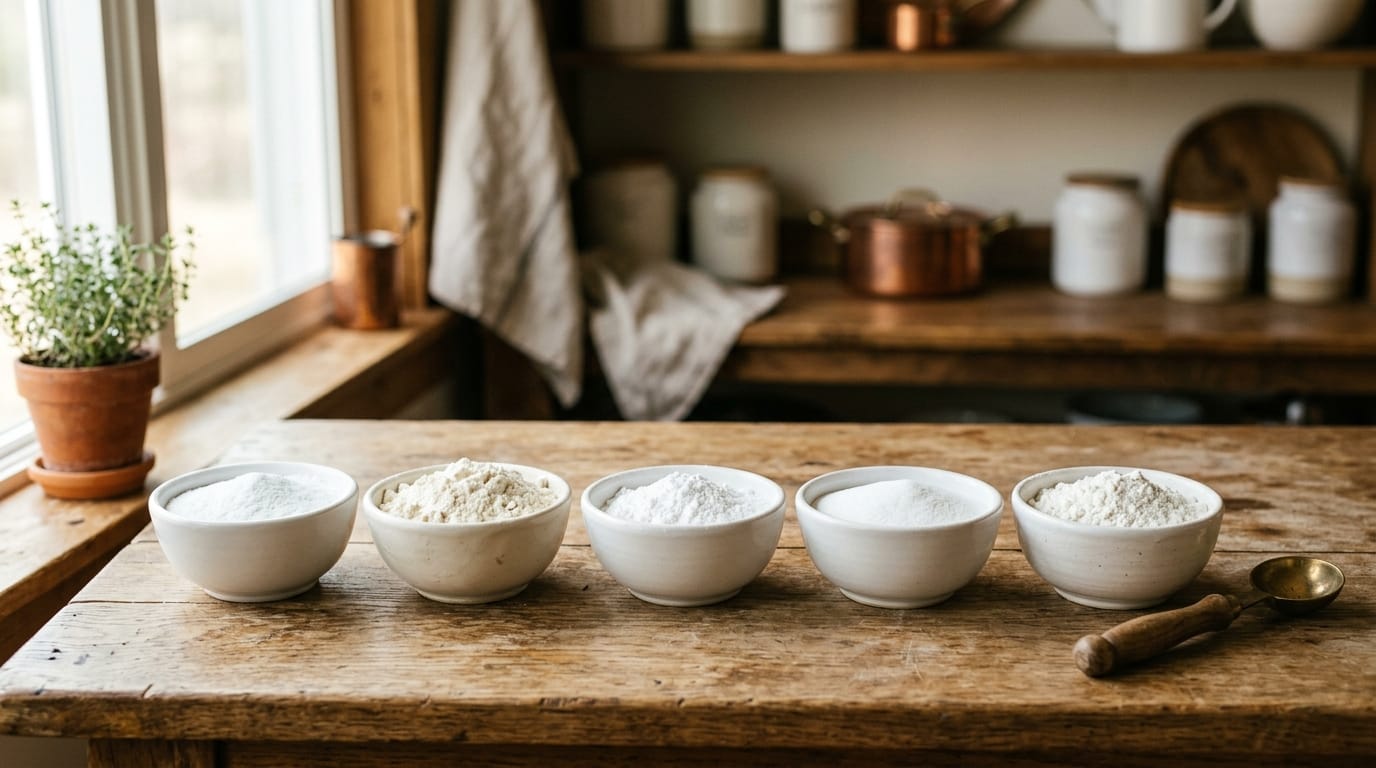
To substitute cornstarch, use 2 tablespoons of all-purpose flour for every 1 tablespoon of cornstarch. That is the swap most people need, and the ingredient most people already have. If you want a clearer, glossier result, arrowroot or tapioca starch are better choices.
| Instead of 1 tbsp cornstarch, use | Amount | Best for |
|---|---|---|
| All-purpose flour | 2 tbsp | Gravy, stews, roux-based sauces |
| Arrowroot powder | 1 to 1.5 tbsp | Acidic sauces, anything you will freeze |
| Tapioca starch | 1 to 2 tbsp | Fruit pies, glossy sauces |
| Potato starch | 1 tbsp | Soups and sauces, added at the end |
| Rice flour | 2 tbsp | Gluten-free thickening, crispy frying |
| Xanthan gum | 1/4 tsp per cup of liquid | Gluten-free baking, dressings |
| Instant potato flakes | 1 to 2 tbsp | Rustic stews and chowders |
One honest note before the details: published ratios for arrowroot and tapioca vary from source to source, some saying one-to-one and others saying double. That is because the strength differs slightly by brand and by what you are thickening. Start at the lower end, let it cook a minute, and add more if it has not set. You can always thicken further. You cannot easily un-thicken.
The 7 Best Cornstarch Substitutes
1. All-Purpose Flour (Use Twice as Much)
Flour is the answer for most people most of the time, because it is already in the cupboard. Use 2 tablespoons of flour for every 1 tablespoon of cornstarch the recipe calls for.
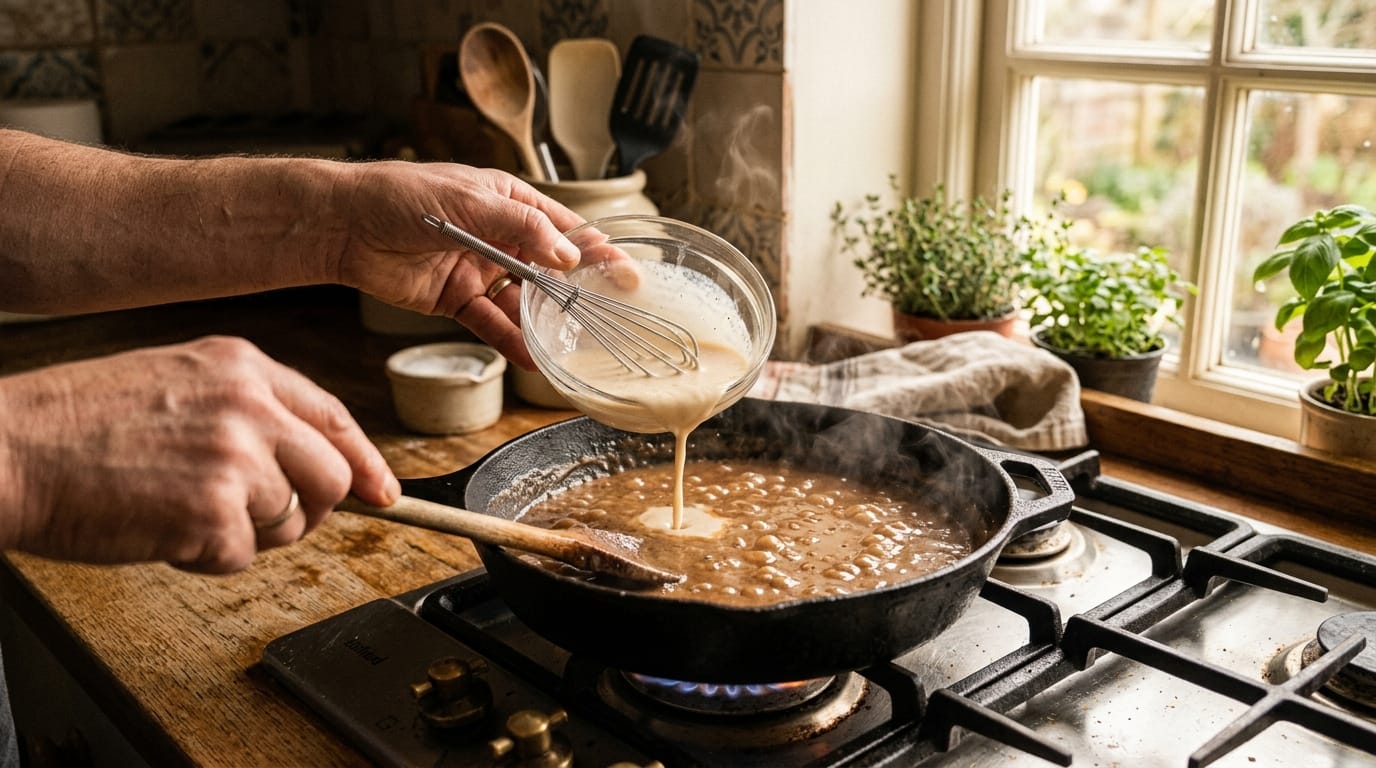
Two things change when you swap. Flour makes a sauce slightly cloudy rather than glossy and clear, which nobody notices in a brown gravy and everyone notices in a fruit glaze. And flour needs to cook longer, at least a minute or two at a simmer, or the sauce keeps a raw, pasty taste. Whisk it into a little cold liquid first to make a slurry, or cook it in fat as a roux, which is the method our homemade brown gravy guide uses.
2. Arrowroot Powder (Best for Acidic and Frozen Dishes)
Arrowroot is the substitute worth keeping in the pantry on purpose. Start with roughly the same amount as the cornstarch and go up to about one and a half times if it needs help. It thickens clear and glossy, it is gluten-free, and it holds up in two situations where cornstarch struggles: acidic mixtures like citrus or tomato, and anything you plan to freeze and reheat.
Its one real weakness is dairy. Arrowroot in a milk or cream sauce can turn slightly slimy. For a creamy soup base, use flour instead, the way we do in the cream of mushroom soup substitute. Arrowroot also does not like long cooking, so stir it in near the end and pull the pan once it thickens.
3. Tapioca Starch (Best for Fruit Pies)
Tapioca starch, sometimes labeled tapioca flour, comes from cassava root. Start at an equal amount and go up toward double if the filling is loose. It gives the glossiest finish of any substitute here, which is why it is the traditional choice for fruit pie fillings, and it freezes and thaws without weeping.
Do not let it boil hard. Overcooked tapioca turns stringy and can go slightly rubbery. Add it toward the end and take the heat down.
4. Potato Starch (One-to-One, Added Late)
Potato starch swaps one-for-one with cornstarch, which makes it the easiest substitute to think about. It is gluten-free, neutral in flavor, and thickens at a lower temperature than cornstarch does.
That lower temperature is also the catch. Boil potato starch and it breaks down and thins right back out. Stir it into the pot at the very end, off the heat or barely simmering, and serve. It is a poor choice for anything that needs to hold at a simmer for a while.
5. Rice Flour (Gluten-Free, Great for Frying)
Use about 2 tablespoons of rice flour per 1 tablespoon of cornstarch for thickening. It is neutral, gluten-free, and slightly grainy if you use too much, so measure rather than eyeball it.
Where rice flour genuinely shines is frying. If you were using cornstarch in a coating to get that shatter-crisp crust, rice flour does the same job and arguably better.
6. Xanthan Gum (A Tiny Amount Goes a Long Way)
Xanthan gum is not a starch, and the amounts are nothing like the others. Use about 1/4 teaspoon per cup of liquid, and measure it properly. Too much produces a texture most people describe as slimy, and there is no fixing it once it happens.
It is most useful in gluten-free baking and in dressings, where it keeps oil and vinegar from separating. For a weeknight gravy, it is the wrong tool.
7. Instant Potato Flakes (The Emergency Option)
This one is not elegant, and it works. A tablespoon or two of instant mashed potato flakes stirred into a stew, chowder, or pot pie filling thickens it quickly and adds a little body and flavor.
Keep it to rustic dishes. It is opaque, faintly potato-flavored, and would be obvious in a clear sauce or a fruit filling. But at 6pm on a weeknight with a thin beef stew, it is a genuinely good answer.
Corn Flour vs Cornstarch: The Mix-Up That Ruins Batches
This deserves its own section, because the answer depends entirely on where the recipe was written, and nobody tells you that.
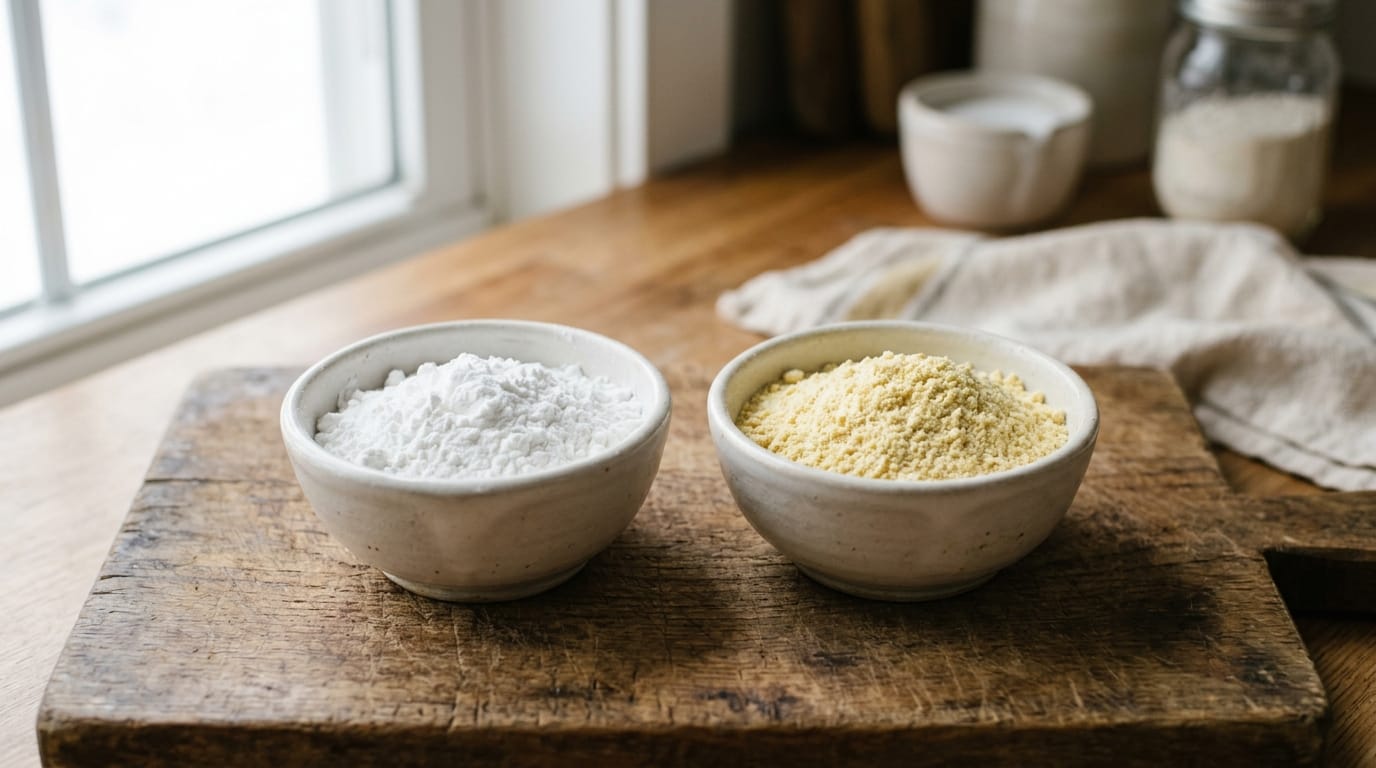
In the UK, Ireland, Australia, and New Zealand, “cornflour” means cornstarch. Same white powder, same pure starch, same job. If you are following a British recipe that calls for cornflour and you have American cornstarch, use it one-for-one and stop worrying.
In the United States, “corn flour” is a different product. It is finely ground whole corn, closer to a very fine cornmeal, and it is pale yellow rather than bright white. It contains the protein and fiber of the corn kernel, not just the starch. Swap it one-for-one for cornstarch and your sauce will come out cloudy, faintly gritty, and thinner than you wanted, because it simply does not have the same thickening power.
| What you have | Is it cornstarch? | What to do |
|---|---|---|
| US “cornstarch” | Yes | Use as written |
| UK, AU, or NZ “cornflour” | Yes, same product | Swap one-for-one |
| US “corn flour” (pale yellow) | No, ground whole corn | Treat it like flour: about 2 to 1, expect cloudiness |
| Cornmeal | No | Do not substitute; it is far too coarse |
| Masa harina | No | Do not substitute; it is lime-treated and flavored |
The quick test is color and feel. Cornstarch is bright white, silky, and squeaks slightly when you press it between your fingers. US corn flour is pale yellow and feels like soft flour with no squeak. If the bag is yellow, it is not going to thicken like cornstarch.
Which Substitute for What You Are Making
Thickening Gravy and Pan Sauces
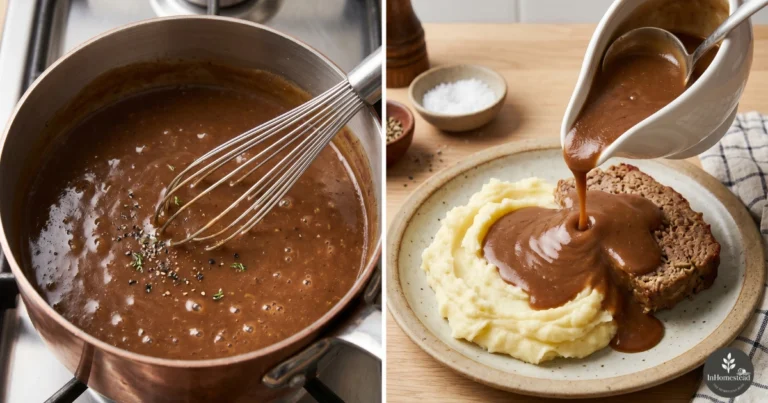
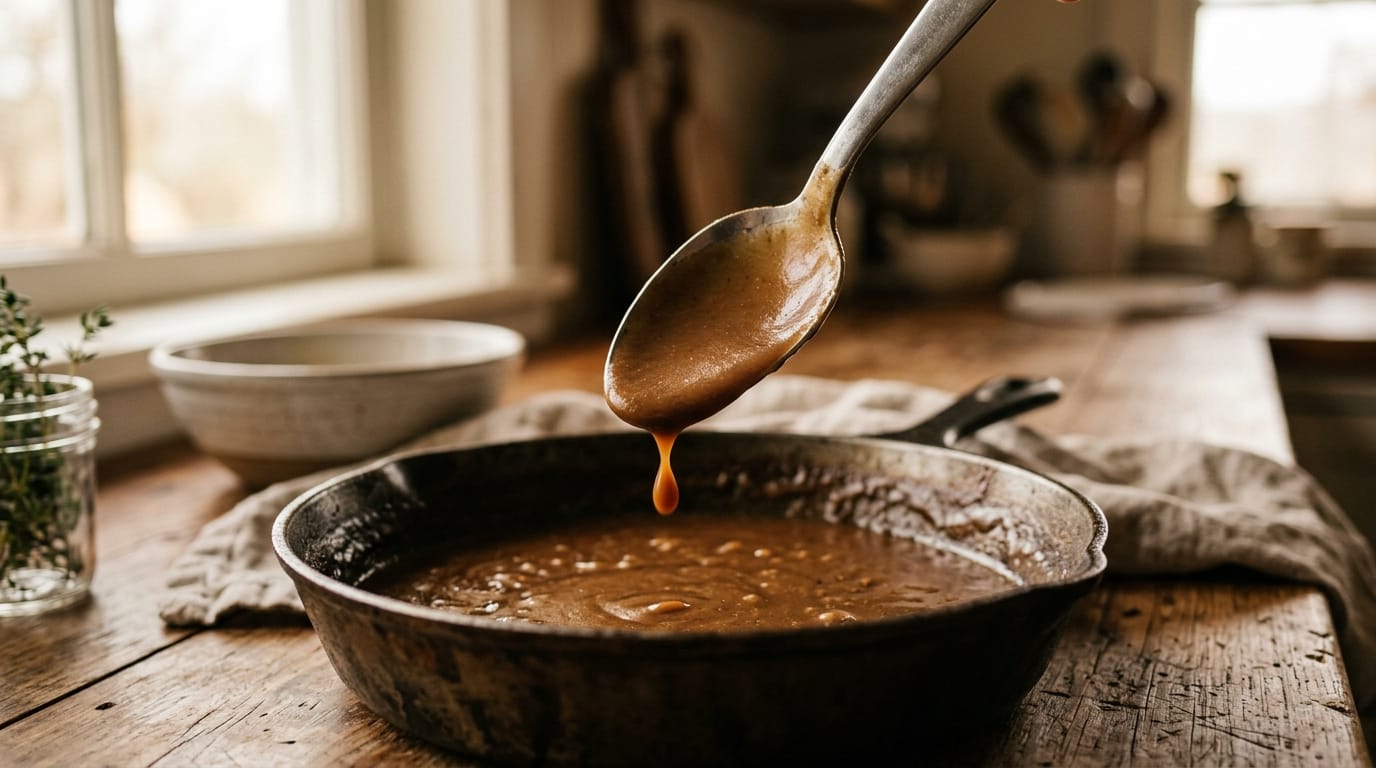
Use flour at 2 to 1. Gravy is opaque and brown anyway, so flour’s cloudiness costs you nothing, and it holds up to simmering better than potato starch or arrowroot. Make a slurry with cold water or cook it into the fat first, then simmer a full minute or two to cook out the raw taste. If you are starting from drippings, our guide to brown gravy from scratch walks through both methods.
Thickening Soups and Stews
Flour or instant potato flakes both work. For a creamy soup, flour is the better choice because arrowroot goes slippery with dairy, which is worth knowing before you thicken a chowder. You can also skip starch entirely and simmer the pot uncovered to reduce it, or blend a cup of the soup and stir it back in, which thickens with no added ingredient at all.
Frying and Crispy Coatings
Rice flour first, potato starch second. Both fry up crisper than all-purpose flour, which is exactly why cornstarch was in the recipe to begin with. Plain flour will still work and gives a softer, more bready crust, which is fine for some things and disappointing on fried chicken.
Fruit Pies and Glazes
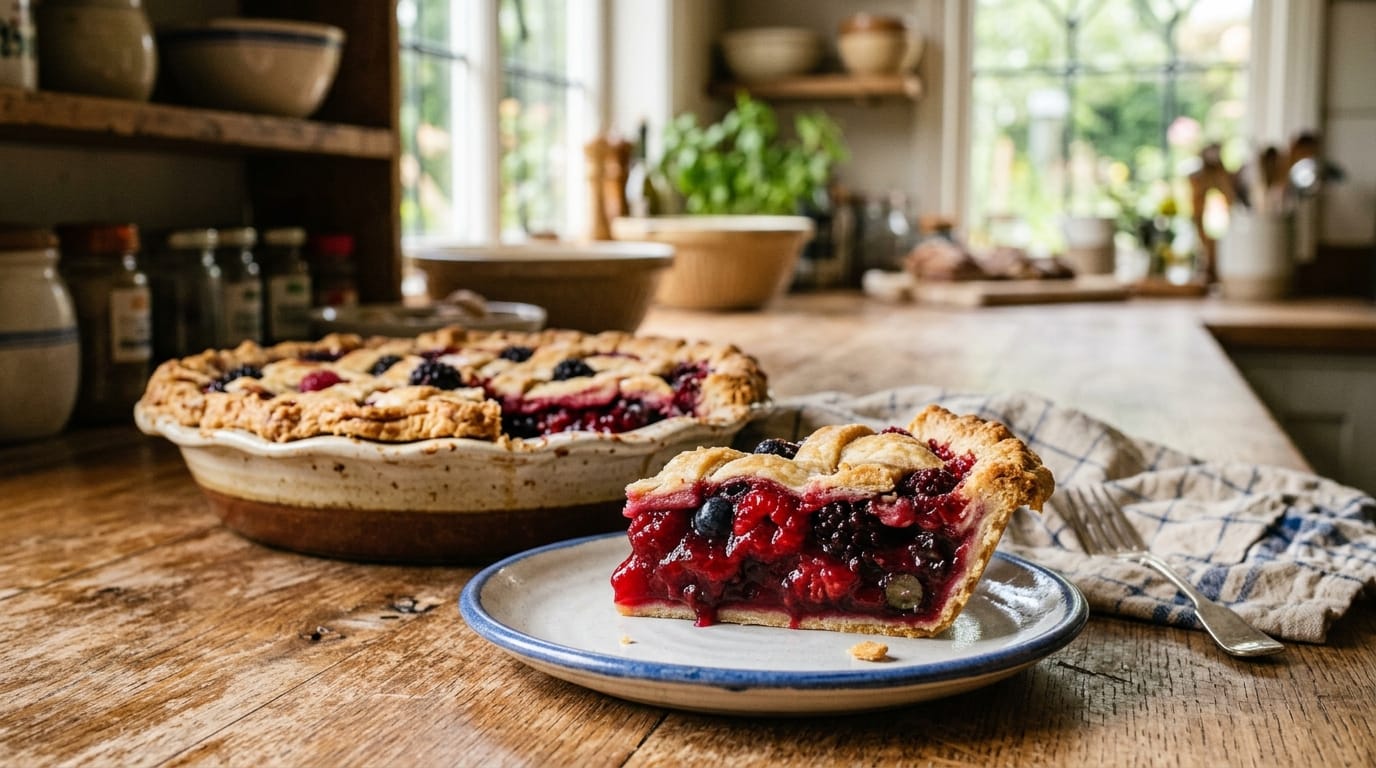
Tapioca starch, then arrowroot. Both stay clear and glossy so the fruit still looks like fruit, and both handle the acidity of berries and stone fruit better than cornstarch does. Tapioca also survives freezing, which matters if you make pie fillings ahead.
Baking
Here the honest answer is that it depends on why the cornstarch is there. If it is a small amount blended with flour to soften the crumb of a cake or shortbread, you can often just use all flour and accept a slightly chewier result. If it is doing structural work in a gluten-free recipe, replace it with another starch (arrowroot, tapioca, or potato starch), not with wheat flour. Substituting in baking is less forgiving than in a sauce, which is the same lesson as our guide to egg substitutes for baking.
The Free Garden Starter Pack
Five printable pages that take the guesswork out of a first season, plus a short email every week or two when something is worth planting, picking, or putting up.
- A garden planning worksheet you can actually fill in
- A seed-starting and planting calendar
- A harvest log to track what really produced
No spam, ever. Unsubscribe in one click.
Thank you. You are on the list.
Your Garden Starter Pack is ready right now. Grab it here:
Download the pack (PDF)Keep an eye on your inbox. The next seasonal guide lands there first.
Frequently Asked Questions About Cornstarch Substitutes
What can I use instead of cornstarch?
All-purpose flour is the most common answer, at 2 tablespoons of flour per 1 tablespoon of cornstarch. Arrowroot, tapioca starch, potato starch, and rice flour all work too, and each has a situation it suits best.
Is corn flour the same as cornstarch?
It depends on the country. In the UK, Ireland, Australia, and New Zealand, cornflour is cornstarch, and you can swap one-for-one. In the United States, corn flour is finely ground whole corn, a pale yellow product that will not thicken the same way. Treat US corn flour more like all-purpose flour.
Can I substitute flour for cornstarch?
Yes. Use twice as much flour as the cornstarch called for, and cook the sauce a minute or two longer so it does not taste raw. Expect a slightly cloudier result, which matters in a clear glaze and not at all in gravy.
How do I thicken a sauce without cornstarch or any starch?
Simmer it uncovered to reduce the liquid, which concentrates flavor at the same time. You can also blend a portion of the dish and stir it back in, finish the pan with a knob of butter, or stir in a spoonful of cream. None of these need a thickening agent at all.
What is the best gluten-free cornstarch substitute?
Arrowroot, tapioca starch, potato starch, and rice flour are all gluten-free. Arrowroot is the most versatile of the four, though it does not pair well with dairy. Cornstarch itself is naturally gluten-free, so if you are avoiding it for another reason, any of these will do the same job.
Why did my sauce thicken and then go thin again?
You most likely boiled it too long or too hard. Potato starch and arrowroot both break down under sustained heat, and cornstarch loses power in very acidic mixtures. Stir these in near the end of cooking, and once the sauce thickens, take it off the heat.
Final Thoughts
The empty cornstarch box is not the emergency it feels like. Two tablespoons of flour per missing tablespoon of cornstarch, a minute longer in the pan, and the gravy is on the table with nobody the wiser.
The one thing worth doing before the next time: put a small bag of arrowroot or tapioca starch in the pantry. They keep for years, they cover the situations where cornstarch and flour both fall short, and having one on the shelf turns the whole problem into a non-event.