Best Seed Starting Trays and Kits: 8 Picks (2026)
In Homestead is reader-supported. When you buy through links on this page, we may earn a small commission at no extra cost to you. See our affiliate disclosure. As an Amazon Associate I earn from qualifying purchases.
Every spring the same thing happens on a lot of seed-starting shelves: a cheap tray cracks the first time it is lifted full of wet mix, a dome will not stay on, or tomato seedlings outgrow their tiny cells weeks before it is warm enough to plant out.
Sturdy, well-fitting trays and cells sized for what you grow can reduce those problems, and a couple of simple extras like a dome and a heat mat make seed starting far less fussy. Good trays are also made to be reused year after year.
This guide compares eight seed starting trays and kits, from heavy-duty reusable systems to self-watering kits, soil blockers and plantable pots, and explains cell sizes, domes, heat mats and cleaning, using extension guidance.
Table of Contents
Quick Picks
- Best overall reusable system: Bootstrap Farmer 72-Cell Kit. Heavy-duty flats, inserts and vented domes.
- Best budget kit with dome: Ferry-Morse Pro-Hex Kit. Everything for one tray, cheaply.
- Best for larger seedlings: Bootstrap Farmer 32-Cell Trays. Roomy cells for tomatoes and peppers.
- Best self-watering kit: Burpee Self-Watering System. Steadier moisture with less watering.
- Best soil blocker: Ladbrooke Mini 4. Grow seedlings without plastic cells.
- Best heat mat: VIVOSUN mat and thermostat. Faster germination for warm-season crops.
- Best tall dome: Bootstrap Farmer Humidity Dome. Taller, vented and sturdy.
- Best plantable pots: Jiffy 3-inch peat pots. Plant pot and all.
How a Seed Starting Tray System Works
Most seed starting setups are built around the “1020” tray, roughly 10 by 20 inches. A solid flat with no holes sits at the bottom and holds water. A cell insert with drainage holes sits inside it and holds the mix. A clear dome goes on top to keep moisture in while seeds germinate.
That layout lets you water from below: pour water into the flat and the mix wicks it up through the drainage holes, as University of Maryland Extension explains. Tip out any water still standing after half an hour or so, because soggy mix starves roots of air and raises the risk of damping-off.
What to Look for in Seed Starting Trays
Cell Size That Fits the Crop
Small cells, such as 72 per tray, save space and suit lettuce, onions, leeks and many brassicas, but seedlings outgrow them quickly. Tomatoes and peppers, which spend longer indoors, do better in larger cells or need potting up into bigger containers. Fast growers like squash and cucumbers are best started in larger cells or plantable pots and moved outside young. Maryland Extension suggests sowing tomatoes about five to six weeks before you plan to plant them outside.
Sturdy, Reusable Plastic
Thin trays can flex or crack when lifted full of wet mix. Heavier trays cost more up front but are designed for repeated use, which may mean fewer replacements and less plastic waste.
Parts That Fit Together
“1020” is a convention, not an exact size, and different brands vary slightly. Inserts, flats and domes from one brand fit each other best. If you mix brands, check the dimensions first.
The 8 Best Seed Starting Trays and Kits
Best Overall Reusable System
Bootstrap Farmer 72-Cell Seed Starting Kit (2-Pack)
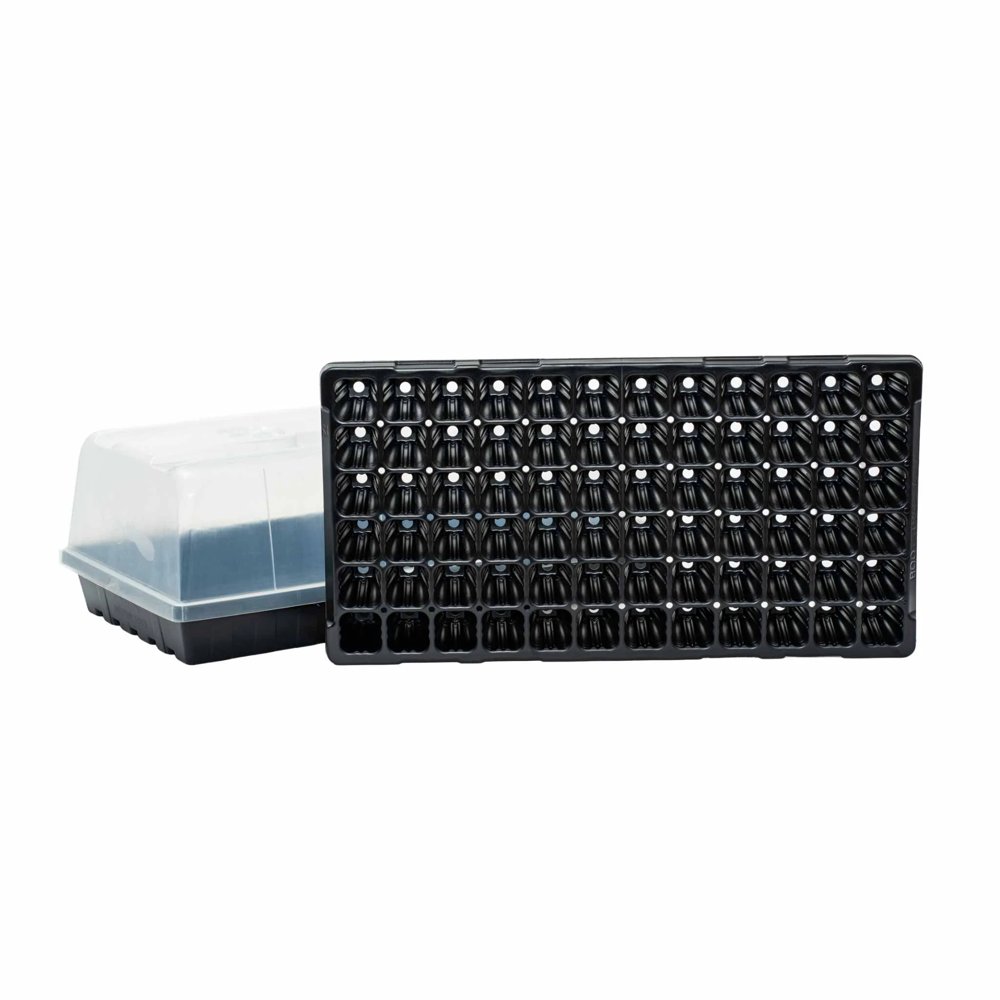
Bootstrap Farmer makes the heavy-duty trays that small farms use, and its 72-cell kit is the easiest way to get a full, matching set. You get two kits, each with a 72-cell insert, a solid extra-strength 1020 flat and a vented dome.
The flats are thick, BPA-free polypropylene backed by Bootstrap Farmer’s two-year warranty, and they are designed for repeated use.
- Best for: beginners who want one reusable system that lasts for years.
- Keep in mind: 72-cell inserts are small for tomatoes and peppers that stay indoors a long time, so plan to pot those up. The inserts carry a shorter one-year warranty than the flats.
Best Budget Kit with Dome
Ferry-Morse Pro-Hex 72-Cell Seed Starting Kit
If you want to try seed starting without spending much, the Ferry-Morse Pro-Hex kit has everything for one tray: 72 hexagonal cells, a watertight base and a clear dome.
It is widely sold in garden centers and hardware stores, so it is easy to pick up in early spring.
- Best for: a first try at seed starting on a budget.
- Keep in mind: owners often describe the plastic as light or flimsy, so handle it gently and do not expect it to last as long as heavy-duty trays.
Best for Larger Seedlings
Bootstrap Farmer 32-Cell Seed Starter Trays
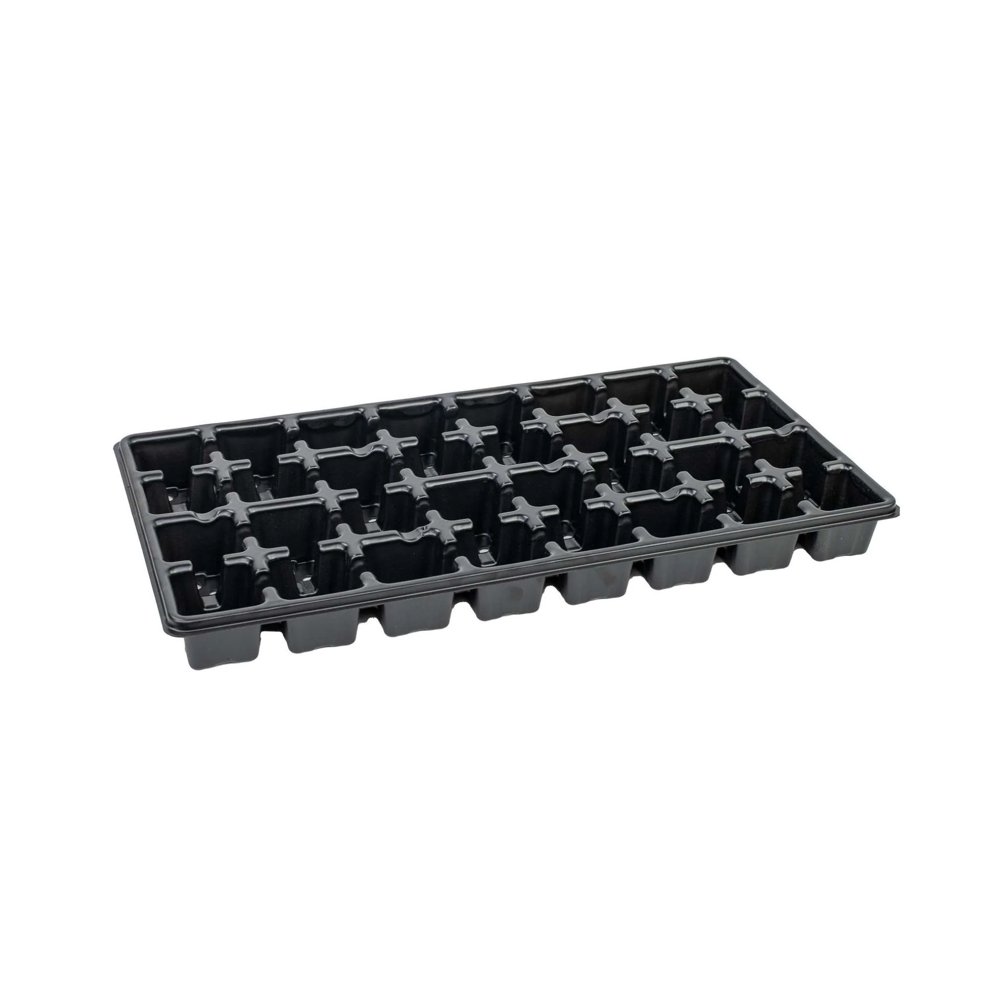
Tomatoes and squash can soon outgrow small cells, and peppers spend longer indoors, so all three benefit from more room. These 32-cell inserts give each seedling a 2-by-2-by-2-inch cell, so they can stay in their cells longer before potting up or planting out.
The inserts fit Bootstrap Farmer’s 1020 flats and carry a one-year warranty against breaking and warping.
- Best for: tomatoes, peppers, squash and other big seedlings.
- Keep in mind: this is an insert only, so you need a solid flat underneath, and fewer cells mean more shelf space per plant.
Best Self-Watering Kit
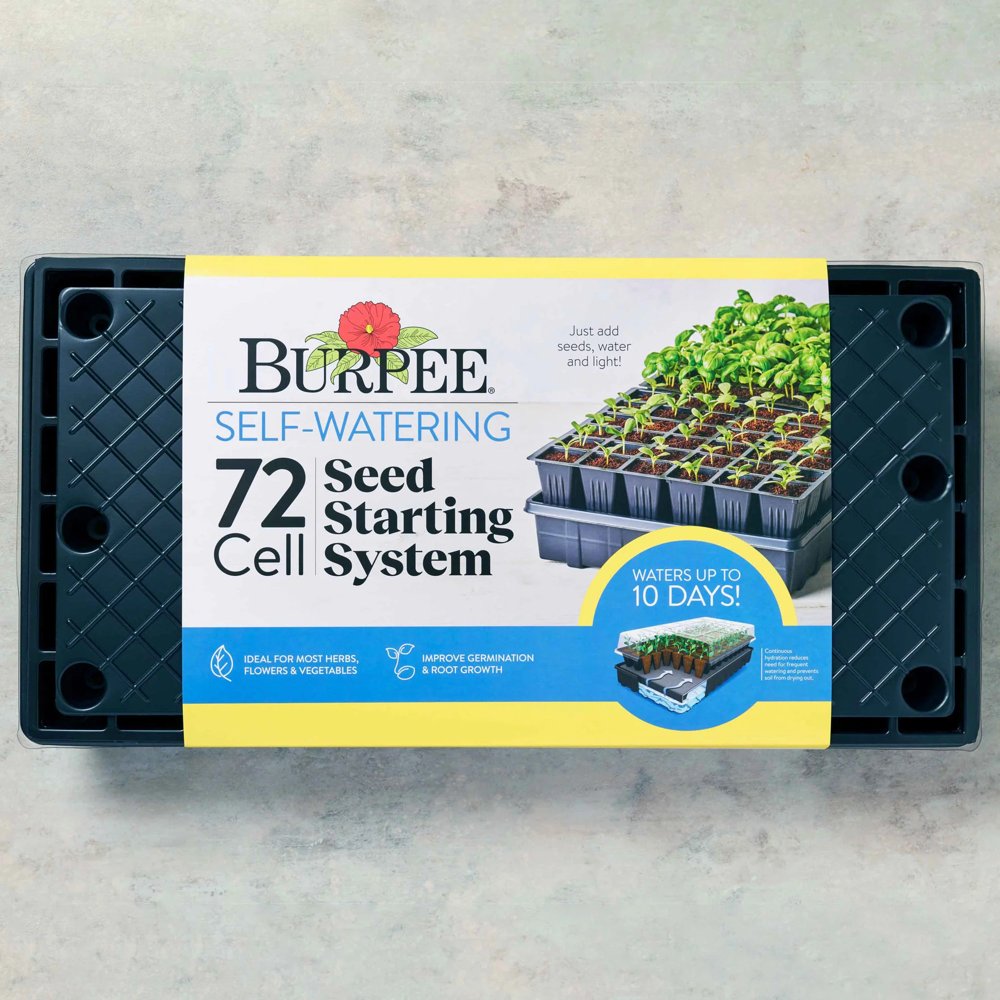
Burpee 72-Cell Self-Watering Ultimate Growing System
Burpee’s self-watering system holds water in a base tray and wicks it up through a capillary mat into two 36-cell trays, so the cells stay evenly moist with less daily attention. It comes with 72 growing pellets, a dome, plant markers and planting charts.
It is a good fit if you are away during the day or tend to forget to water. For a smaller setup, Gardener’s Supply’s GrowEase kit works the same way with 24 larger cells.
- Best for: busy gardeners who want steadier moisture with less watering.
- Keep in mind: check the reservoir every day or two; self-watering reduces chores but does not prevent overwatering. Some owners say the mat is fiddly to fit and the lid sits loosely.
Best Soil Blocker
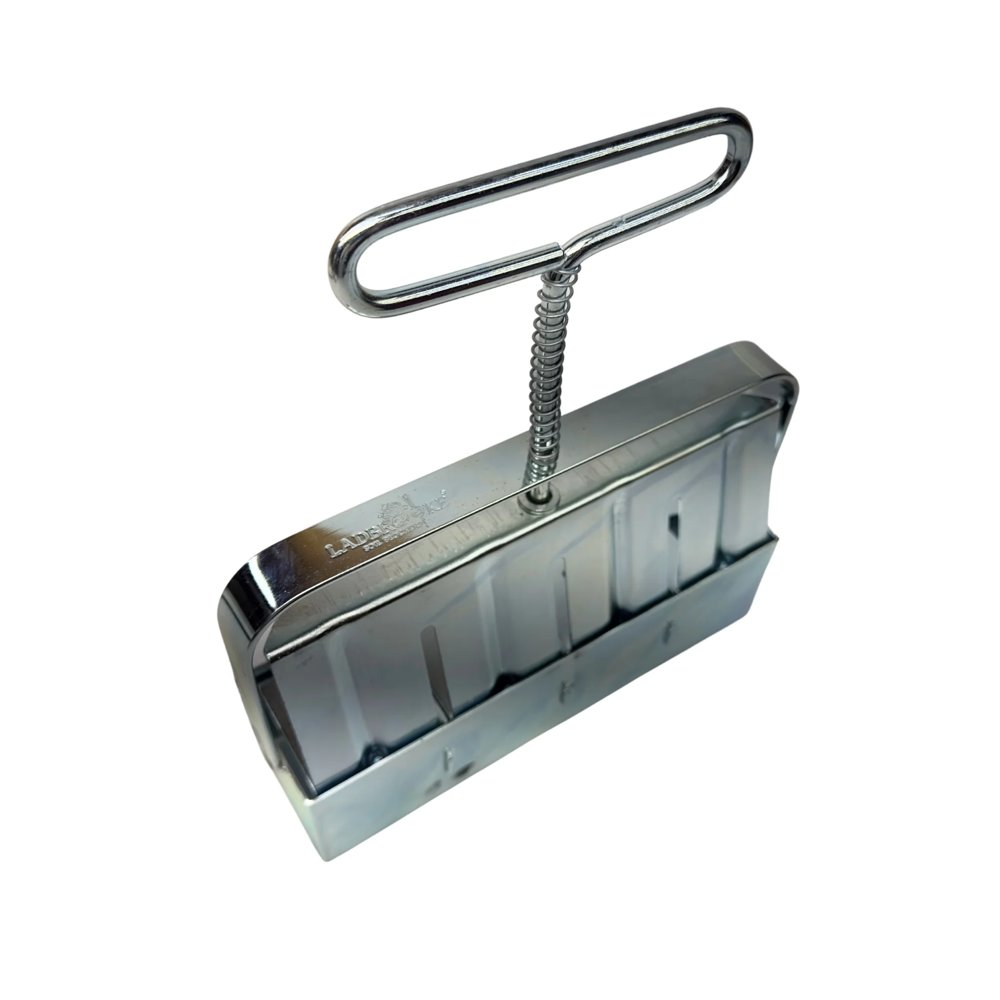
Ladbrooke Mini 4 Soil Blocker (2-Inch)
A soil blocker presses damp mix into free-standing cubes, so seedlings grow without plastic cells. The Ladbrooke Mini 4 is made in England from zinc-coated steel and makes four blocks about 1 13/16 inches square with each press, with seed pins that leave a small dimple for sowing.
Because air surrounds each block, roots stop at the edge instead of circling, and the whole block goes into the ground at transplant.
- Best for: gardeners who want to cut plastic and try a market-gardener method.
- Keep in mind: it takes practice: you need a cohesive blocking mix at the right moisture, and blocks dry out faster than cells. You also need a flat tray to hold the blocks.
Best Heat Mat with Thermostat
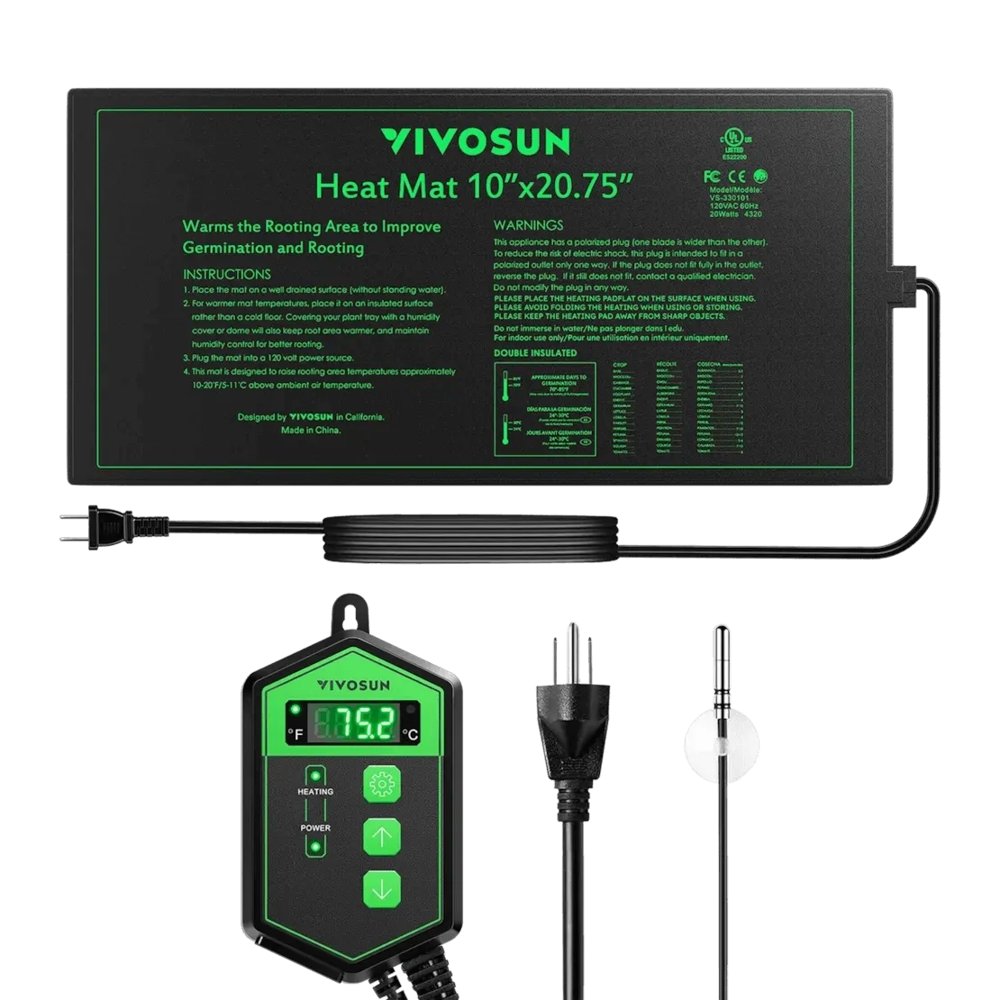
VIVOSUN 10 x 20.75 Inch Seedling Heat Mat and Thermostat Set
A heat mat warms the mix from below, which speeds up germination of warm-season seeds like tomatoes and peppers in a cool room. This VIVOSUN set pairs a 20-watt, 10-by-20.75-inch mat, sized for one standard 1020 tray, with a separate thermostat.
The thermostat is the important part: its probe sits in the mix and switches the mat on and off to hold the temperature you set.
- Best for: starting tomatoes and peppers in a cool basement or spare room.
- Keep in mind: always use the thermostat; a mat on its own can keep heating. Check the listing for the exact controller and warranty, since VIVOSUN sells several versions.
Best Tall Vented Dome
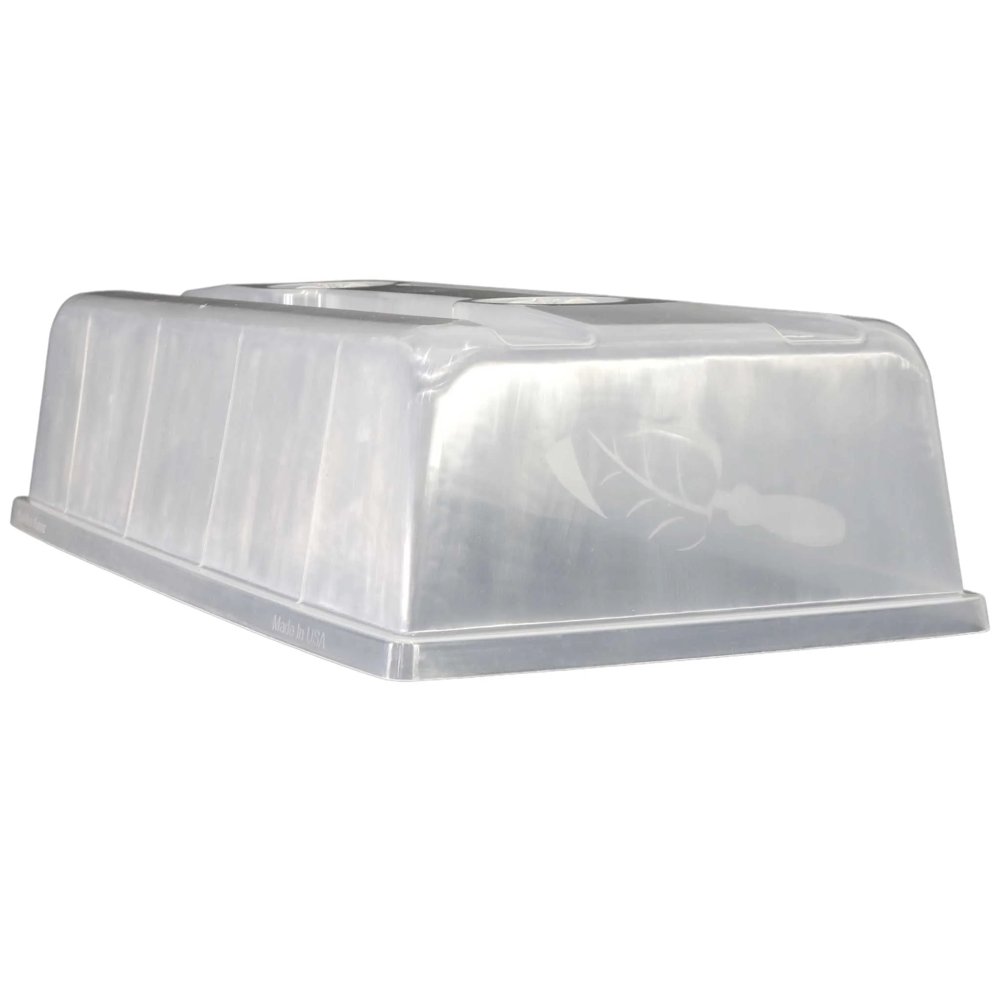
Bootstrap Farmer Extra Strength Humidity Dome
A taller dome gives sprouting seedlings room before you take it off. Bootstrap Farmer’s extra-strength dome is about 5.4 inches high with two adjustable vents, so you can let out excess humidity.
It is made in the USA from the same sturdy polypropylene as its flats.
- Best for: anyone replacing flimsy kit domes.
- Keep in mind: Bootstrap Farmer says the dome rests on the tray rim rather than sealing, and it is sized for its own 1020 flats, so measure other brands before buying.
Best Simple Plantable Pots
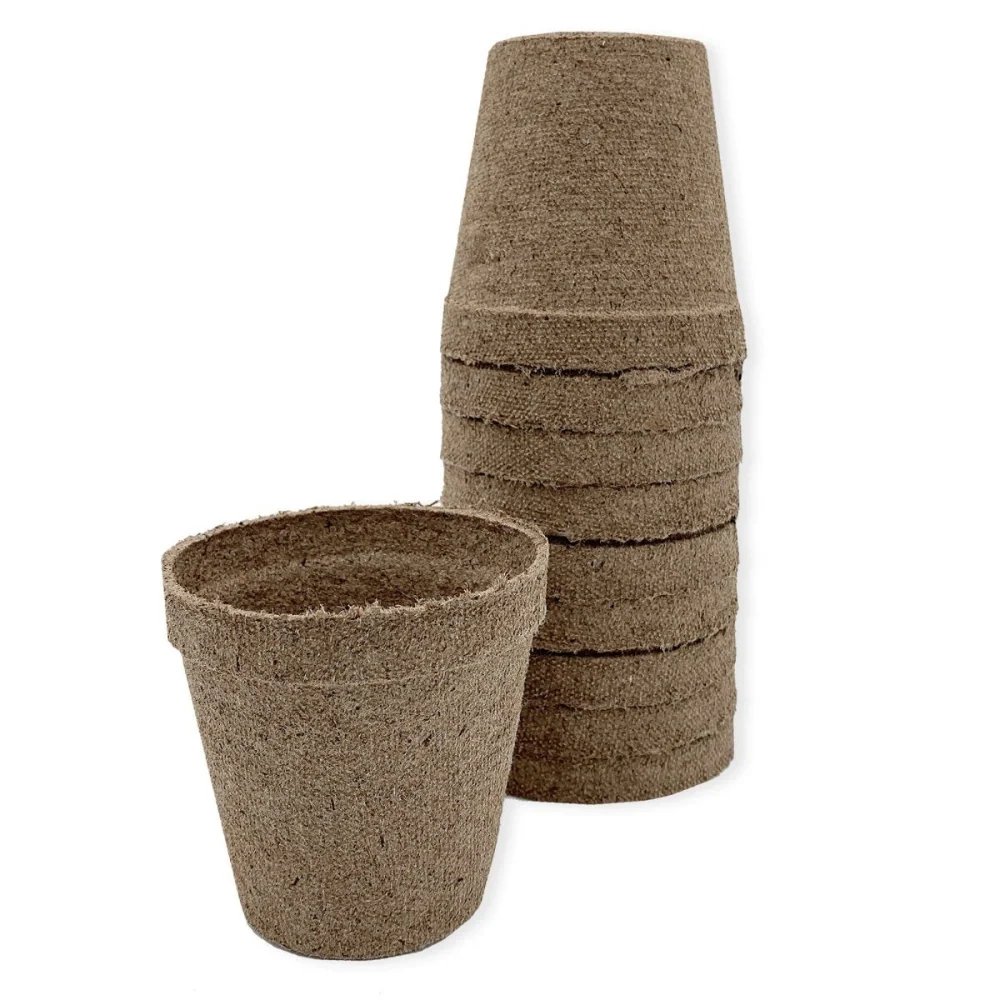
Jiffy 3-Inch Round Peat Pots
Peat pots can be planted with the seedling inside, which means less root disturbance at transplant. These 3-inch round pots are a good size for squash, cucumbers and other crops that dislike being moved.
They are also handy for potting up seedlings from small cells.
- Best for: squash, cucumbers and potting up.
- Keep in mind: peat pots dry out quickly, so check them often. At planting, tear off the rim or bury the pot completely, since an exposed rim wicks water away from the roots. The pots come without a tray or mix.
Quick Comparison
| Pick | Cells or size | What you get | Notes |
|---|---|---|---|
| Bootstrap Farmer 72-Cell Kit | 72 per insert | Inserts, flats, vented domes | Heavy-duty, reusable |
| Ferry-Morse Pro-Hex | 72 hex cells | Base and dome | Light plastic |
| Bootstrap Farmer 32-Cell | 32, 2 x 2 x 2 in | Insert only | Heavy-duty, reusable |
| Burpee Self-Watering | 2 x 36 | Reservoir, mat, dome, pellets | Self-watering |
| Ladbrooke Mini 4 | 4 blocks per press | Blocker and seed pins | Zinc-coated steel |
| VIVOSUN mat set | One 1020 tray | Mat and thermostat | 20 W |
| Bootstrap Farmer Dome | Fits 1020 flats | Dome with 2 vents | About 5.4 in tall |
| Jiffy Peat Pots | 3-in pots | Pots only | Plantable peat |
Humidity Domes and Heat Mats
A dome keeps the surface of the mix from drying out before seeds sprout. Take it off as soon as seedlings appear, and sooner if condensation is heavy, because trapped humidity and poor airflow encourage damping-off.
A heat mat speeds germination for warm-season crops such as tomatoes and peppers in a cool room. Cool-season crops like lettuce and brassicas do not need one, and too much heat can actually slow lettuce germination. Use a thermostat with its probe in the mix, follow the seed packet’s temperature, and, as VIVOSUN’s own guide notes, most seedlings no longer need bottom heat once they have emerged. After that, they need strong light; see our guide to grow lights for seedlings.
Soil Blocking: Starting Seeds Without Cells
Soil blocks are cubes of compressed mix that stand on their own in a flat tray. Because there is air between the blocks, roots stop at the edge instead of circling. Iowa State University Extension notes the learning curve: a mix that is too dry crumbles, one that is too wet sticks to the blocker, and blocks dry out faster than cells, so they need more frequent watering. You also need a cohesive blocking mix rather than an ordinary seed starting mix.
Peat Pots and Other Plantable Pots
Peat, paper and other plantable pots go into the ground with the seedling, which helps crops that dislike root disturbance. They dry out quickly, so check them often. When you plant, tear off the rim or bury the pot completely; a rim left above the soil wicks moisture away from the roots.
Cleaning and Reusing Seed Trays
Reusable trays are worth cleaning between seasons to avoid carrying disease into next year’s seedlings. Wash off the old mix, then sanitize. Oregon State University Extension recommends a solution of 10 percent bleach and 90 percent water, a 10-minute soak, then a rinse with clean water. Follow the bleach label and wear gloves.
How We Chose
These trays and kits were researched rather than tested side by side, and we would rather say that plainly. We compared cell counts and sizes, materials and thickness where published, what each kit includes, how the parts fit, and warranties, and we read owner reviews for recurring issues such as flimsy plastic or loose lids, without treating them as failure rates. Our growing advice follows extension guidance.
We do not list prices, because they change constantly. Use the buttons to check current prices.
Frequently Asked Questions About Seed Starting Trays
What is a 1020 tray?
It is the standard seed-starting flat, roughly 10 by 20 inches. Cell inserts and domes are made to fit it, though exact sizes vary a little by brand.
What size cells should I use for tomatoes?
Larger cells, such as 32 or 50 per tray, let tomatoes grow longer before potting up. If you start them in 72-cell trays, plan to move them into bigger pots once they outgrow the cells.
Do I need a heat mat to start seeds?
Not for everything. Heat mats help warm-season crops such as tomatoes and peppers germinate in a cool room. Lettuce and brassicas germinate fine without one. Always use a thermostat and remove the mat once seedlings are up.
Should I water seed trays from the top or the bottom?
Bottom watering is easiest: pour water into the solid flat and let the mix soak it up, then tip out what is left. It keeps seeds from washing around and the surface from crusting.
Can I reuse seed starting trays?
Yes, sturdy ones. Wash them, soak them in a 10 percent bleach solution for 10 minutes, then rinse, as Oregon State Extension recommends. Thin, cracked trays are not worth saving.
The Bottom Line
For most beginners, the Bootstrap Farmer 72-Cell Kit is the one to buy: sturdy flats, matching inserts and vented domes built for reuse. Add 32-cell trays for tomatoes and peppers, and a heat mat with a thermostat if your seed-starting spot is cool. Then fill them with a good seed starting mix and pick what to grow from our easiest vegetables for beginners.