
Best Stand Mixers for Bread Dough: 4 Picks, Compared (2026)
In Homestead is reader-supported. When you buy through links on this page, we may earn a small commission at no extra cost to you. See our affiliate disclosure. As an Amazon Associate I earn from qualifying purchases.
A good bread dough changes under your hands. It starts as a shaggy, sticky mass and, a few minutes into kneading, turns smooth and springy. Doing that by hand is satisfying once or twice. Doing it for two loaves every week is where a stand mixer starts to look very appealing.
Bread dough is also where stand mixers fail. A heavy whole-wheat dough can strain a motor, rock the mixer across the counter and leave you with a warm machine and an under-kneaded loaf. The bowl size on the box tells you very little about how much dough a mixer can actually handle. The manufacturer’s published flour limit tells you much more.
This guide compares four stand mixers that can knead bread dough, from an everyday tilt-head to a commercial bowl-lift, using the flour capacities their makers publish. It also explains why we left the cheap, big-bowl mixers out.
Table of Contents
Quick Picks
- Best for bread: the Bosch Universal Plus. A bottom-drive design with a 14 lb published dough capacity and a hook extender for smaller batches.
- Best all-rounder: the KitchenAid Artisan 5 Qt. Handles one or two loaves within clear published limits, and everything else in the kitchen too.
- Best value: the Cuisinart Precision Master 5.5 Qt. A bigger bowl and longer warranty for less, best for occasional loaves.
- Best for big batches: the KitchenAid Commercial 8 Qt. Rated for up to 16 cups of flour per batch.
Why Bread Dough Is Hard on a Mixer
Cake batter is loose and light. Bread dough is stiff, elastic and heavy, and kneading means the mixer works against that resistance for several minutes at a time. Whole-grain dough is harder still, because bran and germ absorb more water and make the dough denser. King Arthur Baking’s whole-grain guide explains why whole-wheat dough behaves so differently from white.
That is why mixer makers publish separate limits for bread. Those numbers are the most useful thing on the spec sheet, and they are often well below what the bowl looks like it could hold.
What to Look for in a Stand Mixer for Bread
Published Flour Capacity, Not Bowl Size
A 5.5 qt bowl does not mean 5.5 qt of dough. Look for the maker’s maximum flour or dough figure for yeast bread. As a rough guide, a standard loaf uses about 3 to 4 cups of flour, so a mixer rated for 6 cups is a one-loaf mixer and one rated for 14 lb of dough is a multi-loaf machine.
Tilt-Head, Bowl-Lift or Bottom-Drive
A tilt-head mixer hinges back for access. It is convenient, but the head can flex and bounce with stiff dough. A bowl-lift mixer raises the bowl to a fixed head, which holds steadier under load. A bottom-drive mixer like the Bosch puts the motor below and turns the hook from the center of the bowl, which suits heavy dough and big batches.
Speed Limits for Kneading
Most makers want bread dough kneaded slowly. KitchenAid’s bread-making instructions say never to exceed speed 2 with the dough hook, and Cuisinart puts kneading at speeds 3 to 4 on a 12-speed dial. Running a dough hook faster does not knead faster. It mostly heats the motor and the dough.
Whole Wheat Changes the Math
If you bake mostly whole wheat, plan around the whole-wheat limit, not the white-flour one. On KitchenAid’s 5 qt tilt-head models the gap is large: 10 cups of all-purpose flour, but only 6 cups of whole wheat.
The 4 Best Stand Mixers for Bread Dough
Best for Bread
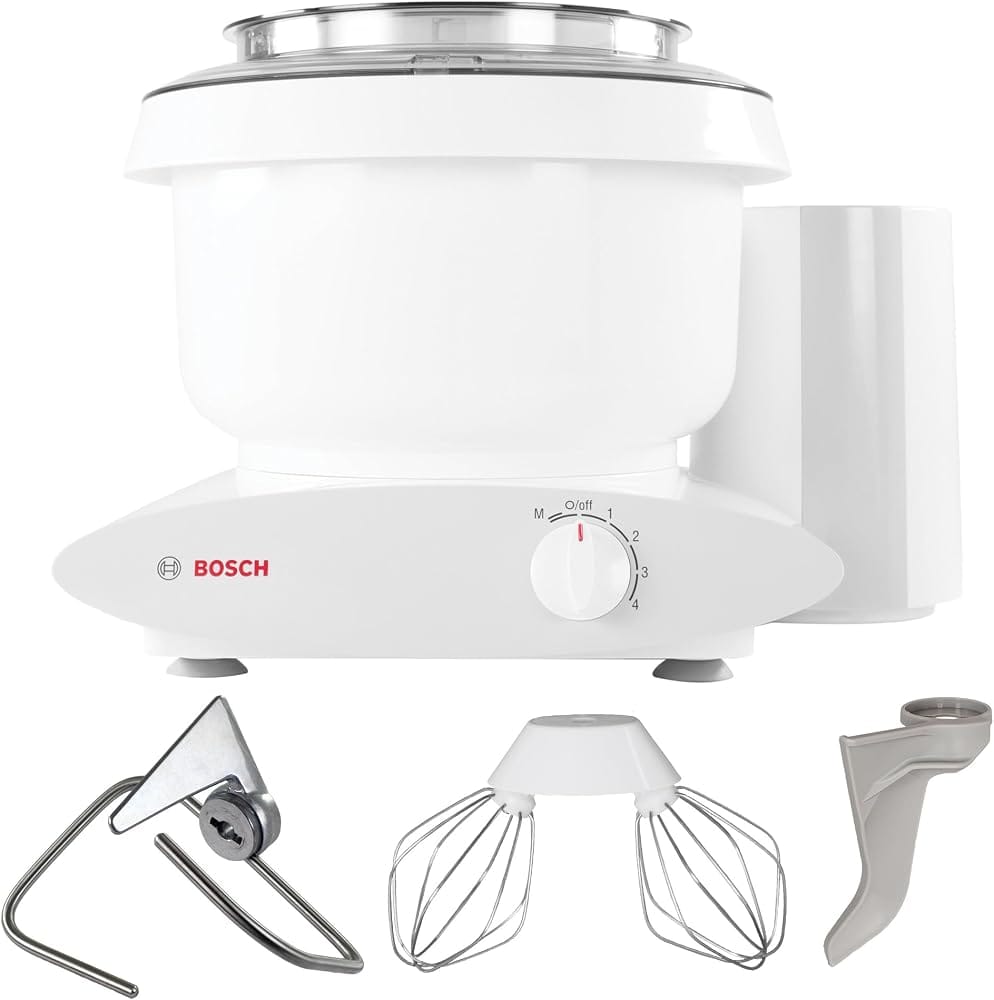
Bosch Universal Plus 6.5 Qt Mixer with Dough Hook Extender
The Bosch is built around heavy dough, and the reason is in the design. The motor sits underneath and drives the dough hook from the center of the bowl, so heavy dough is pulled down and around instead of climbing a hook from above. NutriMill, the US distributor, lists a dough capacity of 14 lb in the 6.5 qt bowl, which is several loaves at once.
This bundle adds NutriMill’s dough hook extender, which is designed to improve kneading for batches of one to four loaves, the range where a big bowl can otherwise leave a small dough under-worked. The open bowl makes it easy to add flour as you go. NutriMill lists a three-year warranty on the mixer.
- Best for: weekly bread baking, whole-wheat loaves, and families who bake several loaves at a time.
- Keep in mind: it looks and works differently from a classic stand mixer, the bowl is plastic, the extender is one more part to fit and wash, and NutriMill recommends lower speeds for kneading. The bundle listing says 15 lb; we use the manufacturer’s 14 lb figure.
Best All-Rounder
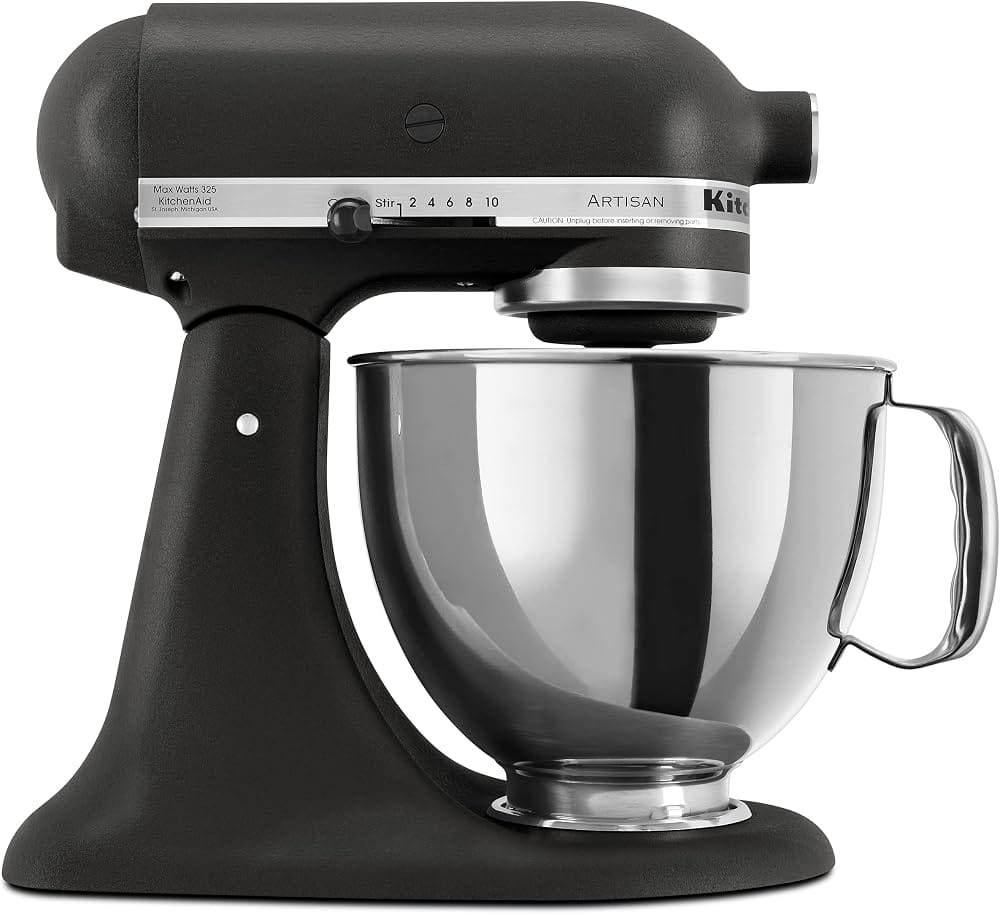
KitchenAid Artisan 5 Qt Tilt-Head Stand Mixer (KSM150PS)
The Artisan is the mixer most people already know, and it handles everyday bread well as long as you stay within its limits. KitchenAid’s own bread instructions for its 5 qt tilt-head mixers set those limits clearly: no more than 10 cups of all-purpose flour, or 6 cups of whole-wheat flour, in one batch, and never above speed 2 with the dough hook.
That is enough for one or two standard loaves, or a big batch of pizza dough or rolls. The tilt head makes the bowl easy to reach, and the attachment hub opens up pasta rollers, grain mills and meat grinders if you want to grow into them. Good Housekeeping rated its bread-dough performance well in lab testing.
- Best for: one- or two-loaf baking alongside cakes, cookies and everything else a stand mixer does.
- Keep in mind: the whole-wheat limit is much lower than the white-flour limit, stiff doughs work the motor hard, and the standard warranty is one year.
Best Value
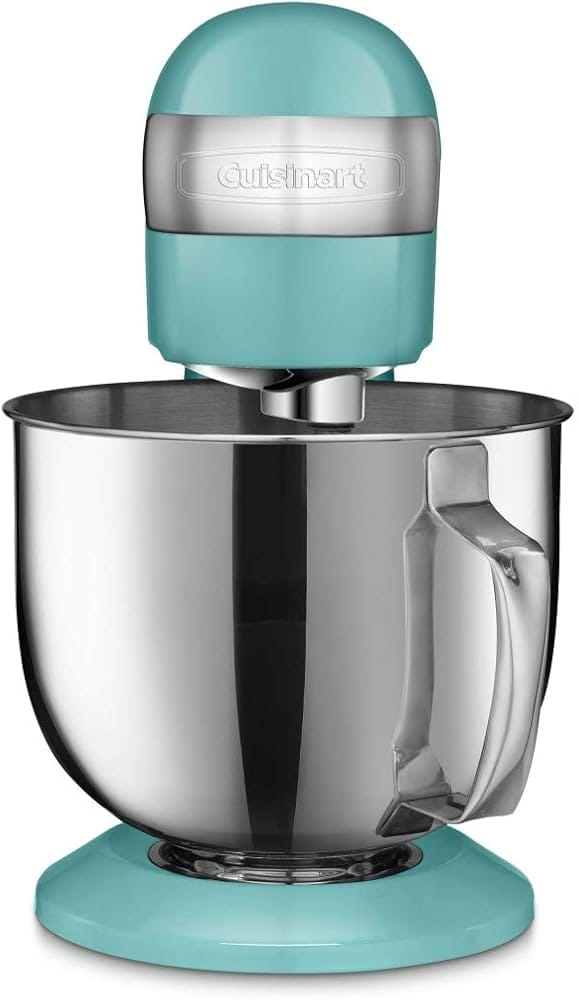
Cuisinart Precision Master 5.5 Qt Stand Mixer (SM-50)
The Cuisinart gives you a bigger bowl and more speeds than the Artisan, and a longer warranty. It has a 5.5 qt stainless bowl, a 500 W motor, 12 speeds, a tilt-back head and a dough hook, and Cuisinart’s guide puts bread kneading at speeds 3 to 4.
The important number is not the bowl size. Cuisinart’s manual lists a maximum of 6 cups of white flour for yeast dough, so treat it as a one-loaf bread mixer that also does excellent work on batters and whipped cream. Cuisinart’s three-year limited warranty is a point in its favor.
- Best for: occasional loaves, cookies and cakes, on a budget.
- Keep in mind: Good Housekeeping saw the head move with stiff bread dough, and the 6 cup flour ceiling is lower than the bowl suggests. Cuisinart lists the SM-50 as discontinued, so confirm which version this listing ships.
Best for Big Batches
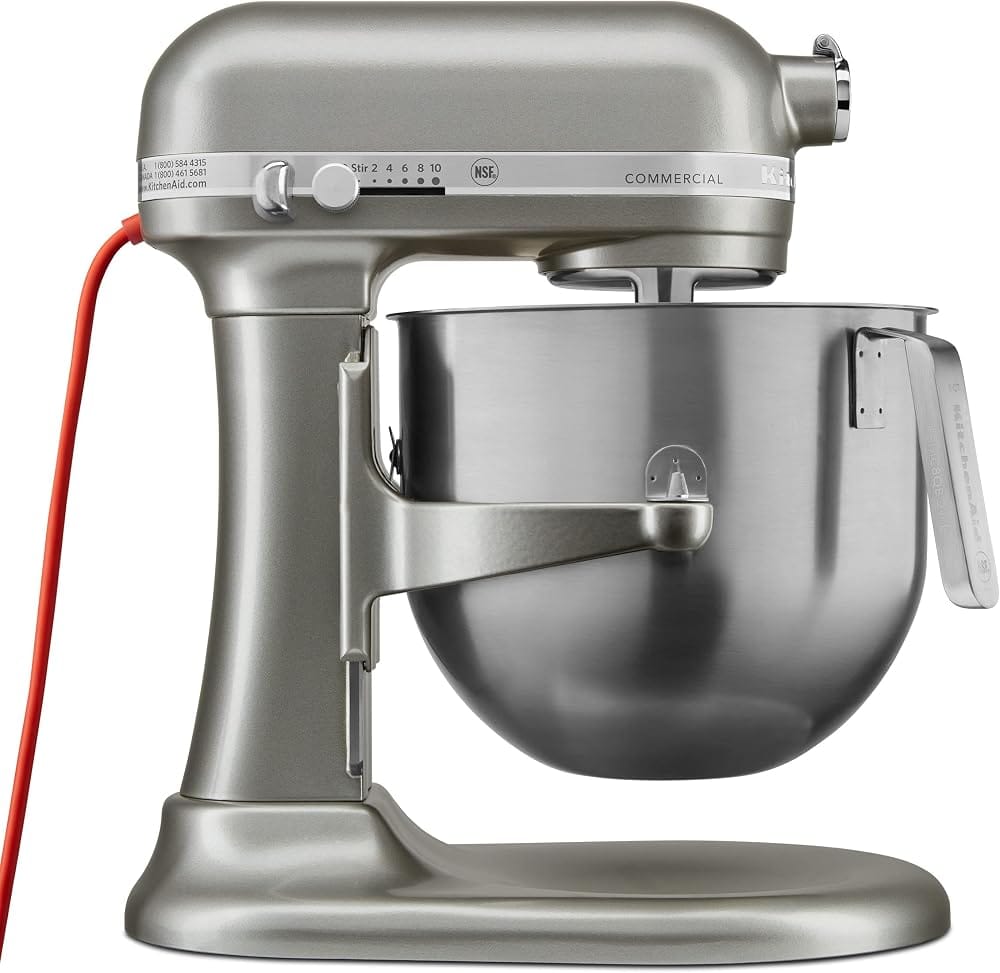
KitchenAid Commercial 8 Qt Bowl-Lift Mixer (KSM8990)
If you bake for a big household, sell at a market, or simply want to make a week of bread in one session, this is the heavy-duty option. KitchenAid’s specification sheet lists capacity for up to 16 cups of flour, enough dough for about 8 loaves, in an 8 qt bowl.
It is a bowl-lift design, which holds the bowl rigidly against heavy dough, and it uses a stainless spiral dough hook and a motor built for longer kneading loads. It is NSF certified for commercial kitchens and carries a two-year limited commercial warranty.
- Best for: large families, market bakers, and anyone who regularly bakes four or more loaves at a time.
- Keep in mind: it is large, heavy and expensive for one-loaf baking, and its 1.3 horsepower motor rating is not directly comparable to the wattage figures other mixers list.
Quick Comparison
| Model | Design | Bowl | Published Bread Limit | Warranty |
|---|---|---|---|---|
| Bosch Universal Plus | Bottom-drive | 6.5 qt | 14 lb dough | 3 years (mixer) |
| KitchenAid Artisan | Tilt-head | 5 qt | 10 cups AP or 6 cups whole wheat | 1 year |
| Cuisinart SM-50 | Tilt-head | 5.5 qt | 6 cups white flour | 3 years |
| KitchenAid Commercial 8 Qt | Bowl-lift | 8 qt | 16 cups flour | 2 years (commercial) |
Why We Left Out the Big Budget Mixers
Shop for stand mixers online and you will see very inexpensive models with 6 to 8 qt bowls and big wattage numbers. They are popular for cookies and cakes, and some owners use them for bread happily.
We left them out of a bread-dough guide for one reason: we could not find a manufacturer’s published flour or dough limit for the models we looked at, and wattage alone says little about how a motor copes with several minutes of stiff kneading. Without that number, we cannot tell you how much dough to put in one. If you already own one, start with a single small loaf and watch for the motor straining or the head bouncing.
How to Knead Bread Dough in a Stand Mixer
- Mix on the lowest speed first. Combine flour, water, yeast and salt with the dough hook until no dry flour remains, about 1 to 2 minutes.
- Knead at the speed your manual specifies. On the KitchenAid Artisan, that is speed 2. Most doughs need about 5 to 8 minutes.
- Check the dough, not the clock. It is ready when it is smooth, slightly tacky and stretches thin without tearing easily. If it is climbing the hook, stop and push it back down.
- Give the mixer a rest on long kneads. If the motor feels hot, stop for a few minutes before continuing.
- Stay within the flour limit. For a double batch, it is often easier on the machine to make two separate batches.
From there, the rise, shaping and baking are the same as any hand-kneaded loaf. If you are new to it, our beginner sourdough guide walks through a complete bake, and a good sourdough starter kit covers the tools. Prefer to skip the shaping and baking entirely? A bread machine does it all.
How We Chose
These mixers were researched rather than tested side by side in our kitchen, and we would rather say that plainly. We started from the bread limits each manufacturer publishes in its manuals and specification sheets, then compared drive design, kneading speeds, warranties and independent lab testing, and the specific limitations we could verify, and we flag any figure that comes only from a seller listing.
We weighted heavy and whole-grain dough over cakes and whipped cream, because that is where mixers succeed or fail for bread. We do not list prices, because they change constantly. Use the buttons to check current prices.
Frequently Asked Questions About Stand Mixers for Bread
Is a KitchenAid good for bread dough?
Yes, within its limits. The 5 qt Artisan handles one or two loaves well if you keep to KitchenAid’s published flour limits and knead at speed 2. For frequent large batches or mostly whole-wheat bread, a bottom-drive or bowl-lift mixer is a better fit.
How long should you knead bread in a stand mixer?
Usually 5 to 8 minutes at low speed after the ingredients come together. Judge by the dough: smooth, elastic and able to stretch thin is the goal. Over-kneading by machine is possible but uncommon in home batches.
Why does my mixer walk across the counter?
Stiff dough makes the mixer rock as the hook catches it. Use the lowest kneading speed, check you are within the flour limit, add water a teaspoon at a time if the dough is very stiff, and never leave a mixer running near the edge of the counter unattended.
Stand mixer or bread machine?
A stand mixer kneads but leaves the rising, shaping and baking to you, so you get a bakery-style loaf and a machine that does much more than bread. A bread machine does everything in one pan with almost no effort. Our bread machine guide covers that side.
What size stand mixer do you need for bread?
For one or two loaves at a time, a 5 to 5.5 qt mixer with a published limit of at least 6 cups of flour is enough. If you regularly bake three or more loaves, or mostly whole wheat, look at a mixer rated for 12 lb of dough or more.
The Bottom Line
If bread is the main reason you want a mixer, the Bosch Universal Plus is built for it and has the published capacity to prove it. If you want one mixer for everything and bake a loaf or two at a time, the KitchenAid Artisan is a safe, versatile choice as long as you respect its limits. Then put it to work on our homemade crackers or a first sourdough loaf.