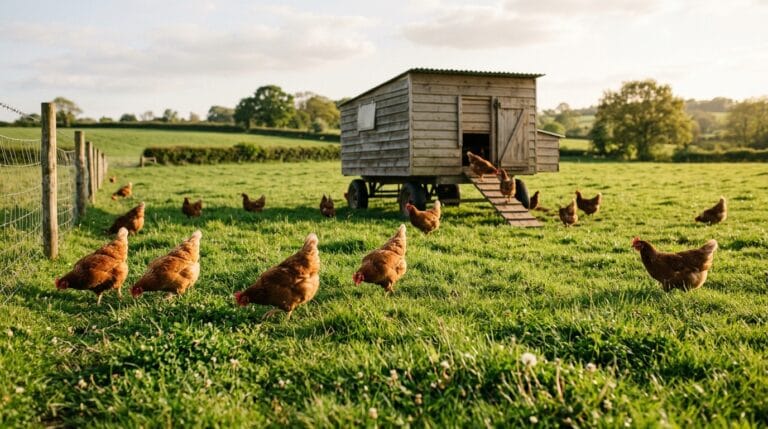
How to Keep Chickens Warm in Winter: A Practical Checklist
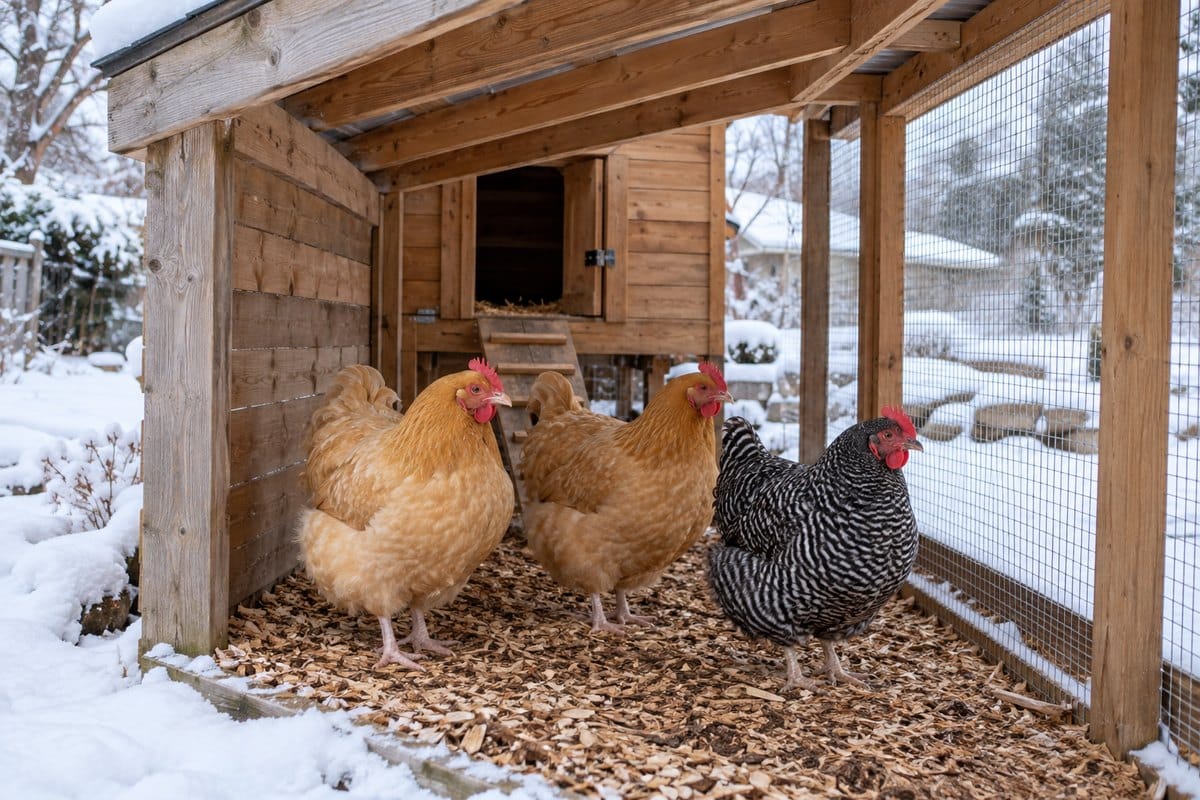
The water bowl has a thin rim of ice, and the hens hesitate at the coop door before stepping into the morning. Inside, there is the soft rustle of feathers and a damp patch beneath the drinker. That small patch deserves attention before you start shopping for a heater.
Learning how to keep chickens warm in winter means looking after the whole setup: dry shelter, fresh air, usable water, balanced feed, and birds that can reach all of them. A tightly sealed coop or an improvised heat lamp can create a new problem while you are trying to solve the cold. This checklist is for adult, fully feathered backyard chickens, not chicks that still need a brooder.
Quick Answer
- Keep rain, snow and direct wind out of the sleeping area without closing every ventilation opening.
- Remove wet litter and repair leaks. Dry bedding matters more than adding another layer over a soggy floor.
- Provide suitable wooden roosts and enough room for every bird to settle comfortably.
- Keep clean drinking water available and unfrozen. Check the water itself, not just whether a heater is switched on.
- Continue a balanced poultry ration. Watch vulnerable birds and make a safe, flock-specific heat plan before severe weather.
Utah State’s housing guidance and Oklahoma State’s backyard-flock guide both put suitable housing and air exchange at the center of the job. The question is not simply whether chickens can survive a cold night, but whether your birds can stay dry, eat, drink and rest in the conditions you have.
Table of Contents
Inspect the Coop Before the Cold Arrives
Walk around the coop in daylight, then look inside after wet or windy weather. A problem that is easy to miss on a calm afternoon may be obvious when water runs down a wall or wind enters beside the roost.
- Roof and walls: find leaks, loose panels, and gaps that admit weather at bird level.
- Doors and latches: make sure you can close them securely, including when snow or ice changes the fit.
- Floor: look for damp corners, spilled water, and bedding that has formed a compacted mat.
- Daily access: keep a route open for carrying water, collecting eggs, and removing litter.
- Power: if you intend to use electrical equipment, arrange a suitable installation before the storm, not during it.
Illinois Extension recommends repairing drafts while retaining ventilation. If incoming air is visibly moving a resting bird’s feathers, investigate that opening rather than treating the whole coop as one space to seal.
Our chicken coop building guide covers the larger structure. For winter preparation, start with the repairs that keep your existing shelter dry and usable.
Keep the Roosting Area Dry, With Fresh Air Above It
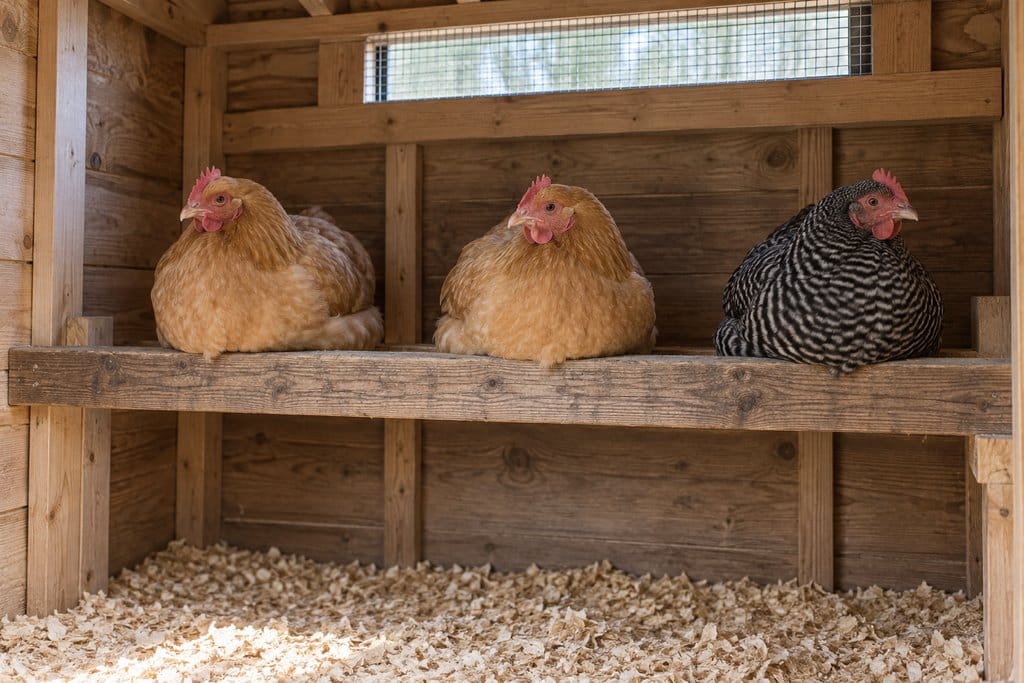
Draft protection and ventilation do different jobs. The first limits direct cold airflow over resting birds. The second removes moisture and stale air. Blocking both together can leave a warmer-feeling coop with worse air and damp surfaces.
Utah State describes winter air exchange near the roof, where incoming air can mix before reaching the birds. The exact vent arrangement depends on the building and prevailing weather; a photograph of someone else’s coop is not a ventilation design for yours.
Look for condensation and ammonia odor during your checks. Repair the source of water, remove wet litter, and assess air exchange rather than just opening a door briefly and calling the problem solved. Illinois links ventilation to both moisture and ammonia control.
Roosts should be stable, accessible, and made of suitable wood rather than cold metal. Colorado State describes broad roosts that let birds cover their feet. Leave enough usable perch space for all the birds, including the one that usually gets pushed to the end. Watch where each hen actually sleeps; an empty-looking perch is not helping a bird that cannot reach it or is driven away.
If you add insulation, protect it from pecking and rodents. Keep intentional ventilation openings usable. A coop that excludes weather should not become an airtight box.
Remove Wet Litter Instead of Hiding It
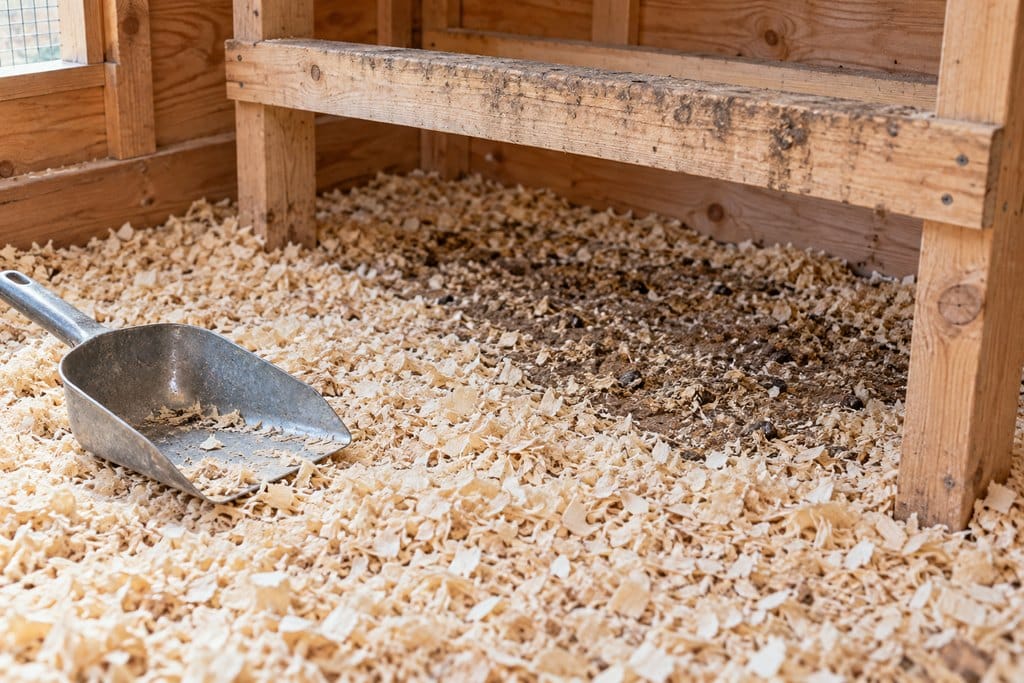
Check beneath the waterer and roosts first. Lift a little bedding where it looks compacted, because a dry top layer can hide moisture underneath. Take out wet or caked material and replenish with clean bedding.
Penn State’s small-flock recommendations include removing wet or compacted litter and maintaining the coop. That is a useful starting routine for a beginner: find the wet spot, remove it, and fix why it became wet.
If the same place is damp again tomorrow, examine the drinker for leaks or tipping. If the dampness is widespread, check the roof, drainage, stocking conditions, and ventilation. More bedding is not a repair for water continually entering the building.
Deep litter is a management method, not permission to leave a wet floor untouched or a promise of enough heat for any winter. This overview does not give a deep-litter recipe. Choose a cleaning routine you can maintain while keeping the flock dry.
Keep Drinking Water Available and Unfrozen
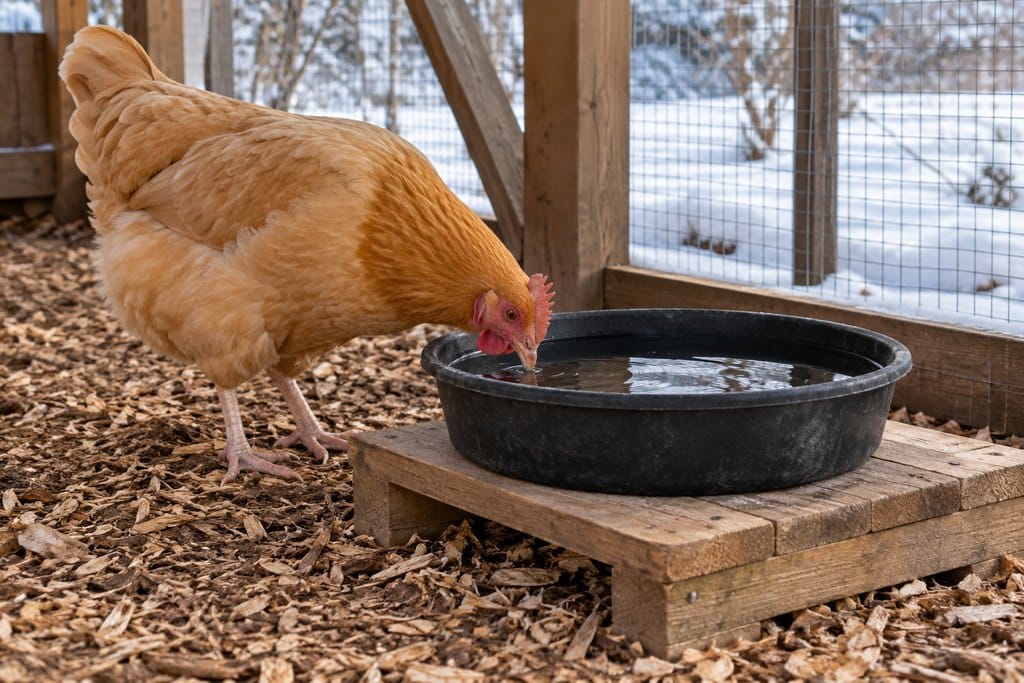
A bowl full of ice is not drinking water. Winter chores need a plan for what happens between visits, especially when you are away for several hours.
Without power, a practical option is to exchange a frozen container for a clean filled one and thaw the spare elsewhere. A flexible rubber bowl can make ice removal easier. New Hampshire describes this manually serviced option, while emphasizing access to clean, unfrozen water.
A fresh fill is not guaranteed to last until your next check. Observe how quickly your actual container freezes in its actual location, then adjust the checking routine. If you cannot keep water available that way, you need a different arrangement, not a larger gap between visits.
Powered waterers and compatible heated bases can help, but follow the equipment’s directions and keep connections protected from birds and water. Make sure the container and base are approved to work together. Check for spills, damage, and a drinker that is powered but still frozen.
Our feeder and waterer guide explains the everyday setup. Keep the drinking point accessible to smaller or less dominant hens, not just the birds that arrive first.
Keep Balanced Feed at the Center of Winter Feeding
Do not replace the normal ration with corn because you heard it keeps chickens warm. Treats and a complete feed are not interchangeable.
Minnesota’s laying-hen guide recommends a prepared, balanced feed and notes that consumption can rise during winter. Keep the appropriate ration available, monitor the feeder, and store spare feed where it stays dry and protected from pests.
Watch the flock eat rather than judging access from a full feeder. A bird kept away by a dominant hen can struggle while plenty of feed remains. Check vulnerable hens individually, and ask a poultry veterinarian or local Extension specialist about a bird losing condition.
Feather loss is another reason to pay closer attention. Our molting guide explains normal molt and other causes of missing feathers. A poorly feathered bird should not receive the same casual winter assumptions as a healthy, fully feathered hen.
Make a Safe Heat Plan, Not a Blanket Rule
There is no single no-heat promise that suits every flock, coop and climate. Breed, body condition, feather coverage, exposure, and the duration of the cold all matter.
Extension recommendations differ. Minnesota recommends supplemental heat below a coop temperature of 35 degrees Fahrenheit. New Hampshire generally advises against adding heat because of fire risk, while allowing that vulnerable birds may need a carefully chosen arrangement. Neither supports ignoring a bird in distress.
Use those differences as a reason to make a local plan with Extension or a poultry veterinarian. Measure conditions near where the birds rest, inspect the shelter, and decide what you will do for the vulnerable birds before the coldest forecast arrives.
- Use equipment specifically approved for the intended poultry or livestock setting.
- Follow installation instructions, clearances and fire warnings exactly.
- Keep wires protected from birds, moisture and combustible litter.
- Arrange suitable permanent power with an electrician rather than using an extension cord as permanent wiring.
- Have a backup shelter and checking plan if equipment or power fails.
The installation and wiring cautions follow Minnesota’s equipment guidance. Do not hang a lamp from its cord or improvise a heater among combustible bedding. A product being sold for a coop does not remove the need to follow its instructions.
Watch the Birds, Not Just the Thermometer
A reading on the wall cannot tell you whether every hen has eaten or whether one is wet and unable to perch. Compare behavior with what is normal for each bird.
Persistent huddling, repeatedly holding up a foot, or staying fluffed and inactive may signal that a bird is struggling. New Hampshire recommends reassessing shelter and seeking veterinary guidance for suspected frostbite. A hen briefly fluffing her feathers is not, by itself, a diagnosis.
Get prompt veterinary advice for a bird that cannot stand or reach food and water, seems severely weak, or has injured or frostbitten tissue. Do not pick off dark scabs or try rapid reheating with a heat lamp. Colorado State’s winter-chicken guidance warns against rapid direct heating and removing frostbite scabs.
Do not blame sudden flock illness or unexplained deaths on winter alone. USDA APHIS lists sudden death and other illness signs as reasons for urgent attention. Contact your veterinarian or state animal-health officials and follow their instructions.
A Daily Winter Checklist You Can Repeat
Use this as a starting routine, not a claim that two visits are enough in every freeze. Add checks when weather or equipment requires them.
| When | What to Check | What Needs Action |
|---|---|---|
| Morning | Every bird, liquid water, feed, wet litter, and overnight condensation | A bird not behaving normally, a frozen drinker, leaks, or damp bedding |
| During the day | Water availability, changing weather, and any powered equipment | Water freezing between visits, wind entering at bird level, or equipment damage |
| Before night | Bird count, secure doors, accessible roosts, and the overnight forecast | A hen left outside, a bird unable to perch, a door that will not latch, or a forecast beyond your current plan |
Keep spare water containers, dry bedding, and your veterinary contact details somewhere you can reach easily. Write down the problems you find. A repeated wet corner or frozen drinker needs a change in the setup, not repeated reassurance that the hens look all right.
Frequently Asked Questions About How to Keep Chickens Warm in Winter
How Cold Is Too Cold for Chickens?
There is no universal outdoor temperature that makes every chicken safe or unsafe. Consider the conditions inside the shelter and the birds themselves. The differing heat recommendations above are why a local, flock-specific plan is more useful than a temperature copied from a social-media post.
Can Chickens Go Outside in Winter?
Give them access to a protected area when conditions allow, with a way back to shelter. A roofed run and a dry path can make that choice easier. Do not force a struggling bird into snow or assume that an open door proves the outdoor area is suitable. Keep predator protection in place.
Will a Light Keep the Coop Warm?
Lighting and heating are separate decisions. University of Georgia explains that LEDs contribute little heat and warns about heat-lamp fire risk. If egg production slows, do not make the coop hotter simply to chase more eggs.
Does Breed Choice Make a Difference?
Yes, but it does not replace care. Minnesota’s breed guidance notes that medium to large breeds suit cold winters. Our beginner breed guide can help with future flock choices; the hens you already have still need suitable shelter, feed, water and monitoring.
Start Tonight With the Ordinary Checks
That thin rim of ice and the damp patch under the drinker are where the work begins. How to keep chickens warm in winter comes down to dry bedding, fresh air above the roost, liquid water, and a balanced ration, checked every day.
Start tonight with the ordinary things: a dry floor, usable water, a secure door, and a look at every bird. Those checks make the next cold morning easier to handle.
This adult-bird overview does not replace individual veterinary advice or a brooding plan for chicks.