Homemade Peach Jam (No Pectin, Small Batch)
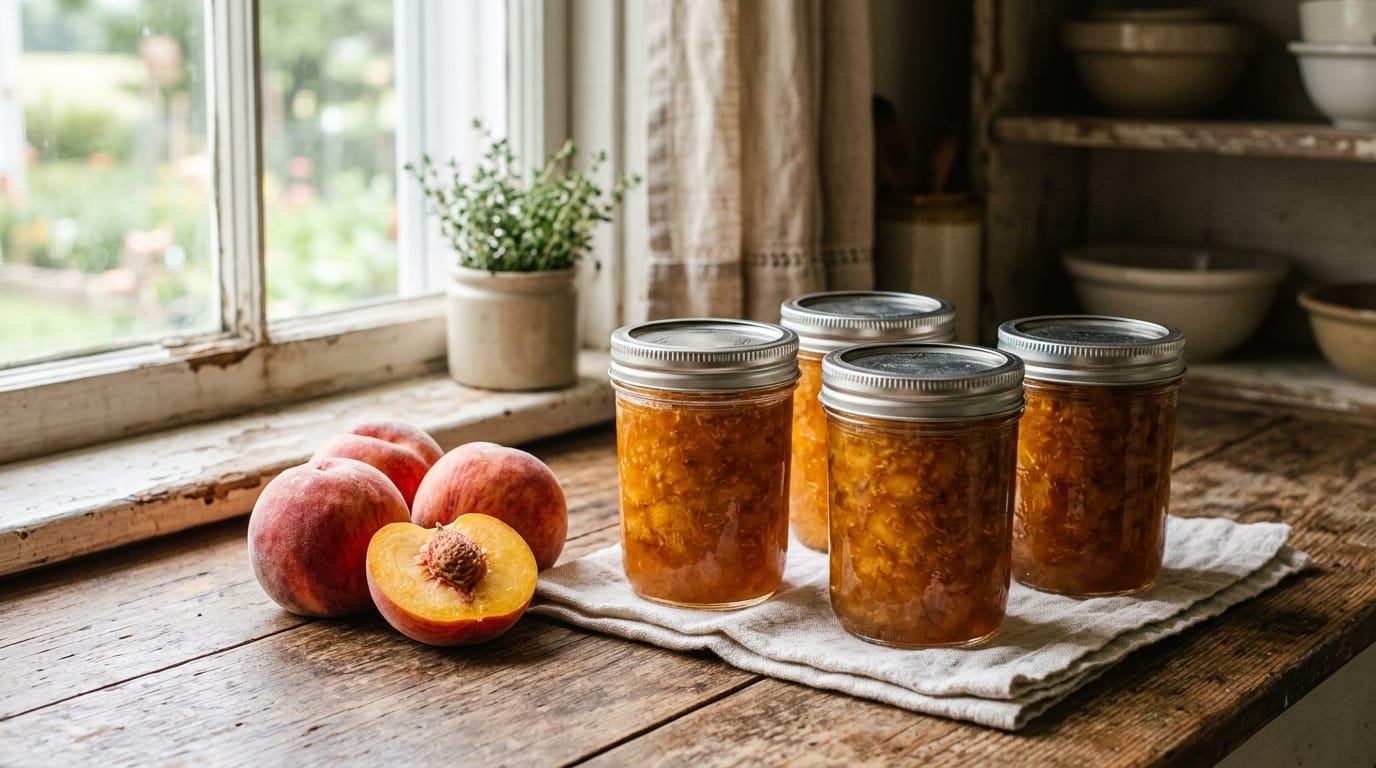
There is a specific stage a box of peaches reaches, about a day past perfect, where the fruit is too soft to slice neatly and still too good to throw out. The skins bruise if you look at them. The juice runs down your wrist when you cut one.
That is jam fruit, and it is arguably the best use of a peach. Nothing in a jam cares whether the slices held together.
What makes peach jam confusing is the pectin question. Half the recipes online call for a box of powdered pectin and half insist you do not need it, and it is genuinely hard to find out what the tested proportions are without it. They do exist. They are just published in a place almost nobody looks. This guide gives you both versions, how to tell when jam is actually set rather than hopefully set, and the difference between jam and preserves that explains why your grandmother’s recipe reads so differently from a modern one.
Table of Contents
The Short Answer
- Peach jam without pectin is 5 1/2 to 6 cups crushed peaches, 4 to 5 cups sugar and 2 tablespoons lemon juice, which yields 6 to 7 half-pints.
- Those proportions are tested. They are published in a table inside NCHFP’s general no-pectin method rather than as a recipe with a name, which is why searching for them usually fails.
- Cook it to 220 F at sea level, which is 8 degrees above the boiling point of water. Subtract 2 degrees for every 1,000 feet of elevation.
- The temperature test is the one to trust. The spoon test and the cold plate test both work and both are less reliable.
- Jam gets 1/4 inch of headspace and processes for 5 minutes at up to 1,000 feet. That is under 10 minutes, so the jars must be sterilized first.
- Sugar is not just sweetness here. It is doing the gel and a good deal of the preserving, so cutting it changes the product rather than just the flavor.
The No-Pectin Peach Ratio That Is Hard to Find
If you search NCHFP for a peach jam without pectin you will come up with Blueberry-Peach Jam and not much else, and it is easy to conclude that the plain version was never tested. That is not right.
The proportions are in NCHFP’s general method for making jam without added pectin, in a table alongside apricots and berries. Peaches are right there:
| Fruit | Crushed fruit | Sugar | Lemon juice | Yield |
|---|---|---|---|---|
| Apricots | 4 to 4 1/2 cups | 4 cups | 2 tablespoons | 5 to 6 half-pints |
| Berries | 4 cups | 4 cups | None | 3 to 4 half-pints |
| Peaches | 5 1/2 to 6 cups | 4 to 5 cups | 2 tablespoons | 6 to 7 half-pints |
So the tested no-pectin peach jam is a real thing that simply never got its own page with its own title. If you have been reading blog recipes and wondering which one to trust, start from that row.
Notice that peaches need more fruit per batch than berries and get proportionally less sugar. Peaches are low in natural pectin and low in acid, which is why the lemon juice is not optional here and why a peach jam takes longer to reach a set than a berry one. You are boiling water off until the sugar concentration is high enough to gel, and a peach starts with a lot of water.
Peach Jam Without Pectin, Step by Step
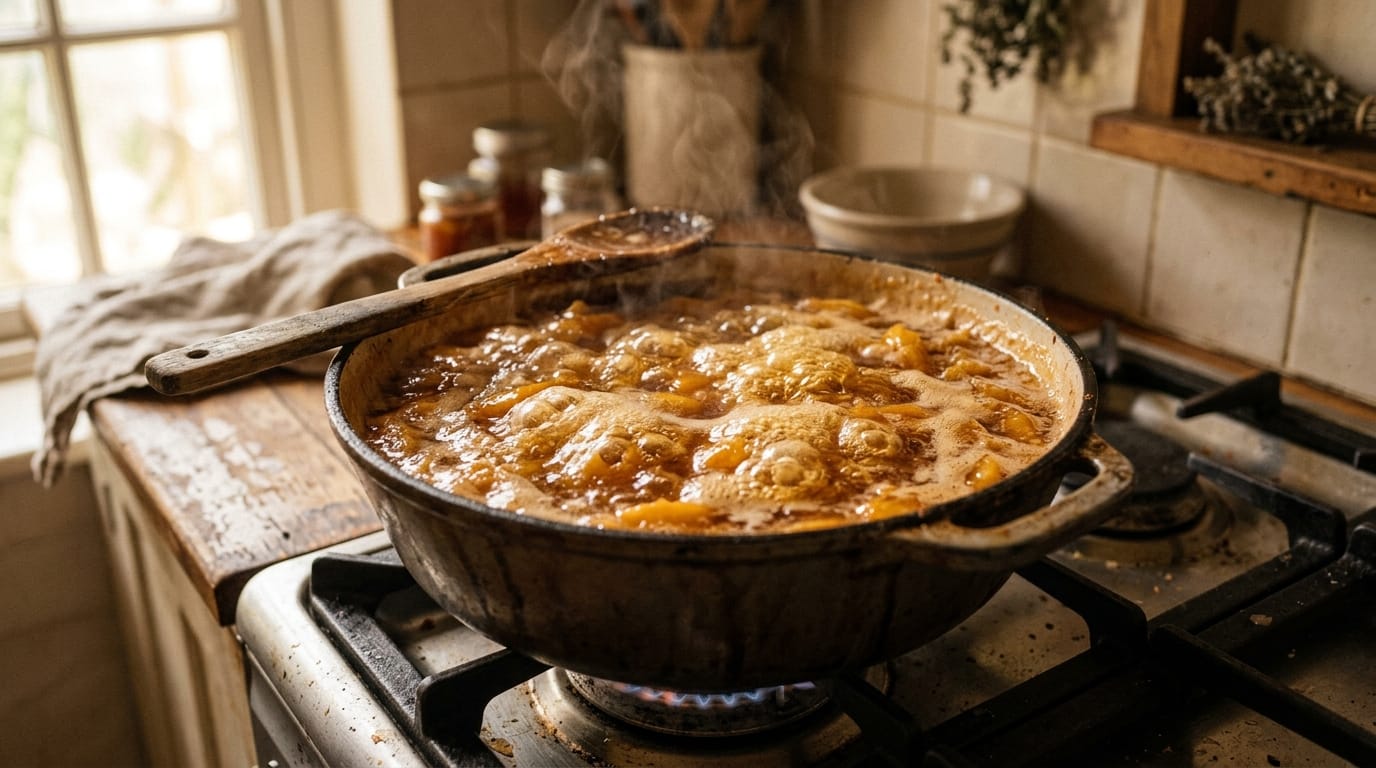
Yields 6 to 7 half-pints
Peach Jam Without Pectin
- 5 1/2 to 6 cups crushed peaches, from roughly 4 lb of fruit
- 4 to 5 cups sugar
- 2 tablespoons lemon juice
Proportions from NCHFP’s no-pectin jam table. Use fully ripe fruit: NCHFP says so explicitly, and it matters more here than in most recipes.
- Sterilize your jars and keep them hot. This process runs under 10 minutes, which means sterile jars are required rather than optional. Our guide to sterilizing jars covers the boiling water method.
- Wash and rinse the peaches thoroughly. Do not soak them. Remove the stems, skins and pits. Skins slip off easily after 30 to 60 seconds in boiling water and a dip in ice water, which is the same trick as freezing peaches.
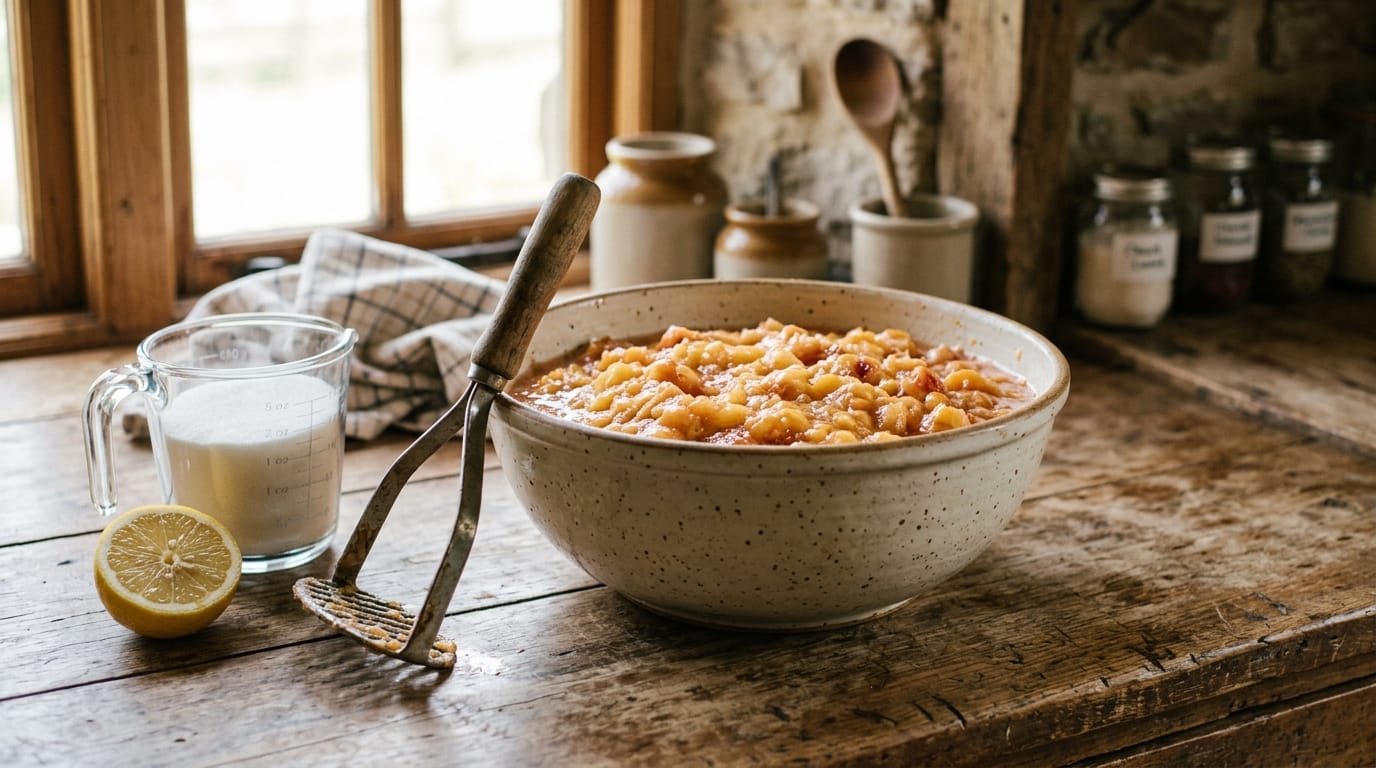
- Crush the fruit rather than pureeing it. A potato masher in a wide bowl gives you the texture jam is supposed to have. A blender gives you peach sauce.
- Measure the crushed fruit into a large saucepan. Use a wider, heavier pan than feels necessary, because jam boils up hard and scorches easily.
- Add the lemon juice and the sugar, and bring it to a boil while stirring rapidly and constantly. That instruction is NCHFP’s wording and it is not decorative: sugar on the bottom of a hot pan burns fast.
- Continue boiling until the mixture thickens and reaches the temperature for your elevation. See the next section, because this is the step everyone gets wrong.
- Skim off any foam, then fill the hot jam immediately into hot sterile jars, leaving 1/4 inch of headspace.
- Wipe the rims with a clean dampened paper towel, apply two-piece lids, and process in a boiling water canner using the table further down.
This is a small-batch recipe and it should stay one. Do not double it. A larger volume of jam takes much longer to reach the gel point, and the extra boiling time cooks the flavor flat and darkens the color. Two batches back to back beat one big one every time.
How to Tell When It Is Actually Done
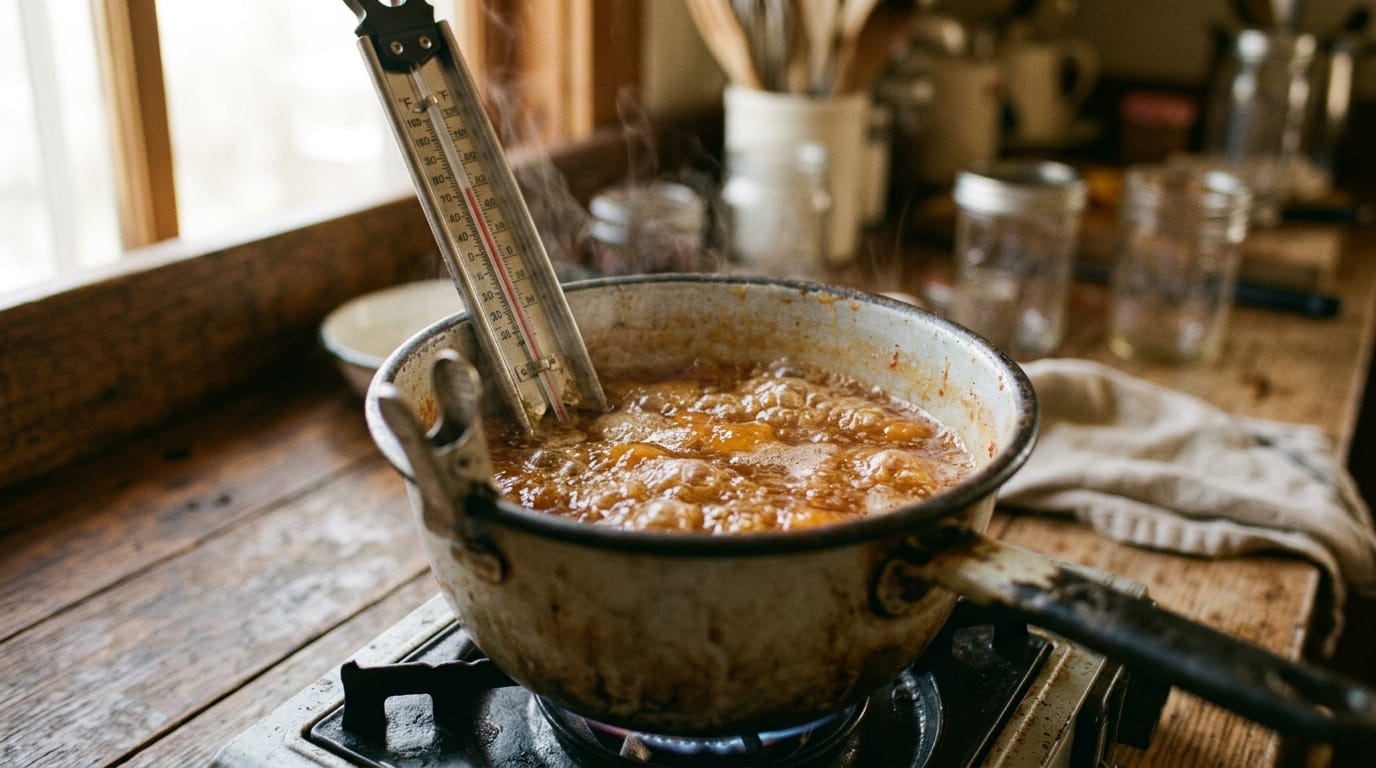
No-pectin jam has no fixed cooking time, which is the part that unsettles people used to following a clock. You are cooking to a condition, not a duration, and the condition is a sugar concentration you can measure with a thermometer.
NCHFP describes three tests and is direct about the ranking: the temperature test is most dependable.
The Temperature Test
When done, the temperature of the jam should be 220 F, which is 8 degrees above the boiling point of water at sea level. For each 1,000 feet of elevation above sea level, subtract 2 degrees.
| Your elevation | Target temperature |
|---|---|
| Sea level | 220 F |
| 1,000 ft | 218 F |
| 2,000 ft | 216 F |
| 3,000 ft | 214 F |
| 4,000 ft | 212 F |
| 5,000 ft | 210 F |
| 6,000 ft | 208 F |
A cheap candy thermometer removes almost all the guesswork from jam making, and it is the single piece of equipment that most improves a beginner’s results.
The Spoon or Sheet Test
Dip a cool metal spoon into the boiling mixture and lift it out of the steam so the syrup runs off the side. Early on it runs off in separate drips. When the two drops run together and sheet off the edge of the spoon, the jellying point has been reached.
This works and it is how it was done for generations. It also takes practice to read, and the difference between not-quite and just-right is subtle in a way that a thermometer is not.
The Cold Plate Test
Put a few plates in the freezer before you start. Pour a small amount of the boiling jam onto a cold plate and return it to the freezer for a few minutes. If the mixture gels, it is ready. Take the pan off the heat while you wait, or the jam keeps cooking while you test.
Use whichever you like, and if you are unsure, use two. Undercooked jam is the most common complaint in this whole category and the easiest one to avoid.
The Version With Pectin
If you would rather not stand over a pot judging a set, the NCHFP peach jam with added pectin is a fixed procedure with a fixed boil time, and it is genuinely easier.
Yields about 6 half-pints
Peach Jam With Pectin
- 3 3/4 cups crushed peaches, from about 3 lb of fruit
- 1/4 cup lemon juice
- 1 package powdered pectin
- 5 cups sugar
Quantities from NCHFP. Note the pectin goes in with the fruit and the lemon juice, before the sugar.
The method: measure the crushed peaches into a kettle, add the lemon juice and pectin and stir well. On high heat, stirring constantly, bring it quickly to a full boil with bubbles over the entire surface. Add the sugar, keep stirring, and return it to a full bubbling boil. Boil hard for exactly 1 minute, stirring constantly. Remove from heat and skim. Fill hot sterile jars to 1/4 inch headspace and process.
| Without pectin | With pectin | |
|---|---|---|
| Fruit | 5 1/2 to 6 cups crushed | 3 3/4 cups crushed |
| Sugar | 4 to 5 cups | 5 cups |
| Lemon juice | 2 tablespoons | 1/4 cup |
| Cook time | Until it reaches temperature, usually 20 to 40 minutes | Boil hard for 1 minute |
| Yield | 6 to 7 half-pints | About 6 half-pints |
| Result | Deeper cooked-peach flavor, softer set, darker color | Brighter fresh-peach flavor, firmer set |
Worth noticing: the pectin version uses less fruit and more sugar to make roughly the same number of jars. That is what pectin buys you. It gels without needing you to boil away the water, so the fruit tastes fresher and the batch takes a fraction of the time. What you give up is the long-cooked flavor that a lot of people are specifically after when they go looking for a no-pectin recipe.
Jam or Preserves? They Are Not the Same Thing
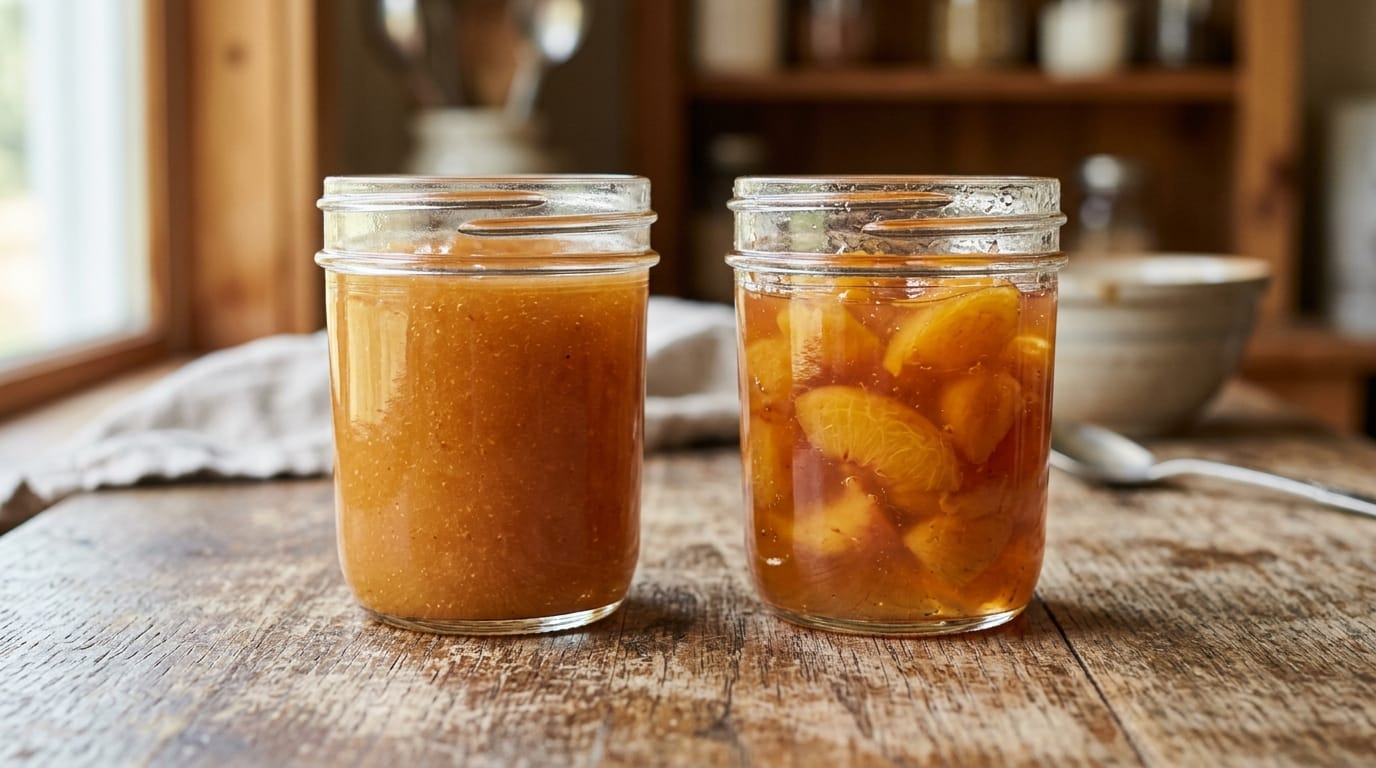
These two words get used interchangeably and they should not be, because they describe different textures produced by different handling.
| Jam | Preserves | |
|---|---|---|
| The fruit | Crushed | Left in chunks or halves |
| Texture | Even and spreadable throughout | Pieces of fruit suspended in syrup or gel |
| On toast | Spreads evenly | You get a piece of peach |
| Which is this recipe | This one | Chop rather than crush and you are moving toward preserves |
The practical version: if you crush the fruit, you get jam. If you cut it into chunks and keep them intact, you are making preserves. Jelly is a third thing again, made from strained juice with no fruit solids in it at all.
Recipes labeled peach preserves and peach jam are often the same tested proportions handled differently, which is why a search for one turns up the other. The safety side does not change with the cut. The set does, because larger pieces hold more water.
Headspace, Sterile Jars and Processing
Sweet spreads process differently from most canning, and there are two details worth getting right.
Headspace is 1/4 inch, not the 1/2 inch you use for most vegetables and fruits. Jam is dense and does not need the same expansion room.
The jars must be sterilized. This is the part people skip. Both peach jam recipes process for 5 minutes at up to 1,000 feet, and any boiling water process under 10 minutes requires pre-sterilized jars, because the process itself is not long enough to do the job. NCHFP’s own wording is to fill hot jam into hot, sterile jars.
| Elevation | Processing time |
|---|---|
| 0 to 1,000 ft | 5 minutes |
| 1,001 to 6,000 ft | 10 minutes |
| Above 6,000 ft | 15 minutes |
Both the pectin and no-pectin versions use the same times. Start the clock when the water returns to a full rolling boil, and keep the jars covered by 1 to 2 inches of water. If you are choosing a pot, our comparison of water-bath canners for beginners covers what matters, though a 5 minute process asks very little of the equipment.
Equipment
What You Need
- A canning tools kit that includes a rack. The rack keeps jars off the base of the pot, so a deep stockpot you already own works as a canner. The kit also brings the jar lifter, funnel and headspace tool.
- An 18-piece canning tools kit. Tongs, jar wrench, magnetic lid lifter, funnel and bubble tool. No rack, so pick this one if you already have a canner.
- A candy or jelly thermometer. The one piece of equipment that turns no-pectin jam from a judgment call into a measurement. Any cheap clip-on model works.
- A wide heavy-bottomed pot. Jam boils up alarmingly and scorches in a thin pan. Wider is better, because evaporation is the entire mechanism.
- Half-pint jars, new lids and bands. Buy locally. Heavy, cheap and stocked everywhere.
Some links above are affiliate links. If you buy through them we earn a small commission at no extra cost to you, and it does not change what we recommend. As an Amazon Associate, we earn from qualifying purchases.
Peach Jalapeno Jam, and What Is Safe to Add
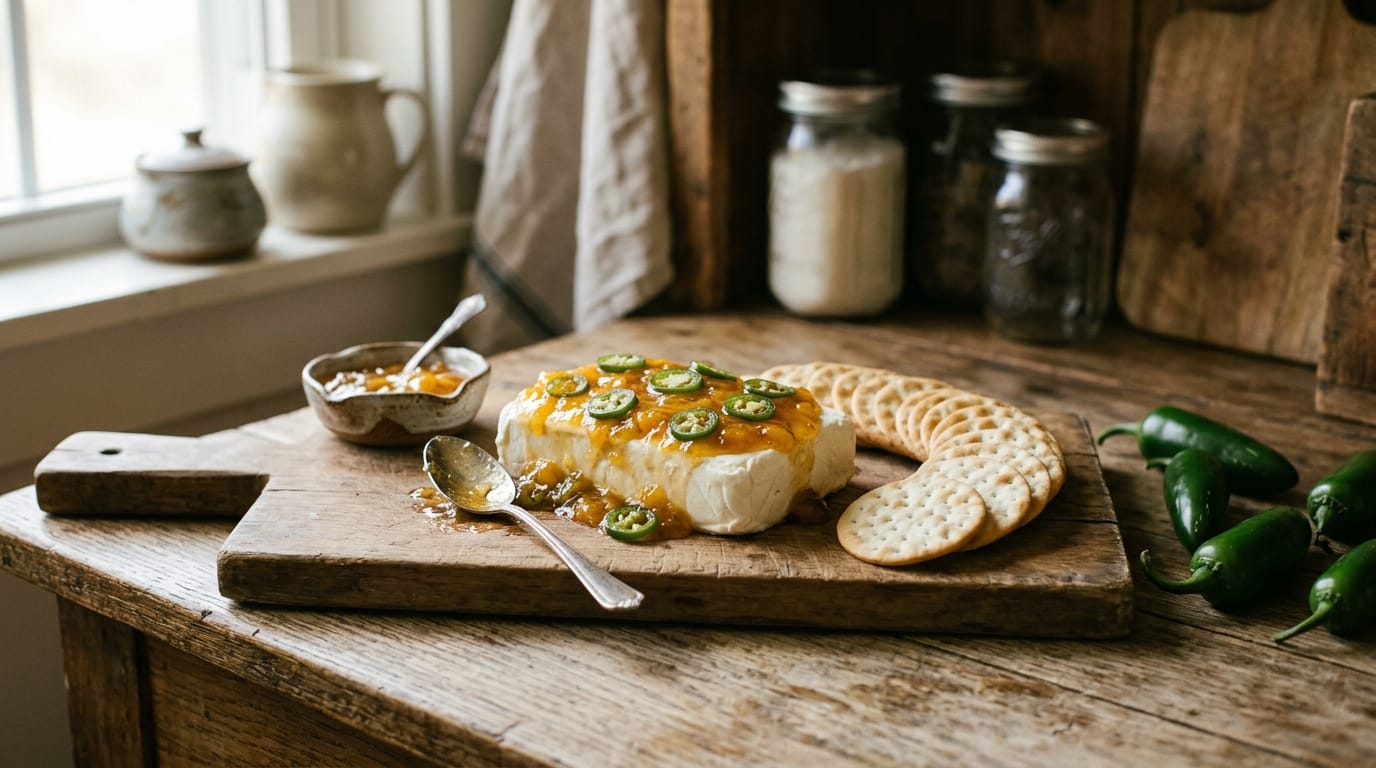
Peach jalapeno jam is a real and deserved favorite, and it is also the question where this article has to be careful.
Jalapenos are a low-acid vegetable. Adding them to a tested fruit jam changes the acidity of the finished product, and the tested proportions above were validated without them. I could not find an NCHFP recipe for peach jalapeno jam, which means adding peppers to the recipe on this page is improvising with the one variable that matters.
Two honest routes. Use a tested recipe published specifically for peach pepper jam, from a source like a canning manufacturer’s tested collection, and follow it exactly. Or make it as a refrigerator or freezer jam, where shelf stability is not being asked of the acidity and you can season it however you like.
If it is the sweet-hot combination you are after rather than jam specifically, we have two tested pepper options already: cowboy candy, which is candied jalapenos in syrup, and the savory version in our guide to canning jalapenos. Either one on cream cheese scratches the same itch and neither requires improvising.
Freezer Peach Jam
If the canner is the part putting you off, freezer jam skips it entirely. The fruit is not cooked down, or barely, so the flavor stays very close to fresh peach, and the set comes from pectin rather than from boiling.
Follow the instructions in the pectin package, because freezer jam ratios are specific to the pectin type and the instructions in the box are the tested ones. Leave the headspace the package specifies, let the jars stand until set, then freeze.
The trade-offs are honest ones. Freezer jam takes freezer space you may be using for other things, it keeps months rather than years, and it has to be thawed and then kept in the refrigerator once opened. What you get is the best fresh-fruit flavor of any method here.
Why Your Peach Jam Did Not Set
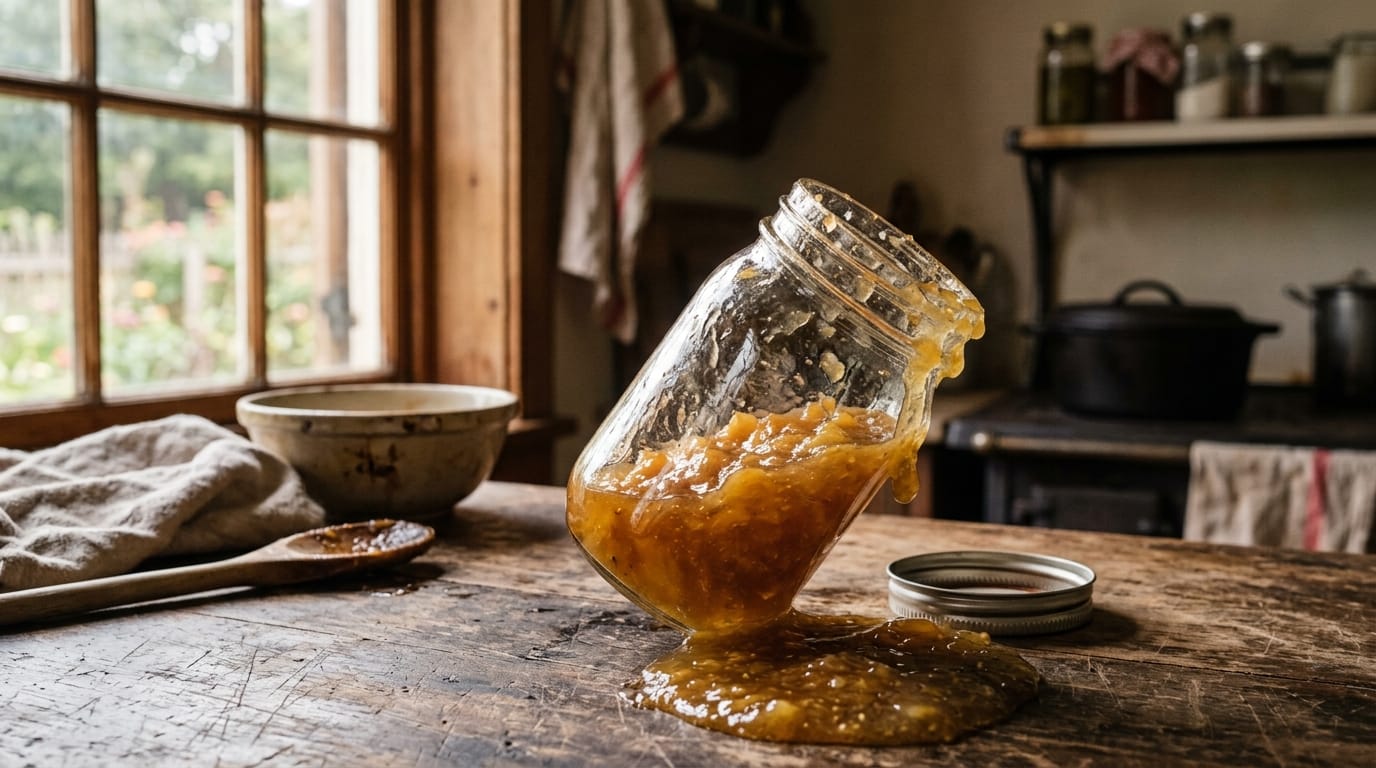
| What happened | Why | What to do |
|---|---|---|
| Runny after a week | Undercooked. The single most common cause, especially with peaches, which are low in pectin and acid and need a longer boil than berries. | Give it a full week before judging, since jam continues to set as it cools and rests. After that, recook it with a thermometer this time. |
| Runny even though you hit the time in a recipe | No-pectin jam has no fixed time. A wider pan, wetter fruit or a bigger batch all change how long it takes. | Cook to temperature rather than to a clock. |
| Set like rubber | Overcooked, or too much pectin for the fruit. | Still perfectly good stirred into yogurt or warmed as a glaze. Pull it off the heat closer to target next time. |
| Dark or caramel-tasting | Too long at a boil, usually from doubling the batch. | Make single batches. Two in a row are faster than one double. |
| Foam on top | Normal. Air worked into the fruit during boiling. | Skim it before filling. A small piece of butter reduces it, though it can affect long-term quality, so skimming is the safer habit. |
| Fruit floated to the top | More common in preserves than jam, where larger pieces are lighter than the syrup. | Crush more thoroughly, or let the jam stand five minutes off the heat and stir gently before filling. |
Storage and Shelf Life
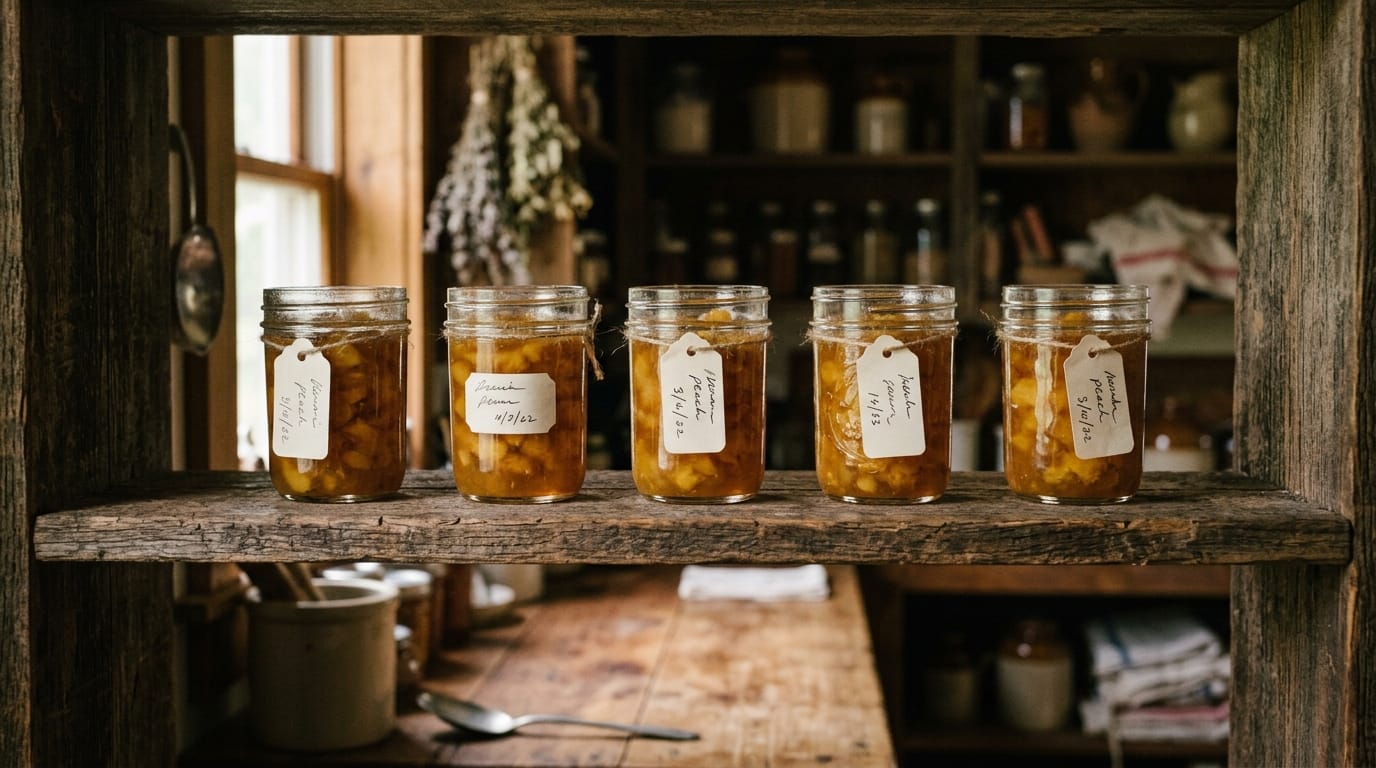
Cool the jars undisturbed for 12 to 24 hours, then remove the bands and check the seals by pressing the center of each lid. Wash the outside of the jars, because sugar residue on the glass attracts everything, then label and date them.
Store without the bands somewhere cool, dark and dry, and use within a year for best quality. Sweet spreads stay safe longer in a sealed jar, but the color darkens and the fresh flavor fades, and a jam that has gone brown in the cupboard is a disappointment rather than a hazard. Once opened, refrigerate and use within a month or so.
A jar of peach jam alongside a jar of canned peach halves and a bag of frozen slices is the sensible way to handle a big pick, because each one suits a different use and none of them competes for the same shelf.
First season of sweet spreads?
The Beginner’s Canning eBook covers water-bath canning end to end: altitude and headspace charts, the acidity rules that decide what is safe, and step-by-step walkthroughs for a first season. The Canning Starter Bundle adds both Quick Kits for jar prep and fermenting.
The Free Garden Starter Pack
Five printable pages that take the guesswork out of a first season, plus a short email every week or two when something is worth planting, picking, or putting up.
- A garden planning worksheet you can actually fill in
- A seed-starting and planting calendar
- A harvest log to track what really produced
No spam, ever. Unsubscribe in one click.
Thank you. You are on the list.
Your Garden Starter Pack is ready right now. Grab it here:
Download the pack (PDF)Keep an eye on your inbox. The next seasonal guide lands there first.
Frequently Asked Questions About Peach Jam
Can you make peach jam without pectin?
Yes, and the proportions are tested: 5 1/2 to 6 cups crushed peaches, 4 to 5 cups sugar and 2 tablespoons lemon juice, yielding 6 to 7 half-pints. They appear in NCHFP’s general no-pectin jam table rather than as a standalone recipe, which is why they are hard to find. The trade is that you cook it longer and judge the set yourself.
How long do you boil peach jam without pectin?
There is no fixed time, which is the honest answer. It depends on your pan, your fruit and your batch size, and typically runs 20 to 40 minutes. Cook to 220 F at sea level, subtracting 2 degrees per 1,000 feet of elevation, rather than to a clock.
Can I reduce the sugar in peach jam?
Not without changing what you are making. In a no-pectin jam the sugar is doing the gel and a large part of the preserving, so cutting it gives you a runny, shorter-lived product. If you want a lower-sugar spread, use a pectin made specifically for low or no sugar recipes and follow that package, which was tested for it.
What is the difference between peach jam and peach preserves?
The cut of the fruit. Jam uses crushed fruit and comes out evenly spreadable. Preserves keep chunks or halves suspended in the gel, so you get a piece of peach. The tested proportions are often the same, and the safety does not change with the cut.
Do I have to sterilize the jars for peach jam?
Yes. Jam processes for 5 minutes at up to 1,000 feet, and any boiling water process shorter than 10 minutes requires jars that were sterilized first. This is one of the few canning recipes where the step genuinely is not optional.
Why is my peach jam still runny after two days?
Give it a week before you decide. Jam continues to firm as it cools and rests, and peach jam is slower than most. If it is still liquid after that, it was undercooked, and you can recook it with a thermometer to the target temperature for your elevation.
Before the Peaches Go Over
Decide tonight whether you are cooking to a temperature or following a pectin package, because that choice decides everything else: how much fruit you need, how much sugar, and whether you will be standing at the stove for forty minutes or four.
If you have never made jam before, buy the thermometer and make the no-pectin version. It is the one that tastes like the jam people remember, and the thermometer turns the only difficult part of it into a number you can read.