How to Tell If an Egg Is Bad: 4 Tests That Take Two Minutes
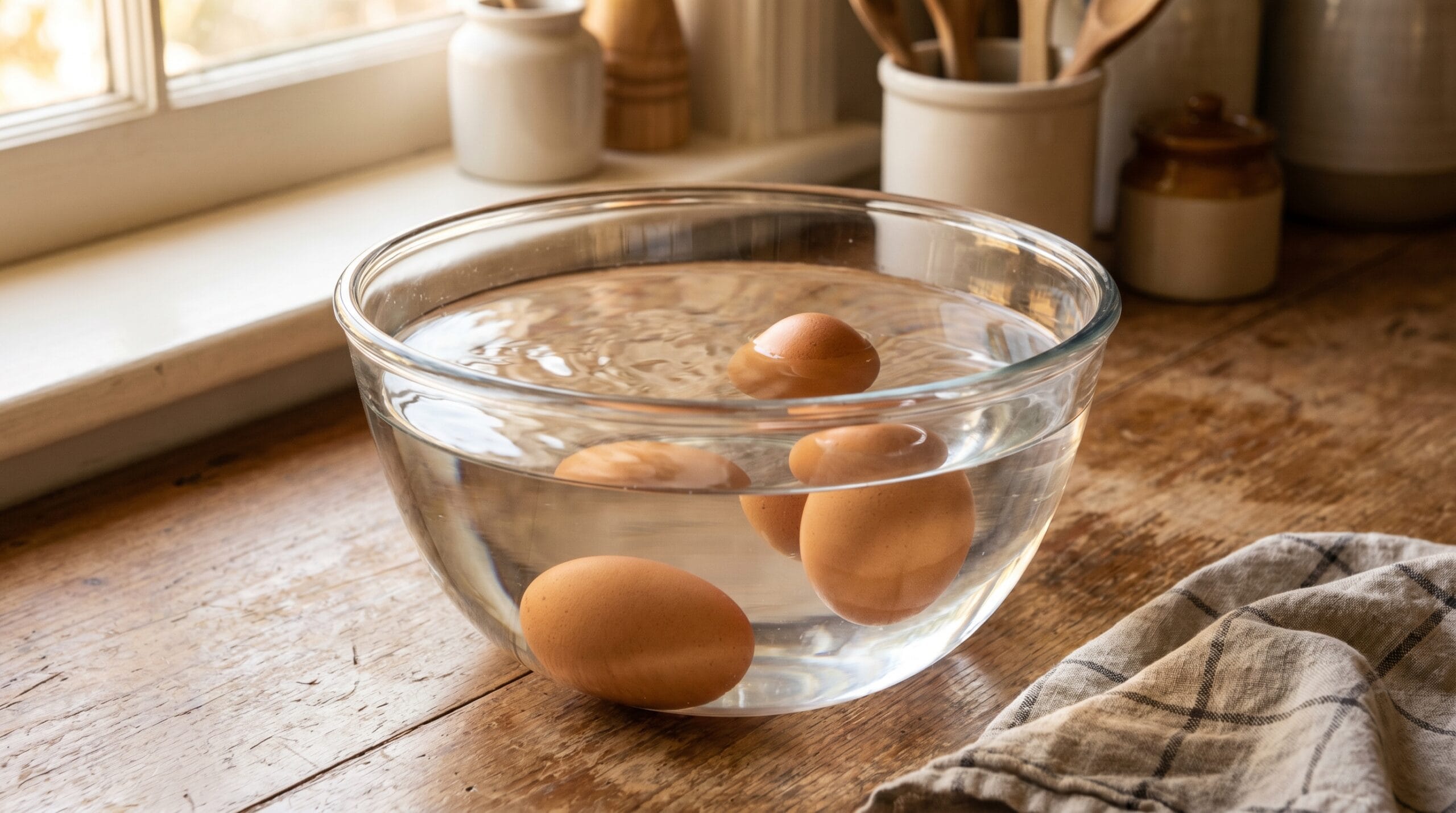
To tell if an egg is bad, lower it into a bowl of cold water. A fresh egg sinks and lies flat. An older egg stands upright on the bottom and is usually still fine to eat. An egg that floats should be thrown out. Then crack it into a separate bowl and smell it — a genuinely bad egg announces itself, and no other test overrules your nose. Those two checks take about two minutes and settle nearly every questionable carton.
A few simple checks can tell you, with reasonable confidence, whether an egg is still worth using. You need a bowl of water and about two minutes. The tests are not complicated, but knowing where the limits are keeps you from either wasting good eggs or talking yourself into a bad one.
To test eggs for freshness, place them in a bowl of cold water. A fresh egg sinks and lies flat. An egg that stands upright is older but usually still safe to eat. An egg that floats should be discarded. The float test works because eggshells are porous and the air cell inside grows larger as an egg ages.
Quick Answer
- Sink flat: fresh, roughly 1 to 2 weeks old
- Stands upright on bottom: approximately 2 to 4 weeks old, still usable
- Floats: discard it
- Sniff test: crack into a bowl first; any sulfur or off smell means toss it
- Crack test: a domed yolk and thick white mean fresh; a flat, spreading yolk and watery white mean older but still likely safe
- Check the carton: the Julian date tells you the pack date; eggs are often safe 3 to 5 weeks past purchase when kept refrigerated
- Bottom line: the sniff test after cracking is the most definitive check of all
The Float Test: How It Works and What Each Position Means
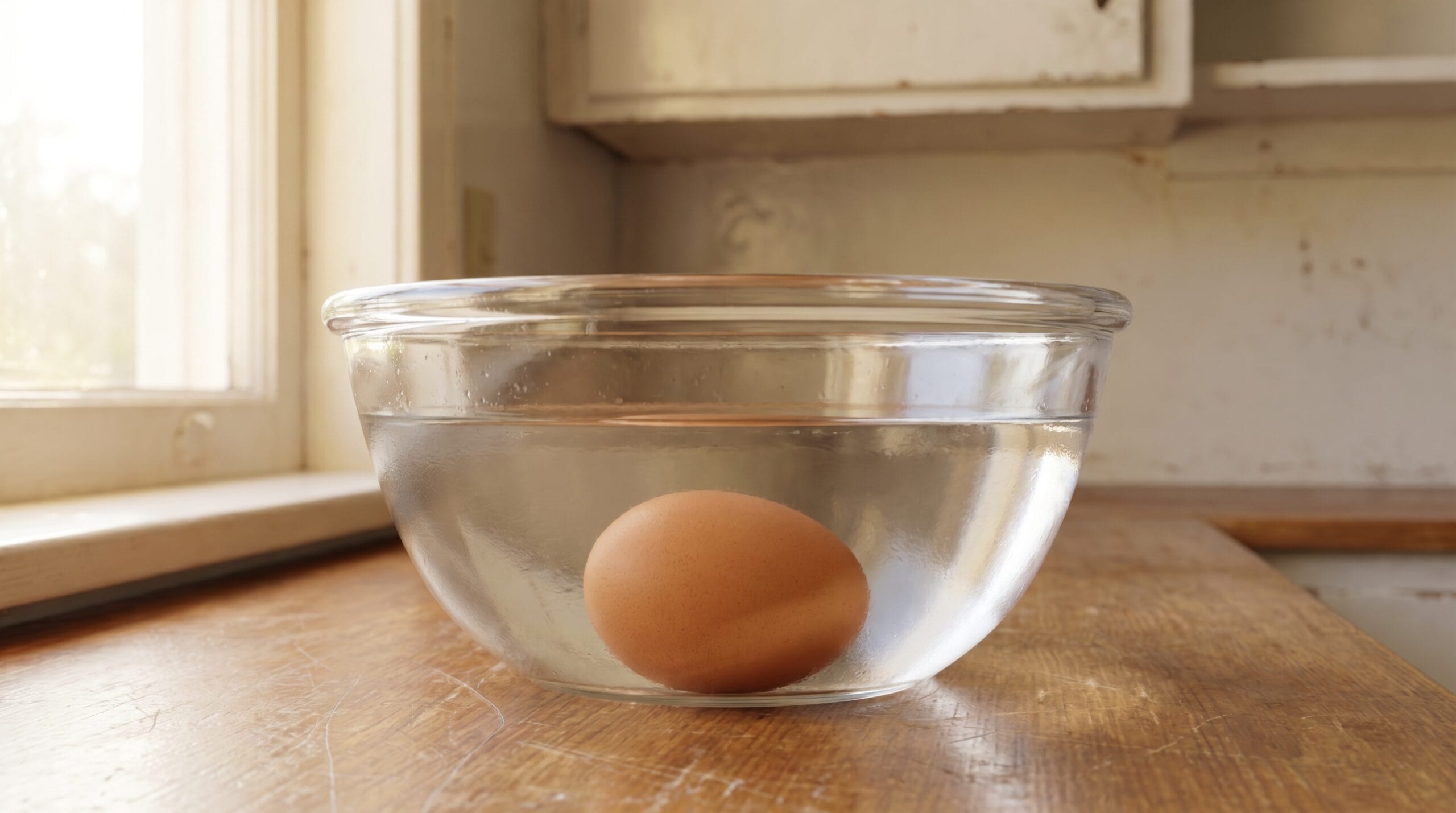
The float test is the most commonly cited method for testing egg freshness, and for good reason: it works without cracking anything open. Fill a bowl or tall glass with cold water, deep enough that an egg can float freely if it is going to. Lower the egg in gently and watch where it settles.
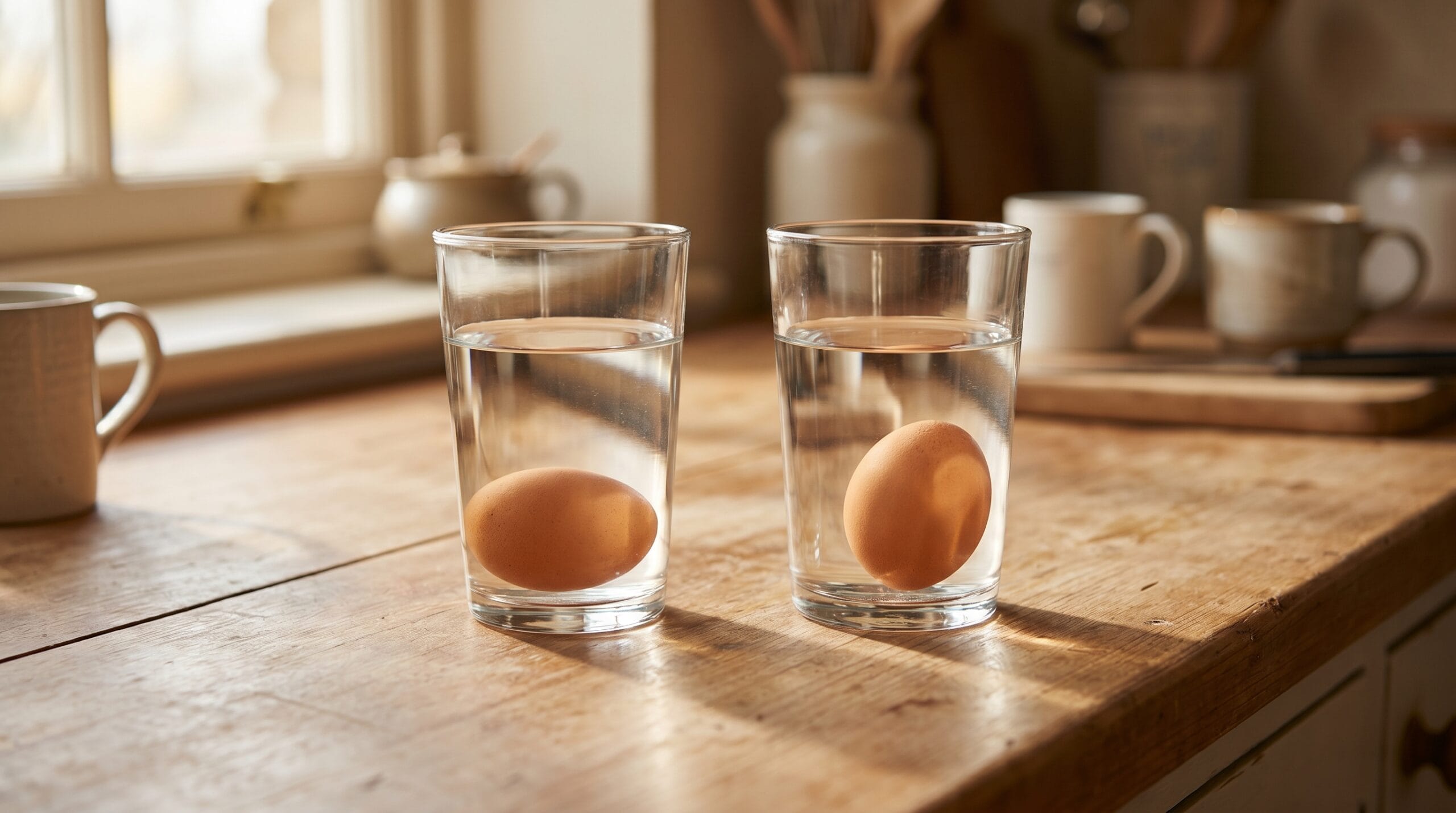
Flat on the bottom: The egg is fresh, roughly within one to two weeks of being laid. The air cell is small, the egg is dense, and it stays put.
Standing upright on the bottom, but not floating: The egg is older, somewhere in the approximately two to four week range. It is still safe to eat. The air cell has grown enough to tilt the egg upward, but not enough to lift it off the floor of the bowl.
Floating: Discard this one. The air cell has expanded significantly, which means the egg has been aging for a long time or was stored in warm conditions. Do not crack it to check further.
The mechanism is straightforward. Eggshells look solid, but they are riddled with tiny pores. Over time, moisture inside the egg escapes through those pores and outside air moves in to fill the gap. That incoming air collects in a pocket at the wide end of the egg called the air cell. As the egg ages, the air cell grows, the egg becomes less dense, and it rises in the water.
These age ranges are estimates. Storage temperature affects how quickly air cells grow, so an egg kept in a cold refrigerator and an egg that sat on a warm counter for the same number of days will behave differently in the bowl. Use the positions as a rough guide, not a precise calendar.
Why the Float Test Can Mislead You (and When to Trust It)
Every beginner guide presents the float test as a clean pass/fail, but there are real situations where it can steer you wrong. Knowing the limitations keeps you from throwing out perfectly good eggs.
The core issue is that air cell growth is driven by two things: time and temperature. An egg stored at room temperature in a warm kitchen loses moisture much faster than one kept in a cold refrigerator. A fresh egg from a backyard flock that spent a few days on a warm counter in summer can stand upright in a bowl of water, even if it is only a week old. By the standard reading, that should mean “usable but aging.” In this case, the float position looks worse than the egg actually is.
Altitude adds another wrinkle. At high elevation, the lower air pressure accelerates moisture loss from the porous shell. An egg that would lie flat in Denver might stand upright at sea level, and both could be equally fresh. According to research from land-grant extension programs on egg quality, air cell size increases with time, but temperature and altitude also accelerate moisture loss, meaning a relatively fresh egg can float in some conditions.
Use the float test as a first screen, not a final verdict. An egg that floats is a strong signal to discard. An egg that stands upright deserves a follow-up sniff test before you decide. An egg that lies flat is almost certainly fine.
The Sniff Test: the Most Reliable Method
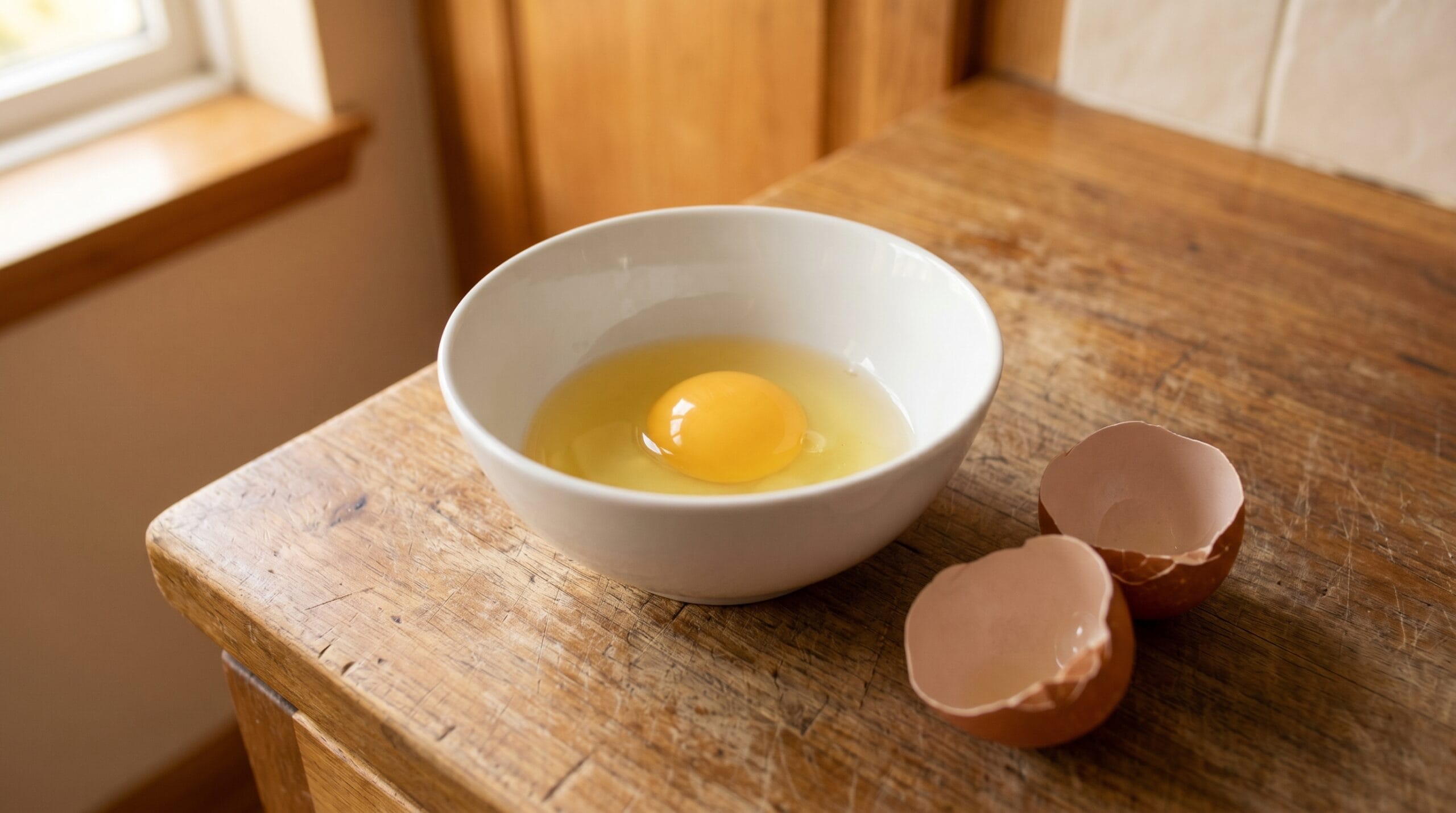
The sniff test is the most definitive check you have, and it requires one rule that most people get wrong: crack the egg into a bowl first. Smelling through the shell tells you almost nothing. The shell does not transmit smell reliably, and a badly spoiled egg can sit in your hand smelling like nothing at all through the outside.
Once you have cracked the egg into a bowl, lean in. A spoiled egg has a hydrogen sulfide smell that is completely unmistakable: sharp, sulfurous, like a struck match or a drained pond. If that smell is there, you will know it immediately. You will not be asking yourself “does this smell a little off?” You will be walking quickly to the compost bin.
A useful nuance worth knowing: some very fresh eggs from backyard hens on high-protein feeds can carry a faint sulfurous note right after cracking, caused by the feed rather than spoilage. This is different from the sharp, persistent smell of a bad egg. That said, this distinction is only reliable if you know the egg is very fresh and from a flock whose diet you manage. If the egg is of uncertain age or origin and you smell anything sulfurous, discard it. Do not wait to see if the smell fades. The risk is not worth it.
The practical rule is this: a fresh egg has no real smell. If you crack an egg and find yourself debating whether something is off, that uncertainty is itself a reason to toss it.
How to Read an Egg Carton: Pack Date vs. Sell-By Date
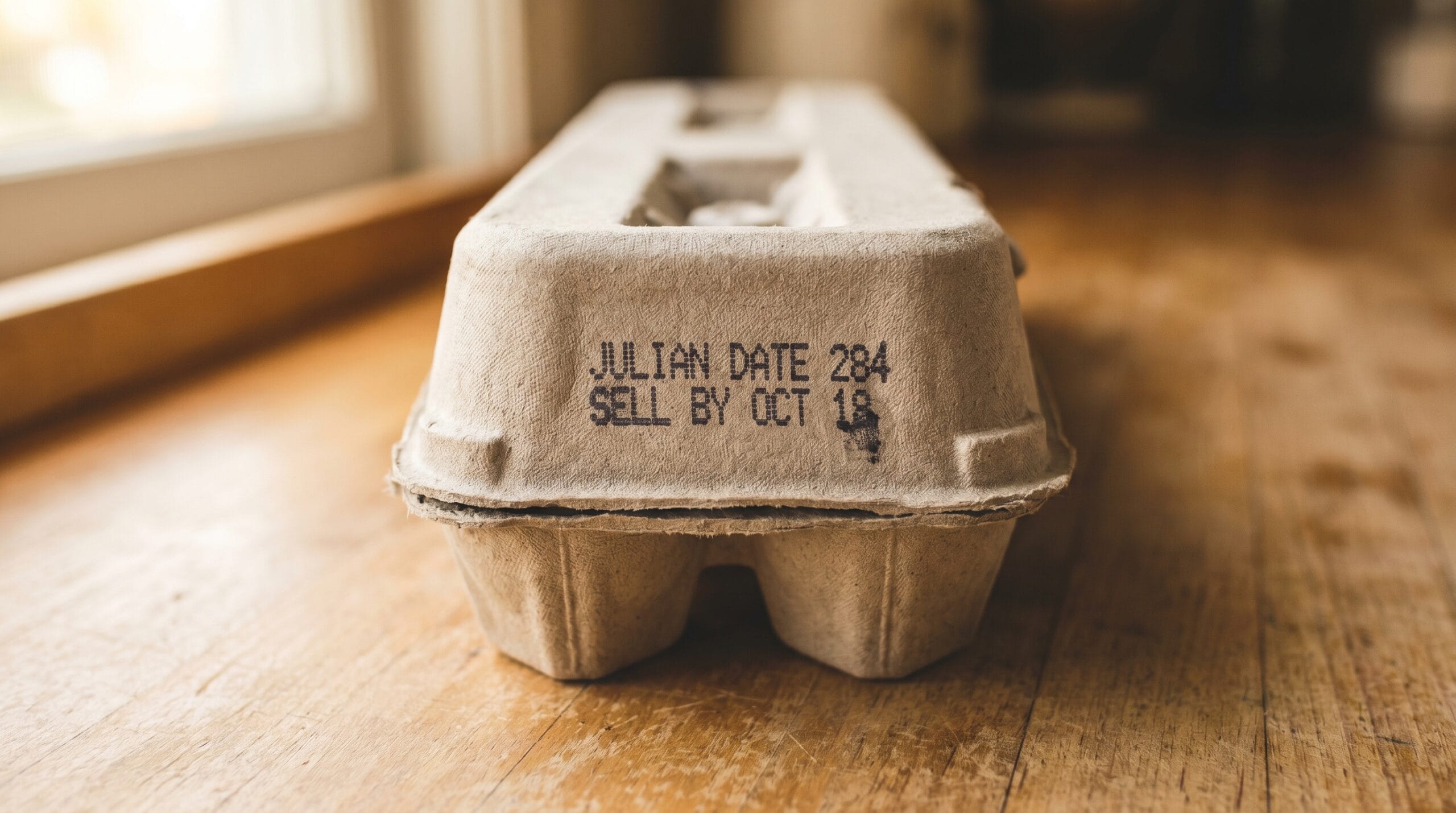
Before you test anything, it is worth understanding what the numbers on your carton actually mean. Most beginners assume the sell-by date is the safety cutoff. It is not.
Commercial egg cartons in the United States carry a Julian date, also called a pack date, stamped as a three-digit number. This represents the day of the year the eggs were packed: 001 is January 1st, 365 is December 31st. The sell-by or best-by date is a separate date printed in a more familiar format. According to the USDA’s guidance on egg dating and safety, the sell-by date on a carton can be no more than 30 days after the pack date, and eggs refrigerated in their carton are generally safe to eat 3 to 5 weeks past the purchase date.
That means a carton you bought on August 1st and promptly refrigerated is very likely fine to use on September 1st, and possibly a bit later. The date on the carton is not an expiration date in the food-safety sense. It is a quality indicator written for retail stock rotation.
If your carton only shows a Julian date, you can decode it with a basic calendar: day 245 is September 2nd in a standard year. That tells you when the eggs were packed, and from there you can estimate how old they are.
This matters for beginners because a large number of eggs end up in the trash based on a date stamp that was never meant to be a hard safety cutoff. Run the float test and the sniff test. Do not let a sell-by date do all your thinking.
What a Fresh Egg Looks Like Once Cracked Open
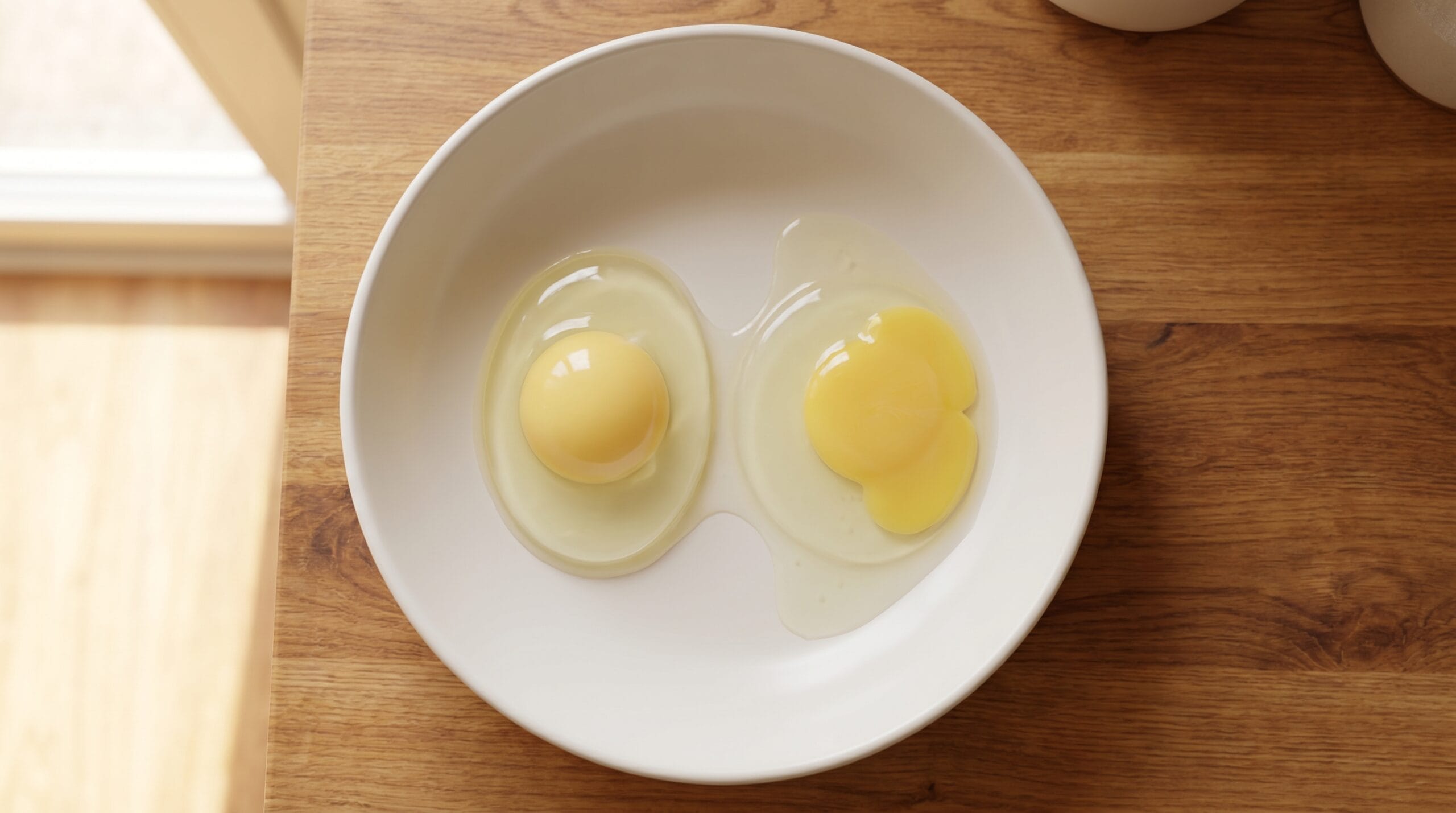
If you have already cracked a questionable egg, you do not need to run the float test. You have more direct information right in front of you.
A fresh egg has a yolk that sits high and domed, holds its shape, and does not spread immediately. The white separates into two distinct layers: a thick, gelatinous portion that clings close to the yolk, and a thinner outer ring. The whole thing looks cohesive.
An older egg has a yolk that flattens out quickly and a white that spreads across the bowl in a thin, watery sheet. It may look almost translucent. There may also be a faint cloudiness in the white that clears as it sits, which is actually a sign of freshness in reverse: the USDA notes that cloudy whites result from high carbon dioxide content and indicate a very fresh egg, while a flat, spreading yolk and thin watery white indicate an older egg, though the egg is still safe to eat if it passes the sniff test.
The critical line is smell. If you crack an egg and it looks old but smells like nothing, it is very likely fine for scrambled eggs, baked goods, or anything where appearance is not the point. If it smells off, discard it regardless of what it looks like.
For baking projects that use several eggs at once, cracking each egg into a separate small bowl before adding it to the batter is a habit worth keeping. One bad egg in a batch you cannot smell until it is already mixed in is a much more frustrating problem.
How to Store Eggs So They Stay Fresh Longer
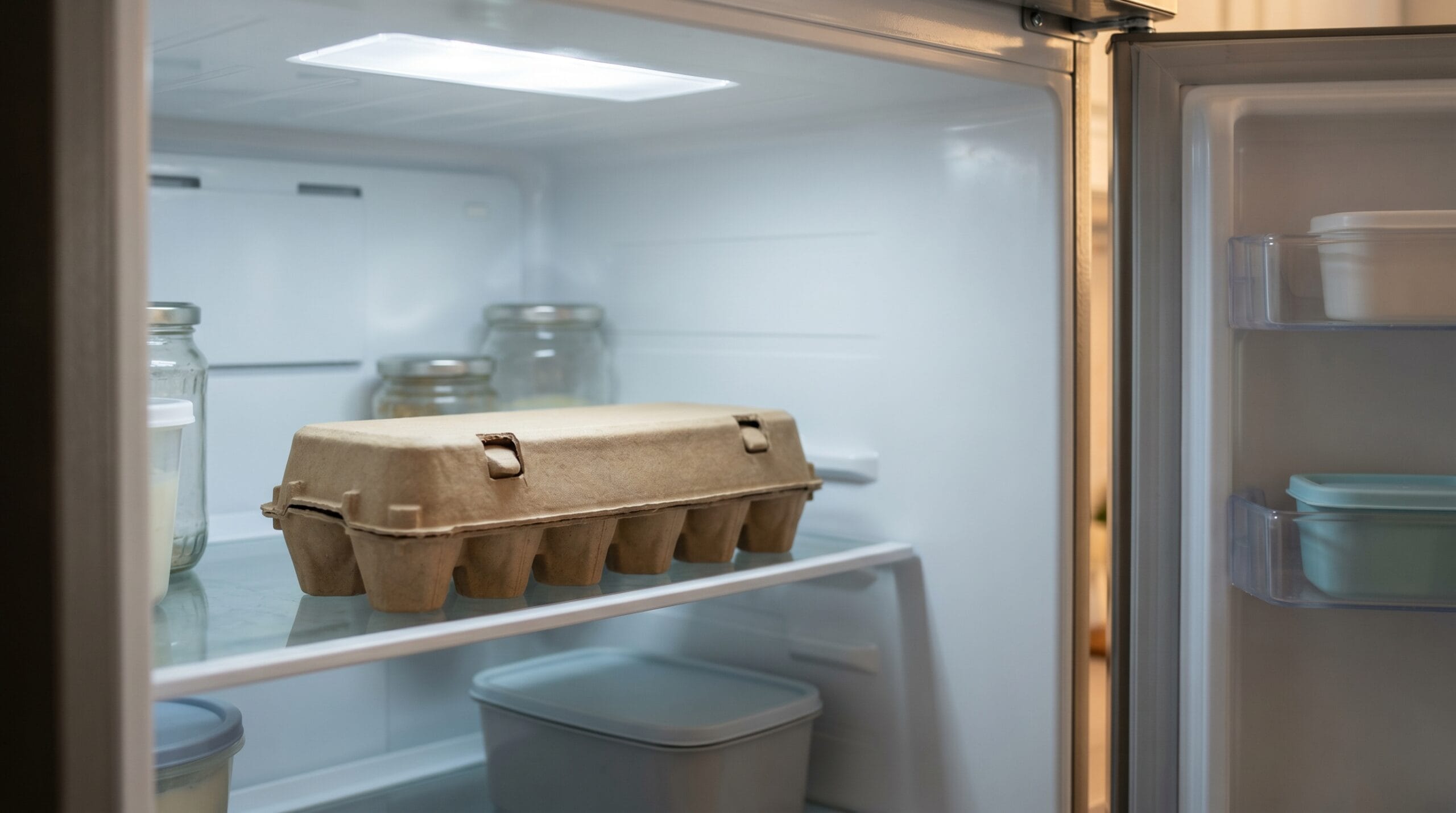
The best freshness test is not needing one very often. Good storage habits keep your eggs in usable condition long enough that you are rarely guessing.
Backyard Eggs vs. Store-Bought Eggs
If you are keeping a backyard flock, freshly laid eggs have a natural coating called the bloom or cuticle. This coating seals the pores of the shell and slows moisture loss and bacterial entry. An unwashed egg with its bloom intact can sit at room temperature for roughly two to three weeks without significant quality loss, provided the ambient temperature is cool. In a warm kitchen during summer, even bloomed eggs deteriorate faster, so refrigeration is the safer default if you are in doubt about your conditions.
Once an egg is washed, the bloom is gone and the shell is open to the environment. Washed eggs must be refrigerated. In the United States, commercial eggs are washed and sanitized before packing, which is why USDA requires them to be kept refrigerated from that point forward. European eggs are typically unwashed, which is why they sit at room temperature in shops overseas.
Orientation and Location in the Refrigerator
Store eggs small-end down if you can. This keeps the yolk centered and the air cell stable, which slows quality loss. Most cartons make this automatic, but loose eggs stored in a dish benefit from the same orientation.
Keep eggs away from strong-smelling foods. Onions, fish, and aged cheeses all push odor molecules through the porous shell and into the egg, affecting flavor. The back of the refrigerator is colder and more stable than the door, where temperature fluctuates with every open-and-close cycle.
A Note on What Hens Eat
What your hens eat affects the quality of their eggs more than most beginner keepers expect. A diet high in fish meal or certain greens can produce a mild off-flavor in fresh eggs. This is not a spoilage signal, but it is worth knowing so you do not confuse feed-related flavor with actual deterioration.

From the In Homestead Shop
Starting your first flock?
The Backyard Chickens Starter Guide covers your whole first year — everyday egg handling, plus breeds, feed, and daily care — sourced from cooperative extension guidance and the Merck Veterinary Manual, with two printables.
How Long Are Eggs Good For?
Most eggs are thrown out long before they need to be. Refrigerated store-bought eggs keep for three to five weeks past the pack date, which is normally well past the sell-by date stamped on the carton. Unwashed backyard eggs still carrying their bloom last around two weeks on the counter and several months in the refrigerator. Treat these as quality guidelines rather than safety deadlines — they mark the point where texture and flavour start to slide, not the moment an egg turns dangerous. The tests above are what actually decide it.
| Type of egg | Stored | Keeps for |
|---|---|---|
| Store-bought, washed | Refrigerator | 3–5 weeks past the pack date |
| Backyard, unwashed (bloom intact) | Cool room | About 2 weeks |
| Backyard, unwashed | Refrigerator | 3 months or more |
| Backyard, washed | Refrigerator | About 2 months |
| Hard-boiled, still in the shell | Refrigerator | 1 week |
| Cracked into a sealed container | Refrigerator | 2 days |
Washing is the detail most people miss. The bloom is a natural coating that seals the shell’s pores, and rinsing it away lets air and bacteria move in far faster. That single difference is why an unwashed egg from your own hens outlasts a washed supermarket egg by months. If you keep chickens, collect daily and leave the eggs unwashed until the moment you cook them. For the ones you buy rather than collect, we broke down what free range and pasture raised actually mean.
The Free Garden Starter Pack
Five printable pages that take the guesswork out of a first season, plus a short email every week or two when something is worth planting, picking, or putting up.
- A garden planning worksheet you can actually fill in
- A seed-starting and planting calendar
- A harvest log to track what really produced
No spam, ever. Unsubscribe in one click.
Thank you. You are on the list.
Your Garden Starter Pack is ready right now. Grab it here:
Download the pack (PDF)Keep an eye on your inbox. The next seasonal guide lands there first.
Frequently Asked Questions About Bad and Fresh Eggs
Is the egg float test accurate?
The float test is a reliable first screen but not a definitive safety test on its own. It accurately identifies badly aged eggs that should be discarded (floaters), but temperature and altitude can cause a relatively fresh egg to stand upright, making it look older than it is. Always follow a float test with a sniff test after cracking.
What are two ways to check eggs for freshness?
The float test and the sniff test are the two most practical methods. The float test requires only a bowl of cold water and works before cracking. The sniff test requires cracking the egg into a bowl and smelling immediately; any hydrogen sulfide odor means the egg should go to the compost bin.
How do you know if an egg is bad?
A bad egg has a sharp, sulfurous smell the moment you crack it open. This smell is unmistakable. Visual signs can include a floating position in the float test, or a badly discolored yolk after cracking, but smell is the most reliable indicator. If in doubt, discard.
Can you eat eggs 2 months out of date?
In most cases, no. The USDA advises that refrigerated eggs are generally safe for 3 to 5 weeks past purchase. Two months past the sell-by date puts most eggs well beyond that range. The default recommendation is to discard them. If you do run a sniff test on an egg this far out and it smells clean, use your judgment, but be aware that the USDA safety window has been significantly exceeded and quality is likely to be noticeably poor regardless.
How do you test eggs for freshness in water?
Fill a bowl or glass with cold water deep enough for the egg to sink or float freely. Gently lower the egg in. If it lies flat on the bottom, it is fresh. If it stands upright on the bottom, it is older but likely safe. If it floats, discard it. This works because the air cell inside the egg grows larger as it ages, reducing the egg’s overall density.
Do eggs go bad in the fridge?
They do, just slowly. Refrigeration does not stop ageing, it stretches it out. A raw shell egg holds its quality for three to five weeks in the fridge, and unwashed backyard eggs go considerably longer. What shortens that window is temperature swings, so keep eggs in their carton on an interior shelf rather than the door, where every opening warms them.
How can you tell if an egg is bad without cracking it?
The float test is the only reliable check that leaves the shell intact, and it tells you about age rather than safety. Shake the egg gently as a second clue: a sloshing sound means the yolk and white have thinned with age. Neither test replaces cracking the egg into a separate bowl and smelling it, which is why you should never crack a doubtful egg straight into a batch of good ones.
A Final Word
The moment of doubt with a questionable egg carton does not have to end with tossing a dozen eggs you probably did not need to toss. Three tests, done in under two minutes, give you a reasonable picture: check the Julian date on the carton, run the float test, crack into a bowl and smell. Most of the time, the egg is fine and dinner proceeds.
The one test you should never skip is the sniff after cracking. The others are useful screening tools. That one is the deciding vote.
For anyone thinking about preserving food safely at home in other ways, the same principle applies: understanding what spoilage actually looks, smells, and feels like is far more valuable than relying on dates alone.