Best Sourdough Starter Kits and Tools for Beginners: 5 Picks (2026)
In Homestead is reader-supported. When you buy through links on this page, we may earn a small commission at no extra cost to you. See our affiliate disclosure. As an Amazon Associate I earn from qualifying purchases.
A healthy sourdough starter has a smell you remember: tangy, a little like yogurt, with something nutty underneath. When it is active, it rises in its jar after a feed, the surface domed and full of bubbles, though how fast depends on temperature and your feeding routine. Getting there for the first time is the part most beginners worry about.
That worry is exactly what sourdough starter kits are sold on, and it is also where many of them disappoint. Plenty of “starter kits” contain a jar, a banneton and a pile of tools, but no starter. You do not need a 30-piece box to bake good sourdough. You need a culture and a jar; a scale makes feeding consistent, and a heavy lidded pot is the easiest way to a good crust. The rest is optional.
This guide compares five picks: one complete tool kit, an actual dehydrated starter, a starter jar, a Dutch oven and a scale, so you can build exactly the setup you need without paying for gadgets you will not use.
Table of Contents
Quick Picks
- Best complete tool kit: the Superbaking Sourdough Starter Kit. Banneton, jar, sling, lame and scrapers in one box. Add a culture.
- The starter itself: Eve Dehydrated Sourdough Starter. An actual culture, which most kits leave out.
- Best starter jar: the KNEADACE Pro 34 Oz Starter Jar. Wide mouth, markings and a feeding band.
- Best baking pot: the Lodge 6 Qt Enamel Dutch Oven. Rated to 500 F, and useful every day.
- The tool you actually need: the Etekcity Kitchen Scale. Sourdough is measured by weight.
The Catch: Most Starter Kits Do Not Include a Starter
Read the box contents before you buy. In the sourdough world, “starter kit” usually means a kit of tools for starting sourdough, not a kit that contains a starter culture. The jar is for a starter you either make yourself from flour and water or buy separately.
That is not a scam, but it surprises a lot of first-time buyers who open the box expecting to bake that weekend. If you want to bake soon, pair a tool kit with a dehydrated or fresh starter. If you are happy to wait a week or two, flour, water and a jar are all it takes to grow your own.
What You Actually Need to Start Sourdough
Need It: Jar, Scale and a Covered Pot
- A starter. Homemade or dehydrated.
- A clear jar of about 24 to 34 oz, with room for the starter to double without overflowing. A wide mouth makes stirring easier.
- A digital scale that reads in grams. This matters more than any other tool.
- A heavy lidded pot, such as a Dutch oven, for a crusty, well-risen loaf.
Nice to Have: Banneton, Lame and Sling
A banneton (proofing basket) supports the dough during its final rise and leaves the familiar spiral pattern. A bowl lined with a floured kitchen towel does the same job. A lame is a razor for scoring the loaf, and a sharp knife works in a pinch. A silicone or parchment sling makes it easier and safer to lower dough into a very hot pot.
Skip It: Gadgets You Will Not Miss
Bread stencils, extra banneton shapes, decorative bags and multiple scrapers pad out the piece count in big kits. They are fine extras, but they are not why your bread will be good. Start simple and add tools once you know how you like to bake.
The 5 Best Sourdough Starter Kits and Tools
Best Complete Tool Kit
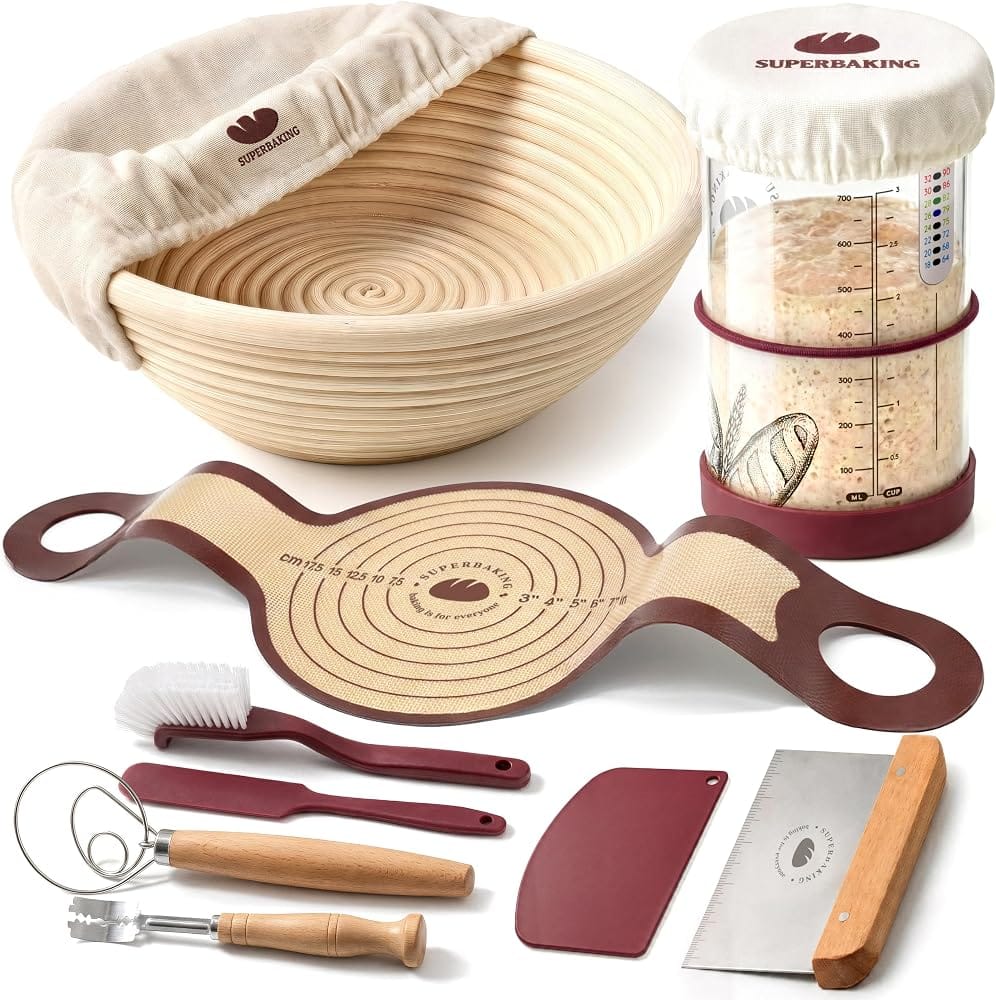
Superbaking Sourdough Starter Kit with 9 Inch Banneton
If you want one box that covers the whole process, this is the most complete of the kits we looked at. Superbaking lists a 9 inch round banneton with a liner, a 34 oz glass starter jar with a spatula, thermometer strip and feeding band, a silicone sling for lowering dough into a hot pot, a bread lame for scoring, a dough whisk, scrapers and a cleaning brush.
That covers starter tracking, proofing, scoring and getting the loaf safely into a Dutch oven. It makes a thoughtful gift for someone who has been talking about sourdough for months.
- Best for: beginners who want every hand tool in one purchase, and gift-givers.
- Keep in mind: there is no starter culture in the box, so pair it with a dehydrated starter or make your own. A few owners have reported thin jar glass and a stretched feeding band.
The Starter Itself
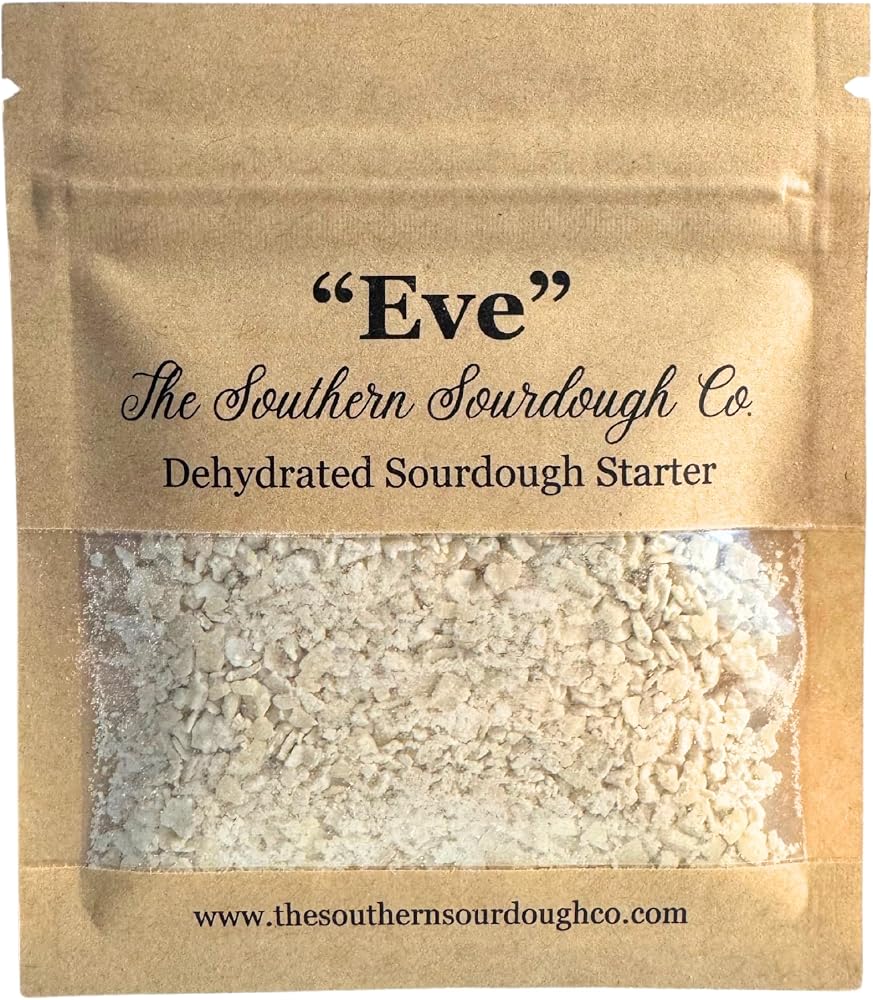
Eve Dehydrated Sourdough Starter (The Southern Sourdough Co.)
This is the piece most kits leave out: an actual sourdough culture. It is a 10 g packet of dehydrated starter with a rehydration card, and the maker emails full instructions. You feed it flour and water over a few days to wake it up, and then it behaves like any other starter.
Starting from a dried culture skips the uncertain first week of building a starter from scratch, which is where many beginners give up. The maker says it is shelf stable for a year and recommends using it within six months.
- Best for: anyone who wants a ready-made culture to activate, and the natural add-on to any tool-only kit.
- Keep in mind: it is only the culture, with no jar or tools, and the maker’s “baking by day 5” is an expectation, not a guarantee. A cool kitchen will slow it down. It is wheat-based.
Best Starter Jar
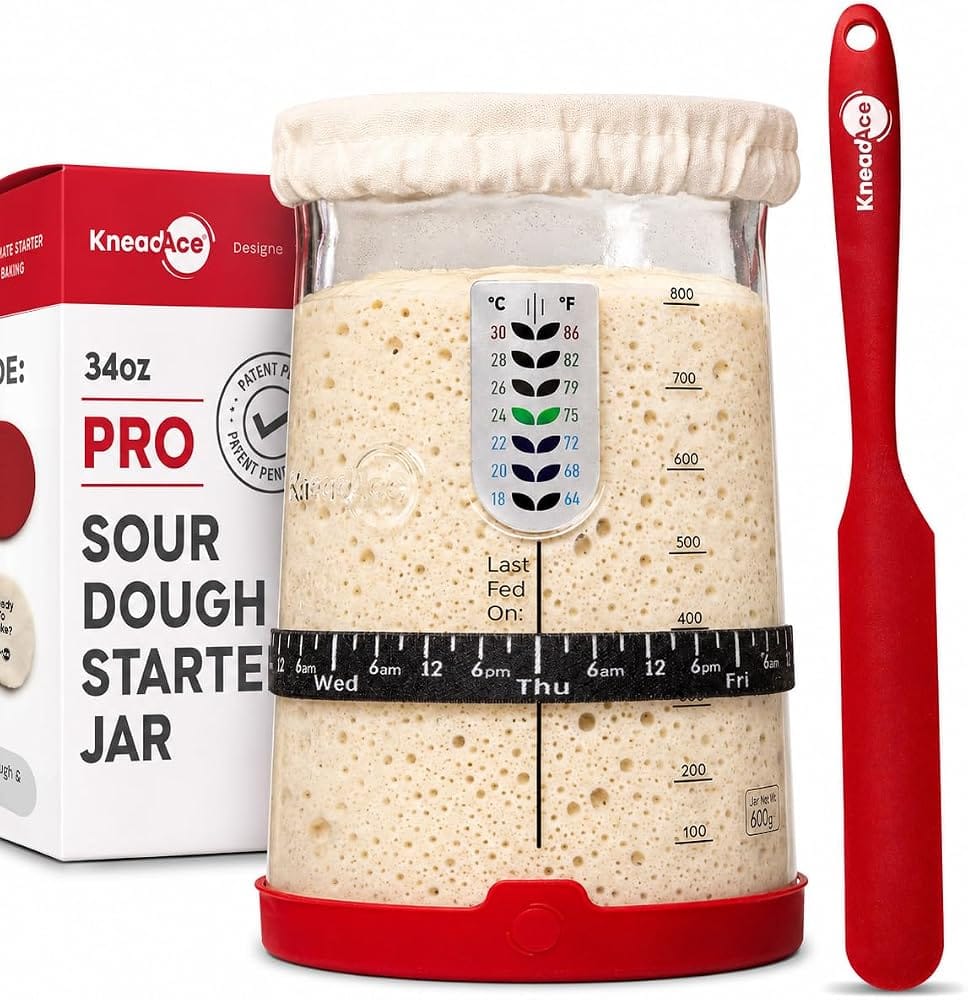
KNEADACE Pro 34 Oz Sourdough Starter Jar Kit
A good jar makes daily feeding easier, and this one is built around that job. It is a wide-mouth 34 oz glass jar with measurement markings, a feeding-day band to track rise, a stick-on thermometer, a cloth cover, a spatula, and a silicone lid that doubles as a nonslip base.
The wide opening is the practical win. Stirring and scraping down a starter in a narrow jar gets old fast, and the markings make it easy to see whether your starter has doubled after a feed.
- Best for: bakers who already have a Dutch oven and just need a proper home for their starter.
- Keep in mind: it is a jar kit only, with no culture and no banneton, and it is hand wash only. One owner noted the silicone cap sits loosely when used as a base.
Best Baking Pot
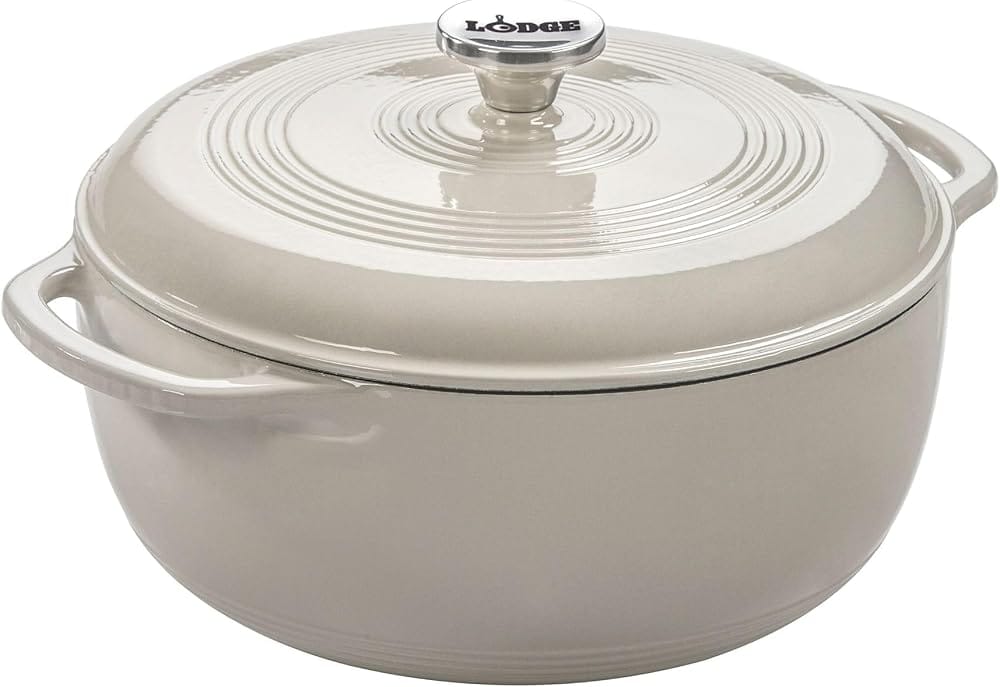
Lodge Essential Enamel Cast Iron Dutch Oven, 6 Qt
A heavy lidded pot is what gives home sourdough its crackly, blistered crust. The lid traps steam from the dough during the first part of the bake, then you remove it to brown the crust. Lodge rates both this pot and its stainless steel lid knob for oven use up to 500 F, which covers typical sourdough baking temperatures.
It is a 6 qt enameled cast iron pot that also handles soups, stews and braises the rest of the week, and Lodge backs it with a limited lifetime warranty with specific provisions for the enamel.
- Best for: baking boule-shaped loaves, and anyone who will use a good Dutch oven for everyday cooking too.
- Keep in mind: it is heavy to lift out of a hot oven, Lodge recommends hand washing, and you should not preheat it above its 500 F rating.
The Tool You Actually Need
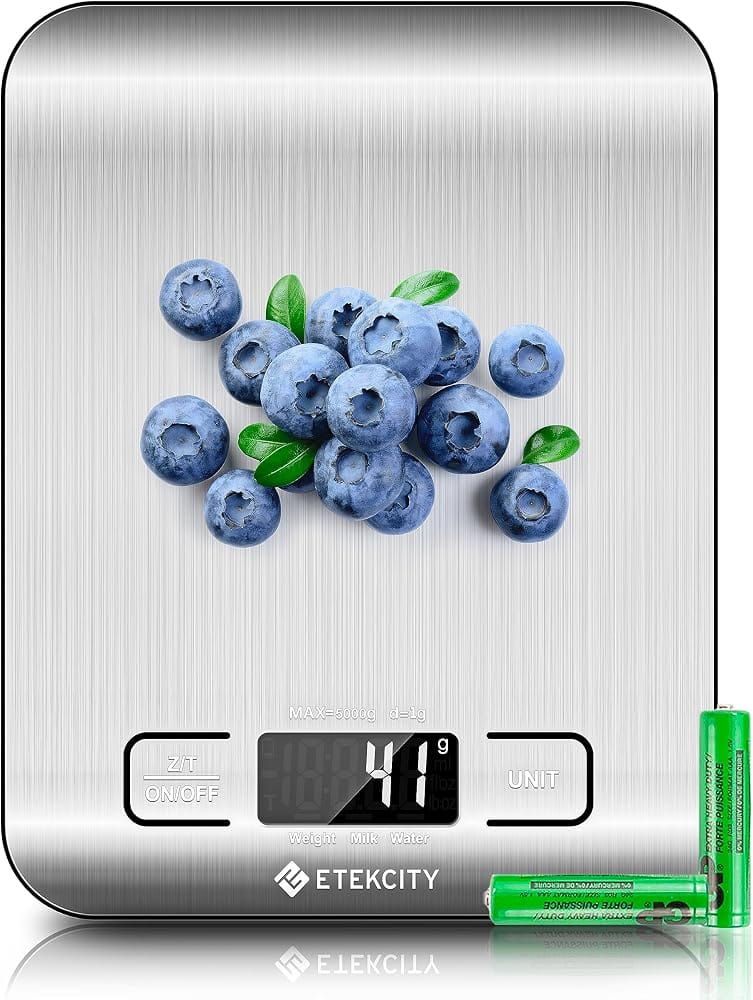
Etekcity Digital Kitchen Scale (EK6015)
If you buy only one tool, buy a scale. Sourdough recipes and feeding schedules are written by weight, because a cup of flour varies a lot depending on how it is scooped. This scale weighs up to 11 lb in grams or ounces, has a tare button to zero out the jar, and runs on two AAA batteries.
King Arthur Baking’s starter feeding guide gives its feeding amounts in grams for exactly this reason. Etekcity lists a two-year limited warranty.
- Best for: everyone starting sourdough, and anyone who wants more consistent baking in general.
- Keep in mind: it is a basic scale. For very small amounts like salt, a scale that reads in tenths of a gram is more precise, though most bakers manage fine with this one.
Quick Comparison
| Pick | What It Is | Includes a Culture? | Best For | Main Trade-Off |
|---|---|---|---|---|
| Superbaking kit | Tool kit with banneton and jar | No | Everything but the starter | Add a culture |
| Eve starter | 10 g dehydrated culture | Yes | A ready-made culture | No tools |
| KNEADACE jar | 34 oz starter jar kit | No | Daily feeding | Jar only |
| Lodge Dutch oven | 6 qt enameled cast iron pot | No | Crusty loaves | Heavy |
| Etekcity scale | Digital kitchen scale | No | Measuring by weight | Basic precision |
Make a Starter or Buy One?
Both work. Making a starter costs nothing but flour and patience. You mix flour and water, then discard part of it and feed it daily until it rises predictably, which usually takes one to two weeks. Our beginner sourdough guide covers the process and the first loaf.
Buying a dehydrated starter shortens the uncertain early stretch, when a homemade starter can look lively for a day and then go quiet. Either way, the routine once it is established is the same: keep it fed, keep it at a steady room temperature, and use it when it is at its peak. King Arthur Baking’s guide to feeding and maintaining a starter is a reliable reference for the schedule and the amounts.
Once your starter is going, you may want help with the kneading. Our guides to the best stand mixers for bread dough and the best bread machines cover the machines that can take that on.
How We Chose
These picks were researched rather than tested side by side in our kitchen, and we would rather say that plainly. We checked exactly what each box contains against the manufacturers’ own listings, looked for an actual culture, compared jar sizes and materials, oven ratings and warranties, and noted individual owner reports where available without treating them as a failure rate.
We deliberately split the picks by job instead of ranking five similar kits, because most beginners need a culture, a jar, a scale and a pot more than they need a bigger box. We do not list prices, because they move constantly. Use the buttons to check current prices.
Frequently Asked Questions About Sourdough Starter Kits
Does a sourdough starter kit come with starter?
Usually not. Most kits sold as “sourdough starter kits” contain tools and a jar, but no culture. Check the contents list. If you want to bake soon, buy a dehydrated or fresh starter separately.
How long does a new starter take to be ready?
A homemade starter usually takes one to two weeks of daily feeding before it rises reliably. A dehydrated starter is often ready in several days. Temperature makes a big difference, so a cool kitchen will slow either one down.
Do you need a Dutch oven for sourdough?
Not strictly, but it is the easiest way to get a good crust at home. A Dutch oven traps steam around the loaf early in the bake. You can also bake on a baking steel or stone with a pan of water for steam, but results are less consistent for beginners.
What size jar do you need for a sourdough starter?
Around 24 to 34 oz is comfortable for a typical home starter. The jar needs room for the starter to at least double after a feed. A wide mouth makes stirring and cleaning easier.
Can you use all-purpose flour for a starter?
Yes. Many bakers maintain starters on unbleached all-purpose flour. Adding a little whole-wheat or rye flour when you begin often makes a new starter more active, because those flours carry more of the wild yeasts and bacteria that get things going.
The Bottom Line
The simplest setup that works: an Eve dehydrated starter, a wide-mouth jar, a kitchen scale and a heavy lidded pot. If you would rather buy every hand tool at once, the Superbaking kit covers them all. Just remember to add the culture. Then follow our beginner sourdough guide for your first loaf.