Cowboy Candy: Candied Jalapenos for Canning
The first jar of cowboy candy I opened was two days old, and it tasted like a hot pepper that had fallen into a sugar bowl. Sharp vinegar on the front, raw green pepper underneath, sweetness sitting on top of both rather than mixed into them. I decided the recipe was overrated and put the rest of the batch at the back of a shelf.
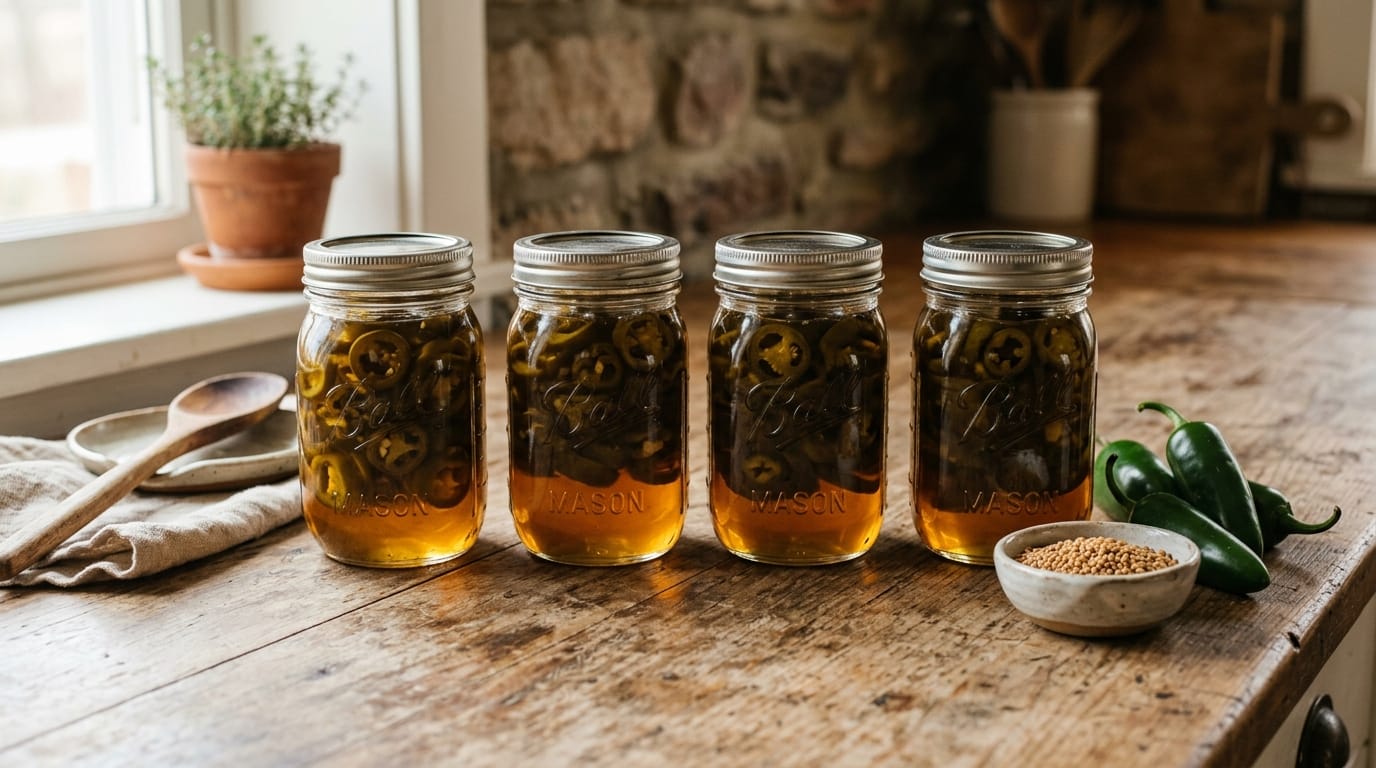
We found it again in November. Somewhere in those weeks the syrup had gone thick and amber, the heat had come down out of the front of your mouth and settled into the back, and the whole thing had turned into the condiment people had been telling me about. It went on everything for a month.
That is the part most cowboy candy recipes leave out. The canning is straightforward, and it is a genuinely good first project if you have made anything in a boiling water canner before. What nobody mentions is that the jar is not finished when the lid seals. This guide covers what cowboy candy actually is, a tested recipe and why using one matters more here than in most projects, the processing times by altitude, the three things that go wrong, and what to do with both the peppers and the syrup.
Table of Contents
What Is Cowboy Candy?
Cowboy candy is jalapeno rings simmered in a sweet vinegar syrup and canned. The name is informal and the product is also sold as candied jalapenos, sweet-hot jalapenos or sweet pickled jalapenos, and all of those refer to roughly the same thing: a sugar-heavy pickle where the sweetness is the point rather than a background note.
It is a condiment, not a side dish. You are not going to eat a bowl of it. You put a spoonful on a burger, over cream cheese, into cornbread batter, and it does the job that a sweet chili sauce does, with more texture.
Two things separate it from an ordinary pickled jalapeno. The sugar is measured in cups rather than spoons, which is what produces the syrup. And the peppers are simmered in that syrup before they go into the jar, which softens the raw green edge and turns the rings a darker, duller green. If your finished jar looks less bright than the fresh peppers did, that is the recipe working.
The Recipe at a Glance
| Yield | About 4 pint jars |
| Peppers needed | 4 lb jalapenos, roughly 40 to 60 depending on size |
| Prep | About 25 minutes, most of it slicing |
| Simmer | 15 minutes |
| Processing | 15 minutes for pints in a boiling water canner, up to 1,000 ft |
| Headspace | 1/2 inch |
| Ready to eat | Technically at once. Genuinely good at 3 to 4 weeks. |
Use a Tested Recipe, and Why That Matters Here
Cowboy candy sits in an awkward spot, and it is worth being straight about it rather than pretending otherwise.
The National Center for Home Food Preservation, which is the usual first stop for a tested canning recipe, does not publish one for candied jalapenos. Its tested jalapeno product is Pickled Jalapeno Rings, which is a different thing: no sugar, a pickling lime soak for crispness, and 10 minutes for pints. Useful recipe, not this recipe.
The tested candied version that most home canners actually follow is Ball’s Candied Jalapenos, and that is the one this guide walks through. The quantities below are theirs. The method notes are mine, from making it.
Why the fuss on this particular recipe? Because cowboy candy is mostly low-acid vegetable held safe by vinegar, and the sugar makes it easy to talk yourself into changes. Penn State Extension is blunt about which changes are available to you and which are not.
- Do not reduce the vinegar. PSU: reducing vinegar in salsa or pickled products may result in the contents in the jar being low acid. The vinegar is the safety mechanism, not a flavor choice.
- Do not add more peppers, onion or garlic than the recipe calls for. Never increase the total amount of low-acid vegetables. Adding extra dilutes the acidity.
- Use the jar size specified. Pints here. A quart is not a pint with a longer process.
- You can swap cider vinegar for white and back again. They are interchangeable as long as both are 5% acidity, which is what the label on ordinary supermarket vinegar means.
- You can change the dried spices. Amounts and types of dried spices and herbs are adjustable. Do not add extra fresh herbs.
Sugar is the one people ask about most. In this recipe it is doing texture and flavor work rather than preservation work, so cutting it will not make the jar unsafe. It will give you thin syrup and a sharper, more vinegary result, which is a different product from the one you were trying to make. Reduce it if you want to, knowing that.
What You Need
Yields about 4 pint jars
Cowboy Candy Ingredients
- 4 lb jalapenos, sliced into 1/4 inch rings
- 3 cups cider or white vinegar, at least 5% acidity
- 4 cups sugar
- 6 cloves garlic, sliced
- 2 teaspoons mustard seeds
- 2 teaspoons turmeric
- 2 teaspoons salt
- 1/2 teaspoon cayenne powder
Quantities from Ball’s tested Candied Jalapenos recipe. The turmeric is why the syrup goes gold rather than pale, and it stains everything it touches, including a wooden spoon and your worktop.
A word on the peppers. Four pounds is a lot of slicing, and the heat is cumulative on your hands even if you do not notice it at the time. Wear gloves and keep your hands away from your face, the same rule that applies when you are canning salsa. A mandoline gets the rings even and takes about a third of the time, and it is also the single most likely thing in this recipe to send you looking for a bandage, so use the guard.
Seeds are your call. Leaving them in gives you the heat people expect from cowboy candy. Taking them out gives you something closer to a sweet pepper relish, and it roughly triples your prep time.
Equipment
For the Canning Part
- A canning tools kit that includes a rack. The rack is what matters. It keeps jars off the base of the pot, so a deep stockpot you already own works as a canner. The kit also brings the jar lifter, funnel and headspace tool.
- An 18-piece canning tools kit. Tongs, jar wrench, magnetic lid lifter, funnel and bubble tool. No rack, so choose this one if you already have a canner.
- Pint jars, new lids and bands. Buy these locally. Heavy, cheap and stocked everywhere, so shipping them rarely makes sense.
- Disposable gloves. Four pounds of hot peppers is not the batch to learn this lesson on.
- A wide-mouth funnel. Optional for most projects, genuinely useful here, because you are ladling sticky syrup and rings together.
Some links above are affiliate links. If you buy through them we earn a small commission at no extra cost to you, and it does not change what we recommend. As an Amazon Associate, we earn from qualifying purchases.
How to Make Cowboy Candy, Step by Step
- Get the canner heating and the jars hot. Sterilizing is not needed for a 15 minute process, but hot jars will not crack when the syrup goes in. If you want the detail, we covered sterilizing jars for canning separately.
- Wash the jalapenos and slice them into rings about 1/4 inch thick. Discard the stem ends. Keep the rings roughly even, because thin ones go limp while thick ones stay raw.
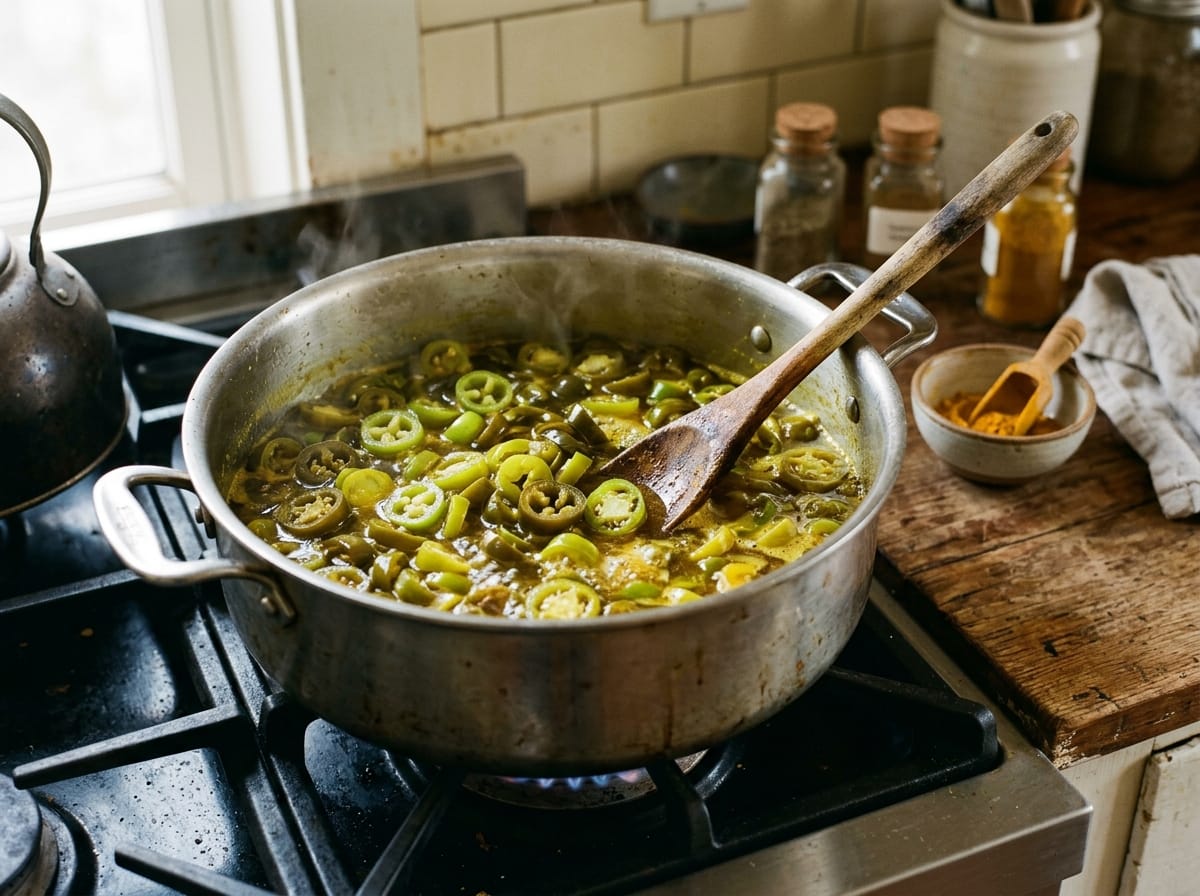
- Put everything except the peppers into a large pot: vinegar, sugar, garlic, mustard seeds, turmeric, salt and cayenne. Bring it to a boil over high heat and stir until the sugar has fully dissolved.
- Add the pepper rings, drop the heat to medium and simmer for 15 minutes. They will darken and start to take up the brine. Do not walk away and let it go longer, because this is where soft peppers come from.
- Ladle the hot rings into hot pint jars, then top up with the syrup, leaving 1/2 inch of headspace. Pack the rings in reasonably tight rather than letting them float in syrup.
- Run a plastic tool around the inside of each jar to release trapped air, then check the headspace again. Wipe the rims with a clean damp cloth, because syrup on the rim is the classic cause of a failed seal.
- Fit the lids and tighten the bands to fingertip tight. Load the canner, making sure the water covers the jars by an inch, and process for 15 minutes once it reaches a full rolling boil.
- Turn off the heat, take the lid off and leave the jars in the water for 5 minutes before lifting them out. Cool them undisturbed for 12 to 24 hours, then check the seals.
You will almost certainly have syrup left over after the jars are full. That is normal and it is not a mistake. Do not add water to stretch it across another jar, because you would be diluting the acid. Pour it into a clean jar and keep it in the fridge.
Processing Time and Altitude
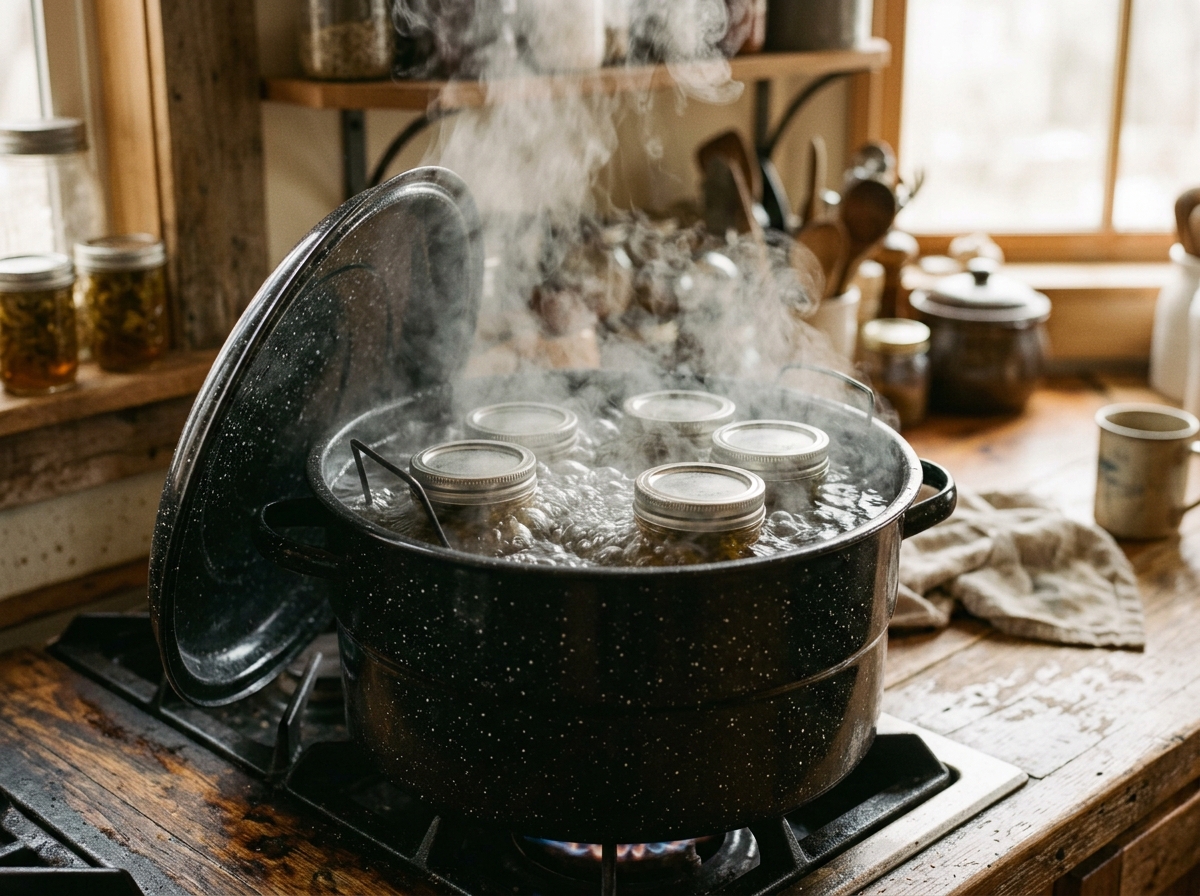
Pints process for 15 minutes at up to 1,000 feet. Above that, water boils cooler and the process needs longer. Utah State Extension gives the standard boiling water adjustment:
| Your elevation | Add | Total process time for pints |
|---|---|---|
| 0 to 1,000 ft | nothing | 15 minutes |
| 1,001 to 3,000 ft | 5 minutes | 20 minutes |
| 3,001 to 6,000 ft | 10 minutes | 25 minutes |
| 6,001 to 8,000 ft | 15 minutes | 30 minutes |
| 8,001 to 10,000 ft | 20 minutes | 35 minutes |
Two details that decide whether that time means anything. The clock starts when the water comes back to a full rolling boil after the jars go in, not when you put them in. And the water has to stay over the jars by an inch for the whole process. Those two rules are the same ones that govern canning whole tomatoes and every other water-bath project. NCHFP is direct about the consequence: food may spoil if you fail to add process time at elevations above 1,000 feet, process for fewer minutes than specified, or cool jars in cold water.
If you are still choosing a pot, our comparison of water-bath canners for beginners covers what actually matters at this size. Cowboy candy is a shallow, short process, so almost anything with a rack will do.
The Three Weeks Nobody Warns You About
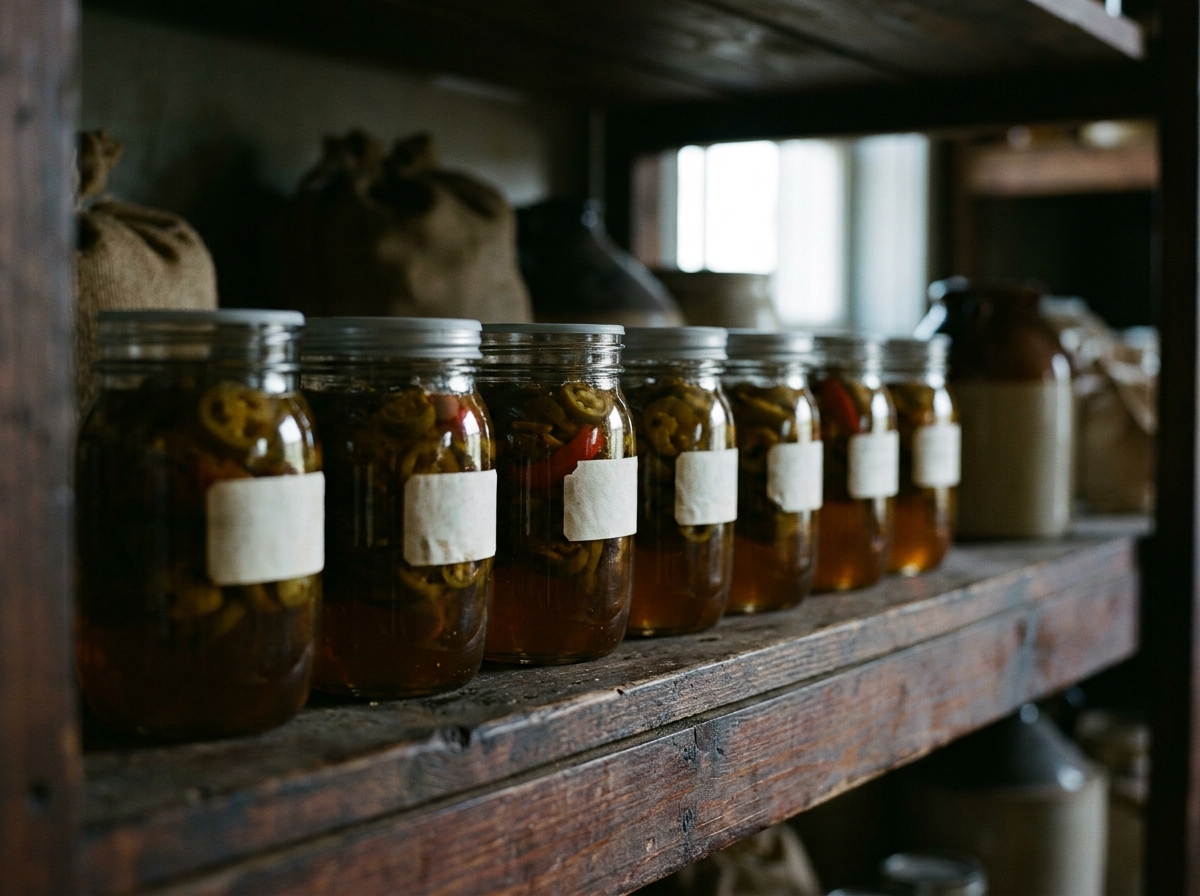
A sealed jar of cowboy candy is safe to eat as soon as it has cooled. It is just not very good yet.
Fresh out of the canner the three components are still separate: sugar, vinegar and raw pepper, all arriving at once and none of them talking to each other. Over the following weeks the syrup thickens as it takes up sugar and pepper juice, and the heat spreads through it instead of sitting on the rings. Most people find three to four weeks is where it turns.
I want to be honest about the status of that claim. It is not a food safety rule and I have no extension source that puts a number on it. It is what the flavor does in my kitchen and what almost everyone who makes this says. Treat it as a strong suggestion rather than research: label the jars with the date, put them at the back, and open one in a month.
Make two batches if you have the peppers for it. Open one immediately so you learn what the difference tastes like, and leave the rest alone.
Runny Syrup, Floating Rings, and Soft Peppers
| What happened | Why | What to do |
|---|---|---|
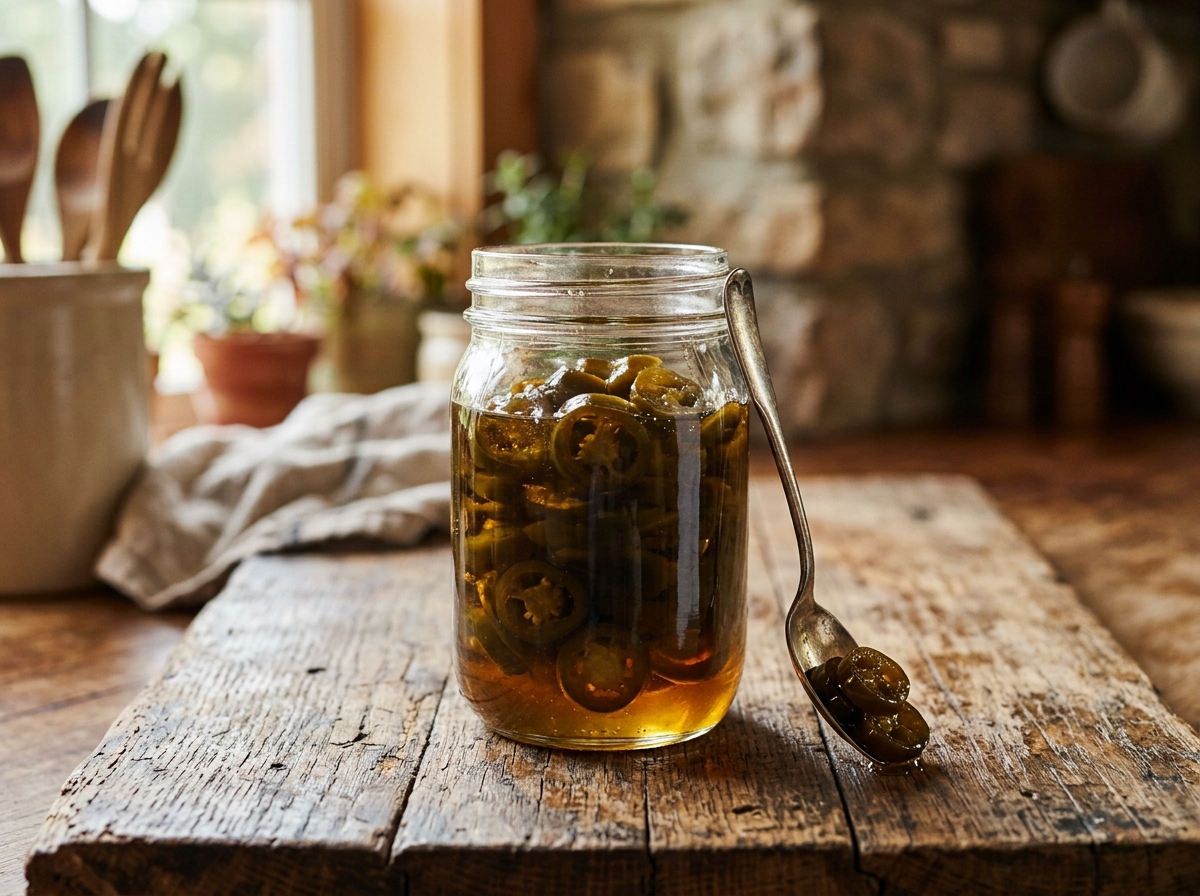
| The syrup is thin and watery | It is supposed to be, on day one. The syrup thickens over the following weeks as it takes up sugar and pepper juice. | Wait. Do not boil the syrup down harder next time to compensate, because a longer reduction gives you sticky candy and overcooked rings. |
| The rings float above the syrup | The jars were packed loosely, or air was left in and escaped during processing. | Pack the rings in more firmly next time and use the bubble tool properly. Fruit above the liquid may darken, but a sealed jar is safe. |
| The peppers are limp | They simmered too long. Fifteen minutes is a time, not an approximation. | Set a timer. There is no fixing a soft batch, though it still works stirred into cornbread or cream cheese. |
| The syrup went cloudy | Usually the turmeric, which does not fully dissolve. Sometimes hard water or table salt with anti-caking additives. | Turmeric cloudiness is cosmetic. Use canning or pickling salt and soft water if it bothers you. |
| A jar did not seal | Syrup on the rim is the most common cause on this recipe. It is sticky and it gets everywhere. | Refrigerate that jar and eat it within a few weeks. Wipe rims more carefully next time. |
What to Do With Cowboy Candy (and the Syrup)
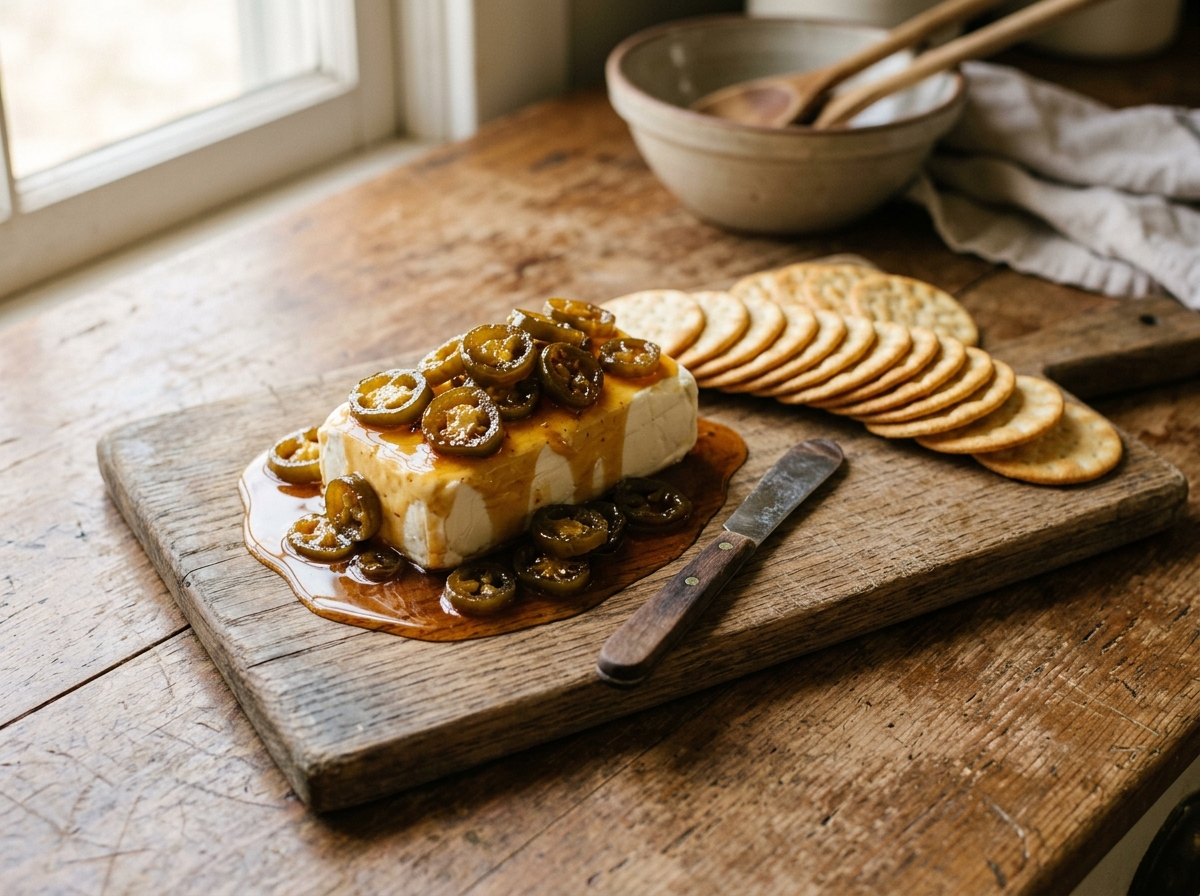
A pint goes further than you expect, because it is used in spoonfuls.
- Over cream cheese, with crackers. This is the one everybody lands on. A block of cream cheese, the contents of half a jar poured over it, done.
- On a burger or a grilled cheese, where the sweetness does the job that relish usually does.
- Stirred into cornbread batter, about a quarter cup per pan, drained.
- On nachos and pizza, in place of plain pickled jalapenos.
- Chopped into potato salad or coleslaw, which is better than it sounds and uses up the softer rings.
The syrup is the part people throw away and should not. It is a sweet-hot pepper vinegar, and it works as a glaze brushed onto chicken thighs or pork in the last few minutes of cooking, as the acid half of a vinaigrette, stirred into barbecue sauce, or shaken into a drink if that is your sort of thing. The jar of leftover syrup in the fridge tends to run out before the peppers do.
Storage and Shelf Life
Once the jars have cooled for 12 to 24 hours, take the bands off before testing the seals. Press the center of each lid: it should not flex. Wash the outside of the jars, because syrup left on the glass will grow mold during storage even though the contents are fine.
Label and date every jar and store them somewhere cool, dark and dry, without the bands on, alongside the rest of your home-preserved shelf. Plan to use them within a year for best quality. The peppers gradually soften and dull with time, so this is not a recipe to stockpile for three years even though a sealed jar stays safe well beyond a season.
Once a jar is open it lives in the fridge. It will keep for months there, largely because of the sugar and vinegar, and the rings will keep softening slowly. If you would rather skip canning altogether, the same recipe works as a refrigerator pickle: cool the jars and put them straight in the fridge, no processing, and eat within a couple of months. That is the same shortcut available with ordinary homemade pickles.
New to water-bath canning?
The Beginner’s Canning eBook covers water-bath canning end to end: altitude and headspace charts, the acidity rules that decide what is safe, and step-by-step walkthroughs for a first season. The Canning Starter Bundle adds both Quick Kits for jar prep and fermenting.
The Free Garden Starter Pack
Five printable pages that take the guesswork out of a first season, plus a short email every week or two when something is worth planting, picking, or putting up.
- A garden planning worksheet you can actually fill in
- A seed-starting and planting calendar
- A harvest log to track what really produced
No spam, ever. Unsubscribe in one click.
Thank you. You are on the list.
Your Garden Starter Pack is ready right now. Grab it here:
Download the pack (PDF)Keep an eye on your inbox. The next seasonal guide lands there first.
Frequently Asked Questions About Cowboy Candy
Why is it called cowboy candy?
It is an informal American name for candied jalapenos, generally associated with Texas, and it stuck because it describes the thing well: a pepper treated like a sweet. There is no official definition, which is why you will see the same product sold as candied jalapenos or sweet-hot jalapenos.
Can I use less sugar?
Yes, without making the jar unsafe. In this recipe the sugar is doing flavor and texture work while the vinegar handles the preservation. Cutting it gives you thinner syrup and a sharper result. What you must not reduce is the vinegar.
Do I have to wear gloves?
With four pounds of jalapenos, yes. Capsaicin builds up on your skin without any obvious warning and transfers to your eyes hours later. If you skip the gloves, wash thoroughly with soap and water before touching your face.
Can I make cowboy candy without canning it?
Yes. Make it exactly the same way, skip the boiling water canner, let the jars cool and refrigerate them. Treat it as a fridge pickle and eat it within a couple of months. This is a good option if you only have enough peppers for a jar or two.
What is the difference between cowboy candy and pickled jalapenos?
Sugar, mostly. Pickled jalapeno rings are a sharp, salty vinegar pickle, and NCHFP’s tested version even uses a pickling lime soak to keep them crisp. Cowboy candy uses cups of sugar to make a syrup, and the rings are simmered in it before jarring, so they end up softer, darker and sweet. If the savory jar is what you were after, our guide to canning jalapenos covers both tested recipes for it.
Why did my cowboy candy turn out so hot?
Jalapeno heat varies enormously between plants and gets stronger late in the season and in dry, stressed growing conditions. The seeds and the pale membrane carry most of it. Remove both for a milder batch, and remember the cayenne in the recipe is adding heat on top.
Before You Start Slicing
Two decisions to make before the knife comes out. Whether you are seeding the peppers, which sets the heat and most of your prep time. And whether you can leave the jars alone for a month, because that is the difference between the version I nearly gave up on and the version that disappeared by Christmas.
Label them with the date you made them. In four weeks you will not remember, and that jar at the back is the one worth opening first.