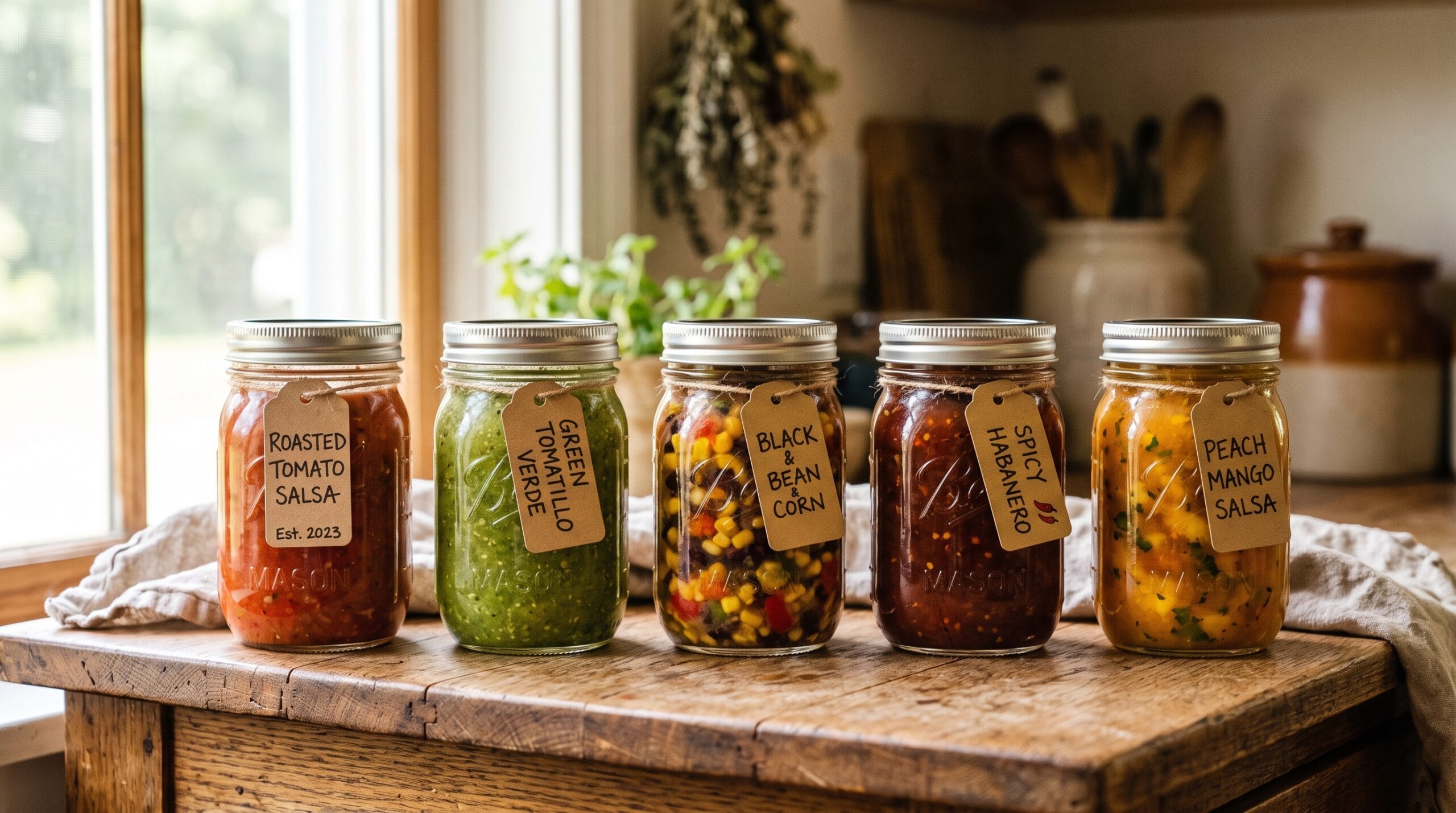
Best Salsa Recipes for Canning: 5 Tested Versions Compared
By the second week of August my kitchen counter stops being a counter. It becomes a staging area for tomatoes in various states of ripeness, a bowl of peppers I picked without a plan, and an onion that has been rolling around since Tuesday. At some point you have to decide what all of it is going to become.
Salsa is the obvious answer, and that is where most people hit a wall. Search for a canning salsa recipe and you get a thousand of them, all confident, almost none of them tested for safety. The ones that matter are a much shorter list.
There are five of best salsa recipes for canning tested worth knowing, all published free by the National Center for Home Food Preservation. They are not interchangeable. One is built for flexibility, one is genuinely hot, one uses tomato paste to fix the watery problem, one skips tomatoes entirely, and one is a fruit salsa that will surprise you. This compares them on heat, texture, yield and how forgiving each one is.
The Short Answer
- Start with Choice Salsa. It was tested specifically so you can vary the peppers and onions to taste, which is what most people want on their first batch.
- Want it genuinely hot? Chile Salsa uses two pounds of chile peppers to five pounds of tomatoes.
- Tired of watery salsa? Tomato/Tomato Paste Salsa adds paste to thicken it, which is the only safe way to do that.
- Have tomatillos? Tomatillo Green Salsa is a different plant with different acidity, so it needs its own recipe.
- Peach Apple Salsa is the one people are skeptical about and then make every year.
- All five process for 15 minutes as pints at up to 1,000 feet, and longer above that.
Why Tested Is the Only Word That Matters Here
Salsa is a mix of tomatoes, which sit near the acidity line that makes boiling water canning safe, and onions and peppers, which sit well below it. The ratio between them is doing the safety work. A recipe that has been laboratory-tested has been checked to confirm the finished jar lands on the right side of that line.
A recipe from a blog that has not been tested might be fine. You have no way to know, and neither does the person who wrote it. That is the whole distinction, and it is why this comparison only covers recipes from the NCHFP.
You do not need a pressure canner for any of these. You do not need pH strips. If you want the full method, our step-by-step guide to canning salsa safely walks through one of these recipes from chopping to sealed jar.
Equipment
What You Need
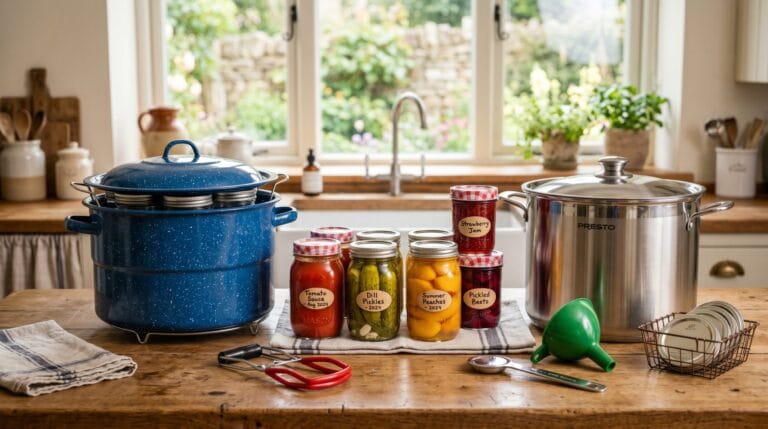
- A canning tools kit that includes a rack. The rack is the part that matters. It keeps jars off the bottom of the pot, which means a stockpot you already own will do the job of a canner. The kit also has the jar lifter, funnel, magnetic lid lifter and headspace tool.
- An 18-piece canning tools kit. Tongs, jar wrench, magnetic lid lifter, funnel, bubble tool and labels. No rack in this one, so pick it if you already have a canner.
- Jars, lids and bands. Buy these locally. They are heavy, inexpensive, and stocked by most hardware and grocery stores, so shipping them rarely makes sense. Lids are single-use for sealing; bands and jars are reusable until a rim chips.
- Thin kitchen gloves. Every one of these recipes involves peppers, and Chile Salsa involves two pounds of them. Any disposable pair works.
Some links above are affiliate links. If you buy through them we earn a small commission at no extra cost to you, and it does not change what we recommend. As an Amazon Associate, we earn from qualifying purchases.
The Five Recipes, Compared
| Recipe | Heat | Texture | Yield | Acid used | Best for |
|---|---|---|---|---|---|
| Choice Salsa | Your choice | Loose | About 6 pints | Bottled lemon or lime | A first batch, and anyone who wants to pick their own peppers |
| Chile Salsa | Hot | Medium | 6 to 8 pints | Vinegar | People who actually want heat |
| Tomato/Tomato Paste Salsa | Mild to medium | Thickest | 7 to 9 pints | Bottled lemon or lime | Anyone frustrated by runny salsa |
| Tomatillo Green Salsa | Medium | Medium | About 5 pints | Bottled lemon or lime | Tomatillo growers, salsa verde |
| Peach Apple Salsa | Mild, sweet | Chunky | About 7 pints | Cider vinegar | Late-summer fruit, gifting |
1. Choice Salsa: The One to Start With
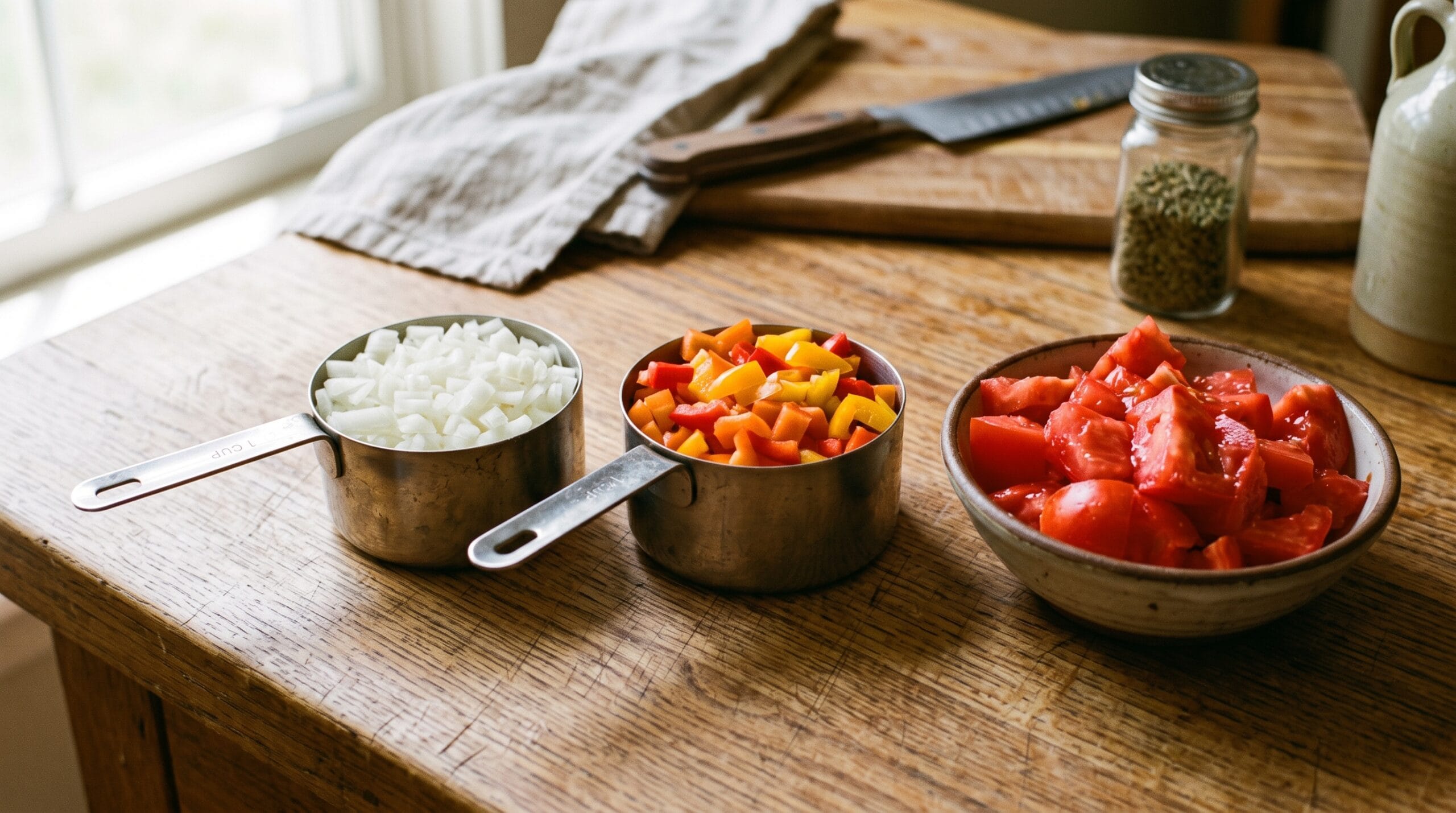
Six cups of peeled, cored, seeded and chopped tomatoes. Nine cups of diced onions and peppers, any variety. One and a half cups of bottled lemon or lime juice. Three teaspoons of canning salt.
The nine cups is the clever part. Choice Salsa was tested across a wide range of tomatoes, peppers and onions precisely so that portion could be yours to decide. All bell peppers gives you something mild enough for children. All jalapenos gives you something else entirely. The total still has to reach nine cups.
Note that it uses bottled lemon or lime juice rather than vinegar, and the NCHFP says specifically not to swap in vinegar here. It also rules out bottled key lime juice. That is a strangely specific warning and it is worth respecting.
The trade-off is texture. This is a loose salsa. If you want it to sit on a chip rather than run off one, see the paste version below.
2. Chile Salsa: The Genuinely Hot One
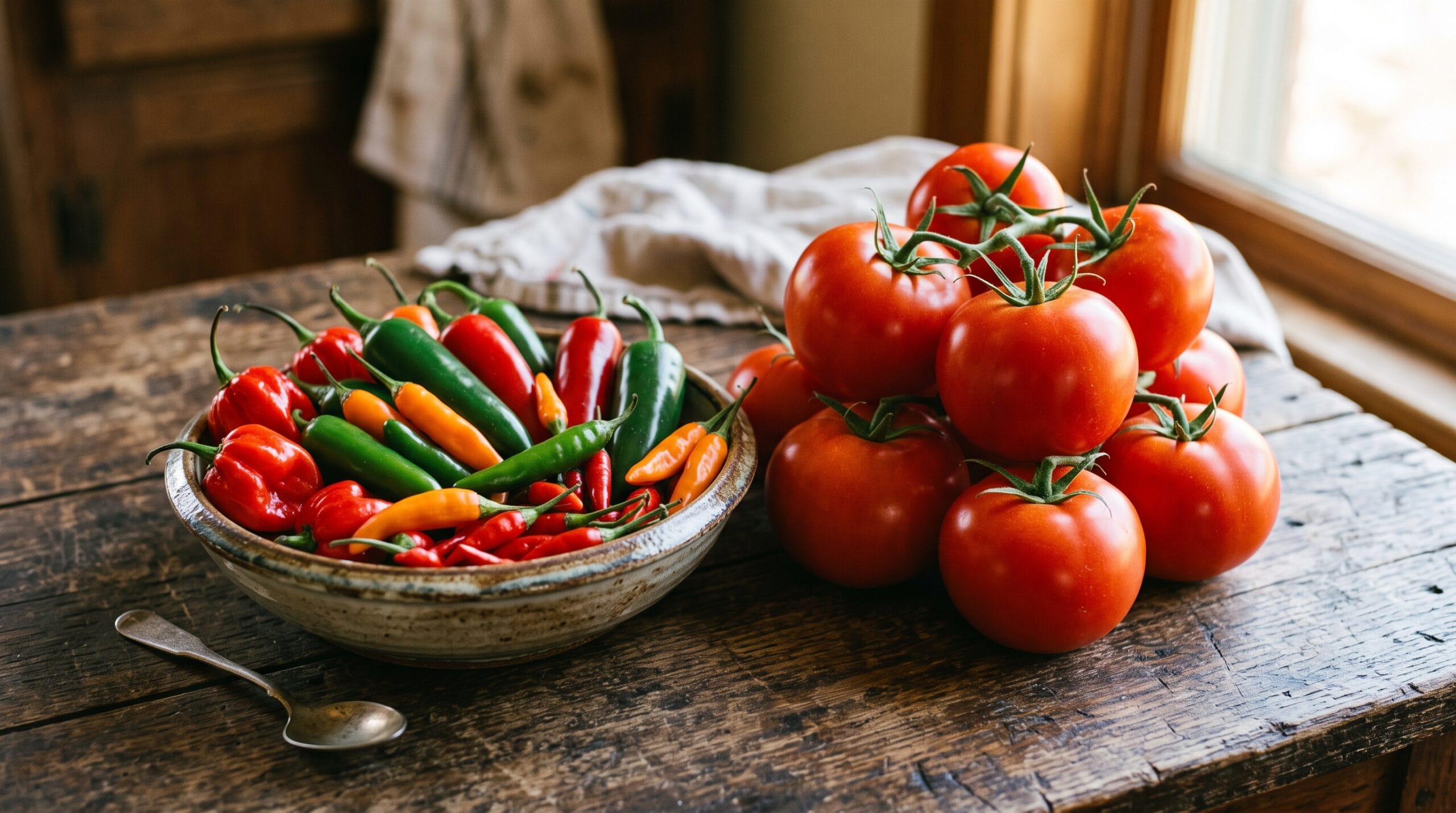
Five pounds of tomatoes, two pounds of chile peppers, one pound of onions, a cup of five percent vinegar, three teaspoons of salt and half a teaspoon of pepper. It yields six to eight pints.
Two pounds of chiles against five pounds of tomatoes is a serious ratio, which is why Chile Salsa is also called Hot Tomato-Pepper Sauce. You can moderate it by choosing milder chiles or removing more seeds and membranes, but you cannot reduce the pepper weight and make up the difference with tomatoes.
This is the one recipe here that uses vinegar as its acid rather than bottled citrus, which gives it a sharper finish. Wear gloves. Two pounds of chiles is a lot of capsaicin to get on your hands.
3. Tomato/Tomato Paste Salsa: The Thick One
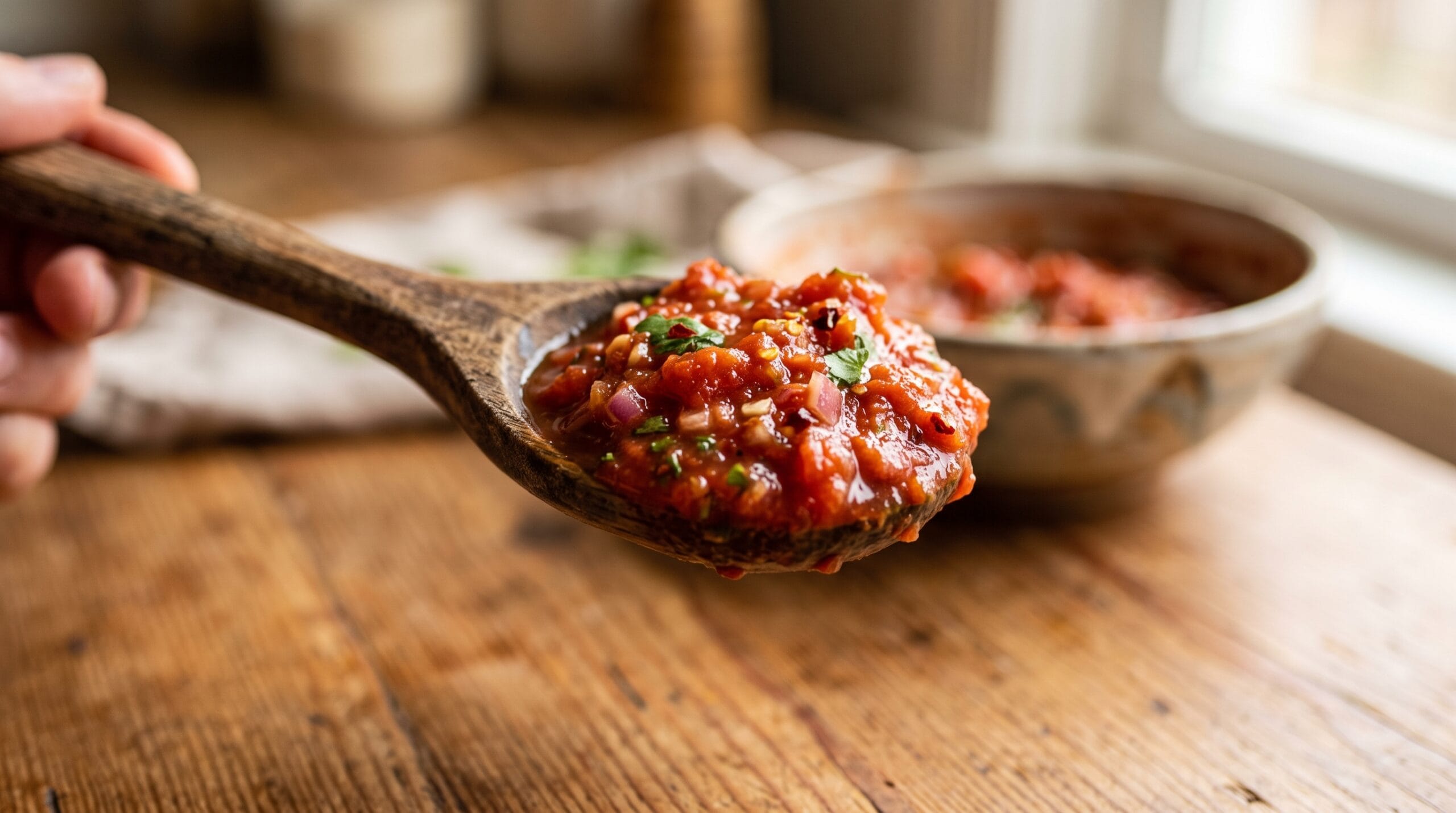
Three quarts of peeled, cored, chopped slicing tomatoes. Three cups of chopped onions. Two cups of bottled lemon or lime juice. A tablespoon each of salt and sugar, a teaspoon of black pepper, and optional cumin and oregano. It yields seven to nine pints, the largest batch of the five.
If your complaint about home-canned salsa is that it pours, this recipe is the answer. Adding tomato paste is the safe way to thicken salsa, because the paste is part of what was tested. Stirring cornstarch or flour into a jar before processing is not safe, and reducing a batch on the stove for an hour changes the concentration of everything including the acid.
It also has room for cumin and oregano, which most tested recipes do not. Those are listed as optional, meaning they were part of the tested version and you can leave them out without affecting safety.
4. Tomatillo Green Salsa: A Different Plant Entirely
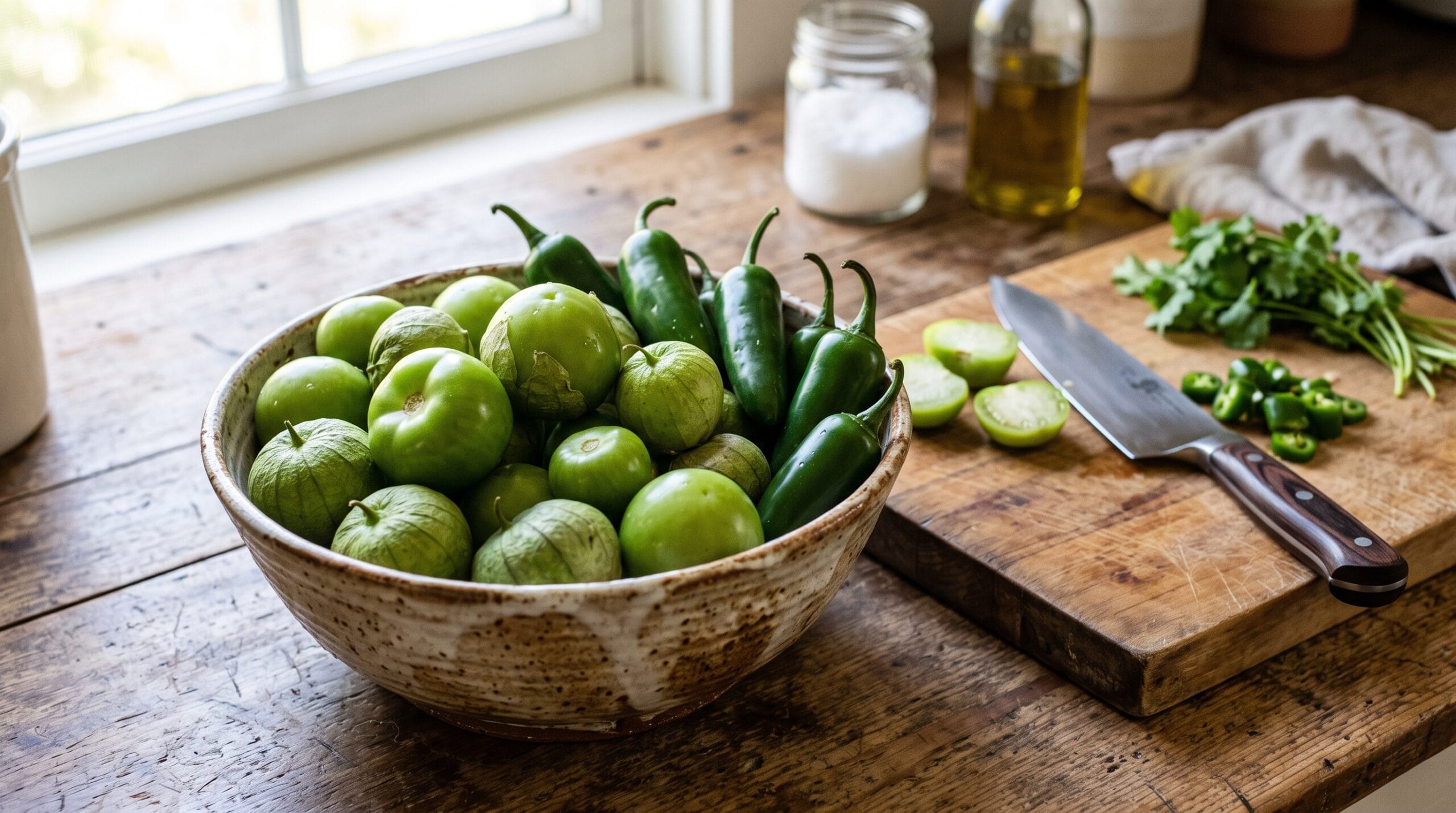
Five cups of chopped tomatillos. Half a cup of seeded, finely chopped jalapenos. Four cups of chopped onions. A cup of bottled lemon or lime juice, a tablespoon of salt, a teaspoon of black pepper, and optional cumin and oregano. About five pints.
Tomatillos are not small green tomatoes. They are a different plant with different acidity, which is exactly why this recipe exists separately rather than as a variation on a red salsa. Using green tomatoes in a tomatillo recipe, or tomatillos in a tomato recipe, is not a safe substitution.
Husk them and rinse off the sticky residue before you chop. That stickiness is normal and washes off with warm water.
5. Peach Apple Salsa: The Surprising One
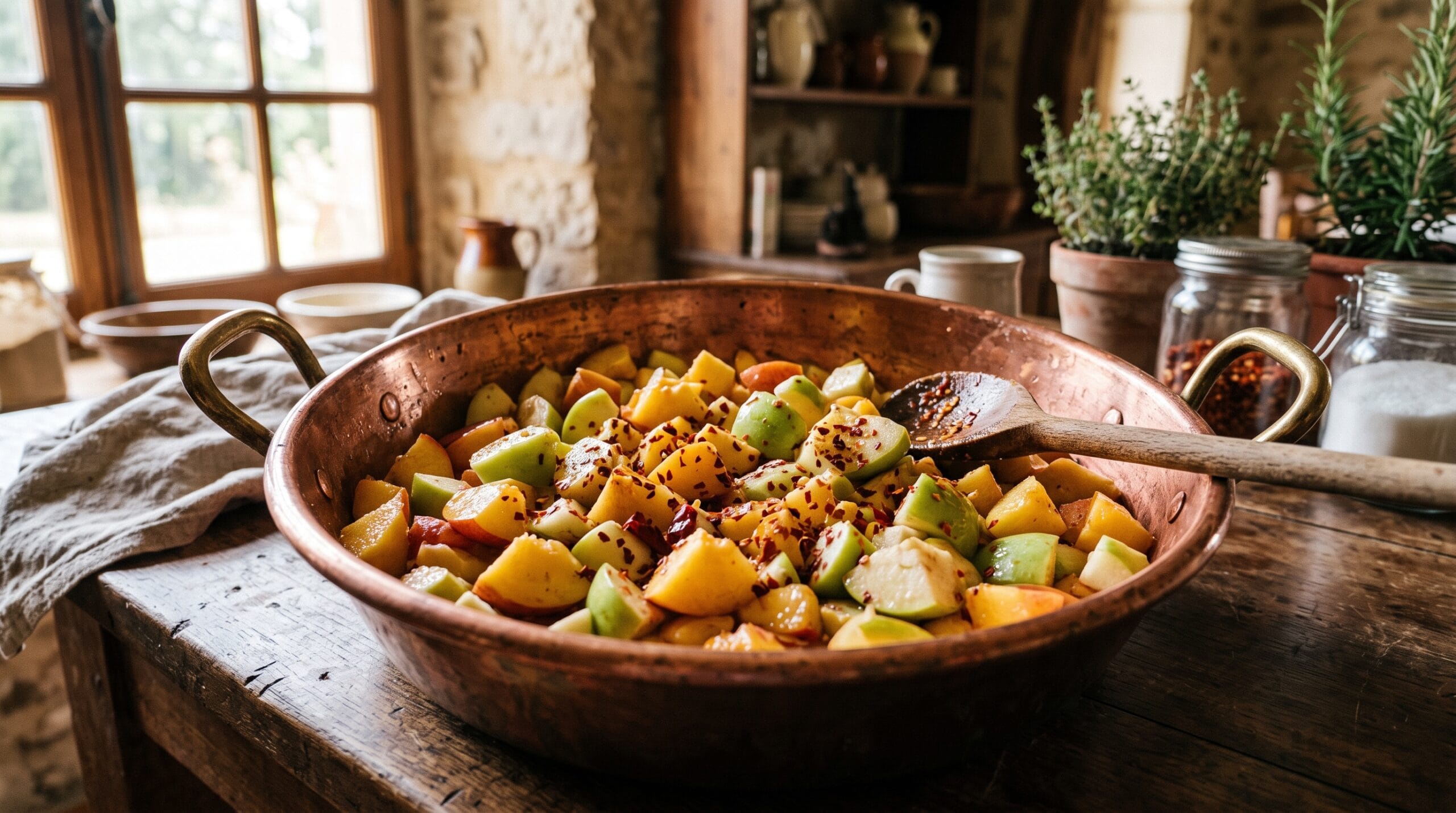
Ten cups of chopped hard, unripe peaches. Six cups of chopped Roma tomatoes. Two cups of chopped Granny Smith apples. Two and a half cups of diced yellow onions, two cups of green bell pepper, cider vinegar, brown sugar, pickling spice, canning salt and crushed red pepper. About seven pints.
Read the peach line again: hard and unripe. Peach Apple Salsa is one of the few recipes that wants underripe fruit, because ripe peaches turn to mush and are less acidic. If your peaches are perfect for eating, they are wrong for this.
It is sweet and mild rather than hot, and it goes on pork and fish far better than it goes on a tortilla chip. It is also the recipe people give away at Christmas. If you are dealing with a peach glut, our guide to canning peaches covers the other direction.
Processing Times and Altitude
All five of these process as pints in a boiling water canner, and all five start at 15 minutes at sea level. Water boils cooler as elevation rises, so the time goes up to compensate.
| Elevation | Pint jars |
|---|---|
| 0 to 1,000 ft | 15 minutes |
| 1,001 to 6,000 ft | 20 minutes |
| Above 6,000 ft | 25 minutes |
Two things people get wrong. The timer starts when the water returns to a full rolling boil after the jars go in, not when you lower them. And quart jars are not recommended for salsa, because the tested times cover half-pints and pints only.
Which One Should You Actually Start With
If this is your first year canning salsa, make Choice Salsa. Not because it is the best of the five, but because the nine-cup vegetable allowance means you can use whatever the garden gave you and still be inside a tested recipe. That is a rare combination.
Make the paste version second, once you have opened a jar of the loose one and decided how you feel about the texture. Some people do not mind it at all. Some people find it is the only thing that bothers them.
Save Peach Apple Salsa for when the peaches are cheap and slightly underripe, which is a two-week window most years and easy to miss.
Working through a first canning season?
The Canning Starter Bundle puts the Beginner’s Canning eBook together with both Quick Kits. Altitude and headspace charts, the acidity rules that decide what is safe, jar prep step by step, and a fermenting guide for the vegetables that do not need a canner at all.
Frequently Asked Questions About Canning Salsa Recipes
Can I combine two of these recipes?
No. Each was tested as a whole, and blending two changes the ratio of low-acid vegetables to acid in a way neither test accounted for. If you want a hotter Choice Salsa, use hotter peppers within its nine cups rather than borrowing from Chile Salsa.
Why do some use vinegar and others use bottled lemon juice?
Each recipe was tested with the specific acid it lists, and the two are not equivalent by volume. Swapping them changes the acidity of the finished jar. It also changes the flavor noticeably, which is why the NCHFP picked lemon for some and vinegar for others.
Can I add cilantro before canning?
You can, but it will taste muddy and grey after processing. Fresh herbs do not survive a boiling water bath well. Stir cilantro into the bowl when you open the jar instead.
How long do these keep?
Best quality within about a year, stored cool and dark with the bands removed. A sealed jar stays safe beyond that, though color and texture slowly decline. Refrigerate after opening.
Do I have to peel the tomatoes for all of them?
Yes. Every one of these specifies peeled tomatoes, and skins loosen during processing into tough curls that float through the jar. A 30 to 60 second dip in boiling water makes it quick once you find a rhythm.
Before the Tomatoes Turn
The counter clears eventually. What is left is a row of jars that took one afternoon and will still be there in February, which is the entire point of the exercise.
Pick one recipe rather than trying to do three in a day. Measure the vegetables level, use the acid the recipe names, and set the timer when the water comes back to a boil. If you want the full walkthrough before you start, our guide to canning salsa step by step covers the method in detail, and the overview of home preservation methods is worth a look if you are still deciding what to do with the rest of the harvest.
The Free Garden Starter Pack
Five printable pages that take the guesswork out of a first season, plus a short email every week or two when something is worth planting, picking, or putting up.
- A garden planning worksheet you can actually fill in
- A seed-starting and planting calendar
- A harvest log to track what really produced
No spam, ever. Unsubscribe in one click.
Thank you. You are on the list.
Your Garden Starter Pack is ready right now. Grab it here:
Download the pack (PDF)Keep an eye on your inbox. The next seasonal guide lands there first.