Tomato Paste Substitute: 7 Easy Swaps With Exact Ratios
The onions are soft, the garlic is fragrant, and the recipe says to stir in 2 tablespoons of tomato paste. You open the pantry and find the small red can you remember buying, except it is an empty space between the beans and the broth.
Dinner does not need to stop there. Tomato paste is concentrated tomato with very little water, so the best substitute is usually another tomato product with some of that water cooked away.
For every 1 tablespoon of tomato paste, use 3 tablespoons of tomato sauce and simmer it until it reduces to about 1 tablespoon. If there is no time to reduce anything, use 1 tablespoon of ketchup instead and expect a slightly sweeter, tangier flavor.
This guide gives you the exact ratio for seven tomato paste substitutes, which one fits the dish already on your stove, and how to make tomato sauce when paste is the only tomato product you have.
Table of Contents
Quick Answer: What Can You Substitute for Tomato Paste?
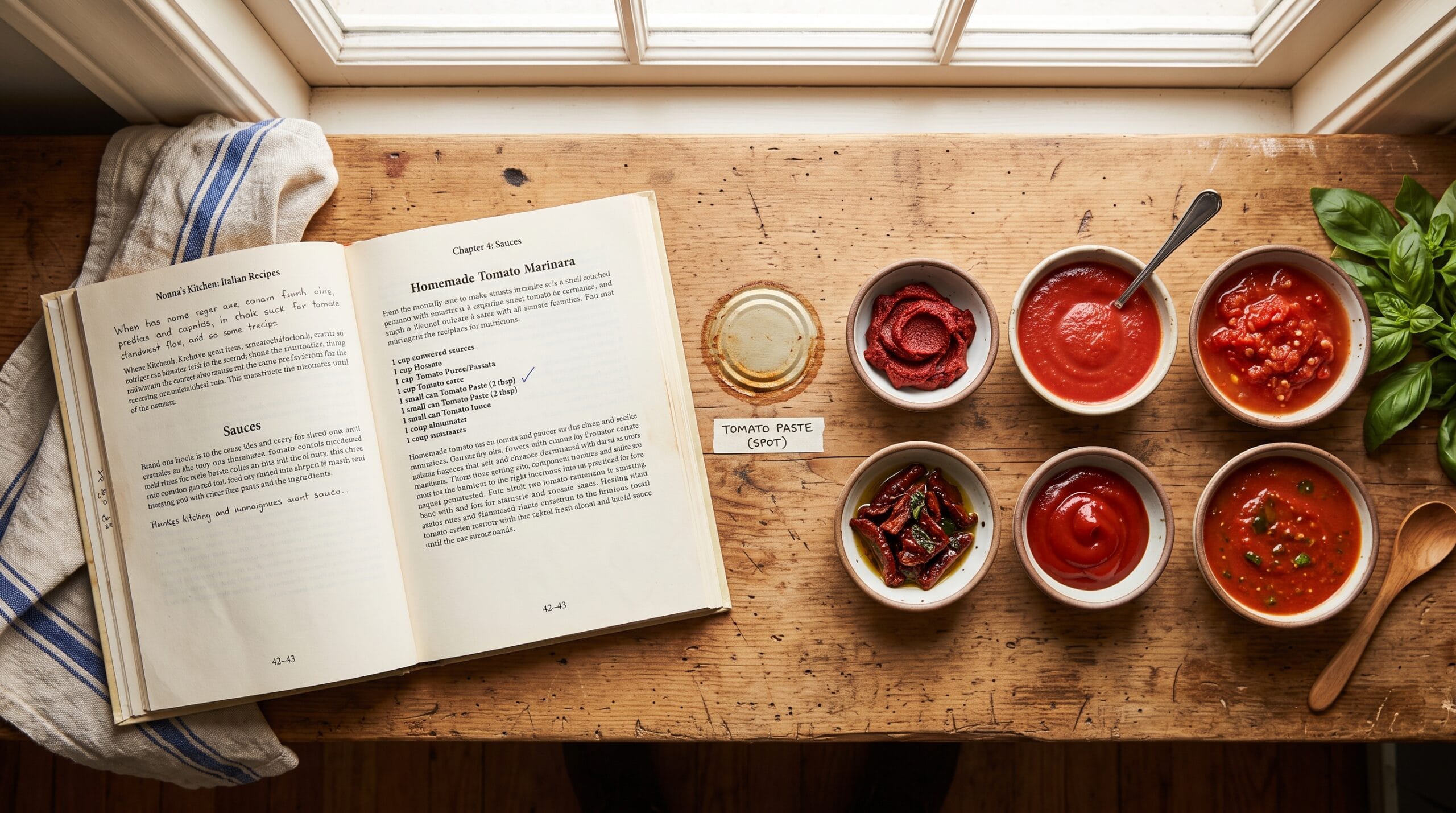
Tomato sauce is the best common tomato paste substitute. Use 3 tablespoons of sauce for every 1 tablespoon of paste, then cook the sauce down until it is thick. Tomato puree needs less reduction, so start with 2 tablespoons for every tablespoon of paste.
If the recipe calls for only 1 or 2 tablespoons and you need the fastest swap, ketchup works at a 1:1 ratio. It brings sugar, vinegar, and salt with it, though, so taste the dish before adding more of any of those.
| Instead of 1 tbsp tomato paste, use | Amount | Best For | What to Adjust |
|---|---|---|---|
| Tomato sauce | 3 tbsp, reduced to 1 tbsp | Soups, stews, chili, pasta sauce | Reduce another liquid or simmer longer |
| Tomato puree | 2 tbsp, reduced briefly | Sauces, braises, curry | Reduce another liquid by about 1 tbsp |
| Ketchup | 1 tbsp | Chili, meatloaf, barbecue sauce | Cut back on sugar, vinegar, and salt |
| Canned tomatoes | 3 tbsp, blended and reduced | Soups, stews, long-cooked sauces | Cook off the extra water |
| Fresh tomato | 3 to 4 tbsp, pureed and reduced | Long-cooked dishes | Add time and season to taste |
| Sun-dried tomatoes | 1 tbsp blended paste | Pasta, stew, braises | Check salt if oil-packed |
| Red pepper paste | 1 tbsp | Curry, stew, chili | Expect a sweeter pepper flavor |
These are starting ratios, not laws. Brands vary. The label “tomato paste” applies to a much more concentrated product than tomato puree under the federal standard for tomato concentrates, but the exact concentration still differs from can to can. Judge the finished substitute by texture as well as the measuring spoon.
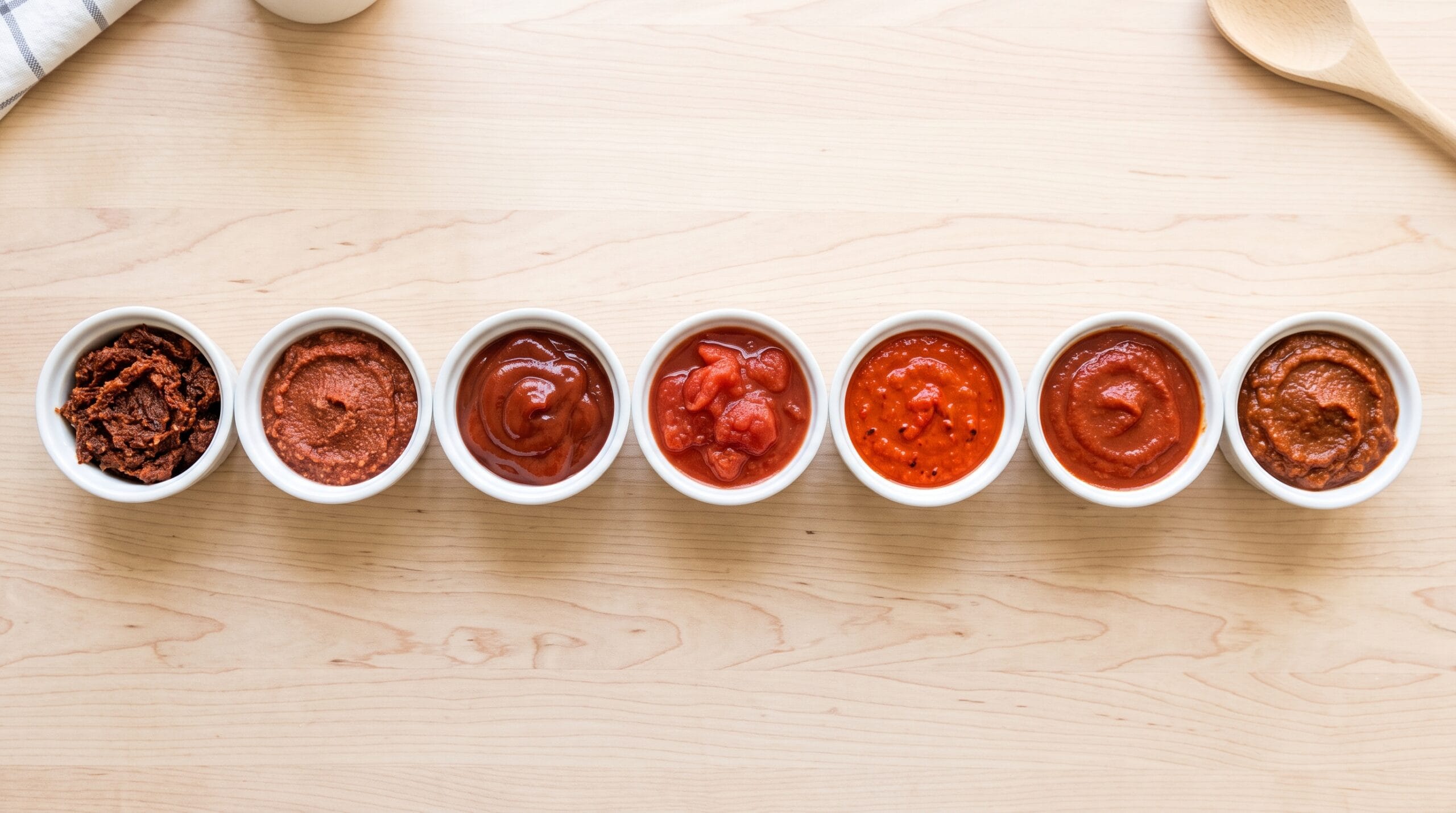
The 7 Best Tomato Paste Substitutes
1. Tomato Sauce: Best Overall
Use 3 tablespoons of tomato sauce for every 1 tablespoon of tomato paste. Put the sauce in the pan where the paste would have gone and let it bubble gently until it reduces to roughly one-third of its original volume. It should leave a clear trail for a second or two when you drag a spoon across the pan.
That reduction matters. Pouring in thin sauce adds tomato flavor, but not the body that paste was meant to provide. The extra water may not matter in soup or chili. It does in a meatloaf glaze, pizza sauce, or thick braise.
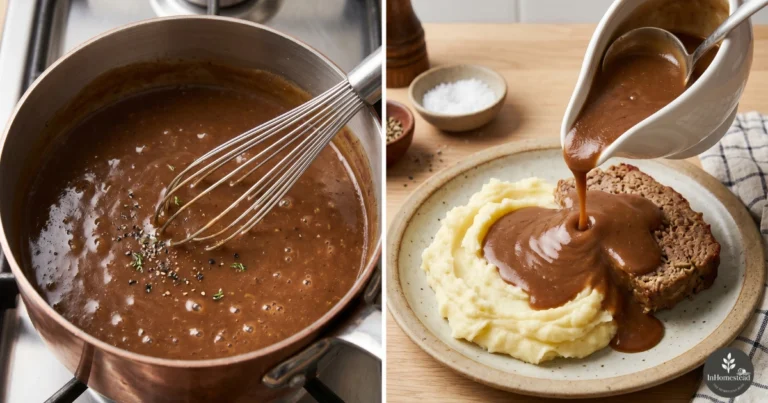
If the dish already contains broth, water, or wine, you can skip the separate reduction and use 2 tablespoons less of that liquid for each tablespoon of paste you are replacing. Our homemade tomato sauce guide shows why sauce stays looser than paste and where that extra water comes from.
2. Tomato Puree: The Closest Straightforward Swap
Use 2 tablespoons of tomato puree for every 1 tablespoon of paste. Simmer it for a few minutes before adding the next liquid, or remove about 1 tablespoon of liquid elsewhere in the recipe.
Puree sits between sauce and paste. It is smooth, usually unseasoned, and dependable in pasta sauce, curry, soup, and any braise that still has time to reduce.
Check the can before you season. Plain puree may contain only tomatoes and salt, while sauce can include garlic, onion, herbs, or added sweetener. The puree gives you more control over the finished flavor.
3. Ketchup: The Fastest Emergency Substitute
Use 1 tablespoon of ketchup for every 1 tablespoon of tomato paste. No reduction is required for a small amount.
Ketchup is already thick, but it contains sugar, vinegar, salt, and seasonings that plain paste does not. That works in meatloaf, sloppy joes, barbecue sauce, chili, and some beef stews. It is easier to notice in tomato soup, a delicate curry, or a strictly savory sauce.
Do not add the recipe’s full sugar or vinegar until you taste the dish. Hold back some salt, too. The Saskatchewan Health Authority’s ingredient substitution chart also gives ketchup as a 1:1 replacement and tomato sauce as a 2-to-3-times replacement.
Ketchup is a sensible answer for one missing tablespoon. If the recipe needs a whole 6 oz can of paste, choose sauce, puree, or canned tomatoes instead. That much ketchup will change the dish.
4. Canned Crushed, Diced, or Whole Tomatoes
Blend 3 tablespoons of drained canned tomatoes until smooth, then simmer the puree until it reduces to about 1 tablespoon. For a soup or stew that will cook for 30 minutes or more, you can add the blended tomatoes directly and let the whole pot do the reducing.
Crushed tomatoes are the easiest because most of the work is already done. Diced and whole tomatoes need a blender, food processor, or a hard mash with a fork. Drain off the thin juice first if you want the reduction to move faster.
This swap has less of the dark, cooked depth of paste. Cook it against the hot pan with the onions and fat for a few minutes before adding broth.
5. Fresh Tomatoes
Use 3 to 4 tablespoons of pureed fresh tomato for every 1 tablespoon of paste, then reduce it until thick. Remove the seeds and watery center first if you are using a large slicing tomato.
Fresh tomato is the least efficient substitute here. It carries a great deal of water, and a pale winter tomato may add acidity without much depth. It still works in a long-simmered soup, curry, or pasta sauce.
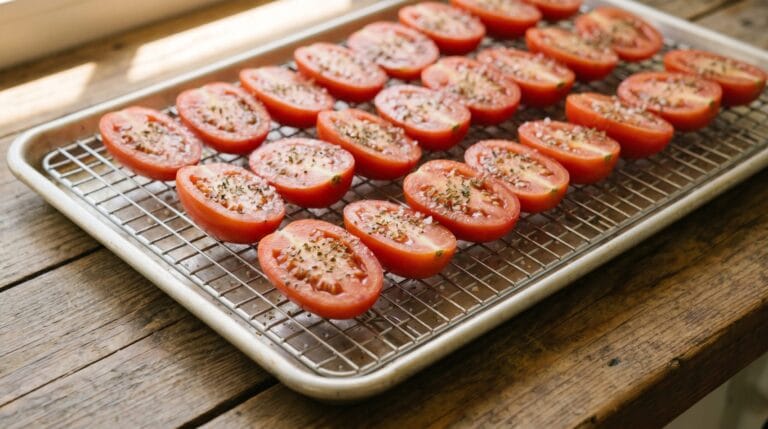
Paste varieties such as Roma reduce faster because they contain more flesh and less juice. That same difference is why Roma tomatoes work so well in our three methods for making sun-dried tomatoes.
6. Sun-Dried Tomatoes
Blend drained sun-dried tomatoes with just enough warm water to make a smooth, thick paste, then use it 1:1. If the tomatoes are very dry, soak them in hot water for 10 minutes first. If they are oil-packed, drain them well but leave a little oil to help the mixture blend.
This is one of the closest swaps for concentration. Its slightly coarse texture disappears in rustic pasta sauces, beef stew, chili, and braises but can show in a silky soup.
Taste before adding salt. Oil-packed sun-dried tomatoes are often seasoned, and the concentrated fruit can be salty on its own.
7. Red Pepper Paste
Use 1 tablespoon of red pepper paste for every tablespoon of tomato paste. Choose a mild version unless the dish is meant to be hot.
Red pepper paste provides color, thickness, and a cooked vegetable sweetness, but it does not taste like tomato. It fits best in chili, curry, bean dishes, braised meat, and recipes that already contain peppers. In a tomato-forward pasta or pizza sauce, the flavor shift is much more obvious.
Check the label for salt and chile heat. Some jars are mild and plain. Others are fermented, heavily salted, or hot enough to change the whole pot.
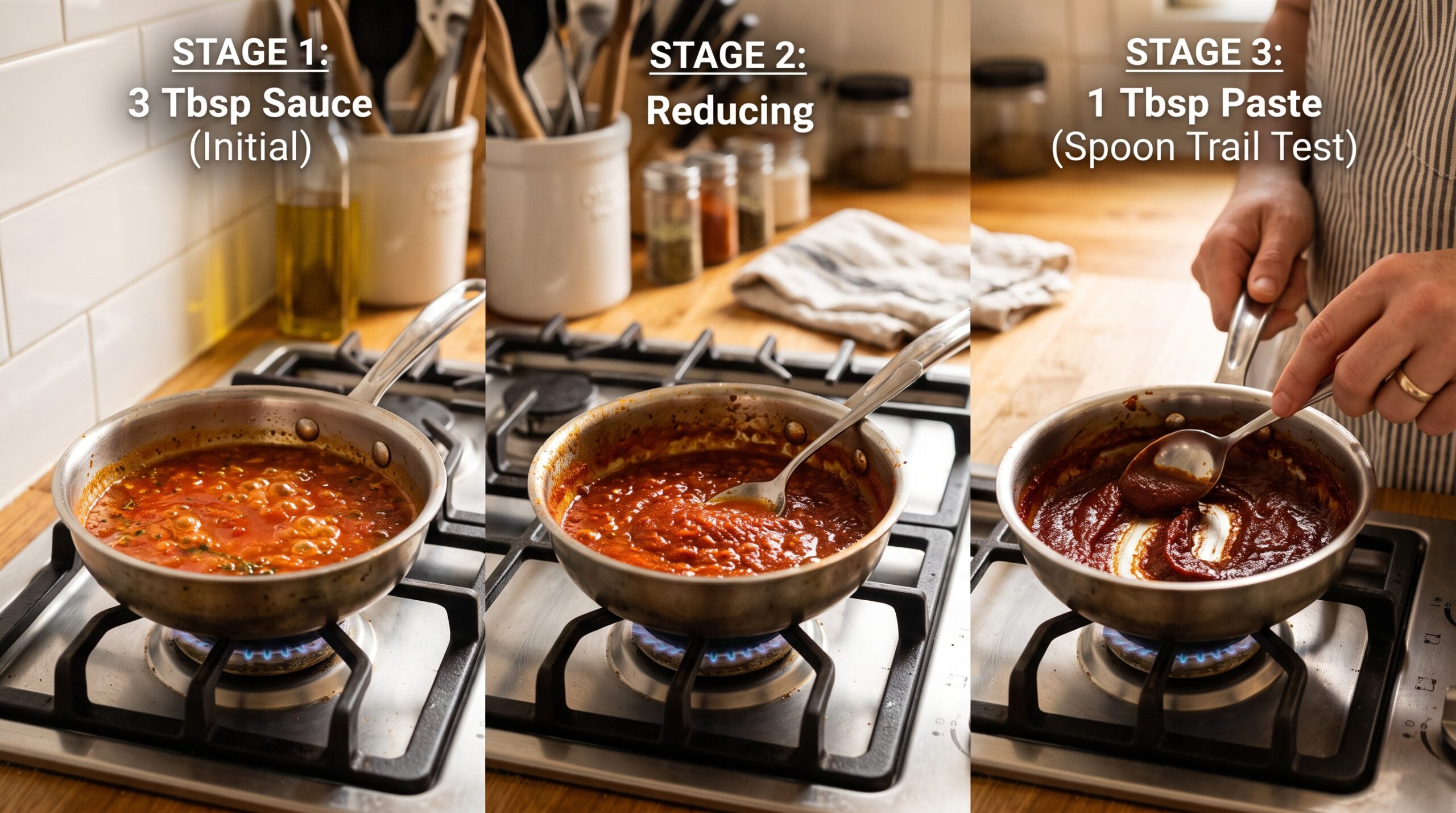
Can I Substitute Tomato Sauce for Tomato Paste?
Yes. Use 3 tablespoons of tomato sauce for every 1 tablespoon of tomato paste, then reduce it to about 1 tablespoon in the pan. If you cannot stop to reduce it, subtract about 2 tablespoons from the broth, water, wine, or other liquid in the recipe.
Here are the common conversions:
| Tomato Paste in the Recipe | Tomato Sauce to Start With | Adjustment |
|---|---|---|
| 1 tbsp | 3 tbsp | Reduce to about 1 tbsp |
| 2 tbsp | 6 tbsp (3/8 cup) | Reduce to about 2 tbsp |
| 1/4 cup | 3/4 cup | Reduce to about 1/4 cup |
| 6 oz can | About 18 oz sauce | Reduce until very thick |
Replacing a full 6 oz can takes time. Tomato puree or reduced canned tomatoes will usually get there faster. Do not pour 18 oz of sauce into the dish unless it has enough simmering time to lose roughly two-thirds of that volume.
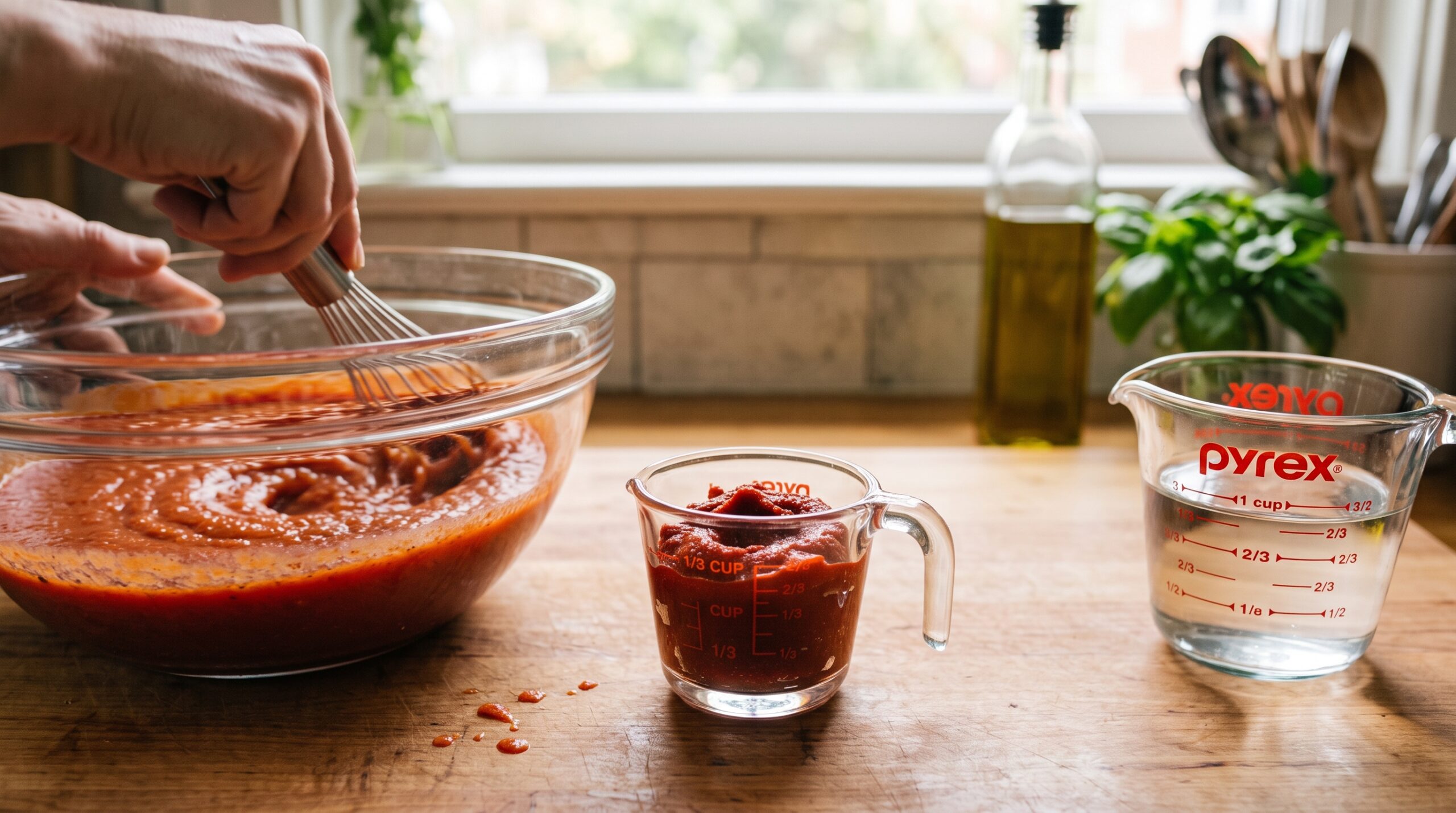
Can I Substitute Tomato Paste for Tomato Sauce?
Yes. Whisk 1/3 cup of tomato paste with 2/3 cup of water to make about 1 cup of tomato sauce. This gives you a practical starting consistency without making the sauce as heavy as straight diluted paste can become.
Plain tomato paste and water will taste flatter than a prepared tomato sauce. Add seasoning based on the dish, not by habit. For an Italian-style sauce, start with a small pinch each of salt, garlic powder, and dried oregano. For chili or curry, leave it plain and let the recipe’s existing spices do the work.
| Tomato Sauce Needed | Tomato Paste | Water |
|---|---|---|
| 1/2 cup | 2 tbsp + 2 tsp | 1/3 cup |
| 1 cup | 1/3 cup | 2/3 cup |
| 1 1/2 cups | 1/2 cup | 1 cup |
Some canned pastes are thicker than others, and tubes may be labeled double concentrated. Start with less of a double-concentrated paste, add water gradually, and stop when the mixture pours like sauce and coats a spoon lightly.

Which Substitute Works Best for Your Recipe?
The pantry item closest to the stove is not always the one that fits the dish. Think about what the paste is doing before you choose.
| What You Are Making | Best Substitute | Why |
|---|---|---|
| Chili | Tomato sauce or ketchup | Long cooking handles extra liquid; ketchup fits a sweet-tangy chili |
| Beef stew | Tomato puree or sun-dried tomato paste | Adds concentrated savory flavor without much sweetness |
| Pasta sauce | Reduced tomato sauce or puree | Keeps the flavor clean and tomato-forward |
| Pizza sauce | Sun-dried tomato paste or reduced puree | Low moisture keeps the crust from turning soggy |
| Curry | Tomato puree or fresh tomato | Blends smoothly with spices and can reduce in the pan |
| Meatloaf or barbecue sauce | Ketchup | The sweetness and vinegar already suit the dish |
| Soup | Tomato sauce or canned tomatoes | A little extra liquid is rarely a problem |
| Braised beans | Tomato puree or red pepper paste | Both bring body and tolerate a long simmer |
Tomato paste often supplies three things at once: concentrated tomato flavor, body, and browning. In our beef broth recipe, for example, the paste is cooked against the pan before water goes in. A thin substitute needs time on that hot surface if you want a similar dark, savory note.
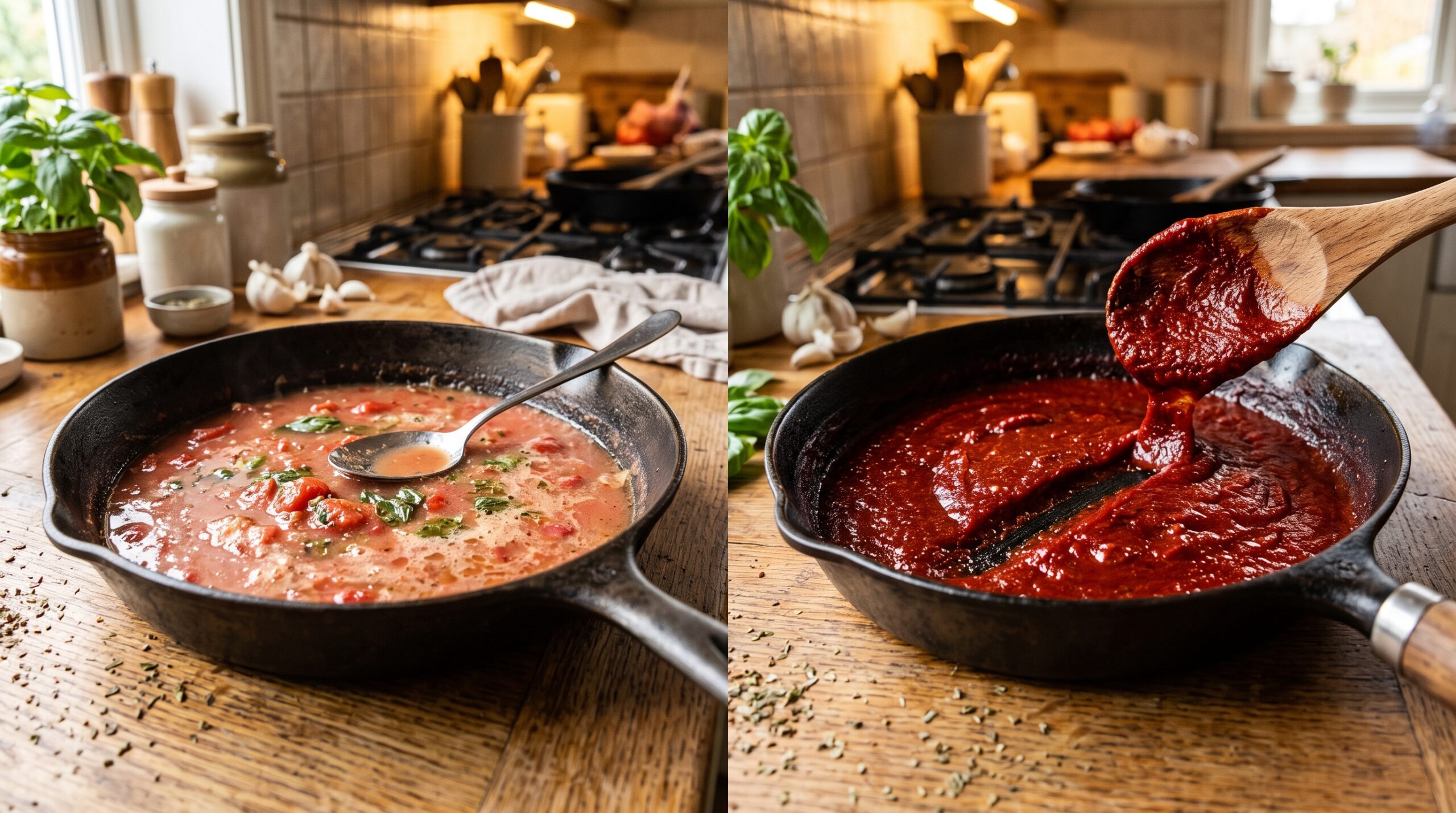
How to Keep the Substitute From Making Your Dish Watery
The simplest fix is reduction. Add sauce, puree, or blended tomatoes to the pan after the onions and garlic have cooked, then simmer uncovered. Stir often. When the mixture darkens slightly, thickens, and starts sticking lightly to the bottom, you are ready for the next ingredient.
If the pan is already full, adjust a liquid elsewhere. For every 1 tablespoon of paste replaced with 3 tablespoons of sauce, remove about 2 tablespoons of broth, water, or wine from the recipe. You do not need to be this exact in a large pot of soup. You do in a meatloaf, pizza sauce, casserole, or any dish whose structure depends on keeping water under control.
Do not reach automatically for starch. Cornstarch can thicken the extra liquid, but it cannot concentrate tomato flavor. If the dish needs only body, a slurry may help, and our cornstarch substitute guide covers the alternatives. If it needs the deep tomato taste of paste, reducing the tomato product is the better fix.
The Free Garden Starter Pack
Five printable pages that take the guesswork out of a first season, plus a short email every week or two when something is worth planting, picking, or putting up.
- A garden planning worksheet you can actually fill in
- A seed-starting and planting calendar
- A harvest log to track what really produced
No spam, ever. Unsubscribe in one click.
Thank you. You are on the list.
Your Garden Starter Pack is ready right now. Grab it here:
Download the pack (PDF)Keep an eye on your inbox. The next seasonal guide lands there first.
Frequently Asked Questions About Tomato Paste Substitutes
What Is the Best Substitute for Tomato Paste?
Tomato sauce is the best substitute most people already have. Use 3 tablespoons for every 1 tablespoon of paste and reduce it until thick. Tomato puree is even closer in flavor and needs less reduction.
Can I Use Ketchup Instead of Tomato Paste?
Yes. Replace tomato paste with an equal amount of ketchup when the recipe needs only a tablespoon or two. Ketchup works best in chili, meatloaf, barbecue sauce, and stews, but its sugar and vinegar can stand out in simple tomato sauces or delicate dishes.
Is Tomato Puree the Same as Tomato Paste?
No. Tomato puree contains more water and pours, while tomato paste is cooked down to a dense concentrate. Use about 2 tablespoons of puree for 1 tablespoon of paste and cook it briefly to remove excess water.
How Much Tomato Sauce Replaces a 6 Oz Can of Tomato Paste?
Start with about 18 oz of tomato sauce and simmer it until it reduces to roughly 6 oz and becomes very thick. This is a large reduction, so tomato puree or blended canned tomatoes may be more practical.
Can I Use Pasta Sauce or Marinara Instead of Tomato Paste?
You can in a soup, stew, or pasta dish. Use about 3 tablespoons for every tablespoon of paste and reduce it. Marinara already contains salt, herbs, garlic, and sometimes sugar, so it is a poor fit when those flavors do not belong in the recipe.
Can I Use Crushed Tomatoes Instead of Tomato Paste?
Yes. Blend 3 tablespoons of crushed tomatoes and simmer them down to replace 1 tablespoon of paste. In a long-cooked soup or stew, add them directly and let the pot reduce uncovered.
Does Tomato Paste Thicken a Sauce?
It adds body because it contains little water, but it does not thicken liquid in the same way flour or cornstarch does. A thin tomato substitute can add flavor while making the dish looser unless you reduce it or remove another liquid.
Use What Is Already Open
That empty spot in the pantry is inconvenient, but it is rarely a reason to stop dinner. Spoon 3 tablespoons of tomato sauce into the hot pan, let it cook down until the spoon leaves a trail, and carry on with the recipe.
If the only red bottle in the refrigerator door is ketchup, that works for a small amount too. The useful part is knowing what it changes. Match the thickness, account for the extra water or sweetness, and the missing can becomes a small adjustment instead of a grocery run.