How to Fill a Raised Garden Bed (Without Wasting Money)
Most beginners assume filling a raised bed is just a matter of shoveling in soil. That assumption is what makes raised bed gardening feel more confusing and expensive than it should be. The frame is built, the location is set, and then the questions start: what kind of soil, how much of it, and what is actually worth buying versus what can be skipped.
The filling part is not complicated, but it does have a few hard rules. Get the ratios wrong, use the wrong materials, or skip a caveat that seems minor, and you may not know what went wrong until you are two months into a struggling season.
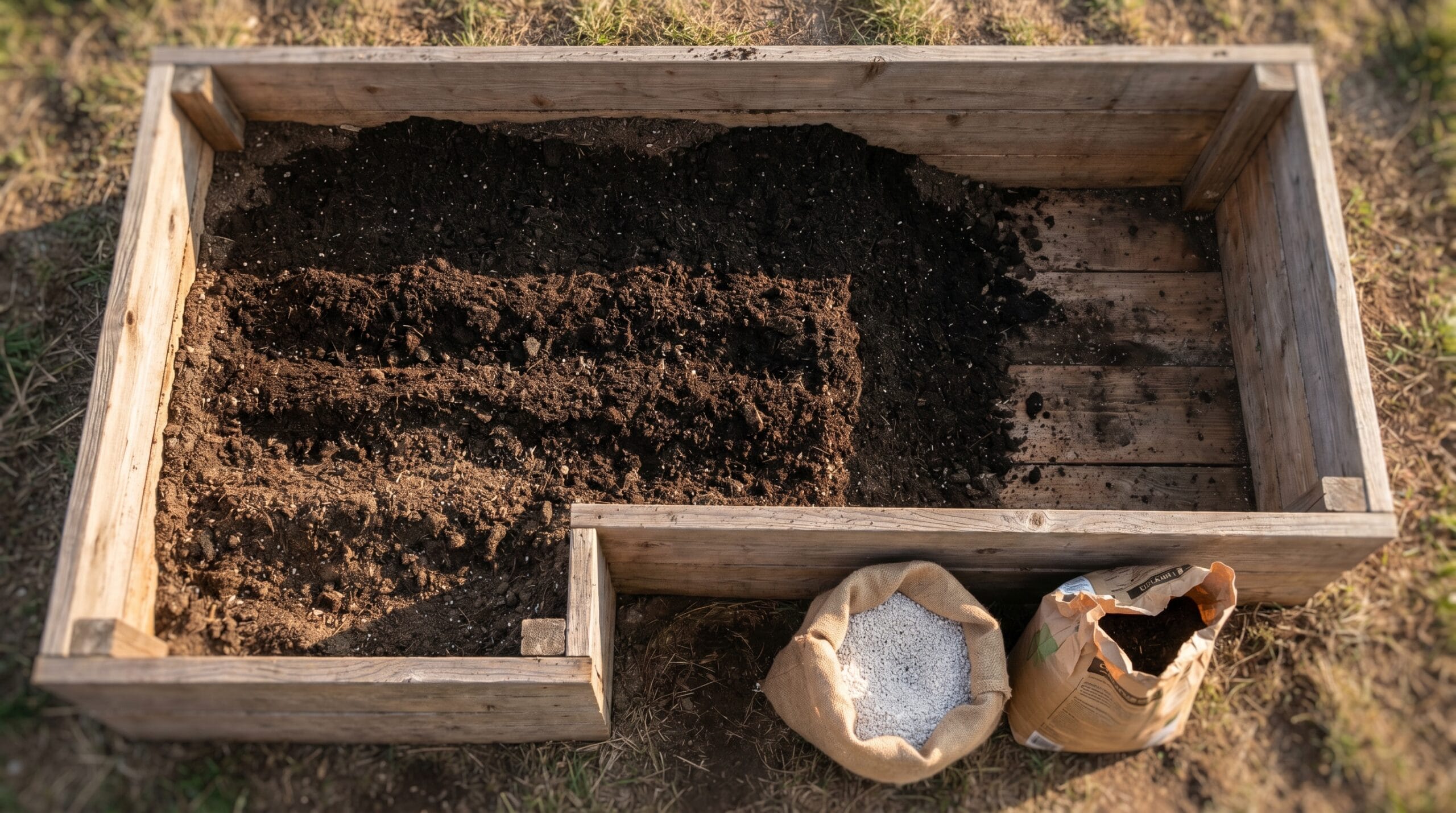
To fill a raised garden bed, use a layered mix of about 60 percent topsoil, 30 percent compost, and 10 percent perlite or coarse sand. Plain yard soil compacts and drains poorly in a raised bed. The best soil sits in the top 6 inches where roots spend most of their time.
Quick Answer
- Use a 60/30/10 ratio: 60% topsoil, 30% compost, 10% perlite or coarse sand
- Do not fill a raised bed with plain yard soil, fill dirt, or spent potting mix
- A 4x8x12-inch bed needs roughly 6.4 cubic feet of soil, always buy 10 to 15% extra for settling
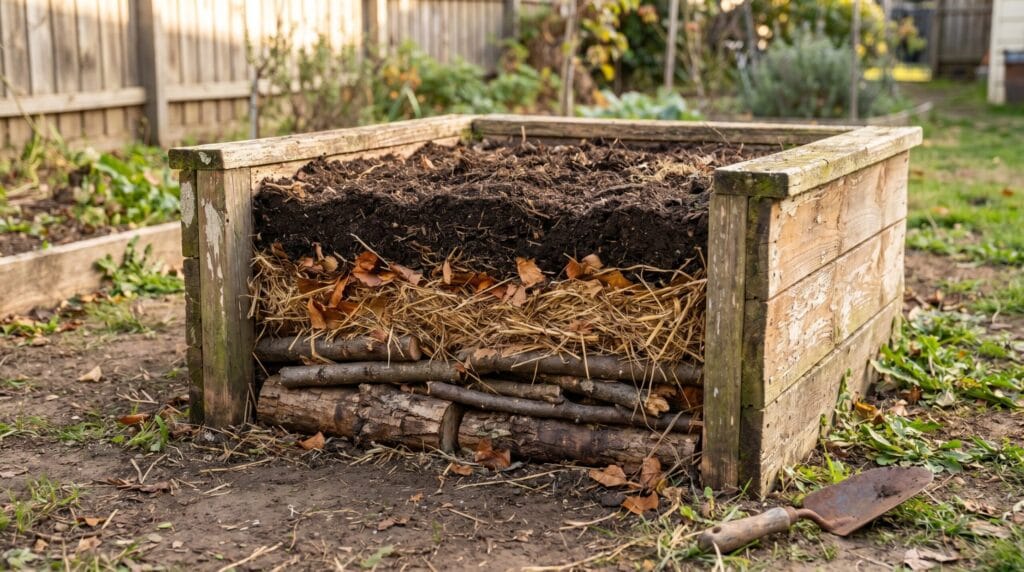
- Fill the bottom third of deep beds with logs, cardboard, or straw to cut costs (the hugelkultur approach)
- Never add a gravel drainage layer, it makes waterlogging worse, not better
- Top-dress with 1 to 2 inches of compost each spring; expect to lose 1 to 3 inches of volume per season
- Source bulk topsoil and compost instead of bags once you need more than 8 to 10 cubic feet
Why Filling a Raised Garden Bed Gets Expensive Fast
The sticker shock of filling a raised bed catches almost every beginner off guard. The frame looks small. The volume it holds is not.
A single 4×8-foot bed at 12 inches deep holds 32 cubic feet of material, or just under 1.2 cubic yards. A standard 1-cubic-foot bag of potting soil runs roughly $7 to $10 in 2026. Fill that bed with bags alone and you are looking at over $220 before you have planted a single seed, and closer to $320 at the higher end of bag pricing.
Bulk topsoil and bulk compost delivered by the yard typically cost roughly $30 to $60 per cubic yard each (estimated 2026 pricing, varies by region), which cuts your per-cubic-foot cost to a fraction of the bagged price. The math only works in your favor once you are buying 8 to 10 cubic feet or more. Below that threshold, bags are fine. Above it, call a landscape supply company.
One method that dramatically reduces material cost is hugelkultur, a traditional approach that uses decomposing wood, branches, straw, and leaves to bulk out the bottom of a deep bed before you add any purchased soil. The organic material breaks down slowly over several seasons, releasing nutrients as it goes and reducing how much topsoil you need to buy at the start.
How Much Soil You Actually Need (With a Simple Volume Formula)
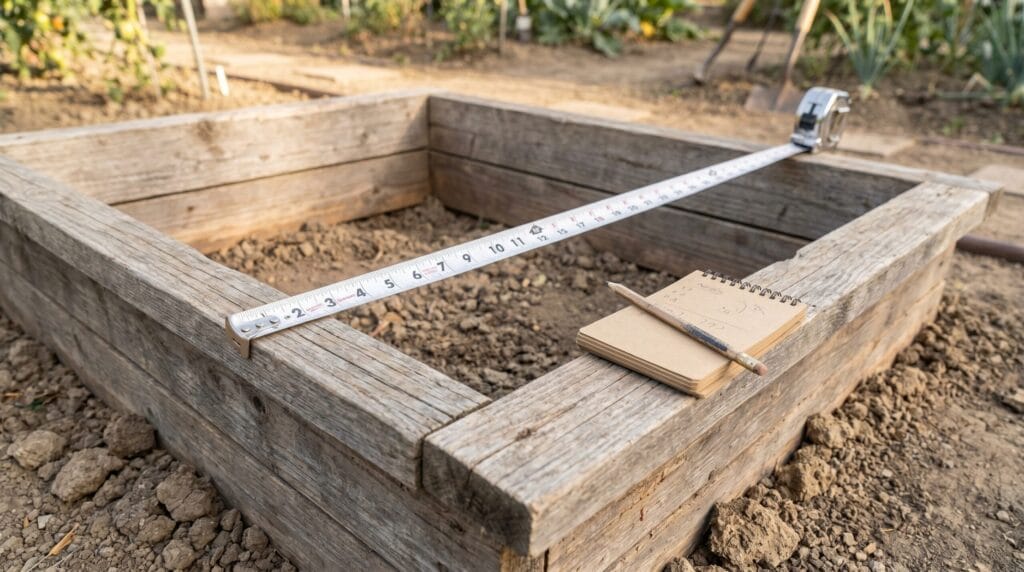
The formula is straightforward: length (in feet) multiplied by width (in feet) multiplied by depth (in feet) gives you cubic feet. Divide by 27 to convert to cubic yards for bulk orders.
Two common bed sizes worked out:
4×4 at 12 inches deep: 4 × 4 × 1 = 16 cubic feet, or about 0.6 cubic yards.
4×8 at 12 inches deep: 4 × 8 × 1 = 32 cubic feet, or about 1.2 cubic yards.
If you plan to go deeper, say 18 inches for root vegetables like carrots or parsnips, multiply accordingly. A 4×8 bed at 18 inches would need 4 × 8 × 1.5 = 48 cubic feet, or roughly 1.8 cubic yards.
Add 10 to 15 percent to whatever number you land on. Soil settles as it absorbs water and as organic matter starts to decompose. A bed that looks full on planting day can drop 2 inches by mid-summer. Building in that buffer means you are not scrambling to top up before plants go in.
If the bed will sit directly on native ground, you can subtract volume from the bottom third by using the hugelkultur approach described in the next section. On a hard surface like concrete or a patio, you will need to fill the full volume.
What Goes in the Bottom of a Raised Bed
The answer depends on how deep your bed is and what it is sitting on.
Deep Beds (Over 12 Inches)
For beds taller than 12 inches, filling the entire box with purchased soil is expensive and largely unnecessary. Plant roots concentrate in the top 6 to 12 inches, meaning the bottom third of a 24-inch bed contributes very little to actual plant performance early on.
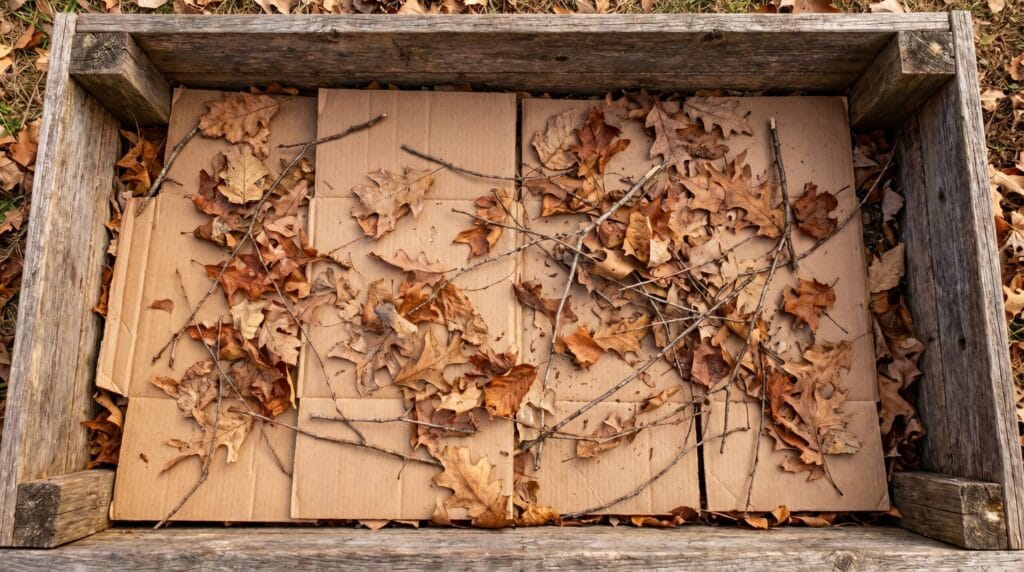
Fill the bottom third with coarse organic material: logs, branches, straw, dry leaves, cardboard (remove any tape or staples), or wood scraps (untreated wood only, avoid pressure-treated lumber scraps, which can leach preservatives into the soil). This is the core principle behind hugelkultur. The material decomposes over one to three seasons, adding organic matter to the bed from below while also retaining moisture. A word of caution: freshly cut green wood pulls nitrogen from the surrounding soil while decomposing, so use older, partially dried material where you can. In arid climates, soak the organic fill layer thoroughly before adding topsoil on top, since dry organic material can develop water-repellent pockets that redirect moisture away from roots.
What About Gravel for Drainage?
Skip it entirely. Research from the University of Maryland Extension confirms that placing rocks or gravel at the bottom of a raised bed creates a perched water table, a zone where water stalls at the boundary between fine and coarse material, which actually worsens drainage rather than improving it. The only exception is a bed sitting on an impermeable hard surface: add 2 to 3 inches of coarse gravel at the very bottom to allow overflow, then top with landscape fabric before adding soil.
Beds on Native Ground
No drainage layer is needed. If the ground underneath drains reasonably well, a raised bed sitting directly on it will drain fine through the open bottom. Earthworms and other soil organisms will also migrate up into the bed over time, which improves soil structure.
The Soil Mix That Works for Most Vegetables
Once you have handled the bottom layers, the top 12 inches of your raised bed need a mix that drains well, holds moisture, and feeds plants through the season.
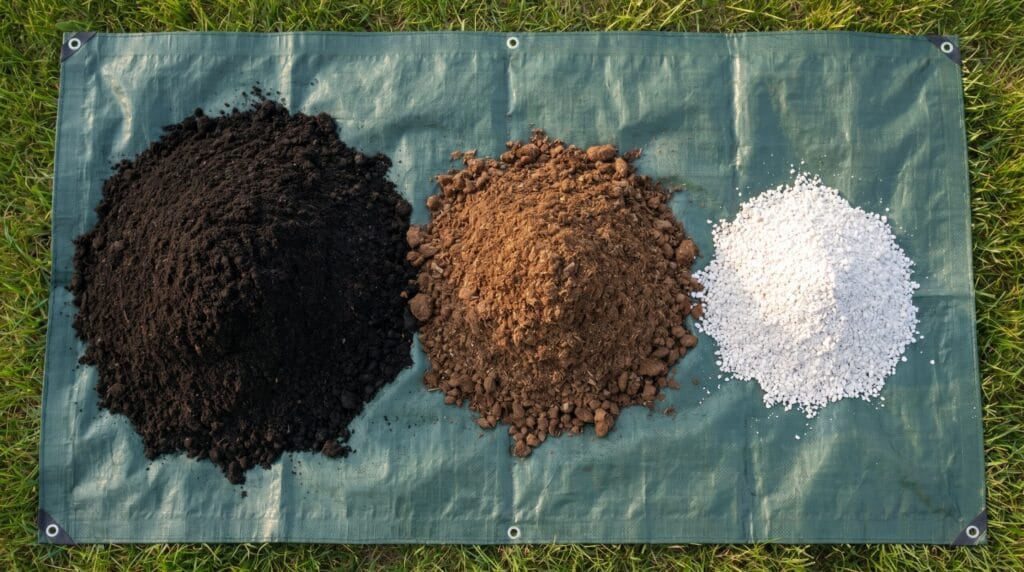
The 60/30/10 ratio works across almost every vegetable: 60 percent topsoil, 30 percent compost, and 10 percent perlite or coarse sand. Topsoil provides structure and mineral content. Compost adds nutrients, beneficial microorganisms, and water-holding capacity without waterlogging roots. Perlite (the small white volcanic granules) improves drainage and aeration, keeping oxygen available in the root zone.
A few adjustments worth considering:
Worm castings can replace up to half the compost volume if you have access to them. They release nutrients more slowly than finished compost but improve soil structure noticeably. Heavy feeders like tomato and zucchini respond well to castings blended into the mix at planting time.
Peat moss holds moisture well and is cheap, but it is acidic (typically pH 3.5 to 4.5) and depletes a non-renewable resource. If your native soil is already acidic or you are growing vegetables that prefer near-neutral pH, avoid it as a primary amendment. In alkaline regions, a small amount of peat moss can help moderate pH, but test your soil first before adding it. If moisture retention is your main goal, coconut coir is a more neutral substitute, it holds water almost as well, sits closer to pH 6.0, and comes from a byproduct of coconut processing.
For most vegetables, tomatoes, zucchini, peppers, greens, cucumbers, a compost-rich 60/30/10 blend will carry you through the season without additional fertilizing if the compost is fully finished. Beds that skew light on compost will need supplemental feeding by midsummer.
What Not to Put in a Raised Bed
A few substitutions feel reasonable but cause real problems. Avoid all of these as primary fill materials.
Plain native yard soil. Most yard soils compact quickly in the raised bed environment. Without the constant disruption of earthworm activity and deep roots that keep in-ground soil loose, it turns to a hard, waterlogged block within a season. It may also contain weed seeds and fungal pathogens.
Fresh wood chips or sawdust in the root zone. Uncomposted wood material is actively decomposing, which means it is consuming nitrogen to fuel that process. Plants sitting above it run short on nitrogen fast, showing up as yellowing leaves and stunted growth. If you use wood at all, keep it at the bottom of the bed and let it age at least one season before plant roots can reach it.
Fill dirt from construction sites. This is the most tempting free option and often the most dangerous. Construction fill may contain heavy clay, concrete rubble, chemical runoff, or unknown debris. Even clean-looking fill dirt rarely has the nutrient profile or drainage characteristics that vegetables need.
Spent potting mix as the primary fill. One-season-old potting mix is not the worst top-up material, but it is too lightweight and nutrient-depleted to carry an entire bed through a growing season on its own. Use it as an amendment, not as a foundation.
How to Fill a Raised Bed Cheaply Without Cutting Corners
Cost-cutting on a raised bed does not mean using the wrong materials. It means sourcing the right materials from better places.
Municipal compost programs. Many counties run yard-waste composting programs and sell the finished product at roughly $20 to $35 per cubic yard (estimated 2026 pricing). Some give it away entirely. Search your county’s name plus “compost program” or call the public works department. This is the single most reliable way to get large quantities of compost cheaply.
If you want to avoid buying compost altogether, make your own compost from kitchen scraps and yard waste. A basic pile started in spring can produce usable compost by late summer, though you will need purchased material for this first season.
Bulk topsoil vs. bags. Once you are filling more than one bed or using a depth greater than 8 inches, bags become a poor value. A single cubic yard of bulk topsoil weighs roughly 1,400 to 1,700 pounds and typically costs $25 to $55 delivered (estimated 2026 pricing), versus $7 to $10 per cubic foot in bags.
Organic fill for the bottom layers. Cardboard from appliance boxes, dry leaves collected in fall, trimmed branches, and untreated wood scraps from a home project are all free, avoid anything pressure-treated or painted, since those finishes can leach chemicals into food-growing soil. Pack them loosely into the bottom third of the bed before you add any purchased material.
Stretch bed space with companion planting. If you are filling multiple beds, consider whether companion planting can help you accomplish more in fewer square feet. Pairing fast-growing greens between slower tomato plants, for example, uses vertical and horizontal space that would otherwise sit empty.
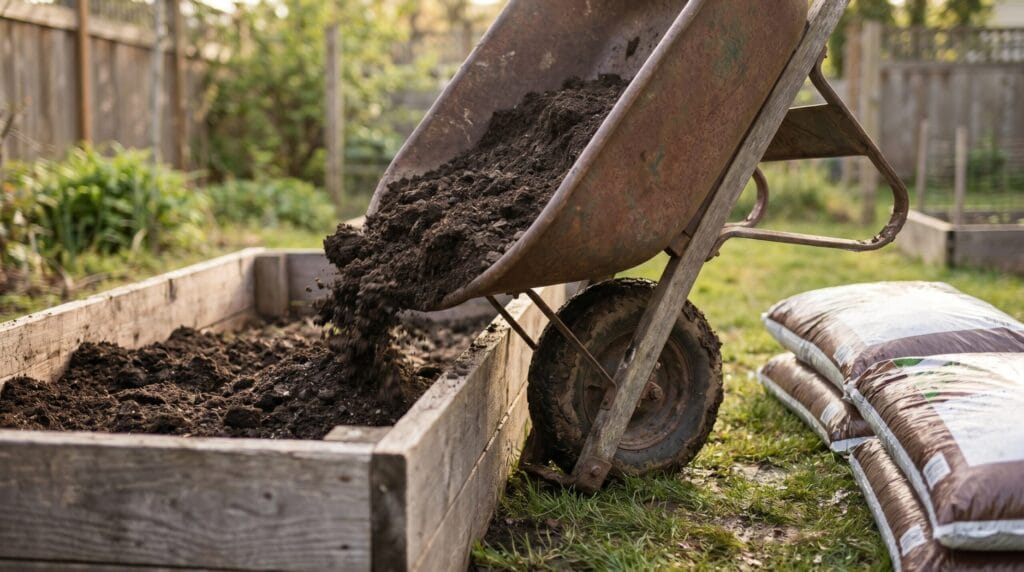
Should You Use Native Soil at All? The Trade-Off Beginners Always Get Wrong
Free is appealing. Yard soil is right there. And for some beginners, blending in a small percentage of native soil feels like a reasonable way to stretch a budget.
The problem is that native soil behaves differently once it is lifted out of the ground and placed in a raised bed. According to University of Minnesota Extension and cooperative extension research, native soil in a raised bed almost always compacts within one season because it lacks the earthworm activity and root disruption that keeps in-ground soil loose. In the ground, roots from surrounding plants, burrowing organisms, and natural freeze-thaw cycles continuously break up compaction. In a contained raised bed, those forces disappear.
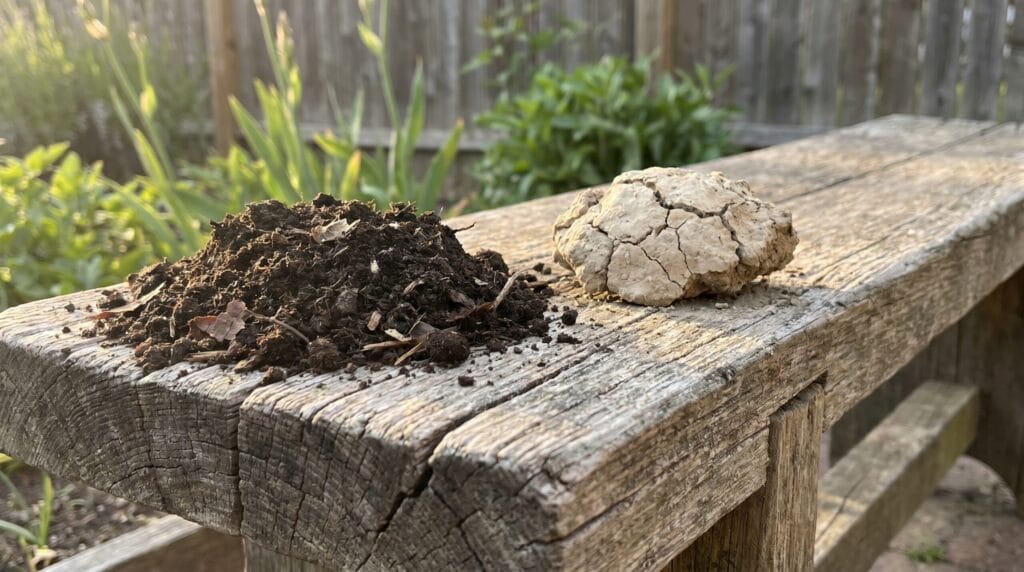
The exception is genuinely sandy loam, which already drains well on its own. If you reach into your yard, grab a handful of moist soil, and it crumbles rather than clumping, your native soil might be worth blending in at 20 to 30 percent of total volume. No more than that.
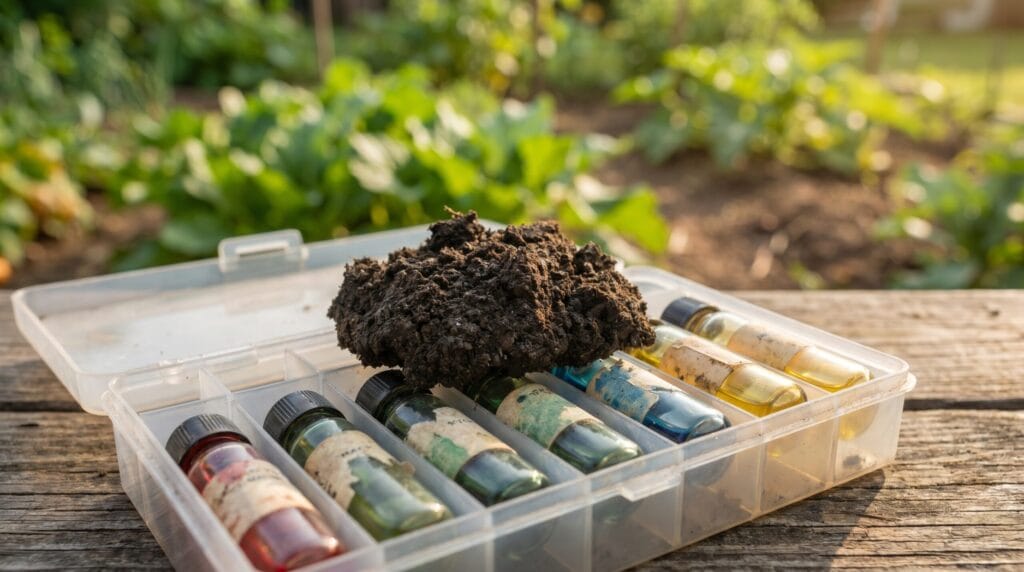
Before dismissing your native soil entirely, a basic soil test from your local cooperative extension office typically costs roughly $15 to $20. It will tell you your soil’s texture, pH, and basic nutrient levels. That information might save you money, or it might confirm that buying topsoil is worth it. Either way, it is a better starting point than guessing.
If you are still in the planning phase, the guide on building a raised bed covers how depth, lumber choice, and bed placement affect the soil you will need.
What Happens When the Fill Is Wrong (Signs to Catch Before You Lose the Season)
Most raised bed problems show up in the first four to six weeks after planting, if you know what to look for.
Standing Water After Watering
If water is still pooling on the soil surface 30 minutes after a thorough watering, the mix has too much clay or has already compacted. Top-dress with 2 inches of finished compost and work it in gently with a garden fork, going no deeper than 4 to 6 inches. Do not dig down hard on the first repair, since disturbing the root zone of young plants causes more harm than the compaction itself.
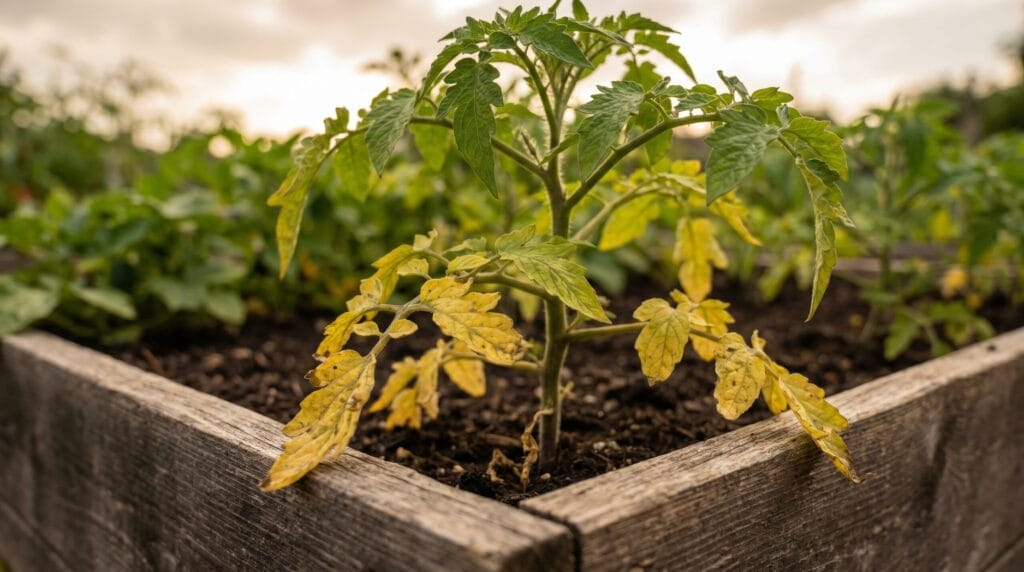
Yellow Lower Leaves Within Three to Four Weeks
Yellowing of the oldest, lowest leaves is a classic sign of nitrogen deficiency. In a raised bed, this often means the mix contained uncomposted wood material that is actively drawing down available nitrogen during decomposition. Side-dress with worm castings or a balanced organic fertilizer, and water it in well. The problem typically improves within two to three weeks under good growing conditions, though correction time varies with temperature and how depleted the mix is.
Soil Pulling Away From the Bed Walls
If the soil is shrinking and cracking away from the sides, the mix has too little moisture retention. This happens with mixes heavy in perlite or coarse sand. Apply a 2-inch layer of mulch across the surface immediately. Straw, wood chip mulch, or shredded leaves all work. The mulch slows evaporation, reduces surface crusting, and helps the soil hold moisture long enough to reach roots. Water deeply and less frequently rather than shallowly and often.
Topping Off and Maintaining the Bed Season After Season
Raised beds are not a one-time fill project. The organic matter in the mix breaks down every season, which is actually a good thing (it means your soil is alive), but it also means volume drops.
Expect to lose 1 to 3 inches of depth per season. In hot climates (roughly Zones 8 and above), organic matter decomposes faster and losses lean toward the higher end of that range. In cooler zones, decomposition slows and you may lose closer to 1 inch. How much organic matter you started with matters too.
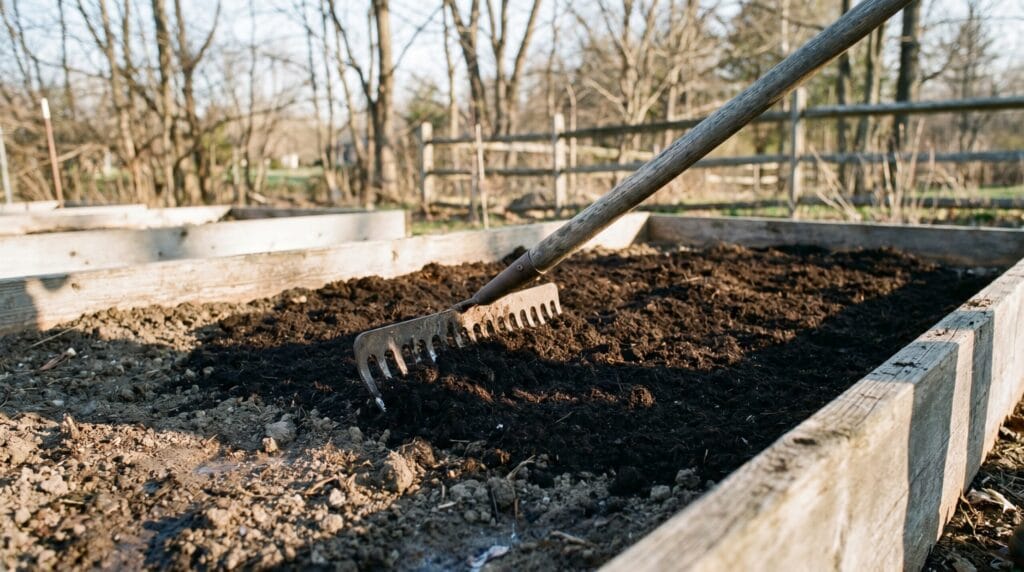
Each spring, before planting, spread a fresh layer of compost 1 to 2 inches deep across the surface. Work it lightly into the top inch or two with a rake or your hands, but do not till deeply. The soil food web, the fungal networks, bacterial communities, and beneficial organisms that make your soil productive, benefits from minimal disturbance once it is established. Deep tilling after the first season disrupts more than it helps.
If you are getting started with a backyard garden for the first time, plan the annual top-dressing into your spring routine the same way you plan seed-starting. It takes ten minutes and saves you from wondering in June why everything is growing slowly.
The Free Garden Starter Pack
Five printable pages that take the guesswork out of a first season, plus a short email every week or two when something is worth planting, picking, or putting up.
- A garden planning worksheet you can actually fill in
- A seed-starting and planting calendar
- A harvest log to track what really produced
No spam, ever. Unsubscribe in one click.
Thank you. You are on the list.
Your Garden Starter Pack is ready right now. Grab it here:
Download the pack (PDF)Keep an eye on your inbox. The next seasonal guide lands there first.
Frequently Asked Questions About Filling a Raised Garden Bed
Can I just use soil from my yard to fill a raised bed?
For most yards, no. Native yard soil compacts quickly in a raised bed because it lacks the biological activity and root disruption that keeps in-ground soil loose. The exception is sandy loam, which you can blend in at up to 30 percent of total volume. A soil test from your county extension office (roughly $15 to $20) will tell you if your soil is worth using.
How deep should a raised bed be for vegetables?
Most vegetables do fine in 12 inches of depth. Root vegetables like carrots and parsnips need at least 18 inches to develop properly. For leafy greens and herbs, even 8 inches works, though a deeper bed holds moisture better and requires less frequent watering.
How much does it cost to fill a 4×8 raised bed?
Expect to spend roughly $50 to $150 in 2026, depending on whether you buy bagged or bulk materials and how much of the lower volume you fill with free organic matter. A full bagged-soil approach at a 12-inch depth runs toward the higher end. Using bulk topsoil and compost with hugelkultur fill on the bottom third can bring it closer to $50 to $70.
Can I use Miracle-Gro potting mix alone to fill a raised bed?
It will work for one season, but it is expensive at raised-bed scale and it depletes faster than a blended topsoil-compost mix. A 4×8 bed at 12 inches would need over 30 cubic feet of potting mix, which costs far more than a blended mix from bulk sources. Use potting mix as a component of your blend if you have leftover bags, not as the entire fill.
What is the single most important thing to get right when filling a raised bed?
The compost content, and specifically the quality of it. Finished compost should be dark, crumbly, and smell like soil rather than rotting material. A mix that contains partially composted or green material will tie up nitrogen instead of releasing it. Heavy feeders like tomatoes and zucchini will stall mid-season in a bed that started with underfinished compost, and no amount of top-dressing fixes a poor foundation quickly. If you are unsure whether bagged compost is fully finished, look for products that list a completion date or are certified by the US Composting Council’s Seal of Testing Assurance program.