
Cream of Chicken Soup Substitute: How to Make One in 10 Minutes

You are already halfway through dinner. The casserole is assembled, the oven is preheated, and you just reached into the pantry and found nothing where the cream of chicken soup should be. It happens more than you would expect. The good news is that a workable substitute takes about 10 minutes on the stovetop, and in most recipes, you will not be able to tell the difference.
The technique is a basic roux — butter, flour, broth, and a splash of milk — and once you have made it twice, it becomes faster than a grocery run. This guide covers the core recipe, dairy-free and gluten-free versions, storage tips, and the three texture mistakes that trip up beginners making a roux for the first time.
Table of Contents
Quick Picks / TL;DR
- One can of condensed cream of chicken soup equals roughly 1.25 cups of thick sauce. Your substitute should match that volume and consistency.
- Base recipe: 3 tablespoons butter, 3 tablespoons flour, 1 cup chicken broth, 1/3 cup whole milk or half-and-half, salt, garlic powder, onion powder.
- Ready in 10 to 12 minutes. Do not thin it before adding to your recipe — it is meant to be condensed.
- Dairy-free: swap butter for olive oil, milk for unsweetened oat milk or canned coconut milk.
- Gluten-free: use a 1-to-1 gluten-free flour blend or 1.5 tablespoons of cornstarch instead of 3 tablespoons of flour.
- Freeze in 1.25-cup portions for up to 3 months. Each portion replaces one can.
- Homemade with low-sodium broth runs around 150 to 200 mg sodium. A standard can contains roughly 870 mg.
What Cream of Chicken Soup Actually Does in a Recipe
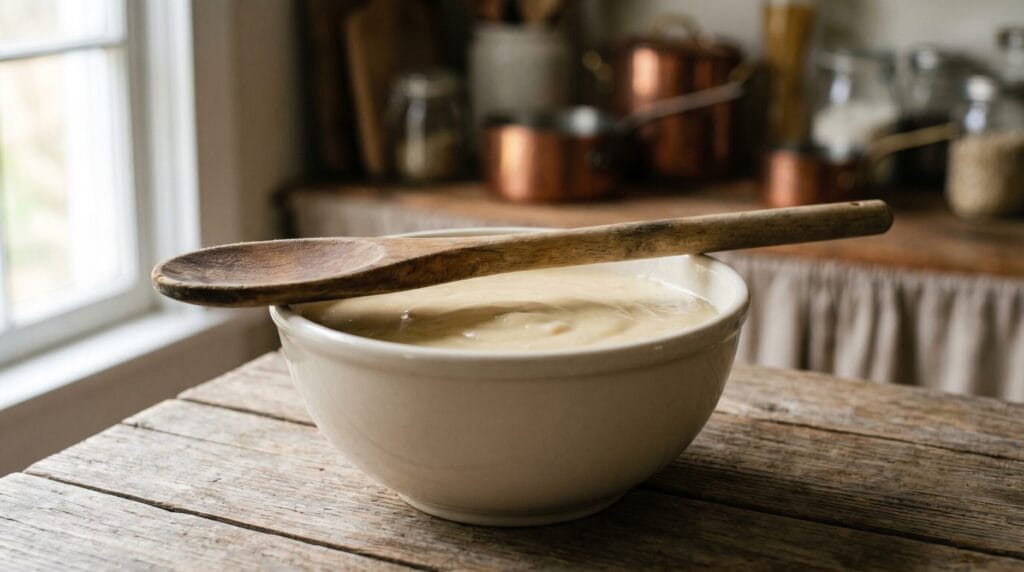
Before you swap anything out, it helps to understand why the recipe calls for it in the first place. Condensed cream of chicken soup does three distinct jobs. It thickens whatever it is mixed into, carrying body and structure. It adds fat for richness, which is why dishes made with it feel satisfying rather than watery. And it contributes salt and savory depth — the kind of background flavor that keeps a casserole from tasting flat.
A standard 10.5 oz can equals roughly 1.25 cups of thick, concentrated sauce. That concentration matters. If you replace it with something too thin — say, regular chicken broth or plain milk — the dish loses structure and can come out soupy rather than set.
The recipes that rely on it most heavily are casseroles (chicken and rice, green bean casserole), slow-cooker chicken dishes, and thick soups built around potato or root vegetables. In each of those, the condensed soup is doing the work of a sauce base. Your substitute needs to match that function, not just the flavor.
The Basic Homemade Substitute (Equal to One Can)

This version yields approximately 1.25 cups — the same as one 10.5 oz can of condensed soup. Use it as a direct 1-for-1 replacement in any recipe that calls for a can of condensed cream of chicken.
Ingredients
- 3 tablespoons unsalted butter
- 3 tablespoons all-purpose flour
- 1 cup chicken broth (low-sodium recommended)
- 1/3 cup whole milk or half-and-half
- 1/4 teaspoon garlic powder
- 1/4 teaspoon onion powder
- Salt and black pepper to taste
The roux — that combination of butter and flour cooked together briefly before liquid is added — is what gives this substitute its thickening power. Cook it for a full 60 seconds before adding any broth, and add the broth slowly. Those two details are where most first-timers go wrong, and the mistake section below covers what happens if you rush either one.
Pull the pan off the heat when the sauce coats the back of a spoon and holds a clean line when you run your finger across it. That is the right consistency. Do not thin it further before stirring it into your recipe.
Step-by-Step Instructions

- Melt 3 tablespoons of butter in a small saucepan over medium heat. Swirl the pan once the butter is fully melted.
- Whisk in 3 tablespoons of flour all at once. Stir constantly for about 60 seconds until the mixture smells slightly nutty and has no visible dry flour. This is your roux.
- Add the chicken broth in roughly 1/4-cup increments, whisking thoroughly after each addition before pouring in the next. This step prevents lumps. The sauce will look very thick at first and smooth out gradually as you add more liquid.
- Stir in the milk, garlic powder, onion powder, a pinch of salt, and a few cracks of black pepper.
- Cook for 3 to 4 more minutes over medium-low heat, stirring frequently, until the sauce thickens enough to coat the back of a spoon and hold a line. Use immediately or cool to room temperature before storing.
Total active time: 10 to 12 minutes. The first time through, budget 15 minutes so you are not rushing the broth additions.
Ingredient Notes and Simple Swaps
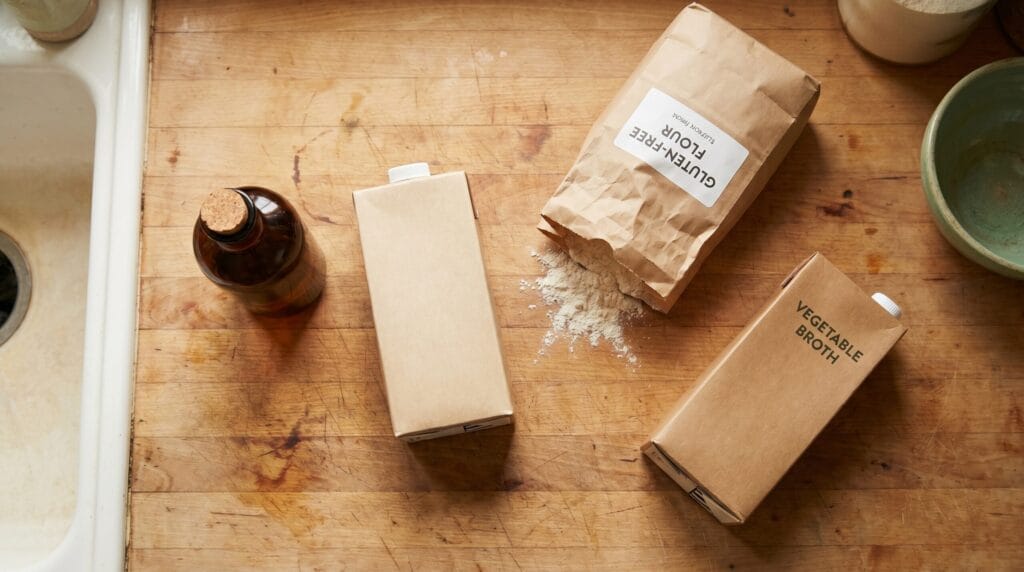
Fat (Butter)
Butter gives the richest result and is what most canned versions approximate. Olive oil or a neutral oil like avocado oil works as a substitute, but the flavor ends up slightly thinner. If you use oil, increase the garlic and onion powder by a small pinch to compensate.
Flour
All-purpose flour is the standard. For a gluten-free version, a 1-to-1 gluten-free flour blend swaps in without any other changes. Cornstarch also works — use 1.5 tablespoons of cornstarch in place of 3 tablespoons of flour, and whisk it with a small amount of cold broth before adding it to the pan rather than cooking it dry with the fat.
Milk and Dairy
Whole milk gives the richest result. Two-percent milk works almost as well. For dairy-free cooking, unsweetened plain oat milk is the most neutral-tasting option. Full-fat canned coconut milk also works and adds more body, though it can leave a faint coconut flavor in longer-cooked dishes.
Broth
Low-sodium chicken broth lets you control the salt level yourself, which matters because the canned soup is already quite salty. Vegetable broth makes the substitute close to vegetarian as long as you skip any chicken-flavored seasoning. The garlic and onion anchors keep the flavor grounded either way.
Variations: Dairy-Free, Gluten-Free, Low-Sodium, and Vegan

| Version | Fat Swap | Flour Swap | Liquid Swap | Notes |
|---|---|---|---|---|
| Standard | Unsalted butter | All-purpose flour | Whole milk | Closest to canned flavor |
| Dairy-Free | Olive oil | All-purpose flour | Unsweetened oat milk | Neutral flavor; slightly less rich |
| Coconut Dairy-Free | Olive oil | All-purpose flour | Full-fat canned coconut milk | Richer body; faint coconut note in slow cooker |
| Gluten-Free | Butter | 1-to-1 GF flour blend | Whole milk | Same steps, same result |
| Cornstarch GF | Butter | 1.5 tbsp cornstarch | Whole milk | Whisk cornstarch with cold broth first; avoid long slow-cooker use |
| Low-Sodium | Unsalted butter | All-purpose flour | Whole milk + no-salt broth | ~150 mg sodium vs. ~870 mg in canned |
| Vegan | Olive oil | All-purpose flour | Unsweetened oat milk + vegetable broth | Sauté fresh garlic in the oil first for more depth |
One honest note on dairy-free versions: they tend to be slightly less rich than the butter-and-milk standard. If you are making a dish for guests the first time, test the dairy-free version in a small batch before committing to the full recipe. The oat milk version is the most neutral; the coconut milk version tastes better in isolation but can drift noticeable in a long slow-cooker braise.
Storage and Make-Ahead Tips
One of the better arguments for making this from scratch is that you can batch it on a slow Sunday and forget about canned soup for weeks. Once you factor in the time savings over repeated grocery runs, the 10-minute investment starts to look like a reasonable trade.
Refrigerator Storage
Store in an airtight container for up to 4 days. The sauce will thicken further as it cools — that is normal. Stir it back to a uniform consistency before adding it to a recipe. If it has thickened too much to stir easily, warm it briefly over low heat.
Freezer Storage
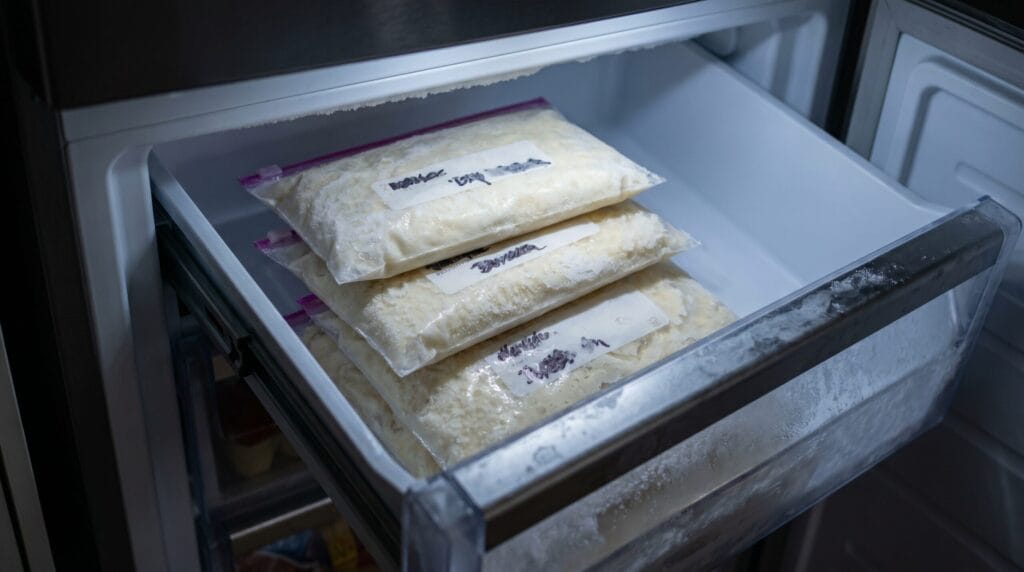
Freeze in 1.25-cup portions — zip-lock bags laid flat work well and stack neatly. Each portion equals one can. Label with the date and the version (dairy-free, standard, etc.). The substitute keeps for up to 3 months in the freezer without noticeable quality loss. You can also preserve homemade soup base in batches for later use using the same general logic that applies to any concentrated sauce or stock.
Reheating
Thaw overnight in the refrigerator or drop the sealed bag in cold water for 20 to 30 minutes. Warm gently over low heat, stirring in a small splash of broth or milk if it has thickened beyond what you need. Do not rush reheating on high heat; the sauce can break and go grainy.
How This Substitute Compares to Canned Soup: Sodium, Cost, and Effort
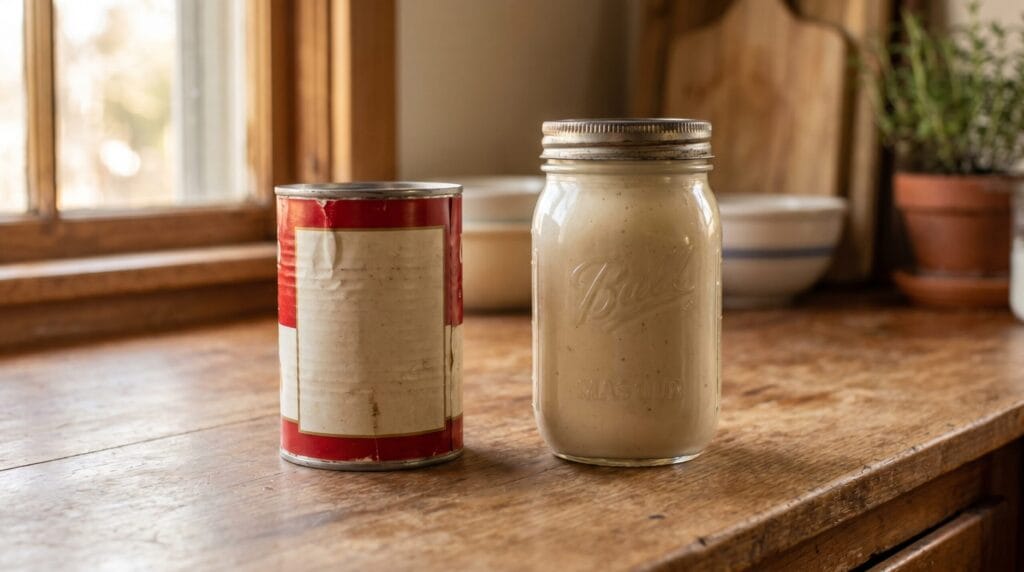
Most beginner guides skip this part, and it is the part that actually helps you decide whether making your own is worth it for your situation.
Sodium
A standard can of Campbell’s condensed cream of chicken soup (10.5 oz, used undiluted as a recipe ingredient) contains roughly 870 mg of sodium per serving when used as an ingredient. The homemade version made with low-sodium broth, unsalted butter, and no added salt comes in around 150 to 200 mg. For anyone monitoring sodium — whether for blood pressure, a health condition, or simply a preference for less-processed food — that gap is significant over a month of regular cooking.
Cost
A can of Campbell’s condensed cream of chicken runs roughly $1.40 to $1.80 at most grocery stores. The homemade version costs approximately $0.40 to $0.60 in ingredients — butter, flour, broth, and milk. If you make a casserole once a week, that is a difference of roughly $50 to $60 per year. Not a dramatic number on its own, but it adds up alongside other small homestead-kitchen swaps.
Effort
The honest answer: 10 to 12 minutes of active stovetop time. That shrinks to 7 or 8 minutes once you have done it a few times and the steps are automatic. The batch-freeze approach makes the per-use effort close to zero after the first Sunday cook session.
If you are not watching sodium and you always have cans in the pantry, the canned version is genuinely convenient and there is no shame in using it. The homemade substitute earns its place for health-focused cooking, bulk meal prep, and weeks when the pantry is short on cans but the fridge has butter and broth.
Three Mistakes That Ruin the Texture (and How to Avoid Them)

Mistake 1: Lumpy Roux From Adding Broth Too Fast
This is the most common first-time error. If you pour all the broth in at once before the flour is fully incorporated into the fat, you get pockets of raw flour that clump rather than dissolve. The fix is simple: add broth in roughly 1/4-cup increments, whisking until the mixture is smooth after each addition before you pour in more. The sauce will look alarmingly thick at first — that is correct. It loosens as more liquid goes in.
Mistake 2: Broken Sauce From High Heat
Cranking the burner to speed things up causes the fat to separate from the starch and liquid, leaving a greasy, grainy result that no amount of whisking will fully fix. Stay at medium to medium-low the entire time. The roux step only takes 60 seconds anyway — there is nothing to be gained by rushing it with higher heat.
Mistake 3: Pulling It Off the Heat Too Early
A substitute that is only slightly thicker than milk will not hold a casserole together. The test is simple: dip a spoon into the sauce, then run your finger across the back of the spoon. If the line holds cleanly, it is ready. If the sauce runs back to fill the line immediately, it needs another minute or two. Also worth noting: slow cookers will thin a sauce that is already borderline. If you are adding this to a crockpot recipe, err on the side of slightly thicker than you think you need before it goes in.
Which Substitutes Work in Slow Cooker and Baked Casserole Recipes
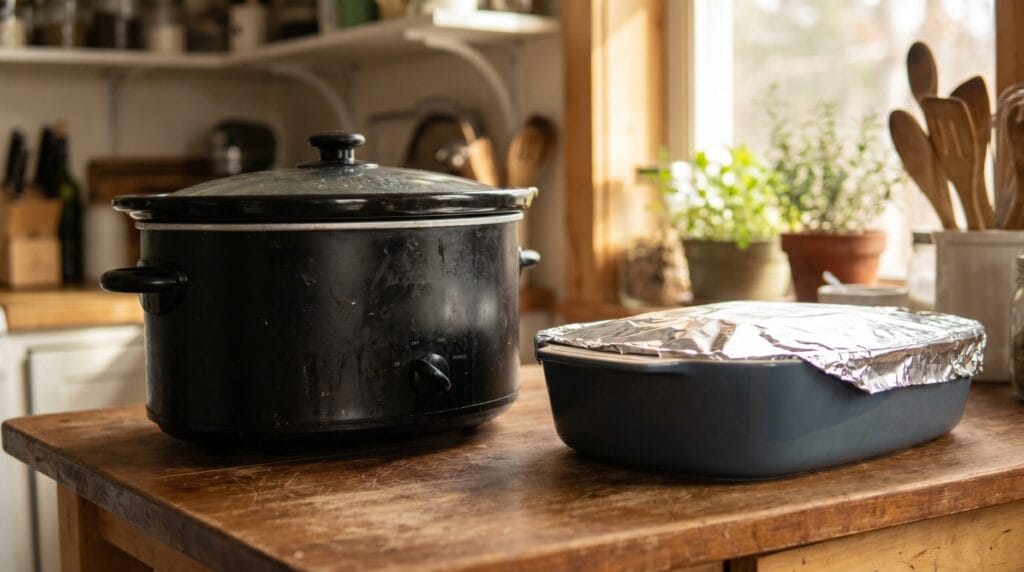
Oven-Baked Casseroles
The standard butter-and-flour roux substitute holds together well through oven baking at 350 F for up to 45 minutes. It does not separate, and the finished dish has the same creamy set texture you would expect. This holds true in green bean casserole, potato-based bakes, and chicken-and-rice dishes. The dairy-free oat milk version performs nearly as well. The coconut milk version also bakes without separation, though the flavor is slightly more present in a shorter bake than in a long slow cook.
Slow Cooker
The roux-based substitute holds reasonably well on low heat for 6 to 8 hours, but it will thin slightly over that time. Start it slightly thicker than the spoon-coat test requires — meaning cook it one extra minute before removing from the stovetop. If the recipe calls for undiluted condensed soup added directly to the slow cooker without mixing it into anything else first, add the homemade substitute at the same volume without thinning it.
Avoid cornstarch-only versions in slow cookers running longer than 4 hours. Cornstarch can break down under extended low heat and leave a thinner, sometimes slightly starchy-tasting sauce. The flour-based roux is more stable for long cooks.
The coconut milk dairy-free version is the one to watch in slow cookers. After 6 or more hours, the coconut note becomes noticeable in the finished dish — not unpleasant, but detectable. The oat milk version is more neutral and holds up better in a long braise alongside tomato-based flavors or heavier spicing.
The Free Garden Starter Pack
Five printable pages that take the guesswork out of a first season, plus a short email every week or two when something is worth planting, picking, or putting up.
- A garden planning worksheet you can actually fill in
- A seed-starting and planting calendar
- A harvest log to track what really produced
No spam, ever. Unsubscribe in one click.
Thank you. You are on the list.
Your Garden Starter Pack is ready right now. Grab it here:
Download the pack (PDF)Keep an eye on your inbox. The next seasonal guide lands there first.
Frequently Asked Questions About Cream of Chicken Soup Substitutes
What Can I Use If I Don’t Have Any Cream of Soup?
A roux-based homemade substitute — butter, flour, chicken broth, and milk — is the closest match in texture and flavor. If you are truly short on time and do not want to make a roux, plain Greek yogurt thinned with chicken broth (roughly 3/4 cup yogurt plus 1/4 cup broth) works as a quick stand-in in baked dishes, though it is not suitable for long slow-cooker recipes where the heat can cause it to curdle.
What Can I Use Instead of Cream for Chicken?
Whole milk or half-and-half in a roux-based sauce gives a very similar result to heavy cream without the richness being overwhelming. The roux provides the thickening, so the dairy is mainly contributing body and mild flavor. You do not need cream to make a workable substitute.
How Do You Make Your Own Cream of Chicken Soup?
Melt 3 tablespoons of butter over medium heat, whisk in 3 tablespoons of flour, and cook for 60 seconds. Add 1 cup of chicken broth in small increments, whisking after each one, then stir in 1/3 cup of milk plus garlic powder, onion powder, salt, and pepper. Cook 3 to 4 more minutes until thick. The finished amount — about 1.25 cups — replaces one standard 10.5 oz can.
What Can I Use Instead of Campbell’s Condensed Soup?
The homemade roux-based recipe above is a direct replacement. Other options include sour cream or Greek yogurt thinned with broth for baked dishes, or a simple béchamel (white sauce) seasoned with chicken bouillon. The roux recipe in this article is the most consistent performer across casseroles, slow-cooker dishes, and soups.
What Is a Healthy Substitute for Cream of Chicken Soup?
Homemade with low-sodium or no-salt-added broth, unsalted butter, and 2% milk is the most straightforward healthy swap. It brings the sodium down from roughly 870 mg per can to around 150 to 200 mg, with no preservatives or added thickeners. A vegan version using vegetable broth and oat milk reduces saturated fat further.
Is Homemade Cream of Chicken Soup Gluten-Free?
Not by default — the standard recipe uses all-purpose flour. Substituting a certified 1-to-1 gluten-free flour blend makes it gluten-free without changing the process. You can also use 1.5 tablespoons of cornstarch instead of 3 tablespoons of flour, though the cornstarch version is better suited to short-cook recipes than long slow-cooker dishes.
Conclusion
The casserole that sent you looking for this page does not have to wait. Ten minutes, one small saucepan, and a few pantry staples get you back on track. The roux takes a little attention the first time — slow broth additions, steady medium heat, patience at the end — but after two or three batches, it becomes an automatic part of how you cook.
If you take one concrete step this week, make a double batch on a quiet evening, pour it into two labeled zip-lock bags, and slide them flat into the freezer. The next time you are halfway through dinner and the pantry comes up short, you are already covered.