Chicken Feeder and Waterer Guide for Beginners: Types, Sizes & Setup
There is a small ritual most chicken keepers settle into without really thinking about it. You walk out to the chicken coop in the morning, lift the lid on the feeder, top it off, and rinse the waterer until it runs clear. The hens come running before you have even closed the gate. It is a quiet, simple part of homestead life, and once you have done it for a few weeks, you stop noticing it at all.
But that small daily routine depends on something most beginners overlook: the equipment doing the work.
The right chicken feeder and waterer keeps your flock fed, hydrated, and healthy with very little effort from you. The wrong setup wastes feed, spills water, attracts mice and wild birds, freezes in winter, and creates twice as much daily chore time as you needed.
This guide walks you through every type of chicken feeder and waterer worth considering for a backyard or homestead flock, how to size them for your birds, when to consider automatic systems, and the small setup details that make the difference between clean, easy mornings and messy ones.
Table of Contents
In Homestead is reader-supported. When you buy through links on this page, we may earn a small commission at no extra cost to you. See our affiliate disclosure. As an Amazon Associate, we earn from qualifying purchases.
Quick Picks: Chicken Feeder and Waterer by Flock Size
Not sure where to start? Here are simple recommendations based on the size of your flock and how hands-on you want to be.
- 3 to 6 chickens (starter backyard flock): One 5 to 10 lb hanging gravity feeder and one 1 to 3 gallon gravity waterer is usually enough for daily use.
- 6 to 12 chickens (small homestead flock): A 20 lb treadle feeder and a 3 to 5 gallon nipple or gravity waterer cuts feed waste and pest visits.
- 12 to 25 chickens (larger flock): A bulk gravity or automatic feeder paired with a 5 gallon nipple waterer (or a horizontal nipple bucket system) keeps mornings short.
- Cold climate setups: Add a heated base or heated nipple waterer to prevent freezing through winter.
- Hands-off or away-from-home setups: An automatic chicken feeder and an automatic chicken waterer system can keep a flock fed and watered for several days without daily refills.
Chicken Feeder and Waterer Comparison Table
This table compares the most common chicken feeder and waterer types side by side, so you can see at a glance what fits your flock and setup.
| Type | Best For | Feed/Water Waste | Pest Resistance | Daily Effort |
|---|---|---|---|---|
| Hanging gravity feeder | Small backyard flocks | Low to medium | Low | Low |
| Treadle feeder | Mouse and wild-bird problems | Very low | High | Low |
| Trough feeder | Chicks and young birds | Medium to high | Low | Medium |
| Automatic chicken feeder | Larger flocks, time-saving | Very low | High | Very low |
| Gravity waterer (founts) | Small flocks, simple setups | Medium | Low | Medium |
| Nipple waterer | Clean water, most flocks | Very low | High | Low |
| Cup waterer | Flocks that learn slowly to nipples | Low | Medium | Low |
| Heated waterer | Cold winter climates | Low | Medium | Low |
| Automatic waterer system | Larger flocks, hands-off setups | Very low | High | Very low |
Why the Right Feeder and Waterer Matters
It is easy to think of a chicken feeder and waterer as simple equipment. Bowl, food, water, done. But the type you choose quietly shapes almost every part of your daily routine and your flock’s health.
Feed Waste Adds Up Fast
Chickens are messy eaters. An open trough or a feeder that lets them scratch and flick feed onto the ground can waste 20 to 30 percent of what you pour in. Over a year, that is real money pulled out of your homestead budget. A well-designed feeder cuts waste down to almost nothing.
Dirty Water Causes Real Health Problems
Chickens drink constantly, and they are not careful about it. Open waterers fill quickly with droppings, dirt, feathers, and shavings. That cloudy water becomes a fast route for bacteria, coccidiosis, and crop issues. A clean, closed water system protects your hens without extra effort from you.
Pests Follow Spilled Feed and Water
Mice, rats, sparrows, and even raccoons quickly notice an unprotected feeder. Once they show up, they bring disease risk, predator pressure, and contamination. A treadle feeder or covered automatic feeder makes your coop dramatically less attractive to unwanted visitors.
Good Equipment Means Better Egg Production
Hens that always have access to clean water and fresh feed lay better, more consistently, and over a longer season. If you are raising hens for eggs, choosing one of the best egg laying chickens matters far less than whether their feed and water are clean and constant.
Types of Chicken Feeders
There is no single best chicken feeder for every flock. The right pick depends on your flock size, your pest pressure, and how often you want to refill. Here are the main types you will see, with the real-world strengths and weaknesses of each.
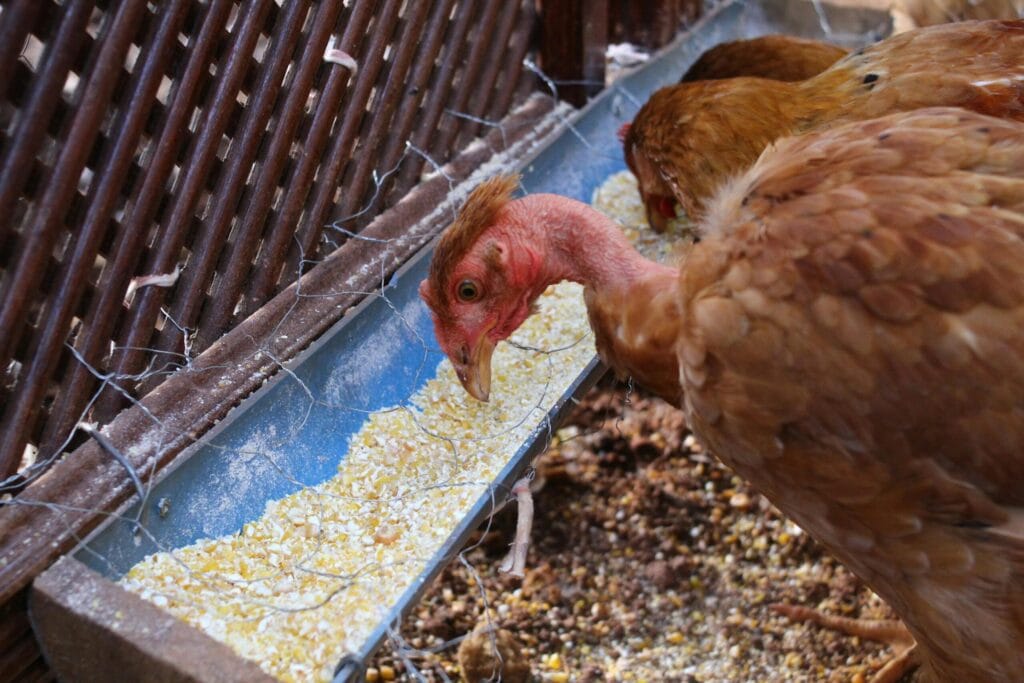
Hanging Gravity Feeders
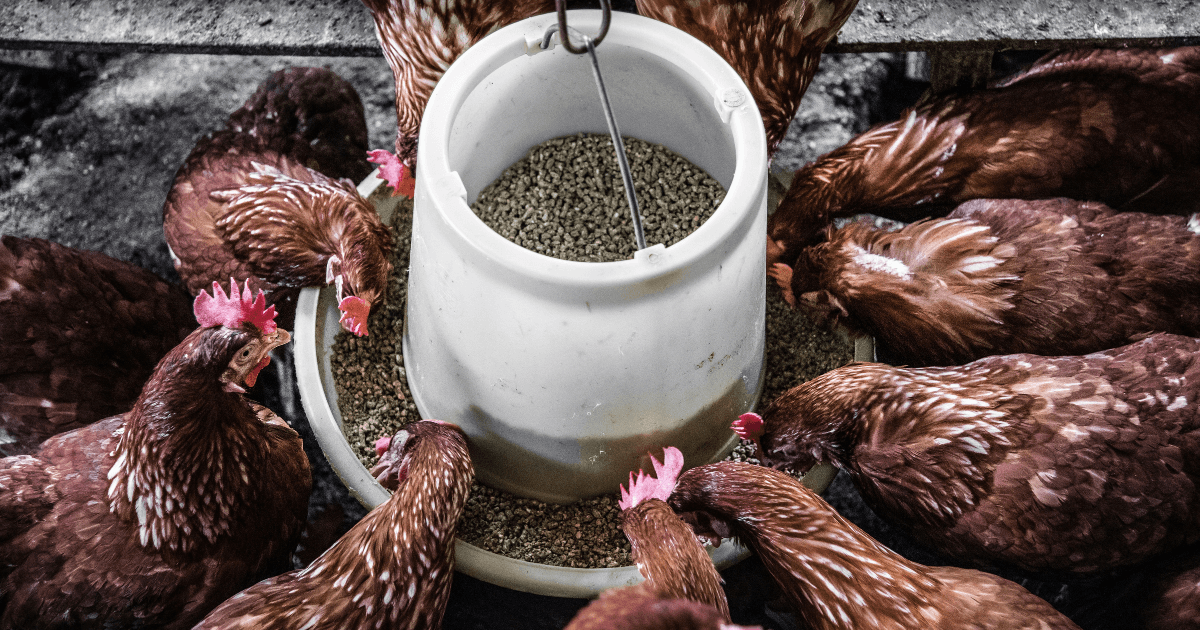
Hanging gravity feeders are the classic starter option. A cylinder holds the feed, gravity drops it into a tray at the bottom, and you hang the whole thing from a chain or rope so the lip sits at about the height of a hen’s back. Hanging the feeder reduces scratching and spilling, and keeps droppings out of the tray.
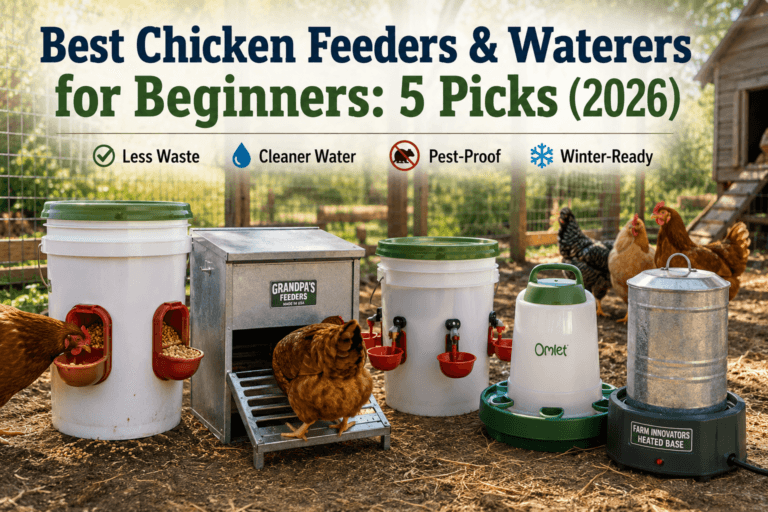
Capacity ranges from small 3 lb units up to 25+ lb bulk feeders. For 3 to 6 hens, a 5 to 10 lb hanging feeder is plenty. If you would rather skip straight to specific picks, we compare five of them in our roundup of the best chicken feeders and waterers for beginners.
Best No-Waste Feeder
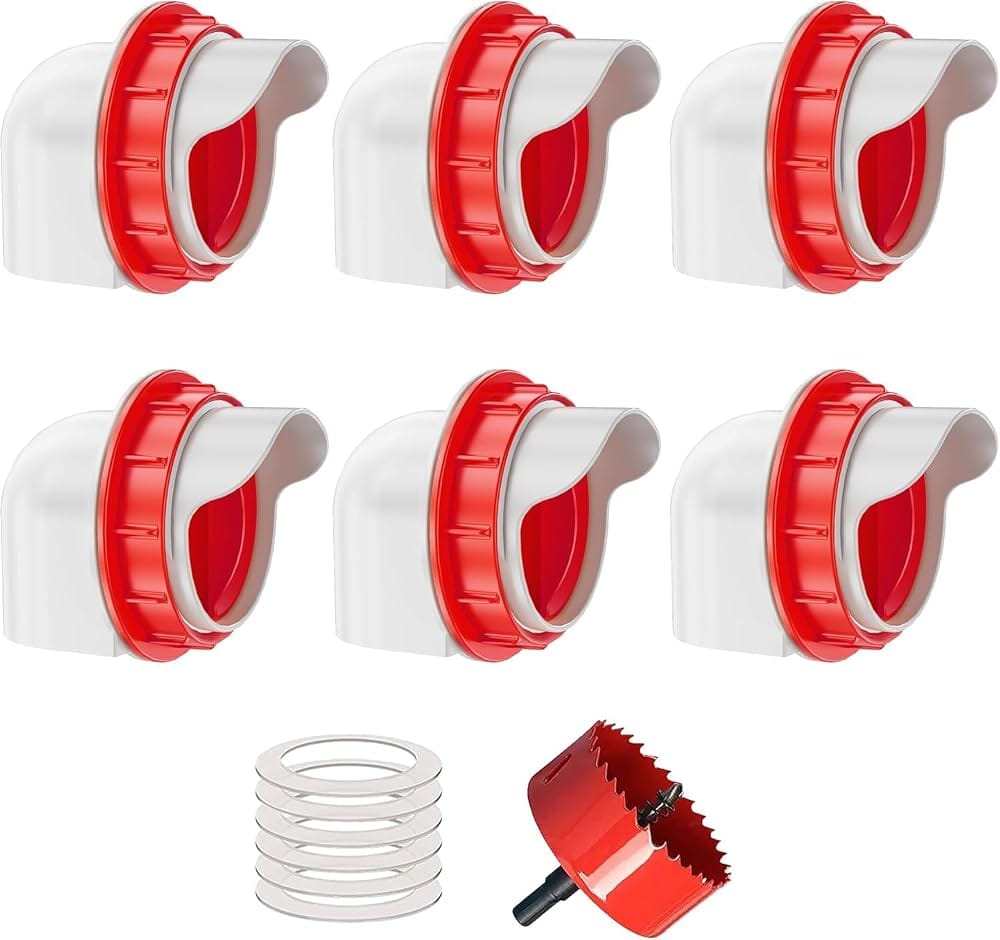
No-Waste 6-Port Bucket Feeder Kit
Port-style feeders have quietly replaced open hanging feeders for the exact waste problem above. Chickens push their beaks into the port instead of scratching feed onto the ground, and the kit mounts to a food-grade bucket you may already have. At 4.6 stars across more than 2,000 reviews, it is the best-rated way to turn a bucket into a real feeder.
- Best for: keeping feed off the ground and out of the rain for a small to mid-size flock.
- Keep in mind: you supply the bucket, and very timid birds take a day or two to learn the ports.
Treadle Feeders
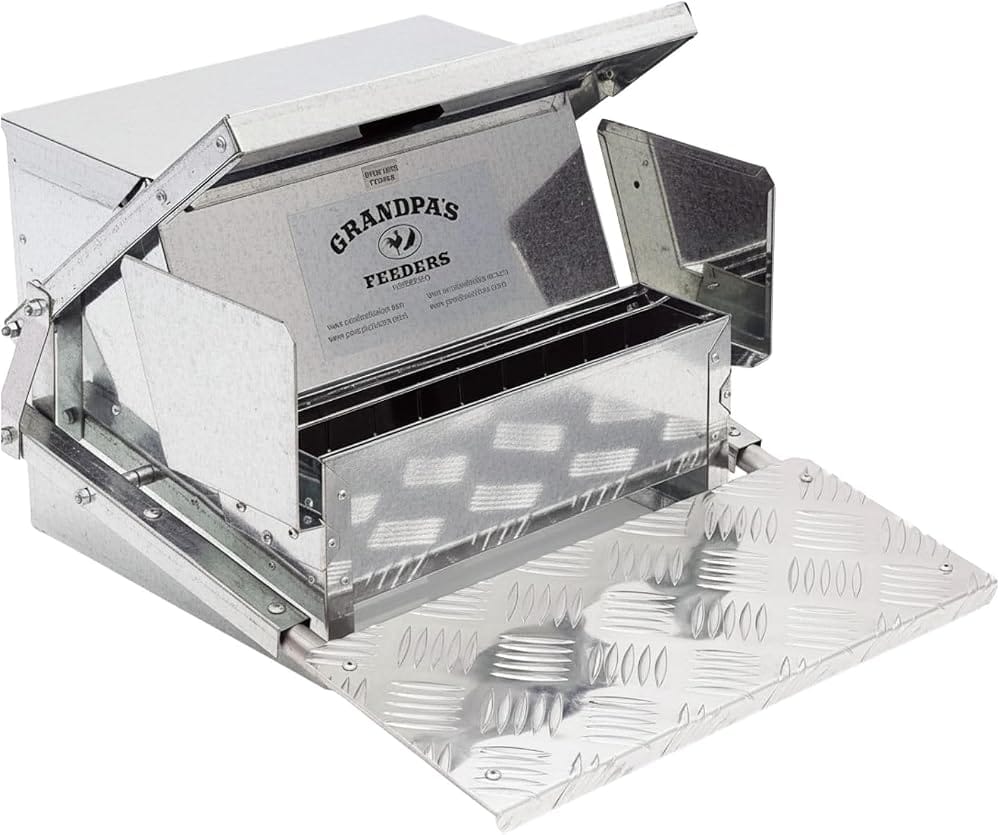
Treadle feeders are a favorite for homesteads dealing with mice, rats, or wild birds. The feed sits inside a closed metal box with a hinged lid. When a chicken steps on the treadle, the lid opens. When she steps off, it closes. Pests cannot get to the feed at all.
Treadle feeders take a little patience the first week, since hens need to learn to step on the platform. Most flocks figure it out within a few days, especially if you prop the lid open at first.
Best Treadle Feeder
Grandpa’s Feeders 20 lb Treadle Feeder
A treadle feeder is the surest way to shut out mice, rats, and sparrows, since the lid only opens when a bird stands on the step. Grandpa’s is the galvanized-steel original that most keepers end up with after trying cheaper copies, at 4.3 stars across roughly 1,500 reviews. For a dozen or more birds, RentACoop’s 40 lb version holds more feed and rates a touch higher.
- Best for: keeping rodents and wild birds out of the feed entirely.
- Keep in mind: lightweight hens may need the lid propped open for a few days to learn the step.
Trough Feeders
Trough feeders are long, shallow open trays. They are useful for chicks, where many small birds need to eat at once, and for fermented feed or wet mash that does not flow well through a gravity feeder. They are not great as everyday feeders for adult hens, because they invite scratching, spilling, and contamination.
Best Trough Feeder
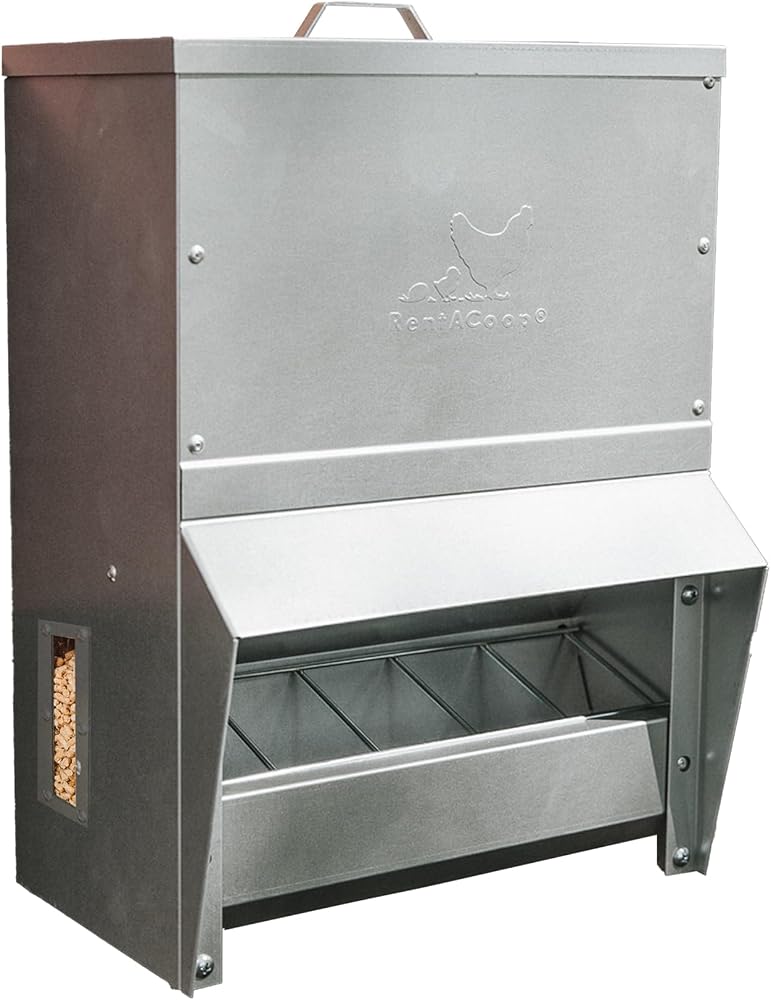
RentACoop Covered Trough Feeder
If you prefer a trough for chicks or a small flock, the usual failure point is rain turning feed to sludge. This galvanized trough solves that with a lid and rain cover, plus a side window so you can see the feed level without opening it. It rates 4.5 stars across about 1,300 reviews.
- Best for: chicks and small flocks, or as a second feeder during a flock expansion.
- Keep in mind: an open trough still wastes more feed than a port or treadle design over a full year.
PVC and DIY Chicken Feeders
PVC pipe feeders have become popular for their simplicity and low cost. A vertical pipe holds the feed, and a 90-degree elbow at the bottom creates a small feeding port. They are easy to mount on a coop wall, hold several pounds of feed, and reduce waste compared with open trays.
If you enjoy DIY projects, a homemade chicken feeder is one of the easiest builds on the homestead. Used food-grade buckets, PVC, and basic hardware can replace a store-bought feeder for a fraction of the cost.
Best DIY Upgrade
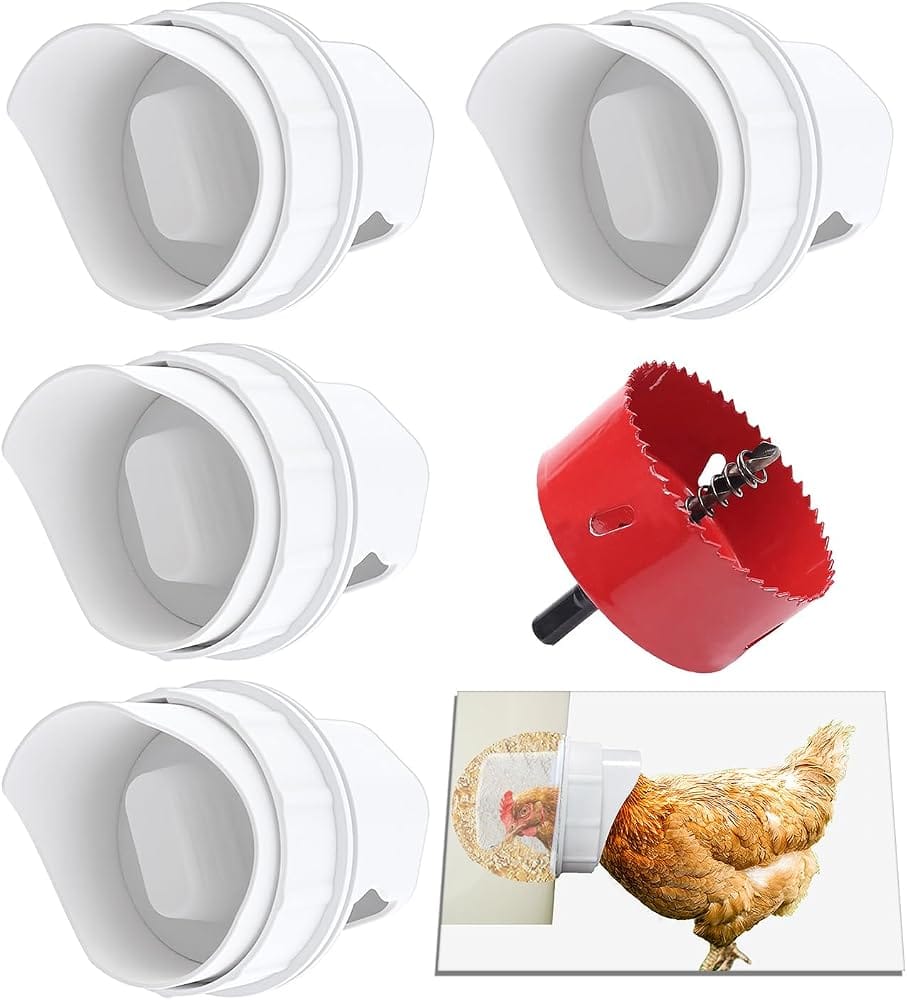
Rain-Proof Gravity Feed Port Kit
If you are building your own feeder, the one part worth buying rather than improvising is the port itself. This rain-proof kit includes the hole saw, so a bucket becomes a no-waste feeder in about ten minutes. At 4.6 stars across more than 3,000 reviews, it has the strongest track record of any feeder part we found.
- Best for: anyone with a spare food-grade bucket who wants a no-waste feeder for very little money.
- Keep in mind: you still need to source a clean, food-safe bucket with a lid.
Automatic Chicken Feeders
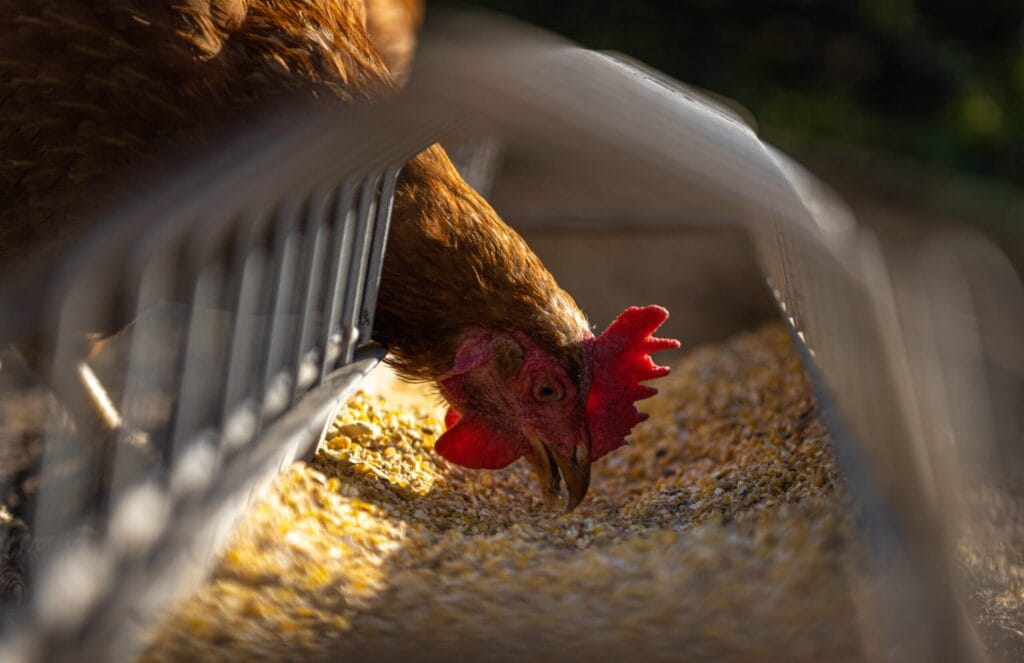
Automatic chicken feeders dispense feed on a schedule or on demand. Some are simple gravity bulk feeders with a closed lid that opens only when a hen approaches. Others are battery-operated units that release a set portion of feed at set times.
For larger flocks or homesteaders who travel, an automatic feeder keeps the routine running even when you are away from home for a long weekend. They are not strictly necessary for a small backyard flock, but they cut down dramatically on daily effort.
Types of Chicken Waterers
If you only upgrade one piece of equipment in your coop, make it the waterer. Clean water has a bigger daily impact on chicken health than almost any other variable. Here are the water feeders for chickens you will find most often, with notes on what each does best.
Gravity Waterers (Founts)
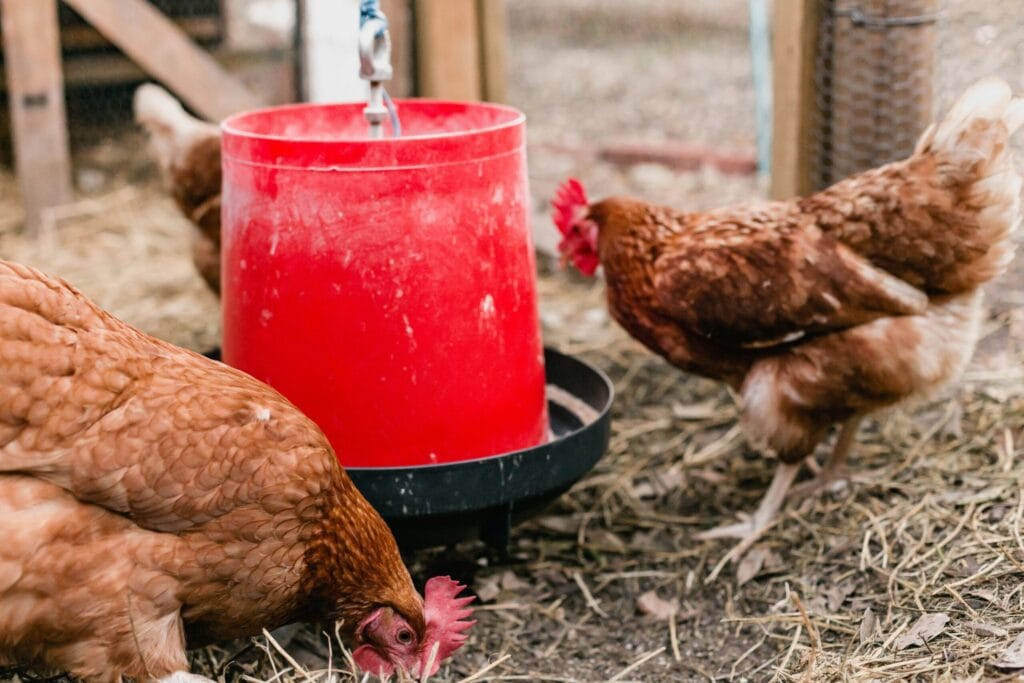
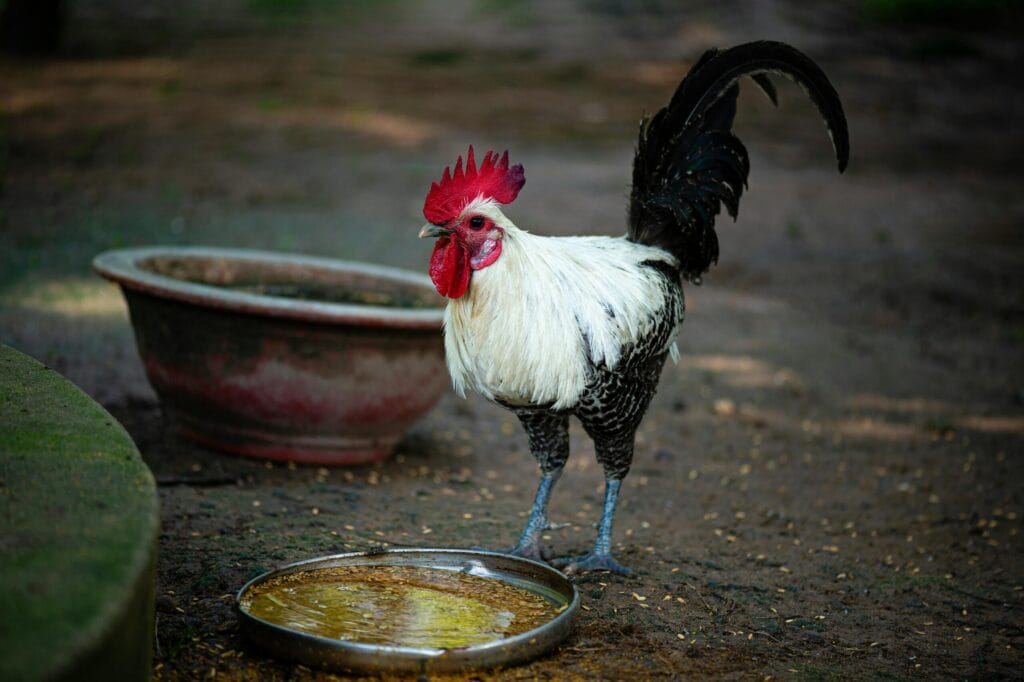
Gravity waterers, sometimes called founts, are the round plastic or galvanized containers most beginners start with. You fill the top, flip it over, and water slowly fills the trough at the bottom as hens drink. They are inexpensive and simple.
The downside: the open trough fills with shavings, droppings, and feathers quickly. You will end up cleaning a gravity fount once a day, sometimes more in warm weather.
Nipple Waterers
Nipple waterers are small metal valves screwed into a bucket, pipe, or reservoir. When a chicken pecks the nipple, a small amount of water releases. The water inside the container stays sealed, clean, and uncontaminated for days.
Nipple waterers are widely considered the cleanest, lowest-maintenance option for most backyard flocks. They come in two main styles: vertical nipples (mounted on the bottom of a bucket) and horizontal nipples (mounted on the side). Horizontal nipples drip less and are usually the better long-term choice.
Best All-in-One Waterer
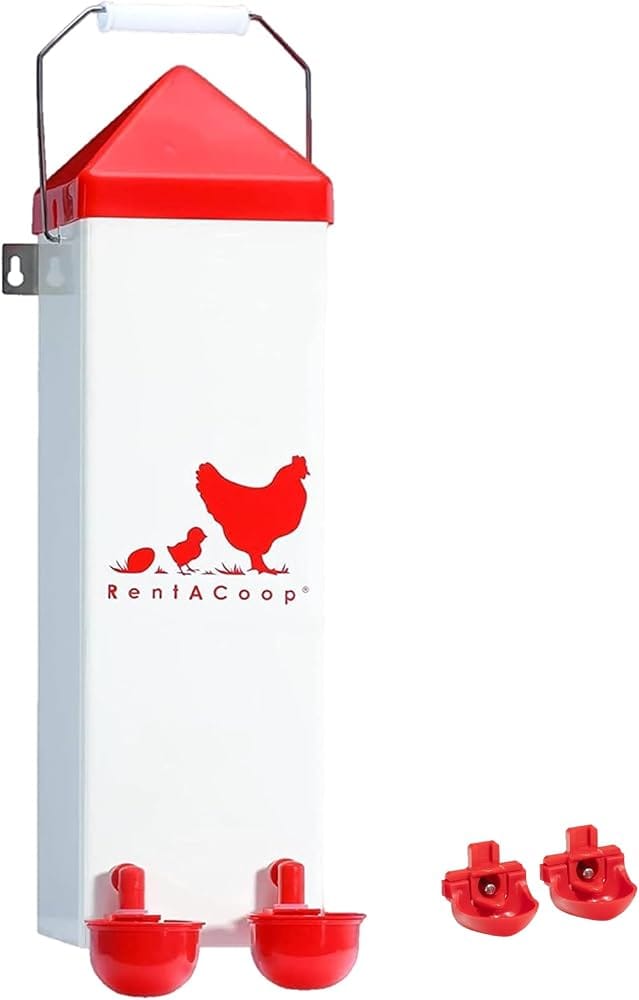
RentACoop 2-Gallon High-Rise Waterer
This one unit covers both watering styles worth using: horizontal nipples that barely drip and auto-fill cups for birds that prefer to sip from an open surface. It sits up on legs, which keeps litter and droppings out of the water, the main reason open founts get dirty. It rates 4.5 stars across more than 900 reviews.
- Best for: keeping water clean for a full flock without choosing between nipples and cups.
- Keep in mind: in hard freezes it needs a heated base or a bucket heater (see the winter section below).
Cup Waterers
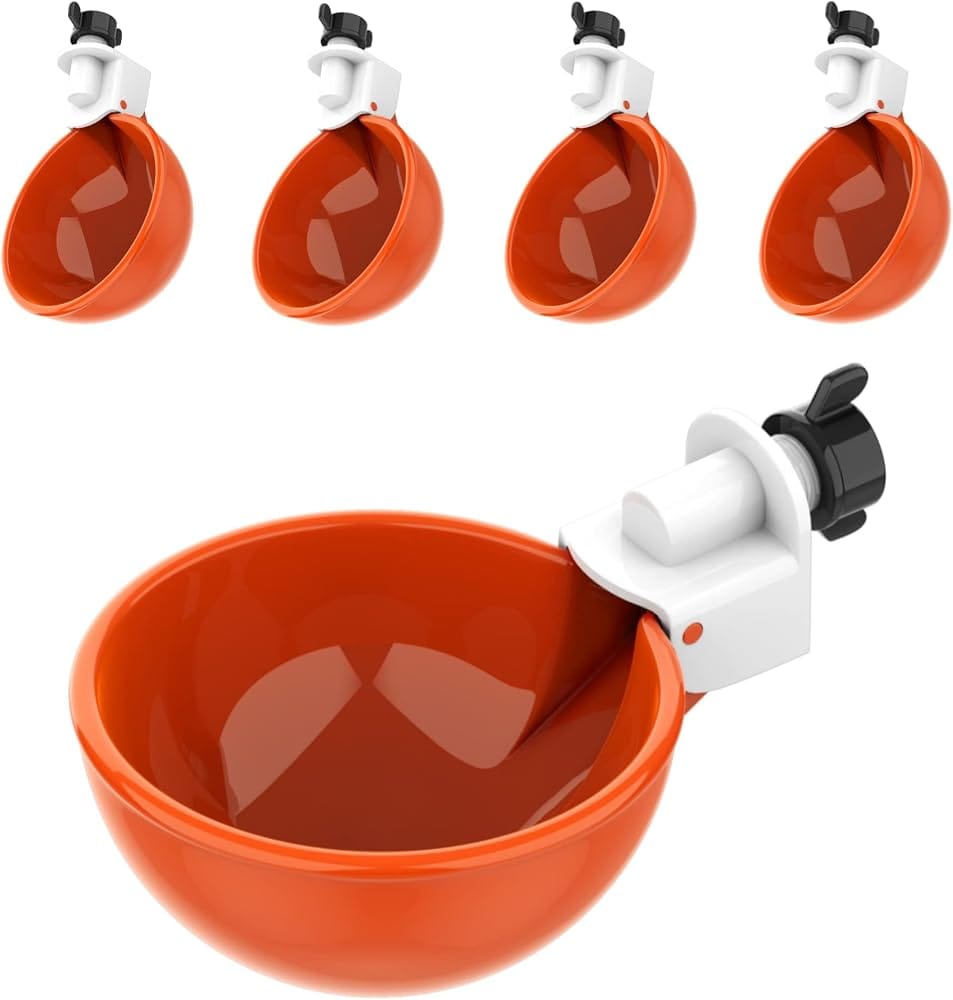
Cup waterers work similarly to nipples but release water into a small cup that the chicken drinks from. Some flocks take to cup waterers faster than nipples, especially if your hens are older birds being switched from a fount. Cups can collect a little debris but are still much cleaner than open founts.
Best Cup Waterer
Lil’Clucker Automatic Cup Waterers
If you would rather build your own waterer, these screw-in cups turn any bucket or PVC pipe into a clean, refilling waterer. They carry more than 5,200 reviews at 4.4 stars, more real-world use than any other watering part in this guide, which matters for something holding pressure against water all day.
- Best for: converting a bucket into a low-cost automatic waterer.
- Keep in mind: cups collect a little debris, so a quick daily glance keeps them flowing.
Heated Waterers
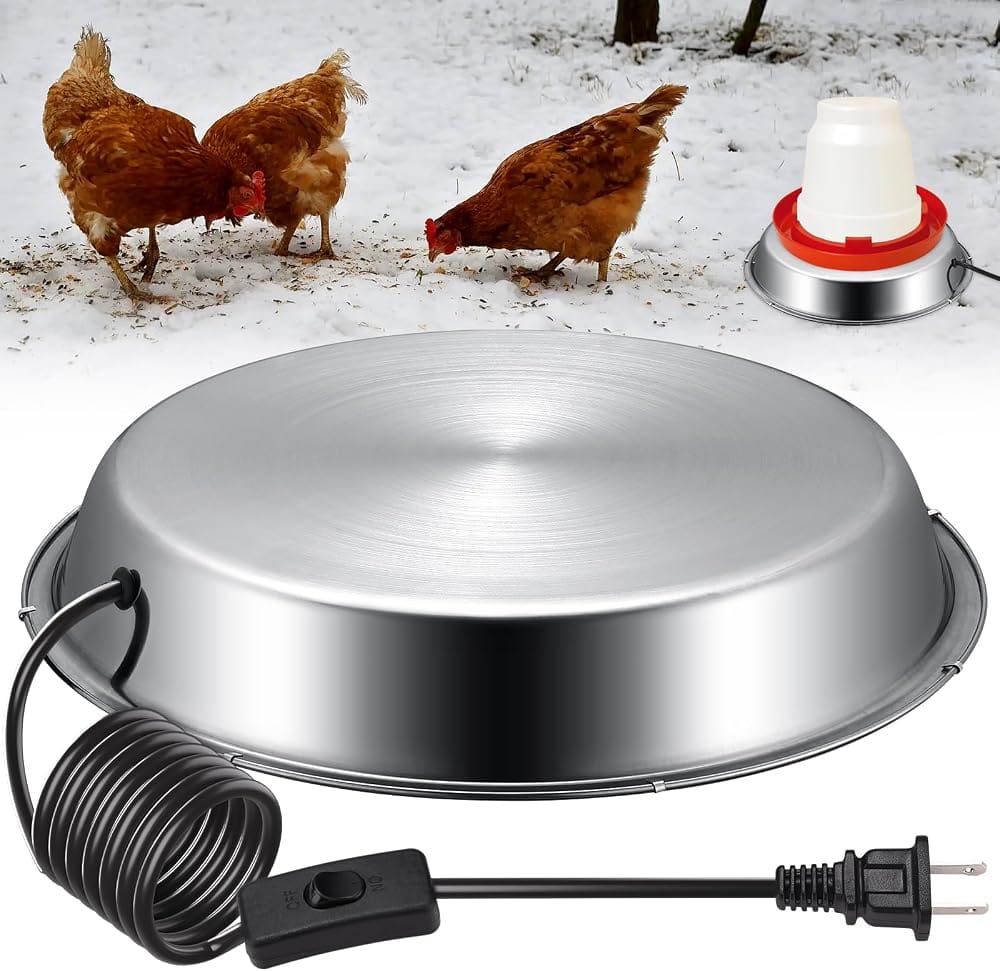
If you live anywhere with hard freezes, a heated waterer is not a luxury. It is the difference between fresh water all winter and chipping ice every morning. The two main options are heated bases (a flat plate the waterer sits on) and heated waterers with built-in heating elements. Both work well, though heated bases give you more flexibility with the waterer itself.
Best for Winter
Thermostat-Controlled Heated Base
Here is the honest finding from the reviews: the all-in-one heated waterers on Amazon rate poorly, mostly 3.2 to 3.3 stars, with leaks and failed heating elements the common complaints. The better route is a thermostat-controlled heated base (4.5 stars) placed under a metal fount you already own. It only draws power when the temperature actually drops near freezing. If you water from a bucket instead, an insulated bucket heater belt does the same job.
- Best for: keeping water liquid through winter without replacing your whole waterer.
- Keep in mind: you still need a metal fount or bucket to set on or wrap; the base is just the heater.
Automatic Chicken Waterer Systems
An automatic chicken waterer system connects directly to a water supply, like a garden hose, rain barrel, or RV-style water hookup. A float valve keeps the reservoir or trough topped up automatically. For larger flocks, or homesteaders who want to step back from daily refills, automatic chicken feeders and waterers can turn a 15-minute chore into a 30-second check.
Automatic Chicken Feeding and Watering Systems
Automatic chicken feeding and automatic chicken waterer systems are the upgrade most homesteaders eventually consider once their flock grows past six or eight birds. They are not necessary, but they are genuinely time-saving.
When Automatic Systems Make Sense
Consider an automatic setup if any of these apply to your homestead:
- You have more than 10 chickens and refilling is becoming a real chore.
- You travel, work long hours, or have stretches where you cannot do daily coop checks.
- You want to reduce feed waste and pest pressure as much as possible.
- You have a coop or run set up close to a water source.
What to Look for in an Automatic Chicken Feeder
Look for closed feed storage to keep pests out, a step-activated or weight-activated lid so feed only releases for chickens, large feed capacity (10 to 40 lb is common), and weather-resistant construction. Avoid models that depend on small electronics in damp coop conditions, unless they are explicitly rated for outdoor use.
What to Look for in an Automatic Chicken Waterer System
Look for a float valve made of durable plastic or brass, food-grade tubing, freeze protection if you are in a cold climate, and a closed reservoir to keep water clean. Nipple-based automatic systems generally stay cleaner than open-trough automatic systems.
How Much Feed and Water Chickens Need
Sizing your chicken feeder and waterer correctly comes down to two numbers: how much each hen eats and drinks per day, and how often you want to refill.
Daily Feed Intake Per Chicken
A typical full-grown laying hen eats about 1/4 to 1/3 pound (around 110 to 150 grams) of feed per day. Heavier breeds eat a little more, lighter breeds a little less. For a flock of six hens, that is roughly 1.5 to 2 pounds of feed per day, or about 10 to 14 pounds per week.
Daily Water Intake Per Chicken
Hens drink roughly two times the weight of feed they eat in water, which works out to about 1 to 2 cups (8 to 16 oz) per chicken per day. Hot weather, laying season, and certain feeds increase that significantly. A flock of six hens needs at least half a gallon of water available each day, and ideally more.
Sizing Your Equipment
A simple rule of thumb: choose a feeder that holds at least three to seven days of feed, and a waterer that holds at least two to three days of water. That gives you room to skip a refill if life gets busy, without ever leaving the flock short.
How to Set Up Your Chicken Feeder and Waterer
Even the best chicken feeder and waterer can become a problem if it is set up poorly. A few small placement choices make the entire system work better.
Hang or Mount at the Right Height
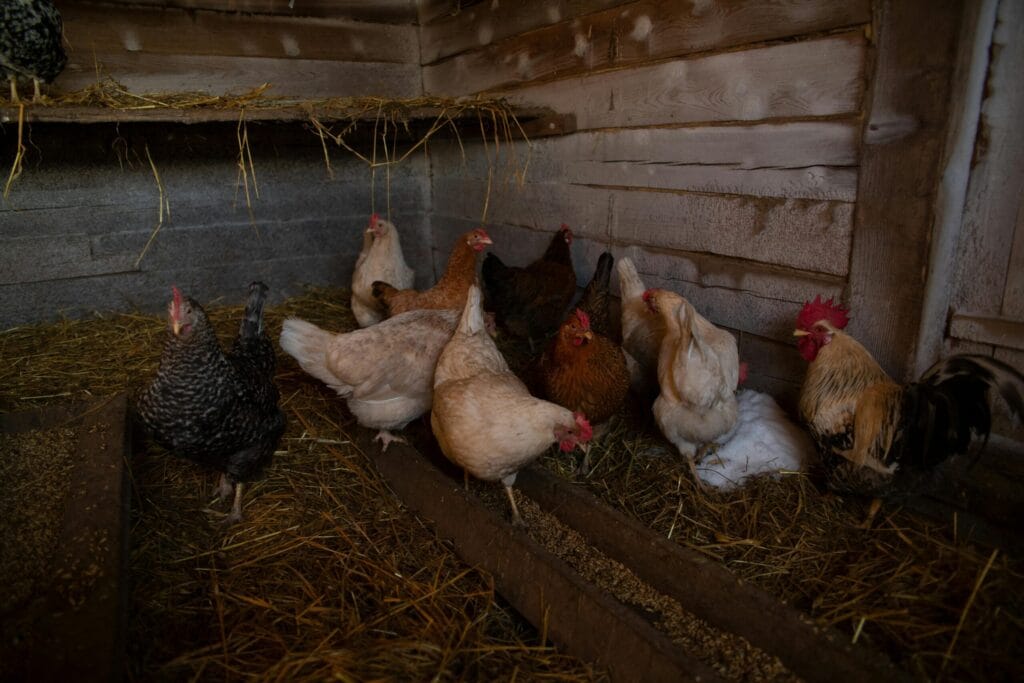
Both the feeder and the waterer should sit at roughly the height of your hens’ backs, about 6 to 10 inches off the ground for most breeds. That height stops chickens from kicking shavings, droppings, and dirt into the equipment.
Keep Feed Inside, Water Outside If Possible
Many keepers prefer to keep the feeder inside the coop or under cover (to keep feed dry and discourage wild birds) and to keep the main waterer in a covered run or shaded outdoor area. Water inside a closed coop adds humidity, which causes respiratory and frostbite problems, especially in winter.
Provide More Than One Watering Point
For flocks larger than about eight birds, two watering points reduce bullying at the waterer and protect a single point of failure. If one waterer is knocked over, leaks, or freezes, the flock still has water.
Use the Right Number of Feeding Spaces
Aim for about 4 inches of feeder space per hen if you use a trough or open feeder, so the whole flock can eat at once if they choose. With gravity or treadle feeders, you have a bit more flexibility, but two access points are still better than one for larger flocks.
Common Mistakes With Chicken Feeders and Waterers
Most chicken feeder and waterer problems come down to a handful of repeated mistakes. Avoid these and your daily routine gets noticeably easier.
- Buying too small a waterer. A 1-gallon fount looks fine for six hens, but on a hot day they will drink it dry by mid-afternoon. Size up.
- Leaving the feeder on the ground. Chickens scratch with enthusiasm and will throw feed everywhere. Hang or raise the feeder.
- Using only an open fount. Open water gets dirty within hours. Add a nipple waterer or upgrade entirely if you can.
- Ignoring pests until they take over. If you see one mouse, there are dozens. Switch to a treadle or closed feeder before the problem grows.
- Forgetting winter prep. A regular waterer in freezing weather becomes a block of ice every morning. Plan for heat before the first freeze.
- Cleaning too rarely. Even nipple and automatic systems need a deep clean at least once a month, and gravity founts need rinsing every day or two.
Winter Considerations for Chicken Feeders and Waterers
Winter is when a chicken feeder and waterer setup gets tested. Cold makes water freeze, feed get damp, and your hands very unhappy when you are chipping ice in the dark.
Preventing Frozen Water
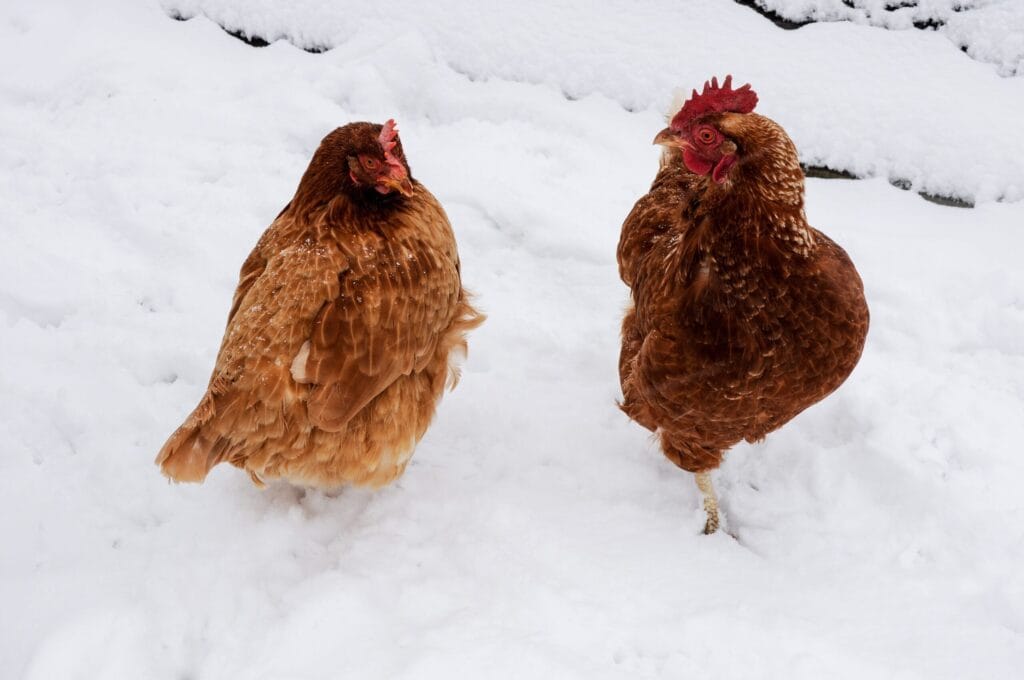
The most reliable solutions are a heated base under a metal fount, a heated waterer with a built-in element, or a heated nipple bucket system. All three keep water flowing on the coldest days. A cookie tin heater can work for small setups, but commercial heated bases are safer and more reliable.
Keeping Feed Dry
Wet feed clumps, molds, and stops flowing through a gravity feeder. Keep your feeder under cover, store extra feed in a sealed metal trash can or sealed bin (not a plastic bag, which mice chew through), and check the feeder regularly during snowy or wet stretches.
More Frequent Checks
Even with heated equipment, plan for one extra coop check on the coldest days. Knocked-over waterers, drifted snow, and short daylight hours all make winter chores a little harder than summer ones.
From the In Homestead Shop
Starting your first flock?
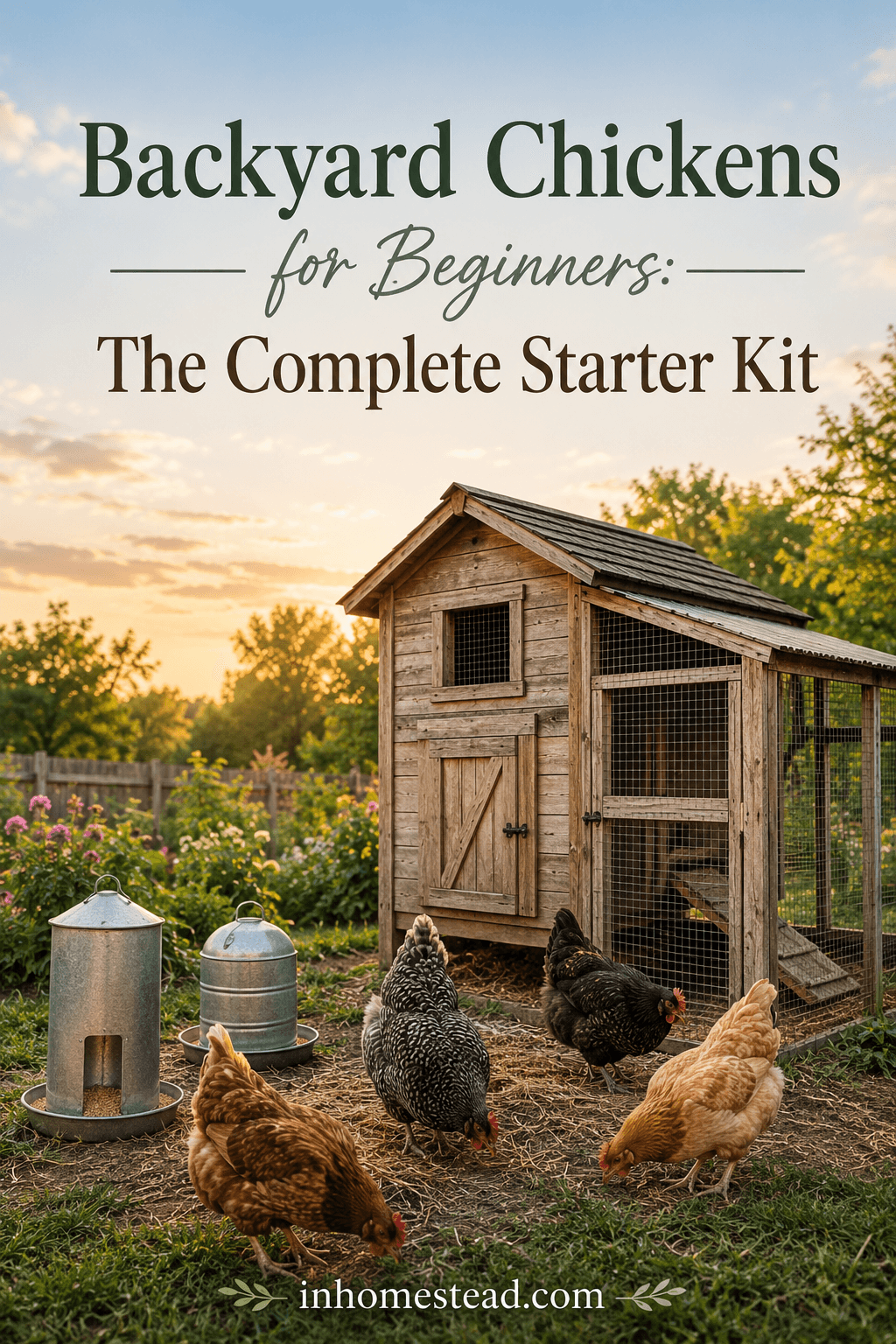
The Backyard Chickens Starter Guide covers your whole first year — setting up feeders and waterers, plus breeds, feed, and daily care — sourced from cooperative extension guidance and the Merck Veterinary Manual, with two printables.
The Free Garden Starter Pack
Five printable pages that take the guesswork out of a first season, plus a short email every week or two when something is worth planting, picking, or putting up.
- A garden planning worksheet you can actually fill in
- A seed-starting and planting calendar
- A harvest log to track what really produced
No spam, ever. Unsubscribe in one click.
Thank you. You are on the list.
Your Garden Starter Pack is ready right now. Grab it here:
Download the pack (PDF)Keep an eye on your inbox. The next seasonal guide lands there first.
Frequently Asked Questions About Chicken Feeders and Waterers
What is the best chicken feeder and waterer for beginners?
For a first flock of three to six hens, a 5 to 10 lb hanging gravity feeder and a 3 to 5 gallon nipple waterer is a strong, low-maintenance setup. It is affordable, easy to clean, and resists most of the early problems beginners run into.
How many feeders and waterers do chickens need?
A small flock of six or fewer hens can usually share one feeder and one waterer. For flocks larger than eight, add a second waterer and consider a second feeding point to reduce bullying and create a backup in case of leaks or freezing.
Are automatic chicken feeders and waterers worth it?
For most small backyard flocks, no — a good gravity or treadle feeder is plenty. For homesteads with 10 or more chickens, or for keepers who travel, automatic systems pay back the cost in saved time and reduced feed waste.
Do chickens need water inside the coop?
Chickens need constant access to water, but the main waterer is usually best in the covered run or just outside the coop. Indoor water raises coop humidity, which can cause respiratory issues and frostbite in cold weather. A small backup waterer inside is fine.
How often should I clean a chicken waterer?
Rinse gravity founts daily and deep clean weekly. Nipple and automatic systems should be checked daily and deep cleaned monthly. Any waterer that has visible algae, slime, or odor should be cleaned immediately.
Can chickens share a feeder and waterer with other birds?
It is best to keep chicken feeders and waterers reserved for chickens only. Wild birds can carry diseases like avian flu, and ducks (if you keep them) splash so much water that they will quickly soak any chicken feeder nearby. Separate setups are healthier and cleaner.
How high should a chicken feeder and waterer be?
Hang or mount both so the lip sits at about the height of your hens’ backs, which is roughly 6 to 8 inches off the ground for standard breeds. At back height the birds eat and drink comfortably but cannot scratch bedding or droppings up into the feed and water. Raise both as the flock grows, and set them lower for chicks or bantams so every bird can reach.
Conclusion: The Right Chicken Feeder and Waterer for Your Flock
The best chicken feeder and waterer is not the most expensive one, or the most automated one. It is the setup that fits your flock size, your climate, and the amount of time you actually have for daily chores.
For a small backyard flock, a hanging gravity feeder and a nipple waterer will serve you well for years. For larger homesteads, a treadle feeder paired with an automatic chicken waterer system can turn coop chores from a 20-minute job into a 2-minute walk. For cold climates, a heated waterer is non-negotiable from the first freeze onward.
Whatever you choose, remember that the equipment is only as good as the routine you build around it. Clean water every day, fresh feed in a covered feeder, the right height, and a quiet check each morning are the small habits that keep a flock healthy and laying. If you are also planning your housing setup, our guides on best chicken breeds for beginners and nesting box sizing pair well with the feeder and waterer choices you make here.
Start simple, watch how your hens use the setup for a few weeks, and adjust as you learn what works in your coop. The right chicken feeder and waterer should fade into the background of homestead life, leaving you free to enjoy the part that drew you in to begin with: fresh eggs, calm mornings, and a flock that takes care of itself.