Best Bedding for Chickens: Coop, Nest Box and Chick Picks (2026)
In Homestead is reader-supported. When you buy through links on this page, we may earn a small commission at no extra cost to you. See our affiliate disclosure. As an Amazon Associate I earn from qualifying purchases.
Open the coop door on a cold morning and you know straight away whether the bedding is working. Good bedding smells faintly of pine and dry dust. Tired bedding smells of ammonia, the sharp sting that hits the back of your throat before your eyes adjust to the dark.
The bedding under your flock does more than look tidy. It soaks up droppings and spilled water, keeps eggs from cracking, and decides how often you are on your knees with a shovel. The wrong material traps moisture, grows mold or irritates the birds’ airways. You do not need anything fancy. You need something dry, low-dust and safe, in the right depth for each part of the coop.
This guide compares five bedding products and one odor helper for the coop floor, nest boxes and brooder, explains when pine, hemp, straw and sand each make sense, and covers depth, cleaning and the deep litter method, all checked against university extension guidance.
Table of Contents
Quick Picks
- Best overall: America’s Choice Large Flake Pine Bedding. Large, kiln-dried pine flakes for the floor and the nests.
- Best premium bedding: OverEZ EGG-Sentials Hemp Chicken Bedding. A compostable alternative to pine, at a higher price.
- Best straw bedding: Standlee Certified Chopped Straw. Chopped, weed-free straw for cold-weather insulation.
- Best for nesting boxes: Eaton Pet & Pasture Premium Nesting Pads. Trim-to-fit aspen pads you lift out when soiled.
- Best for chicks: Kaytee Clean & Cozy Natural Paper Bedding. Fragrance-free paper bedding for the brooder once chicks are past their first week or two.
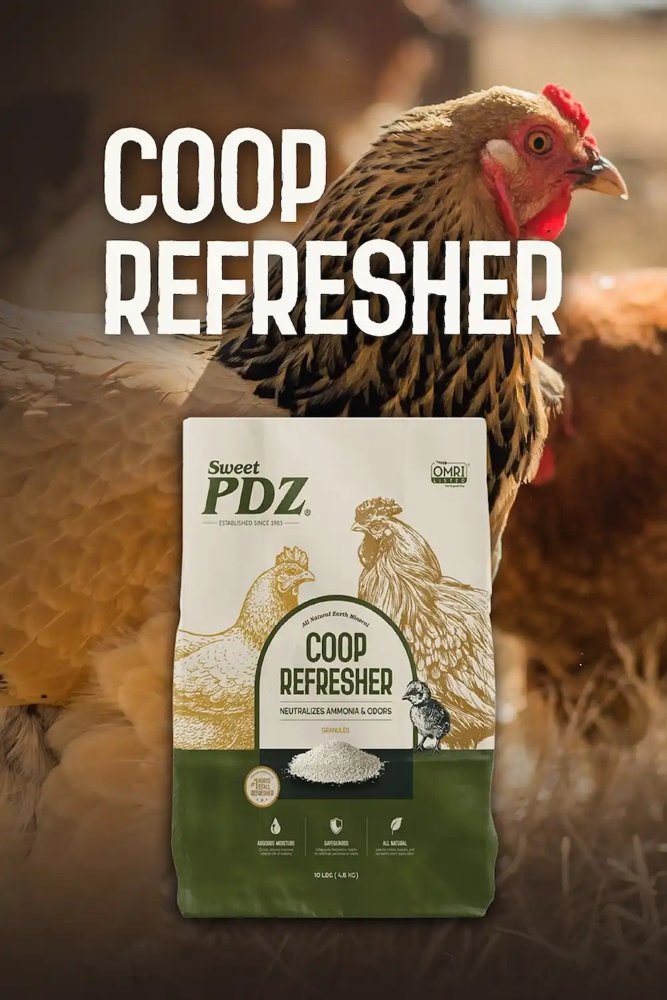
- Optional odor helper: Sweet PDZ Coop Refresher. A zeolite for wet spots under the roosts, not a bedding.
What Bedding Goes Where
Most of the confusion about chicken bedding comes from treating the coop as one space. It is really four, and each has a different job.
| Area | Best Choice | How Deep | Change When |
|---|---|---|---|
| Coop floor | Large-flake pine shavings; chopped straw as a winter top-up | 3 to 4 inches | Wet or caked patches appear |
| Nest boxes | Pine shavings, clean straw or a nesting pad | About 2 inches | Soiled or damp |
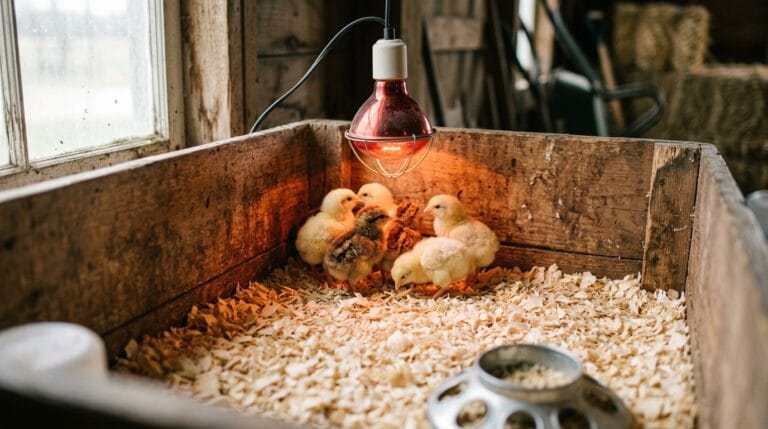
| Chick brooder | Paper towels first, then pine or paper bedding | 2 to 3 inches | Wet spots, often |
| Outdoor run | Dry sand where it drains well | Varies by site | Scoop droppings regularly |
The depths come from Penn State Extension, which recommends 3 to 4 inches of litter on a laying-flock floor, its housing guide, which suggests about 2 inches of clean material in nest boxes, and its brooding guide, which suggests 2 to 3 inches in a floor brooder.
What to Look for in Chicken Bedding
It Has to Stay Dry
Moisture is the enemy of every coop. Wet litter feeds ammonia, mold and parasites, and it is the main reason a coop starts to smell. Good bedding absorbs droppings and spilled water and then dries out again, which is why coarse, flaky material beats fine sawdust.
Low Dust
Chickens breathe close to the bedding all day. Fine dust irritates their airways and yours. Look for products described as screened or dust-extracted, and still check a handful before spreading a whole bag.
Safe for the Birds Using It
A few materials cause real problems. Cedar dust can irritate the respiratory system. Damp hay and straw can grow mold, and Merck Veterinary Manual links moldy litter to aspergillosis, a fungal respiratory disease. For chicks, flat newspaper is slippery enough to cause leg problems.
Easy to Clean Out and Compost
Organic bedding like pine, hemp and straw composts along with the droppings, which turns cleanout day into garden material. Sand does not compost, though you can compost the droppings you scoop out of it.
The 5 Best Chicken Bedding Picks, Plus an Odor Helper
Best Overall
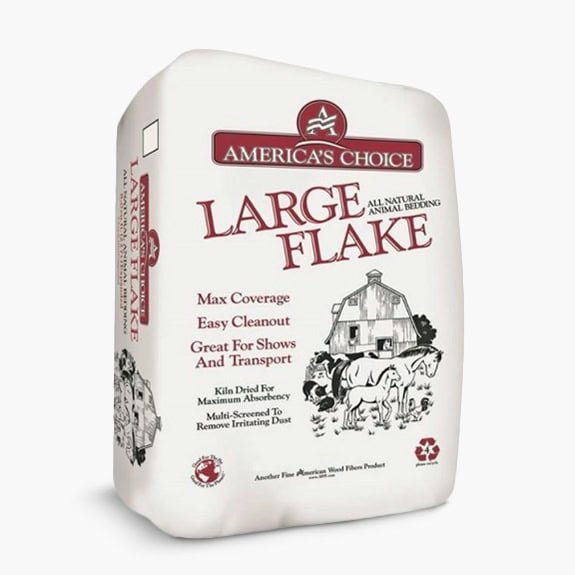
America’s Choice Large Flake Pine Bedding
Large-flake pine shavings are the bedding most extension guides start with, and this is a widely sold version made for chickens and livestock. American Wood Fibers describes it as 100 percent pine, kiln-dried and screened to reduce dust, sold in an 8 cubic foot bale.
Big flakes matter. They hold moisture away from the birds, dry out between cleanings, and are less dusty than fine sawdust. Spread 3 to 4 inches on the coop floor and a couple of inches in the nest boxes and one bale covers both jobs in a small coop.
- Best for: most coops, most of the year, and anyone who wants one bedding that works on the floor and in the nests.
- Keep in mind: quality varies a little from bale to bale. Some owners report bags with more small flakes and dust than usual, so shake out a handful before you spread a whole bale.

Best Premium Bedding
OverEZ EGG-Sentials Hemp Chicken Bedding
Hemp bedding is chopped hemp stalk, and it has become the premium option in a lot of coops. OverEZ sells it in a compressed bale for chickens and describes it as natural, compostable and long-lasting.
The research is promising but young. A laboratory study found hemp absorbed water and ammonia at levels similar to commercial wood-shaving bedding, and called for on-farm trials before stronger claims. It is a reasonable choice if you like how it handles, not a proven upgrade over good pine.
- Best for: keepers who want an alternative to pine and do not mind paying more for it.
- Keep in mind: it costs noticeably more than pine, and despite “dust-free” marketing some owners report dusty bales.
Best Straw Bedding
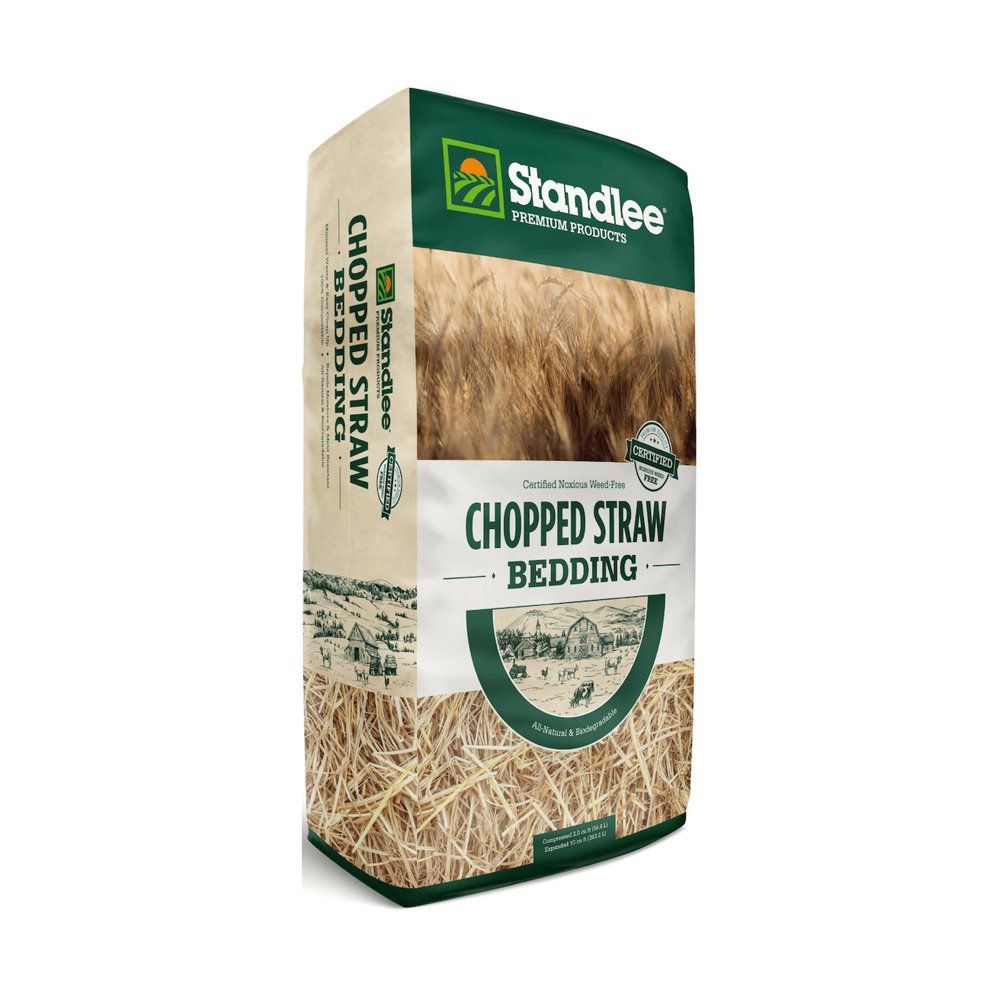
Standlee Certified Chopped Straw
If you prefer straw, chopped is the version to buy. Shorter pieces cover the floor evenly, absorb better and break down faster than long straw, which tends to mat. Standlee’s chopped wheat or barley straw is certified noxious-weed-free and expands from a compressed bag.
Straw traps air, which makes it a good extra layer in cold weather. It absorbs less than shavings, so it works best where you can spot-clean wet patches often.
- Best for: cold-weather coops and keepers who already like straw.
- Keep in mind: Standlee says to replace wet straw promptly, and some owners report dusty or pulverized bags. Availability varies: at least one large retailer has dropped it, so check current stock.
Best for Nesting Boxes
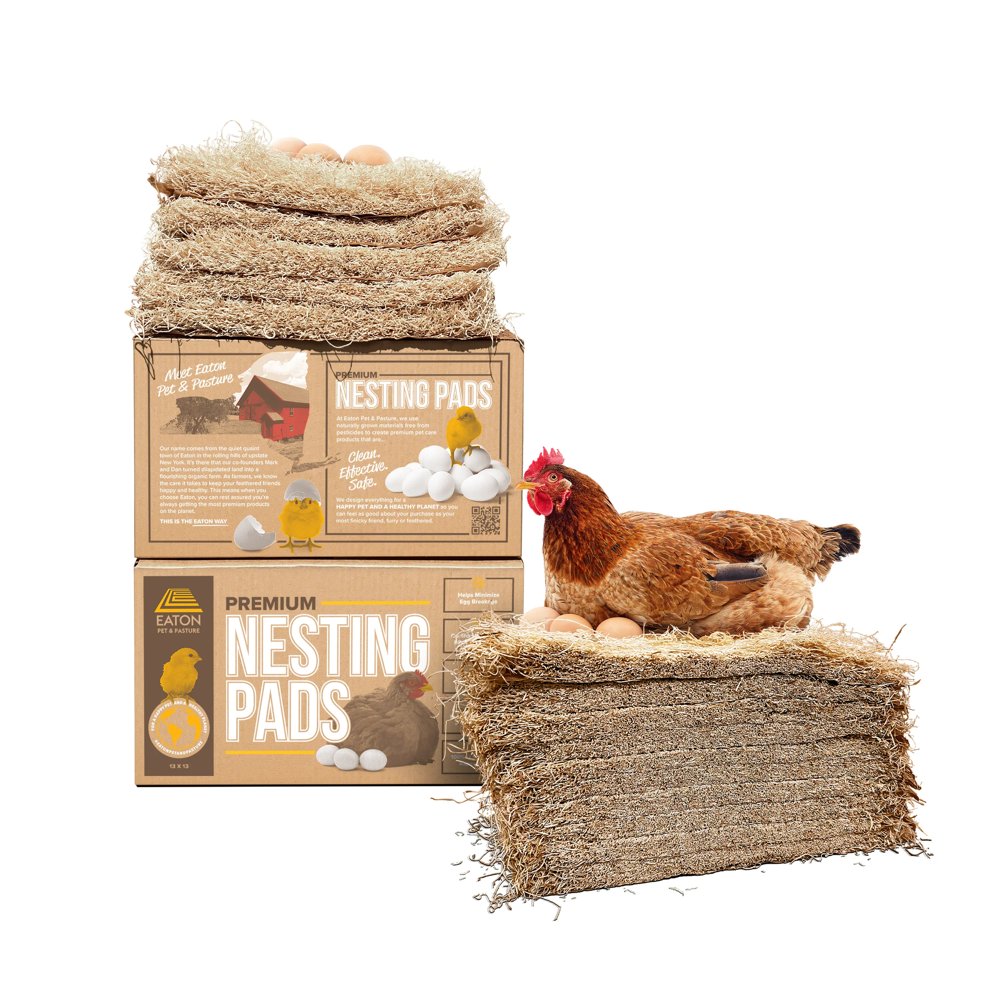
Eaton Pet & Pasture Premium Nesting Pads
Nesting pads make the nest box the easiest part of the coop to keep clean. These are aspen excelsior, thin curly wood fibers, on a paper backing, and you trim them to fit the box.
A pad keeps eggs cushioned and off the bare floor of the box, and when it gets soiled you lift the whole thing out instead of scooping loose bedding. Our nesting box guide covers the box sizes they need to fit.
- Best for: nest boxes, especially if you want quick, tidy changes.
- Keep in mind: hens can pull pads apart, and owners describe them as thin, so expect to replace them regularly.
Best for Chicks
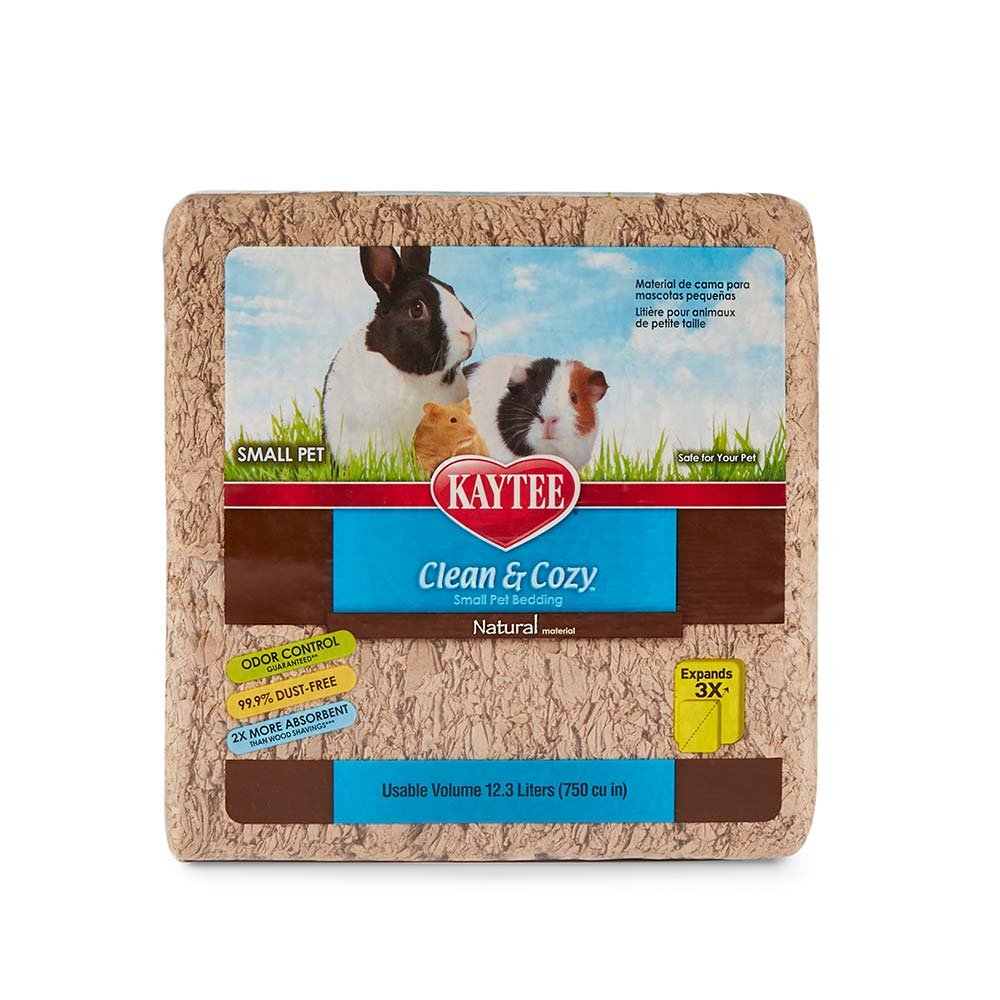
Kaytee Clean & Cozy Natural Paper Bedding
Brooding chicks need traction and a bedding they are unlikely to fill up on. This is a fragrance-free paper bedding from a small-animal brand; Kaytee says it is made from recycled paper and is highly absorbent.
Use plain paper towels or burlap for the first week or two so chicks can find their feed and grip the floor, then switch to a loose bedding like this one or large-flake pine. Never leave chicks on flat newspaper, which is slippery enough to cause leg problems.
- Best for: brooders after the first week or two, and small batches of chicks.
- Keep in mind: it is light and scatters, it can get soggy if spread thin, and it is sold for small pets, so chick-specific performance is not something the maker tests.
Optional Odor Helper
Sweet PDZ Coop Refresher
Sweet PDZ is not bedding. It is a granular zeolite mineral you use under the roosts alongside dry bedding, after removing any wet litter, and the maker says it absorbs moisture and captures ammonia. It is unscented and OMRI-listed.
It is useful as a helper under the busiest part of the coop. It is never a substitute for pulling out wet litter or fixing ventilation, which are what actually stop ammonia building up.
- Best for: the strip under the roosts, between full cleanouts.
- Keep in mind: it adds cost, and hens sometimes peck at freshly spread granules, so work it into the bedding.
Quick Comparison
| Product | Material | Best For | Main Trade-Off |
|---|---|---|---|
| America’s Choice Large Flake | Kiln-dried pine | Floor and nests | Bale quality varies |
| OverEZ Hemp | Hemp stalk | Alternative to pine | Higher price |
| Standlee Chopped Straw | Wheat or barley straw | Winter insulation | Absorbs less than pine |
| Eaton Nesting Pads | Aspen excelsior | Nest boxes | Hens shred them |
| Kaytee Clean & Cozy | Recycled paper | Brooder | Light and scatters |
| Sweet PDZ | Zeolite mineral | Wet spots under roosts | Not a bedding |
Pine, Hemp, Straw or Sand?
Pine Shavings
Pine shavings are the default for good reason. They are absorbent, insulating, widely available and easy to compost, and they have the clearest support in extension guidance. University of Kentucky Extension builds its example deep litter system on wood shavings and warns only against cedar. Stir them every so often so they do not compact.
Hemp
Hemp is a compostable alternative to pine that many keepers like, though its odor control and life between changes have not been well tested in backyard coops. Laboratory testing found its water and ammonia absorption similar to wood shavings, but the researchers called for real-world poultry trials. Treat bold “far more absorbent than pine” claims as marketing until that evidence exists.
Straw, and Why Not Hay
Chopped straw is a good insulating layer and works in nest boxes, but it absorbs less than shavings and mats if it gets wet. Kentucky Extension suggests pieces no longer than about an inch for deep bedding. Hay is a different material: it breaks down and cakes quickly and is more likely to mold, so it is a poor choice for the coop floor.
Sand
Sand has enthusiastic fans, and it can work well in a dry, well-drained outdoor run, where NC State Extension suggests it. Inside the coop it is a harder sell. It does not absorb or insulate the way organic bedding does, it holds the cold in winter, and it needs regular scooping because droppings sit on top of it. If you use it, choose a washed, coarse sand and keep it dry.
Pine Pellets
Pine stall pellets swell and break into soft sawdust when they get wet, which makes them handy under waterers and roosts. Use them as a helper alongside shavings rather than the whole floor, and avoid pellet blends that contain cedar.
Cedar: Skip It
Cedar smells pleasant to us, which is exactly the problem. Kentucky Extension notes that cedar dust can irritate birds’ respiratory systems. With good pine available everywhere, there is no reason to take the risk, in the coop, the nest boxes or the brooder.
How Deep, and How Often to Change It
Start the coop floor at 3 to 4 inches and keep nest boxes at about 2 inches. Then manage it rather than following a fixed calendar:
- Daily or every few days: pull out wet spots around the waterer and caked droppings under the roosts.
- Weekly: stir the floor bedding with a rake so it dries and does not compact, and refresh soiled nest boxes.
- When it smells of ammonia: clean out and improve ventilation. Penn State Extension notes that people often cannot smell ammonia until it reaches roughly 20 to 30 ppm, above the level considered healthy for poultry, so by the time you notice it, act.
- Full cleanout: as often as your coop needs it, which depends on flock size, space and weather.
Wet or caked litter also increases young birds’ exposure to coccidia, the parasite behind coccidiosis, so keeping it dry and loose helps. Our guide to treating coccidiosis in chickens explains why dry litter matters so much.
The Deep Litter Method, Honestly
Deep litter means letting bedding and droppings build up slowly instead of cleaning out completely. University of Kentucky Extension gives an example that starts with 3 to 4 inches of wood shavings over a thin absorbent base, with straw added before winter, building to a litter 6 to 8 inches deep. Managed well, it partly composts in place and cuts down on full cleanouts.
It only works if it stays loose and dry. Deep litter fails when moisture, caking or ammonia outrun your stirring and topping up, so you still remove soaked patches and keep the coop ventilated. It does not sterilize the coop and it does not prevent coccidiosis. Litter you clean out still needs to finish composting before it goes on the garden; our guide to composting at home covers the basics.
Chicken Bedding in Winter
A deeper layer of dry shavings or chopped straw adds some insulation underfoot. University of Minnesota Extension gives an example of 4 to 6 inches of straw or shavings, stirred and topped up, with a spring cleanout. What bedding cannot do is replace ventilation. Moisture plus cold is what leads to condensation and frostbite, so keep air moving above the birds.
Our guide to keeping chickens warm in winter covers the rest of the cold-weather routine, and the coop building guide explains vent sizing if you are still planning your setup.
How We Chose
These products were researched rather than tested side by side in our coop, and we would rather say that plainly. We started from university extension guidance on which materials are safe and effective, then compared widely available products on material, dust and absorbency claims, package size and the specific limitations owners report, treating marketing claims like “dust-free” as claims unless a test backs them.
We left out cedar, scented bedding and fine sawdust entirely. We do not list prices, because they change constantly. Use the buttons to check current prices.
Setting up your first coop?
The Backyard Chickens Starter Guide walks through coop setup, bedding, feeding and daily care for a first flock, in plain language with checklists you can print.
Frequently Asked Questions About Chicken Bedding
What is the best bedding for a chicken coop?
For most backyard coops, large-flake kiln-dried pine shavings. They absorb well, stay relatively low in dust, compost easily and are sold almost everywhere. Spread 3 to 4 inches and remove wet spots promptly.
Is sand or pine shavings better for chickens?
Inside the coop, pine shavings, because they absorb moisture and insulate. Sand can work in a dry outdoor run where you scoop droppings regularly, but it stays cold and wet in winter and does not compost.
What is the best bedding for baby chicks?
Paper towels or burlap for the first week or two, so chicks find their feed and have good grip, then large-flake pine or a fragrance-free paper bedding. University of Maine Extension warns against slick newspaper and against loose bedding that very young chicks may eat.
Is cedar bedding safe for chickens?
It is best avoided. Extension sources note that cedar dust can irritate birds’ respiratory systems, and pine does the same job without that concern.
How often should you change chicken bedding?
Remove wet or caked spots every few days, refresh soiled nest boxes weekly, and do a full cleanout whenever the bedding stays damp or smells of ammonia. A small, well-ventilated coop needs less frequent cleanouts than a crowded one.
Can you compost used chicken bedding?
Yes. Pine, hemp and straw bedding compost well with the droppings. Treat it as manure, though: let it compost fully before using it in the vegetable garden rather than spreading fresh litter straight onto beds.
The Bottom Line
For most flocks, large-flake pine shavings on the floor and in the nests is the simple, reliable answer, with nesting pads if you want easier nest-box changes. Whatever you choose, the habit matters more than the material: keep it dry, keep it loose and keep air moving. Then make sure your nest boxes are the right size for the hens using them.