Best Pressure Canners for Beginners: 5 Picks Compared (2026)
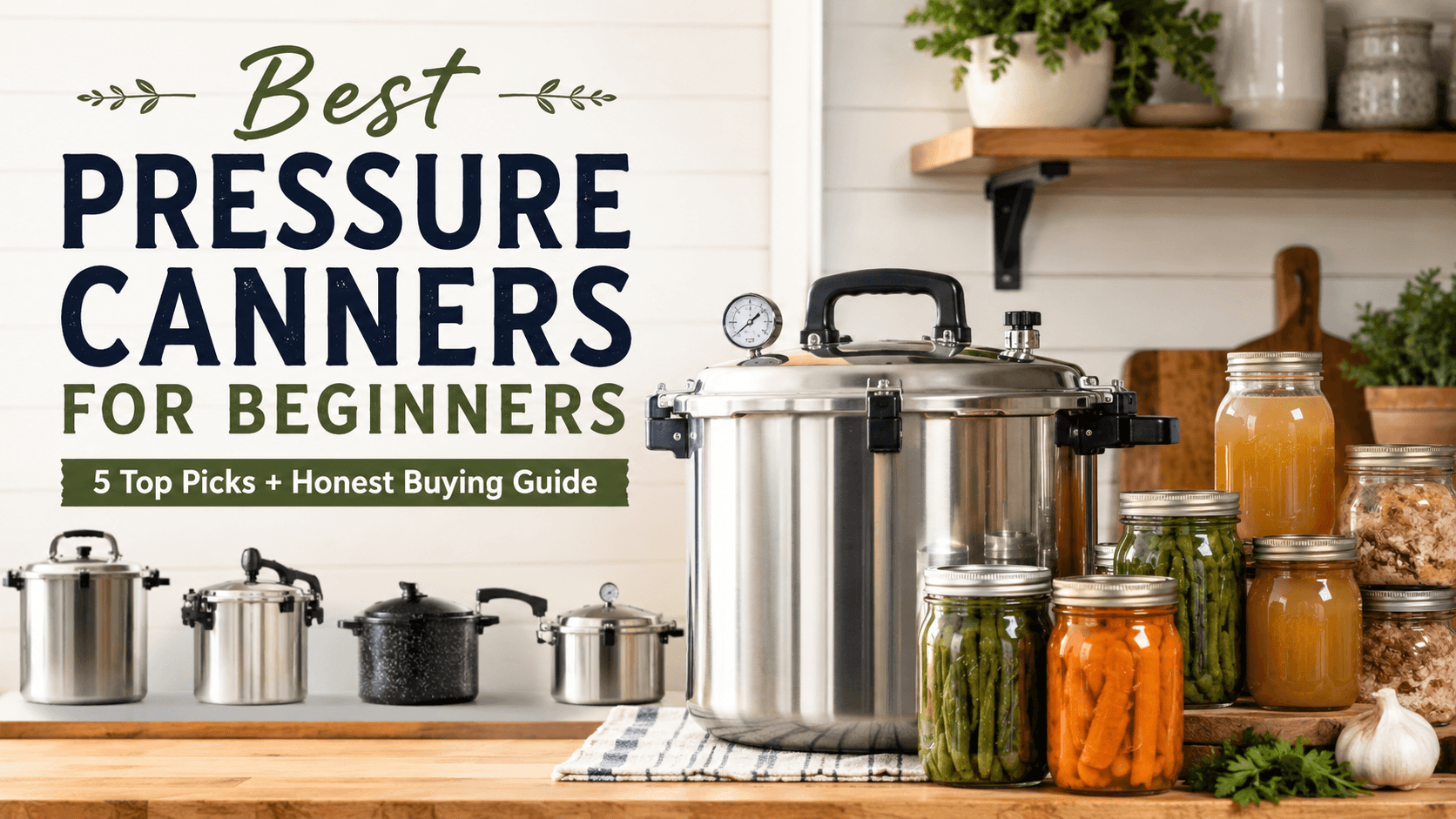
There is a specific sound a pressure canner makes once it settles into its rhythm, a soft, steady jiggle of the weight every few seconds that tells you the jars inside are holding 10 or 11 pounds of pressure. The first time you hear it, it feels like a lot of responsibility. It should. That steady pressure is the only thing at home that gets jars of green beans, carrots, broth, or meat hot enough to be safe on a shelf. Choosing the best pressure canners for beginners starts with understanding that pressure, not the brand on the lid.
Water-bath canning handles the high-acid foods, the jams, pickles, and tomatoes with added acid. Everything else, the low-acid vegetables and anything with meat, has to be pressure canned, because only a pressure canner reaches the 240°F that destroys botulism spores. A boiling water bath tops out at 212°F and cannot do it. If you have outgrown your water-bath canner and want to put up vegetables and stocks, a pressure canner is the next tool you need.
The problem is that the buying page is confusing. Dial gauge or weighted gauge. Sixteen quart or twenty-three. Aluminum or the heavy cast pot that costs three times as much. This guide cuts through it. Below are five pressure canners that beginners actually buy and rate well, sorted by who each one is for, plus a short, honest buying guide so you understand what you are choosing before you spend the money.
In Homestead is reader-supported. When you buy through links on this page, we may earn a small commission at no extra cost to you, see our affiliate disclosure. As an Amazon Associate, we earn from qualifying purchases.
Table of Contents
The Best Pressure Canners for Beginners at a Glance
- Best overall: Presto 01781 23-Quart Pressure Canner – the affordable workhorse most beginners should buy.
- Best for small kitchens: Presto 01755 16-Quart Pressure Canner – lighter, fits smaller stovetops.
- Best for glass-top & induction stoves: Presto 01784 23-Quart Induction-Compatible Canner – a stainless-clad base built for flat tops.
- Best electric / hands-off: Presto 02152 Digital Pressure Canner – one of the few electric units validated for true pressure canning.
- Best budget: Mirro 92116 16-Quart Canner – a simple weighted-gauge pot at the lowest entry price.
Quick Comparison
| Canner | Gauge | Capacity | Best for |
|---|---|---|---|
| Presto 01781 | Dial | 23 qt (7 quarts / 20 pints) | Best overall |
| Presto 01755 | Dial | 16 qt (7 pints) | Small kitchens |
| Presto 01784 | Dial | 23 qt | Glass-top & induction |
| Presto 02152 Digital | Electric (automatic) | 17 qt | Hands-off canning |
| Mirro 92116 | Weighted | 16 qt | Tightest budget |
How I Chose These
I started from safety, because pressure canning is the one kind of home canning where getting it wrong can make someone sick. Every pick here follows the methods backed by the National Center for Home Food Preservation and USDA, holds pressure reliably, and is rated well across hundreds or thousands of real reviews rather than a handful. I left out no-name pots with thin review counts and anything that cannot actually hold a steady canning pressure. I do not list prices, since Amazon changes them often, so tap through for the current number.
Pressure Canner vs. Pressure Cooker (They Are Not the Same)
This trips up almost every beginner, so it is worth being blunt. A pressure cooker, including a multi-cooker like an Instant Pot, cooks food fast. A pressure canner is a larger, taller pot designed and tested to hold a specific pressure long enough to safely process jars for shelf storage. Most electric multi-cookers, even ones with a “canning” button, have not been tested by the USDA for pressure canning low-acid foods, and the NCHFP does not recommend them for it. The only electric unit on this list is one whose manufacturer publishes USDA-based processing instructions. When in doubt, use a tested stovetop canner.
Dial Gauge vs. Weighted Gauge
A dial gauge shows the exact pressure on a numbered face, which is handy at altitude where you fine-tune the target. The catch is that a dial gauge should be tested for accuracy once a year, usually free through your county extension office. A weighted gauge is a metal piece that rocks or jiggles and physically vents excess steam, so it never needs calibration and is harder to get wrong. Presto canners use a dial with an added weighted regulator, the Mirro uses a weighted gauge, and the heavy All American can be ordered either way. For a nervous first-timer, a weighted gauge is the most foolproof, but a dial canner is perfectly safe as long as you test it each season.
What Size Pressure Canner Do You Need?
Capacity is about how many jars fit in one batch, not how much you cook. A 23-quart canner holds 7 quart jars or about 20 pints stacked in two layers, which is the size most people settle on because canning is slow and you want to make each long session count. A 16-quart canner holds about 7 pints in a single layer, which suits a small household, a small harvest, or a small stovetop. If you are putting up a garden’s worth of green beans or tomatoes at a time, go bigger. If you are testing the waters, 16 quart keeps the cost and the weight down.
Will It Work on My Stove?
Gas and electric-coil stoves handle any of these canners. Flat glass-top and induction stoves are pickier. They want a flat, often magnetic base, and a heavy full canner can scratch glass or exceed the weight some manufacturers recommend. If you have a glass or induction cooktop, choose a canner built for it, like the induction-compatible Presto below, or an electric canner that sits on the counter and skips the stove entirely. Check your stove’s manual for a maximum canner diameter and weight before you buy.
The 5 Best Pressure Canners for Beginners
Best Overall
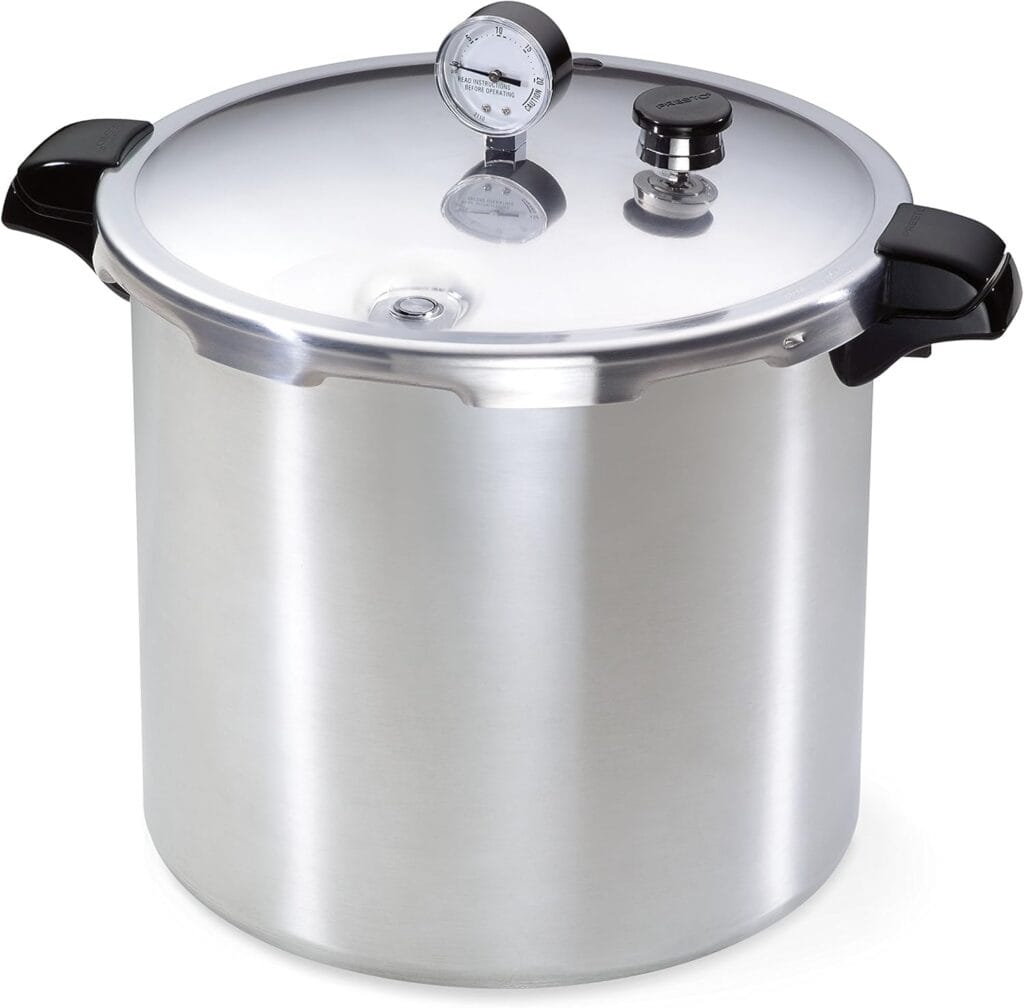
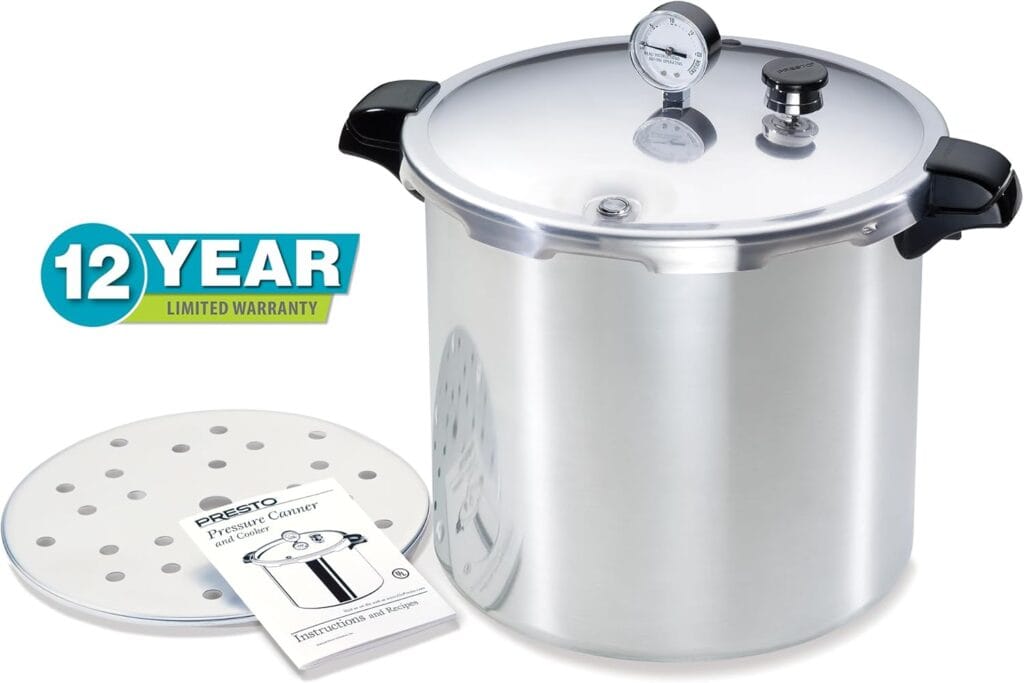
Presto 01781 23-Quart Pressure Canner
4.8 stars across 20,000+ ratings
If you are not sure which to buy, buy this one. The Presto 01781 is the canner you see on more homestead shelves than any other, an affordable aluminum 23-quart pot that holds 7 quart jars and processes vegetables, meat, broth, and beans by the book. It runs a dial gauge with an added weighted regulator, comes with the rack, and is easy to find replacement parts for years down the road. It is light enough to lift full with two hands and simple enough that a first-timer can run it without drama.
- Best for: beginners on a gas or electric-coil stove who want one canner that does everything.
- Keep in mind: the dial gauge should be tested once a year, and the bare aluminum base is not ideal for induction.
Best for Small Kitchens
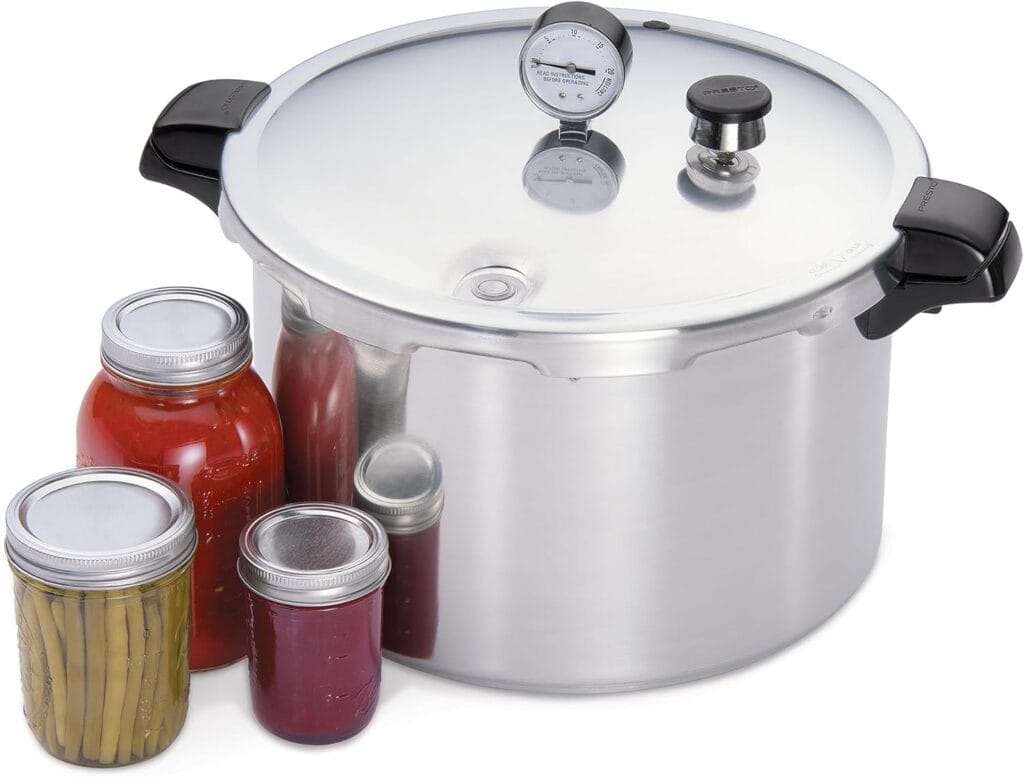
Presto 01755 16-Quart Pressure Canner
4.7 stars across 4,000+ ratings
Same trusted Presto design in a smaller body. The 16-quart holds about 7 pint jars in a single layer, weighs less, and fits stovetops and storage shelves that the big 23-quart crowds out. For a small household, an apartment kitchen, or a first season when you are canning a few jars at a time rather than a bushel, this is the sensible size. You lose batch capacity, not safety, and it uses the same dial-plus-weight system as its bigger sibling.
- Best for: small kitchens, small batches, and anyone who wants to start light.
- Keep in mind: you will run more batches for a big harvest, and like all dial gauges it needs an annual accuracy check.
Best for Glass-Top & Induction
Presto 01784 23-Quart Induction-Compatible Canner
4.8 stars across 5,000+ ratings
If you cook on a flat glass or induction top, this is the version to get. The 01784 keeps the familiar 23-quart Presto layout but adds a stainless-clad, induction-ready base so it heats evenly on a flat cooktop and is less likely to scratch the glass. You still get the dial gauge, the weighted regulator, and the same processing capacity as the standard model. It costs a bit more than the plain aluminum 01781, and that premium buys you a canner your stove will actually tolerate.
- Best for: glass-top and induction stoves that cannot safely run a bare-aluminum canner.
- Keep in mind: confirm your cooktop’s weight limit, since a full 23-quart canner is heavy, and the base still needs to be centered on the element.
Best Electric
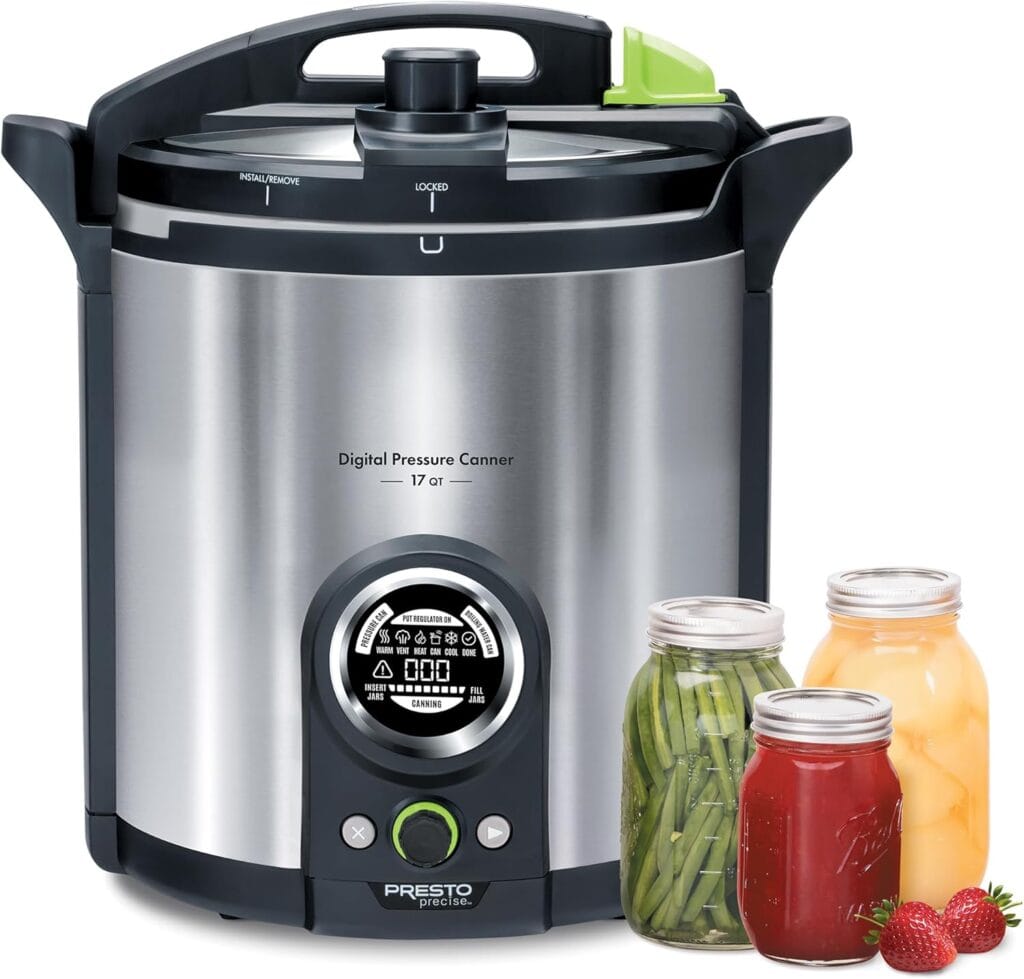
Presto 02152 17-Quart Digital Pressure Canner
4.6 stars across 5,000+ ratings
Stovetop canning means babysitting a burner to hold steady pressure. This countertop unit does that part for you, regulating pressure and timing automatically, and it is one of the few electric canners whose maker publishes USDA-based processing instructions for low-acid foods. It is also water-bath capable for high-acid jars, so one appliance covers both jobs. For someone intimidated by the stovetop dance, or without a strong enough burner, this removes most of the guesswork.
- Best for: hands-off canning, weak stovetops, and beginners who want the machine to manage pressure.
- Keep in mind: always follow the included USDA-based charts, hold less per batch than a 23-quart pot, and never assume a generic multi-cooker can do the same job.
Best Budget
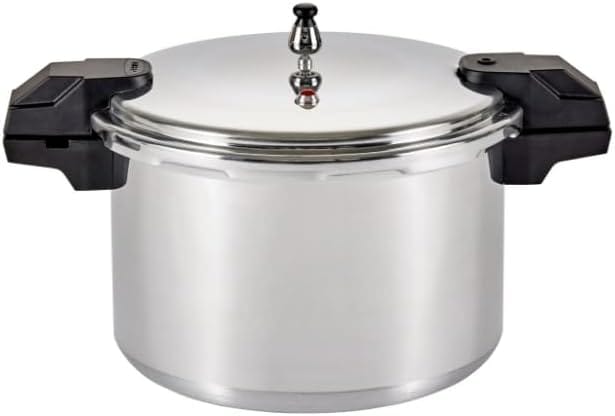
Mirro 92116 16-Quart Pressure Cooker/Canner
4.6 stars across 700+ ratings
The lowest-cost way onto this list. The Mirro 92116 is a 16-quart aluminum canner with a weighted gauge that rocks to vent pressure, so there is no dial to calibrate and one less thing for a beginner to get wrong. It doubles as a large pressure cooker for everyday meals. It is basic and it is light, but it follows the same proven weighted-gauge approach that has canned food safely for generations.
- Best for: the tightest budget and anyone who prefers a calibration-free weighted gauge.
- Keep in mind: it is a smaller, lighter pot, and Mirro’s canner line has thinned out, so check current availability before you count on a specific size.
Worth the Splurge: All American
If you already know canning is going to be a yearly habit, the All American pressure canner is the buy-it-once option. Instead of a rubber gasket that wears out, it seals metal-to-metal with a ring of wing nuts, so there is no gasket to replace and effectively nothing to fail. These pots are heavy, expensive, and built to outlast you, which is why they show up in extension demonstrations and on multi-generation homesteads. The trade-offs are real: the weight is a lot on a glass top, the price is two to three times a Presto, and All American has been moving its Amazon listings to newer bundles, so review counts there look low even though the product line is decades old. For most beginners a Presto is the smarter first buy, but if you want to spend once and never think about it again, this is the one.
New to canning? Start with the basics.
Before you load that first batch, our Beginner’s Canning eBook walks you through safe processing, headspace, and altitude adjustments step by step, so your pressure canner pays off from day one.
The Free Garden Starter Pack
Five printable pages that take the guesswork out of a first season, plus a short email every week or two when something is worth planting, picking, or putting up.
- A garden planning worksheet you can actually fill in
- A seed-starting and planting calendar
- A harvest log to track what really produced
No spam, ever. Unsubscribe in one click.
Thank you. You are on the list.
Your Garden Starter Pack is ready right now. Grab it here:
Download the pack (PDF)Keep an eye on your inbox. The next seasonal guide lands there first.
Frequently Asked Questions About Pressure Canners
Can I use a pressure cooker or Instant Pot for canning?
Not for low-acid foods. Most multi-cookers, even ones labeled with a canning setting, have not been tested by the USDA to hold safe pressure long enough for vegetables, meat, or stock, and the NCHFP does not recommend them for pressure canning. Use a tested stovetop pressure canner, or an electric canner whose maker publishes USDA-based processing instructions, like the Presto digital above.
Is an electric pressure canner safe for canning?
Only specific models are. An electric canner is safe for pressure canning if the manufacturer provides USDA-based processing times for the foods you are putting up, which a small number of units do. Generic electric “canners” without tested instructions are not safe for low-acid foods. Always follow the charts that came with your specific machine.
Can I use a pressure canner on a glass-top or induction stove?
Yes, if it is built for it. Choose a canner with a flat, induction-ready base, like the Presto 01784, and check your stove’s manual for a maximum canner weight and diameter. A heavy full canner can scratch glass or overheat a single element, so when in doubt an electric countertop canner avoids the stove issue entirely.
What size pressure canner is best for a beginner?
A 23-quart canner is the most popular all-around size because it holds 7 quart jars and makes each long canning session worthwhile. If you have a small kitchen, a small harvest, or a flat cooktop with a weight limit, a 16-quart canner is easier to handle and store. Both are safe; the difference is batch size.
Do I have to test the dial gauge every year?
If your canner has a dial gauge, yes. An inaccurate dial can under-process your jars, which is a safety risk, so have it checked once a year, usually free at your county extension office. Weighted gauges do not need testing because they vent pressure mechanically rather than reading it.
How long does a pressure canner last?
A well-cared-for aluminum canner like a Presto lasts many years, with the gasket and overpressure plug being the main wear parts you replace occasionally. A metal-to-metal canner like an All American has no gasket and can last for decades. Either way, store it clean and dry with the lid off so the seal lasts.
The Bottom Line
That steady jiggle of the weight is the sound of food being made safe, and the canner under it does not need to be fancy to do that job. For most beginners the Presto 01781 23-quart is the right first buy: affordable, proven, and easy to live with. Size down to the 16-quart for a small kitchen, choose the induction model for a glass top, or let the electric unit manage the pressure for you. Whatever you pick, learn the method first. Read up on preparing your jars and the wider methods of preserving food at home, follow tested processing times, and your first shelf of home-canned vegetables will be one you can trust.