How to Harvest Leaf Lettuce So It Keeps Growing
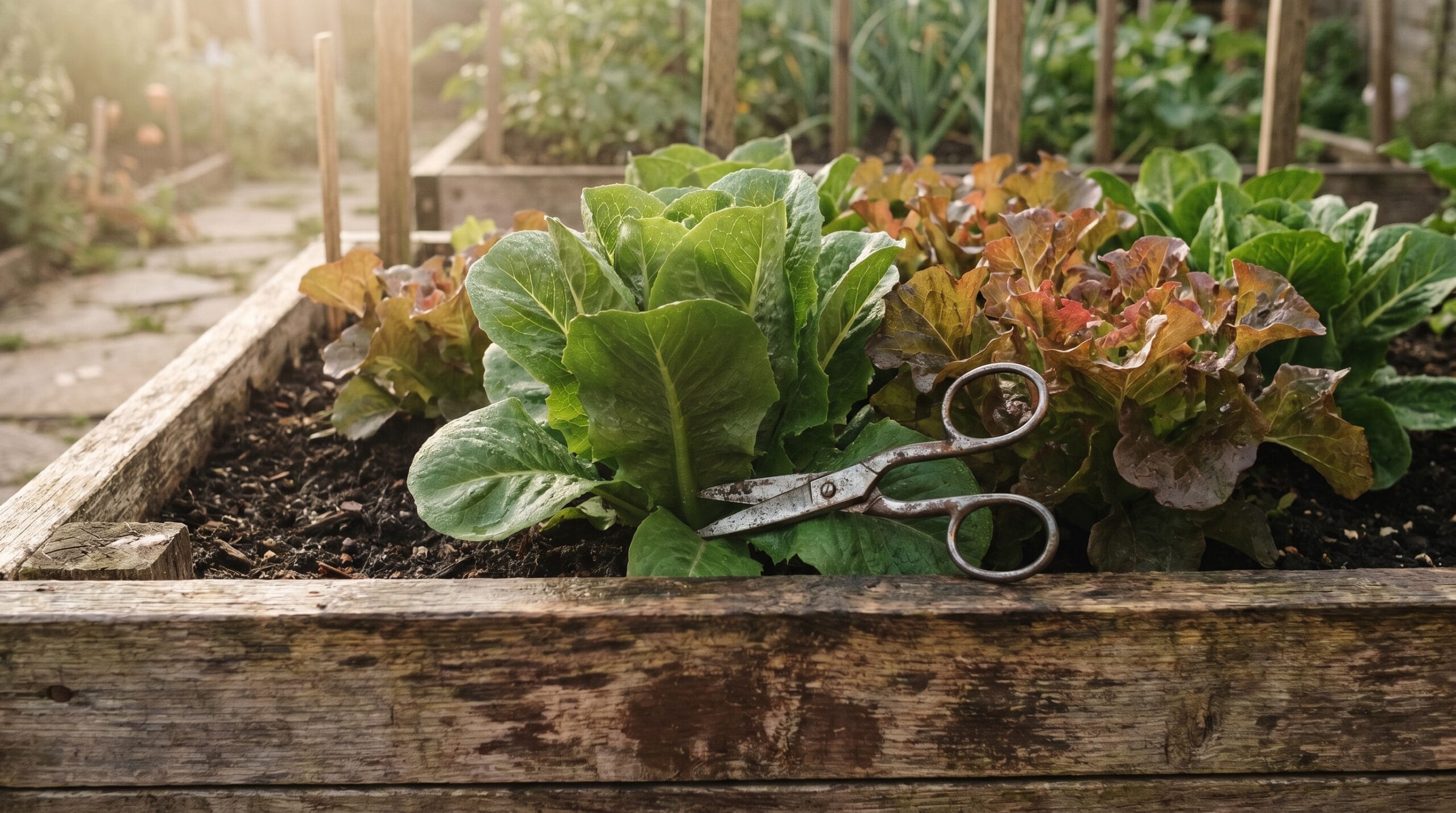
Learning how to harvest leaf lettuce correctly is what determines how long the plant keeps producing. Cut it wrong, and you get one salad and a plant that stalls. Cut it right, and the same row can feed you for six weeks or more. The difference comes down to one thing: whether you leave the central growing crown intact.
Most beginners either take too little out of caution or strip too many leaves at once without knowing the one-third rule. Neither mistake is permanent, but understanding the logic behind the method makes every harvest more deliberate and more productive.
To harvest leaf lettuce, cut outer leaves 1 inch above the soil using clean scissors, leaving the central growing crown untouched. Leaves are ready when they reach 3 to 6 inches long, usually 45 to 60 days from transplant. Removing no more than one-third of the plant at a time lets the crown regrow and produce another flush within 7 to 14 days.
Quick Answer
- Harvest when outer leaves reach 3 to 6 inches long, roughly 45 to 60 days from transplant
- Cut 1 inch above the soil line with clean scissors, never pull the leaves out by the roots
- Leave the central crown (the tight cluster of young leaves in the middle) completely untouched
- Take no more than one-third of the plant per harvest session
- Expect a new flush of leaves within 7 to 14 days after each cut
- Most plants support 3 to 5 harvests before bolting or flavor decline ends the season
- Harvest in the morning for the crispest, most moisture-rich leaves
When Leaf Lettuce Is Actually Ready to Harvest
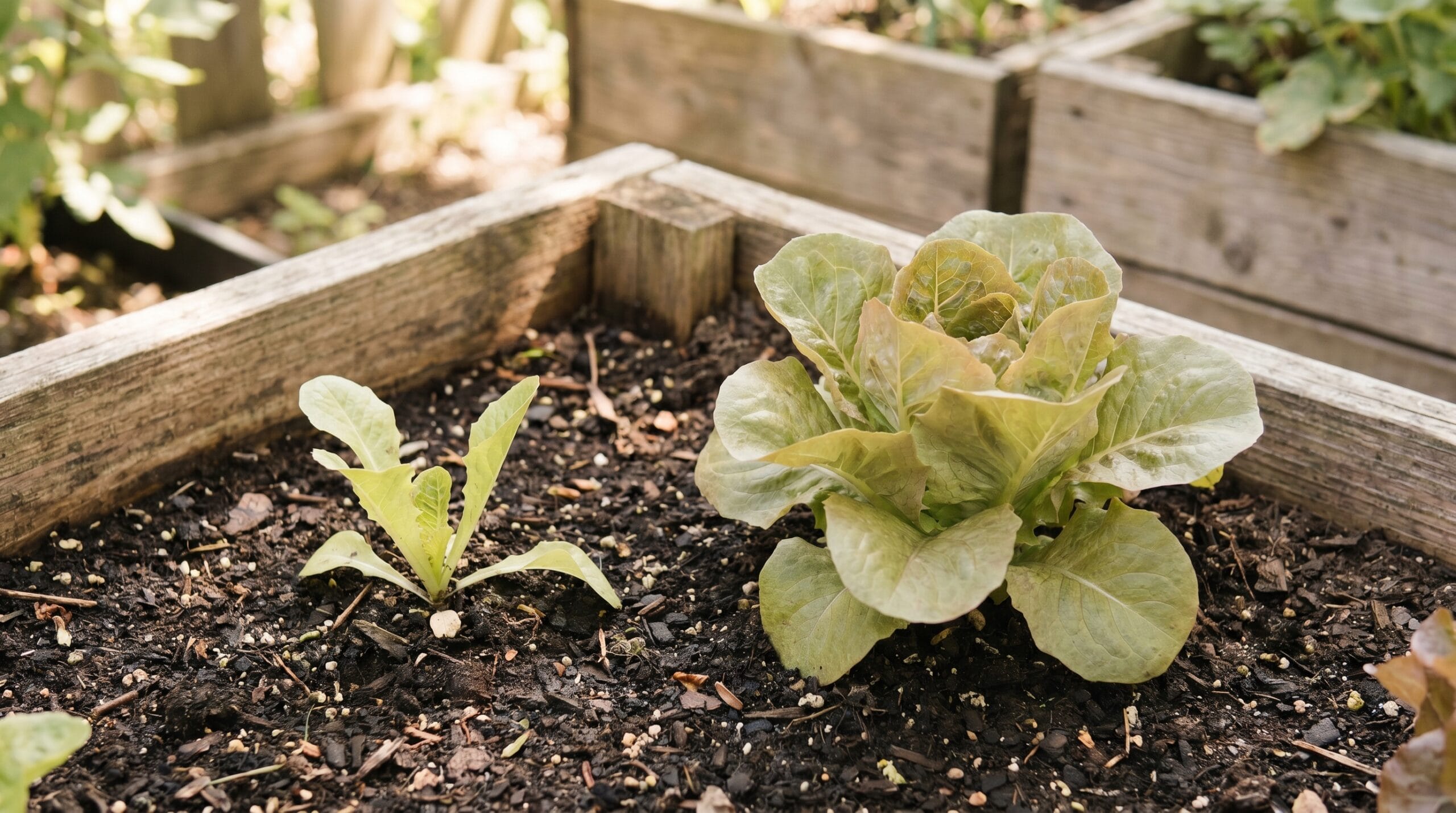
Size is the most reliable signal. Leaf lettuce outer leaves are ready when they reach 3 to 6 inches long. At that stage, they are fully colored, firm to the touch, and have enough leaf mass to be worth cutting. Smaller than 3 inches and you are taking the plant’s best growth energy before it has paid off. Bigger than 6 to 7 inches and the leaves can start to turn bitter, especially in warmer weather.
According to the University of Missouri Extension, leaf lettuce typically reaches harvest maturity 45 to 60 days from transplant, though this varies by variety and temperature. Note that this timeline applies to transplants; seeds started directly in the ground typically take longer, closer to 60 to 80 days, so do not use this benchmark if you sowed directly outdoors. Loose-leaf types in cool soil and full sun tend to come in faster. In heat above 75 F, the plant shifts energy away from leaf production and toward flowering, shortening the window.
A few visual cues help beyond measuring:
- Outer leaves should look fully colored. Pale or yellowing outer leaves usually signal nutrient stress or a watering problem, not readiness. Check your soil and watering routine before harvesting a stressed plant.
- The center crown should still look tight and compact. If the crown has already started to elongate or push upward, the plant is beginning to bolt.
- Bolting signs to watch for: leaves become narrower and more pointed, a central stalk pushes up from the middle, and the flavor turns sharply bitter. If you see bolting happening, harvest every usable leaf immediately. There is no stopping it once it starts.
Red and green loose-leaf varieties are harvested at the same size. Red varieties sometimes look denser because of their coloring, but the 3-to-6-inch benchmark applies to both.
Timing also matters within the day. Morning is the best time to harvest leaf lettuce. Leaves hold more moisture overnight and stay crisp before afternoon heat causes them to wilt slightly. A morning harvest gives you the best texture and the longest refrigerator life.
The Cut and Come Again Method
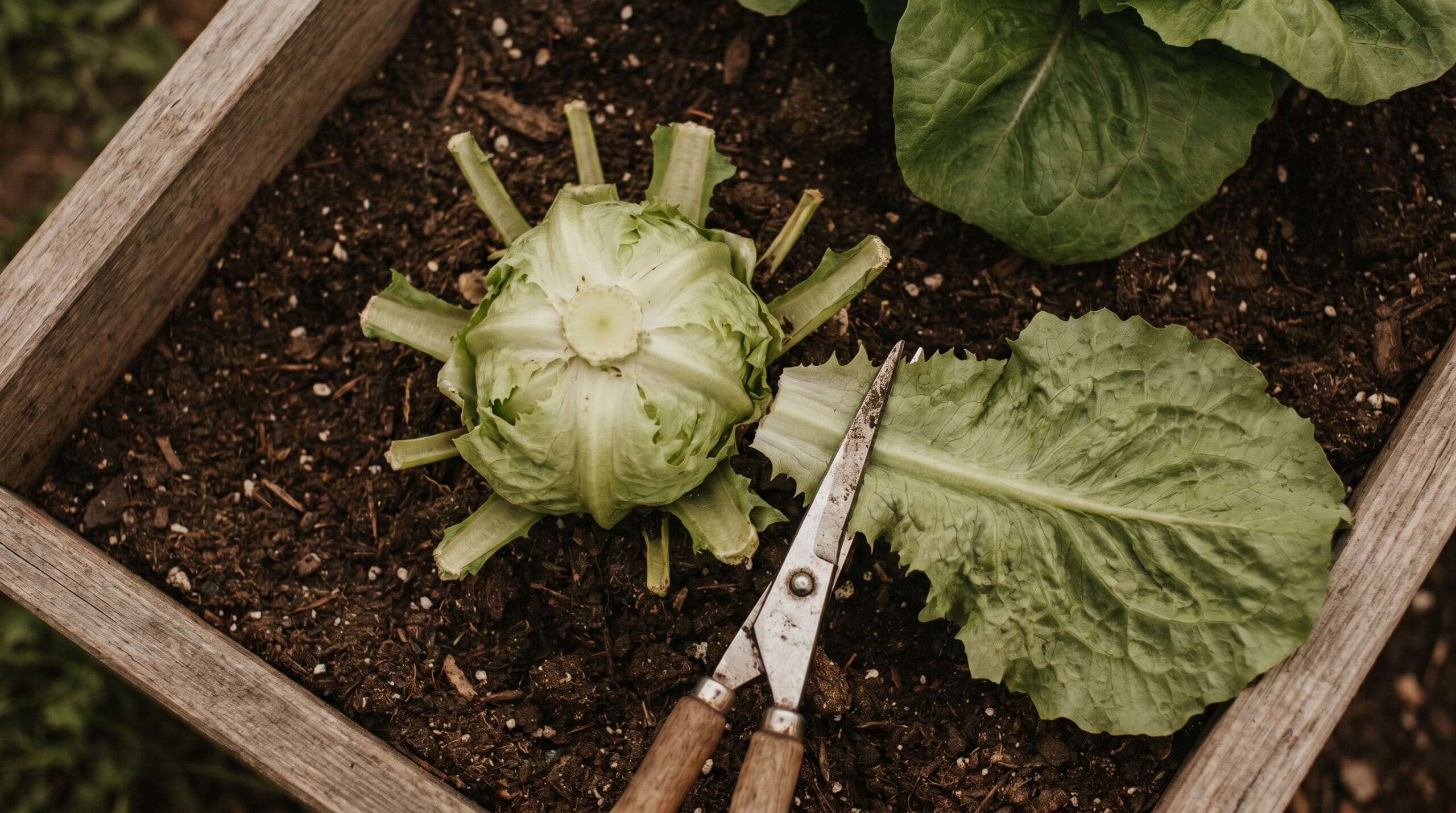
The cut-and-come-again method is the core technique behind a productive lettuce patch, and it is simpler than the name suggests. You cut the outer, oldest leaves and leave everything in the center alone. The plant treats this as a normal part of its growth cycle and redirects energy to the crown to replace what was removed.
Step by step:
- Use clean, sharp scissors or a knife. A dull blade bruises the cut edge of the leaf, which speeds wilting and can let pathogens in. Wipe blades with a damp cloth or a diluted isopropyl solution between plants if you are moving through a row, particularly if any plant shows spots or discoloration that could indicate disease.
- Select the outermost leaves first. These are the oldest and the ones the plant is already moving resources away from. Start at the outside and work inward, but stop before you reach the central cluster.
- Cut 1 inch above the soil line. Not at the soil. Not flush with the ground. About an inch up the stem, which leaves a small stub that protects the crown and gives the plant a clean surface to seal over.
- Never pull. Pulling leaves out instead of cutting them damages the root system and the crown. Roots that are disturbed or torn take extra energy to recover, which slows your next harvest.
- Stay within the one-third rule. If your plant has 15 leaves, take no more than 5 in one session. More than that, and you are removing the plant’s ability to photosynthesize enough to recover quickly.
After a proper cut-and-come-again harvest, new leaves appear from the crown in one to two weeks under normal growing conditions. In cool weather with consistent moisture, the rebound can be closer to seven days. In hot weather, it takes longer.
Can You Harvest Leaf by Leaf Instead of Cutting?
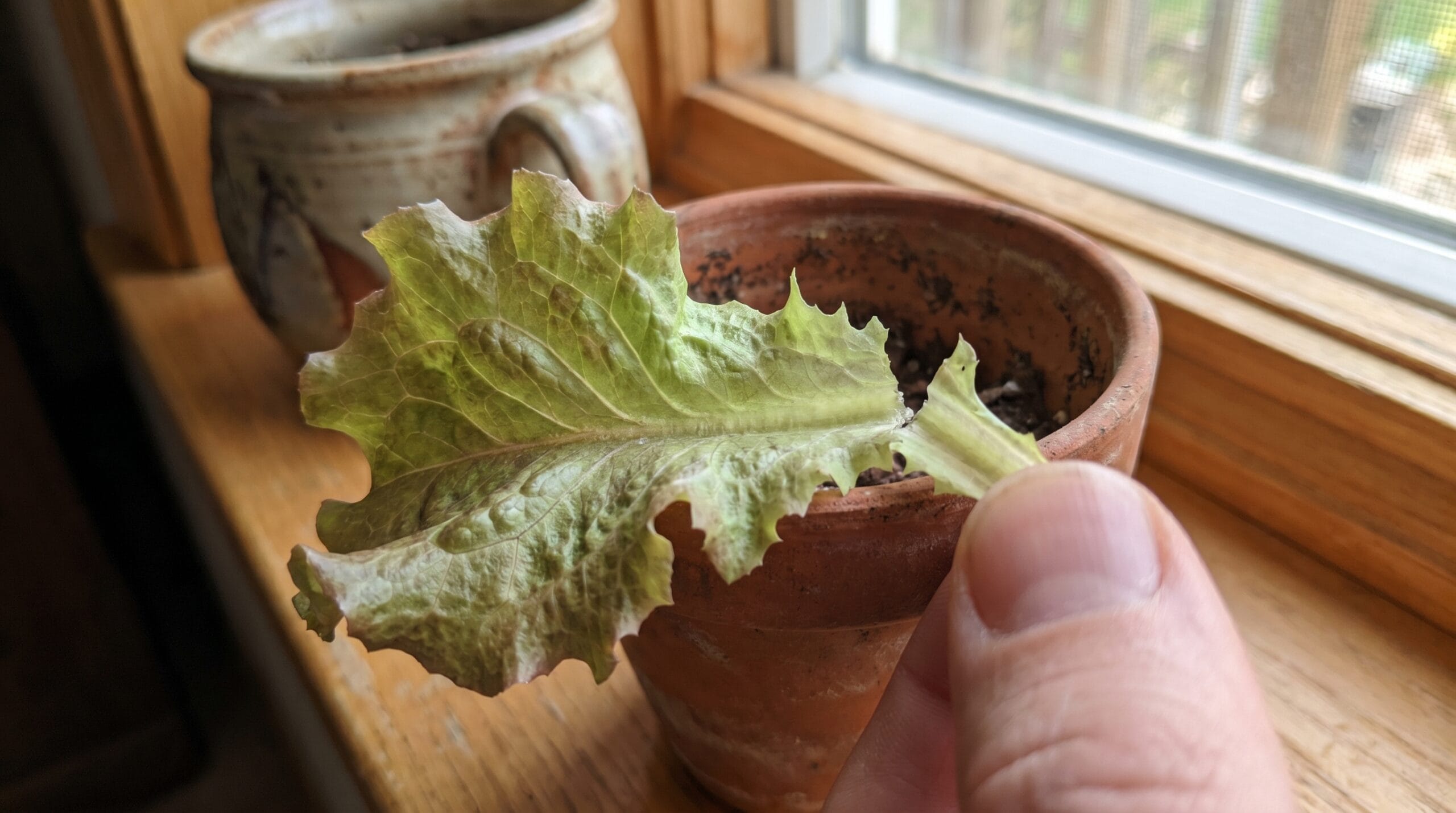
Yes. Snapping or pinching individual leaves off by hand is a valid method, especially for small harvests or when a plant is still young and you want to disturb it as little as possible.
The cleanest technique is to bend the leaf down and away from the plant and snap it at the base where it meets the stem. Do not tear upward, which can strip stem tissue and create ragged wounds that are slower to seal. A clean snap leaves a tidy break point.
Leaf-by-leaf harvesting works well in these situations:
- The plant is in its first three to four weeks and you only need a handful of leaves for a salad
- You are growing leaf lettuce in a container where the plant is smaller and each leaf is more valuable
- You want to thin a dense planting without committing to a full scissor harvest
The practical limit with this method is about 4 to 5 leaves per plant per session. Beyond that, you are slowing your harvest and probably stressing the plant more than a clean scissors cut would have. For larger harvests, scissors are faster and actually gentler because the cut is more controlled.
How Many Times Can You Realistically Harvest Before the Plant Gives Out
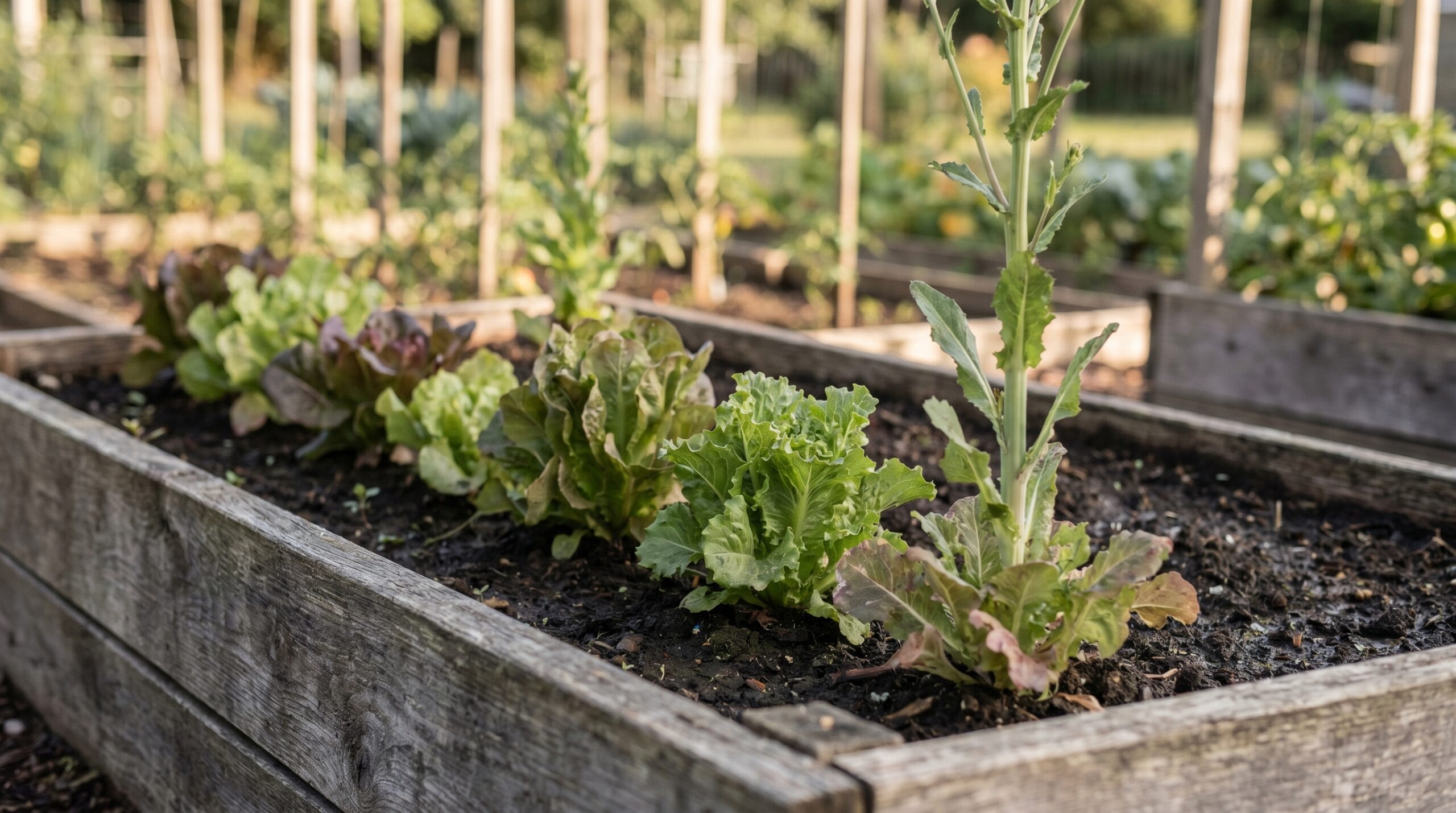
Most leaf lettuce varieties typically support 3 to 5 cut-and-come-again harvests over roughly a 4 to 6 week window. That is the realistic range under decent growing conditions: cool temperatures, adequate moisture, and a well-amended bed. Push the plant hard in heat and the window shrinks. Treat it well in spring or fall and you can stretch toward the higher end.
A few factors shape exactly how many harvests you get:
Temperature is the biggest variable. As noted by University of Missouri Extension research on lettuce production, heat above 75 F accelerates bolting, which redirects the plant’s energy toward flowering rather than leaf production. This cuts your harvest window sharply in summer gardens.
Flavor declines before yield does. Most leaf lettuce starts to taste more bitter after the third or fourth cut, even when the plant is still producing leaves. This is especially noticeable in warmer conditions. If your salads are starting to taste sharp or unpleasant, the plant is telling you it is winding down.
Succession planting is the real answer. Plan new sowings every 2 to 3 weeks so a fresh row is coming in just as the older one fades. If you are working with limited space, pairing lettuce with other cool-season crops in a small-space container or raised bed setup makes succession planting much easier to manage. This is how you keep steady harvests from late winter through early summer, and again from late summer through fall.
Bolting is the natural endpoint. Once a flowering stalk appears at the center of the plant, the harvest window is over. Leaves at that point are edible but very bitter. You have two options: harvest everything that looks usable and pull the plant, or consider feeding bolted lettuce leaves to your chickens rather than the compost pile, they tend to eat them willingly.
How to Store Freshly Cut Leaf Lettuce So It Stays Crisp
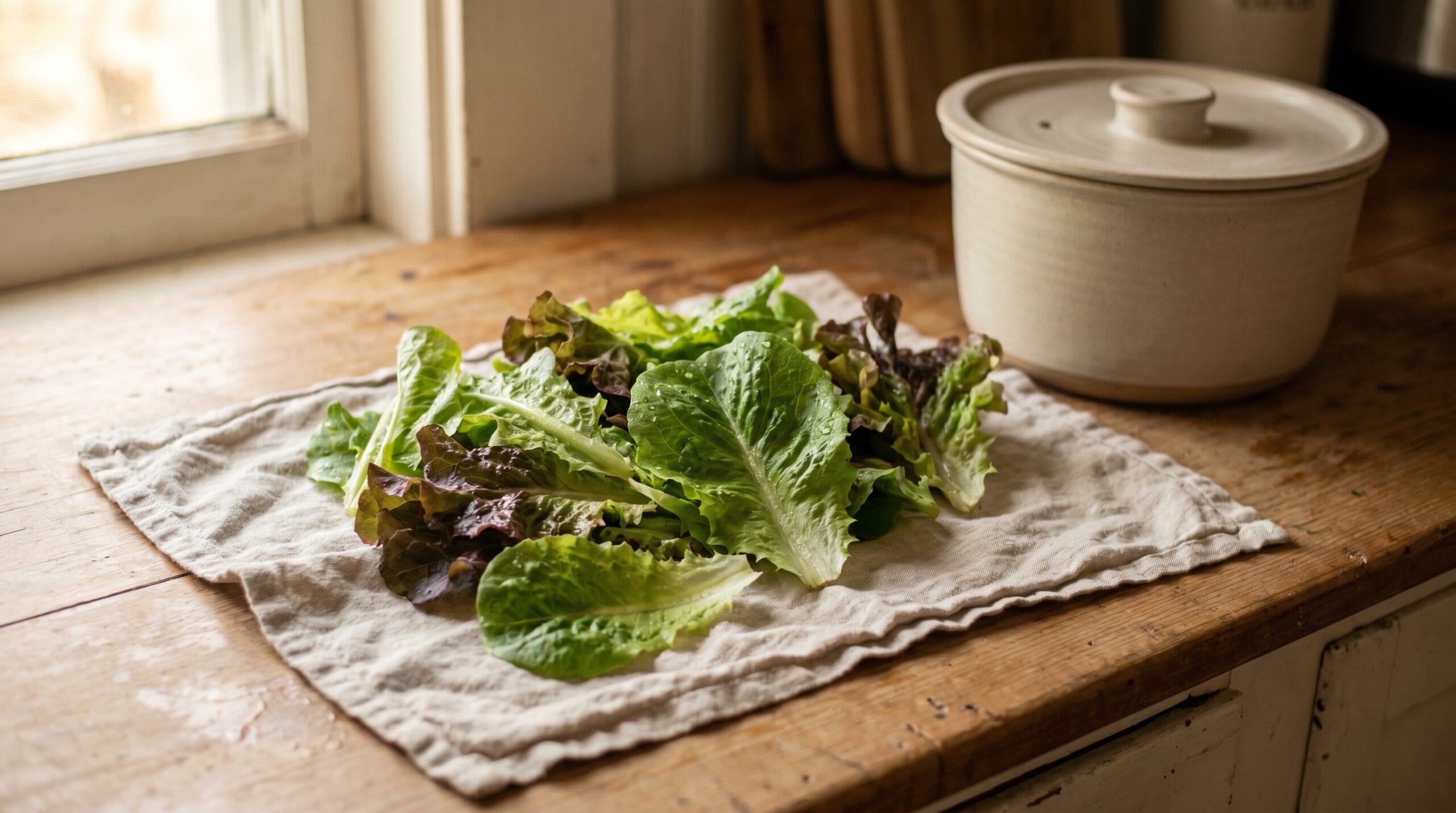
Harvesting correctly means nothing if the lettuce wilts in a drawer before you use it. Post-harvest handling is where most beginners lose a significant portion of their yield, and it gets almost no attention in standard growing guides.
What to do immediately after cutting:
Rinse in cold water right away. Cold water removes soil, slows cellular stress from the cut, and revives leaves that started to wilt slightly in the garden. Do not use warm water. The cold rinse is part of what keeps the texture firm.
Dry thoroughly before storing. This is the step beginners skip, and it is the reason refrigerated lettuce turns to slime after two days. Excess surface moisture creates rot, not crispness. Use a salad spinner, or spread the leaves on a clean kitchen towel and pat gently.
Wrap and refrigerate correctly. Wrap the dried leaves in a damp (not wet) paper towel and place them in a zip bag or airtight container. According to USDA guidelines on cold storage for fresh leafy greens, the optimal refrigerator temperature is 32 to 36 F, and properly stored fresh-cut leaf lettuce can last up to 7 to 10 days at that temperature. Lettuce left unwashed and loosely bagged typically deteriorates much faster, often within a day or two.
Keep it away from ethylene-producing vegetables. Tomatoes, apples, and cucumbers all release ethylene gas, which accelerates ripening and wilting in nearby produce. Store your lettuce in a separate crisper drawer away from these. Garlic and onion, while not ethylene producers, can transfer odor to delicate greens, keep those separated too.
How to Keep Leaf Lettuce Growing Longer Into the Season
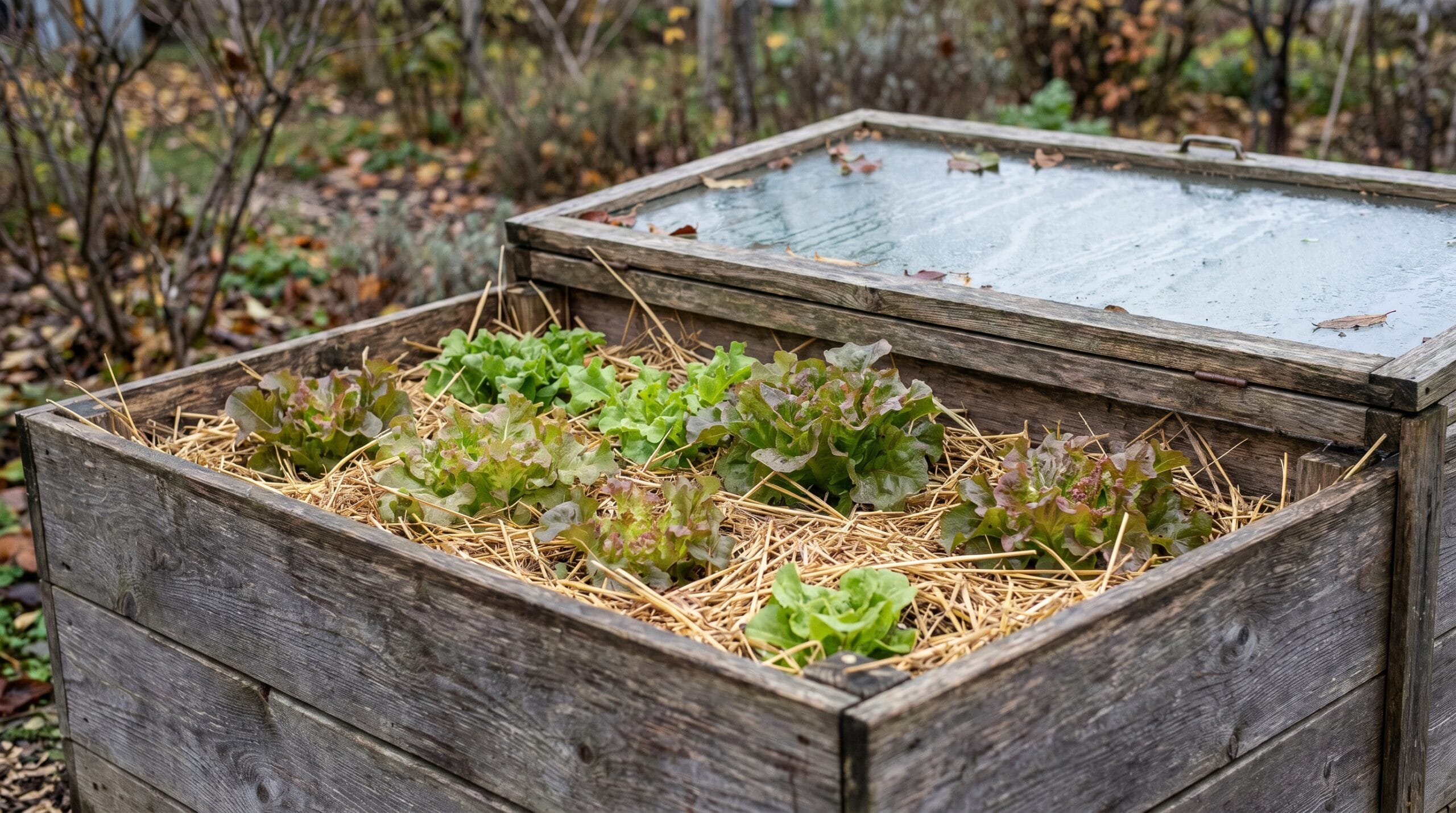
The harvest technique matters, but so does the environment the plant is growing in. A few simple adjustments can extend your harvest window by weeks and increase the quality of each cutting.
Mulch the soil around the base. A 2-inch layer of straw or shredded leaves can keep soil noticeably cooler in warm weather, roughly 5 to 10 degrees depending on conditions. That temperature buffer delays bolting and can extend the harvest window in spring. It also helps retain moisture, which matters more for lettuce than most crops.
Water consistently, not occasionally. Lettuce in dry soil bolts faster than any other stress factor. The root system is shallow, so it responds quickly to soil drying out between waterings. Aim for consistently moist soil, not waterlogged. In a raised bed with compost-amended soil, drainage is usually good enough that overwatering is rarely the problem, underwatering is.
Use a cold frame or row cover for fall extension. A cold frame or floating row cover can often push your fall harvest window several weeks later, roughly 3 to 4 weeks in many U.S. climates, though how much protection you gain depends on your region and how hard your winters come on. Leaf lettuce handles light frost reasonably well, but a cover prevents the hard freezes that damage leaves and end the season abruptly.
Shade cloth in summer. If you are trying to grow through summer heat, a 30 to 40 percent shade cloth reduces the soil temperature and light intensity enough to slow bolting in many climates. This is a temporary fix, though, and what works in a mild coastal climate may not be enough in a hot inland region. Heat-tolerant varieties like ‘Jericho’ or ‘Nevada’ are a better long-term strategy for summer growing wherever you are.
Compost-amended soil produces noticeably better results. Leaf lettuce grown in a raised bed with compost-amended soil tends to produce larger leaves and bounce back faster after each cutting. Compost provides a slow release of nitrogen that supports the leaf production the cut-and-come-again method depends on. If your leaves are coming back thin or pale after cutting, a side-dressing of compost or a diluted liquid feed can help.
If you are just getting your first garden started, lettuce is one of the best crops to begin with precisely because it tolerates imperfect conditions while you figure out your watering and soil rhythms.
The Free Garden Starter Pack
Five printable pages that take the guesswork out of a first season, plus a short email every week or two when something is worth planting, picking, or putting up.
- A garden planning worksheet you can actually fill in
- A seed-starting and planting calendar
- A harvest log to track what really produced
No spam, ever. Unsubscribe in one click.
Thank you. You are on the list.
Your Garden Starter Pack is ready right now. Grab it here:
Download the pack (PDF)Keep an eye on your inbox. The next seasonal guide lands there first.
Frequently Asked Questions About Harvesting Leaf Lettuce
Will Leaf Lettuce Grow Back After Cutting?
Yes, leaf lettuce grows back after cutting as long as the central growing crown is left intact. The crown is the tight cluster of small, undeveloped leaves at the center of the plant. If you cut outer leaves only and leave the crown untouched, the plant redirects its energy upward and produces a new flush of leaves within 7 to 14 days.
Can I Harvest Red and Green Leaf Lettuce the Same Way?
Yes. Both red and green loose-leaf varieties are harvested using the same cut-and-come-again method, and the same size benchmarks apply. Use clean scissors, cut outer leaves at 1 inch above the soil, and leave the crown alone. Red varieties may look slightly more compact due to denser leaf coloring, but they are ready at the same 3-to-6-inch leaf length as green types.
How Do I Know If Bolted Lettuce Is Still Edible?
Bolted lettuce is technically edible, but the flavor is sharply bitter and most people find it unpleasant. Once the central stalk has pushed up and the plant has flowered, the sugars in the leaves are largely gone and the bitterness compounds dominate. You can harvest and taste a leaf to check, but most gardeners pull the plant at that point or use the remaining leaves for compost or chicken feed rather than salad.
Is Wild Lettuce the Same as Garden Lettuce?
No. Wild lettuce (most commonly Lactuca virosa or Lactuca serrata) is a completely different plant from garden leaf lettuce (Lactuca sativa). Garden leaf lettuce is what you grow in a raised bed or container. Wild lettuce grows as a weed in disturbed soil and roadsides and has a distinct milky sap and much stronger bitterness. Growing garden lettuce at home is legal everywhere in the U.S. Wild lettuce has different regulatory considerations in some areas, but that is a separate topic from harvesting the lettuce growing in your backyard garden.
How Do You Pick Leaf Lettuce So It Keeps Growing?
Pick the outermost leaves first, cutting 1 inch above the soil line with clean scissors, and never remove more than one-third of the plant’s total leaves in a single session. Leaving the central crown undisturbed is the one rule that determines whether your plant regrows. Follow that rule and you can expect multiple harvests from each plant over 4 to 6 weeks.
What Is the Best Time of Day to Harvest Leaf Lettuce?
Pick leaf lettuce in the early morning, after the dew has dried but before the sun heats the bed. The leaves hold the most water then, so they are crispest and keep the longest after cutting. Lettuce harvested in the afternoon heat wilts fast and can turn limp within a day. If you miss the morning, the next best window is the cool of early evening.
Should You Cut Leaf Lettuce With Scissors or Pinch It by Hand?
Clean scissors or a small sharp knife give the best results, because a clean cut heals quickly and does not bruise the leaf or disturb the crown. Pinching or tearing by hand works when you have nothing else, but it tends to crush the stem and can pull the shallow roots if you tug too hard. Whichever you use, cut about 1 inch above the soil and wipe the blade between plants if any of them look diseased.
Wrapping Up
Leaf lettuce is a crop that rewards consistency over intensity. The cut-and-come-again method works because it mirrors what the plant already wants to do: push new growth from the center while the outer leaves age out. Take those outer leaves on a regular schedule, respect the one-third rule, and keep the soil moist and cool, and a single planting can supply fresh salad greens for a month or more.
When the plants finally bolt or the flavor turns, pull them, work in a bit of compost, and put in the next succession. Two or three staggered plantings, spaced two to three weeks apart, is usually enough to carry most gardens from the last frost through the first real heat of summer, and again from late summer into fall. That rhythm takes one season to dial in and very little effort to repeat. Late summer is the moment to plan those successions deliberately, which our guide to growing a fall garden works through by frost date.