Best Seed Starting Mix: 5 Picks for Sturdy Seedlings (2026)
In Homestead is reader-supported. When you buy through links on this page, we may earn a small commission at no extra cost to you. See our affiliate disclosure. As an Amazon Associate I earn from qualifying purchases.
Every seedling starts in a thimbleful of mix, and that mix does more work than most beginners realize. It has to hold enough water for a seed to swell and sprout, drain well enough that tiny roots get air, and stay fine and loose so the first root can push through without a fight.
Heavy, dense potting soil and garden dirt can restrict drainage and root growth in small cells. A fine seed starting mix avoids that, and it is especially useful for tiny seeds and shallow trays.
This guide compares five seed starting mixes, from budget bags to organic and peat-free options, and explains how to use them, when to feed seedlings, and how to make your own, using extension guidance.
Table of Contents
Quick Picks
- Best overall: Black Gold Natural & Organic Seedling Mix. Fine, even and OMRI Listed, with a wetting agent.
- Best budget pick: Miracle-Gro Indoor Potting Mix for Seed Starting. An inexpensive 8-quart bag.
- Best organic: Espoma Organic Seed Starter. Peat, perlite and yucca extract.
- Best peat-free: Burpee coconut coir bricks. Compact bricks that expand in water.
- Best no-mess alternative: Jiffy peat pellets. No bags, no filling trays.
Seed Starting Mix vs Potting Soil
A seed starting mix is a light, soilless blend, usually peat or coconut coir with perlite or vermiculite, with finer particles than ordinary potting mix. That fine texture suits small seeds and shallow cells, and it drains well enough that roots get air.
You do not always need a special bag. University of Maryland Extension notes that a good general potting mix can start most vegetable seeds. A dedicated seed starting mix earns its keep with tiny seeds such as lettuce and many flowers. What you should not use is garden soil, which is too dense for cells and can bring in weeds and disease.
What to Look for in a Seed Starting Mix
Fine, Even Texture
Look for a mix without sticks, bark chunks or clumps. Small seeds need close contact with the mix, and big pieces leave air pockets and uneven moisture in small cells.
Peat, Coir and What Is Added
Peat moss and coconut coir make up the base of most mixes and hold moisture. Perlite, the white specks, adds air and drainage, and vermiculite holds extra water. Peat is acidic, so makers add limestone to adjust the pH, and dry peat repels water, which is why many bags include a wetting agent. Coir wets easily but varies in quality, so buy it from a brand you trust.
Fertilizer or No Fertilizer
Seeds carry enough food to germinate, so a seed starting mix does not need much fertilizer. Some bags have none, some have a small starter charge, and a few are pre-fed for weeks, such as PRO-MIX’s organic seed starting mix, which its maker says feeds for up to three months. Read the bag: it decides when you start feeding.
Organic Labels
“Organic” on a bag and “OMRI Listed” are not the same thing. OMRI lists products that are allowed in certified organic production. If that matters to you, look for the OMRI seal on the exact bag.
The 5 Best Seed Starting Mixes
Best Overall
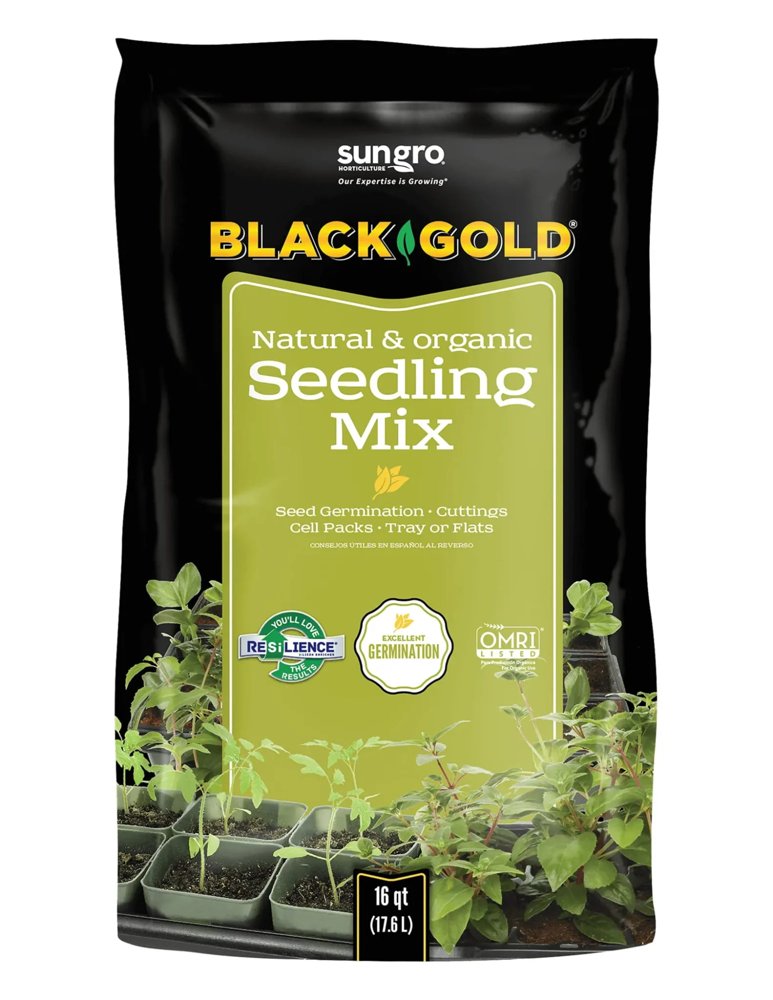
Black Gold Natural & Organic Seedling Mix
Black Gold’s seedling mix is what a seed starting mix should be: fine, light and even, made from Canadian sphagnum peat and perlite with an organic wetting agent so water soaks in evenly instead of running off the top. Sun Gro describes it as low in salt, which young roots appreciate, and it is OMRI Listed.
It contains no added fertilizer, which suits seed starting: seedlings need little feeding until their true leaves appear, and then you control exactly what they get.
- Best for: most beginners starting vegetables and flowers in cell trays.
- Keep in mind: with no starter fertilizer, you will need to begin feeding once true leaves appear. Like any peat mix, moisten it before filling trays.
Best Budget Pick
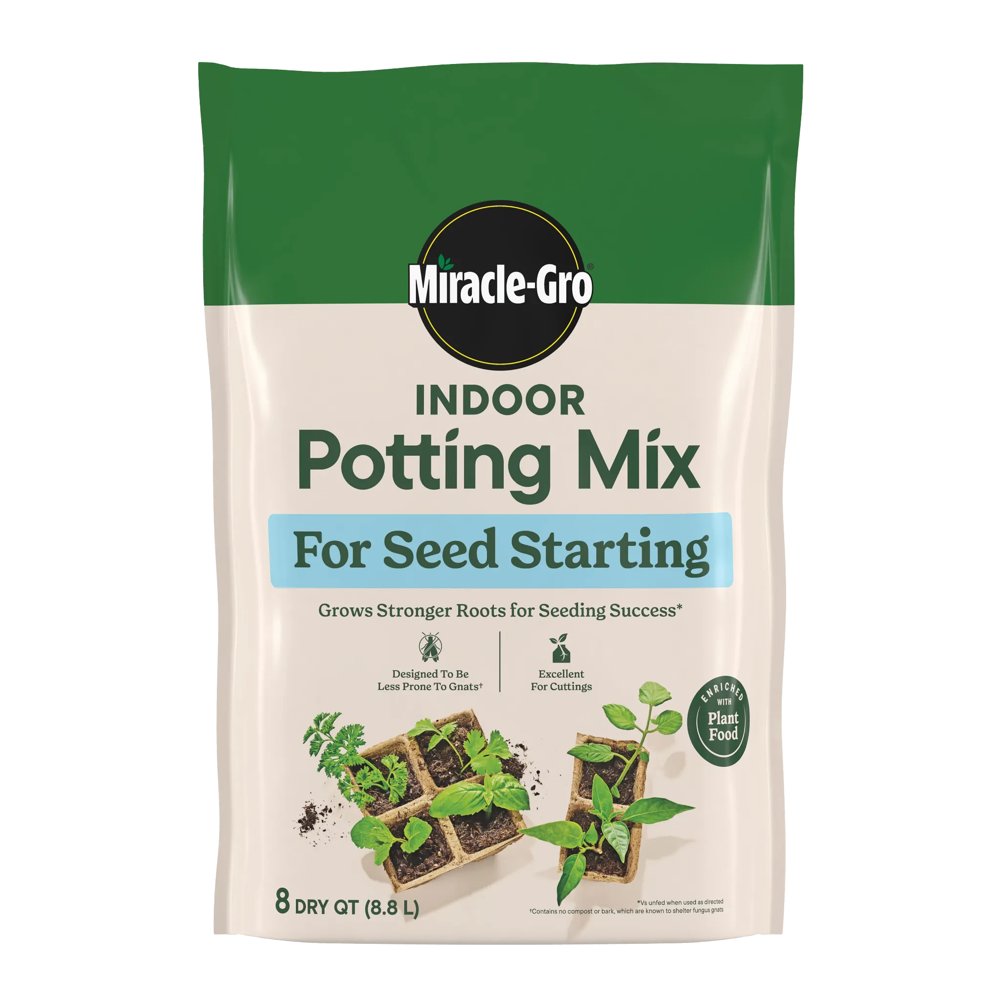
Miracle-Gro Indoor Potting Mix for Seed Starting
Miracle-Gro’s seed starting mix comes in an inexpensive 8-quart bag that is easy to find in many stores. It is a peat and perlite mix with a wetting agent and a very small starter fertilizer charge. Miracle-Gro says the bag is a renamed version of its older Seed Starting Potting Mix, with the same formula.
The small 8-quart bag is enough for several trays, and the mix is fine enough for small seeds.
- Best for: beginners who want an inexpensive bag.
- Keep in mind: some owners report sticks and chunks, and it can be slow to wet when bone dry, so moisten it in a bucket first. It is not an organic product.
Best Organic
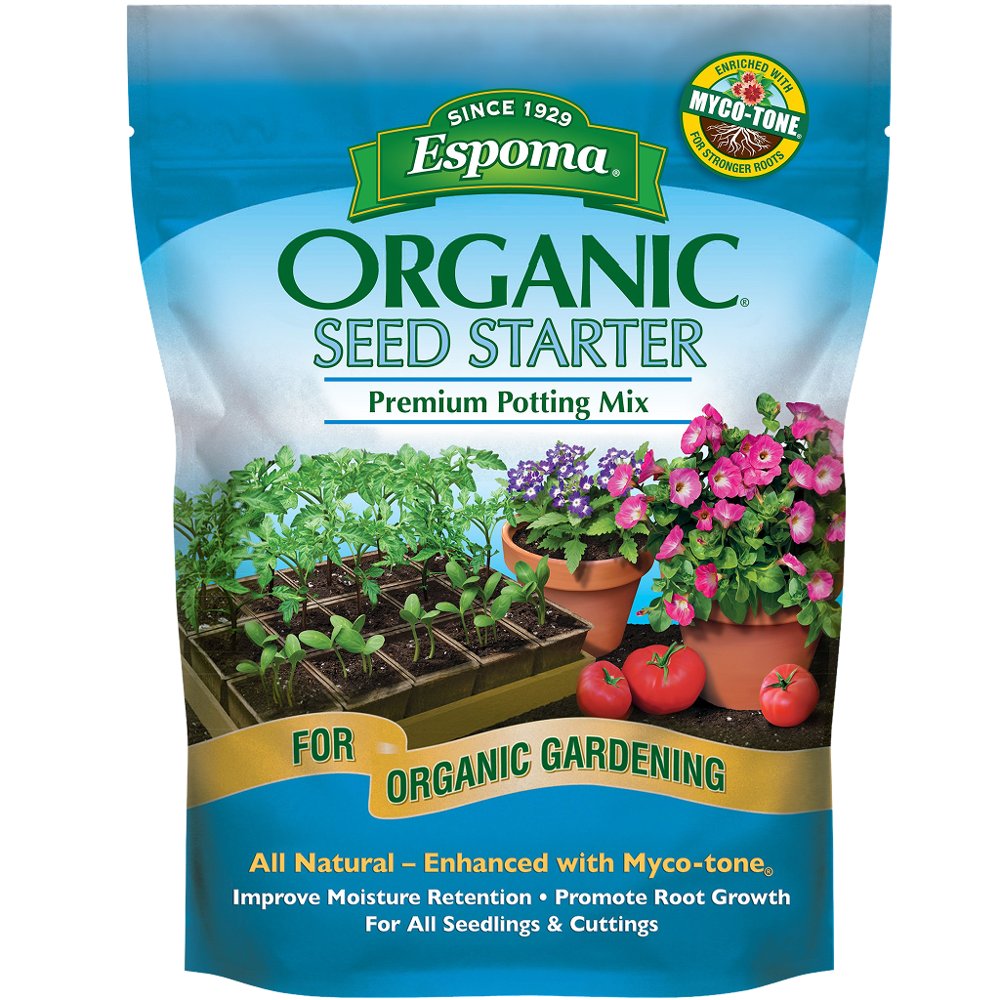
Espoma Organic Seed Starter
Espoma’s seed starter is 80 to 90 percent sphagnum peat with perlite, limestone to adjust the pH and yucca extract, which helps the mix take up water. It also includes Espoma’s mycorrhizal fungi.
It is labeled Natural & Organic and is a good choice if you want a widely sold organic-style bag from a company most gardeners know.
- Best for: organic gardeners who want a familiar, easy-to-find bag.
- Keep in mind: there is no added fertilizer, so plan to feed after true leaves. Espoma labels it natural and organic, but check the bag for an OMRI seal if you need a listed product.
Best Peat-Free (Coir)
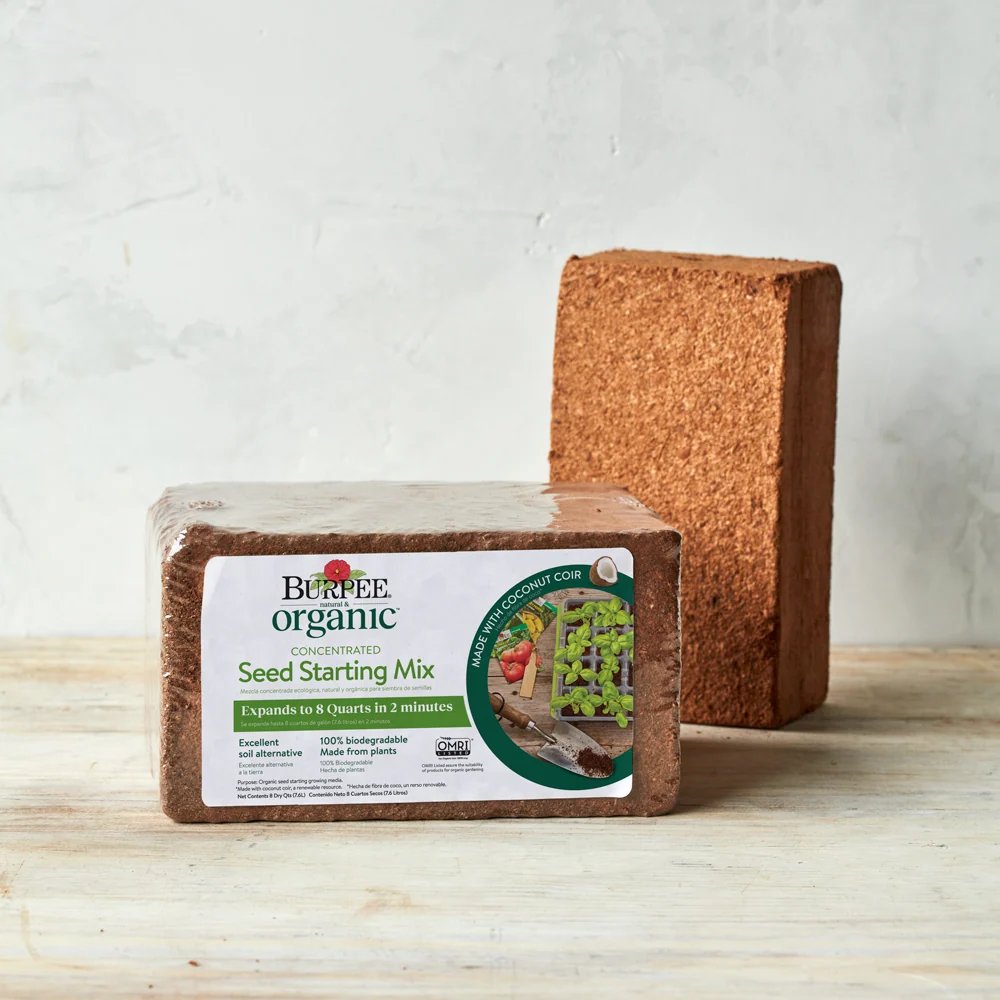
Burpee Organic Coconut Coir Seed Starting Concentrate (2-Pack)
These compressed coconut coir bricks expand in water to about 8 quarts each, so a two-pack makes about 16 quarts of light, peat-free mix while taking up very little room on the shelf until you need it.
Coir wets easily and is a good option if you want to avoid peat. Burpee says it contains no fertilizer.
- Best for: gardeners who want a peat-free mix that stores compactly.
- Keep in mind: soak the bricks before use, and Burpee advises adding fertilizer once seedlings have four true leaves. Coir quality varies, and “peat-free” does not automatically mean a smaller environmental footprint.
Best No-Mess Alternative
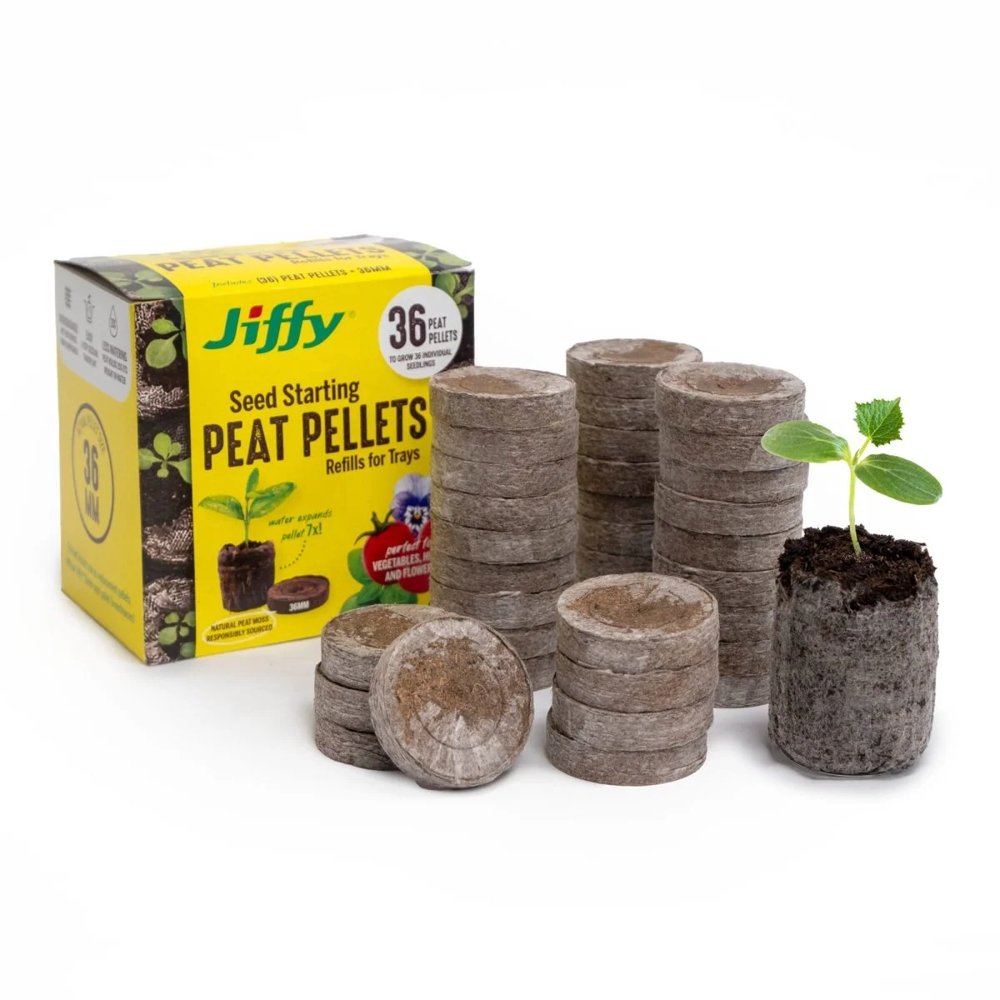
Jiffy 36mm Peat Pellets
Peat pellets skip bags and tray filling altogether. Set the dry discs in a tray, add warm water and they swell into small, netted plugs ready for seed. When the seedling is ready, you plant the whole pellet.
They are tidy and simple for a small batch on a windowsill or a first try at seed starting.
- Best for: small batches and anyone who wants to avoid mixing and filling trays.
- Keep in mind: pellets dry out quickly, some owners report mold on the surface, and the netting can persist in the soil, so tear it open at planting. They are small for long-season crops like tomatoes, which need potting up.
Quick Comparison
| Pick | Base | Fertilizer | OMRI | Wetting agent |
|---|---|---|---|---|
| Black Gold Seedling Mix | Peat, perlite | None added | OMRI Listed | Organic wetting agent |
| Miracle-Gro Indoor Seed Starting | Peat, perlite | Small starter charge | No | Yes |
| Espoma Seed Starter | Peat, perlite | None added | Natural & Organic label | Yucca extract |
| Burpee Coir Concentrate | Coconut coir | None | See bag | Not stated |
| Jiffy peat pellets | Peat | Not stated | No | Not stated |
How to Use Seed Starting Mix
Moisten It Before You Fill the Trays
Dry, peat-based mix sheds water at first. Pour some into a bucket or tub, add warm water a little at a time and work it with your hands until it feels like a wrung-out sponge: damp all the way through, but no water drips when you squeeze it. Then fill your seed starting trays, firm it lightly and sow.
When to Start Feeding Seedlings
Utah State University Extension advises starting to fertilize seedlings once they develop their first true leaves, the leaves that appear after the first pair. Use a diluted liquid fertilizer, following the label. If your mix already contains fertilizer, follow the bag instead of adding more right away.
Avoiding Damping-Off
Damping-off is a fungal disease that makes young seedlings collapse at the soil line. No mix prevents it on its own, but you can lower the risk: use fresh mix and clean trays, keep the mix moist rather than soggy, water from below, give seedlings good airflow and remove humidity domes once they sprout. Strong light helps too; see our guide to grow lights for seedlings.
Can You Reuse Seed Starting Mix?
Start each season with fresh mix for new seedlings, since old mix can carry disease and has lost its structure. Used mix can go into the compost pile or be worked into garden beds.
DIY Seed Starting Mix
Utah State University Extension gives a simple homemade recipe: equal parts peat moss, perlite and vermiculite. Mix them in a tub, moisten before use, and since it has no fertilizer, start feeding when the first true leaves appear. Wear a dust mask while mixing dry ingredients.
Mix for Soil Blocks
Soil blocks are free-standing cubes of compressed mix that replace plastic cells. They need a more cohesive mix than ordinary potting mix, which Penn State Extension says is not the right consistency. Its master gardeners give a blocking recipe built around peat, and many growers buy a ready-made blocking mix such as Johnny’s 512 Mix, which is sold mainly by Johnny’s Selected Seeds.
Handle Bagged Mix Safely
Dry peat and perlite are dusty, so open bags outdoors or away from your face, dampen the mix before working it, and wear gloves and a dust mask. Potting mixes and compost have also been linked to rare cases of Legionnaires’ disease from the bacterium Legionella longbeachae, as described in a CDC journal study, so wash your hands after handling any bagged mix.
How We Chose
These mixes were researched rather than tested side by side, and we would rather say that plainly. We compared published ingredients, fertilizer content, wetting agents, organic and OMRI status and bag sizes, and noted individual owner reports of sticks, slow wetting or mold; we could not establish how often those issues occur. Our how-to advice follows extension guidance.
We do not list prices, because they change constantly. Use the buttons to check current prices.
Frequently Asked Questions About Seed Starting Mix
Can I use regular potting soil to start seeds?
A good-quality potting mix works for most vegetable seeds, as Maryland Extension notes. Sift out any large chunks for small cells. A fine seed starting mix is better for tiny seeds. Avoid garden soil.
Is seed starting mix sterile?
Not necessarily. “Soilless” does not mean sterile, and no bag guarantees a disease-free start. Fresh mix, clean trays and careful watering matter more.
Do I need to fertilize seedlings in seed starting mix?
Not at first. Seeds germinate on their own stored food. Once the first true leaves appear, start a diluted liquid fertilizer, unless your mix is pre-fed, in which case follow the bag.
Is coco coir better than peat for seed starting?
Both work well. Coir wets more easily and is peat-free, while peat-based mixes are widely available and consistent. Choose on availability, how easily it wets, and whether avoiding peat matters to you.
The Bottom Line
For most beginners, Black Gold Natural & Organic Seedling Mix is the one to buy: fine, even, OMRI Listed and easy to wet. On a tight budget, Miracle-Gro Indoor Potting Mix for Seed Starting does the job, and if you would rather skip peat, try Burpee’s coir bricks. Moisten dry mix first, follow the product’s feeding directions, and use fresh mix for new seedlings. Not sure what to grow? Start with our easiest vegetables for beginners.