Homemade Marshmallow Fluff (4 Ingredients, 15 Min)
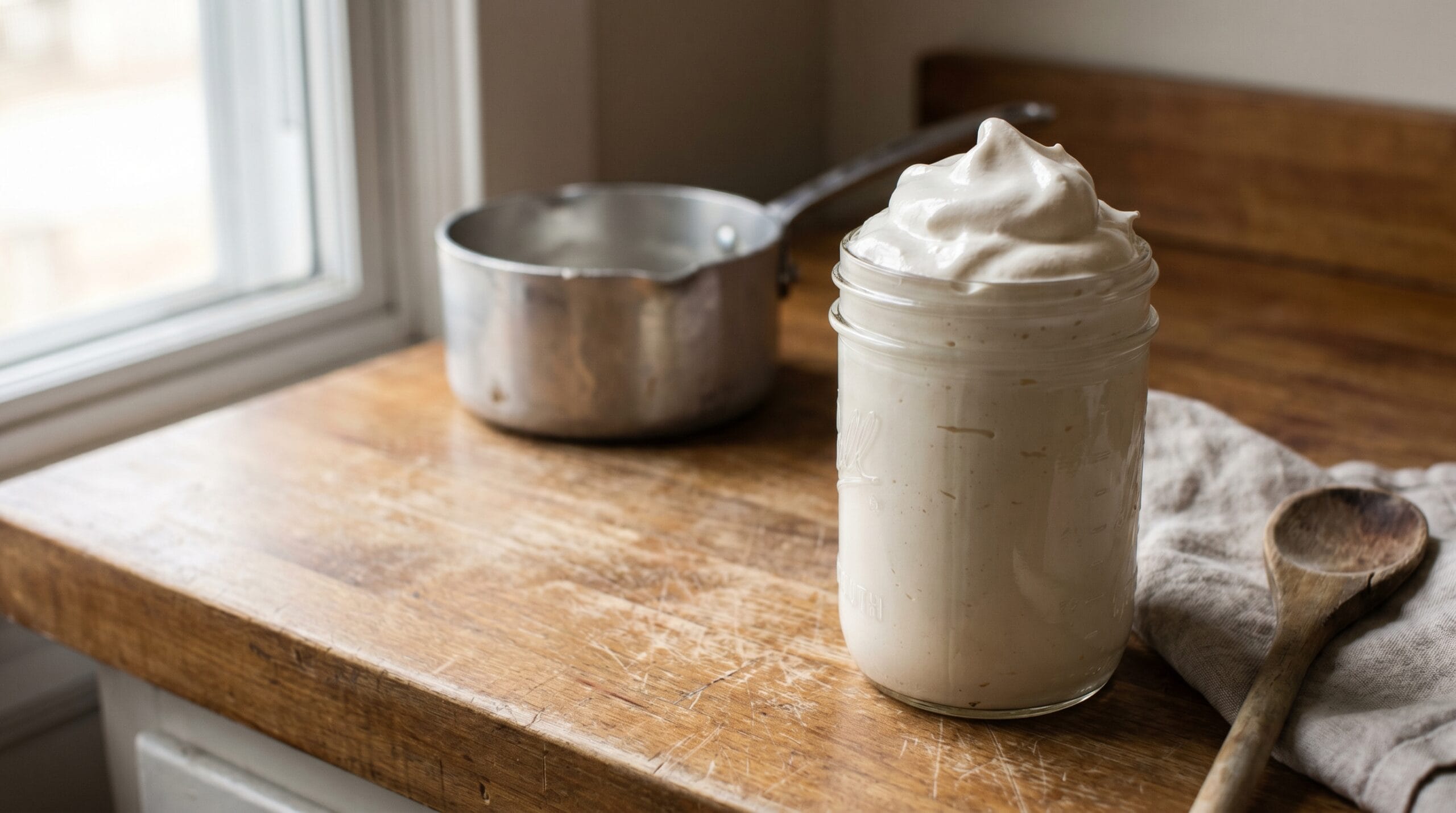
The bowl looks wrong right up until it doesn’t. Egg whites foam, the hot syrup goes in, and for a few minutes it all seems too thin, too liquid, too uncertain. Then the mixer does its work. The mixture tightens, goes glossy, and starts pulling away from the sides of the bowl in thick, shiny ribbons. What you have at that point is better than the stuff in the jar at the grocery store, and you made it in about 15 minutes.
This is one of those recipes that seems fussier than it is. The technique is straightforward once you understand why each step matters. The margin for error is real but avoidable, and the result is versatile enough to justify keeping a jar in the fridge on a fairly regular basis.
Homemade marshmallow fluff is made by whipping egg whites to stiff peaks while streaming in a hot sugar syrup cooked to 240 degrees F. The process takes about 15 minutes total. It keeps in a sealed jar in the refrigerator for up to 2 weeks because it contains raw egg whites, which are not shelf-stable at room temperature.
Quick Answer
- 4 main ingredients: egg whites, corn syrup, powdered sugar, vanilla
- Cook corn syrup until hot, then stream it slowly into whipped egg whites
- Whip on high for 4 to 6 minutes until glossy and thick
- Yields about 2 cups (equivalent to one 7 oz store-bought jar)
- Store refrigerated in a sealed jar for up to 2 weeks
- Total time: roughly 15 minutes
- Cost: well under $1 per batch with pantry staples
What You Need to Make Marshmallow Fluff
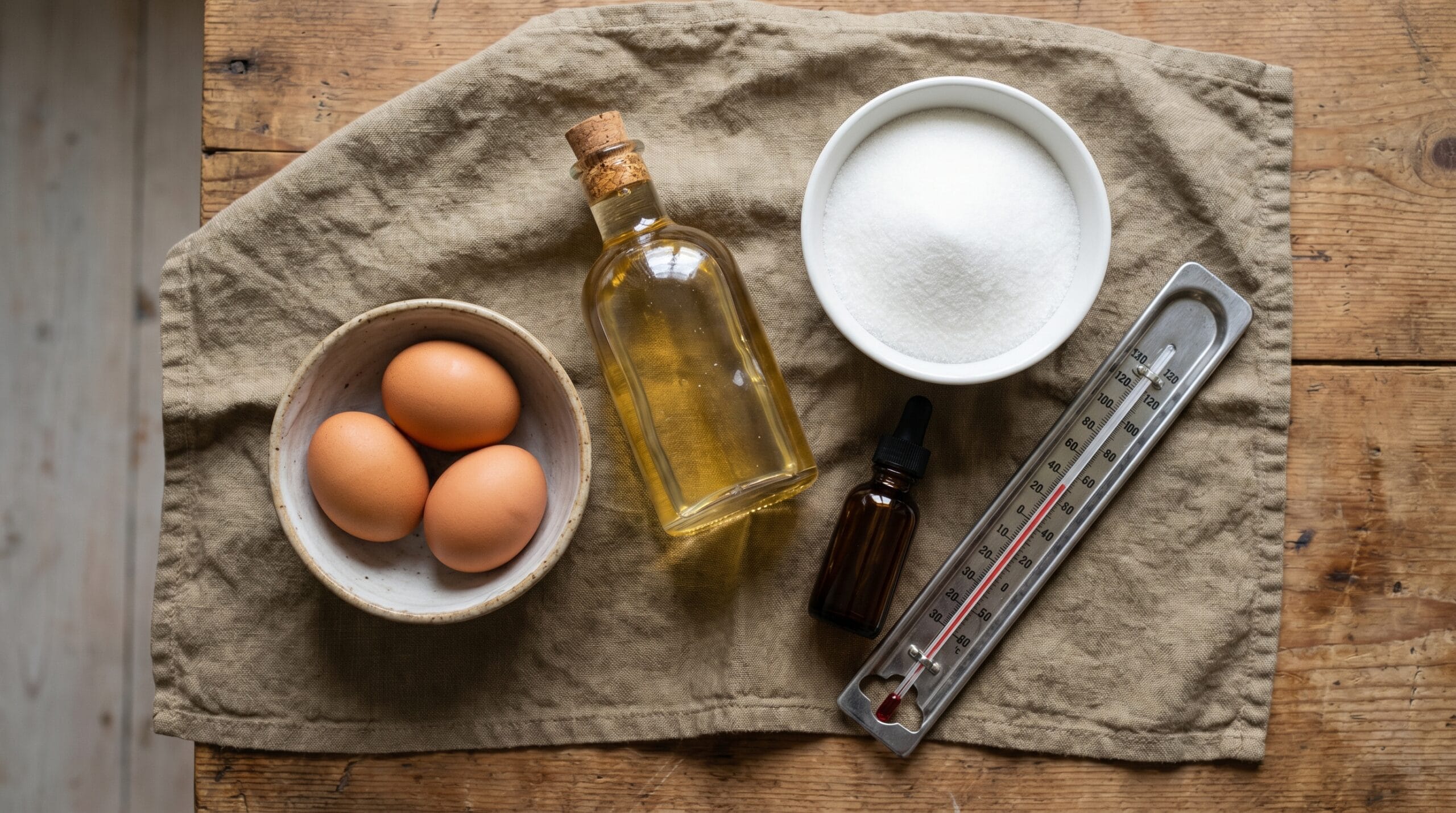
The ingredient list is short. What matters is having them in the right form before you start, because the process moves quickly once the syrup is hot.
Ingredients
- 3 large egg whites, at room temperature. Cold whites whip slower and never reach the same volume. Pull your eggs from the fridge 30 minutes before you start.
- 2/3 cup light corn syrup. This is the structural backbone of the fluff. It keeps the sugar from crystallizing and gives the finished product that smooth, stretchy texture.
- 1/4 teaspoon cream of tartar. Added to the egg whites before whipping. It stabilizes the foam by lowering the pH, which means your whites hold their peaks longer and are less likely to collapse.
- 1 cup powdered sugar, sifted. Sifting matters here. Any lumps that go in will stay in, and you will feel them in the finished fluff.
- 1 teaspoon vanilla extract. Adds flavor. Clear vanilla keeps the color bright white if that matters to you.
Equipment
A stand mixer makes this easier because you need both hands free when streaming in hot syrup. A hand mixer works too, just have a plan for holding the bowl steady. You also need a small saucepan and a candy thermometer. A candy thermometer is not optional here, the syrup temperature is what determines the final texture of the fluff, and guessing does not work reliably. If you do not own one, they are inexpensive and worth picking up before you start.
Corn Syrup Substitutions
If you want to avoid corn syrup, light agave nectar is the closest swap at a 1:1 ratio. A cooked simple syrup (equal parts sugar and water, brought to 240 F) with an extra pinch of cream of tartar also works. Both produce a slightly less stable fluff that may weep a little more quickly in storage. The texture is still good. No potato starch, thickener, or other modification is needed.
How to Make Marshmallow Fluff: Step by Step
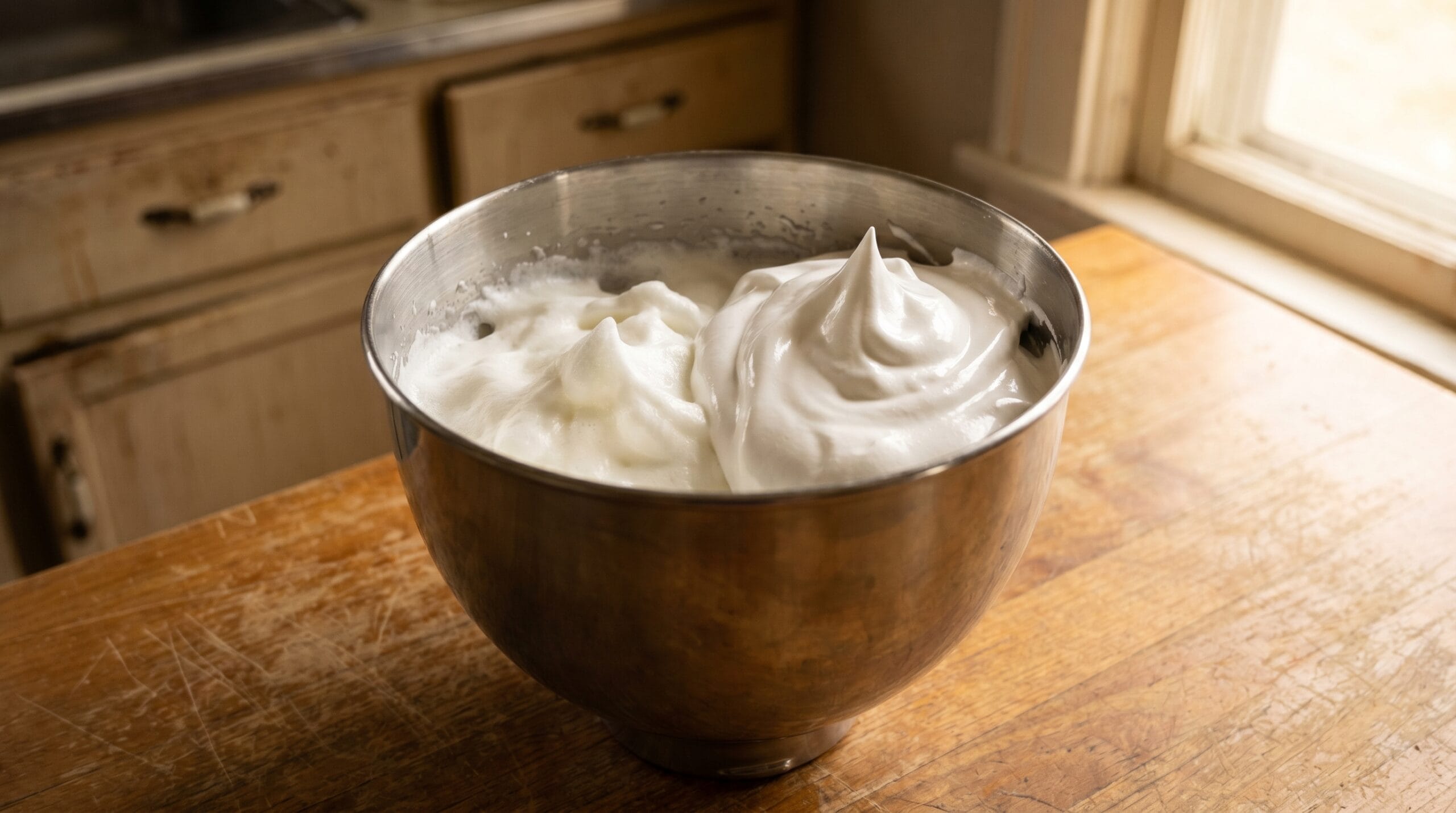
This goes fast once the syrup is hot, so read through all the steps before you start.
Step 1: Heat the corn syrup.
Pour the corn syrup into a small saucepan over medium heat. Bring it to a full boil. Once it starts bubbling, stop stirring. Stirring a hot sugar syrup after it boils encourages crystallization. Let it cook undisturbed until it reaches 240 F on your candy thermometer. This is the soft-ball stage. It usually takes 4 to 6 minutes depending on your burner.
Step 2: Whip the egg whites while the syrup heats.
Add the egg whites and cream of tartar to your mixer bowl. Start on medium speed and work up to medium-high. You want soft peaks by the time the syrup is ready. Soft peaks mean the whites hold a shape but the tip folds over when you lift the beater.
Step 3: Stream the hot syrup in slowly.
With the mixer running on medium, pour the hot syrup in a thin, steady stream down the inside wall of the bowl. The syrup is at 240 F at this point, pour carefully and keep hands clear of the beaters and the bowl rim. Do not pour it directly onto the beaters. If you do, the syrup flings against the sides of the bowl, cools immediately into hard threads, and those threads end up as chewy bits in your finished fluff.
Step 4: Add powdered sugar and vanilla.
Once all the syrup is in, add the sifted powdered sugar in two additions, letting each one incorporate before adding the next. Add the vanilla with the second addition.
Step 5: Whip on high until stiff peaks form.
Increase the speed to high and whip for 4 to 6 minutes. The mixture will go from pale and slightly loose to brilliant white and thick. When you lift the beater and the fluff holds a sharp, upright peak without drooping, it is done. The bowl should feel warm but not hot.
Before jarring: let the fluff sit for 5 minutes before putting the lid on the jar. If you seal a warm jar immediately, condensation forms on the inside of the lid, drips back onto the surface, and thins the top layer. A brief rest solves this. The yield is approximately 2 cups, which is the equivalent of one standard 7 oz jar of store-bought marshmallow fluff.
Where to Use Homemade Marshmallow Fluff
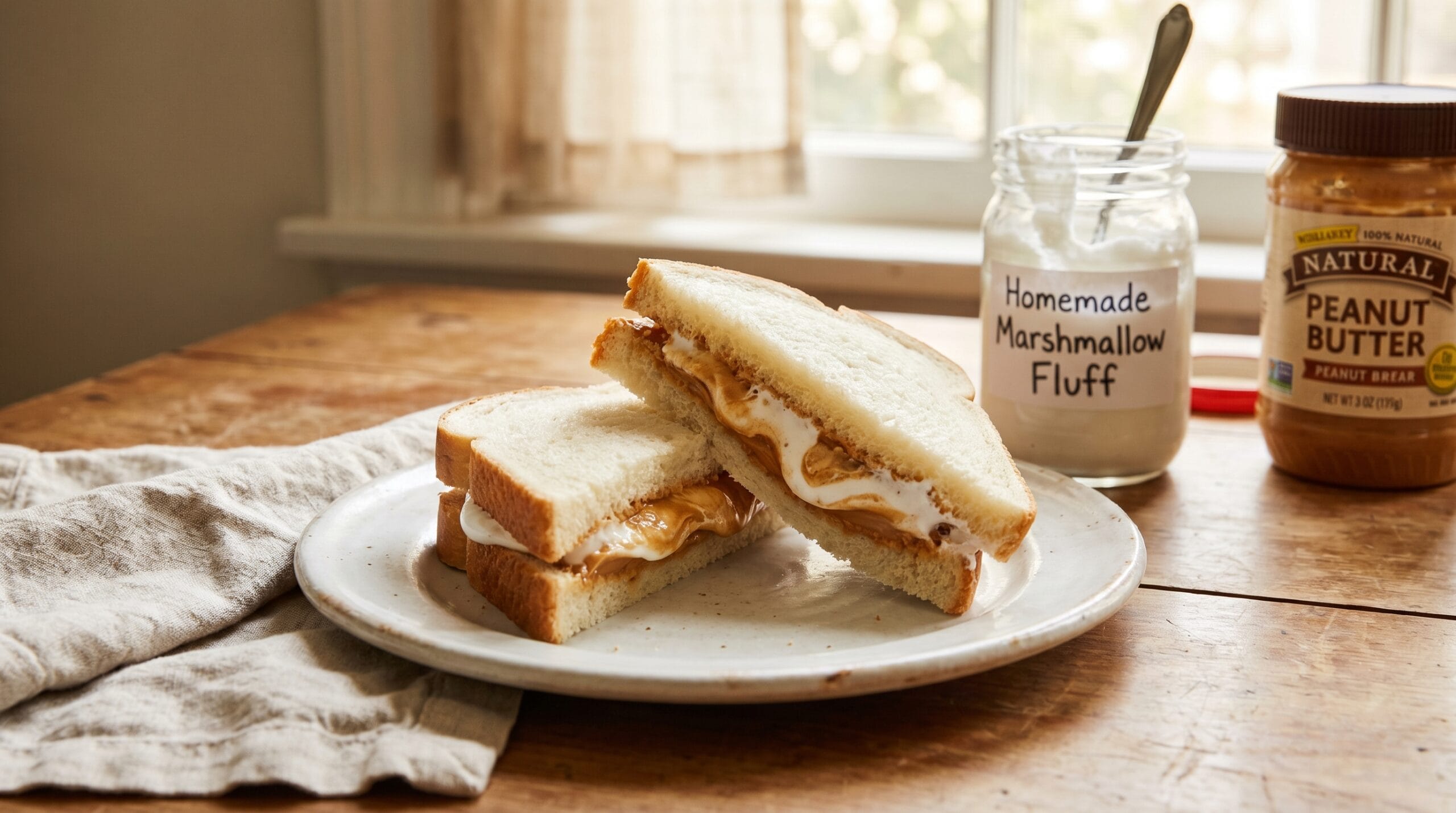
Two cups of fluff goes further than it looks. These are the most practical uses, starting with the easiest if you are new to cooking with it.
Fluffernutter sandwiches. Peanut butter and marshmallow fluff on soft white bread. This is a New England classic that deserves more credit than it gets. A generous layer of each is the move, do not treat it like a condiment. If you want a fully from-scratch version, pair it with a homemade jam spread alongside the fluff for a layered sandwich filling that skips store-bought altogether.
Fruit dip. Beat together equal parts marshmallow fluff and softened cream cheese with a splash of vanilla. Serve with sliced strawberries or apple wedges. This takes about 2 minutes and uses roughly half a cup of fluff.
Hot cocoa or coffee topping. A spoonful on top holds its shape longer than whipped cream and tastes noticeably better when you hit it briefly with a kitchen torch. No torch needed, it works cold too.
Sweet potato casserole topping. Spread fluff over a baked sweet potato casserole and run it under the broiler for 60 to 90 seconds until the peaks brown. It behaves the same as mini marshmallows in this role, just with a smoother, more even finish.
Fudge. Marshmallow fluff prevents the sugar from recrystallizing into coarse grains as fudge cools. Most no-fail fudge recipes call for roughly 1 cup of fluff per batch. This is one of the better reasons to keep a jar on hand.
Frosting and cake filling. Fold fluff into buttercream at a roughly 1:1 ratio for a lighter, less dense texture. Chilling the finished frosting for 20 minutes before piping helps it hold its shape.
S’mores. Spread fluff on a cracker, add chocolate, and press a second cracker on top, or torch the fluff surface before assembling. Homemade crackers as a base for fruit-and-fluff snacks are worth trying here if you want to skip store-bought graham crackers entirely.
Is It Actually Cheaper to Make Marshmallow Fluff at Home?
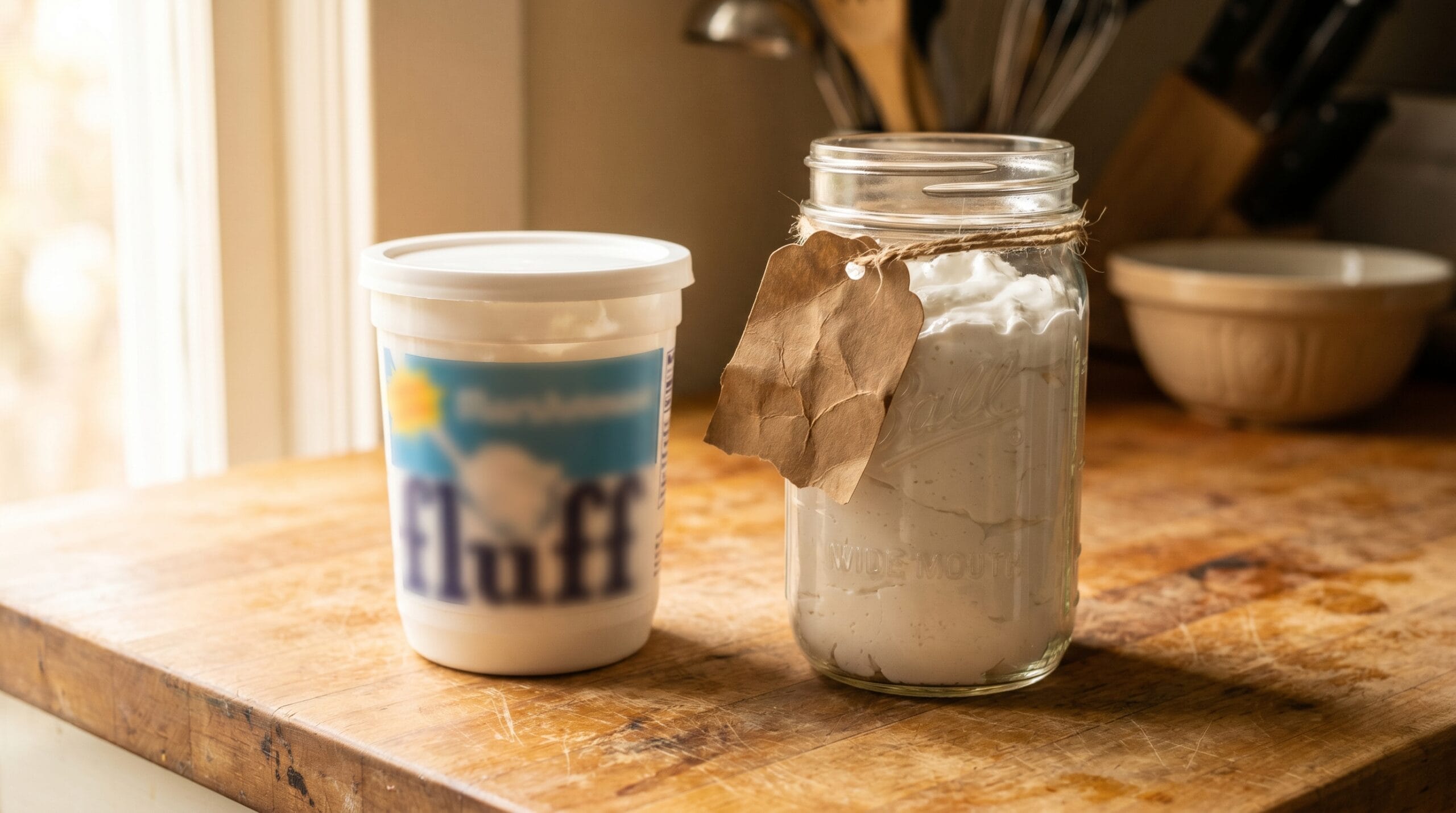
Most recipes claiming homemade is “so much cheaper” never run the numbers. Here is a rough estimate based on approximate U.S. pantry staple pricing at the time of publication. Your actual costs will vary by region and store.
| Ingredient | Amount Used | Estimated Cost |
|---|---|---|
| 3 large egg whites | From roughly 3 eggs | ~$0.25 to $0.40 |
| 2/3 cup light corn syrup | From a standard 16 oz bottle | ~$0.25 to $0.35 |
| 1 cup powdered sugar | From a 2 lb bag | ~$0.15 to $0.20 |
| Vanilla extract | 1 teaspoon | ~$0.10 to $0.20 |
| Total | ~2 cups | ~$0.75 to $1.15 |
A 7 oz jar of store-bought marshmallow fluff runs roughly $2.50 to $3.50, depending on the brand and retailer. That jar holds about 2 cups. So making it at home saves you somewhere between $1.50 and $2.75 per batch if you already have the pantry staples, which most people do.
The real savings compound when you make it regularly. The bottle of corn syrup you buy for one batch will cover four or five more. At that point, the per-batch cost drops toward $0.50.
What you do not save: time. The store version is on the shelf in 30 seconds. Homemade takes 15 to 20 minutes and one pot to wash. Whether that trade-off makes sense depends on what you value in a given week.
The Two Mistakes That Make Homemade Fluff Separate or Go Grainy
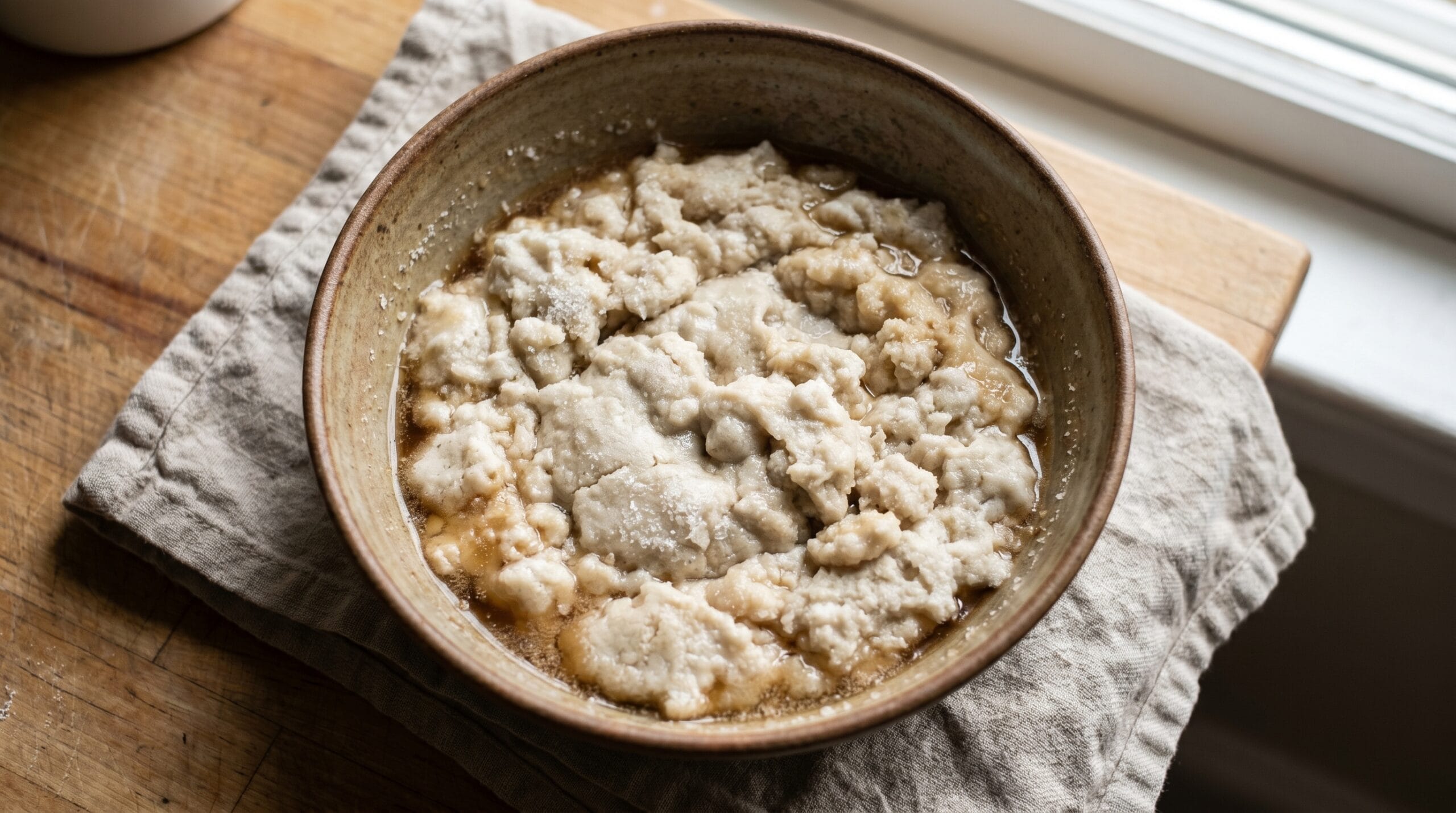
These are the two failure modes that most recipes never mention. Both are fixable if you know what causes them.
Mistake 1: Pouring the Syrup Too Fast (Causes Separation)
If the hot syrup hits the egg whites in a rush instead of a thin stream, two things happen. First, the outer layer of egg white proteins cook faster than the interior, forming soft cooked clumps. Second, the foam structure does not have time to incorporate the syrup evenly, so moisture pools at the bottom of the bowl.
The fix is patience. The stream should look like a thick thread, not a pour. If your saucepan spout is too wide for control, transfer the hot syrup to a heatproof liquid measuring cup before streaming. A cup with a narrow spout gives you much better control.
Food science extension resources note that egg white proteins coagulate rapidly when exposed to sudden high heat without the buffering effect of sugar. Streaming the syrup slowly allows the sugar to coat and protect the proteins as temperature rises, which is why technique here is not optional. Extension.org’s guidance on egg safety covers the underlying protein behavior in more detail.
Mistake 2: Undissolved Sugar (Causes Graininess)
Powdered sugar that is not sifted, or that is added to a too-hot mixture, can leave a gritty texture in the finished fluff. A few degrees of temperature drop between the syrup addition and the sugar addition is all it takes.
Graininess is easier to prevent than to fix: sift the sugar before it goes in, add it in two additions rather than all at once, and let the mixer run for at least 30 seconds between additions to fully incorporate each one. If you taste graininess in the finished fluff, continue whipping for another minute or two. The sugar usually dissolves with a bit more mechanical work and heat still present in the mixture.
How Long Does Homemade Marshmallow Fluff Actually Last?
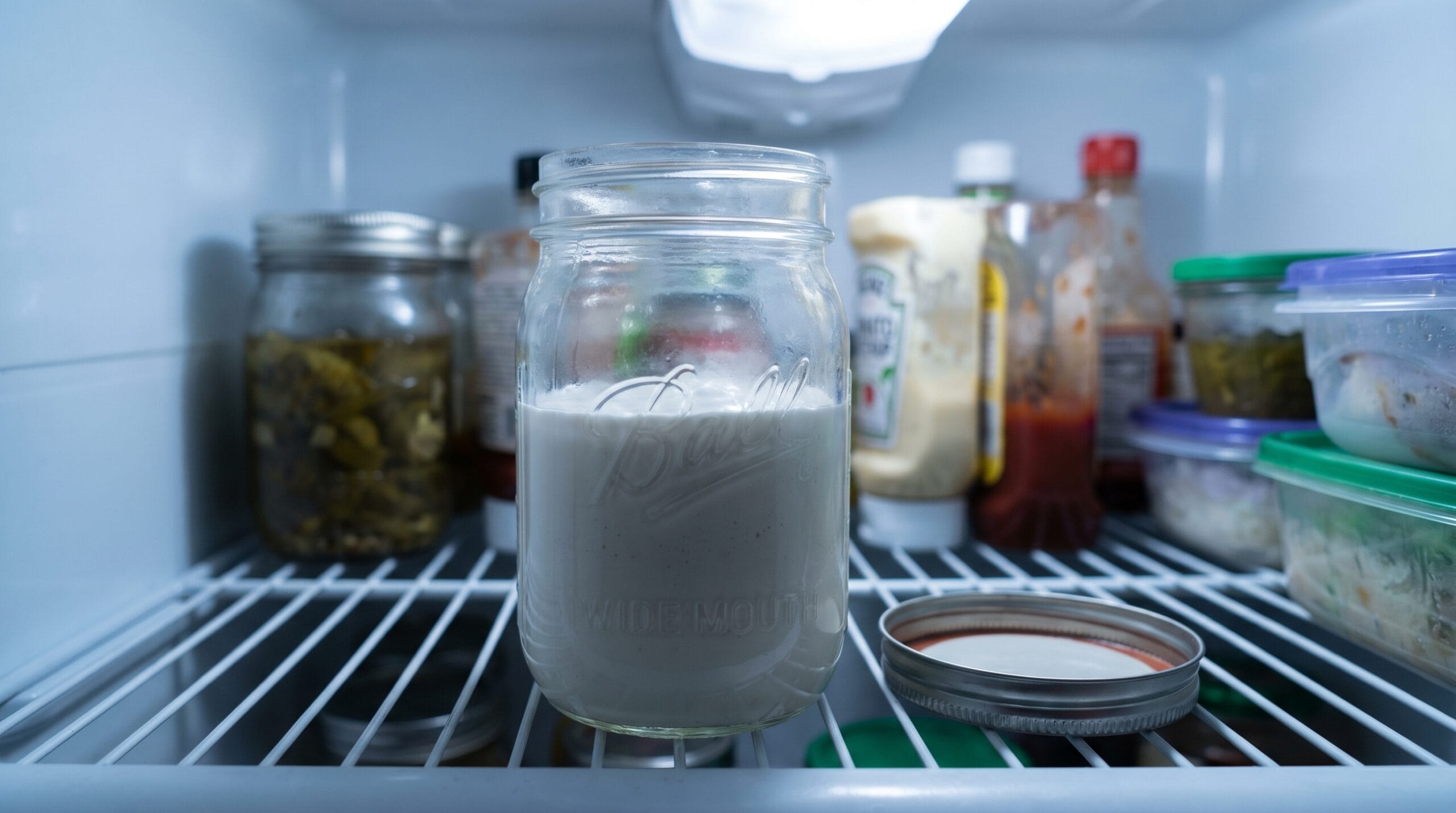
Store-bought marshmallow fluff has a long shelf life because it uses pasteurized egg products and contains preservatives. Homemade fluff uses raw egg whites, which changes the storage rules entirely.
The USDA guidelines on raw egg product safety specify that raw egg products should be refrigerated at all times and consumed within 2 weeks. Homemade marshmallow fluff should be treated the same way: refrigerate it in a sealed jar and use it within 2 weeks.
There is a reasonable safety question about whether the hot syrup method actually cooks the egg whites enough to reduce pathogen risk. The answer is yes, with an important caveat. According to University of Minnesota Extension via extension.org, egg whites are considered safe once they reach an internal temperature of 160 F. In this recipe, the corn syrup is cooked to 240 F and then streamed directly into the whites while the mixer is running. The combination of the syrup temperature and the extended whipping time raises the egg white temperature well above the 160 F threshold. The product is safer than truly raw egg whites, but it is still not shelf-stable.
Practical storage notes:
- Use a clean, dry jar. Any moisture or food residue in the jar can introduce bacteria and shorten shelf life.
- Press a small piece of plastic wrap directly onto the surface of the fluff before putting the lid on. This reduces the air contact that causes a crust to form on the top.
- Do not leave it on the counter between uses. Spoon out what you need and put it straight back in the fridge.
- Signs it has turned: off smell (sour or fermented), visible mold, or a liquid layer that does not reincorporate when stirred.
The Free Garden Starter Pack
Five printable pages that take the guesswork out of a first season, plus a short email every week or two when something is worth planting, picking, or putting up.
- A garden planning worksheet you can actually fill in
- A seed-starting and planting calendar
- A harvest log to track what really produced
No spam, ever. Unsubscribe in one click.
Thank you. You are on the list.
Your Garden Starter Pack is ready right now. Grab it here:
Download the pack (PDF)Keep an eye on your inbox. The next seasonal guide lands there first.
Frequently Asked Questions About Homemade Marshmallow Fluff
Can you turn marshmallows into marshmallow fluff?
You can melt marshmallows to approximate the consistency of fluff, but the result is not quite the same. Melt store-bought marshmallows over low heat with a small splash of water and a tablespoon of light corn syrup, then stir until smooth. The texture is thicker and more paste-like than true fluff, and it sets firmer when it cools. It works as a substitute in most baking applications but does not hold the same airy, spreadable texture.
What can I use if I don’t have marshmallow fluff?
The most practical substitute depends on what you are making. Melted marshmallows with a tablespoon of corn syrup work well for fudge and baked fillings, where the texture difference matters less. For spreading on bread or using as a dip, a thin Italian meringue (egg whites and hot sugar syrup, without the powdered sugar step) is structurally very close and swaps in at a 1:1 ratio. Whipped cream with powdered sugar is a last resort, it works for topping drinks but breaks down under heat and does not behave the same way in baking.
What’s actually in store-bought marshmallow fluff?
The ingredient label on standard commercial marshmallow fluff lists corn syrup, sugar, dried egg whites, and vanilla flavoring. The homemade version uses the same core components in a fresher, unpreserved form. The primary structural difference is that commercial versions use dried (pasteurized) egg whites, which extend shelf life significantly compared to the fresh whites in a homemade batch.
Is homemade marshmallow fluff safe for people who avoid raw eggs?
The hot sugar syrup method does raise the egg whites to a safe temperature during whipping, as noted in the storage section above. That said, people who are immunocompromised, pregnant, or otherwise avoiding any risk from egg products should use pasteurized liquid egg whites instead of shell eggs. Pasteurized egg whites (sold in cartons) work in this recipe without any adjustment to quantities or technique.
How do you know when the fluff is done whipping?
Lift the beater and hold it upright. If the fluff forms a peak that holds its shape without drooping or sliding, it is done. The mixture should look bright white and feel thick when you drag a spatula through it. If peaks droop, continue whipping in 60-second intervals. Over-whipping is rarely a problem with this method, but under-whipping produces a fluff that will slowly deflate in the jar.